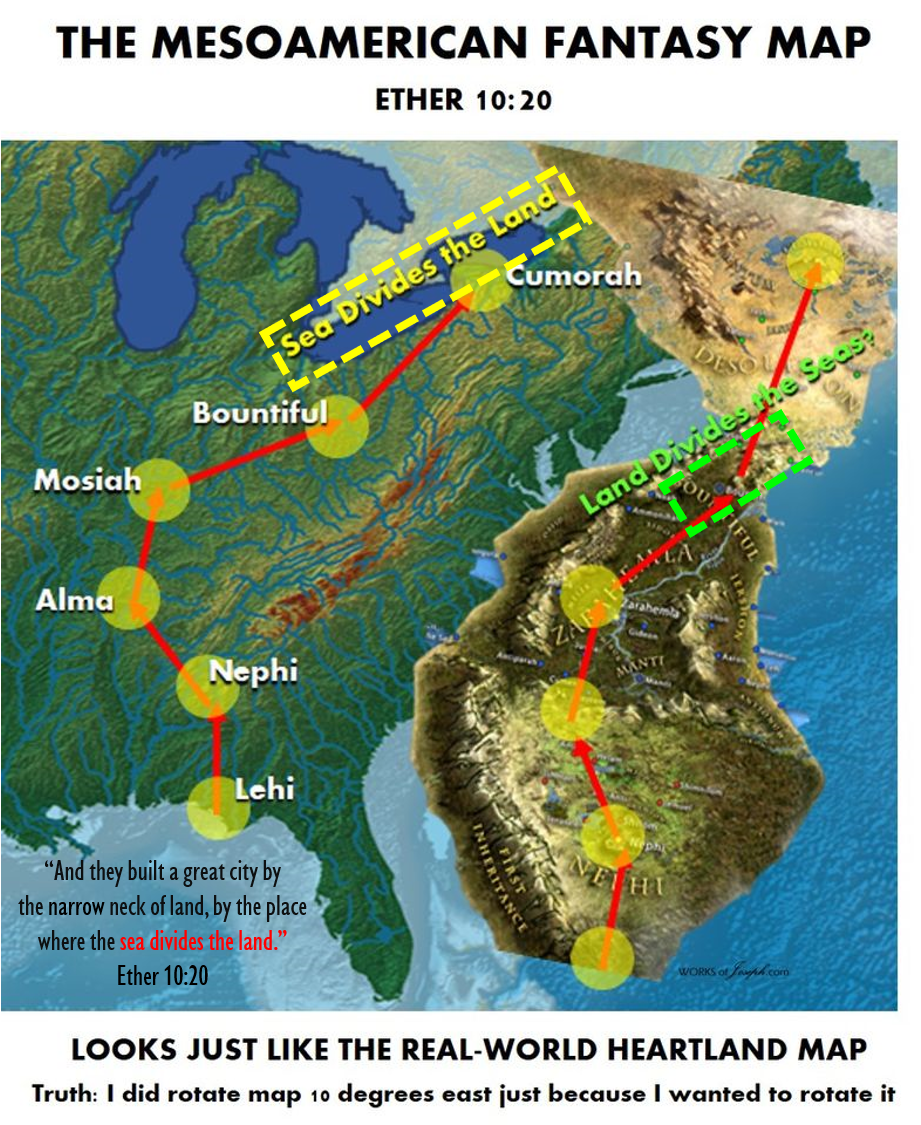
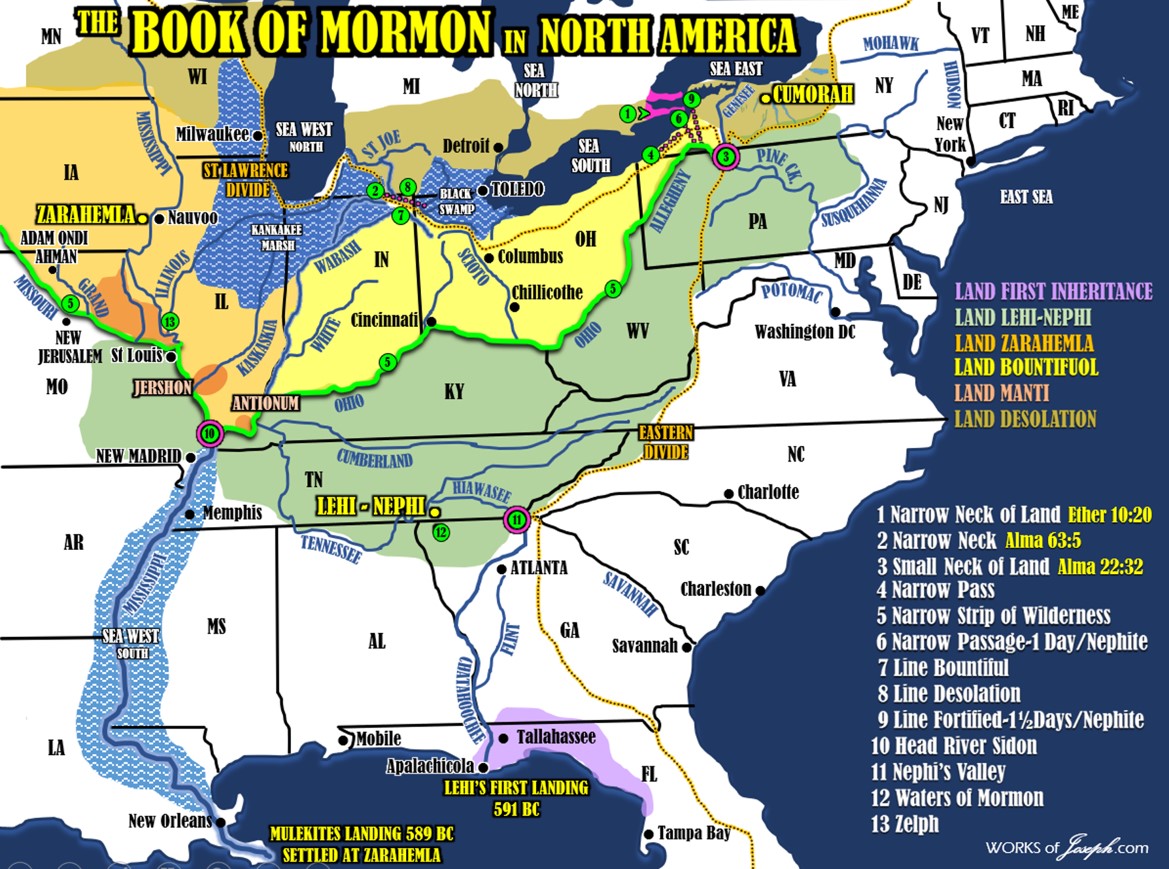
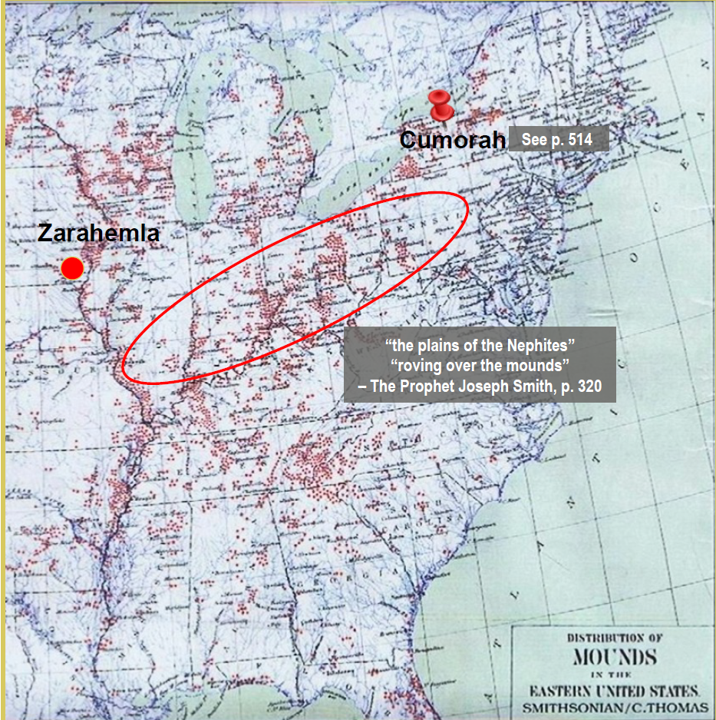
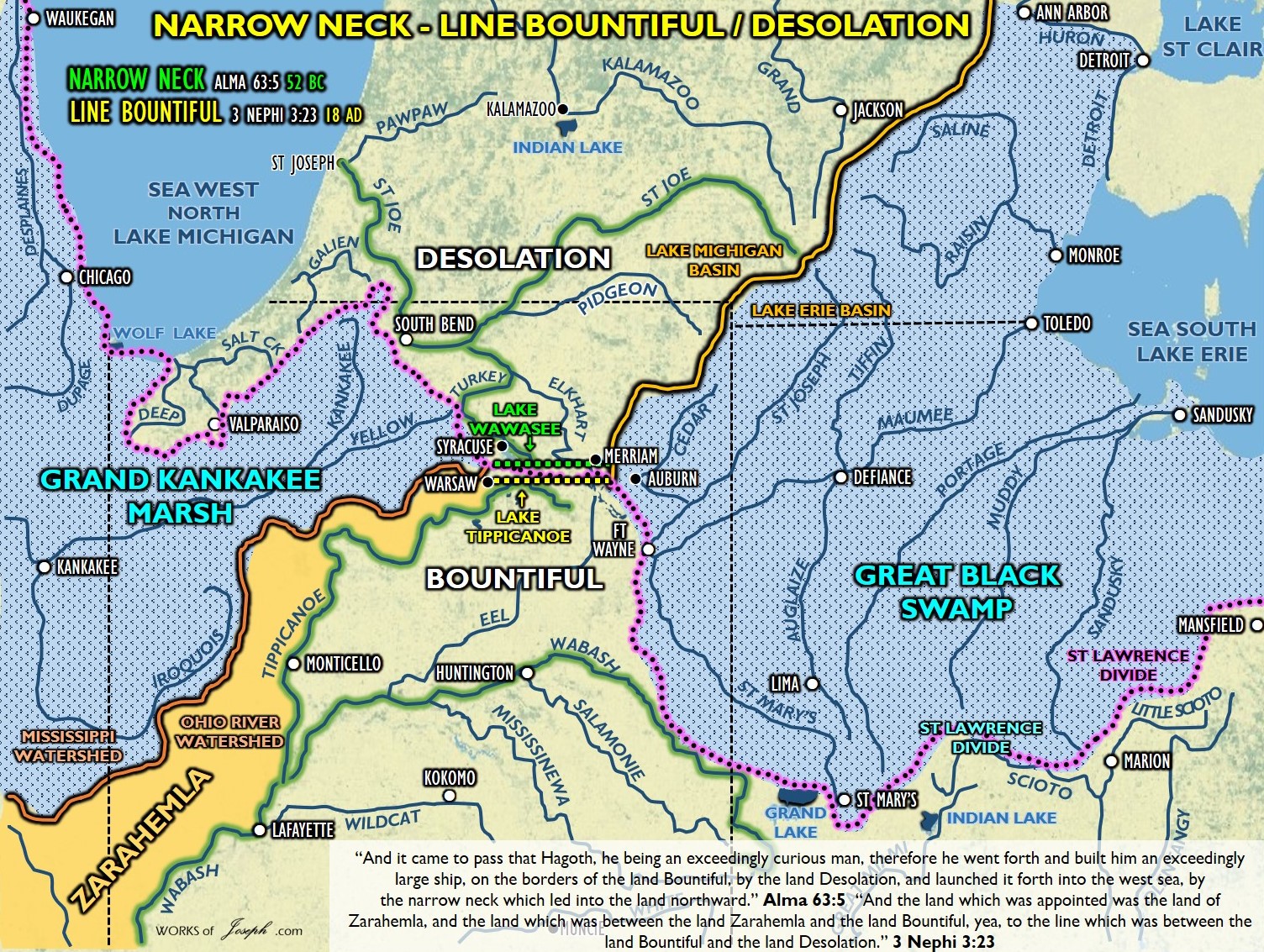
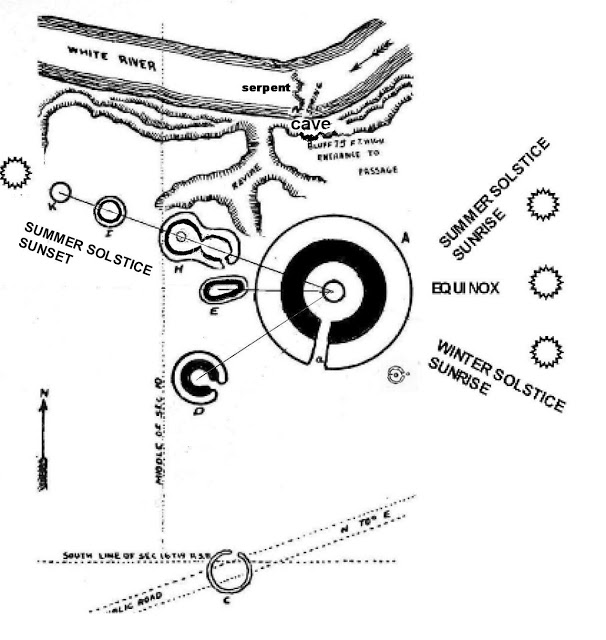
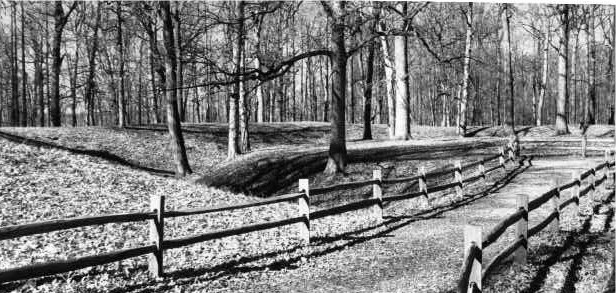
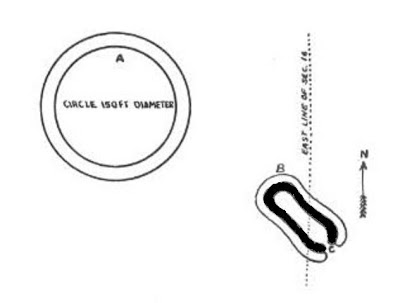
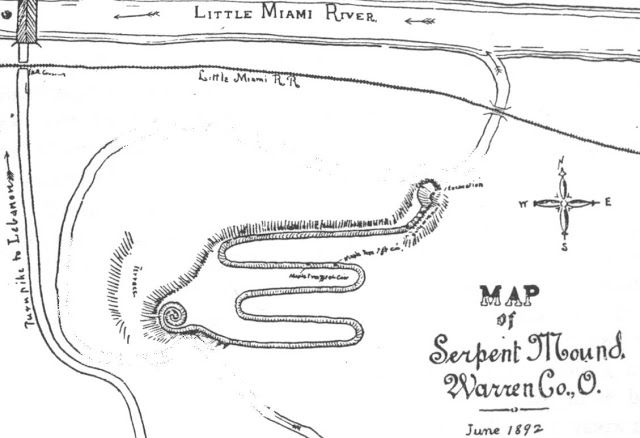
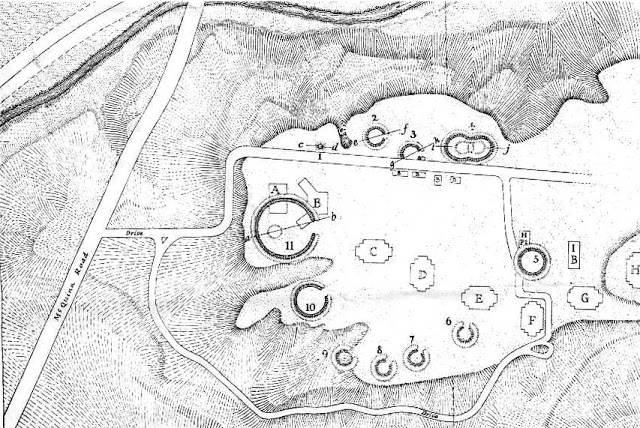
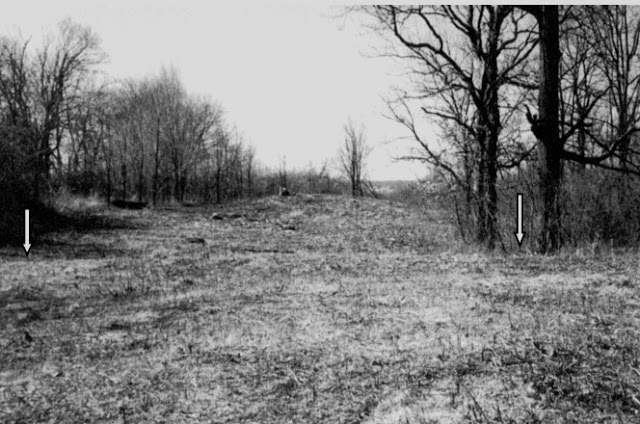
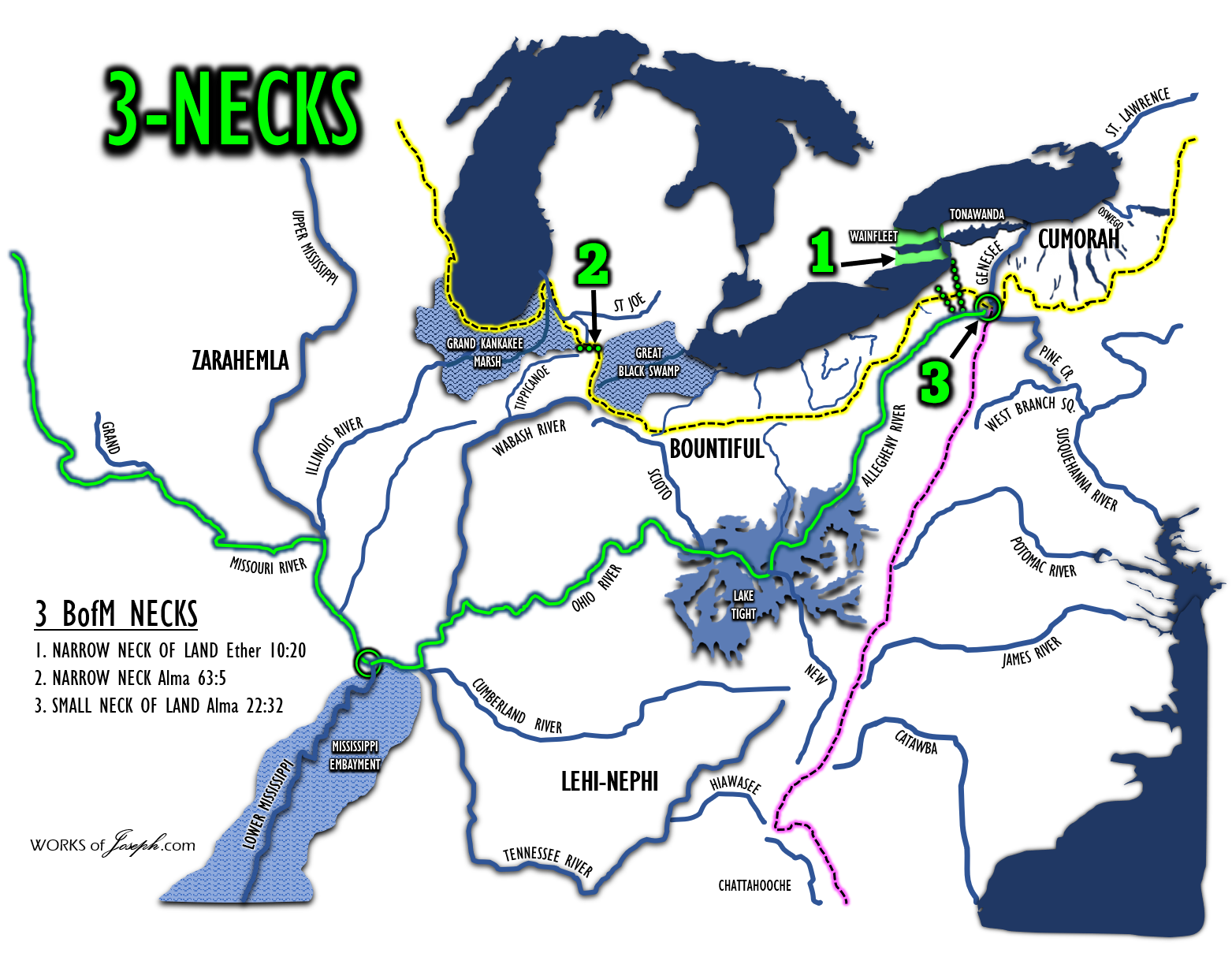
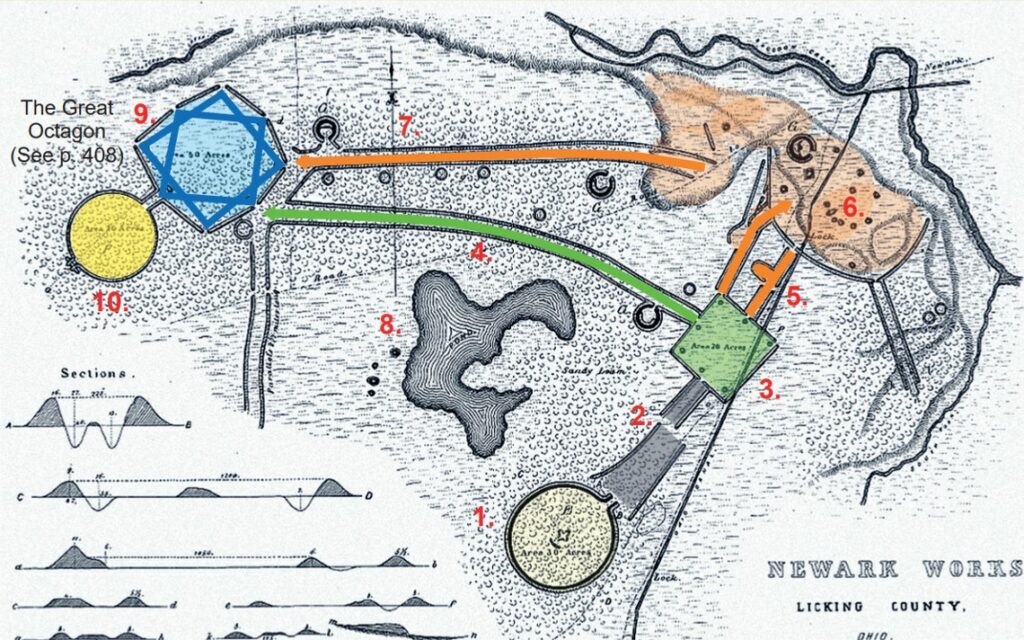
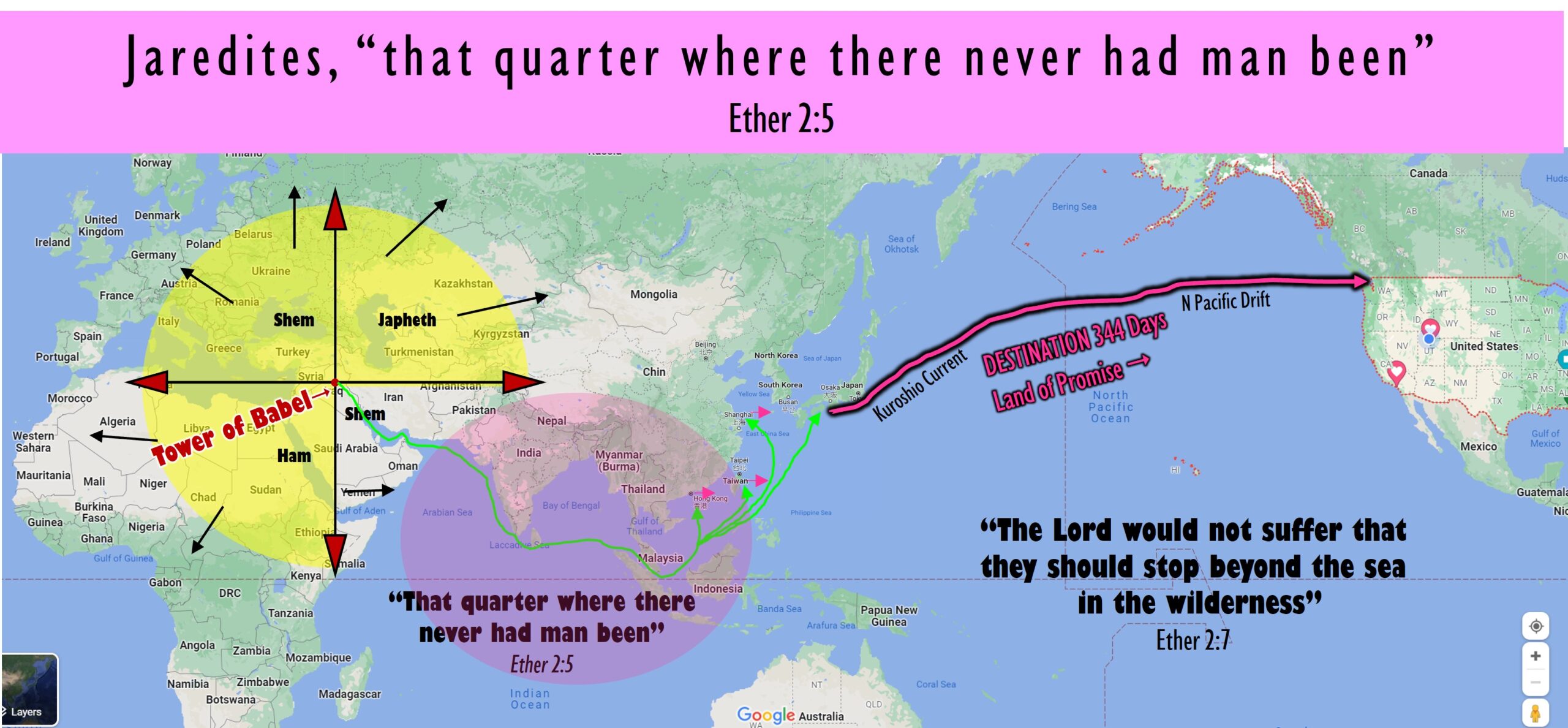
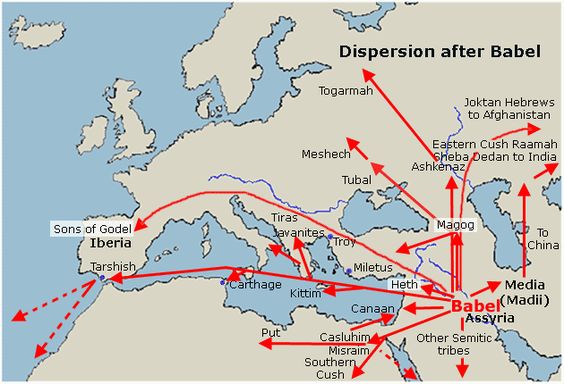
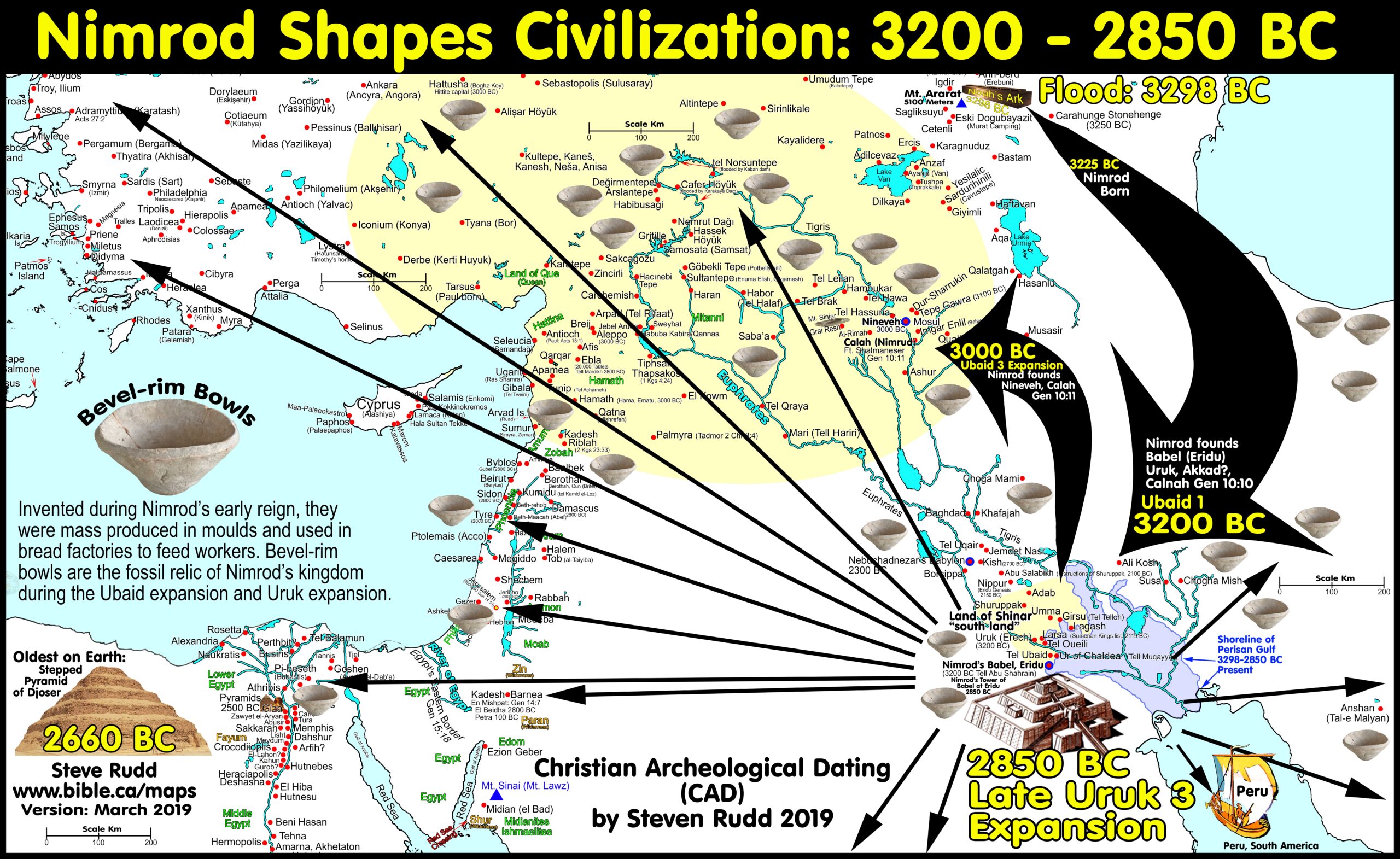
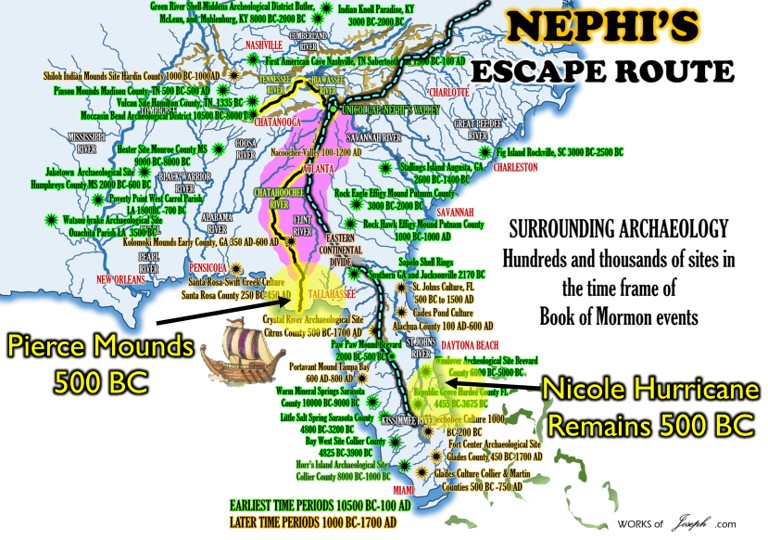
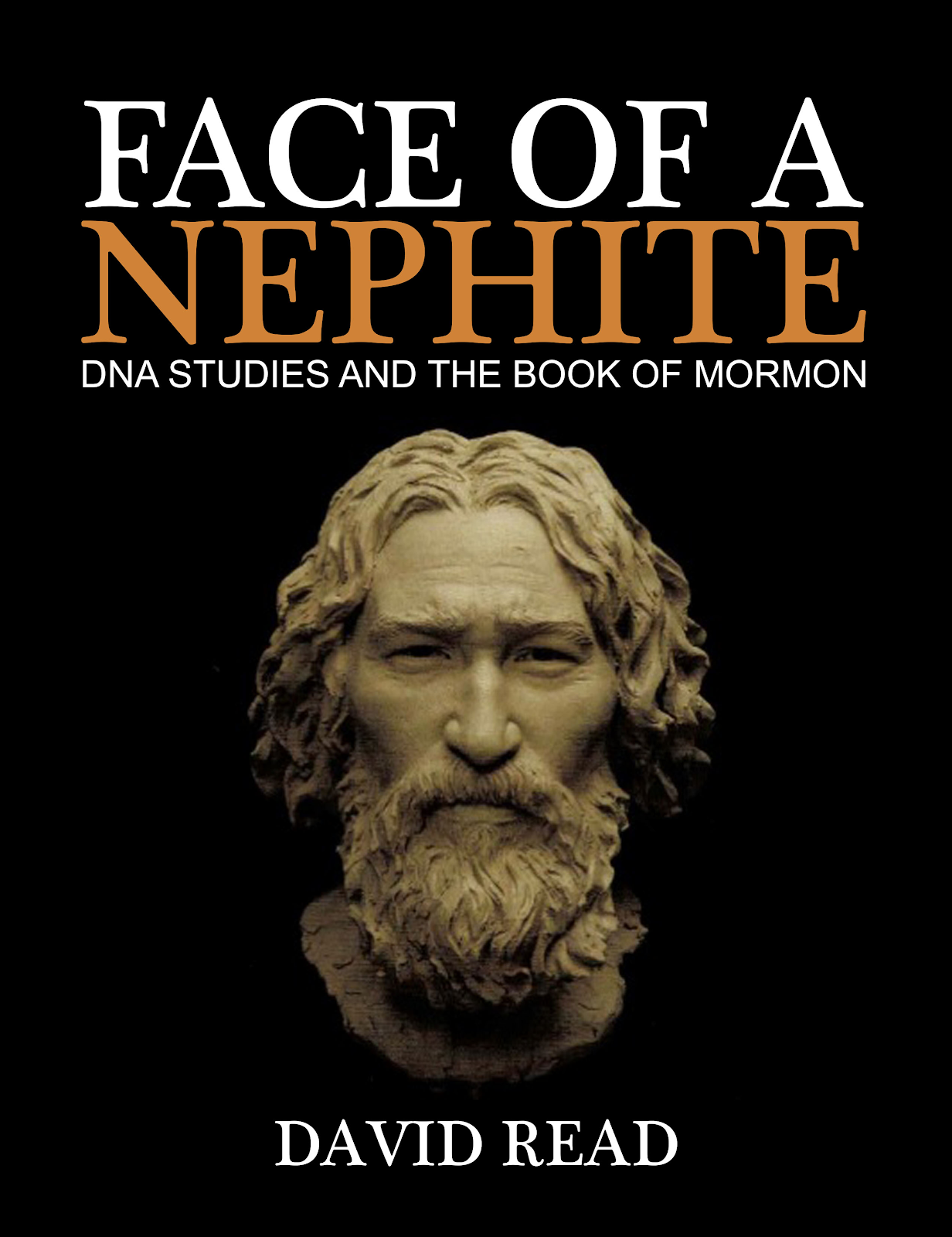
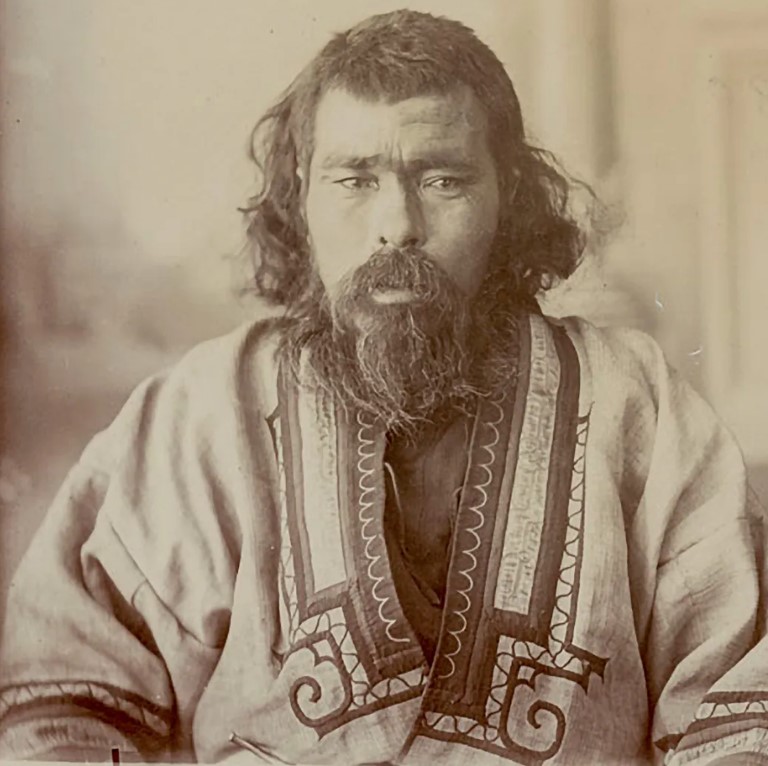
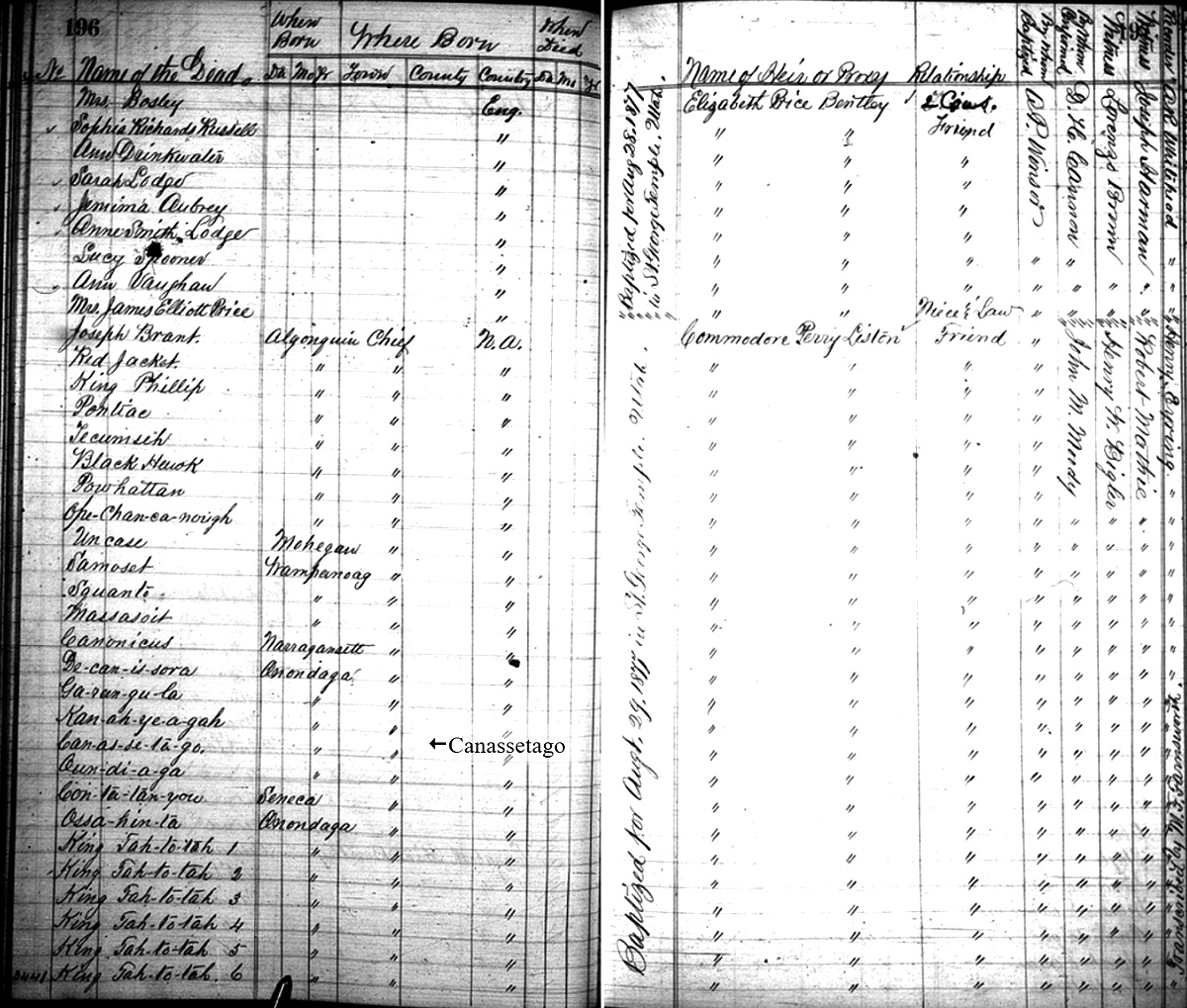
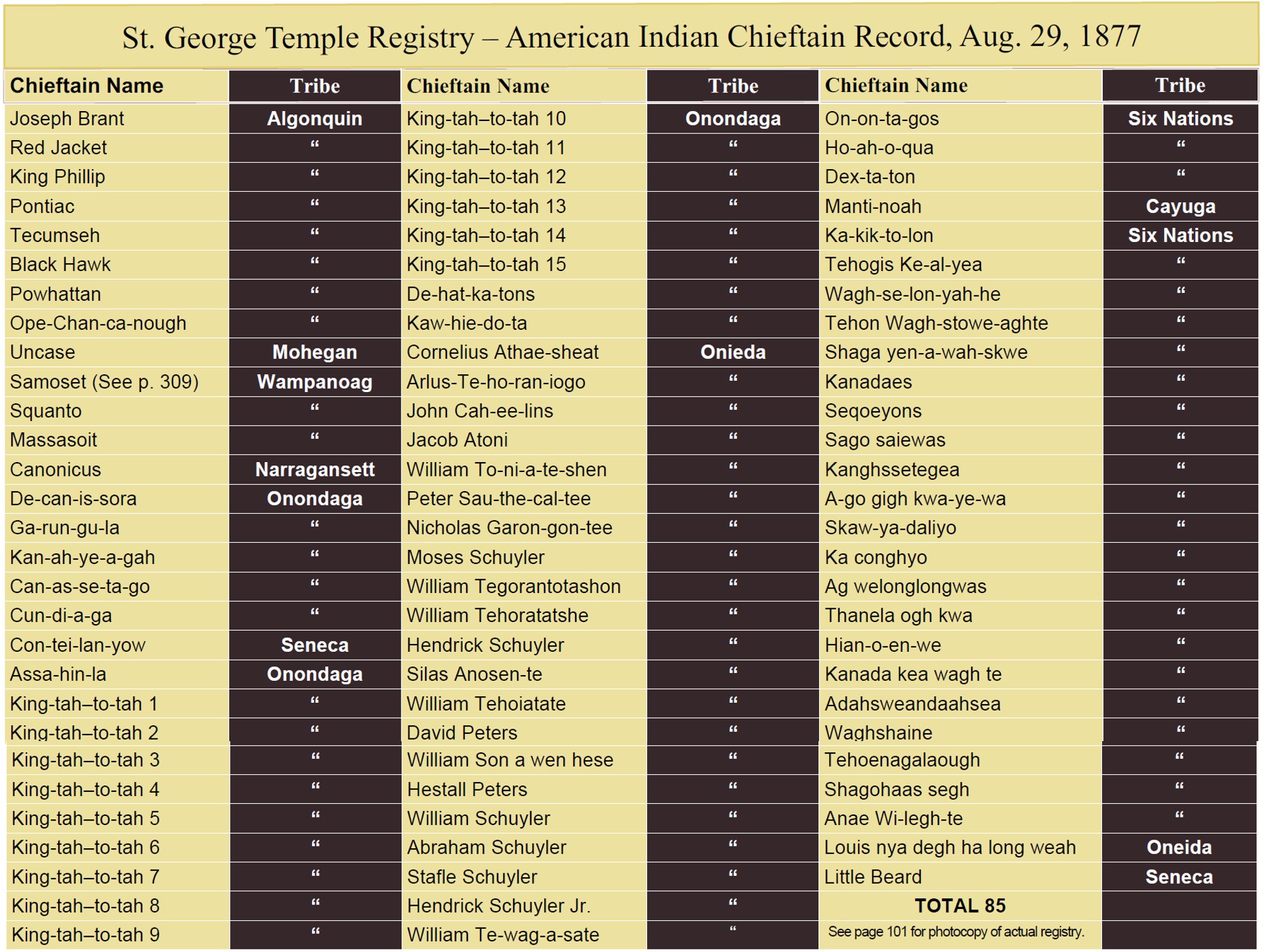
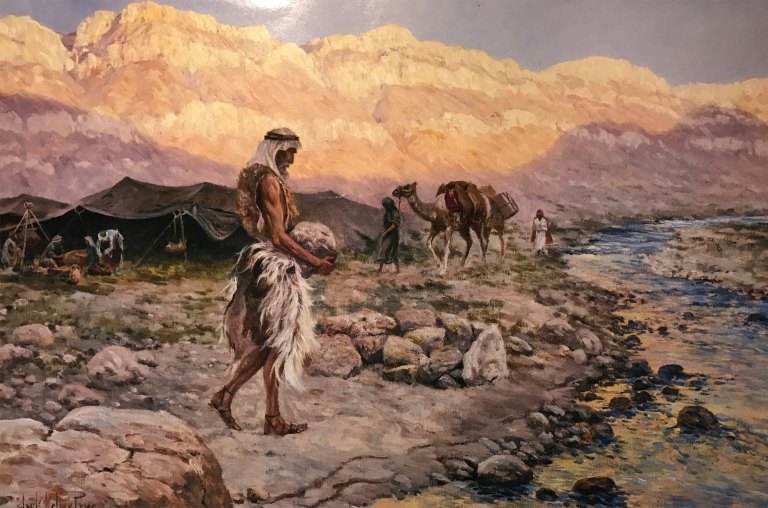
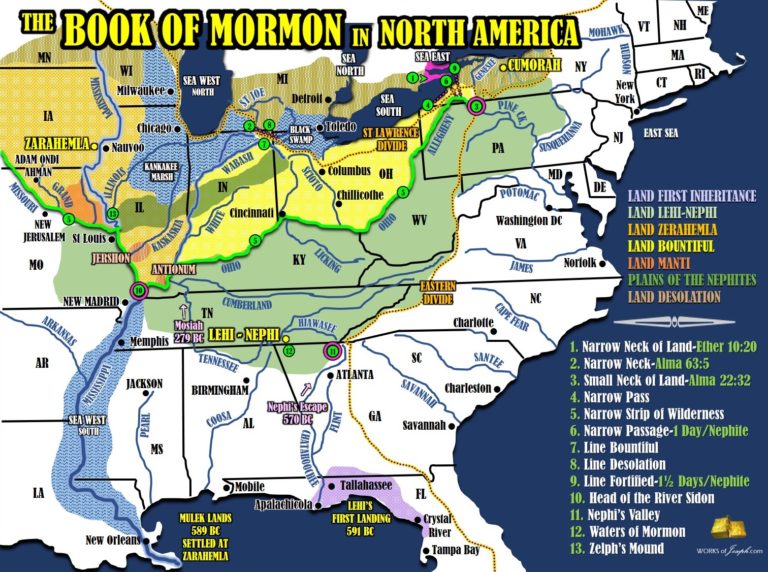
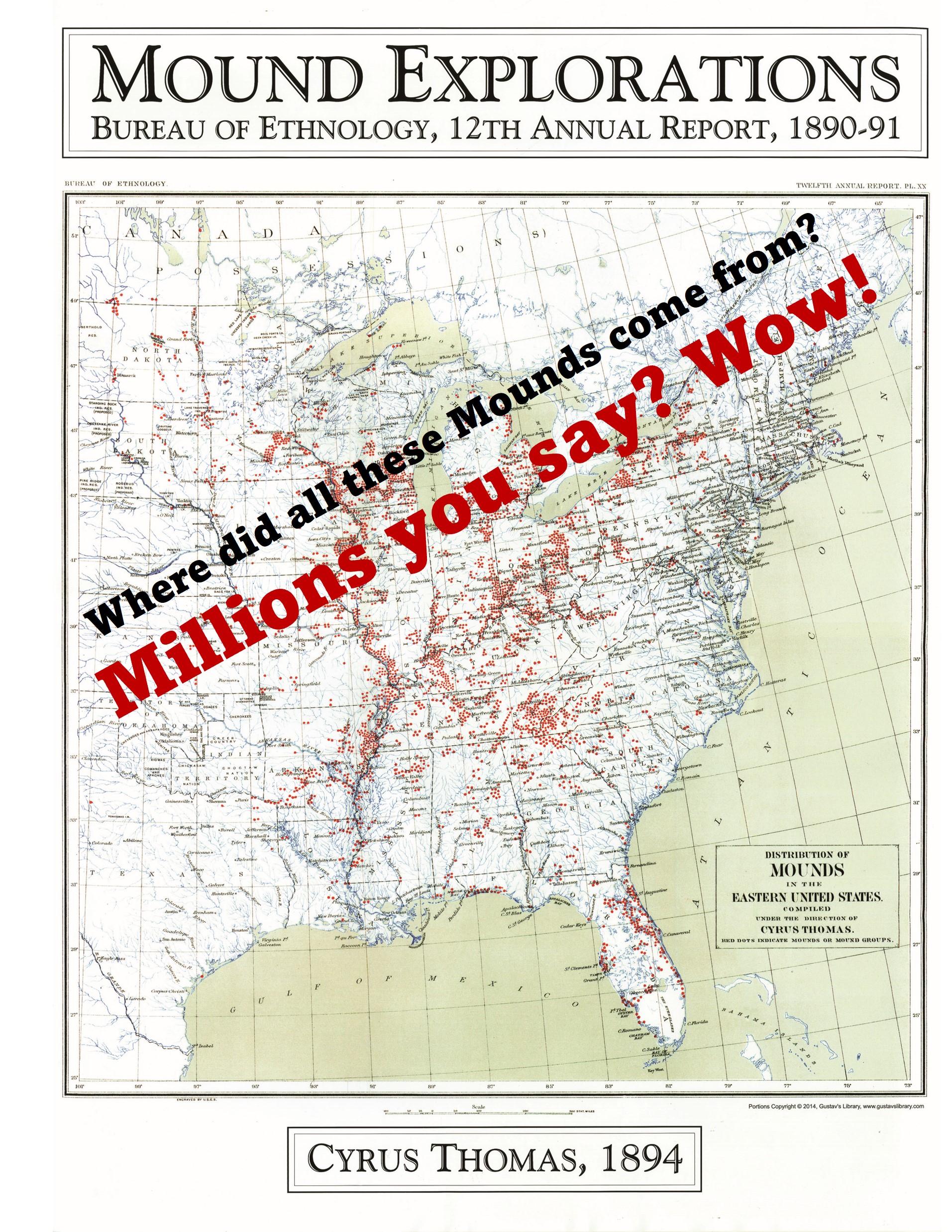
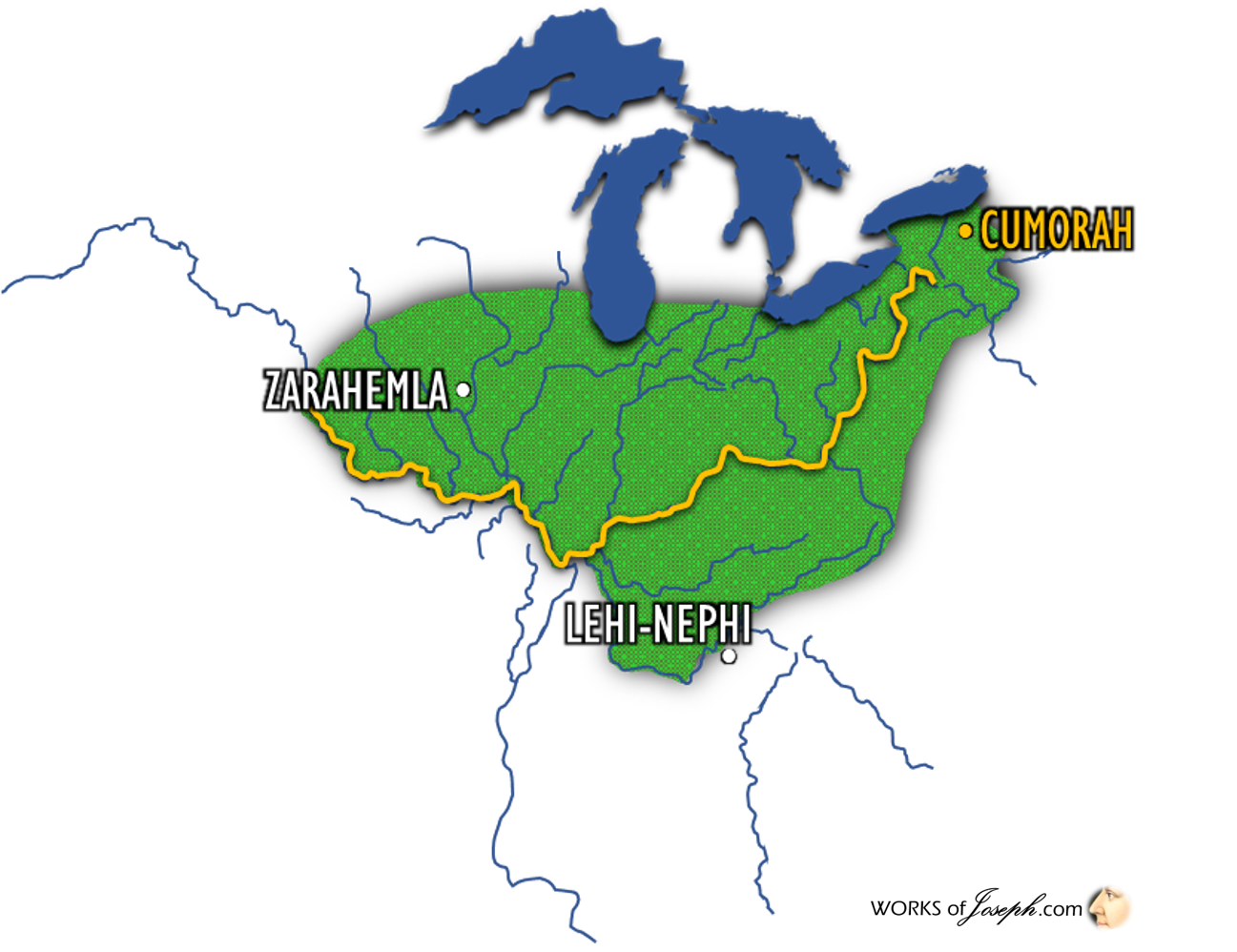
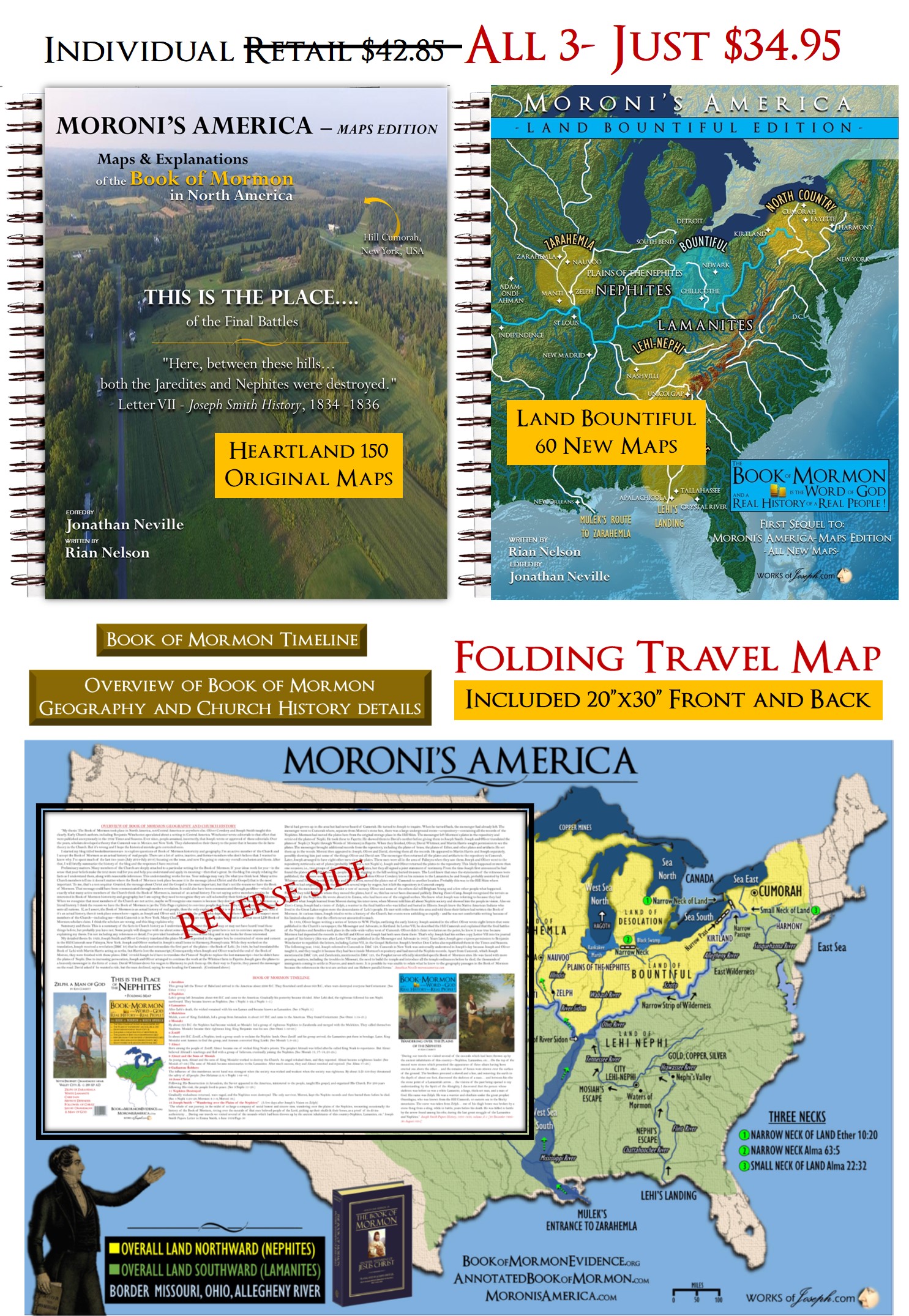
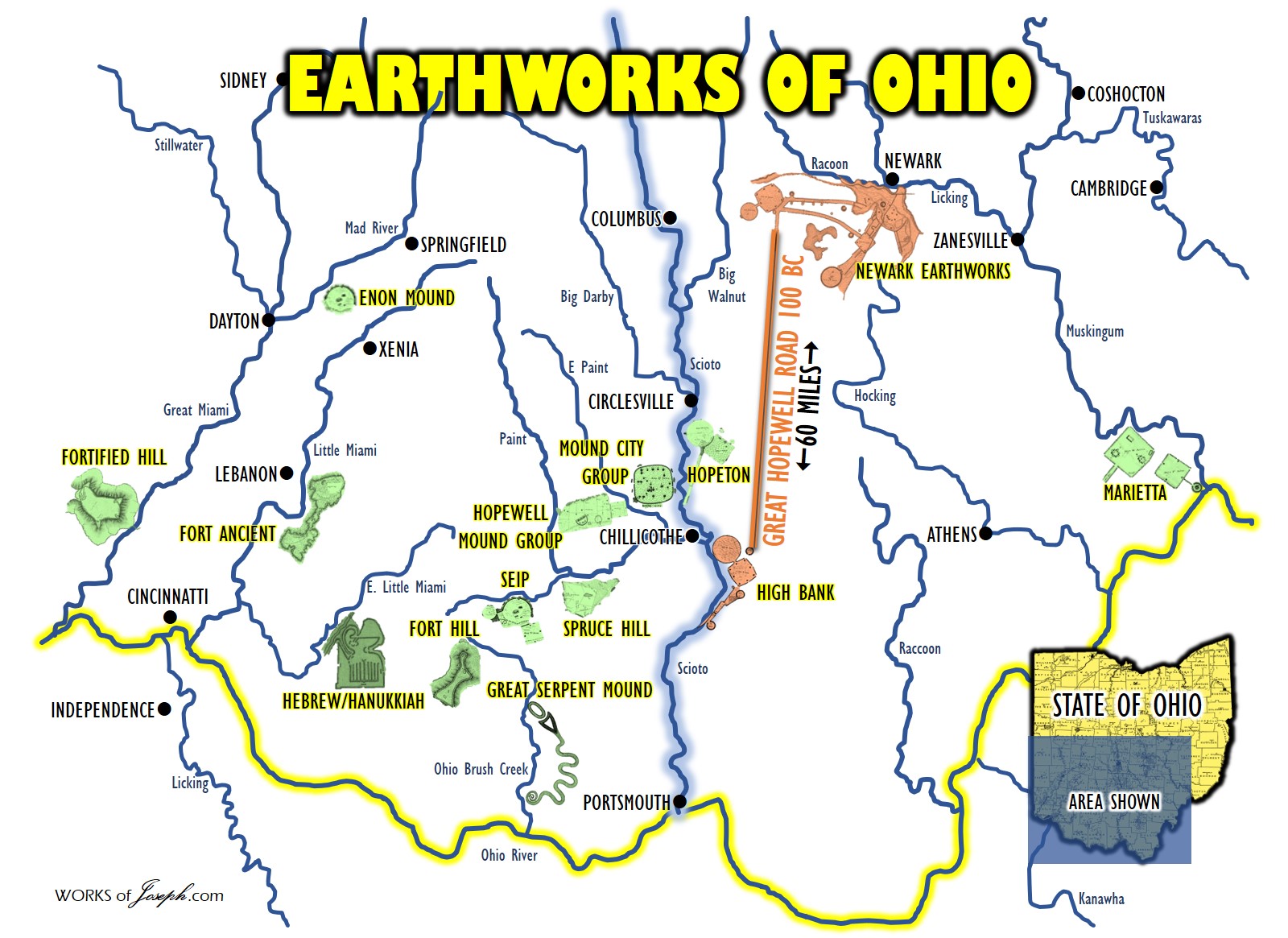
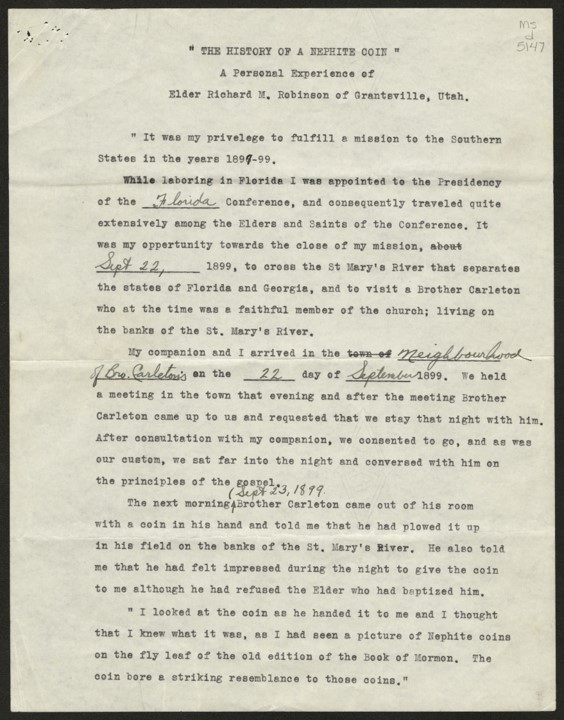
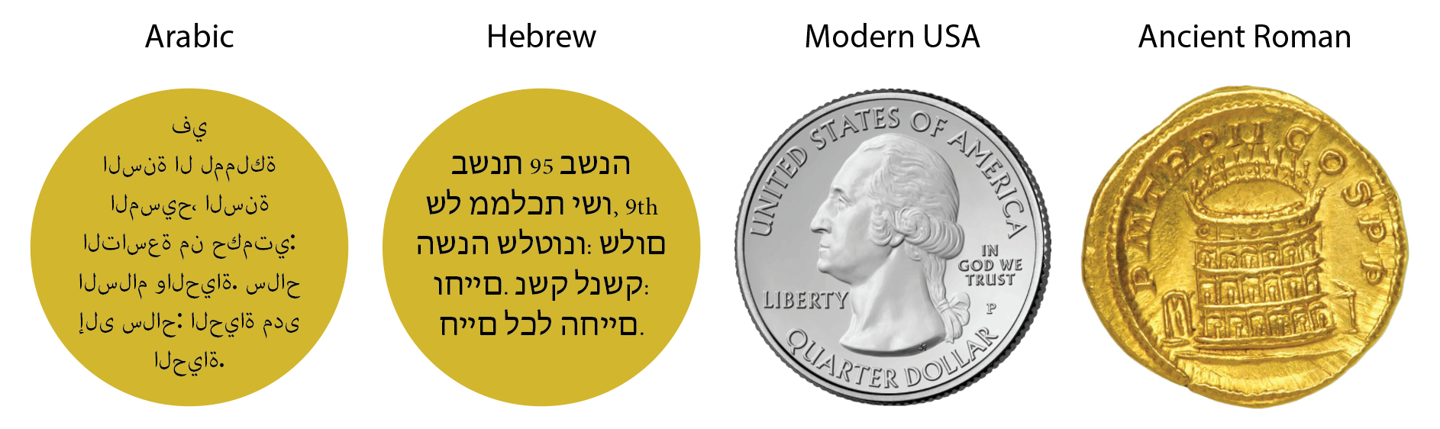
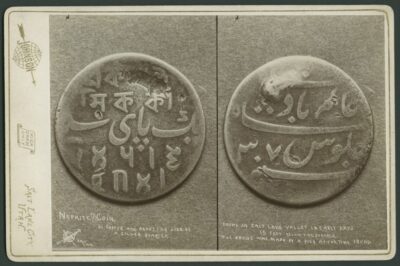
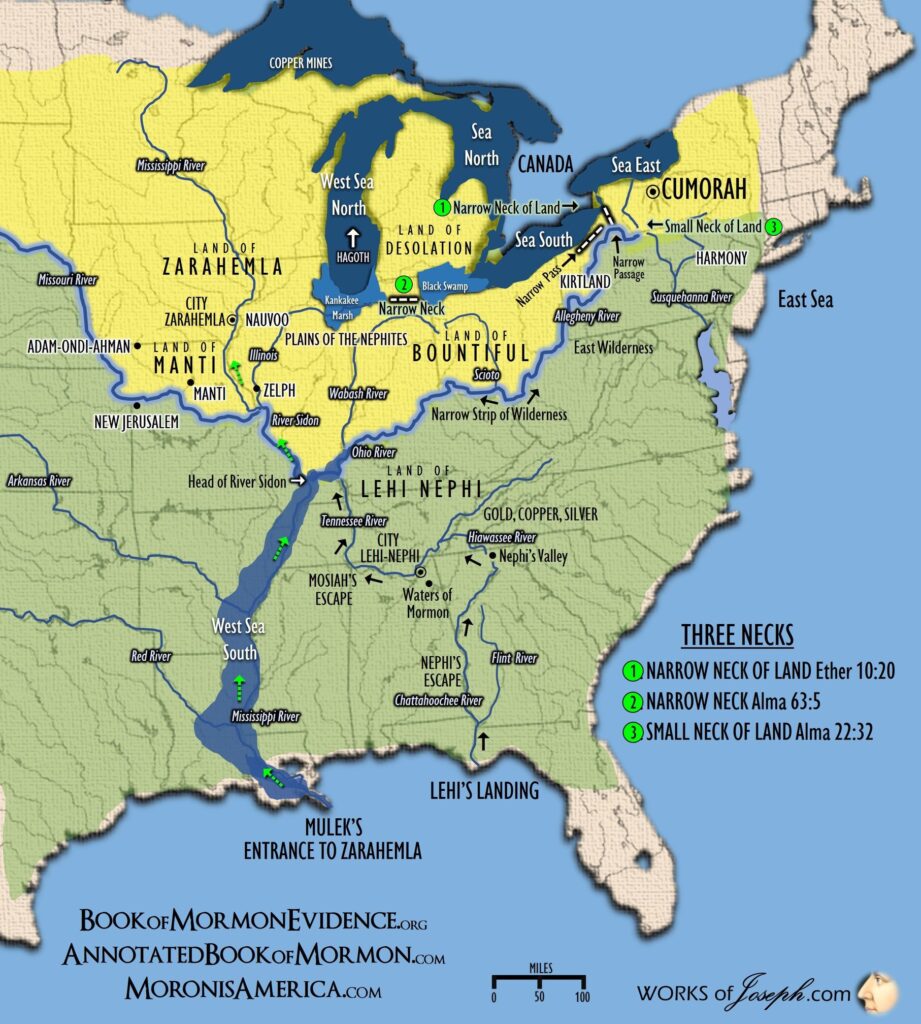
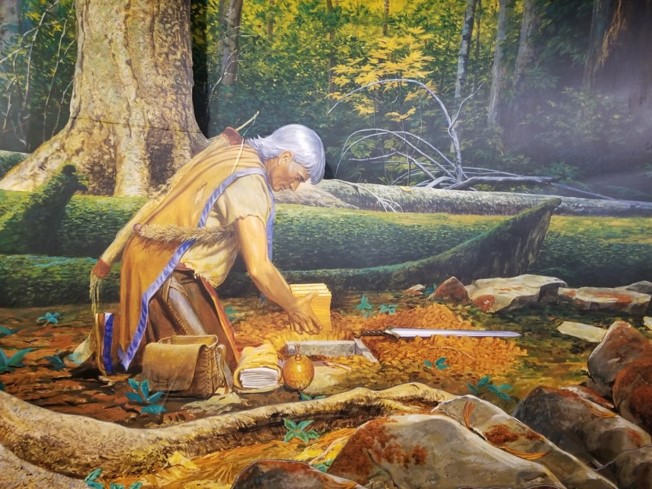
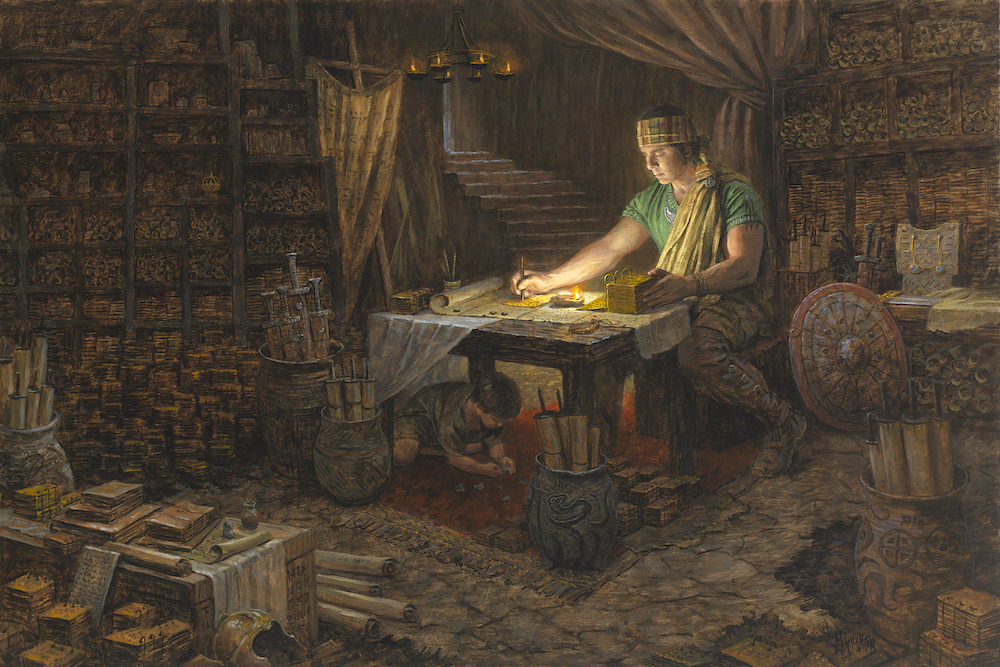
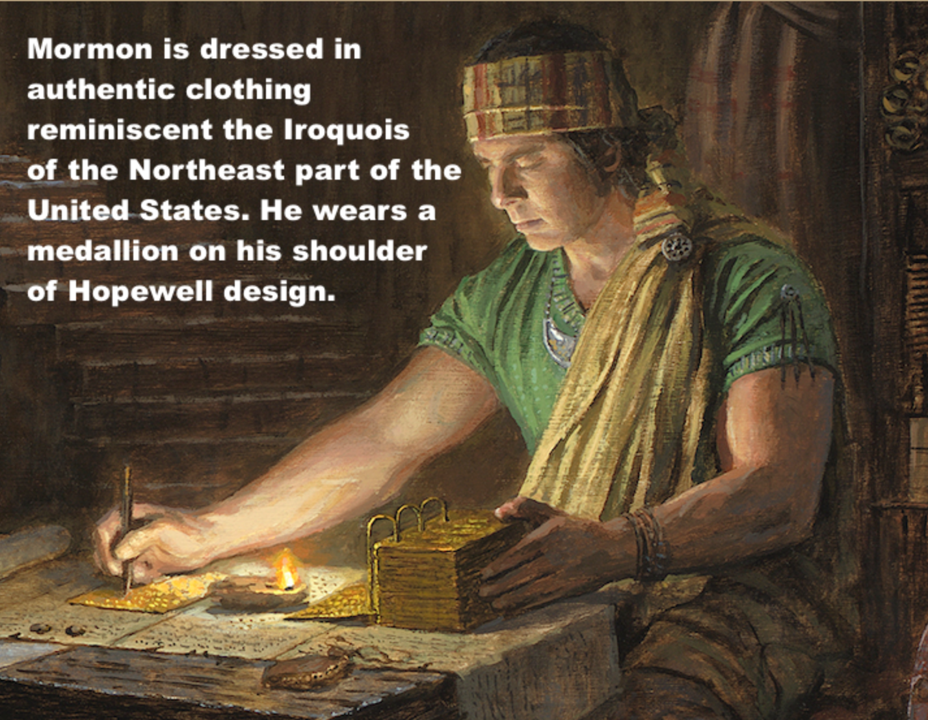
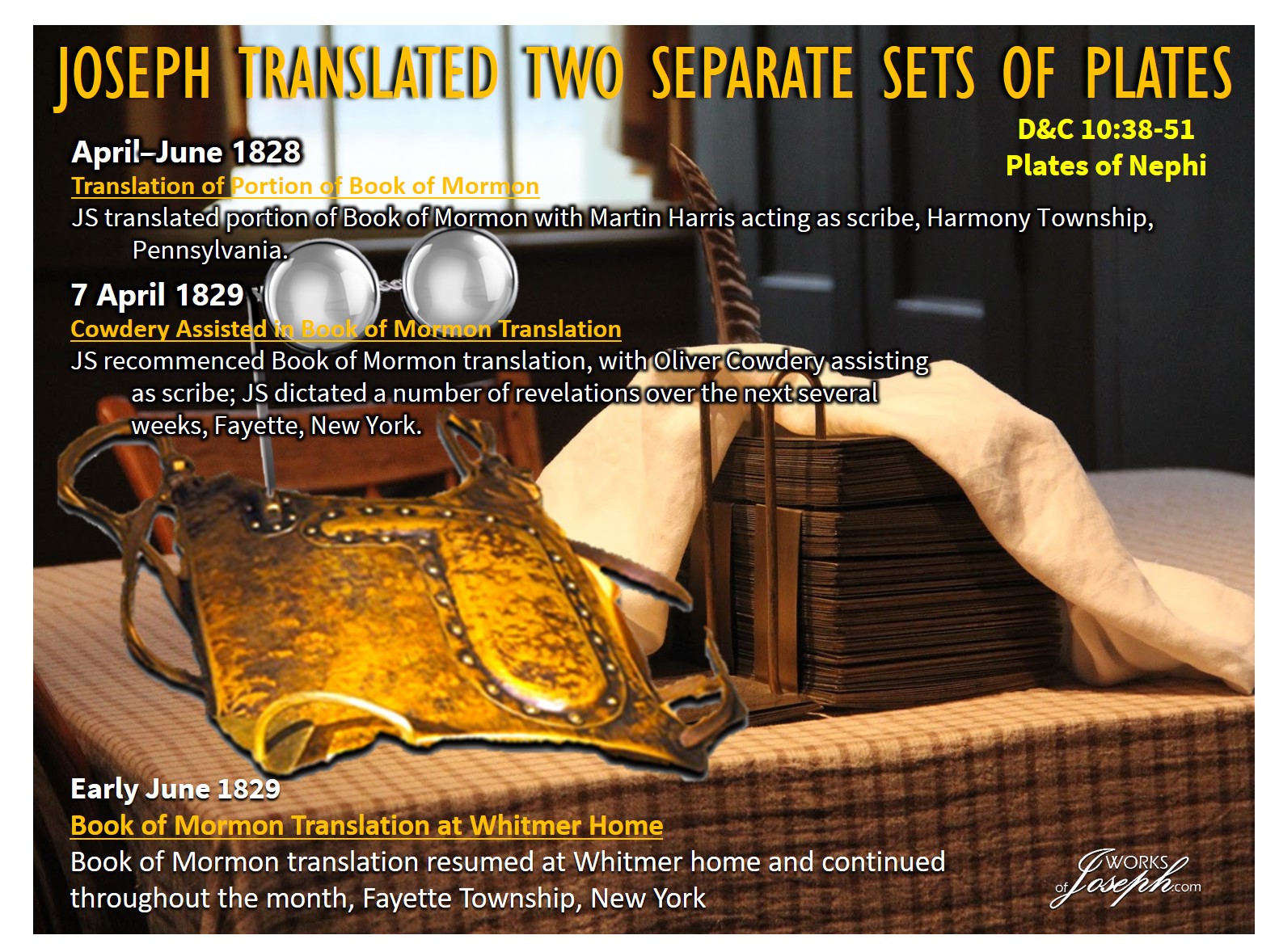
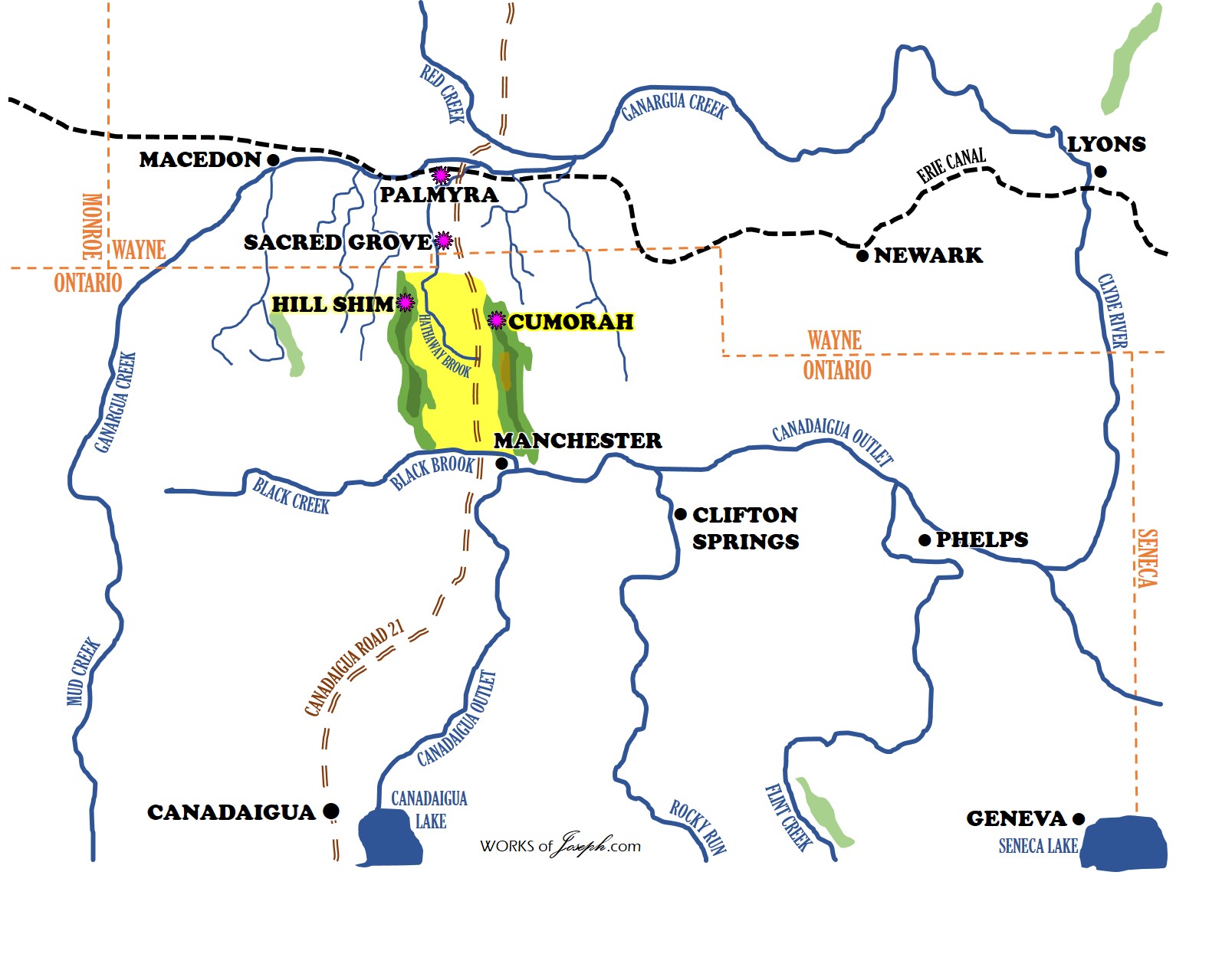
In my opinion the following two articles are possible verification of my thesis that the Jaredites landed near Seattle Washington. From Seattle the Jaredites who did have the Priesthood among them as they had the Adamic language, consisted of the mixed lineages of Ham, Shem and Japeth from the Tower of Babel, likely migrated west, north and south accordingly.
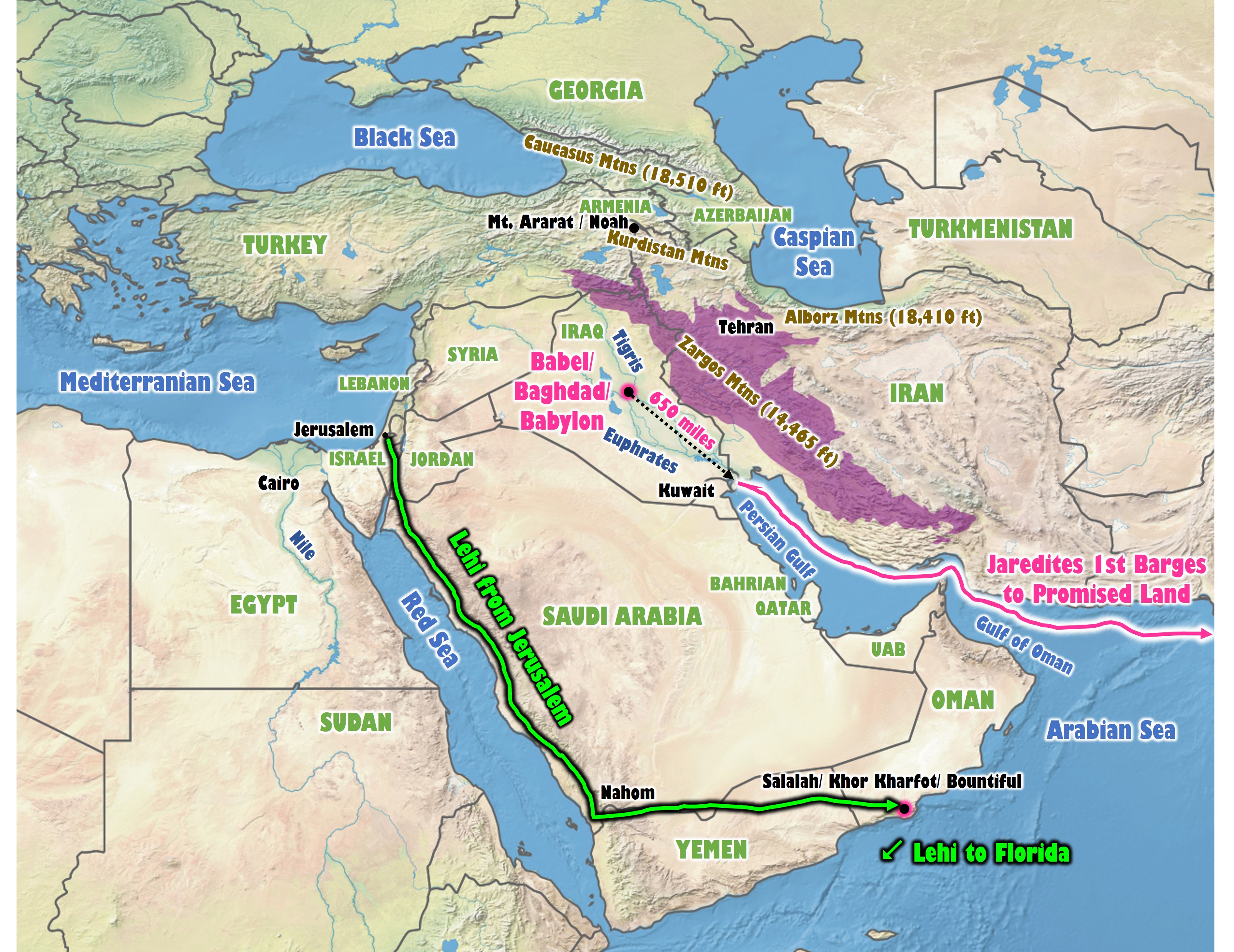
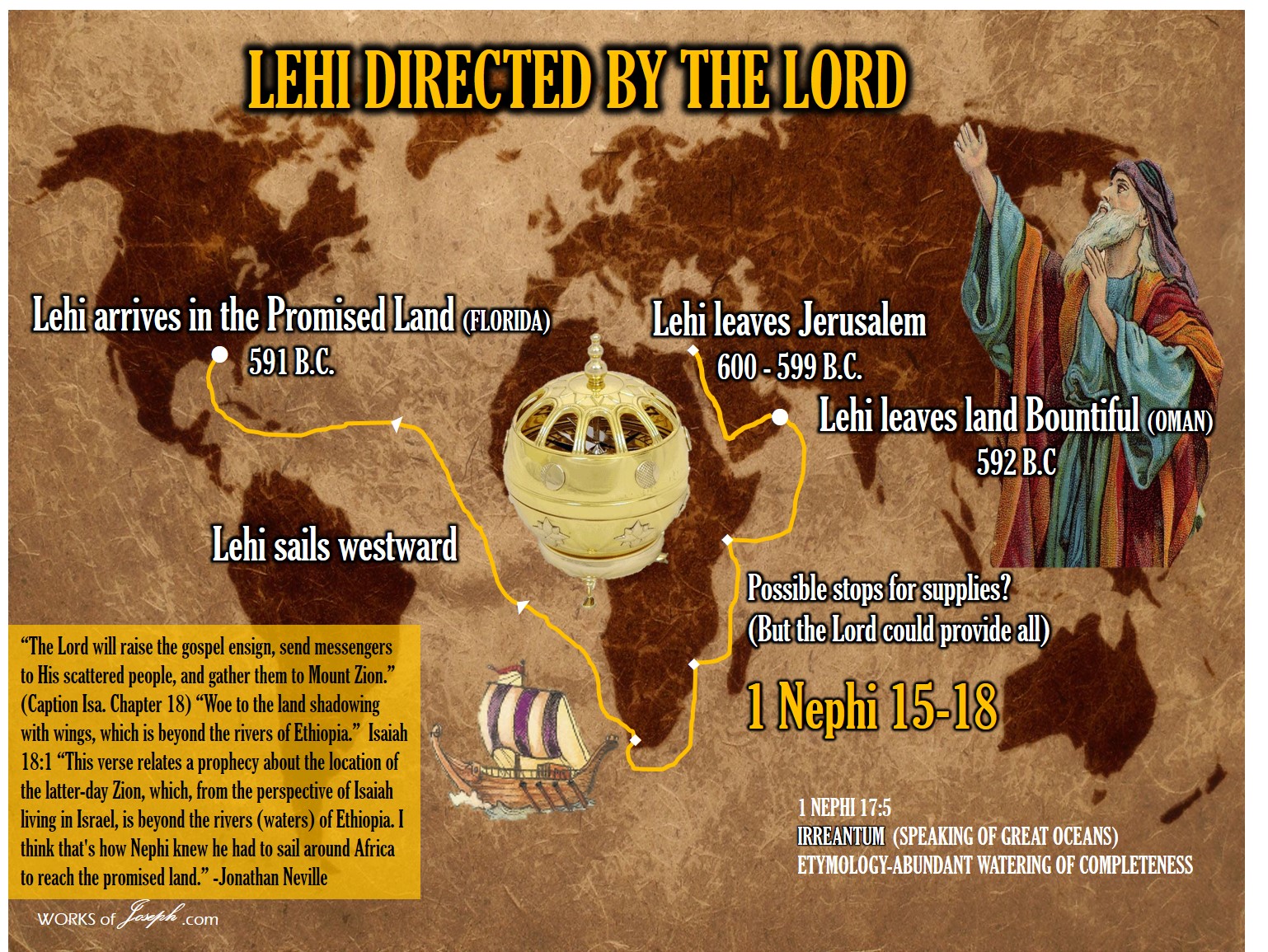
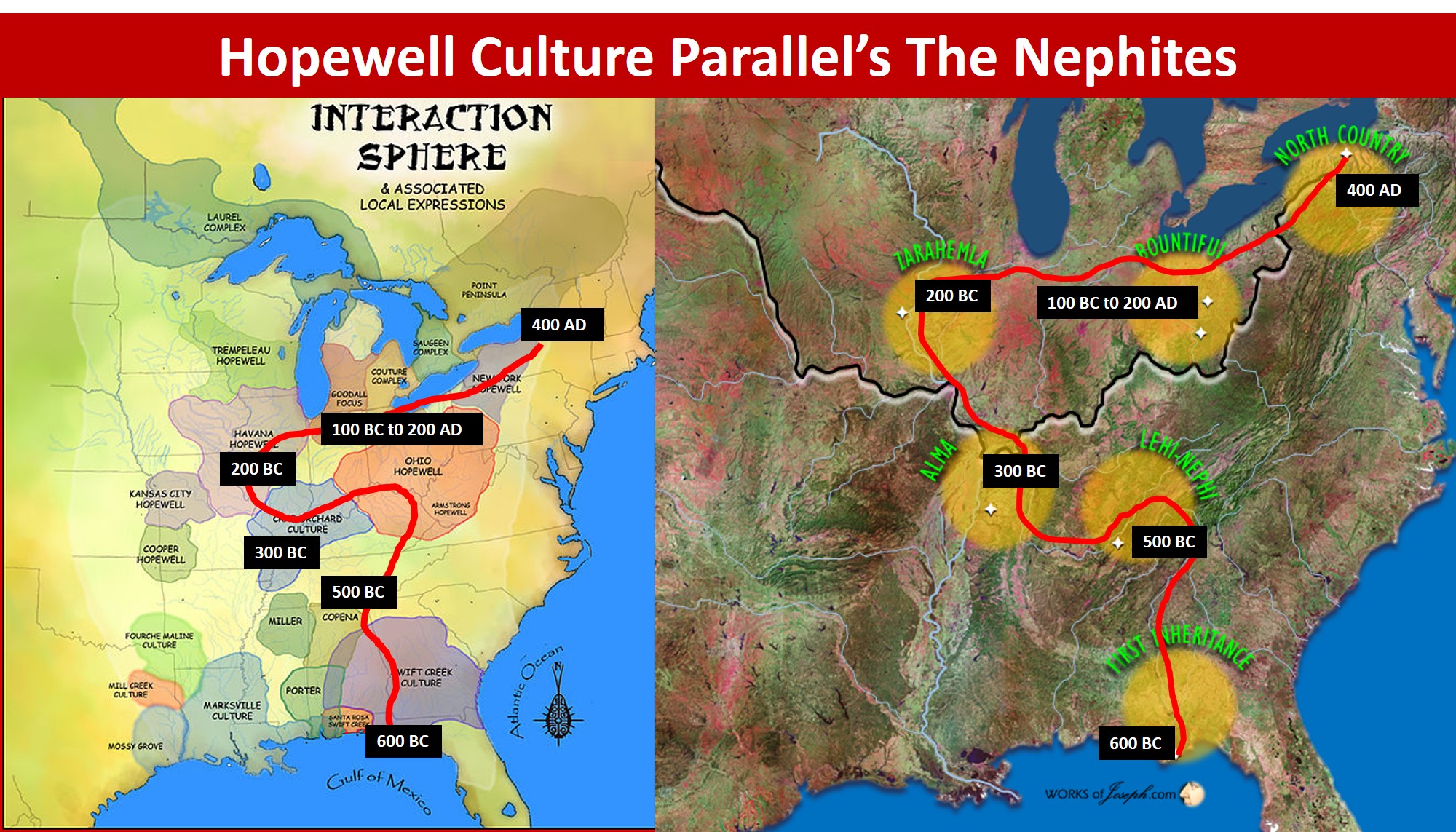
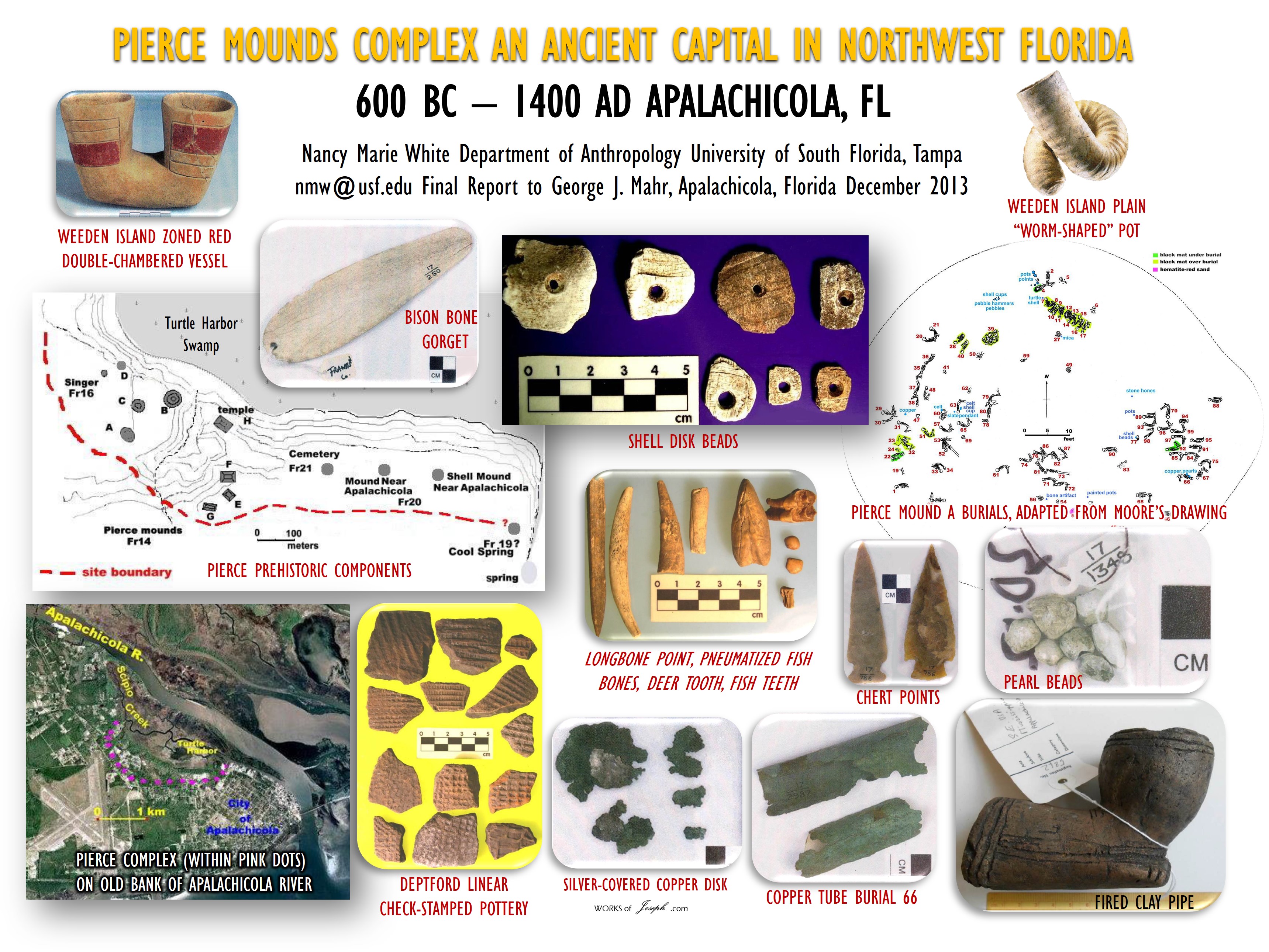
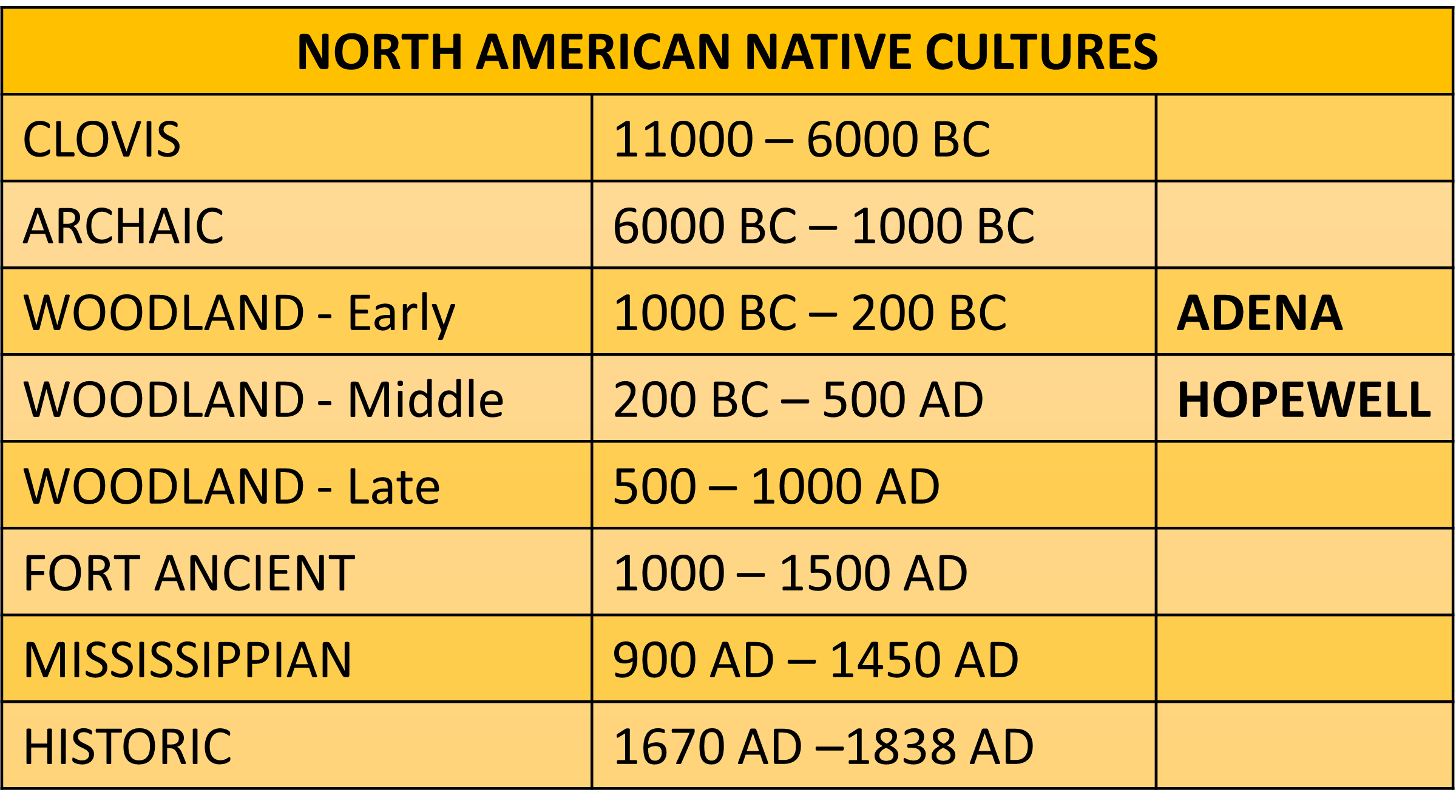
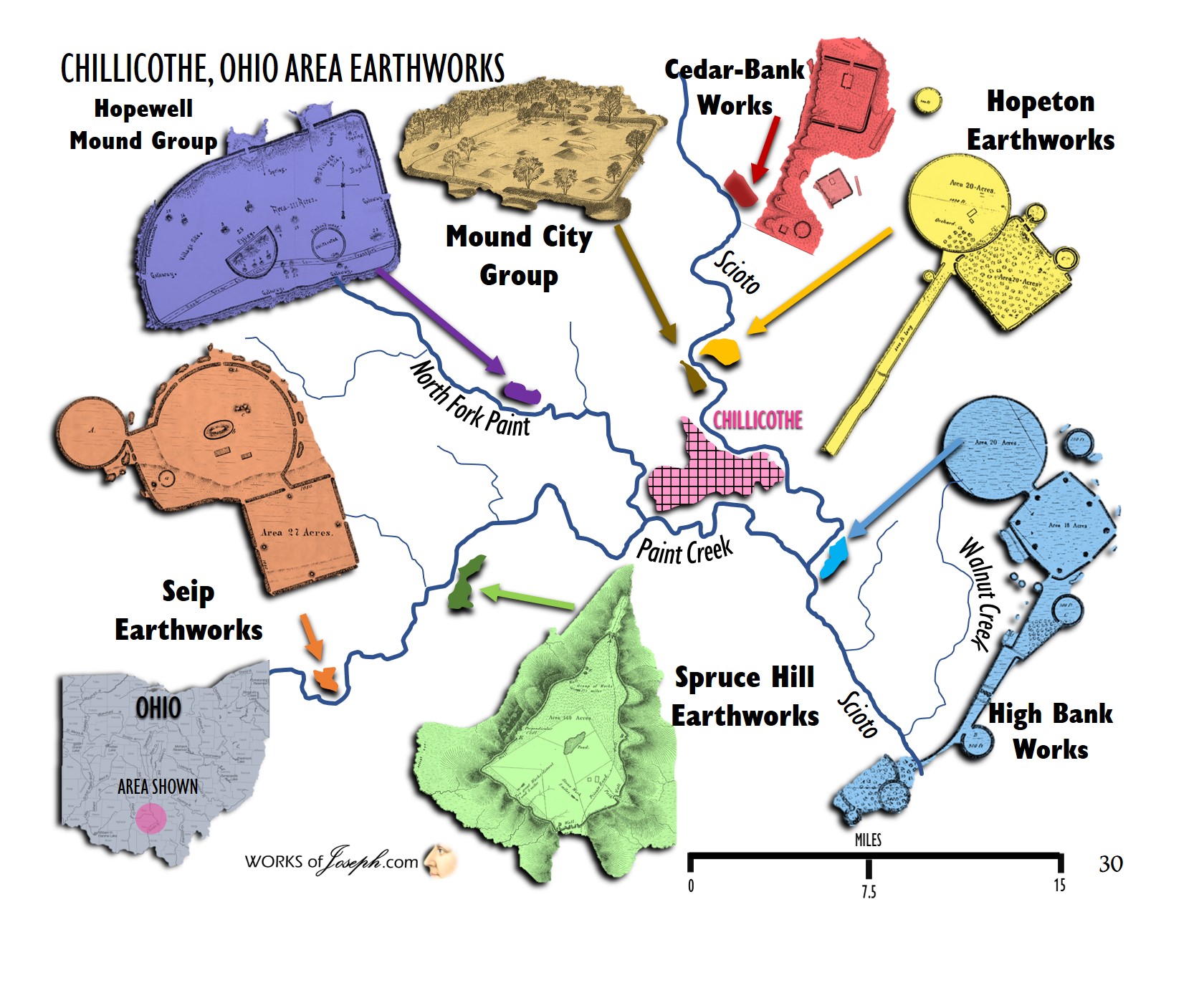
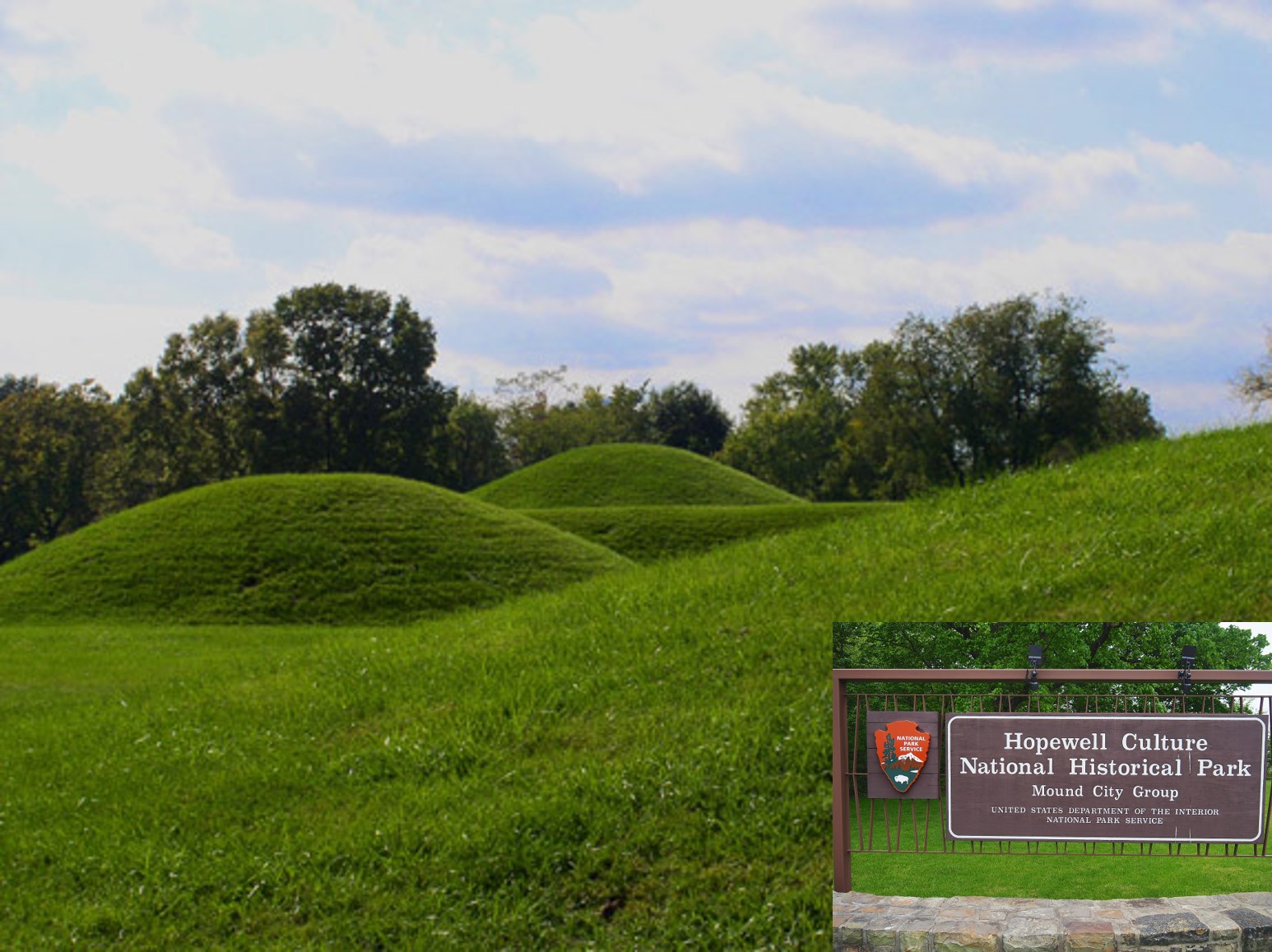
I also believe the Nephites with Lehi landed near Florida where the historical Hopewell Culture began in 600 bc. The Hopewell culture also ended abruptly in NY at about 400 ad. Sound familiar? I believe the Nephites are the Hopewell and the Jaredites are the Adena or Archaic people.
Shem (Priesthood Lineage) migrated principally west on the Columbia, Missouri and Ohio rivers to be a logical descendents of the Jaredites whose lives ended at Ramah or Cumorah in NY.
Japeth (Asian Lineage) likely migrated north from Seatle into northern Canada and Alaska and then into more central Canada:
Ham (Egyption and African Lineage) likely mirgrated south of Seattle and they were the leaneage of the Olmecs (1500 BC), the Atecs and Incas and Mayans.
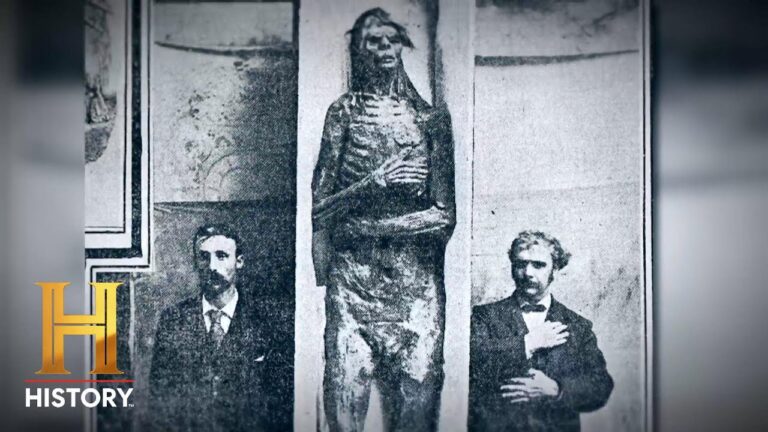
Several Native American tribes have passed down legends of a race of white giants who were wiped out. We’ll take a look at a few such legends, including those among the Choctaw and the Comanches of the United States down to the Manta of Peru.
Choctaw
Horatio Bardwell Cushman wrote in his 1899 book “History of the Choctaw, Chickasaw, and Natchez Indians”: “The tradition of the Choctaws . . . told of a race of giants that once inhabited the now State of Tennessee, and with whom their ancestors fought when they arrived in Mississippi in their migration from the west. … Their tradition states the Nahullo (race of giants) was of wonderful stature.”
A Choctaw stick-ball player, depicted by George Catlin in 1834. (Public Domain)
Cushman said “Nahullo” came to be used to describe all white people, but it originally referred specifically to a giant white race with whom the Choctaw came into contact when they first crossed the Mississippi River. The Nahullo were said to be cannibals whom the Choctaw killed whenever the opportunity arose.
Comanches
Chief Rolling Thunder of the Comanches, a tribe from the Great Plains, gave the following account of an ancient race of white giants in 1857: “Innumerable moons ago, a race of white men, 10 feet high, and far more rich and powerful than any white people now living, here inhabited a large range of country, extending from the rising to the setting sun. Their fortifications crowned the summits of the mountains, protecting their populous cities situated in the intervening valleys.
The faces of the Choctaw and Chickasaw men of sixty years ago were as smooth as a woman’s, in fact they had no beard. Sometimes there might be seen a few tine hairs (if hairs they might be called) here and there upon the face, but they were few and far between, and extracted with a pair of small tweezers whenever discovered. Oft have I seen a Choctaw warrior standing before a mirror seeking with untiring perseverance and unwearied eyes, as he turned his face at different angles to the glass, if by chance a hair could be found lurking there, which, if discovered, was instantly removed as an unwelcome intruder. Even today, a full blood Choctaw or Chickasaw with a heavy beard is never seen. I have seen a few, here and there, with a little patch of beard upon their chins, but it was thin and short, and with good reasons to suspect that white blood flowed in their veins.
It is a truth but little known among the whites, that the North American Indians of untarnished blood have no hair upon any part of the body except the head. My knowledge of this peculiarity was confined, however, to the Choctaws and Chickasaws alone. But in conversation with an aged Choctaw friend upon this subject, and inquiring” if this peculiarity extended to all Indians, he replied; “To all, I believe. I have been among the Comanche’s, Kiowa’s and other western Indians, and have often seen them bathing, men and women, promiscuously together, in the rivers of their country, and found it was the same with them, their heads alone were adorned with hair.”
In conversation soon after with a Creek friend upon the subject in regard to the full-blood Creeks, he said, “They have no hair whatever upon the body, except that of the head, and the same is the case with all full-bloods that I have seen of other tribes.” It is also the testimony of all the early explorers of this continent.
The Council of Fire
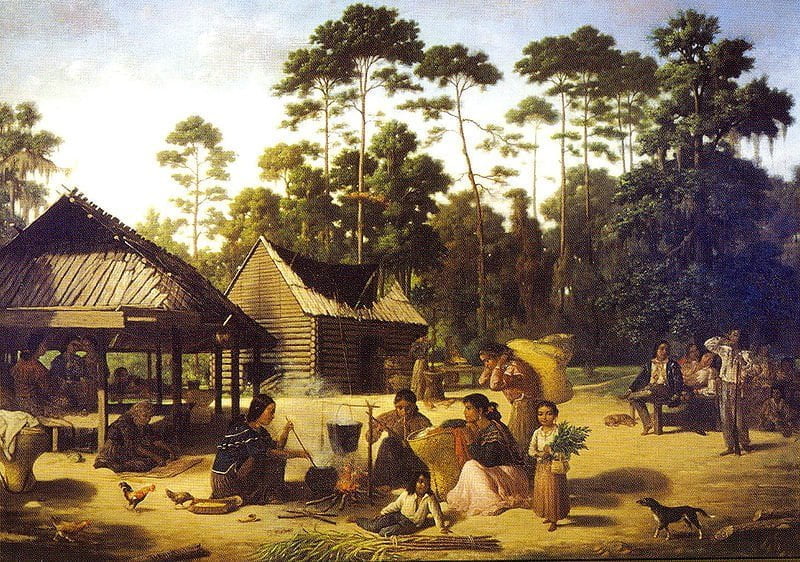
Choctaw Village near the Chefuncte, The women appear to be making dye to color the strips of cane beside them, by François Bernard, 1869
In their ancient councils and great national assemblies, the Choctaws always observed the utmost order arid decorum, which, however, is universally characteristic of the Indians everywhere. In those grave and imposing deliberations of years ago convened at night, all sat on the ground in a circle around a blazing fire called “The Council Fire.” The aged, who from decrepitude had long retired from the scenes of active life, the war-path and the chase, formed the inner circle; the middle aged warriors, the next and the young warriors, the outer circle. The women and children were always excluded from all their national assemblies. The old men, beginning with the oldest patriarch, would then in regular succession state to the attentive audience all that had been told them by their fathers, and what they themselves had learned in the experience of an eventful life the past history of their nation; their vicissitudes and changes; what difficulties they had encountered, and how overcome; their various successes in war and their defeats; the character and kind of enemies whom they had defeated and by whom they had been defeated, the mighty deeds of their renowned chiefs and famous warriors in days past, together with their own achievements both in war and the chase; their nation’s days of prosperity and adversity; in short; all of their traditions and legends handed down to them through: the successive generations of ages past; and when those old seers and patriarchs, oracles of the past, had in their turn gone to dwell with their fathers in the Spirit Land, and their voices were no longer heard in wise counsel, the next oldest occupied the chairs of state, and in turn rehearsed to their young braves the traditions of the past, as related to them by the former sages of their tribe, together with their own knowledge; and thus were handed down through a long line of successive generations, and with much accuracy and truth, the events of their past history; and when we consider the extent to which all Indians cultivated that one faculty, memory, their connections in the history of the past is not so astonishing. I will here relate a little incident (frequently published) in the life of the famous Indian chief, Red Jacket, as an evidence of strength and correctness of the Indian s memory. It is said of Red Jacket, that he never forgot any thing he once learned. On a certain occasion, a dispute arose in a council with his tribe and the whites, concerning the stipulations made and agreed upon in a certain treaty. “You have forgotten,” said the agent, “we have it written on paper.” “The paper then tells a lie,” replied Red Jacket. “I have it written down here,” he added, placing his hand with great dignity on his brow. “This is the book the Great Spirit has given the Indian; it does not lie.” A reference was immediately made to the treaty in question, when, to the astonishment of all present, the document confirmed every word the unlettered warrior and statesman had uttered. There can be little doubt but that a large majority of their traditions are based upon truth; though passing as they have through so long a period of time, it is reasonable to suppose that many errors have crept in.
But one has given his opinion, on page 92 of his “History of the Indian Tribes of North America,” in the following positive and presumptuous assertion, though his apparent ignorance of all the characteristics (well known to the thousands of the White Race who have lived among them and studied them a long life-time) of the North American Indians so plainly manifested throughout his entire work, entitles his assumed learned opinion regarding the truth or untruth of the traditions of the North American Indians, or anything else concerning that people, to but little, if any, credit. He boldly asserts, with a seemingly great indifference as regards its truth, that “Nothing can be more uncertain, and more unworthy, we will not say of credit, but of consideration, than their (the Indians) earlier traditions; and probably there is not a single fact in all their history, supported by satisfactory evidence, which occurred half a century previous to the establishment of the Europeans.” Though all admit that the voices of tradition coming from all Nations even from our own ancestors, the Britons are enshrouded, to a greater or less extent, in dense and dubious fogs, and become more dim and distant as we go further back into the past. Yet that does not necessarily bring even the traditions of the North American Indians under his edict, “Nothing can be more uncertain, and more unworthy, we will not say of credit, but of consideration, than their traditions, “as here comes to our aid modern Oriental Discovery, with records engraved on rocks and stamped on bricks records contemporary with the events, and in all cases independent of the modern authority since the records have been hidden from the eyes of both the believer and disbeliever. Inscriptions are disclosed, in languages now dead, in characters long-forgotten, and to which every key had been apparently lost. Ancient cities and countries, Thebes, Ninevah, Pompeii, Balbee, Babylon, Jerusalem and Egypt rise to testify and confirm the credit of many of the traditions, fables and legends of the Old World. And so also, from the buried past of the New World, hundreds of witnesses have already been summoned, and are still being summoned, that confirm the credit of the traditions and legends of the North American Indians, and to which they pointed back through the long vista of ages past, ere the Indians were known to the White Race, and give the merited contradiction to the assertion that their traditions “merit not even consideration.”
Mammoths & Nahullo
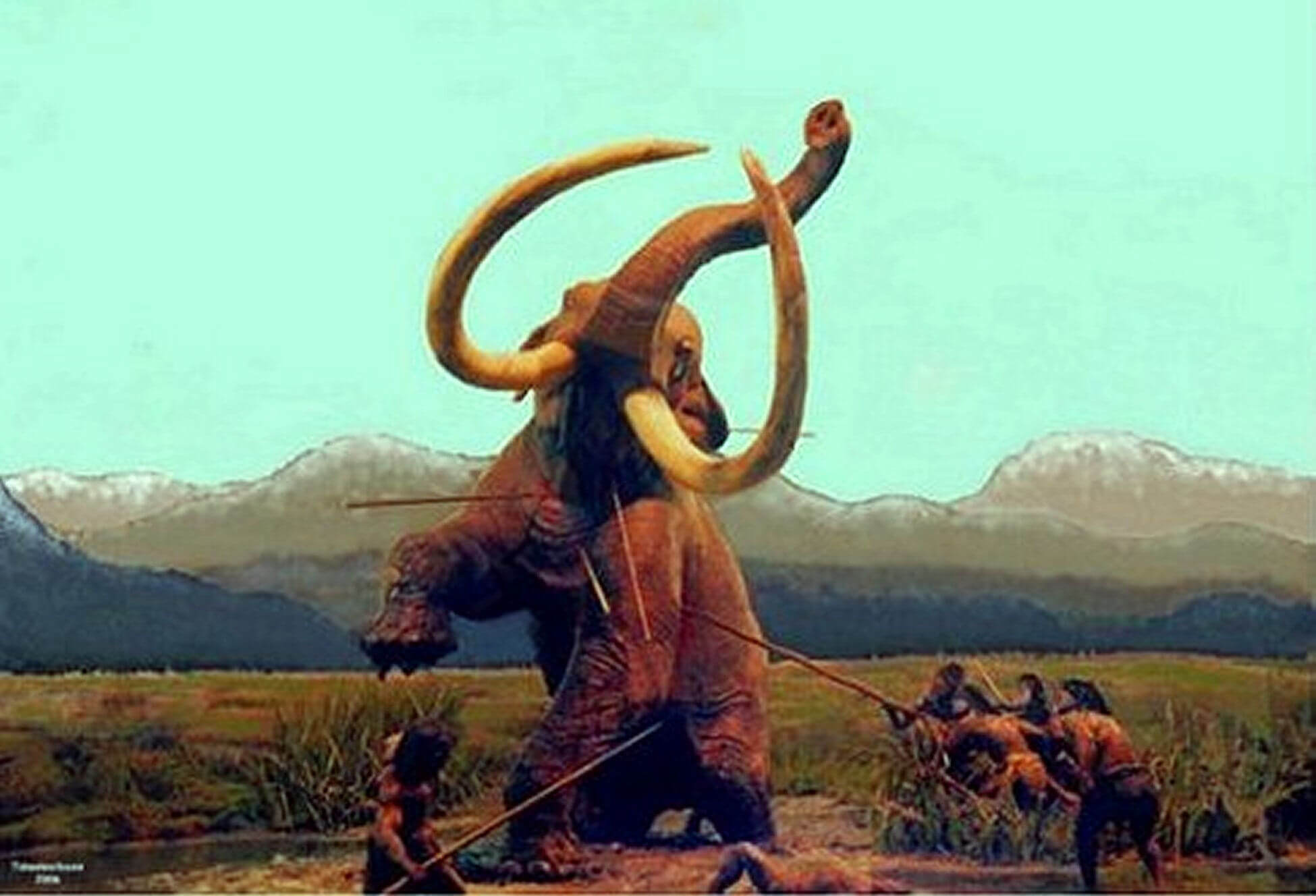
As the climate warmed during the last part of the Ice Age, large mammal such as the Mastodon migrated into the Shenandoah Valley. Source: VR image by Richard Thornton
An ancient Choctaw tradition attributes the origin of the prairies along the western banks of the Tombigbee River, to some huge animals (mammoths) that existed there at the advent of their ancestors from the west to Mississippi. Their tradition also states that the Nahullo, (Supernatural) a race of giant people, also inhabited the same country, with whom their forefathers oft came in hostile contact. These mighty animals broke off the low limbs of the trees in eating the leaves, and also gnawed the bark off the trees, which, in the course of time, caused them to wither and die; that they roamed in different bands, which engaged in desperate battles whenever and wherever they met, and thus caused them to rapidly decrease in numbers; and that, in the course of years all had perished but two large males, who, separate and alone, wandered about for several years each confining himself to the solitude of the forest many miles from the other. Finally, in their wanderings they met, and at once engaged in terrible conflict in which one was killed. The survivor, now monarch of the forests, strolled about for a few years wrapped in the solitude of his own reflections and independence then died, and with him the race became extinct.
That the Choctaw traditions of both the mammoth and great men, was based on truth as to their former existence in the southern and western parts of this continent is satisfactorily established by the many mammoth skeletons of both men and beasts and fragments of huge bones that have been, and are continually being found in different parts of the country, and all of whom, according to their tradition were contemporary with the ancient fathers of the present Indian race. It is well known that the ancient existence of those giants and mammoth was wholly unknown to the White Race, until the excavation of their bones proved their former existence; yet were known to the Indians to have existed and so declared; but which was regarded by the whites as only an Indian fable, unworthy of belief or even a second thought. A huge skeleton of one of those ancient animals was found in March 1877, four miles east of the town of Greenville, Hunt County, Texas. I secured a fragment of the skeleton, evidently a part of the femoral bone, which measured twenty-one inches in circumference. A tooth measured three inches in width, five inches in length along the surface of the jawbone and five inches in depth into the jaw, and weighed the seemingly incredible weight of eleven pounds. The teeth proved the monster herbaceous, the animal of which was in a perfect state of preservation. The greater part of the frame crumbled to dust, as soon as exposed to the action of the air.
Here then it had found a burial place, among others of the prehistoric population of the various animals which held possession of this continent before, perhaps, the advent of man, rising up before us like some old granite dome, weather-beaten and darkened by the lapse of ages past. But death came to it, as to its predecessors, whose cemeteries time has opened here and there, and revealed to the scrutiny of the curious, the testimony of vanished age. Many citizens of the immediate neighborhood visited the place of disinterment, and viewed the solitary grave and looked with wondering interest upon this stranger of hoary antiquity arising from his forest tomb where he has so long slept in silence, unknown and unsung; whose history, as that of his mighty race, is wrapped in the eternal silence of the unknown past. Yet, to one who seeks to muse over the mysteries of the unwritten long ago, this fossil tells a story of the mystic days of yore and of the multiplied thousands of years since old Mother Earth commenced to bear and then destroy her children.
Ah, could the records of the ages to which they point be restored, how many doubts and problems would be solved? But they only tantalize us by their near approach and undiminished inscrutableness, while imagination shrinks from the contemplation of the intervening years between. Yet, from those relics of the ages past, an unlimited field for the imagination is open to view, which many thinkers have attempted to explore only to find themselves utterly lost.
“Hupimmi hattak tikba a mintih hushi aiokatula” (our, forefathers came from the west), declare the ancient Choctaws through their tradition, and they saw the mighty beasts of the forests, whose tread shook the earth; but our forefathers ancestry came from the northwest beyond the big water.”
“Tis but the tradition of the ignorant Indian a foolish fable,” responded he of the pale-face, of boasted historical attainments when lo! Accident unearths the long hidden monster of traditional record, and the truth of the rejected declaration of the despised Indian is established, and with equal truth establishing the fact that, mid all our boasted ancient pedigree, theirs is more ancient, and perhaps more honorable, reaching back through the vista of pre-historic times to the” dim and hazy regions of ages past and unknown.
Also of the tradition of the Choctaws which told of a race of giants that once inhabited the now State of Tennessee, and with whom their ancestors fought when they arrived in Mississippi in their migration from the west, doubtless Old Mexico. Their tradition states the Nahullo (race of giants) was of wonderful stature; but, as their tradition of the mastodon, so this was also considered to be but a foolish fable, the creature of a wild imagination, when lo! Their exhumed bones again prove the truth of the Choctaws tradition. In the fall of 1880, Mr. William Bevtrly, an old gentle man 84 years of age living near Piano, Collin County, Texas, and who was born in west Tennessee and there live d to man hood, stated to me that near his father’s house on a small creek were twenty-one mounds in consecutive order forming a crescent, each distant from the other about fifty feet and each with a base of seventy-five or eighty feet in diameter, and rising to an average height of forty feet; that he, when a boy twelve years of age, was present with his father, when an excavation was made in one of the mound in which human bones of enormous size were found, the femoral bones being five inches longer than the ordinary length, and the jaw bones were so large as to slip over the face of a man with ease. This statement was confirmed by Rev. Mr. Rudolph of McKinney, Texas, and several others, all men of undoubted veracity, which places the truth of the former existence of the mounds, their excavations and results, as well as the Choctaw tradition, beyond all doubt and even controversy.
In regard to the race of giants that once occupied the now State of Tennessee and mentioned in the tradition of the ancient Choctaws, Mr. H. S. Halbert, an esteemed friend, says in a letter to me, January 22, 1878, “I will give you some facts which modern researches have thrown upon the ancient occupancy of this continent, on the Atlantic seaboard of the United States stretching from the coast of North Carolina up to and through New England. I refer particularly to the seaboard .
“I am satisfied that the Indian race were in occupancy of this seaboard region only about 200 years before the discovery of America in 1492, I give the reasons:
About the year 1000, A. D. (I quote the date from memory, not having the authorities before me) the Northmen discovered America and made some settlements on the New England coast. All this, as you know, is historical. The Northmen there came in contact with a people whom they called Skrellings. Now these Skrellings, from the description given by them were not Indians, but Esquimaux. They were the same kind of people the Northmen had previously met in Greenland and whom they called also Skrellings, or rather Skraellinger. This is plain proof that 500 years before Columbus, the Esquimaux race inhabited the seaboard of New England and not the Indians.
“Again, the Tuscarora Indians, now living in Canada, but formerly from North Carolina, state in their traditions that they came from the west and settled on the North Carolina seaboard about the year A. D. 1300. Their traditions also state that they came in contact with a people of short stature, ignorant of maize and eaters of raw flesh.
“Now to whom does this description apply but to the Esquimaux? Thirdly, relics have been discovered implements of various kinds, along the seaboard exactly similar to those used by the Esquimaux of the present day. All this is plain proof to my mind, that the Esquimaux once inhabited the Atlantic seaboard as far south as North Carolina, and that they were pushed northward by the influx of the incoming Indian tribes; and that- the Indian had not been settled but for comparatively a short period in this seaboard at the time of Columbus discovery. The Mound Builders seemed to have never occupied this seaboard stretching from North Carolina upward. Now as to the Delaware tradition.
“The Delawares, or Leni Lenape as they style themselves in their native tongue, have a tradition that they came from the west. When they came to the Great River, perhaps, somewhere in the latitude of St. Louis, they found a people of tall stature, and living in towns. This people the Delawares called Allegewi. They asked the Allegewi for permission to cross the river, which was granted. The Allegewi, however, seeing the Indians constantly coming from the west in such large numbers, and fearing they would ultimately dispossess them of their country, commenced war upon them. After years of fighting, the Allegewi were defeated and driven out of their country retreating southward, and the Delawares and other tribes took possession of their country. Now these Allegewi are without doubt the same stock of people spoken of in Choctaw tradition as the Nahoolo.”
The word Nahoolo is a corruption of the Choctaw word Nahullo and is now applied to the entire White Race, but anciently it referred to a giant race with which they came in contact when they first crossed the Mississippi river. These giants, says their tradition, as related to the missionaries occupied the northern part of the now States of Mississippi and Alabama and the western part of Tennessee. The true signification of the word Nahullo is a superhuman or super natural being, and the true words for white man are Hattak-tohbi. The Nahullo were of white complexion, according to Choctaw tradition, and were still an existing people at the time of the advent of the Choctaws to Mississippi; that they were a hunting people and also cannibals, who killed and ate the Indians whenever they could capture them, consequently the Nahullo were held in great dread by the Indians and were killed by them whenever an opportunity was presented; by what means they finally became extinct, tradition is silent.
“Chemical analysis of the bones of this giant race in Tennessee and elsewhere,” says Mr. H. S. Halbert, in a letter of January 3rd, 1878, “indicate the ravages of one of the most terrible diseases to which flesh is heir. Bones exhumed from these ancient cemeteries indicate with painful certainty that syphilis was, at least, one cause of the extinct ion of this ancient people. 1 It was long supposed that syphilis was imported into this continent by the European race. That may have been the case, in the historical period, but I have no doubt it prevailed with awful fatality among that ancient people, who -dominated a large portion of this continent before the advent of the Indian race.
“Mr. Grant Lincicum, (Dr. Gideon Lincicum, with whom I was personally acquainted, was an educated white man, who came to the Choctaw Nation after the advent of the missionaries, and settled at Columbus, then a small place, and afterwards wrote a MS. of the Choctaw habits, customs, traditions and legends, which has been lost)” stated that they (the Mound Builders) were, according to the Choctaw tradition, a hunting-people. He certainly must be in error on this point. (Not so; Lincicum used the pronoun “they” with reference to the Nahullo, and not to the Mound Builders, of whom their traditions never spoke). Now I believe that the Mound Builders were of much fairer complexion than the Indian, perhaps almost, if not quite, as fair as we, and were an agricultural people also. Disease and war no doubt were the main causes of their extinction. Detached off shoots of them may have amalgamated with the Indian tribes, and thus lost their physical peculiarities, but at the same time kept up with their tribal organization. The Mandan Indians (now extinct) are supposed to have been a degenerate and amalgamated offshoot of the Mound Builders. In their manners and customs they were strikingly different from the other Indians. I have no doubt but the researches of antiquarians in some manner, to us yet unknown, will throw much light upon the early occupants of this continent.”
Be that as it may, I still believe in the Choctaw traditions that the Nahulio who inhabited North Mississippi and Alabama, and West Tennessee, were “a hunting people,” as they have left no trace whatever of having been agriculturists, ad the unbroken forests of majestic trees of ages growth, that covered the land everywhere at the advent the of the Europeans, evidently prove.
Still I admit, with friend Halbert, that, possibly the Allegewi of Delaware tradition may be the Nahulio of Choctaw tradition, if they were of white complexion, as the word Nahulio is emphatically applied to the white race and no other. If white, may they not be of the Northmen, who, it is said, established a few colonies upon the Atlantic coast A. D. 1000?” Then, if the North American Indians are not the Mound builders, (which has not yet been satisfactorily proved) may not the Northmen be?
Some have believed that the Nahulio were the Carib Indians, as they were said to be of gigantic stature and also cannibals, and who once inhabited our Gulf coast. They were found by Columbus in the West Indies, and they are still found in the isles of the Caribbean Sea and Venezuela. The early French writers of Louisiana called the Caribs by their Indian name Attakapas, and Attakapas Parish in Louisiana took its name from that tribe. The French translated Attakapas, Man-eater. Attakapas is a corruption of the Choctaw words Hattakapa, (man eatable) which they (the French), no doubt, got from the Choctows, who gave the tribe that name. I am inclined to believe that the Nahulio of the Choctaw tradition were not regular cannibals, but that they sacrificed human victims in their religious ceremonies, which in extreme cases may, perhaps, have required their officiates to eat a portion also of the victim’s flesh. The same also of the Caribs, hence Hattakapa, (man eatable) instead of Hattakupa, eater.
I have heard all of my life about Mary Rollins Lightner. She has a life story that is amazing. She is truly a Saint who’s story must be told over and over.
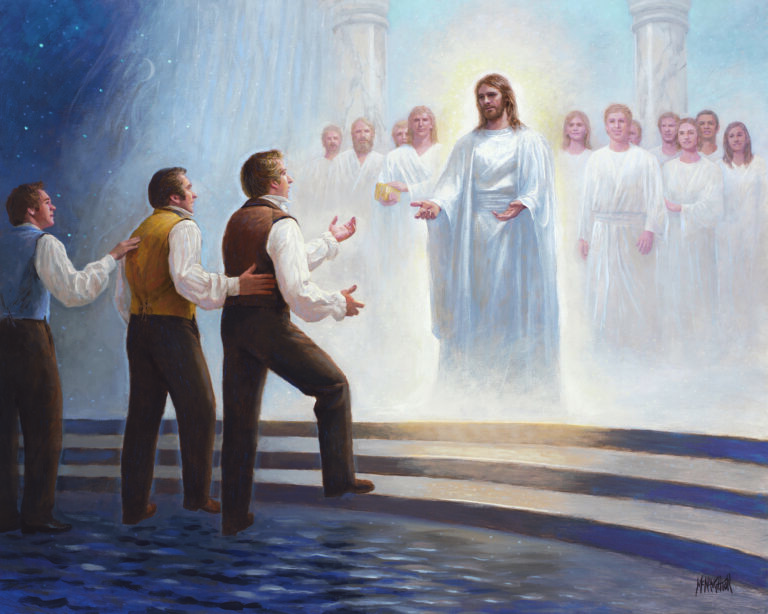
I recently found out Mary is a distant cousin to me and so her story became even more interesting. Because she was sealed to Joseph Smith that also makes Joseph Smith one of my distant relatives as well. I think you need to share Mary’s story with everyone you know and especially with your daughters and granddaughters who would love some additional role models to live up to. The faith of Mary is extraordinary. She saved the Book of Commandments, found a fish with money in its stomach, suffered and succeeded, was sealed to Joseph Smith and Brigham Young and personally saw the Savior Jesus Christ.
Autobiography of Mary E. Lightner (1818-1913) “Mary Elizabeth Rollins Lightner,” The Utah Genealogical and Historical Magazine 17 (July 1926):193-205, 250
I was born in the town of Lima, Livingston County, state of New York, April 9, 1818. My father, John D. Rollins, came from one of the New England States; I think it was Vermont. My mother, Keziah Keturah Van Benthuysen, was born in Albany, state of New York, May 16, 1796. She married my father in 1814 or 1815. Three children were the fruit of this marriage, James Henry, myself and sister Caroline, the youngest. When Caroline was six months old, my father was shipwrecked on Lake Ontario during a terrible storm. Only one person was saved out of all the passengers and crew.
When I was ten years old, we moved to Kirtland, Ohio, and lived in a house belonging to Algernon Sidney Gilbert, mother’s sister’s husband. We remained there two years, when we heard of the plates of the Book of Mormon, being found by Joseph Smith. Soon the news was confirmed by the appearance of Oliver Cowdery, Peter Whitmer, and Ziba Peterson, with the glorious news of the restoration of the Gospel through the Prophet Joseph Smith. They bore a powerful testimony, by the Holy Spirit, of the truth of the great work they were engaged in; and which they were commissioned by the Father to present to all the world.
Brother Morley Has The Book
Quite a number of the residents of Kirtland accepted baptism. Mother and myself also, in the month of October, 1830. A branch of the Church was organized, and Father Morley was ordained an elder to preside over it. He owned a large farm, about a mile from Kirtland, and some three or four families went there to live, and meetings were held there. A good spirit and one of union prevailed among the brethren for some time. After Oliver Cowdery and his brethren left there for Missouri on their mission to the Lamanites, a wrong spirit crept into our midst, and a few were led away by it. About this time, John Whitmer came and brought a Book of Mormon. There was a meeting that evening, and we learned that Brother Morley had the Book in his possession the only one in that part of the country. I went to his house just before the meeting was to commence, and asked to see the book; Brother Morley put it in my hand, as I looked at it, I felt such a desire to read it, that I could not refrain from asking him to let me take it home and read it, while he attended meeting. He said it would be too late for me to take it back after meeting, and another thing, he had hardly had time to read a chapter in it himself, and but few of the brethren had even seen it, but I pled so earnestly for it, he finally said, “Child, if you will bring this book home before breakfast tomorrow morning, you may take it.” He admonished me to be very careful, and see that no harm came to it.
If any person in this world was ever perfectly happy in the possession of any coveted treasure I was when I had permission to read that wonderful book. Uncle and Aunt were Methodists, so when I got into the house, I exclaimed, “Oh, Uncle, I have got the ‘Golden Bible’.” Well, there was consternation in the house for a few moments, and I was severely reprimanded for being so presumptuous as to ask such a favor, when Brother Morley had not read it himself. However, we all took turns reading it until very late in the night as soon as it was light enough to see, I was up and learned the first verse in the book. When I reached Brother Morley’s they had been up for only a little while. When I handed him the book, he remarked, “I guess you did not read much in it.” I showed him how far we had read. He was surprised and said, “I don’t believe you can tell me one word of it.” I then repeated the first verse, also the outlines of the history of Nephi. He gazed at me in surprise, and said, “child, take this book home and finish it, I can wait.”
I Meet Joseph Smith
Before or about the time I finished the last chapter, the Prophet Joseph Smith arrived in Kirtland, and moved into a part of Newel K. Whitney’s house (Uncle Algernon’s partner in the Mercantile Business), while waiting for his goods to be put in order. Brother Whitney brought the Prophet Joseph to our house and introduced him to the older ones of the family (I was not in at the time.) In looking around he saw the Book of Mormon on the shelf, and asked how that book came to be there. He said, “I sent that book to Brother Morley.” Uncle told him how his niece had obtained it. He asked, “Where is your niece?” I was sent for; when he saw me he looked at me so earnestly, I felt almost afraid. After a moment or two he came and put his hands on my head and gave me a great blessing, the first I ever received, and made me a present of the book, and said he would give Brother Morley another.He came in time to rebuke the evil spirits, and set the church in order. We all felt that he was a man of God, for he spoke with power, and as one having authority in very deed.
I Speak in Tongues
In the fall of 1831, in company with Bishop Partridge, Father Morley, W. W. Phelps, Cyrus Daniels and their families, mother and myself, my brother Henry and sister Caroline, under the guardianship of Algernon S. Gilbert, left Kirtland for Independence, Jackson County, Missouri. Soon, quite a number of the Saints settled in Independence. Uncle Gilbert opened a store of dry goods, and groceries; while his partner, Newel K. Whitney, kept one in Kirtland, where they had one for several years before the Gospel came to them.
A two story printing office was also erected; altogether the Saints were in a prosperous condition, both temporally and spiritually. Oliver Cowdery, John Whitmer and Thomas B. Marsh often spoke in tongues in addressing the people on the Sabbath day, and I wanted to understand what they said; so I made it a subject of prayer, that the Lord would give me to understand what was the meaning of their words; for they seemed to speak with great power. One evening the brethren came to Uncle’s house to converse upon the revelations that had not been printed as yet, but few had looked upon them, for they were in large sheets, not folded. They spoke of them with such reverence, as coming from the Lord; they felt to rejoice that they were counted worthy to be the means of publishing them for the benefit of the whole world. While talking they were filled with the spirit and spoke in tongues. I was called upon to interpret it. I felt the spirit of it in a moment.
Terrible were the threats against our people, we were too much united to suit the inhabitants of Missouri, and they did not believe in our religion, or our way of doing business; then we did not believe in slavery, and they feared us on that account, though we were counseled to have nothing to say to the slaves whatever, but to mind our own business. Soon a mob began to collect in the town and set fire to the grain, and hay stacks in the yard of Bishop Partridge. All were destroyed. Then they began to stone the houses, breaking the doors and windows. One night, a great many got together and stoned our house, part of which was hewed logs, the front was brick. After breaking all the windows, they commenced to tear off the roof of the brick part amidst awful oaths and howls that were terrible to hear; all of a sudden they left and all was quiet. Soon after, I saw Bishop Partridge tarred and feathered, also Brother Charles Allen.
I Sewed for Lilburn Boggs Who Tried to Adopt Me.
From that time our troubles commenced in earnest. But just before these troubles began, I went to work for Peter Whitmer, who was a tailor by trade, and just married. He was crowded with work, and Lilburn W. Boggs offered him a room in his house, as he had just been elected lieutenant governor, and wanted Peter to make him a suit for his inauguration ceremonies. Peter did make them, and I stitched the collars and faced the coat. Mr. Boggs often came in to note the progress of the work. As I was considered a good seamstress, he hired me to make his fine, ruffled bosom shirts, also to assist his wife in her sewing. I worked for them some weeks; during that time, they tried to induce me to leave the Church and live with them; they would educate me, and do for me as if I were their daughter. As they had but one little girl about two years old, and two sons, the eldest near my own age, nearly 14 years old, but their persuasions were of no avail with me.
Tearing Down the Printing Office
The mob renewed their efforts again by tearing down the printing office, a two story building, and driving Brother Phelps’ family out of the lower part of the house and putting their things in the street. They brought out some large sheets of paper, and said, “Here are the Mormon Commandments.” My sister Caroline and myself were in a corner of a fence watching them; when they spoke of the commandments I was determined to have some of them. Sister said if I went to get any of them she would go too, but said “They will kill us.” While their backs were turned, prying out the gable end of the house, we went, and got our arms full, and were turning away, when some of the mob saw us and called on us to stop, but we ran as fast as we could.Two of them started after us. Seeing a gap in a fence, we entered into a large cornfield, laid the papers on the ground, and hid them with our persons. The corn was from five to six feet high, and very thick; they hunted around considerable, and came very near us but did not find us. After we satisfied ourselves that they had given up the search for us, we tried to find our way out of the field, the corn was so high we could not see where to go, looking up I saw trees that had been girdled to kill them. Soon we came to an old log stable which looked as though it had not been used for years. Sister Phelps and children were carrying in brush and piling it up at one side of the barn to lay her beds on. She asked me what I had. I told her. She then took them from us, which made us feel very bad. They got them bound in small books and sent me one, which I prized very highly.
3 Half Dollars in the Belly of a Catfish
I saw the first hay and grain stacks on fire, in Bishop Partridge’s lot, and other property destroyed. Uncle Gilbert’s store was broken open, and some of the goods strewn on the public square; then the few families living in town went to the temple block, where the bishop and his first counselor, John Corrill, lived, for mutual protection; while the brethren were hiding in the woods, their food being carried to them in the night. Some of our brethren were tied to trees and whipped until the blood ran down their bodies. After enduring all manner of grievances we were driven from the county. While we were camped on the banks of the Missouri River waiting to be ferried over, they found there was not money enough to take all over. One or two families must be left behind, and the fear was that if left, they would be killed. So, some of the brethren by the name of Higbee thought they would try and catch some fish, perhaps the ferryman would take them, they put out their lines in the evening; it rained all night and most of the next day, when they took in their lines they found two or three small fish, and a catfish that weighed 14 pounds. On opening it, what was their astonishment to find three bright silver half dollars, just the amount needed to pay for taking their team over the river. This was considered a miracle, and caused great rejoicing among us. At length we settled in Clay County, where my mother married Mr. John M. Burt, a widower with two children, his wife having died with cholera at St. Louis in 1831. I stayed with Uncle Gilbert most of the time until Zion’s Camp came up in 1834.
Many of the brethren stopped with us, including the Prophet Joseph, his brothers, Hyrum and William; and Jesse Smith, their cousin, also Luke and Lyman E. Johnson. When the cholera broke out among the camp, Uncle Gilbert, (who was preparing to go on a mission) was among the first to die, then Jesse Smith. There were five who died at Uncle’s, and nine at a neighbor’s by the name of Burgett, this was in the month of June. The dead were rolled in blankets and consigned to the grave, as the people were so frightened they would do nothing for us, and our brethren were bowed down with sorrow for the loss of their friends, and almost despaired of seeing an end of the plague. But the Lord saw fit to heal the most of those who had come up in the camp, and there were not many deaths after the Prophet Joseph had administered to them. Uncle died on the 29th of June, 1834; shortly after, the camp left for their homes in Kirtland.
I commenced teaching a few children in spelling, reading and writing. I did not understand much about grammar, I had commenced its study with Sabrina Phelps, Oliver Cowdery, John Whitmer, and two or three others, in Jackson County, but was stopped by the mob, but I was well versed in geography. I continued teaching for two years, and met with good success. In 1835 on the eleventh of August, I was married to Mr. Adam Lightner of Liberty, Clay County, Mo.
Shortly after this, our people moved to Far West, Caldwell County, and soon had a flourishing town, and a settlement all around of farms, etc. The brethren persuaded Mr. Lightner to go there and keep a store for their accommodation, as the Church was not able; for the most of them had been stripped of all they had. He concluded to go and build a log house for his store, and leave me in Liberty until it was completed. We soon left for Far West, my husband furnishing the supplies for the brethren until they could harvest their crops. It was customary among the Missourians to credit the farmers a year. Mr. Lightner followed the rule, for he knew they could not pay until they could earn the money.
Loss of Possessions/Crooked River
In the meantime, on the 18th of June, 1836, a son was born to us, we named him Miles Henry. In the latter part of 1837 we moved to Milford, a small town about ten miles distant from Far West, to start a branch of the store in that place for my brother, James H. Rollins, to take charge of. Soon rumors of trouble began to circulate among the people in the outer settlements and we deemed it prudent to go back to Far West. Accordingly, we left the store in the care of Mr. Slade, and most of our housekeeping articles, expecting to send for them in a few days, which we were not able to do for two or three weeks, then we found all of our provisions gone, our carpets ruined, etc. Then the mob gathered in great numbers, threatening our people, driving off stock, and committing other depredations too numerous to mention. When our grievances became almost unbearable, the brethren determined to try and defend themselves. As there was but little powder in the place, they decided, as Mr. Lightner was not a Mormon, to send him to Liberty for a keg of powder; Homer Duncan accompanied him. They got the powder, and brought 20 yards of carpet, rolled the keg in it, put it in a barrel and filled the barrel with beans; on returning their wagon was twice searched by ten men, who thrust their bayonets into the barrel, but did not touch the powder. If they had found it two men would have been killed. Both knew their lives hung on a thread as it were, and looked for death every moment. But the Lord willed otherwise, and they arrived home safely to the joy of the brethren.
After a while, teams were sent out into the settlements to collect all the provisions they could. A number of teams went; two men were appointed to take their guns and guard each wagon. Mr. Lightner and George A. Smith were guards for one wagon. Plenty of provisions were brought in, and taken to Sidney Rigdon’s, and other places. But our people were soon to hear the heart-rending news of a battle between our brethren and the mob at Crooked River, in which Brothers David W. Patten, Patrick O’Banion and Gideon Carter were killed.
Haun’s Mill Massacre
It was about this time that seventeen men and boys were massacred by a mob at Hauns’ Mill, and their bodies buried in a well. This news was heart-rending, for all felt to mourn for the loss of the slain. Oh, what a time that was! For in the midst of sorrow, news came that the militia (besides the hundreds of the mob), were marching to destroy our city and its inhabitants. A part of the bloodthirsty mob camped near the city and placed a cannon in the middle of the road, intending to blow up the place. Then they sent in a flag of truce, demanding an interview with John Cleminson and wife, and Adam Lightner and wife. We went a short distance to meet them. We saw a number of the brethren standing around the place of meeting, well armed. As we approached, General Clark shook hands with the two men, being old acquaintances, and remarked that Governor Boggs had given him an order for our safe removal before they destroyed the place. I asked my sister-in-law what we should do about it. She replied, “We will do as you say; I was surprised at her answer, as she was the mother of four or five children, and I had but one. So I asked the General if he would let all the Mormon women and children go out? He said, “No.” “Will you let my mother’s family go out?” He said, “The Governor’s orders were that no one but our two families should go but all were to be destroyed.” “Then, if that is the case, I refuse to go, for where they die, I will die, for I am a full blooded Mormon, and I am not ashamed to own it.” “Oh,” said he, “you are infatuated, your Prophet will be killed with the rest.” Said I, “If you kill him today, God will raise up another tomorrow.” “But think of your husband and child.” I then said that he could go, and take the child with him, if he wanted to, but I would suffer with the rest.
Just then a man kneeling down by some brush, jumped up and stepping between the General and myself, said, “Hold on, General,” then turned to me and said, “Sister Lightner, God Almighty bless you, I thank my God for one soul that is ready to die for her religion; not a hair of your head shall be harmed, for I will wade to my knees in blood in your behalf.” “So will I,” said Brother Hyrum Smith, and others. The first speaker was Brother Heber C. Kimball, with whom I was not acquainted at the time. Then the General pleaded with my husband, but it was of no avail.
The next morning the Prophet and his brother Hyrum were given into the hands of the mob militia. A few days after, my husband’s brother came from Lexington for us to go to his home, forty miles distant. As we found our people were not to be massacred, we concluded to go with him for a time. Accordingly, Cleminson’s family and ourselves took a change of clothes and were ready to go, when we found a posse was hunting for my brother Henry (who had not been married long). So we got him in the back end of the wagon, and covered him with a feather bed, his wife sitting beside him to uncover him for air when no one of the mob was by. We passed through troops of five hundred men, one half on the right of the wagon and the other on the left. They did not molest us, as we feared they would. We had a negro driver, and Mr. Lightner’s brother, who was well known, walked beside the team. I do not know what would have been my brother’s fate had they seen him. We soon left Far West behind and reached Lexington in safety, though we had a hard time in crossing the Missouri River at that place, large cakes of ice would almost upset the boat, and we were in great danger of drowning. The ferryman said that he never came so near going to the bottom before. The officers found where we were, and came and took Henry and put him in Richmond jail, with Joseph, Hyrum and other brethren; where they were treated like brutes, and threatened to be shot every day or two. What their sufferings were was only known to God and themselves. But General Doniphan was disposed to favor the brethren as much as he possibly could.
About this time we decided to go to Louisville, Kentucky. We rode day and night until we reached there. We took a change of clothes for myself and babe, a shirt for Mr. Lightner, (we had left our goods in Far West) took a quilt for a wrap, and that was all we had. We expected to find an uncle of my husband’s there, with whom we could stay for awhile, as we had but little means; but in this we were disappointed, for he had moved to Pennsylvania. We rented a house of four small rooms for six months, and gave a gold watch that cost two hundred dollars in New York City for the rent. We bought a second hand bed and bedstead and two chairs, a kettle and skillet, 3 or 4 plates and cups, and commenced housekeeping.
No Jobs to be Found
Our money soon gave out and no work could be got that Mr. Lightner could do, as he was a cabinet maker by trade. What to do we did not know. Then I went from shop to shop to get work, many refused because I had no recommendation. At last I told a kind looking man that we were strangers and were destitute. He said he would give me two fine shirts to make, and if they suited, he would give me all the work that I could do. I finished them and carried them home; he was delighted with them and did up a lot more for me to take home. I asked him if he would pay me for what I had done. He offered me 30 cents for the two shirts. He said that was all he paid other women, and though my work was better, yet he could give no more. A dollar was the common price for a fine shirt, and to get only fifteen cents for one; I thought it was hard. I told him that I could do no more at that price, and left him. I spent the money for some cornmeal and molasses. We lived on that for days. I then painted some pictures of flowers, and as good luck was on my side, I sold them for just enough to live on for awhile.
One day Mr. Lightner was down at the wharf and met Francis Higbee, who told him that our people were in Illinois at a place called Commerce, and that my brother Henry was in Alton, Illinois; so we sold what little we had and started for St. Louis with just enough money to take us there, hoping to get work of some kind so we could live. Our boat proved to be an old affair and we had to stop for repair nearly every day, sometimes for hours at a time. I improved the time in giving painting lessons to a lady on board, to the amount of six dollars, which paid our passage to Alton. We met a member of the Church there whom we had befriended in Far West; he was keeping a boarding house but had a good many empty rooms. We asked permission to leave our trunk with him over night, which he readily gave. We then walked a mile, up hill all the way, and found Henry and wife living in a small house with two other families.
Oh, how glad we were to meet with friends once more, and get a square meal of victuals with wheat bread, for we had lived so long on corn meal that both husband and child were ill. Next day we went for the trunk; the man charged us our last half dollar for letting the trunk stay in an empty room over night. We did not know what to do; our boy was very sick and we almost gave up hope that he would recover, for neither we nor either of the other families had a cent to procure medicine with. Finally, a doctor’s wife, hearing of our distress, kindly gave us medicine that checked the disease, for which she would take no pay.
As soon as my husband was able to be around so as to take care of our boy, I went from house to house and procured a number of scholars for lessons in painting. We went to board with a private family at four dollars a week for both of us. I continued teaching until I had sixty dollars, besides paying board. I felt quite rich. Although in poor health, yet I traveled through the hot sun to different houses, some a good distance from others, to get means to go to Montrose, where I might find my mother, for I was near to be confined the second time. So we took deck passage to Montrose (which was opposite Nauvoo, across the Mississippi River) and found Mr. Burt had moved ten miles from there, onto what was called the half breed tract. We hired a team and went there, we found them living in a small log hut, only one room in it. We were joyfully received, and on October 18th, my daughter Caroline Keziah was born. When she was three weeks old we moved to Farmington, ten miles from the half breed tract, situated on the Des Moines River. Mother lent us a bed, knives and forks, gave us a few quarts of flour (for she had but little herself) and some other necessities, while an Irishman gave us a bushel of potatoes and some squash.
We commenced housekeeping in two rooms, one Mr. Lightner used for a shop, as there was no one there that could make furniture. The people gladly let him have all the tools and lumber he wanted, and would take his work for pay. We did well for nearly two years. I obtained work from a tailor and earned all my clothes, and the children, for we were anxious to save enough to get a home of our own, which we did by building a frame house composing one large room, which we expected to add to as we were able.
Our Bank Fails, Kiln Burns
In the meantime he bought a great deal of choice lumber to season for bureaus, tables, etc. Finding our house not in a healthy part of the place, we sold it for two hundred dollars cash, and as he wanted mahogany and some other things that he could not get at home, he went to Montrose for them. He had been there but a short time when a steamboat came in and brought the report that the bank where our money was deposited had failed and we only got twenty-five dollars for our hundred. We were about discouraged, but this was not all, for on looking out one morning, he found his kiln, in which he was seasoning his lumber, on fire. Not a plank was saved. What to do to pay our debts and live, with winter coming on, we did not know.
Weevilled Pork
While in this dilemma, Mr. Burt, my step-father, came over from Nauvoo to visit us, he saw our situation and offered us a home with him until we could do better. It seemed a “God-send” to us, and we gladly hailed the opportunity. So in January, we, Mr. Burt, myself and two children, crossed the Mississippi River on the ice. It was late in the evening and he did not dare to take his team. So we walked across the river and up the hill near the Temple where he lived. Next morning the ice was all broken up, and it was days before he could get his team across. On the 23rd of March I was confined with my third child, we called him George Algernon. Mr. Lightner had settled up his business in Farmington, paid his debts by giving up all his tools, etc., which left us poor indeed, but as some of the brethren owed us nearly two thousand dollars, we thought we could get some of it to help us, but those that owed us the most, took the benefit of the bankrupt law and refused to pay us. One man offered to let us have a barrel of pork and a coffee pot, if we would give him back his note of five hundred dollars, which we held. We did this and was very thankful for it; but not for long, for when we opened the barrel we found the meat sour and full of weevils.
Joseph’s Prophesy/Mary’s Baptism
My husband could get no work, and I commenced teaching painting to Julia Murdock Smith, to Steven Mark’s daughter; and to Sarah Ann Whitney. I also procured a lot a block below the Prophet Joseph Smith’s mansion; but as we could get no more work in Nauvoo. Mr. Lightner found a job cutting cord wood, 15 miles up the river, at a place called Pontusuc. He got a little log room with a floor made of logs split in two, and very rough. The Prophet Joseph, on learning that we were going to leave there, felt very sad, and while the tears ran down his cheeks, he prophesied that if we attempted to leave the Church we would have plenty of sorrow; for we would make property on the right hand and lose it on the left, we would have sickness on sickness, and lose our children, and that I would have to work harder than I ever dreamed of; and, “At last when you are worn out, and almost ready to die, you will get back to the Church.”I thought these were hard sayings and felt to doubt them. But the sequel proved them true. Before leaving Nauvoo on the 4th of July there was a general parade of the Legion; about noon Emma came to me to borrow my dining table, as the officers were to dine with her, and the Prophet Joseph came also, he said the Lord commanded him to baptize us that day. Emma asked, “Why is this? They have always been good members in the Church, and another thing, dinner will be ready soon and you certainly won’t go in those clothes?” “No,” he told us, and he wanted us to be ready by the time he was, for he would not wait for dinner; as we lived on the bank of the river, we were soon ready. Brother Henry and wife, Aunt Gilbert and myself were baptized and confirmed. The Prophet Joseph tried hard to get Mr. Lightner to go into the water, but he said he did not feel worthy, but would, some other time. Joseph said to me that he never would be baptized, unless it was a few moments before he died.
It was with sorrowful feeling that I went to Pontusuc to live, but by my taking in sewing we made out to live, and that was all. A lady called on me and asked me if we had a cow. I said, “No.” She said if I would let her have my bedstead she would give me a cow and two pigs. I gladly accepted her offer, and slept on the floor until we could nail up a substitute. In a short time George was taken sick and died. I was alone with him at the time; my husband had gone to a neighbor’s for assistance. An old lady helped me dress him, and Mr. Lightner had to make the coffin, as he was the only carpenter in the place. The two men that dug the grave, and a little girl, were all that went to help bury my darling. I felt that the Prophet’s words were beginning to be fulfilled.
Dreadful Lightning
We then moved to a more commodious house. In 1843, my third son, Florentine Matthias was born. When he was two months old, I commenced teaching a few children in spelling and reading. I had not taught long before I took a severe cold that caused inflammation of the bowels. I was so low that my life was despaired of by two physicians. Mother was sent for. She brought some consecrated oil with which I was anointed. I felt better, and persuaded her to fix quilts in a chair and let me try to sit up to have the bed made, for it had not been made for over two weeks, but she was afraid to try it, as the doctor said I could not live three days, but I pleaded so hard they granted my request; by fixing quilts and pillow in a large rocking chair, tipped back as nearly like a bed as they could; then lifting me in a sheet, I was placed on it. Mother was so afraid it would make me worse she put on my stockings and slippers and wrapped me up in quilts while she made my bed more comfortable. I was in the second story of the house, in a large room; there were two more rooms on the same floor, and a hall. While lying there a heavy storm came up and our house was struck by lightning, and all of us badly shocked; the door casing was torn out and struck mother on the shoulder and bruised her terribly. All were senseless for some time. There were seven of us in the family at the time. I was the first to come to my senses, and I found myself across the foot of the bed, my head on one side of the foot post of the bed and limbs on the other. As I looked around and saw the family on the floor, I thought they were all dead. I called for Mr. Lightner, who had gone into the next room; not getting any answer, I arose and went through the hall, to find him on the floor as rigid as a corpse. The window in the hall had been torn out and the water was pouring in, in torrents. I took a small bucket and would dip up the water and pour it over him as fast as I could, but it did not do him any good.
Soon the doctor and two or three of the neighbors came in. They had seen the lightning strike the house and as they could see no one moving, they concluded that we were all killed, but when they saw me they were frightened. The doctor got a quilt and wrapped it around me and carried me to a neighbor’s. This was about 4 o’clock, June 6th, and it was nine at night before they could bring Mr. Lightner to the use of his limbs. He said he suffered more in being treated to live than he would in dying, but I who had been turned over in bed for two weeks by the sheets (for I was so swollen and inflamed in my bowels, I could not bear to have them handle me) was entirely cured, and dressed myself and went about my duties. However, for two years, when a storm came up, I was very sick while it lasted.
Our Cow Dies
Our house was torn to pieces, the lightning had run from the roof to the ground in seven different places. People came from a distance to see it, and wondered that we were all not killed. A few days after this, I went out to milk my cow; when about half done, she stepped over the bucket and fell down dead. This was a great trial to us, for my long sickness had used up our means. We were obliged to leave the house and move into one close by. All of us came down with the chills and fever; there was not one to do anything but Mr. Lightner, and he had to do all the cooking and looking after the rest of us. My case proved to be biliousness, with a fever, in a bad form. I was again given up to die. We got a little girl to stay a day, then Mr. Lightner took the baby on a pillow and rode horseback to Nauvoo for mother to take care of it. I never expected to see it again, the thoughts of leaving my little children in the condition we were in, seemed more than I could bear. I thought of all that the Prophet Joseph had told me, and felt in my heart that it was all true. I prayed for help to get well, but the doctor coming in, said there was no hope for me. But I dreamed that an angel came to me and said if I would go to Nauvoo and call for a Brother Cutler, that worked on the temple, to administer to me, I should be healed. But we could get no team to go. I was in despair; however, my brother was impressed to send for me, he felt that something was wrong, so he sent a boy with an ox team after me. I was so glad, that for a few moments I felt new life. But the people said I would not get a mile from town when he would have to bring back my dead body. But I said I wanted to be buried in Nauvoo, and pleaded with them to take me there, dead or alive.
Near Death I Receive a Blessing
So after fixing a bed in the wagon, they placed me on it; the neighbors bid me goodbye as they supposed for the last time (they were not of our faith). We went a mile and stopped the team; they thought me dying, all the children were crying. I had my senses and motioned for them to go on. We went a few miles further, stopped at a house and asked to stay all night. The woman was willing until she saw me. She said I would die before morning, and she did not want me to die in her house. Mr. Lightner told her that I would certainly die if I was left in the open wagon all night. She finally let us in. She made us as comfortable as she could and fixed me some light food; after drinking some tea, I felt better and had a good night’s rest; but she was glad when we left, for she thought I would never see Nauvoo. After traveling a few miles further, we finally reached Nauvoo. They still thought me dying. Mr. Lightner asked Brother Burt if there was an old man by the name of Cutler working on the temple. He said “Yes.” Mr. Lightner told him my dream; soon they brought him, he administered to me and I got up and walked to the fire, alone. In two weeks I was able to take care of my children.
But just previous to this last sickness, the Prophet Joseph and his brother Hyrum, were taken to Carthage jail and men around Pontusuc formed a company to go to Carthage; they said to protect the Smiths, but I thought otherwise; also to go against Nauvoo if demanded. I was called to make a flag for this company; I refused, for I felt so low spirited I could hardly keep from weeping all day. I could not account for these awful feelings. But there was no one that knew how to make the flag but me, and I was compelled to make it or suffer the consequence, for I was the only Mormon in the place. In the afternoon of this same day this company started for Carthage.
The mob of men from Pontusuc, who had compelled me to make a flag, and who were bent upon the destruction of the Prophet Joseph Smith, as was already referred to in the last entry of my journal, returned in the night. As soon as we were up in the morning eight or ten men came to the door and called us to come to the door; when we came, they told us that the Smiths were killed. They said that if we attempted to go to the funeral we should be shot; I said, “You can shoot me here if you want to,” but an old man spoke up and said that if I stayed home I should not be hurt, unless the Mormons came against them; then I would be the first one to be killed; and Mr. Lightner, too, unless he joined their side. We were obliged to remain three months; when they thought I would not live to get there they let us go. But when Mr. Lightner went back for our things he had to give the most of them to pay rent and doctor bills, even some of my clothes were taken for debts. In fact, we were robbed of many things. But I felt thankful to be away from there with my life.
A Needle in my Wrist
Soon after I got well, the temple was ready for giving endowments. When spring opened, we went aboard the “War Eagle” bound for Galena; but before we started, Brigham Young sent word back from Winter Quarters for me to come on and the Lord would bless me. I was destitute of clothes for myself and children, and not a dollar to call my own, how could I go? And to add to my distress, I was watched night and day. Someone had betrayed me. After reaching Galena we did make out to get work and thought we should do pretty well, vain hope. The last week in June, 1847, I was washing and got a needle in my wrist, close to the pulse which broke off, leaving half of it in my wrist. My hand was drawn up to my breast and the pain was excruciating. I went to four different doctors, but could get no help, neither could I sleep, only when I was perfectly exhausted, and then only for a moment or two. It was September before I could sew on anything.
On the ninth of February I had a son born; we named him John Horace Gilbert. In about six weeks I was able to take in sewing for a tailor; I made forty pairs of pants at forty to fifty cents a pair, for which I received pay out of a store, no money. As Mr. Lightner could get no work, it seemed impossible for us to live and pay rent. At length a Mr. Houghton, editor of the Galena Gazette, learned of our circumstances and offered us fifty dollars a month, and our passage free, if we would go to St. Croix Falls and oversee a hotel in which he was interested. We gladly availed ourselves of this offer, considering it a blessing from God.
Remembering Joseph’s Prophecy
We found a man in charge, who was a good cook. We engaged him to remain with us. We had about fifty boarders. We did well the first month, but during the next month, Mr. Lightner was taken sick with brain fever, and my babe with chills and fever. I had my hands full for two weeks. I never undressed. I was on my feet all day and most of the night. When Mr. Lightner got so he could sit up a few moments, I began to hope our troubles were over, but vain were my hopes, for my feet began to swell, and turned purple. I could not put them to the floor. The doctors said one of them was mortified, and I must have it amputated or lose my life. I thought of the Prophet Joseph’s prophesies, when he said if I went away from the Saints I would suffer great tribulation and lose my children, and would make property on the right hand, and lose it on the left; and when I got very poor, and almost worn out, I should go back to the Church. I prayed earnestly for the Lord to spare me my limb, and in answer to my prayer another physician said he thought he could save it if I would let him try. After some days working over it, the pain ceased and the swelling gradually subsided, until I could walk on it once more. Oh, how thankful I felt to my Heavenly Father that my foot was saved and I could work for the maintenance of my family, (for Mr. Lightner was still in poor health and the house needed a mistress). As soon as we gained strength we moved into a more convenient house.
In the meantime, Aunt Gilbert came up from Nauvoo to live with us, and she proved a great help to us, for we were away from all our family relations. No one of our faith was near us, with whom we could converse on “Mormonism.” We were getting along nicely and were prospering in worldly affairs, for all of our provisions were furnished us by the company, and we could save our salary for future use.
We Bought Deadly Medicine
But on the twentieth day of September, at twelve o’clock, day time, a stranger, purporting to be a physician from Quincy, Illinois, came to the house and wanted to sell us medicine. He had a root, he said, which would cure any kind of a cold, bleeding at the lungs, and liver complaint. We did not want to buy any, but he gave us a piece of root for Aunt, as she had the liver complaint, he ate some of it (or pretended to) and said it would do us all good. So Mr. Lightner, Aunt and myself tasted it, and gave a little to two of my sons who came in at that moment, and tasted it also. In a few moments we were all taken violently ill; at three o’clock my two boys, (one ten years and six months, the other three years and six months old) were dead. We thought Aunt was also dead; all three were laid out and covered with a sheet. While Mr. Lightner and myself were not expected to live from one moment to another. Two physicians were in attendance, and gave us no hope that we should recover, and it really seemed as though their predictions would come true. But about nine o’clock in the evening Aunt came to life, but had convulsions for two weeks. It took two or three men to hold her while the convulsions lasted. The doctors were surprised at her condition, for they and ten men had pronounced her dead five hours before she came to life again. In the meantime, Mr. Lightner and myself were getting some better. So the whole town turned out to see justice done to the man who gave us the poison.
They put a rope around his neck, and raised the window at the front of my bed for me to see them hang him. He was an elderly man, with a pleasing countenance, but when they wanted me to look my last on him I begged them to desist from their purpose and try him by due course of law. Nothing but my deep sorrow and the fear that I, too, would soon join my children in the spirit land, caused them to desist from their purpose for the time being, so they confined him in a building they thought secure. But he had a friend in the place who assisted him to escape in the night. There was a light fall of snow and they traced him for two or three days without finding him.
The next spring, a gentleman named Leach opened an office for land entry, the first of the kind in that part of the country, at our house. He had learned of our trouble, and being a resident of the state of Illinois and having business in Quincy, he discovered that the quack doctor was in Quincy, in a hospital, in a very bad condition. Both of his feet were frozen till the flesh dropped off from the bones. He told Mr. Leach that he got lost in the woods after making his escape from jail, and would have died if some friendly Indians had not found him and taken care of him until spring; then he was taken aboard the first boat that went down the river in the spring, where he reached his home, to be a sufferer all his days. Mr. Leach said the man had escaped the vengeance of man, but had not escaped the vengeance of God.
The next fall we moved forty miles down the river to Stillwater, a town situated on the bank of Lake St. Croix. We resided there until the next spring, when we moved to Willow River on the Wisconsin side of the lake. On the 3rd of April my daughter Elizabeth was born. The snow was two feet deep on the level. An Indian woman attended me. As soon as I was able to travel, my husband bought a small farm of sixty-five acres, opposite Stillwater; part of it was heavy timber, the rest under cultivation. We built a four room house, and as it was not finished, and our resources about gone, we concluded to move; but in the meantime, Mr. Lightner bought a horse and cow. In a week the horse was found dead in the stable. We hired a man to drive the cow for us about seven miles. He drove her so fast that she died the next morning. It seemed as though everything worked against us. And as winter was coming, we concluded to accept an offer we had of keeping a three story hotel for three hundred dollars a year, and everything furnished. We were glad to get into a warm house, for the winters were severe in that country. The work was very hard on us, but the last of March we went back to our home, and on the 9th of April, (my own birthday) my daughter Mary was born.
We stayed at home that season, then went to Willow River and kept a boarding house for a Mr. Mears two years. Then I was called to get to Farmington, Iowa, to attend the death bed of my only sister. My baby boy was only four weeks old, and my health very poor. I went by steamboat to Keokuk, and from there by stage. I stayed five weeks, when she left me for a better state of existence. She left four children; two boys and two girls. She died strong in the faith of “Mormonism,” so called; for that, I was truly thankful. I returned home, taking the oldest girl with me, and left the others with friends till I could send for them, as I was not able to care for them at that time.
Gaining Property, just to Lose it
The next year we moved to Marine, on the Minnesota side of the lake, and rented a hotel at five hundred dollars a year. After a few years we purchased a two story house and large lot. Then we built a five story hotel, for business was increasing at such a rate that the house we were in would not accommodate the traveling public. Besides, we had nearly forty regular boarders. Of course, we went in debt a thousand dollars to get it completed and furnished for occupancy. We were doing well and would soon have been out of debt; in the meantime we had mortgaged the whole of the property for the thousand dollars, expecting we could pay it in a few months at least. However, the war of 1861 came on and we began to lose our boarders by enlistment, and through that, we failed to pay the mortgage when due; and after awhile, we lost the whole of our property, which we had labored to obtain by many years of self denial and hard work.
We finally decided to leave a place where misfortune had followed us on every hand. We went to Hannibal, Missouri, and stayed a year; waiting for letters of information from my brother, who had gone to Utah at the time of the expulsion of the Saints from Nauvoo. Not hearing from him, as we expected, and not considering it safe to remain in Hannibal, as we were for the Union, and the majority of the people there were slave owners, and sided with the South, we went back to Minnesota, and on October 28th, 1862, my son Adam was born, being my tenth child. At last the long delayed letter arrived, informing us there was a large company of teams and men being sent from Utah to Omaha to meet immigrants from England, and that one would be sent for us. Oh, how glad we were, it seemed to good to be true. We soon disposed of what little we possessed after all our moving around and many mishaps.
On May 25, 1863, we embarked on board the steamer “Canada” for St. Louis, and took up our quarters on the lower deck. All was neat and clean and we slept on our baggage. On the 26th we commenced taking on wheat, until the boat was heavily freighted. We had no chance to cook. Charles and Adam were very sick with the measles, and no chance to make them comfortable. We came to Rock Island Bridge, which is a dangerous place for boats to go through. At the draw of the R. R. Bridge, a number of vessels lay ruined nearby. Many of our passengers were badly frightened, for we attempted the passage five times before we succeeded in getting through. On the 28th, seventeen horses were taken on the lower deck, which made the atmosphere very impure. In the evening, five or six soldiers came aboard with foul company. Brute beasts in the form of men fill the place, and the scene is almost intolerable. On the 29th, we are lying at Montrose unloading grain. Nauvoo lies on the opposite side of the river and looks deserted enough. One corner of that once beautiful temple, alone remained, a monument of former beauty and grandeur. It was raining hard or I should have crossed the river to see it. But as I looked at it from this point, and thought of what it once was, blossoming forth in beauty, with a population of seventeen thousand inhabitants, I felt to mourn over its present desolation. I thought, “Can it be that I shall see the place no more? Where once the Prophet stood and moved the hearts of the people to worship God according to the new and everlasting covenant, which had been revealed through him to the people in this generation, and where he gave himself a martyr for the cause he taught…”
One of our passengers has just saved a man from drowning, he was sinking for the third time, when rescued. My oldest boy, John, was quite sick, and throat very sore; the other children better, but cross. On a Saturday we arrived in St. Louis; it was raining hard. We went aboard the steamer, “Fanny Ogden,” for St. Joseph. We were to have a stove to cook by, laid in a supply of provisions, and fancied we should be half way comfortable, but it proved the reverse. We were transferred to the upper deck until the storing of Government supplies was completed, then five hundred mules and horses were taken aboard; consequently we had to remain on the upper deck all the way from St. Louis to Omaha–wind and rain for company; nothing but bread and dried beef to eat, as the deck hands had stolen our vegetables. A soldier was put on board for home, who had lost his leg in battle; another very sick. We sat near along box for two or three days, that contained a corpse. Our progress was slow, half the time on sand bars.
We met a steamer coming down, saying the rebels were gathering in great numbers and would fire on us. We had a cannon and soldiers on board for our protection; for myself I felt no fear. The captain has built a breast work of sacks of grain and tobacco boxes; all hands prepared for action. June 3rd all was excitement, and a sharp lookout was kept, looking for the enemy every moment. At Lexington the town was almost destroyed by cannon, houses partly demolished; it was here my husband’s brother, a Unionist, was killed. We passed a gloomy night, some on trunks doubled up any way to get a few moment’s rest; but strange to relate, not a shot was fired at us, although in a rebel community. We passed Liberty landing and Independence; things remain about as they were twenty years ago. We stopped at Kansas City; plenty of Mexicans were there, loading teams for Mexico. On June 6th, we arrived at St. Joseph, all tolerable well, considering that we had not had a chance to change our clothes or undress since leaving Minnesota. We found the river banks lined with Sioux Indians, who were being removed from Minnesota by the Government, for their massacre of the whites.
June 7th, we laid all day at this place; in the evening the Indians had a pow wow dance. We then boarded the “Emilie” for Omaha–some Saints came aboard at the same time, bound for Utah. I felt to rejoice, for I had not seen the face of a member of the Church for over 18 years. Monday we landed at Omaha in a heavy rain storm; rode to Florence, six miles, without a cover from the rain, and stopped at a cabin, wet through. We had no fire and no chance to make one, so laid down in damp bed clothes; next night had the cholera and was sick three of four days, and my babe had bowel complaint very bad. Thursday some immigrants arrived with the small pox. Two are dead and ten more sick. One of the number spent the evening with us; we shook hands with them; they said nothing about the disease; the next day they were sent to the hills, where tents were provided for them. On Saturday seven hundred persons from England arrived here en route for Salt Lake. This is the gathering place for those who intend crossing the plains.
Mary Rollins Lightner, after 95 years, 8 months, 8 days of toil, sorrow and joy, passed away, December 17, 1913. Her husband died, August 19, 1885.
They were the parents of ten children, three of them now (June 1926), living. Elizabeth Turley, Los Angeles, California; Charles W. Lightner, Ogden, Utah; Mary R. Rollins, Minersville, Utah.
Her descendants now living total 119 persons: 24 grandchildren, 76 great-grandchildren, 15 great-great-grandchildren, 1 great, great, great-grandson, 9 years old. Source: Mary Elizabeth Lightner, Address at Brigham Young University, April 14, 1905, typescript, BYU. TESTIMONY OF MARY ELIZABETH LIGHTNER
Remarks by Sister Mary E. Lightner who was sealed to Joseph Smith in 1842. She is 87 years of age.
Well, my young brethren, I can say I never was more surprised in my life than to be called upon to speak to you young men who are called upon to go into the mission field to preach the gospel to the nations of the earth. It is true I have been in the Church from its beginning. Just six months after it was organized, I joined it. I have been acquainted with all of those who were first members of this Church, with all of those who saw the plates and handled them, with even those who saw the angel Moroni who came to them. I am well acquainted with every one of them and I have known them from the time that they came to Ohio until their death; and I am the only living witness who was at the first meeting that the Prophet [Joseph Smith] held in Kirtland.
The Smith family was driven from New York, and a small church had been organized. Oliver Cowdery, Peter Whitmer, and Ziba Peterson were members. Well, I being anxious, though young, to learn about the plates from those who knew all about it, my mother and I went up to the Smith family the next night after they came to Kirtland. As I went in, there were two or three others present. They were all there, from the old gentleman and his wife to all the sons and daughters. As we stood there talking to them, Joseph and Martin Harris came in. Joseph looked around very solemnly. It was the first time some of them had ever seen him.
Said he, “There are enough here to hold a little meeting.” They got a board and put it across two chairs to make seats. Martin Harris sat on a little box at Joseph’s feet. They sang and prayed. Joseph got up and began to speak to us. As he began to speak very solemnly and very earnestly, all at once his countenance changed and he stood mute. Those who looked at him that day said there was a search light within him, over every part of his body. I never saw anything like it on the earth. I could not take my eyes off him; he got so white that anyone who saw him would have thought he was transparent. I remember I thought I could almost see the cheek bones through the flesh. I have been through many changes since but that is photographed on my brain. I shall remember it and see in my mind’s eye as long as I remain upon the earth.
He stood some moments. He looked over the congregation as if to pierce every heart. He said, “Do you know who has been in your midst?” One of the Smiths said an angel of the Lord. Martin Harris said, “It was our Lord and Savior, Jesus Christ.” Joseph put his hand down on Martin and said: “God revealed that to you. Brethren and sisters, the Spirit of God has been here. The Savior has been in your midst this night and I want you to remember it. There is a veil over your eyes for you could not endure to look upon Him. You must be fed with milk, not with strong meat. I want you to remember this as if it were the last thing that escaped my lips. He has given all of you to me and has sealed you up to everlasting life that where he is, you may be also. And if you are tempted of Satan say, ‘Get behind me, Satan.'”
These words are figured upon my brain and I never took my eye off his countenance. Then he knelt down and prayed. I have never heard anything like it before or since. I felt that he was talking to the Lord and that power rested down upon the congregation. Every soul felt it. The spirit rested upon us in every fiber of our bodies, and we received a sermon from the lips of the representative of God.
Much has come and gone from me through the powers and vicissitudes of this Church. I have been in almost every mob. I have been driven about and told I would be shot and had a gun pointed at me, but I stayed with the Church until it was driven from Nauvoo. The words of the Prophet that had been revealed to him always have been with me from the beginning to the end of the gospel. Every principle that has been given in the Church by the prophet is true. I know whereon I stand, I know what I believe, I know what I know and I know what I testify to you is the living truth. As I expect to meet it at the bar of the eternal Jehovah, it is true. And when you stand before the bar you will know. He preached polygamy and he not only preached it, but he practiced it. I am a living witness to it. It was given to him before he gave it to the Church. An angel came to him and the last time he came with a drawn sword in his hand and told Joseph if he did not go into that principle, he would slay him. Joseph said he talked to him soberly about it, and told him it was an abomination and quoted scripture to him. He said in the Book of Mormon it was an abomination in the eyes of the Lord, and they were to adhere to these things except the Lord speak. I am the first being that the revelation [D&C 132] was given to him for and I was one thousand miles away in Missouri, for we went up to Jackson County in 1841 [1831].
I was there in all the tribulations and trials. I have been in the houses that have been stoned. The rocks have been thrown criss-cross in every direction. I have seen the brethren shot and ruined for life. I saw the first martyr dead and a more heavenly corpse I never saw or expect to see on the face of the earth. His face was so happy. I have seen our bishop tarred and feathered in the streets of Missouri. They took off his shirt and covered him with tar and then took a pillow and turned the feathers over him. I looked at him and thought if ever man was counted worthy to be a martyr, he was. His life proved it for he lived an upright and honorable life and was beloved by the prophet while he lived and after he died the prophet honored him. Two of his sisters were Joseph’s wives. Emma took them by the hand and gave them to Joseph.
I asked him if Emma knew about me, and he said, “Emma thinks the world of you.” I was not sealed to him until I had a witness. I had been dreaming for a number of years I was his wife. I thought I was a great sinner. I prayed to God to take it from me for I felt it was a sin; but when Joseph sent for me he told me all of these things. “Well,” said I, “don’t you think it was an angel of the devil that told you these things?” Said he, “No, it was an angel of God.God Almighty showed me the difference between an angel of light and Satan’s angels. The angel came to me three times between the years of 1834 and 1842 and said I was to obey that principle or he would slay me. “But,” said he, “they called me a false and fallen prophet but I am more in favor with my God this day than I ever was in all my life before. I know that I shall be saved in the Kingdom of God. I have the oath of God upon it and God cannot lie; all that he gives me I shall take with me for I have that authority and that power conferred upon me.”
Well, I talked with him for a long time and finally I told him I would never be sealed to him until I had a witness. Said he, “You shall have a witness.” Said I, “If God told you that, why does he not tell me?” He asked me if I was going to be a traitor. “I have never told a mortal and shall never tell a mortal I had such a talk from a married man,” said I. “Well,” said he, “pray earnestly for the angel said to me you should have a witness.” Well, Brigham Young was with me. He said if I had a witness he wanted to know it. “Why should I tell you?” said I. “Well,” said he, “I want to know for myself.” Said he, “Do you know what Joseph said? Since we left the office the angel appeared to him and told him he was well pleased with him and that you should have a witness.”
I made it a subject of prayer and I worried about it because I did not dare to speak to a living being except Brigham Young. I went out and got between three haystacks where no one could see me. As I knelt down I thought, why not pray as Moses did? He prayed with his hands raised. When his hands were raised, Israel was victorious, but when they were not raised, the Philistines were victorious. I lifted my hands and I have heard Joseph say the angels covered their faces. I knelt down and if ever a poor mortal prayed, I did. A few nights after that an angel of the Lord came to me and if ever a thrill went through a mortal, it went through me. I gazed upon the clothes and figure but the eyes were like lightning. They pierced me from the crown of my head to the soles of my feet. I was frightened almost to death for a moment. I tried to waken my aunt, but I could not. The angel leaned over me and the light was very great, although it was night. When my aunt woke up she said she had seen a figure in white robes pass from our bed to my mother’s bed and pass out of the window.
Joseph came up the next Sabbath. He said, “Have you had a witness yet?”“No.” “Well,” said he, “the angel expressly told me you should have.” Said I, “I have not had a witness, but I have seen something I have never seen before. I saw an angel and I was frightened almost to death. I did not speak.” He studied a while and put his elbows on his knees and his face in his hands. He looked up and said, “How could you have been such a coward?” Said I, “I was weak.” “Did you think to say, `Father, help me?'” “No.” “Well, if you had just said that, your mouth would have been opened for that was an angel of the living God. He came to you with more knowledge, intelligence, and light than I have ever dared to reveal.” I said, “If that was an angel of light, why did he not speak to me?”“You covered your face and for this reason the angel was insulted.” Said I, “Will it ever come again?” He thought a moment and then said, “No, not the same one, but if you are faithful you shall see greater things than that.” And then he gave me three signs of what would take place in my own family, although my husband was far away from me at the time. Every word came true. I went forward and was sealed to him. Brigham Young performed the sealing, and Heber C. Kimball the blessing. I know he had six wives and I have known some of them from childhood up.I knew he had three children. They told me. I think two are living today but they are not known as his children as they go by other names.
These are things I can testify to as the living truth, and I have told it to the Josephites. There is a great deal said about this church and the Josephites. I never knew of Joseph appointing him to be the prophet. I have never known him to say it, and I have known the boy ever since he was twelve years of age. I heard Joseph say this: “I have rolled this kingdom off of my shoulders onto the shoulders of the Twelve and they can carry out this work and build up His kingdom.” Said he, “I am tired. I have been mobbed, I have suffered so much from outsiders and from my own family. Some of the brethren think they can carry out this work better than I can, far better. I have asked the Lord to take me away. I have to seal my testimony to this generation with my blood. I have to do it for this work will never progress until I am gone for the testimony is of no force until the testator is dead.People little know who I am when they talk about me, and they never will know until they see me weighed in the balance in the Kingdom of God. Then they will know who I am, and see me as I am. I dare not tell them and they do not know me.” These words were spoken with such power that they penetrated the heart of every soul that believed on him.
Now about these Josephites–I have not a word to say about Joseph. He is doing a great work in the first principles. He does not believe in endowments; he does not believe in some other things; and he does not recognize this Church as the true church. But we have one criterion to go by. Joseph said, “The servant cannot be greater than the Master. If they persecute me they will persecute you.” Has his son Joseph ever been persecuted? Have they been whipped and murdered in cold blood? They can go into the world as members of the re-organized church. They do not believe the right one took Joseph’s place.
But let me tell you this gospel is going to spread, and you young men who are going on missions, give your hearts to God, for He said, “Young man, give me thy heart.” And if you do give Him your hearts and pray to the heavens above the spirit of God and the Holy Ghost will rest upon you. If the great soul that rules in heaven and on earth, and the inspiration of the spirit comes down and rests in your bosom you will be able to speak the light to the people and you will gain a great reward. Just speaking of yourself in your own strength the spirit is withdrawn. You will have no power that will reach the heart. It may tickle the ear, but you must have the power of the Almighty. You must have the angels to be your companions and rest upon you. Let them be your guide in health and trouble. May you ever drink of the waters of intelligence that flows from the throne of God. God Almighty will guide you and direct you and you will walk in the paths of truth and you will receive your reward as His servants for the good deeds you have done on this earth.
Joseph Smith Visit’s Me
This is my testimony and I hope and pray you will believe me for I have received it from the servant’s heart, and when that servant comes he will own his people if they are faithful and humble. A trying hour and darkest hours are in the future before us and it is only those who are humble, contrite and honest before God and endure to the end who shall receive the blessings. Faith will be trampled down and there will be punishments come upon those who are not honest. These are things I tell you and they are true and you will see that they are if you live long enough. All I have said to you about the future will come to pass just as sure as the sun shines in the heavens. May God bless you and let you be on the alert to receive the words of light that are given to you by His servants. You will all be tried by darkness and the powers of darkness will come to you, but put your trust in your Heavenly Father, let Him be your guide and support for He is the everlasting light, worlds without end.
I hope you will excuse me for being a little agitated but it is a terrible tax for me to come and get up to speak. But I want you to remember what I have said, that it is my testimony, as long as you live. I want to say to you as I said before that Joseph said if I was faithful, I should see greater things than the angel. Since then I have seen other persons, three came together and stood before me just as the sun went down — Joseph, Hyrum and Heber C. Kimball. It was prophesied that I should see Joseph before I died. Still, I was not thinking about that. I was thinking about a sermon I had heard. All at once I looked up and they stood before me. Joseph stood in the middle in a circle like the new moon and he stood with his arms over their shoulders. They bowed to me about a dozen times or more. I pinched myself to be sure I was awake, and I looked around the room to see where I had placed things. I thought I would shake hands with them. They saw my confusion and understood it and they laughed, and I thought Brother Kimball would almost kill himself laughing. I had no fear. As I went to shake hands with them, they bowed, smiled and began to fade. They went like the sun sinks behind a mountain or a cloud. It gave me more courage and hope than I ever had before.
[Sister Lightner stated that she had ten children; seven of them were boys and she had raised three of them to manhood. She has one daughter in the Church. Being asked concerning her husband, Sister Lightner said: “My husband did not belong to the Church. I begged him and pled with him to join but he would not. He said he did not believe in it, though he thought a great deal of Joseph. He sacrificed his property rather than testify against Joseph, Hyrum and George A. Smith. After he said this, I went forward and was sealed to Joseph for eternity.”]
Mary Rollins’ Incredible Eye-Witness Account of Joseph Smith Being Transfigured
By David Snell -Jan 10, 2020
I’m going to let Mary herself tell the rest of this story. Her recollection of it comes from a speech she gave to a group of prospective missionaries gathered at Brigham Young University on April 14, 1905. Mary was 87 at the time, and still kickin’. She related a story from her childhood, when she was nearing 13 years of age. The story would have taken place sometime around February, 1831, soon after the arrival of Joseph Smith in Kirtland, Ohio. She mentions that as of 1905, she was the only remaining living witness to what happened at the meeting she describes. Here’s what she had to say [spelling of transcript corrected and reformatted]:
Joseph’s first Kirtland meeting
Kirtland Ohio photograph.
Photograph of Kirtland in 1907, via josephsmithpapers.org.
It is true I have been in the Church from the beginning. Just six months after it was organized I joined it. I have been acquainted with all of those who saw the plates and handled them; those who even saw the angel Moroni, who came to them. I am well acquainted with every one of them and I have known them from the time that they came to Ohio until their death; and I am the only living witness who was at the first meeting that the Prophet held in Kirtland.
The Smith family were driven from New York, and a small Church had been organized. Oliver Cowdery, Peter Whitmer, and Ziba Peterson were members. Well I being anxious, though young, to learn about the plates from those who knew all about it, my mother and I went up to the Smith family the next night after they came to Kirtland.
As I went in there were two or three others present. They were all there, the whole Smith family, from the old gentleman and his wife to all the sons and daughters. As we stood there talking to them, Joseph and Martin Harris came in. Said he ‘There are enough here to hold a little meeting.’ Joseph looked around very solemnly. It was the first time some of them had ever seen him. They got a board and put it across two chairs to make seats. Martin Harris sat on a little box at Joseph’s feet. They sang and prayed. Joseph got up and began to speak to us.
As he began to speak very solemnly and very earnestly all at once his countenance changed and he stood mute. Those who looked at him that day said there was a search light within him, over every part of his body. I never saw anything like it on the earth. I could not take my eyes off of him. He got so white that anyone who saw him would have thought he was transparent. I remember I thought I could almost see the bones through the flesh. I have been through many changes since, but that is photographed on my brain. I shall remember it and see in my mind’s eye as long as I remain upon the earth.
He stood some minutes. He looked over the congregation as if to pierce every heart. Said he: ‘do you know who has been in your midst?’ One of the Smiths said ‘an angel of the Lord.’ Martin Harris said: ‘it was our Lord and Savior, Jesus Christ.’ Joseph put his hands down on Martin and said: ‘God revealed that to you. Brothers and Sisters, the spirit of God has been in your midst. The Savior has been here this night and I want to tell you to remember it. There is a veil over your eyes for you could not endure to look upon Him. You must be fed with milk not with strong meat. I want you to remember this as if it were the last thing that escaped my lips. He has given all of you to me and has sealed you up to everlasting life that where he is there you may be also. And if you are tempted of Satan say “get thee behind me, Satan.”‘
These words are figured on my brain; and I never took my eyes off his countenance. Then he knelt down and prayed. I have never heard anything like it before or since. I felt that he was talking to the Lord and that power rested down upon us in every fiber of our bodies, and we received a sermon from the lips of the representative of God.
Much has come and gone from me through the powers and vicissitudes of this Church. I have been in almost every mob. I have been driven about and told I would be shot and had a gun pointed at me, but I stayed with the Church until it was driven from Nauvoo. The words of the Prophet that had been revealed to him have always been with me from the beginning to the end of the gospel. Every principle that has been given in the Church by the Prophet is true. I know whereon I stand, I know what I believe, I know what I know and I know what I testify to you is the living truth. As I expect to meet it at the bar of the eternal Jehovah it is true.
WHY APALACHICOLA, FLORIDA IS PLAUSIBLE FOR THE LAND OF LEHI’S LANDING 591 BC 1 Nephi 18:23-25
Archaeology, Bees, Honey, Climate, Latitude, Wind Currents, Promised Land (USA), Abundance of Food, Scripture Text, Seeds, No large number of indigenous peoples, and “It Just Makes Sense”
Thesis: The Mulekites c. 589 BC may have landed at the Gulf of America by the Mississippi River, and continued up the Mississippi and settled upriver at Montrose, IA or Zarahemla. (D&C 125:3) The Mulekites had always remained at their first location when Mosiah found them. Omni 1:16 “And they journeyed in the wilderness and were brought by the hand of the Lord across the great waters, into the land where Mosiah discovered them; and they had dwelt there from that time forth.” The Lehi Landing c. 591 BC or the Land of First Inheritance was possibly near Tallahassee Florida. Nephi could then travel up the Chattahoochee River to its source at Unicoi Gap, GA. The source of the Hiwassee River could then take the Nephites where the first temple may have been built in Chattanooga, TN.
This is a possible location for the Nephite settlement. The rivers most likely were the highways of the Nephites. The Land in Tennessee is higher in elevation than Zarahemla (Montrose, IA) and that is why in the scriptures you will always hear of Nephites traveling “up to” the Land of Nephi and “down to” Zarahemla, as it is a reference to elevation not direction. The Moccasin Bend Archaeological District is rich in head plates, breastplates of copper, and other artifacts dating from 3000 BC to 1500 AD. Today from the top of Lookout Mountain in Chattanooga, you can see 7 different states. ‘Mosiah 11:12 relates that King Noah, Zeniff’s son, built ‘a very high tower, even so high that he could stand upon the top thereof and overlook the land of Shilom, and also the land of Shemlon, which was possessed by the Lamanites, and he could look over all the land round about.’ If Noah wanted to look over all the land round about, there could hardly be a better place to do so than Lookout Mountain which rises out of the river valley above Chattanooga to a height of almost 2,400 feet. On clear days, mountains 100 miles away are visible from the summit. The tower was near the temple, but there is no description of where the temple was. It may have been enclosed in walls within the city, or it may have been built on a high place, which would explain why Noah built his tower near the temple.” Jonathan Neville Moroni’s America page 128
“Speaking about Lehi’s people, “Joseph wrote, “They were principally Israelites, of the descendants of Joseph.” It is possible that Joseph Smith was referring to Zoram after all, clarifying he was not a Jew. He may have been referring to those who accompanied the Mulekites (presumably Phoenicians). But it is also possible that he was referring to others who accompanied Lehi… To summarize: I think Lehi brought servants and landed in a mostly uninhabited area in Florida, among a small population of hunter/gatherers who lacked a well-organized society.” Jonathan Neville Moroni’s America page 84-86
“I think Lehi landed in Florida for all the reasons I’ve explained in Moroni’s America. He may have sailed south of Cuba to get there because of ocean currents and wind, but it’s interesting that Mulek, Lehi and Columbus converge on the same areas.” [Below are some reasons].” Jonathan Neville Moroni’s America.
1- Wind current routes across the Atlantic (in the fall when honey and fruits were available, and the natural currents in the fall take you west) would put them somewhere in the Caribbean. This route was proven to be possible by the Phoenicia Expedition of 2009.
2- They went where the Lord directed them with the Liahona, so I don’t think they would have just landed wherever the wind blew them (which would probably have been Hispaniola or maybe the East Coast of Florida or South Carolina).
3- I think it makes sense they landed about the same latitude [Similar climate for seeds] as Jerusalem, which they could tell from the stars. Lattitudes Similar 30° 26′ 17″ N (Tallahassee, FL) and 31° 46′ 48″ N (Jerusalem) Not similar 15° 30′ 0″ N (Guatemala)
4- Crops grew abundantly. This would be difficult in the jungles or islands.
5- It had to be a mostly unoccupied area (not Mesoamerica). Only small groups of hunter/gatherers in Southeastern U.S. at the time. [A large group of people wouldn’t have allowed Nephi to be their king]
6- It had to be the same general land where the Jaredites lived. [Cumorah and Ramah]
7- Should have archaeological evidence. (See Nancy White article below)
8- There should be signs of Hebrew writing or relics. (Holy Stones, Bat Creek Stones, Los Lunas, etc.)
9- Lehi and Nephi brought much honey with them from Bountiful in Oman. 1 Nephi 18:6 “And it came to pass that on the morrow, after we had prepared all things, much fruits and meat from the wilderness, and honey in abundance, and provisions according to that which the Lord had commanded us, we did go down into the ship, with all our loading and our seeds, and whatsoever thing we had brought with us, every one according to his age; wherefore, we did all go down into the ship, with our wives and our children.” It would make sense that the Lord may have led them to another land (Apalachicola FL) that had an abundance of honey producing vegetation, or Lehi may have brought the seeds from Israel to grow the White Tupelo Gum trees, nyssa ogeche, that are found naturally in Florida. Remember the Jaredites also brought bees with them to the Promised land. Ether 2:3 “And they did also carry with them deseret, which, by interpretation, is a honey bee; and thus, they did carry with them swarms of bees, and all manner of that which was upon the face of the land, seeds of every kind.”
“Pierce Mounds, at the mouth of the river (Apalachicola) and overlooking both north-south and east-west traffic, were part of a major multi-component center with remarkable Middle Woodland mounds. Materials clustered around the Apalachicola delta and coast close to Pierce and spread from there up the river. Prestige goods were possibly traded down to major mound centers then moved to other centers along the valley, ending up in burial mounds all over the valley, perhaps interred with important people during Swift Creek times, (100-800 AD) and interred in mass deposits in slightly later Weeden Island times. Such items likely were transported down the river to Pierce, where they were distributed to the inhabitants of nearby coastal mounds involved in the procurement and management end of the trade network, and then traded up the river to other trade partners. Since nearly all the mound sites documented in this thesis have both Swift Creek and Weeden Island pottery, the suggestion is also that these systems endured for a long time as ceramic styles and possibly associated archaeological cultures changed. This research should contribute to a better understanding of Middle Woodland ceremonialism in the Southeastern United States and the Apalachicola watershed, and the systems through which ceremonial artifacts moved around the land. In the future, data from higher up the river in Georgia and Alabama could be compared to help create a picture of Middle Woodland manifestation in the entire valley for comparison with the rest of the Southeast and discussion of differences between trade routes along major waterways and overland historic trails. Further testing of the exotic materials in the mounds for trace elements or other data could shed light on trade routes along which these artifacts and raw materials were traded. With better understanding of the major and minor routes, questions regarding the role of sites in Middle Woodland exchange can be answered. Mounds like Poplar Springs Mound are facing destruction from development and looting. It is essential that these sites are studied before they are gone.
In northwest Florida, the great Apalachicola River system is formed from the confluence of the Flint River, which originates near Atlanta, and the Chattahoochee River, which flows out of the Blue Ridge mountains of north Georgia. The Apalachicola runs over 100 miles to the Gulf of Mexico (Figure 1). It is Florida’s largest river in terms of flow, and the only one containing snowmelt. Its valley is home to several kinds of rare plants and animals and more reptile and amphibian species than anywhere else north of Mexico, amid an exceedingly rich biotic system. Where the river flows into Apalachicola Bay, the abundant life possible in estuarine systems provides the shrimp, oysters, and other seafood for which this region is famous today. The bays and sounds are protected by beautiful barrier islands with white sugar-sand beaches. At the mouth of the river sits the small town of Apalachicola, today known for oysters and picturesque old houses from its historic past. But for about 2000 years of prehistoric time, this location was an important Native American capital centered around the Pierce mounds.
The Pierce site consists of a long shell midden ridge, a large village area, and 13 mounds, constructed and inhabited over a period of time estimated to extend from perhaps 600 B.C. until around A.D. 1400. Its archaeological evidence indicates day-to-day occupation by indigenous peoples who fished, gathered, and hunted, leaving their food garbage and discarded artifacts piled along the riverbank. The evidence shows other aspects of their lives as well, in the construction of burial mounds and inclusion of elaborate ritual artifacts for the honored dead, expressions of ancient beliefs and probably spirituality.
Pierce is one of the most famous sites in southeastern U.S. archaeology, but in reality we have known very little about it. Artifacts and other materials from the site are known to have been collected as early as the mid-nineteenth century, and probably such finds were routinely made far earlier by whoever settled nearby. The first published record was produced well over century ago by Clarence Bloomfield Moore (1902:217-229; Brose and White 1999:219-231), a wealthy Philadelphian whose digs into Indian mounds all over the South are well known because he did describe them in journal articles. Moore’s excavations into two of the mounds at Pierce unearthed elegant ceramic vessels, stone spear and arrow points and plummets, freshwater pearls, copper and silver ornaments, shell beads and drinking cups, and even a bison-bone ornament, associated with many burials of the honored dead, 99 of whom he unearthed from Mound A. Moore noted five mounds, and also described other mound sites nearby (named after the landowners or geographic features), such as the Cemetery Mound, Mound near Apalachicola, and Cool Springs and Singer Mounds, all of which are now thought to make up the whole Pierce complex.
The location of the Pierce site is optimal for obtaining all the resources prehistoric people needed. Upland animal species would have included deer, many small mammals, turtles and other reptiles and amphibians. There would also have been abundant wetland wildlife in the marsh, and fish and aquatic species, including the molluscs whose shells are so abundant at the site, in the river, creeks, and bay. Hardwood bottomland trees such as oaks and magnolia, stands of pine, and wetland cypress and tupelo(Honey) would have produced food from fruits to nuts and acorns. Given the thick forests, prehistoric peoples most likely made the majority of their material culture from wood and other plant materials. What we see in the archaeological record – stone, ceramic, shell artifacts and ecofacts that have been preserved – is probably just a very small part of what people made and used.
In addition to the bounty of its natural environment, the location of the Pierce site is also a great strategic position, with easy access to movement not only east-west along the Gulf, but also north-south on the river system hundreds of miles into the interior. In prehistoric times the only way to go anywhere was to walk or take a boat; water travel was much more efficient. Thus, Pierce was ideally situated not only for obtaining and moving resources, but also for the flow of information and of people, for social, economic, and political interaction.
Deptford-period pottery, (700 BC- 400 AD) indicating people were at Pierce at least as early as 2000 to 3000 years ago. They may have begun mound building at that early time too. Even though the social and political systems changed over time, presumably becoming more complex by the Fort Walton period, when the site must have been a chiefly center with its platform mound and large village, subsistence did not seem to change. Based on the faunal remains from the site, it appears that prehistoric peoples were making a living in the same way their ancestors did one or two millennia earlier: fishing and shellfishing in the rich streams and bays, supplemented by gathering and hunting on land. Such a stable subsistence system supported other enormously complex economic activities at Pierce. Especially for the late Early Woodland and Middle Woodland peoples who built the burial mounds, accumulation of wealth items was very important and probably linked with spiritual beliefs. Elaborate artifacts, either from distant sources or locally crafted in fancy styles, were a significant part of life and markers probably of social, political, and religious status. Some materials were imported from as far as the Appalachian mountains, as the river provided a major highway for the exchange of materials and ideas. However, these expensive possessions were interred with the dead, along with some strikingly plain everyday items, and evidence of burning and other ritual accompanying burial.
PIERCE MOUND A (8FR14A) Location and Description The most spectacular mound at Pierce has been Mound A, mostly because Moore (1902:217-228) dug it thoroughly and recovered 99 burials and exotic and elaborate grave goods. He devoted the most pages to its description and clearly stated that it was the southwesternmost mound in the group, so it is unknown why later researchers thought it was one of the other mounds. Moore’s original field notes locate Mound A at the “edge of scrub” and say “to E & W md extends in sort of roadway,” a setting much changed, as it was recently in heavy forest and then cleared, with little evidence of a roadway. Moore said it was 8 feet high, 96 feet east-west and 76 feet north-south, implying an oval, which is indeed its shape in the unpublished notes. He referred to the “summit plateau” as 40 x 34 feet but much broadened “to prepare for interments made in recent times “– a statement with no explanation. It is hard to believe he would be allowed to dig in a cemetery with recent graves.”
Pierce Mounds Complex An Ancient Capital in Northwest Florida Nancy Marie White Department of Anthropology University of South Florida, Tampa [email protected] Final Report to George J. Mahr, Apalachicola, Florida December 2013
Ken Godfrey notes in his 1989 article (“Joseph Smith, The Hill Cumorah, and Book of Mormon Geography: A Historical Study, 1823-1844) “that when an ancient stone house, including household furniture, was found imbedded in the earth in Rowan County, North Carolina, the editor of The Star commented on the event: “No people that have lived on this continent, since the flood, understood many of the arts and sciences better than the Jaredites and Nephites, whose brief history is sketched in the Book of Mormon. The facts following from the Star of the West is not only proof of their skill but it is good proof to those that want evidence that the Book of Mormon is true.” (Vol. 2, June) Again when “an artificial peach and pear tree cut out of stone with a complete imitation of the stem and blossom end,” was found in another part of the United States this too was, in the same article, cited as proof of the truthfulness of the Book of Mormon. In those early issues of the Star each new archaeological discovery in either North or South America was dutifully cited as proof that the Book of Mormon was “a history of those groups who had peopled this continent” (see Vol. 1 February 1833). A Vol. 2 July 1833 article declared that the book unfolded “the history of the first inhabitants that settled this continent.” When a fifty-foot fissure in a rock in Virginia was found full of bees, the editor of the Star reported that fact as “proof that the Jaredites brought bees with them to the American continent.” Even the W. W. Phelps-authored poem, “The Red Man” identified the American Indian as having descended from Jacob through Ephraim. W.W. Phelps, Editor Evening and Morning Star, February-July 1833 Quoted in “Step by Step through the Book of Mormon” by Alan C. Miner
Tupelo honey is produced from the tupelo gum tree which grows profusely along the Chipola and Apalachicola rivers of northwest Florida. Here in the river swamps, this honey is produced in a unique fashion. Bees are placed on elevated platforms along the river’s edge, and they fan out through the surrounding Tupelo-blossom-laden swamps during April and May and return with their precious treasure. This river valley is the only place in the world where Tupelo Honey is produced commercially.
Real Tupelo honey is a light golden amber color with a greenish cast. The flavor is delicious, delicate and distinctive; a choice table grade honey. Good white tupelo, unmixed with other honeys, will not granulate, and due to this high fructose low glucose ratio some diabetic patients have been permitted by their physicians to eat Tupelo honey. Average analysis: fructose 44.03% glucose 29.98%.
Tupelo Honey Bloom
Black tupelo, ti-ti, black gum, willow, and several other honey plants bloom in advance of white tupelo and are used to build up colony strength and stores. Since these sources produce a less desirable, darker honey, which will granulate, the product is sold as bakery honey. Possibly it is just that or a blend which is a cheaper honey for which the buyer may be paying a premium price.
The important point which we wish to make here is that all honey that is being labeled Tupelo is not top quality Tupelo honey as the bees make it and as skilled beekeepers produce it. Some honey may be very light in color and could very well have a high percentage of gall berry. Gall berry blooms right after Tupelo. It is attractive, as it is a light white honey, but it is not Tupelo and will soon granulate. Some honey is labeled Tupelo and wildflower. In this case the buyer has no guarantee of just how much real Tupelo he may be getting.
Fine Tupelo is more expensive because it cost more to produce this excellent specialty honey. To gain access to the river locations where the honey is produced requires expensive labor and equipment. In order to get fine, unmixed Tupelo honey, colonies must be stripped of all stores just as the white Tupelo bloom begins. The bees must have clean combs in which to place the Tupelo honey. Then the new crop must be removed before it can be mixed with additional honey sources. The timing of these operations are critical and years of experience are needed to produce a fine product that will certify as Tupelo honey.
The new honey always comes in by the middle of May to late May. When we bottle the new honey, and it has not been allowed time to settle. It will have foam and small black particles come to the top of the honey jar as it sits. The honey takes a month or two to settle after it is extracted. It’s fine to eat this or it can be spooned off the top of the honey. The small black particles are bees wax and pollen. This is something that tells you that the honey has not been heated or processed. It’s untouched just as nature intended. All we do to our honey during the extracting process is strain it through cheese cloth. We use absolutely no heat on our honey.
L.L. Lanier & Son’s Tupelo Honey – Since 1898 318 Lake Grove Road P.O. Box 706 – Wewahitchka, FL 32465 Phone or Fax: (850) 639-2371
Email: [email protected]
The genus name Nyssa refers to a Greek water nymph. The name tupelo, the common name used for Nyssa, is of Native American origin, coming from the Creek words ito ‘tree’ and opilwa ‘swamp’; it was in use by the mid-18th century.
The city of Tupelo, Mississippi, is named for this tree.
Tupelo wood is used extensively by artistic woodcarvers, especially for carving ducks and other wildfowl. It power carves excellently and holds good detail in the end grain. In commerce, it is used for shipping containers and interior parts of furniture and is used extensively in the veneer and panel industry for crossbanding, plywood cores, and backs. The wood can be readily pulped and is used for high-grade book and magazine papers.In the past, the hollow trunks were used as “bee gums” to hold beehives.
Tupelos are popular ornamental trees for their mature form, shade, and spectacular Autumn leaf colors.
Tupelos are used as food plants by the larvae of some Lepidoptera species, including Endoclita damor.[citation needed]
The Ogeechee Tupelo, sometimes referred to as the Ocheechee Lime, which is native to Georgia and north Florida produces an edible fruit in the form of a sour, oblong drupe.
Honey
Tupelos of the species Nyssa ogeche are valued as honey plants in the southeastern United States, particularly in the Gulf Coast region. They produce a very light, mild-tasting honey. In Florida, beekeepers keep beehives along the river swamps on platforms or floats during tupelo bloom to produce certified tupelo honey, which commands a high price on the market because of its flavor. Monofloral honey made from the nectar of Nyssa ogeche has such a high ratio of fructose to glucose that it does not crystallize.
“The Apalachicola River in the Florida Panhandle is the center for tupelo honey. The honey is produced wherever tupelo trees (three species) bloom in southeastern USA, but the purest and most expensive version (which is certified by pollen analysis) is produced in this valley. In a good harvest year, the tupelo honey crop produced by a group of specialized Florida beekeepers has a value approaching $1,000,000.” https://en.wikipedia.org/wiki/Tupelo
“The basin of the Apalachicola River is also noted for its tupelo honey, a high-quality monofloral honey, which is produced wherever the tupelo trees bloom in the southeastern United States. In a good harvest year, the value of the tupelo honey crop produced by a group of specialized Florida beekeepers approaches $900,000 each spring.” https://www.visitgulf.com/tupelo-honey
“Generations of beekeepers have been harvesting this delicacy in Wewahitchka, north Gulf County, for decades. It is harvested from the White Tupelo Gum tree (nyssa ogeche). These trees average 50 to 75 feet in height, and 2 to 3 feet in diameter. The trees are most content when standing in several feet of water. An abundance of Tupelo trees are found in the Apalachicola and Chipola river basins in our part of Florida (Gulf and Liberty counties).
The Tupelo tree blossom starts out as a round bud, about the size of a small pea. It then swells into what looks like a miniature cauliflower. Finally, it explodes with dozens of little spikes. The nectar is at the base of each spike.
Tupelo blossoms are very fragile and unpredictable. In some years, the nectar flow lasts for a few weeks. In other years, the fragile blooms may be ruined by wind, hard rain or cold weather just a few days after opening. One thing, however, is certain. Each year, the demand for Tupelo Honey increases!” Content provided graciously by GCTDC Partner, SmileyHoney.com
Interesting facts about Tupelo honey
Bees use nectar from the white Tupelo trees to make the unique southeastern “Tupelo Honey”!
Tupelo honey has a light amber golden color with a unique flavor and a delicate and distinctive taste.
Pure Tupelo Honey, produced from only the White Tupelo, is the only honey that will not granulate.
Due to it’s high laevulose (44.3%), low dextrose (29.98%) ratio (average), doctors have been able to recommend some diabetic patients to consume Tupelo Honey.
This honey was topic in a movie starring Peter Fonda as a beekeeper (Ulee’s Gold, 1997).
Tupelo Honey is also the name of a Van Morrison’s songand album released in November of 1971.
Tupelo Honey is a unique product of the southeast USA.
Pure Tupelo Honey is produced from the White Ogeechee Tupelo
Tupelo, Ogeche’s native habitat in the South Eastern US, from South Carolina to Northern Florida to Mississippi.
Ogeechee tupelo requires a very moist site and is distributed along the borders of rivers, swamps, and ponds that are frequently flooded.
Thousands of hectares of Ogeechee tupelo have been planted in bee farms along the lower Apalachicola River and around swamps, where it grows also naturally. hort.ufl.edu/database/documents/pdf/tree_fact_sheets/nysogea.pdf http://thecitrusguy.blogspot.com/2011/08/oh-gee-ogeechee-lime.html
Summary:
APALACHICOLA FLORIDA IS PLAUSIBLE FOR THE LAND OF LEHI’S LANDING 591 BC 1 Nephi 18:23-25
Archaeology: 500-700 BC pottery, copper, tools, and bones at Pierce Mounds. Buried Mammoths at Wakulla Springs which is also a first magnitude spring and aquifer. Route of Hopewell Indians. Bees and Honey: This river valley is the only place in the world where Tupelo Honey is produced commercially. Latitude: Similar 30° 26′ 17″ N (Tallahassee, FL) and 31° 46′ 48″ N (Jerusalem) Seeds would grow. Wind Currents: Leaving Oman in Sept (after honey and fruits are ripe), wind currents flow toward horn of Africa, not towards India Promised Land: Book of Mormon speaks of a Land of Liberty. USA, not Mesoamerica Abundance of Food: Oman and Florida both called “A” Land Bountiful Navigation: Phoenicia 2009 Expedition proved Lehi could have traveled around Africa and could land in the Gulf near Apalachicola Resources prehistoric people needed: Deer, small mammals, turtles and other reptiles and amphibians. Abundant wetland wildlife. Fish, molluscs. Hardwood bottomland trees, fruits to nuts and acorns. Thick forests No large number of indigenous peoples: “I think the text shows Lehi’s colony landing in the promised land, planting their own seeds, finding animals and ore in the wilderness, all while completely unimpeded by any existing civilization. (1 Ne. 18:23-5). I think Lehi’s observation that “this land should be kept as yet from the knowledge of other nations” was accurate; i.e., that there were no “other nations” in the promised land where they landed, “for behold, many nations would overrun the land, that there would be no place for an inheritance” (2 Nephi 1:8). I do think think there were some indigenous people who went with Nephi when he fled (2 Nephi 5:6), but I infer they were unorganized hunter/gatherers that did not qualify as any sort of “nation” and were impressed by the Jewish immigrants’ technology, language, etc.
In my view, it is difficult enough to believe that Lehi’s family, a relative handful of immigrants from a distant culture speaking a different language, could have arrived and started planting crops on unclaimed land in Mesoamerica, encountering no resistance, but it is even more difficult to believe Lehi’s descendants could have managed to rule as kings and chief judges over even a part of a Mayan civilization, and that in the midst of this Mayan civilization, King Mosiah could have escaped with the Nephites into the wilderness and found a much larger group of illiterate people (the people of Zarahemla) who possessed exactly one engraven stone.
Now that we are learning from LiDAR that the Mayan civilization was even larger, more densely populated, and more sophisticated than we previously realized, the Book of Mormon seems even less plausible in that setting. IOW, the grander the Mayan civilization, the less likely it is that Lehi landed anywhere near that civilization.This view is based on the text and has nothing directly to do with the New York Cumorah, but it does confirm my bias in favor of the New York Cumorah.” Jonathan Neville
My good friend Jeff Downs just shared his very well written and important message about what we need to be aware of and learn in this quick-paced and innovative world we live in, and how following the Spirit of the Lord is critical and a huge part of our growth. Thanks Jeff for your article. Jeff’s amazing son Mike, wrote a blog for us previously, you can find it here:
Please don’t take AI lightly. It is at times a valuable invention but also a dangerous weapon of Satan just as in the past we could say about Radio, Television, the Internet, and Smart Phones. Satan takes truth and good things, and deceives us with false notions.
Elon Musk warns AI could cause ‘civilization destruction’
New York CNN
“Elon Musk warned in an interview that artificial intelligence could lead to “civilization destruction,” even as he remains deeply involved in the growth of AI through his many companies, including a rumored new venture.
“AI is more dangerous than, say, mismanaged aircraft design or production maintenance or bad car production, in the sense that it is, it has the potential — however small one may regard that probability, but it is non-trivial — it has the potential of civilization destruction,” Musk said in his interview with Tucker Carlson…” CNN.com Source
ARTIFICIAL Intelligence and the Very REAL Book of Mormon
By Jeff Downs
“Karl Marx, in the mid-19th century, wrote that religion is “the opiate of the masses.” He was convinced that faith in God disconnected people–especially the disadvantaged–from the present and distracted them from engaging in progressive politics. It would now seem that artificial intelligence has become the new “opiate of the masses” that a progressive society has developed to disconnect people–anyone with a computer or smartphone–from the past and distract us from genuine engagement with our Heavenly Father.
As a teacher of thirty years, I am deeply concerned about what the rise in artificial technology is doing–and has the potential of doing–to my students and society in general. Unfortunately, there is not a lot I can do on that front. But, as a father and grandfather, I want, at the very least, to do all I can to warn my children about the dangers artificial technology poses to their faith and testimony.
Yes. That’s right. To their faith and testimony. And, I am hoping, you want to do the same!
My son, Mike, is a college student studying computer programming. A friend of his was recently asked to give a talk in church. This friend, also studying computer programming, seemed quite pleased with himself that he had found a quick and easy way to accomplish this task. Using an artificial intelligence (AI) generator (easily accessed and free to use online), he simply asked his smartphone to write for him a talk on the given subject, including some scripture, as well as a few quotes from several General Authorities from the Church of Jesus Christ of Latter-day Saints. In mere seconds, the talk was written. It even included a “testimony” at the end, if you can believe it!
My son had a copy of his friend’s talk which I was allowed to read. It had the structure one would expect in a Church talk, with quotations from current General Authorities that aligned very well with the subject, along with assorted scriptures from the standard works seamlessly woven throughout. It was impressive for something constructed in mere seconds by a computer using nothing but sophisticated algorithms as its source.
But the more I read, the more I realized something was clearly lacking: sincerity. There was simply no connection made between the subject matter and the person giving the talk. The words were correct, but the heart or Spirit of the message just wasn’t coming through. How could it? After all, the Spirit had nothing whatsoever to do with it!
Perhaps I would’ve dismissed this completely as a peculiar, computer-generated curiosity one might expect from a programming college student . . . had it not been for the computer-generated “testimony” at the conclusion. That was the part that spooked me. The “testimony” rang hollow. Empty. And then I realized that this same college student had actually given the talk–presented it as his own! He stood in front of a congregation and read the words but, in reality, didn’t produce a single one of them. And, worse than that, concluded by bearing a “testimony” that hadn’t come from his heart, but had been algorithmically generated from his smartphone!
Disturbing? Alarming? I hope you feel that way.
Please don’t get me wrong. I love my GPS when it comes to travel. At no time have I ever craved a return to folded maps and all of the stresses related to missed turn-offs or the delays produced from the miscalculation of distance and/or unforeseen traffic. And, when it comes to researching information, I in no way want to return to the card catalogs of yesteryear. I enjoy my microwave oven, automatic sprinkler system, garage door opener, and Bluetooth earbuds. These technological advances have helped with everyday, mundane tasks or have simply made living more comfortable. However, having a computer or smartphone produce a talk for me–including a testimony–gives me pause. Just how much should we hand off to a machine?
I shared some of my misgivings with my son the moment I had finished reading the talk. But then I sat back and took a moment to collect my thoughts. What would be an appropriate response to any younger person who questioned the use of the latest technology to complete what they might see as a “mundane” task?
I immediately remembered a thought from President Russell M. Nelson. Sister Joy D. Jones of the General Primary Presidency gave a talk in which she shared a very short video clip in which children–and I emphasize here, children–were able to ask the prophet questions. If you Google (in this case, using technology for something good) “The Lord Loves Effort General Conference April 2020” you will find it (or you could use this link: https://www.youtube.com/watch?v=c7OhT6jsvZQ). In this very short video (just over a minute and a half), the prophet makes clear that EVERYTHING that has to do with becoming more like the Savior is difficult. He then states clearly (so that even a child–and hopefully a college student–can understand!), “The Lord loves effort. Because,” Nelson continues, “effort brings rewards that can’t come without it.” President Nelson then notes how if one wants to become good at playing the piano, time and practice must be sacrificed; there are no shortcuts! I can find a song on my smartphone and play it, but that will not magically allow me to play the piece myself. I will never know the joy and satisfaction that comes from mastering that particular piece of music–learning it within my heart as well as the ends of my fingertips–through hours of practice and dedicated determination. President Nelson then concludes by stating that we cannot progress any other way! In fact, he points out how we should always be progressing and will continue to do so in the life to come. So, again, when it comes to our earthly progress as well as our eternal, there are no shortcuts! We learn by doing and by doing we learn. It’s a bummer, and difficult for some to hear, but an essential fact of life!
As the days went by, my heart ached for this programming student who thought he’d genuinely found a shortcut when it came to writing his talk and then, whether he realized it or not, having his smartphone go beyond even that to the manufacturing of his very “testimony.” A testimony that, again, came from a lifeless algorithm (this fact can’t be expressed enough).
Many of us can relate to how difficult it is to construct a talk from the ground up (I’m experiencing that right now!). It takes time, research, pondering, thought, and–hopefully–prayer. The very act of doing so intentionally puts us into an introspective mindset that opens us up to personal inspiration/revelation that, hopefully/ideally, allows us to spiritually connect to what He would have us learn and then thoughtfully/meaningfully share with others. Through this process we, hopefully/ideally sense what we not only need to learn ourselves but what needs to be shared with those with whom our message will be given. Unfortunately, for this programming student, all of this opportunity for learning and growth for himself and for others was lost–traded in for the tapping of a few keys on his smartphone.
He took the shortcut.
Where spiritual muscle could have been strengthened through the hours it would have taken to develop a talk in the way I just mentioned, spiritual atrophy is the only other inevitable alternative. And as spiritual muscles atrophy, we eventually find ourselves becoming spiritually weaker until, eventually, our genuine testimony “withers away” (Alma 32:38). And, before we know it, we have let go of the iron rod and find ourselves lost in the mists of darkness Nephi warned us about in 1 Nephi 11. That AI-generated talk then becomes very similar to the great and spacious building Nephi mentions as well in that same chapter–appealing and enjoyed by many, but lacking any solid foundation on which we can genuinely trust. In fact, it’s worse than this since Nephi makes clear that there is actually no foundation at all (with the building AND an algorithmically-generated testimony)!
In the April 2021 General Conference, President Russell M. Nelson taught: “Your mountains may be loneliness, doubt, illness, or other personal problems. Your mountains will vary, and yet the answer to each of your challenges is to increase your faith. That takes work. Lazy learners and lax disciples will always struggle to muster even a particle of faith. To do anything well requires effort. Becoming a true disciple of Jesus Christ is no exception. Increasing your faith and trust in Him takes effort.”
Can a learner get any lazier than having their smartphone generate a talk in mere seconds using an app? I’ll let you reach your own verdict on that one.
Perhaps the effort that would have been required to assemble that talk was exactly what was needed to address the “loneliness, doubt, illness, or other personal problems” this student undoubtedly faces daily. We ALL face these obstacles. But, regrettably, the opportunity to tap into the remedy for such struggles was traded away for the shortcut. Hopefully, for this student’s sake, this doesn’t become a habit.
But how does any of this artificial intelligence material relate to the Book of Mormon, you might ask?
Recently, some Church historians, scholars, and professors (not all, but many) have been encouraging us to take on a similar mysterious-AI-approach when it comes to the coming forth of the Book of Mormon (I avoided the word “translation” because we are being told by some that word doesn’t mean what we think it means). They encourage us to believe that the part Joseph Smith played was minor–nearly as minor as my son’s programmer friend generating his talk using a smartphone. For many of these intellectuals, Joseph didn’t play a very active role but simply read the words that appeared in a stone he placed in the bottom of a hat.
Think about that. Is this proposed idea really all that different from letting our smartphone do the heavy lifting when it comes to generating a talk?
They tell us the very translation itself “appeared” (generated magically) and Joseph simply read the words and gave us what we have today. In fact, they assure us that the plates weren’t even needed in the translation process and merely sat under a cloth while Joseph’s smartphone–I mean stone–did all of the work. And, when pressed, the very idea that the Book of Mormon is a record of a real people in actual history is brought into doubt by some of our very own scholars and historians today, who assure us that just having uplifting and motivating stories, just as we have in our nonhistorical Bible, should be enough to give the Book of Mormon value and meaning in our lives.
The book By Means of the Urim & Thummim by James W. Lucas and Jonathan E. Neville does an amazing job at explaining how the translation process was, in fact, a very real and tangible experience. I highly recommend this book for your own library and the libraries of your children and grandchildren. It beautifully teaches how we should trust Joseph Smith and Oliver Cowdery when they tell us that the plates were used and translated using the Urim and Thummim (a device specifically prepared for this purpose), and not a stone, by the gift and power of God. If anyone knows someone struggling to wrap their head around this topic, this book will shepherd the reader through a well-sourced, logical, and sympathetic exploration that I haven’t the room or expertise to do justice in this article. The book Seer Stone V. Urim and Thummim by L. Hannah Stoddard and James F. Stoddard III, is another wonderful resource (they are out there, folks, if you know where to look!).
I challenge anyone to read Section 10 of the Doctrine and Covenants and underline every instance of the word “translate”, “translated”, and “translates”. You will be surprised by how many of these words you find! These words were used for a reason! A translator does far more than read words off a stone. A translator must deal with poetry, symbolism, metaphors, slang, neologisms, colloquialisms, the social context of the audience receiving the text being translated, how much needs to be elaborated or expanded to make the translated text meaningful to a modern audience, make variations inspired by the Holy Ghost and choose a style and tone that their audience will respond to if they are to even begin to accept the offered material and not reject it outright (which explains all of the King James language!). Put in this light, Joseph had a Herculean task few give him credit for. Why so much work for Joseph? Yes, we needed–and the Lord needed–the Book of Mormon to come forth, but Joseph needed to grow and develop as well! No growth would have been made had he simply read words off of a smartphone–sorry–stone.
We and our youth need to understand this! Joseph took NO shortcuts and neither should we! He too needed to grow and progress, and his sacrifice, dedication, and struggle to produce the book we have today should be recognized and, in turn, appreciated–not disparaged as so many “experts” are doing today.
Another dangerous trend in current scholarship is to dismiss the historicity of the Book of Mormon itself (along with the Bible, for that matter). Since we have no definitive location for where the Book of Mormon took place, some scholars, religion professors, and Church historians encourage us to focus on the spiritual messages/confirmation only. President Gordon B. Hinckley thoughtfully taught: “I can hold [the Book of Mormon] in my hand. It is real. It has weight and substance that can be physically measured. I can open its pages and read, and it has language both beautiful and uplifting. The ancient record from which it was translated came out of the earth as a voice speaking from the dust. . . . The evidence for its truth, for its validity in a world that is prone to demand evidence, lies not in archaeology or anthropology, though these may be helpful to some. It lies not in word research or historical analysis, though these may be confirmatory. The evidence for its truth and validity lies within the covers of the book itself. The test of its truth lies in reading it. It is a book of God. Reasonable individuals may sincerely question its origin, but those who read it prayerfully may come to know by a power beyond their natural senses that it is true, that it contains the word of God, that it outlines saving truths of the everlasting gospel, that it came forth by the gift and power of God.”
The spiritual confirmation of the reality of the Book of Mormon is essential! And, when it comes right down to it, that is the strongest confirmation we will ever receive in this life. No matter how much evidence we acquire, faith is required! As President Ezra Taft Benson taught: “Every man eventually is backed up to the wall of faith, and there he must make his stand.”
But Neal A. Maxwell also taught: “It is [my] opinion that all the scriptures, including the Book of Mormon, will remain in the realm of faith. Science will not be able to prove or disprove holy writ. However, enough plausible evidence will come forth to prevent scoffers from having a field day, but not enough to remove the requirement of faith.”
And David Whitmer, one of the three published witnesses to the coming forth of the Book of Mormon said, “When we were first told to publish our statement, we felt sure the people would not believe it, for the Book told of a people who were refined and dwelt in large cities; but the Lord told us that He would make it known to the people, and people should discover the ruins of the lost cities and abundant evidence of the truth of what is written in the Book.”
And this is where Wayne May, Rod Meldrum, Jonathan Neville, Rian Nelson, David Hocking, L. Hannah Stoddard, and a growing host of others have done so much to shine a much-needed light on the “abundant evidence of the truth of what is written.” This blog and the conferences the aforementioned take part in share information that speaks to the heart and can do much to bolster your own testimony as well as the testimonies of your children and grandchildren. But it must be shared!
It is vital, in my opinion, that we acknowledge the truth that each of us is born with spiritual gifts. Gifts of the Spirit are cited in many places in scripture (1 Corinthians 12:3-11, Romans 12:6-13, Moroni 10:9-18, and Doctrine and Covenants 46:8-29). Elder Bruce R. McConkie said, “In the fullest sense, [spiritual gifts] are infinite in number and endless in their manifestations.” And Elder Gene R. Cook taught: “One of the great processes you go through in life is to discover yourself, to find those gifts and capacities God has given you. He has given you great talents, the smallest part of which you have just begun to utilize. Trust the Lord to assist you in unlocking the door to those gifts. Some of us have created imaginary limits in our minds. There is literally a genius locked up inside each of us. Don’t ever let anyone convince you otherwise.”
Now, keep these words in mind as you read Doctrine and Covenants 46:13-14: “To some it is given by the Holy Ghost to know that Jesus Christ is the Son of God, and that he was crucified for the sins of the world. To others it is given to believe in their words, that they also might have eternal life if they continue faithful.”
For me, these verses are referring to the gift of testimony. For some, simply reading the Book of Mormon will spark in them the ability to simply believe it is true. That is truly a gift for which they should be eternally grateful. For others, though, it will take time to, as Elder Cook suggested, “unlock” this gift. But, if we are sincere, and righteously striving to find the truth, Moroni assures us that it can be done (Moroni 10:4) and that the gift of testimony regarding the Book of Mormon (or any other truth) can be ours!
But I submit to you that helping others see that the Book of Mormon is in fact a genuine history of a genuine people may in fact be needed to help “unlock” this testimonial gift or at least put a person in the proper mindset to at least consider the idea that the Book of Mormon is in fact a very REAL history. That is precisely, again, what this blog, and the above-mentioned people, are trying to do.
Elder Jeffrey R. Holland taught: “I believe God intends us to find and use the evidence He has given—reasons if you will—which affirm the truthfulness of His work… Evidence is still evidence even if it is not immediately observable… Our testimonies aren’t dependent on evidence—we still need that spiritual confirmation in the heart of which we have spoken—but not to seek for and not to acknowledge intellectual, documentable support for our belief when it is available is to needlessly limit an otherwise incomparably strong theological position and deny us a unique, persuasive vocabulary in the latter-day arena of religious investigation and sectarian debate.”
My friends, now is the time to share what we learn with others. There is tangible evidence sitting right under our very noses if we take the time to open our eyes and hearts to the information being offered on this site and at the conferences Rod Meldrum, Rian Nelson, and others put together. The plates were REAL. The lives chronicled and detailed in the Book of Mormon were REAL. And the message it is trying to convey and warn us about is also REAL. But to obtain an essential spiritual witness of this will require effort! A testimony of its genuine historicity is also obtainable, but your smartphone–and no algorithm–can do it for you. There is nothing ARTIFICIAL when it comes to the Book of Mormon, and my hope as a father and a grandfather is that my posterity will take the time to obtain a REAL testimony from a very REAL book that is here to show us the way to genuine joy and happiness: the covenant path that leads back to our loving Heavenly Father and cherished exaltation.” Jeff Downs
Please share this information as there are many of us who need this information on the good and evil of today’s new technologies.
The United States of America is a special place that the Lord has set aside for the spreading of the gospel, establishing His Church in these Latter-days, and bringing forth the Book of Mormon. Pres Nelson while the President of the Quorum of the Twelve said, “The Book of Mormon reveals the inheritance of Joseph, son of Israel, who was not forgotten when land was distributed to the tribes of Israel. This was promised in the Abrahamic covenant. Because… Joseph’s inheritance was to be a land choice above all others. It was choice not because of beauty or wealth of natural resources, but because it was chosen to be the repository of sacred writings on golden plates from which the Book of Mormon would one day come. Choice because it would eventually host the world headquarters of the Restored Church of Jesus Christ in the latter days. And it was choice because it was a land of liberty for those who worship the Lord and keep His commandments” – President Russell M. Nelson, President of the Quorum of Twelve Apostles, Yes, Mormons are Christians, Legends Library [2017], 60; emphasis added
What have latter-day prophets taught concerning the prophecy of Joseph Smith that the United States Constitution would hang by a thread and be saved, if saved at all, through the efforts of the Elders of Israel?See Below many quotes from Leaders of the Church, as many are borrowed from the Joseph Smith Foundation.
Prophetic Statement
“Even this nation will be on the very verge of crumbling to pieces and tumbling to the ground, and when the Constitution is upon the brink of ruin, this people will be the staff upon which the nation shall lean, and they shall bear the Constitution away from the very verge of destruction.
Then shall the Lord say go tell all my servants who are the strength of mine house my young men and middle aged &c come to the Land of my vineyard and fight the battle of the Lord Then the Kings & Queens shall come then the rulers of the Earth shall come then shall all saints come yea the Foreign saints shall come to fight for the Land of my vineyard for in this thing shall be their safety and they will have no power to choose but will come as a man fleeth from a sudden destruction.
But before this the time shall be when these who are now my friends shall become my enemies and shall seek to take my life and shall be m there are those now before me who will more furiously pursue me and the more diligently seek to my life and be more blood thirsty upon my track than ever were the Missouri Mobbers You say among yourselves as did them of old time it is I & is it I. But I know these things by the visions of the Almighty.” Joseph Smith 19 July 1840, as recorded by Martha Jane Knowlton Coray; ms. in Church Historian’s Office, Salt Lake City; Joseph Smith Papers, LDS Church Historical Archives, Box 1, March 10, 1844 Also: D. Michael Stewart, “I Have a Question,” Ensign, June 1976, 64-65.
2. Hence we say, that the Constitution of the United States is a glorious standard; it is founded in the wisdom of God. It is a heavenly banner: it is to all those who are privileged with the sweets of its liberty, like the coaching shades and refreshing waters of a great rock in a thirsty and weary land. It is like a great tree under whose branches men from every clime can be shielded from the burning rays of [oppression’s] son. 2
3. (as recorded by Mosiah Hancock) The United States will spend her strength and means warring in foreign lands until other nations will say, “Let us divide up the lands of the United States”, then the people of the U.S. will unite and swear by the blood of their forefathers that the land shall not be divided. Then the country will go to war, and they will fight until one half of the U.S army will give up, and the rest will continue to struggle. They will keep on until they are very ragged and discouraged, and almost ready to give up — when the boys from the mountains will rush forth in time to save the American army from defeat and ruin. And they will say, “Brethren, we are glad you have come; give us men, henceforth, who can talk with God”. Then you will have friends, but you will save the country when its liberty hangs by a hair, as it were. 3
Brigham Young
1. When the Constitution of the United States hangs, as it were, upon a single thread, they will have to call for the “Mormon” elders to save it from utter destruction; and they will step forth and do it.
2. How long will it be before the words of the Prophet Joseph will be fulfilled? He said if the Constitution of the United States were saved at all it must be done by this people. It will not be many years before these words come to pass. 5
3. Will the Constitution be destroyed? No: it will be held inviolate by this people; and, as Joseph Smith said, “The time will come when the destiny of the nation will hang upon a single thread. At that critical juncture, this people will step forth and save it from the threatened destruction.” It will be so.
4. Every organization of our government, the best government in the world, is crumbling to pieces. Those who have it in their hands are the ones who are destroying it. How long will it be before the words of the prophet Joseph will be fulfilled? He said if the Constitution of the United States were saved at all it must be done by this people. It will not be many years before these words come to pass.
5. The present Constitution, with a few alterations of a trifling nature, is just as good as we want; and if it is sustained on this land of Joseph, it will be done by us and our posterity.
John Taylor
1. “When the people shall have torn to shreds the Constitution of the United States, the elders of Israel will be found holding it up to the nations of the earth and proclaiming liberty and equal rights to all men and extending the hand of fellowship to the oppressed of all nations. This is part of the program and as long as we do what is right and fear God He will helpus and standbyus under allcircumstances.” 9
John Taylor
2. It would appear that we have reached that era in our history, so long foretold, when the Constitution of the United States would hang by a single thread, and the Elders of Israel alone would contend for its preservation. 10
3. Need we be surprised that men, as the scriptures say, “should wax worse and worse, deceiving and being deceived?” No. We have preached it—I have preached it upwards of forty years in this nation and in other nation Need we be surprised that they should trampleunderfoot the Constitution of the United States? No; Joseph Smith told us that they would do it. Many around me here knew long ago that they would do this thing and further knew that the last people that should be found to rally around that sacredinstrument and saveit from the grasp of unrighteousmen would be the Elders of Israel!
When, therefore, we see these things progressing need we be astonished? I do not think we need be. Some of our people you know, who are a little shaky and get how? Why a little astride of the fence, and say “good Lord and good devil,” not knowing into whose hands they will fall; when they see some of these things transpiring they are filled with amazement; but men who understandthemselves, and who are in possession of the gift of the HolyGhost and the Spirit of the living God, are looking for such things and they are not at all surprised.11
4. “Again in regard to political matters, where is there a nation to-day, under the face of the whole heavens that is under the guidance and direction of the Lord in the management of their public affairs? You cannot find one. It is true that the founders of this nation, as a preliminary step for the introduction of more correct principles and that liberty and the rights of man might be recognized, and that all men might become equal before the law of the land, had that great palladium of liberty, the Constitution of the United States, framed. This was the entering wedge for the introduction of a new era, and in it were introduced principles for the birth and organization of a new world.
The Prophet Joseph Smith said that “The Constitution of the United States was given by the inspiration of God.” But good, virtuous and holy principles may be perverted by corrupt and wicked men. The Lord was opposed by Satan, Jesus had his Judas, and this nation abounds with traitors who ignore that sacred palladium of liberty and seek to trample it under foot. Joseph Smith said they would do so, and that when deserted by all, the elders of Israel would rally around its shattered fragments and save and preserve it inviolate. But even this, good as it was, was not a perfect instrument; it was one of those stepping stones to a future development in the progress of a man to the intelligence and light, the power and union that God alone can impart to the human family. And while we acknowledge, as citizens of the United States, the laws and institutions thereof (which by the way are very easily complied with), we have a higher law, more noble principles, ideas that are more elevated and expansive; principles that reach to the whole human family, and which he will continue to reveal to us.
Does that prevent us from obeying the laws of the land? Certainly not. But then, is that a perfect system? I do not think that many of you will say it is, nor do I think that the people of the United States of any political party will tell you it is. I do not wish to cast any reflections or refer to any events that have taken place; I am merely speaking on religious principles, and principles too in which we as Latter-day Saints are interested. We are united, then, as a body politic, as an integral part of this Government, and it becomes our duty to submit to the laws and institutions of that Government—to all that are constitutional, framed and based upon correct principles, and not in violation of what the fathers of the country instituted.” 12
If other people see fit to violate these sacred principles, we must uphold them in their entirety, in their purity, and be patriotic and law-abiding and act honorably toward our nation and to its rulers. It is truly deplorable to see our President, the President of this great and mighty nation, one of the greatest rulers in the world stricken down by an assassin. Yet these things we have to mourn over. But in all cases it is for us to be true to our God and to our religion, to obey the laws of God, cleaving to correct principles, letting purity, virtue, honor, truth and integrity characterize all our acts, that we may be the blessed of the Lord.” 13
6. “We will trust in the living God, who is the Savior of all men, especially of those that believe. We will do right, we will treat all men right, and will maintain every institution of our country that is according to the Constitution of the United States, and the laws thereof, and we will sustain them. By and by, you will find they will tear the Constitution to shreds, as they have begun now; they won’t have to begin; they have started long ago to rend the Constitution of our country in pieces; and in doing so they are letting loose and encouraging a principle which will re-act upon themselves with terrible consequences; for if law-makers and administrators can afford to trample upon justice, equity, and the Constitution of this country, they will find thousands and tens of thousands who are willing to follow in their wake in the demolition of the rights of man, and the destruction of all principles of justice, and the safeguards of the nation; but we will stand by and maintain its principles and the rights of all men of every color, and every clime; we will cleave to the truth, live our religion and keep the commandments of God, and God will bless us in time and throughout the eternities that are to come.” 14
Joseph Fielding Smith
“CONSTITUTION TO HANG BY A THREAD. The statement has been made that the Prophet said the time would come when this Constitution would hang as by a thread, and this is true. There has been some confusion, however, as to just what he said following this. I think that Elder Orson Hyde has given us a correct interpretation wherein he says that the Prophet said the Constitution would be in danger. Said Orson Hyde: “I believe he said something like this—that the time would come when the Constitution and the country would be in danger of an overthrow; and said he: ‘If the Constitution be saved at all, it will be by the elders of this Church.’ I believe this is about the language, as nearly as I can recollect it.”
Now I tell you it is time the people of the United States were waking up with the understanding that if they don’t save the Constitution from the dangers that threaten it, we will have a change of government.” 15
Harold B. Lee
Harold B. Lee
“It is no wonder that the Prophet Joseph said—even though he knew he would suffer martyrdom in this land—“The Constitution of the United States is a glorious standard; it is founded in the wisdom of God. It is a heavenly banner.”
“Yet, according to his contemporaries, he foresaw the time when the destiny of the nation would be in danger and would hang as by a thread. Thank God he did not see the thread break. He also indicated the important part that this people should yet play in standing for the principles embodied in these sacred documents—the Declaration of Independence and the Constitution.” 16
Ezra Taft Benson
1. I have faith that the Constitution will be saved as prophesied by Joseph Smith. But it will not be saved in Washington. It will be saved by the citizens of this nation who love and cherish freedom. It will be saved by enlightened members of this Church — men and women who will subscribe to and abide the principles of the Constitution. 17
2. I testify that the God of heaven raised up choice spirits to lay the foundation of this government, and he has sent other choice spirits to preserve it. 18
Ezra Taft Benson
3. No nation which has kept the commandments of God has ever perished, but I say to you that once freedom is lost, only bood-human blood-will win it back. 19
4. To all who have discerning eyes, it is apparent that the republican form of government established by our noble forefathers cannot long endure once fundamental principles are abandoned. Momentum is gathering for another conflict — a repetition of the crisis of two hundred years ago. This collision of ideas is worldwide. Another monumental moment is soon to be born. The issue is the same that precipitated the great pre-mortal conflict — will men be free to determine their own course of action or must they be coerced?
We are fast approaching that moment prophesied by Joseph Smith when he said: “Even this nation will be on the verge of crumbling to pieces and tumbling to the ground and the Constitution is upon the brink of ruin, this people will be the staff upon which the nation shall lean, and they shall bear the Constitution away from the very verge of destruction. Are we reading the Constitution and pondering it? Are we teaching its principles to others? Could we defend the Constitution? Do we know what the prophets have said about the Constitution and the threats to it? Have we studied the Federalist papers? It is our sacred responsibility to see that the Constitution is perpetuated so that the Church may more easily flourish in the future. I reverence the Constitution as a sacred document. To me its words are akin to the revelations of God. I testify that God sent some of His choicest spirits to lay the foundations of the government, and he has now sent other choice spirits to help preserve it! 20
5. For years we have heard of the role the Elders could play in saving the Constitution from total destruction. But how can the elders be expected to save it if they have not studied it and are not sure if it is being destroyed or what is destroying it. 21
6. Now where do we stand in this struggle, and what are we doing about it? The devil knows that if the elders of Israel should ever wake up, they could step forth and help preserve freedom and extend the gospel. Therefore the devil has concentrated, and to a large extent successfully, on neutralizing much of the priesthood. He has reduced them to sleeping giants. His arguments are clever. Here are a few samples.
First: “We really haven’t received much instruction about freedom,” the devil says. This is a lie, for we have been warned time and again. No prophet of the Lord has ever issued more solemn warning than President David O. McKay.
Second: “You’re too involved in other church work,” says the devil. But freedom is a weighty matter of the law; the lesser principles of the gospel you should keep, but not leave this one undone. We may have to balance and manage our time better. Your other church work will be limited once you lose your freedom, as our Saints have found out in Czechoslovakia, Poland, and many other nations.
Third: “You want to be loved by everyone,” says the devil, “and this freedom battle is so controversial you might be accused of engaging in politics.” Of course, the government has penetrated so much of our lives that one can hardly speak for freedom without being accused of being political. Some might even call the war in heaven a political struggle—certainly it was controversial. Yet the valiant entered it with Michael. Those who support only the popular principles of the gospel have their reward. And those who want to lead the quiet, retiring life but still expect to do their full duty can’t have it both ways.
Said Elder John A. Widtsoe: The troubles of the world may largely be laid at the doors of those who are neither hot nor cold; who always follow the line of least resistance; whose timid hearts flutter at taking sides for truth. As in the great Council in the heavens, so in the Church of Christ on earth, there can be no neutrality. 22
Fourth: “Wait until it becomes popular to do,” says the devil, “or, at least, until everybody in the Church agrees on what should be done.” But this fight for freedom might never become popular in our day. And if you wait until everybody agrees in this church, you will be waiting through the second coming of the Lord. Would you have hesitated to follow the inspired counsel of the Prophet Joseph Smith simply because some weak men disagreed with him? God’s living mouthpiece has spoken to us—are we for him or against him? In spite of our prophets’ opposition to increased federal aid and compulsory unionism, some Church members still champion these freedom-destroying programs. Where do you stand?
Fifth: “It might hurt your business or your family,” says the devil, “and besides, why not let the gentiles save the country? They aren’t as busy as you are.” Well, there were many businessmen who went along with Hitler because it supposedly helped their business. They lost everything. Many of us are here today because our forefathers loved truth enough that they fought at Valley Forge or crossed the plains in spite of the price it cost them or their families. We had better take our small pain now than our greater loss later. There were souls who wished afterwards that they had stood and fought with Washington and the founding fathers, but they waited too long—they passed up eternal glory. There has never been a greater time than now to stand up against entrenched evil. And while the gentiles established the Constitution, we have a divine mandate to preserve it. But unfortunately, today in this freedom struggle, many gentiles are showing greater wisdom in their generation than the children of light.
Sixth: “Don’t worry,” says the devil; “the Lord will protect you, and besides, the world is so corrupt and heading toward destruction at such a pace that you can’t stop it, so why try?” Well, to begin with, the Lord will not protect us unless we do our part. This devilish tactic of persuading people not to get concerned because the Lord will protect them no matter what they do is exposed by the Book of Mormon. Referring to the devil, it says: “And others will he pacify, and lull them away into carnal security, and they will say: All is well in Zion; yea, Zion prospereth, all is well—and thus the devil cheateth their souls, and leadeth them away carefully down to hell.” 23
I like that word carefully. In other words, don’t shake them—you might wake them. But the Book of Mormon warns us that when we see these murderous conspiracies in our midst, we should awaken to our awful situation. Now, why should we awaken if the Lord is going to take care of us anyway? Let us suppose that it is too late to save freedom. It is still accounted unto us for righteousness’ sake to stand up and fight. Some Book of Mormon prophets knew of the final desolate end of their nations, but they still fought on, and they saved some souls, including their own, by so doing. For, after all, the purpose of life is to prove ourselves, and the final victory will be for freedom.
But many of the prophecies referring to America’s preservation are conditional. That is, if we do our duty we can be preserved, and if not, then we shall be destroyed. This means that a good deal of the responsibility lies with the priesthood of this church as to what happens to America and as to how much tragedy can be avoided if we do act now.
And now as to the last neutralizer that the devil used most effectively—it is simply this: “Don’t do anything in the fight for freedom until the Church sets up its own specific program to save the Constitution.” This brings us right back to the scripture about the slothful servants who will not do anything until they are “compelled in all things.” Maybe the Lord will never set up a specific Church program for the purpose of saving the Constitution. Perhaps if he set one up at this time it might split the Church asunder, and perhaps he does not want that to happen yet, for not all the wheat and tares are fully ripe.” 24
7. You and I have heard all our lives that the time may come when the Constitution may hang by a thread. I do not know whether it is a thread, or a small rope by which it now hangs, but I do know that whether it shall live or die is now in the balance. 25
8. If we do our duty we can be preserved, and if not, then we shall be destroyed. This means that a good deal of the responsibility lies with the Priesthood of this Church as to what happens to America, and as to how much tragedy can be avoided if we do act now. The Prophet Joseph Smith declared it will be the elders of Israel who will step forward to help save the Constitution, not the Church. Brethren, if we had done our homework and were faithful, we could step forward at this time and help save this country. 26
9. It is the devil’s desire that the Lord’s priesthood stay asleep while the strings of tyranny gradually and quietly entangle us until, like Gulliver, we awake too late and find that while we could have broken each string separately as it was put upon us, our sleepiness permitted enough strings to bind us–to make a rope that enslaves us. 27
10. My great concern is whether we have time enough through the legislative route and the great lack of support for sound principles to get the job done, because of the rate at which the subversive program is closing in on us. 28
Supporting Statements
Eliza R. Snow
I heard the prophet Joseph Smith say if the people rose up and mobbed us and the authorities countenanced it, they would have mobs to their hearts’ content. I heard him say that the time would come when this nation would so far depart from its original purity, its glory, and its love for freedom and its protection of civil rights and religious rights, that the Constitution of our country would hang as it were by a thread. He said, also, that this people, the sons of Zion, would rise up and save the Constitution and bear it off triumphantly. 29
Orson Hyde
Orson Hyde in Jerusalem By Clark Kelley Price
It is said that brother Joseph in his lifetime declared that the Elders of this Church should step forth at a particular time when the Constitution should be in danger, and rescue it, and save it. This may be so; but I do not recollect that he said exactly so. I believe he [Joseph] said something like this – that the time would come when the Constitution and the country would be in danger of an overthrow; and said he, If the Constitution be saved at all, it will be by the Elders of this Church. I believe this is about the language, as nearly as I can recollect it.
The question is whether it will be saved at all, or not. I do not know that it matters to us whether it is or not: the Lord ill provide for and take care of his people, if we do every duty, and fear and honour him, and keep his commandments ; and he will not leave us without a Constitution. 30
J. Reuben Clark, Jr.
You and I have heard all our lives that the time may come when the Constitution may hang by a thread. I do not know whether it is a thread, or a small rope by which it now hangs, but I do know that whether it shall live or die is now in the balance. 31
George Q. Cannon
1. At the present time, in the western States especially, men are greatly concerned about the element known as Communism, which has taken possession of the minds of a numerous class of the people. The working classes are becoming very dissatisfied, and men are trembling for fear of what will come upon the nation.
One of the strongest arguments that was made in favor of keeping up the United States army up to its present numbers was, that there would probably be riots in large cities and in populous centres, which would require the presence of the military acting as police to quell. And had it not been for this evil the army would have been cut down. But a good many men were anxious to have it increased, deeming it necessary for the preservation of life and property. When we reflect upon this it shows how changed have become the affairs of our nation, when it is deemed necessary to appeal to military power to maintain good order in the Republic.
There can be no surer sign of the decay of a republic than when human life and property and liberty cannot be sustained by the masses of the people, and the military power, the ranks of which are filled with hired soldiers, has to be appealed to sustain good order in the midst of the people. Let such a state of thing continue and there would soon be an end of true republicanism.
In this respect we also have our difficulties. The business of furnishing employment for our poor people so that our streets shall not be filled with idle men and boys, has no doubt pressed, and will continue to press itself upon the minds of the leading men of this Territory. But in comparison with the magnitude of this question elsewhere, it seems to sink into insignificance here. It is a matter of small moment, comparatively speaking, in this Territory; because the great bulk of the people have employment, and can easily furnish themselves with employment. However, this is a matter that should receive attention and from those, too, who care for the people and have their welfare at heart. No doubt everything will be done that should be to preserve good government throughout this Territory, and throughout all these valleys which are inhabited by the Latter-day Saints.
The fact is, the time will come, concerning which there has been so much said in the past, when it will devolve upon the people of these mountains to maintain good government, to uphold constitutional rights; and we are receiving the training necessary to fit and prepare us for that great and glorious destiny. I have no doubt that the day will come, and come speedily, when Utah will be looked to, as an example of good government, and that the condition of affairs in this Territory will be pointed to as a example for other communities and other societies to imitate with advantage to themselves and the country at large. There is every inducement therefore for us, as Latter-day Saints, to continue to persevere in the direction in which we are going. 33
2. … I expect to see the day when the Latter-day Saints will be the people to maintain constitutional government on this land. Men everywhere should know that we believe in constitutional principles, and that we expect that it will be our destiny to maintain them. That the prediction will be fulfilled that was made forty-four years ago the seventh of last March, wherein God said to Joseph Smith-“Ye hear of wars in foreign lands; but behold I say unto you, they are nigh, even at your doors, and not many years hence ye shall hear of wars in your own lands;” but the revelation goes on to say that the day will come among the wicked, that every man that will not take his sword against his neighbor, must needs flee unto Zion for safety.
A portion of that revelation has been fulfilled, the remainder will be. The causes are in operation to bring it about. We are not alone in the thought that the republic is drifting steadily in that direction; that we are leaving the old constitutional landmarks, and that the time is not far distant when there will be trouble in consequence of it, when there will be civil broils and strife; and, to escape them, we believe, men will be compelled to flee to the “Mormons,” despised as they are now… 34
Jedediah M. Grant
19 July 1840, as recorded by Martha Jane Knowlton Coray; ms. in Church Historian’s Office, Salt Lake City; Joseph Smith Papers, LDS Church Historical Archives, Box 1, March 10, 1844 Also: D. Michael Stewart, “I Have a Question,” Ensign, June 1976, 64-65
Joseph Smith, History of the Church, Vol 3, p. 304
Joseph Smith, as recorded by Mosiah Hancock in his autobiography
Brigham Young, Journal of Discourses 2:182; Latter Day Prophets Speaks, p. 230
Brigham Young, Journal of Discourses 12:204; Latter Day Prophets Speaks, p. 230
Brigham Young, Journal of Discourses, 26 vols. [London: Latter-day Saints’ Book Depot, 1854-1886], 7: 15.
Brigham Young, Journal of Discourses, 26 vols. [London: Latter-day Saints’ Book Depot, 1854-1886], 12: 204 – 205
Brigham Young, Journal of Discourses 8:324
John Taylor, JD 21:8, August 31, 1879
John Taylor Papers 2:464.
John Taylor, Journal of Discourses 20:318.
John Taylor, Journal of Discourses, 26 vols. [London: Latter-day Saints’ Book Depot, 1854-1886], 21: 32.
Journal of Discourses, 26 vols. [London: Latter-day Saints’ Book Depot, 1854-1886], 22: 144.
Journal of Discourses, 26 vols. [London: Latter-day Saints’ Book Depot, 1854-1886], 26: 39.
Joseph Fielding Smith Jr., Doctrines of Salvation, Vol. 3, p. 326 and Conference Report April 1950, p. 159
Harold B. Lee, Conference Report, October 1952, p. 18
Ezra Taft Benson, CHB 28-31
Ezra Taft Benson, The Constitution–A Heavenly Banner, p. 31
Ezra Taft Benson, “A Witness and a Warning,” Ensign, Vol. 9, No. 11, November, 1979, p. 33.
Ezra Taft Benson, The Constitution–A Heavenly Banner, p. 27 and Conference Report October 1987
Ezra Taft Benson, An Enemy Hath Done This, p. 313
Conference Report, April 1941, pp. 16-17
2 Ne. 28:21
Ezra Taft Benson, God, Family, Country: Our Three Great Loyalties [Salt Lake City: Deseret Book Co., 1974], 385.
Ezra Taft Benson, Conference Report, April 1948, p. 85
J. Reuben Clark, Conference Report, October 58, 1942
Goudy E. Hogan, “History of Goudy Hogan, from Diary in his own Hand,” typescript copy, BYU Special Collections, Harold B. Lee Library, Provo, Utah.
George Q. Cannon, Journal of Discourses 20:35-36
Elder George Q. Cannon, delivered at the 45th Annual Conference of the Church, Salt Lake City, April 8, 1875, recorded in Journal of Discourses, 26 vols., 18:, p.9 – 13
Jedediah M. Grant quoted in Tyler, The Mormon Battalion, p. 350
For many years I have been researching the method of Translation by Joseph Smith, and I have been studying the Joseph Smith Papers Project, [JSP] that I believe is the best source we have ever had on the words, papers, and documents to validate the truth of the History of the Restoration of The church of Jesus Christ of Latter-day Saints. I am thankful to the many editors and the extreme amount of time it took to publish such an amazing library of reference material. JSP has enhanced and added much value to the Church History information we had previously.
With that said, I have come across a few areas within this work of papers, a few errors that I wanted to discuss today. It is not unusual to have errors in such a large and and lengthy manuscript as the JSP. The errors I feel mostly stem from the JSP use of the word, Eyewitness.
Eyewitness, noun
A person who has seen someone or something and can bear witness to the fact.
One who testifies to something he has seen.
One who sees a thing done; one who has ocular view of anything.
Hearsay, n.
1) second-hand evidence in which the witness is not telling what he/she knows personally, but what others have said to him/her.
2) a common objection made by the opposing lawyer to testimony when it appears the witness has violated the hearsay rule.
3) scuttlebutt or gossip.
There are only three(3) eyewitnesses who saw and felt the three items found in the stone box at hill Cumorah in New York:
1- Joseph Smith
2- Oliver Cowdery
3- Lucy Mack Smith
There are only two eyewitnesses that saw the three items being used to translate the gold plates.
1- Joseph Smith
2- Oliver Cowdery.
Joseph Smith Eyewitnesses and Canonized Scripture
“Also, that there were two stones in silver bows—and these stones, fastened to a breastplate, constituted what is called the Urim and Thummim—deposited with the plates; and the possession and use of these stones were what constituted “seers” in ancient or former times; and that God had prepared them for the purpose of translating the book. JSH 1:35
Oliver Cowdery Eyewitness and Canonized Scripture:
“Oliver Cowdery describes these events thus: “These were days never to be forgotten—to sit under the sound of a voice dictated by the inspiration of heaven, awakened the utmost gratitude of this bosom! Day after day I continued, uninterrupted, to write from his mouth, as he translated with the Urim and Thummim, or, as the Nephites would have said, ‘Interpreters,’ the history or record called ‘The Book of Mormon.’” JSH 1:75*
Lucy Mack Smith Journals Quote
Lucy saw and felt the three items, the spectacles and breastplate were under a cloth or linen, but she saw and felt the gold plates.
“I have myself seen and handled the golden plates; they are about eight inches long, and six wide; some of them are sealed together and are not to be opened, and some of them are loose. They are all connected by a ring which passes through a hole at the end of each plate, and are covered with letters beautifully engraved. I have seen and felt also the Urim and Thummim.They resemble two large bright diamonds set in a bow like a pair of spectacles. My son puts these over his eyes when he reads unknown languages, and they enable him to interpret them in English. I have likewise carried in my hands the sacred breastplate. It is composed of pure gold and is made to fit the breast very exactly.” Lucy Mack Smith (in Henry Caswall, The City of the Mormons; or, Three Days at Nauvoo, in 1842, 2nd ed. revised and enlarged, (London: J. G. F. & J. Rivington, 1843), 26)
[The Breastplate and Spectacles] “He kept these things constantly about his person”
“Joseph termed a key… nothing more nor less than a Urim and Thummim” Lucy Mack Smith
“That of which I spoke, which Joseph termed a key, was indeed nothing more nor less than a Urim and Thummim by which the angel manifested those things to him that were shown him in, vision; by which also he could at any time ascertain the approach of danger, either to himself or the record, and for this cause he kept these things constantly about his person.
“it [Key] consisted of two smooth three-cornered diamonds set in glass, and the glasses were set in silver bows connected with each other in much the same way that old-fashioned spectacles are made”
Joseph kept the urim and thumim constantly about his person and he could by this means ascertain at any moment if the plates were in danger having just looked into them before Emma got therehe perceived her coming and came up out of the well and met her.” Lucy Mack Smith Journal
JSP Account of Eyewitnesses
In the Joseph Smith Papers, [JSP] we read the following in the glossary about Seer Stones, with the appropriate note numbers attached as well. My comments are in purple after the quotes. https://www.josephsmithpapers.org/topic/seer-stone under the title “Seer Stone”, it says,
Seer Stone
“A special stone used for seeing visions and aiding translation.(1
Correct, it is also a stone used by only those allowed by God to see into the future, find treasure, protect from danger and any other thing the Lord choses to reveal through his special instruments.
JSP Continued, “According to a European tradition of folk belief reaching back at least into the middle ages, quartz crystals or other stones could be used to find missing objects or to see other things not visible to the natural eye.(2
Is this statement preparing the readers to read about seer stones and relate them to folk belief or quartz crystals? Yes in my opinion.
JSP Continued, “This practice accompanied European immigrants to North America and was part of JS’s cultural environment in western New York in the 1820s, though by then the practice was waning.(3
Yes the idea of “scrying” or “peeping” was part of Joseph Smiths’ culture, just like Ouija boards and crystal balls were part of my early culture in the United States when I was young. That doesn’t mean Joseph ever used these items with any wrong intent, but only as the Lord instructed Joseph. Joseph was never part of the occult as some Church Historians suggest.
JSP Continued, “In his youth, JS occasionally used seer stones to help neighbors find missing objects or search for buried treasure.(4
Again Joseph was asked,“Was not Joseph Smith a money digger? Yes, but it was never a very profitable job for him, as he only got fourteen dollars a month for it.” —Joseph’s tongue-in-cheek response to one of a list of questions that were asked of him during a visit at Elder Cahoon’s home. (Elders’ Journal 1/3 (July 1838): 43) [1]
“Joseph Smith’s critics often tried to disparage him by calling him a money digger or a treasure seeker. Rather than deny the charge, Joseph acknowledged in his official history that Josiah Stowell had hired him in 1825 to assist in a treasure-seeking venture in northern Pennsylvania… Joseph Smith and his family, like many around them, accepted these familiar folk practices… Joseph Smith Sr. considered his son’s ability sacred and hoped he would cease using it to look for earthly treasures. As Joseph prepared to translate the Book of Mormon, he was commanded to have nothing further to do with those who sought treasure and instead use his gift to translate and seek revelation.” Church History Topics
JSP Continued, “By 1826, JS had at least two seer stones, and according to Brigham Young he eventually had five seer stones.(5
It is true that Joseph Smith is known to have a stone or two that he found early before he found the items in Hill Cumorah.
JSP Continued, According to JS, in 1823 an angelic messenger revealed to him the location of gold plates and an instrument with which to translate them.(6
This is very accurate as the JSP agreed the instrument, not a stone, would be used to translate the plates.
JSP Continued, This instrument consisted of “two stones in silver bows” that had been used by “seers in ancient times.”(7
True, see JSH 1:35,52,62,75*; Mosiah 28:13, 20; Ether 3:22-23; 4:5; Alma 37:21, 24-25
JSP Continued, “The Book of Mormon itself referred to “interpreters” that were to be kept with the plates.(8
True. As a matter of fact the word “Interpreters” was the only word used in the entire Book of Mormon text to describe the two stones in a silver bow. the words Urim and Thummim are never spoke of in the Book of Mormon.
JSP Continued, “JS explained that he used the pair of stones found with the plates in his translation of the Book of Mormon.(9
True
Eyewitnesses reported that he also translated using a dark brown seer stone placed in a hat to exclude exterior light and that he used a seer stone for many of his early revelations.(10
This is false in my opinion. There were no eyewitnesses [Remeber the definition of eyewitness at the beginning], who ever saw Joseph use a brown stone or any other colored stone placed in a hat to translate. It is not found in the scriptures.
JSP Continued, “JS referred to the pair of stones found with the plates as “spectacles,” and he later referred to these stones and his other seer stones with the term “Urim and Thummim,” the name of the instrument used by the high priest of Israel in the Bible.(11
Where did Joseph call the two stones in silver bows, either as spectacles, or as Urim and Thummim? Not in the Scriptures, only insecond hand phrases or wording written down by other people in the church or otherwise.
JSP Continued, “In 1830, JS apparently began dictating most of his revelations without the aid of a seer stone.(12
Notes 10, 11, and 12 from the JSP, I explain in more detail, how I feel the editors of the JSP either miss-quoted or didn’t explain properly, or may have mislead their readers when it speaks about eyewitnesses and other things in notes 10-12.
Note 10 from JSP glossary under Seer Stone
The following notes appear under note 10 that says,
10 Eyewitnesses reported that he [Joseph Smith] also translated using a dark brown seer stone placed in a hat to exclude exterior light and that he used a seer stone for many of his early revelations.
I ask who were these supposed eyewitnesses? Look at the list of quotes the JSP gives us below, highlighted in Green.
“Mormonism,” Kansas City Daily Journal, 5 June 1881, 1; “Testimony of David Whitmer,” Saints’ Herald, 15 Nov. 1879, 341; Emma Smith Bidamon, Nauvoo, IL, to Emma Pilgrim, 27 Mar. 1870, in John Clark, “Translation of Nephite Records,” The Return, 15 July 1895, 2; see also Bushman, Rough Stone Rolling, 71–72; and “Joseph Smith Documents Dating through June 1831,” in JSP, D1:xxx–xxxi.
The line above that says, Joseph Smith Documents Dating through June 1831, says the following under the title in the JSP.
“This volume contains the earliest surviving documents written, dictated, authorized, owned, or received by Joseph Smith. They originated from July 1828 to June 1831.1 Almost no original records remain of Smith’s life from 1805 to 1827. What is known of that earlier period is derived from reminiscent accounts, augmented by a few details from contemporaneous government documents.
Two of the most important reminiscent accounts are Joseph Smith’s 1832 and 1838 histories, both of which provide detailed descriptions of the angelic visits and manifestations he experienced in the 1820s.2 Although recorded later, these histories provide important context for the documents herein.”
None of the above mentions an Eyewitness so once again the JSP editors have it wrong.
Kansas City Daily Journal. Kansas City, MO. 1878–1891.
Saints’ Herald.Independence, MO. 1860–.
The Return. Davis City, IA, 1889–1891; Richmond, MO, 1892–1893; Davis City, 1895–1896; Denver, 1898; Independence, MO, 1899–1900.
Bushman, Richard Lyman.Joseph Smith: Rough Stone Rolling. With the assistance of Jed Woodworth. New York: Knopf, 2005.
JSP, D1 / MacKay, Michael Hubbard, Gerrit J. Dirkmaat, Grant Underwood, Robert J. Woodford, and William G. Hartley, eds. Documents, Volume 1: July 1828–June 1831. Vol. 1 of the Document series of The Joseph Smith Papers, edited by Dean C. Jessee, Ronald K. Esplin, and Richard Lyman Bushman. Salt Lake City: Church Historian’s Press, 2013.
None of these “Eyewitnesses” mentioned in the JSP below, ever saw Joseph Smith Translate, so they couldn’t be Eyewitnesses!
Emma Smith
David Whitmer
Kansas Journal
MacKay, Michael Hubbard, Gerrit J. Dirkmaat, Grant Underwood, Robert J. Woodford, William G. Hartley, Dean C. Jessee, Ronald K. Esplin, Richard Lyman Bushman.
There are no quotes above from Joseph Smith or Oliver Cowdery who are the ONLY TWO Eyewitness accounts! The JSP either is not telling the truth or they miss-quoted or they don’t really know what an eyewitness is!
Note 11 from JSP glossary under Seer Stone
JS referred to the pair of stones found with the plates as “spectacles,” and he later referred to these stones and his other seer stones with the term “Urim and Thummim,” the name of the instrument used by the high priest of Israel in the Bible. (11
Where in the quotes from note 11 below, did Joseph Smith himself refer to these (two stones with the plates) and his other stones with him, by the name of U&T and did Joseph ever associate these stones with the same ones in the OT?
Exodus 28:30; Leviticus 8:8; Numbers 27:21; JS History, ca. Summer 1832, 5; JS History, vol. A-1, 5; Woodruff, Journal, 27 Dec. 1841; compare “History of Brigham Young,” LDS Millennial Star, 20 Feb. 1864, 26:118–119; see also Van Wagoner and Walker, “Gift of Seeing,” 53.
JS History, ca. Summer 1832 / Smith, Joseph. “A History of the Life of Joseph Smith Jr,” ca. Summer 1832. In Joseph Smith, “Letter Book A,” 1832–1835, 1–[6] (earliest numbering). Joseph Smith Collection. CHL. MS 155, box 2, fd. 1.
JS History / Smith, Joseph, et al. History, 1838–1856. Vols. A-1–F-1 (original), A-2–E-2 (fair copy). Historian’s Office, History of the Church, 1839–ca. 1882. CHL. CR 100 102, boxes 1–7. The history for the period after 5 Aug. 1838 was composed after the death of Joseph Smith.
Woodruff, Wilford. Journals, 1833–1898. Wilford Woodruff, Journals and Papers, 1828–1898. CHL. MS 1352.
Van Wagoner, Richard S., and Steven Walker. “Joseph Smith: ‘The Gift of Seeing.’” Dialogue: A Journal of Mormon Thought 15 (Summer 1982): 49–68.
Note 12 from JSP glossary under Seer Stone
In 1830, JS apparently began dictating most of his revelations without the aid of a seer stone.12
What the editors seem to be saying here, is that Joseph Smith after the translation of the Book of Mormon, he didn’t use seer stones. What do they mean by not using seer stones?
1- Two stones in a silver bow, fastened to a breastplate?
2- One single seer stone?
3- Urim and Thummim?
4- Regular rocks?
5- Any stone?
6- Joseph used nothing at all, or just his mind?
7- Suing a Peep stone?
What do the editors say Joseph used to receive revelations or instructions such as the Doctrine and Covenants. We know Joseph definitely used the Urim and Thummim to translate some of the sections of the Doctrine and Covenants.
“Not only did Joseph Smith use the Urim and Thummim to translate the Book of Mormon, but he also used it to receive revelation from God. Specifically, Doctrine and Covenants sections 3, 6, 11, and 14 were all given through the Urim and Thummim.
We learn from the Doctrine and Covenants that “the place where God resides is a great Urim and Thummim.” In addition, “this earth, in its sanctified and immortal state, will be made like unto crystal and will be a Urim and Thummim to the inhabitants who dwell thereon.” And each person who receives the white stone mentioned in Revelation 2:17 will be able to use the Urim and Thummim (D&C 130:8–10).” http://www.ldsliving.com/10-Things-We-Know-About-the-Urim-and-Thummim/s/90115
Many Times the Urim and Thummim was Used to Translate
“In this respect the testimony of Lorenzo Brown about the preparation the Prophet made for his translation of the Bible may be instructive. He records the Prophet as saying: “After I got through translating the Book of Mormon, I took up the Bible to read with the Urim and Thummim. I read the first chapter of Genesis and I saw the things as they were done. I turned over the next and the next, and the whole passed before me like a grand panorama; and so on chapter after chapter until I read the whole of it. I saw it all!” (as cited in Matthews, Plainer Translation, 25).” The Process of Translating the Book of Mormon Joseph Fielding McConkie (Professor of Ancient Scripture, BYU) Craig J. Ostler (Assistant Professor of Church History and Doctrine, BYU)
Other ways Joseph Smith utilized the Urim and Thummin
The Book of Martyrs, by John Foxe, is an account of Christian martyrs throughout Western history from the first century through the early sixteenth centuries, emphasizing the sufferings of English Protestants and proto-Protestants from the fourteenth century through the reign of Mary I. Commonly known as Foxe’s Book of Martyrs, one fuller title of the work is Acts and Monuments of these Latter and Perilous Days, Touching Matters of the Church.
During the fall of 1834, the Prophet Joseph Smith paid a visit to the home of Edward Stevenson, a faithful member of the Church who would later become a prominent missionary and one of the seven presidents of the Seventy. While there he noticed a copy of Foxe’s Book of Martyrs by the sixteenth-century English cleric John Foxe. Brother Stevenson recorded the Prophet’s remarks in reference to Christian martyrs massacred during the Dark Ages:
“While looking over our copy of a large English Book of Martyrs, he expressed sympathy for the Christian martyrs and a hope for their salvation. He asked to borrow the book, promising to return it when he should meet us again in Missouri.
On returning it he said, ‘I have, by the aid of the Urim and Thummim, seen those martyrs. They were honest, devoted followers of Christ, according to the light they possessed. They will be saved.’” 1
Where did Joseph begin as the JSP says, “JS and other church members began referring to the instrument as the Urim and Thummim by 1832?” This doesn’t make sense if the JSP is trying to equate the Urim and Thummim, the Interpreters, the Seer Stones, and a Stone in a Hat, all to mean the same thing at ever time one of those items is mentioned.
There is a vital lesson to learn about the similar challenges we have in today’s political discourse, which is very similar to that same discourse in Joseph Smith’s day.
It seems history has a way of repeating itself. Only through love and faith in the Lord Jesus Christ may we overcome this unrighteous pattern.
Learn some of the details behind the Prophet Joseph Smith as a candidate for President of the United States, who was the first one ever to be assassinated.
Dallin H. Oaks said the assassination was, “a deliberate political assassination, committed or condoned by some of the leading citizens in Hancock County.”
Church History
The First Presidential Candidate Assassination Ignored by History By Derek Sainsbury · August 4, 2024
The following first appeared in Public Square Magazine.
“Americans are shocked following the attempted assassination of former president and current presidential candidate Donald J. Trump. In recent days, legacy and independent media have reminded us that political assassinations are a dark and recurring part of the American story. However, someone is missing from these articles, even from the official Congressional Research Service. Despite abundant scholarship for fifty years explaining his murder, no one is discussing the first assassinated presidential candidate—Joseph Smith Jr.
That is unfortunate—not only because it is a significant historical omission but because of the lessons it holds for our current political moment. However, to understand the political lessons from Joseph Smith Jr.’s assassination, we must first understand why he was running for president in the first place.
While trying to build Zion in Missouri, stark religious, political, social (particularly the Saints’ more positive views of Blacks and American Indians), and economic differences between the Saints and Missourians led to conflict. In 1833, mobs extralegally drove the Saints out of Jackson County. Five years later, militia/mobs murdered two dozen Saints and terrorized the remainder with indiscriminate rape, theft, and destruction of property, this time with the protection of the law. The majority had spoken, depriving the minority’s rights of life, liberty, property, and freedom of worship under both the federal United States and Missouri state constitutions.
Nauvoo’s city charter and militia gave Joseph Smith and the Saints in Illinois the legal protection they sought. Their majority in Hancock County ensured that they could elect candidates favorable to them. To many outsiders, however, Nauvoo and its prophet-mayor seemed a threatening theocracy, similar to contemporary views of Catholics’ “subservience” to the Pope. Thus, religious freedom seemingly did not apply to Saints, and tensions mounted again.
On January 29, 1844, church leaders decided “that Joseph Smith be a candidate for the next presidency and that we use all honorable means to secure his election.” Smith wrote a political pamphlet and had it distributed widely. He was running to protect the constitutional rights of all Americans and to “restore” virtuous, non-partisan government. Nearly seven hundred men volunteered to preach and electioneer across the nation for Smith. The Saints’ religion now became their politics. Smith was serious about his candidacy, and he understood its danger. “If I lose my life in a good cause I am willing to be sacrificed . . . in maintaining the laws and Constitution of the United States, if need be, for the general good of mankind.”
Smith was stepping into the most partisan era the nation had yet experienced. The Democratic and Whig parties had recently popularized politics. They organized millions, not just to vote but to attend partisan conventions, meetings, and rallies. Partisan newspapers stoked political fires daily rather than at the end of the election cycle. As Alexis de Tocqueville observed, popular politics was the American religion. In the 1840s, as the Second Great Awakening ended, voter enrollment was ten times that of church enrollment. In western Illinois, that zealously partisan Whig/Democrat dynamic overlapped with an Anti-Mormon/Mormon one.
Joseph Smith’s shirt after assassination
Following Joseph Smith’s campaign announcement, enemies inside and outside of the Church plotted his murder. They would not accept his legally gained influence or his right to run for president. For them, he was an existential danger to be eliminated by extralegal means. They tried to drag him away from the safety of Nauvoo using trumped-up charges issued from the county seat. Smith simply traveled in force to Carthage, made bail, and returned home. The conspirators needed something more to incite the passions of the people to destroy Smith and a way to strip him of protection.
William Law led Smith’s enemies inside the Church. He and Smith had split over plural marriage and the Church’s voting power. An ardent Whig, Law was furious that at the last hour, Smith had influenced the Saints to vote Democratic in 1843. The Nauvoo dissidents procured a printing press from a Whig politician to print the Nauvoo Expositor. The paper’s only issue made accusations against Smith using distorted truths and outright falsehoods wrapped in inflammatory language, such as: Continued below
Below is an excellent video by Ducon Williams of Zions’s Media, that tells the true story of how William Law, Josephs previous counselor, attempted to take the life of the Prophet but Joseph was protected by miraculous means.
Continued from above: “Joseph and his accomplices [are] specimens of injustice of the most pernicious and diabolical character that ever stained the pages of the historian. …[If you vote for Joseph Smith] you are voting for an enemy to your government…. You are voting for a man who stands indicted, and is now held to bail, for the crimes of adultery and perjury…. [he] is…one of the blackest and basest scoundrels that has appeared upon the stage of human existence since the days of Nero, and Caligula.
Leading the conspiracy outside of Nauvoo was Thomas Sharp, owner of the Warsaw Signal. He spent 1841-1842 publishing his opposition to the Saints’ political power. Sharp, a Whig, ran in 1842 for state representative but lost to Democrat William Smith (Joseph Smith’s younger brother) due to the Saints’ voting majority in Hancock County. Financial setbacks also forced him to sell the Warsaw Signal. Stewing, he spent 1843 strengthening the Anti-Mormon Party he had created.
Just days after Joseph Smith announced his candidacy, Sharp regained control of the Warsaw Signal. Consequently, his attacks against the Saints intensified. He was particularly angered that Hyrum Smith was running for state representative, once again blocking his personal ambitions. Surreptitiously, Sharp and his associates did some blocking of their own. They began intercepting Nauvoo newspapers to ensure that only their newspapers reached the wider public.
Sharp knew of the Nauvoo dissidents’ plans to use the Nauvoo Expositor to destroy the Smiths. He was not afraid to admit it openly. Just a week before the Expositor’s only issue, Sharp published in the Signal,
We have seen and heard enough to convince us that Joe Smith is not safe out of Nauvoo, and we would not be surprised to hear of his death by violent means in a short time. He has deadly enemies…. The feeling of this country is now lashed to its utmost pitch and will break forth in fury upon the slightest provocation…
Mayor Joseph Smith and the city council gave the conspirators the needed provocation when they destroyed the Expositor. Four days later, Sharp called for political violence.
We have only to state, that this is sufficient! War and extermination is inevitable! Citizens ARISE, ONE and ALL!!! — Can you stand by, and suffer such INFERNAL DEVILS!! to ROB men of their property and RIGHTS, without avenging them. We have no time for comment, every man will make his own. LET IT BE MADE WITH POWDER AND BALL!!!
Eleven days later, Joseph and Hyrum Smith arrived in Carthage, under the protection of Governor Thomas Ford, to face arraignment on charges of riot. This time, when the Smiths posted bail, authorities immediately rearrested them on a charge of treason, a non-bailable offense. They had 18 separate charges ready to ensure that the Smiths could not leave Carthage. The judge, also one of the conspirators, twisted the law and the defendants’ rights to ensure their prey was “secure” in jail. During the evening of June 26th, the Carthage Anti-Mormon Committee of Safety met and finalized its plans to deliver “summary execution” on the Smiths in the name of the people.
The next morning, Governor Ford disbanded the militias (except for a small contingent to guard the jail) and left Carthage for Nauvoo. He did not take Joseph and Hyrum Smith with him as he had promised. William Law also departed Carthage, now safe with an alibi. Thomas Sharp led the disbanded Warsaw militia to the jail, where they first killed Hyrum and then Joseph. Lifeless and lying alongside the well outside Carthage Jail, Joseph Smith became the first assassinated candidate for President of the United States.
As a lawyer, Dallin H. Oaks and historian Marvin Hill wrote almost fifty years ago,
The murder of Joseph and Hyrum Smith at Carthage, Illinois, was not a spontaneous, impulsive act by a few personal enemies of the Mormon leaders, but a deliberate political assassination, committed or condoned by some of the leading citizens in Hancock County.
When those leading citizens stood trial for the murders, the judge and jurors ensured justice was not served.
The first assassination of a presidential candidate is a cautionary tale about our current political environment.William Law, Thomas Sharp, and the other conspirators of 1844 felt justified in twisting truth and telling falsehoods using inflammatory language through their newspapers, controlling the narrative by intercepting their opponents’ newspapers, bringing questionable lawsuits to endanger their opponents, bending the law to their own ends, inciting and leading destructive mobs intent on political intimidation, and in using the ultimate political violence—assassination.
So, let’s step back and look around today. Do the factors involved in the assassination of Joseph Smith exist today?
Twisting truth and pushing falsehoods in pursuit of political ends? Check. Two examples are particularly instructive. While one side declared, and some continue to believe, that the 2020 election was rigged, the other side, for at least two years, hid the fact that the President of the United States was in cognitive decline. Willing accomplices in the media pushed both of their agendas. No wonder the country is suffering from a crisis of political and institutional trustworthiness.
Inflammatory, partisan media? Check. Derisive, partisan, threatening, and “end of democracy” language in our media and political discourse is ubiquitous. It is the default dialect on all sides. Social media guarantees that such politics are in our faces every minute of the day. Engagement algorithms ensure the acceleration of heated discourse while simultaneously placing us in echo chambers where each side sees the other as not just wrong but treacherously evil. After the attempted assassination of Trump, both sides called for the lowering of the temperature. Just one week later, the dangerous rhetoric returned from both camps as if Butler, Pennsylvania, never happened.
Censuring others’ views to control the narrative? Check. The past five years have seen institutional and governmental restrictions on free speech on social media, the town square of today. Furthermore, online mobs “cancel” persons who deviate from their narrative, creating a toxic culture where citizens are afraid to express their views openly.
Stretching or abusing the law to hurt political opponents? Check. “Lawfare” against political opponents is incredibly dangerous. It started with the chants at Trump rallies in 2016 to “Lock her [Senator Hillary Clinton] up!” Now, we’ve clearly passed the Rubicon in the openly partisan civil and criminal suits against former President Trump that the majority of Americans acknowledge as political persecution. Trump has already promised revenge if elected, and the crowd at Kamala Harris’ first speech as a presidential candidate chanted, “Lock him up!”
Incited, destructive mobs for political intimidation? Check. The “mostly peaceful” riots in the summer of 2020 caused 1-2 billion dollars of damage and saw at least 25 people murdered. Donald Trump supporters rioted at the Capitol on January 6, 2021, with many intent on stopping the final certification of the 2020 election. Also, see online mobs above in the previous point.
Not accepting the results of an election? Check. In 2016, Democrats pronounced Trump’s election illegitimate and hampered his presidency with investigations founded on falsehoods and half-truths. In 2020, Trump and many of his supporters declared the election was rigged, which culminated in the January 6th riot. Now, one wonders if either side will accept the results this year.
Politics as religion? Check. Research has shown that, like the 1840s and 1850s, personal religion is increasingly mediated by politics as religious identity weakens. On both sides, politics becomes the chief driver of one’s beliefs about reality. For many Americans and Latter-day Saints, their politics is their religion—the real god they worship. Zealous service to that god gives one a feeling of moral superiority, of being “the good guys.” In such an apocalyptic, good versus evil political environment, some feel that they can and even must take extralegal action, subtle or direct, to defeat the existential threat of “the bad guys.”
If our problems echo the atmosphere surrounding Smith’s assassination, what is the solution, especially as the arena is national? Others on this platform have given wise suggestions. I would only point back to what Joseph Smith wrote in his campaign pamphlet.
Unity is power, and when I reflect on the importance of it to the stability of all governments, I am astounded at the silly moves of persons and parties, to foment discord in order to ride into power on the current of popular excitement.
Smith was trying to create a non-partisan solution to extend the rights of the Constitution to himself, his people, and all Americans rather than pit them against each other. As a people, Latter-day Saints have a doctrinal directive to “befriend” the political process and a prophetic priority to “build, lift, encourage, persuade, and inspire—no matter how difficult the situation.” That will take moral courage and open minds. We, like the prophet Joseph Smith, must be willing to sacrifice in the “good cause…of maintaining the laws and Constitution of the United States…for the general good of mankind.” https://latterdaysaintmag.com/the-first-presidential-candidate-assassination-ignored-by-history/?#google_vignette
I feel the quotes below in this blog speak better than I can relate to you. It is my belief that we should continually seek for truth, but we can also learn from the untruths of this world by prayer and study as we get closer to our Father in Heaven. I believe it is easy to be swayed by any easy solution, but the truths of God must be gained through effort and diligence. Be not deceived, there is far more truth found in the Scriptures than in any text book written by man. Learning truth is not easy but it is definitely worth the effort.
Secular Teachings
“This problem has affected some of those who have taught and have written about the history of the Church. These professors say of themselves that religious faith has little influence on Mormon scholars. They say this because, obviously, they are not simply Latter-day Saints but are also intellectuals trained, for the most part, in secular institutions. They would that some historians who are Latter-day Saints write history as they were taught in graduate school, rather than as Mormons.” The Mantle Is Far, Far Greater Than the Intellect Elder Boyd K. Packer“When we seek the truth about religion, we should use spiritual methods appropriate for that search: prayer, the witness of the Holy Ghost, and study of the scriptures and the words of modern prophets. I am always sad when I hear of one who reports a loss of religious faith because of secular teachings. Those who once had spiritual vision can suffer from self-inflicted spiritual blindness. As President Henry B. Eyring said, “Their problem does not lie in what they think they see; it lies in what they cannot yet see.” Dallin H. Oaks Truth and the Plan Oct 2018“The unique commission of the Brigham Young University has always been and now is threefold. First, to help you recognize that there are two sources of learning—one divine, the other human; second, to urge and inspire you students to drink deeply from both sources; and third, to teach and train you to correctly distinguish between the learning of the world and revealed truth, that you may not be deceived in your search.” Baccalaureate Services, 30 May 1957] God’s Hand in Our Nation’s History EZRA TAFT BENSONWe Are Called to Do Good
By Elder Ronald A. Rasband of the Quorum of the Twelve Apostles April 2024
Stand for Religious Freedom
“Today’s priestcraft, with increasingly secular societies bearing down against people of faith, is not so different from that of Book of Mormon times. The voice of those who oppose religion’s vital role in public and political arenas is growing louder. Secularists and governments, including many schools and universities, are coercing conduct and proselytizing immorality, atheism, and moral relativism.
Attacks on religious freedom will be successful if we do not stand up for our religious rights. “As a church,” I recently taught, “we join with other religions protecting people of all faiths and persuasions and their right to speak their convictions.”
A war in heaven was fought over moral agency—our freedom to choose. To preserve our agency requires that we be diligent in protecting our religious freedom.
Vibrant religious faith strengthens and protects families, communities, and nations. It engenders obedience to law, instills respect for life and property, and teaches charity, honesty, and morality—virtues needed to perpetuate a just, free, and civil society. We need never apologize for our faith.
Our missionary efforts, our vicarious work in the temples, our efforts to build the kingdom of God, and our very happiness require that we stand up for religious faith and freedom. We cannot lose that freedom without losing other freedoms.
The Prophet Joseph Smith taught, “It is a love of liberty which inspires my soul—civil and religious liberty to the whole of the human race.” Religious liberty will also inspire our souls as we follow counsel from Church leaders:
“Stay informed about issues of public importance, and then speak out with courage and civility.”
“Recognize that the erosion of religious freedom will significantly impact our opportunities to grow in strength and gospel knowledge, to be blessed by sacred ordinances, and to rely on the Lord to direct His Church.”
“Stand up and speak up to affirm that God exists and that there are absolute truths His commandments establish.”
“Challenge laws that would impair our freedom to practice our faiths.”
“Go into the world to do good, to build faith in Almighty God, and to help bring others to a happier place.”
There seems to be quite a few critics of the restored Church of Jesus Christ of Latter-day Saints lately focused against Brigham Young. There is the Denver Snuffers, Doctrine of Christ Church and many others.
Why all of this commotion? I believe it may be a new fad to go after Brigham Young as there are very few new criticisms about our dear Prophet Joseph Smith. Critics have failed for nearly 200 years with any credible evidence against the fruit of Joseph Smith, which is of course the truth of the Book of Mormon and the other amazing truths he has provided for us. Critics seem to be saying, if we can’t take down Joseph, then we better work against the number two guy, Brigham Young. This subject seems critical to many of those who love Joseph Smith and the Book of Mormon, but they aren’t a part of today’s Church of Jesus Christ of Latter-day Saints. I love these people, but I also pray for them, as they would likely say the same thing about me, as we all have our own biases.
Many of these critics claim that Joseph Smith never practiced polygamy, but it all started with Brigham Young which is not correct in my opinion. This is how the name of Brigham continues to get smeared. There is a huge difference between what the world calls “polygamy” and what it actually is. A great friend and defender of the Church and its doctrine, Kimberley Smith said, “Joseph Smith taught and practiced Celestial Plural Marriagewhich can be only entered into by Revelation and by the one who holds the sealing keys. Both Joseph Smith and Hyrum Smith both spoke out against “unauthorized polygamy” even Brigham Young was excommunicating men in Nauvoo who married women not given to them through the one who held the keys.” Kimberly Watson Smith
Brigham Young Deniers
“Millions of faithful Mormons are entirely oblivious to the dramatic gulf between the scriptures, revelations and teachings of the founder Joseph Smith, and the replacement religion created through Brigham Young.” Denver Snuffer, Christian Apostacy
In another example of denial for Brigham Young, is in the documentary, titled “Who Killed Joseph Smith” which premiered in 2022. It was made by the Doctrine of Christ group, with Justin Griffin and Steve Sorensen, and speaks about framing Brigham Young, John Taylor, and Willard Richards for the murder of Joseph Smith.
It is also a common practice for some to say that Brigham was not the true successor to Joseph Smith. They dismiss the many eyewitness accounts of saints who actually saw the transfiguration of Brigham Young, who was to be the Lord’s next Prophet. This article is to assist Latter-day Saints in continual faith in the current Prophet, even Russell M. Nelson, and all the prophets that came before. This Church has the true Priesthood of God, and we know that is why the adversary continues to attack.
Transfiguration Witnesses
“I knew then and also know now that Joseph was a true prophet of God, and that the mantle of Joseph fell on Brigham Young who was his legal successor. We all thought Joseph had come back to us! I was present at the meeting when this took place and heard with my own ears and saw with my own eyes. We all thought Joseph had come back to us although we knew he was in his grave. I was standing by the temple talking to Brother Woodruff and he pointed out a spot to me on the opposit[e] side of the river about a mile and a half above Montrose, and said there would be a city and a temple built there and the place would be called Zarahemla. I was at Nauvoo when the temple was finished and dedicated. I went up into the tower and wrote my name there. As I understand, the wicked have burned that temple to the ground and it is all destroyed like the Jerusalem temple. But I expect to see that temple re-erected and the one built on the opposite side of the river to match.” Pioneer Saint Edward Phillips Journal
“The day is Thursday, August 8, 1844. Six weeks to the day have passed since the martyrdom of the Prophet Joseph Smith on June 27, 1844. The majority of the Twelve Apostles have recently returned from missions and some are still stunned and disheartened by the loss of their Prophet. Upon their arrival they find “Sidney Rigdon busy among the Saints, trying to establish his claim to the presidency of the Church.” According to a report issued by the Times and Seasons:
[A] special meeting of the Church of Jesus Christ of Latter Day Saints, convened at the stand in the city of Nauvoo, President Brigham Young, called the audience to order, and arranged the several quorums according to their standing, and the rules of the church. The meeting had been previously called, as stated, to choose a guardian, or trustee for said church.
Opinions differ, either Sidney Rigdon, former First Counselor in the First Presidency, or the Quorum of the Twelve with Brigham Young at their head. The audience is divided as the polished and eloquent Sidney Rigdon commences his message. The old gentleman is charismatic and the arguments are compelling to some of the flock.
Brigham Young, a man fiercely loyal to the Prophet Joseph Smith, current President of the Twelve and later to become known as the “Lion of the Lord”, takes the stand. Suddenly, the people arise “en-masse to their feet astonished.”One eyewitness later remembered, “it appeared that Joseph had returned and was speaking to the people.” As Brigham Young commences speaking, hundreds in the audience believe “in every possible degree it [is] Joseph’s voice, and his person, in look, attitude, dress and appearance [it is] Joseph himself, personified”. William Hyde later remembers:
[Brigham Young] then called upon the saints to know if they would receive the Twelve and let them stand in their place as the First Presidency of the Church in the absense of Joseph. The vote was unanimous in the affirmative. On this day it was plainly manifest that the mantle of Joseph had rested upon President Young.” James F. Stoddard IV and Aaron R. Halsell. More Witnesses Here from the Joseph Smith Foundation
Not one dissenting hand was raised at the conference to sustain Brigham Young, yet thousands today are leaving the Church believing that Brigham Young was not the Prophet or Joseph’s legal successor. The transfiguration of Brigham Young is a key assertion in a continuing debate. If the Lord miraculously transfigured Brigham Young’s appearance, then Brigham Young was divinely sanctioned as Joseph Smith’s successor. If this transfiguration never took place, the very foundations of our LDS faith and history are weakened. I believe the many eyewitnesses and their testimonies that Brigham was Joseph’s successor and was a Prophet of God.
You will love this article below from my good friend, Kimberly Watson Smith of the Joseph Smith Foundation. Her insights are full of truth.
DEBUNKING CRITICS’ ATTACK ON THE TRANSFIGURATION
By Kimberly Watson Smith, Joseph Smith Foundation
“Critics of the Church always attack the Transfiguration of Brigham Young so they can destroy faith and testimony in the authority and the Priesthood of the Church.
These attacks and arguments against the historical documentation of the Transfiguration are neither original nor honest.
Today I want to address the oft-repeated and yet failed argument: “there are no contemporary records of the Transfiguration so it must be folklore or false memory” or worst some even go as far as accusing the Saints of lying.
I invite you to come and reason with me using plain common sense and sound logic.
Let’s begin.
The Transfiguration of Brigham Young is the most documented event in Church History. We currently have access to 141 accounts of the event. The number of individuals who recorded the event totals to 125. Sixty-one of these are first-hand documents, including personal journals, autobiographies and direct testimonies chronicled in Church publications. The remaining 63 are biographical works by family members or historical compilations.
The Charts pictured below display how many eyewitnesses wrote of their mantle experience each year following 1844.
If these eyewitness reports were the result of an invented story, we could expect the Saints to begin jotting down their accounts when the idea was allegedly first noised abroad. The testimonies would have been recorded in a condensed period of time.
Two things to consider about that
—there is no specific timeframe for a spike in the accounts.
—there is no central location for the supposed “myth” to develop
Witnesses recorded their testimonies from various locations: some still living in Nauvoo, some throughout Utah ranging from the northern to the southernmost tip, some into Idaho and the Arizona territories, and some locales as remote as the island of Tubuai.
Any expert in analyzing witness testimony would tell you that it would be IMPOSSIBLE to have a consistent story with that many people and spread over continents for that length of time if it were just a “myth” or “folk lore”
That is why trained historians all accept the Transfiguration of Brigham Young despite limited contemporaneous accounts.
It is also important to point out that non-contemporary record ≠ false record.
Detractors dismiss the role the Holy Ghost plays. This is something that the spiritually blind cannot understand. The Spirit of the Lord leaves an impression on a person far more indelible than any other agent. One of the gifts of the Spirit is the gift of memory and the consistency with which these early Saints and pioneers recorded their memories suggest they were far more influenced by the gift than we can possibly ever realize. Joseph Smith himself knew how powerful the Spirit was that caused people to remember what he said. He received the revelation contained in 1831 and without ever having written it down could recall it word for word in 1843.
Condemning the Saints for not writing spiritual experiences as they were happening or even years later is wrong and is an unrealistic expectation. The same arguments used against the transfiguration accounts can be used against the First Vision accounts and in fact they are!
How we judge others is how we will be judged by the Lord. If you judge a group of Saints for waiting to record their histories and spiritual experiences instead of as they transpired, you will judged just as harshly by the Lord for your own delayed or lack of record keeping of your life.
There are many many reasons why records were recorded much later.
The Saints were suffering immense persecution while constantly being drive out of their homes and having to rebuild over and over again to
Many were too traumatized at the time to think of writing anything down. Thousands of people were in attendance at that incredible meeting, and many (not all) experienced the transfiguration of Brigham young into Joseph Smith. Not all wrote down their experiences, because of many variables. But many DID write their experiences when they had time to write. The remarkable thing is that ALL the varied experiences were almost exactly the same. In the mouth of two or three witnesses shall the truth of a thing be established. There are hundreds of testimonies that this transfiguration actually took place. These are eyewitness accounts, and shouldn’t be dismissed or discredited.
Many records did not survive the trek west and so people had to re-record their experiences later. I am sure that getting to a barren desert wasteland and having to build homes and plant food for survival made record keeping a lot more difficult!” Kimberly Watson Smith.
*** Graph courtesy of the Joseph Smith Foundation
More information below about the succession crisis of 1844 which is a great article that explains the circumstances of this dark time in the History of the Church, and how Brigham Young valiantly followed the Lord.
When did Brigham Young hear about the Death of Joseph and Hyrum?
“Brigham Young had no idea events would turn so badly when he left Nauvoo on May 21 [1844]. From Nauvoo, he took a side trip to Kirtland, Ohio, where Mormonism had first really begun to mold him. Kirtland was also the place where he began his friendship with Joseph Smith, which became the lodestone for the rest of Young’s life. Young visited the old sites in Kirtland and preached in the temple, trying to breathe new life into the old disciples who had let the Church go on without them. He found them “dead and cold to the things of God…
“In the next day or two, Young heard other rumors about the deaths of the Smiths, which he again dismissed. [42] Traveling with Orson Pratt, Young went on Church business to out-of-the-way Peterborough, New Hampshire, a few miles north of the Massachusetts border. His sermon there suggested that he might be coming to grips that some of these awful rumors. “The death of one or a dozen could not destroy the priesthood,” he told the local Saints, “nor hinder the work of the Lord from spreading throughout all nations.” [43]
Brigham Hears of the Prophets Death, 19 Days Later
The ambiguity ended on July 16. Young and Pratt were leaning back in their chairs at Brother Bement’s house in Peterborough when a letter arrived from Nauvoo telling of the killings. Later in the day, Elder Woodruff’s letter with the same news arrived. “I felt then as I never felt bef[ore],” Young later said. There were no tears but an awful, paralyzing headache. “My head felt as tho my head [would] crack.” His thoughts went everywhere. Had Joseph and Hyrum taken the keys or the authority of the Church with them?
At last, his despair lifted “like a clap,” he said. The answer came to him like revelation: “The keys of the kingdom [are] here.” He brought his hand to his knee to make the point. [44] He later confessed that the idea of assuming Joseph’s office had never occurred to him. [45] It had been an interesting psychological study, resisting reality until he could resist it no longer—followed by an emotional and religious outburst of feeling.
There was another meaning to Young’s revelation. It showed that the Church’s procedures for succession were by no means clear, even to the leading Apostle. Young, of course, had been present during those almost daily private council meetings with Smith earlier in the year. During these councils, Smith had laid out the endowment or temple rituals step-by-step, the capstone of his revelation. He concluded with what should have been a portentous warning: “Brethren, the Lord bids me hasten the work in which we are engaged. . . . Some important scene is near to take place.It may be that my enemies will kill me, and in case they should, and the keys and power which rest on me not be imparted to you, they will be lost from the Earth.” Joseph and Hyrum Smith then anointed the Apostles and other men who were present in the room, after which Joseph paced before them and dramatically pushed back upon his shoulders the collar of the coat he was wearing. “I roll the burden and responsibility of leading this church off from my shoulders on to yours,” he said. “Now, round up your shoulders and stand under it like men; for the Lord is going to let me rest a while.” [46]
The “Last Charge”
This event, now known in Church history as the “last charge,”was memorialized by several of the men who were present, but perhaps most significantly by an unpublished and unsigned statement that currently resides in the Church History Library. “Joseph Smith did declare that he had conferred upon the Twelve every key and every power that he ever held himself before God,” the statement said. “This our testimony we expect to meet in a coming day when all parties will know that we have told the truth and have not lied, so help us God.” [47] For Young, the last charge was a final act in a series of events. “Joseph more than one score of times told . . . [the apostles] both in private and in public, that he rolled the Kingdom on to their shoulders,” Young would later say. [48] Joseph’s conferral of authority included priesthood keys of authority but also a fullness of the endowment ritual, “everything necessary for the salvation of man.” [49]
Young and a majority of the other Apostles had been present during these occasions and heard Joseph’s words. But their hopes and wishes, like those of Jesus’ disciples before Calvary, did not permit them to accept the last charge at face value. Only the actual killings, months later, made Joseph Smith’s warning clear. [50]
But Young’s religious experience at Peterborough was more certain, especially as the days wore on and he continued to feel religiously prompted. He was convinced that he, as President of the Twelve, had authority to lead the Church, or to at least name Joseph’s successor.He also believed that at some point a new First Presidency of three men would be required, though he was willing to let that issue rest for the moment. [51] And he hoped that a general assembly of the Saints would give its approval to the succession. One of Joseph’s revelations declared such a gathering to be the highest authority in the Church—the collective inspiration of leaders and members (D&C 107:32). [52]
The day after hearing of the Smith brothers’ deaths, Young hurried from Peterborough to Boston. That night he shared a room with Elder Woodruff at Sister Voice’s home. Young slept in the bed while Woodruff, who was grieving the Prophet’s death, slept in a large chair and did his best to shield his convulsive tears. [53] Young’s grief, in contrast, was clear-eyed and determined. On July 18, he held a council with the Apostles who could be quickly gathered together in the East. The result was a letter that the Church’s eastern newspaper, the Prophet, soon published. The Apostles told Church leaders to head quickly to Nauvoo for the general council. [54] That evening Young briefly preached. He tried to cheer the local Saints: “When God sends a man to do a work all the devils in hell cannot kill him untill he gets through his work. So with Joseph[.] He prepared all things[,] gave the keys to men on the earth[,] and said[,] I may be soon taken from you.” [55] He was already using the last charge as a text.
Deciding the Succession
On Wednesday, August 7—the fifth day of the succession crisis—the Apostles spent much of the day huddled in conference at John Taylor’s house. They held two meetings early in the day. It was the first time that a legal quorum of seven or more Apostles gathered since Carthage—and they actually had not met since months before that because of their missions. Richards had been the Saints’ “principal counselor” during the previous five anxious weeks, answering “calls and inquiries” by the hundreds. [56] Before the others returned, he had been the only healthy Apostle in Nauvoo. He knew the Church’s business as well as anyone in the city and had a reputation for good judgment and good works.
People may have deferred to Richards for another reason. Less than two weeks after the killings, Richards, in the course of his usual correspondence, signed one preacher’s license as “Clerk and acting President.” Other preaching licenses reportedly had a still more interesting signature. An entry in the historical record of these licenses explained, “From the murder of President Joseph Smith to this Date [September 2, 1844] licenses were signed ‘Twelve Apostles, President.’” This last piece of evidence was confirmed by the Church’s official chronological history. [57] Since these materials were written weeks and even years after the succession controversy and may represent a later view of events, they require some skepticism. On the other hand, they may also suggest that Richards, early on, was asserting the leadership claims of a united Quorum of the Twelve and some people were accepting them.
It is unfortunate that someone who attended the meetings held on Wednesday did not leave a record of the issues discussed. These two meetings had to be among the most important during the succession crisis. For one thing, the newly arrived Apostles had to be brought up to date. There had been difficulties in Nauvoo from the first week of the murders. “The greatest danger that now threatens us is dissensions and strifes amongst the Church,” William Clayton had written on July 6. Clayton reported that the Saints were discussing four or five possible successors to Smith in his twin offices as Church President and trustee-in-trust. [58] Clayton regrettably did not identify these men, though they may have included Rigdon and Young, as well as William Marks and Samuel Smith, another of the Smith brothers.
The office of trustee-in-trust, which managed the Church’s property, posed a serious problem. Someone had to receive property and pay the bills for the temple, which meant an immediate appointment. More explosive was the conduct of Emma Smith, the Prophet’s widow, who was determined that the family’s property should not be swallowed by the Church’s claims—Joseph had mixed personal and official accounts and many of his debts were unresolved. Emma opposed the stopgap idea of having Clayton serve until the Apostles returned, and during July repeatedly inserted herself into the trustee-in-trust issue. [59] Her feelings were deep. She accused such opponents as Richards of not treating her “right” and warned if they should “trample upon her,” she would “look to herself”—lawyers were obviously on her mind. By the middle of July, she threatened that she “would do the church all the injury” she could if a new trustee-in-trust were appointed without her approval. Her choice, apparently, was Marks, whose views on Church policy and doctrine more closely agreed with her own. Clayton, in the middle of controversy, despaired. Bills were coming due, and Lucy Mack Smith, the Prophet’s mother, was also restive. [60] Clayton felt that a public disturbance over Smith’s estate and the trustee would bring clamoring creditors and a costly settlement. With proper management, however, there was enough “to pay the debts and plenty left for other uses.” [61]
There were other topics that the Twelve must have discussed in their Wednesday meetings. Some were crucial to the future of Mormonism. Did the Smith family have a special claim to the Church’s leadership? For several months Joseph and Hyrum Smith had been acting closely together, and Hyrum, as the Church’s Assistant President and Patriarch, had the authority to carry on had he survived Carthage. [62] The Old Testament and the Book of Mormon were full of examples of prophetic primogeniture—passing a prophet’s mantle of leadership to a son or perhaps to a family member. For the moment, this question of family succession was not pressing. Joseph Smith’s brother, Samuel Smith, had died on July 30, and Joseph Smith’s sons were young. Another brother, William Smith, was erratic, and no one saw him as a serious candidate.
New Doctrines and Practices Argued
There were underground issues, too. Historian Ronald K. Esplin has argued that Nauvoo in early 1844 had been a city of secrets. During the several years before his death, Joseph Smith had introduced a breathtaking array of new doctrines and practices: “The plurality of gods, new temple ordinances, new theocratic practices, and even plural marriage.” This “Nauvoo ‘package’” was known unevenly among the Saints, according to Esplin. The result were insider Saints who possessed a “private gnosis,” while the majority of Church members were either unaware or not fully informed. [63]
In addition to new doctrines, Smith had also created three new organizations. The first was the Female Relief Society. This organization was publicly known and open to the women living in Nauvoo, though most of its members were drawn from the city’s leading women. The two other organizations were semisecret. The Council of Fifty sought to redress past wrongs, increase the Church’s political influence, and expand Mormonism’s borders into the American West. The Council of Fifty also was a contingency plan for the last days when earthly governments would fall at Christ’s Second Coming and a new religious and political order would be necessary. While some historians have suggested that this new council was not much more than a symbol, the weight of inconclusive evidence suggests that Joseph Smith was serious about his political outreach. His 1844 political campaign and the later Mormon settlement in the Great Basin were not speculative patterns or decorations. [64]
The second semisecret group was Joseph Smith’s prayer circle. Known in furtive references in diaries and minutes as the “Holy Order,” the “Quorum of the Anointed,” the “First Quorum,” or still more often as the “Quorum” or “Council,” this group was making Church decisions in July along with Richards. [65] He was a member of the group and influenced many of its decisions, but not without some tension and hurt feelings along the way. [66]
Like the Council of Fifty, the Quorum of the Anointed began in 1842 and two years later was meeting weekly and sometimes daily. [67] Members were the first initiates of the empowering “ancient order of things,” or the endowment, that later was introduced in the Nauvoo Temple.By the summer of 1844, membership was limited to about sixty-five specially devoted men and women. These anointed members met in special priesthood robes, discussed the matters of the kingdom, and offered special prayers. Their July devotions were fervent. According to Brigham Young, a few of the select group met twice “every day . . . to offer up the signs and pray to our heavenly father to deliver his people.” It had been the “cord which bound the people together.” [68] Some of their soulful petitions were pleas to return the Apostles back to the city. [69]
Many of Smith’s new teachings went against the grain of commonplace or sectarian Christian tradition—and the views of conservative Saints. But within this circle, the Prophet felt at ease. [70] “Brother Joseph feels as well as I Ever see him,” wrote Heber C. Kimball to Parley P. Pratt in 1842. “One reason is he has got a Small company, that he feels safe in thare ha[n]ds. And that is not all, he can open his bosom to[o] and feel him Self safe.” [71] The groups who knew of Smith’s advanced teaching were the Twelve Apostles, the Council of Fifty, and the Anointed Quorum, as well some of the officers of the Relief Society. Sometimes their meetings merged into a single assembly—an informal fusion of the three or four groups—and as a result there were disorderly lines of authority. The March 1844 meeting in which Smith gave his last charge almost certainly was such an example. On that occasion, there had been an assembly of about sixty men—probably a meeting of the Council of Fifty and the Twelve Apostles with others. [72] Altogether, there were probably no more than one hundred such select disciples in Nauvoo, and perhaps only one member in twenty knew about them. [73] But these few members held in their bosom knowledge of the explosive ideas of plural marriage and the temporal kingdom. [74]
Understandably, Smith’s last agenda had little space on the public stage. But privately it gave context to the events surrounding the succession. The succession of 1844 was not simply about appointing a man or group of men to lead the Church. Rather, it was about what kind of Church would survive. When Marks was being pushed for the position of trustee-in-trust, Bishop Whitney objected. He remembered Marks’s past association with William Law and Emma Smith, both of whom had a recent history of opposing Joseph Smith and the Twelve. “If Marks is appointed Trustee our spiritual blessings will be destroyed inasmuch as he is not favorable to the most important matters,” Whitney told Clayton, referring to the temple ordinances. Moreover, Whitney believed the office of trustee was inseparably tied to the Presidency. One office entailed the other, and that combination put Joseph Smith’s last teachings in jeopardy. Whitney favored the appointment of Samuel Smith before Samuel died. [75]
As the events leading to Joseph Smith’s death closed in on Joseph in June, he seemed to retreat from some of his advanced teachings. According to D. Michael Quinn, immediately before he went to Carthage, Smith turned his back on polygamy, the endowment, and the Council of Fifty. [76] Whether the retreat was meant to be temporary or permanent, or whether the steps were expedient or heartfelt, the most likely conclusion was that Smith was stabilizing Nauvoo while privately holding firmly to his teachings. His closest disciples accepted this view. But the possibility of a turnabout gave comfort to Emma Smith and Marks during the succession crisis. A rumor circulated through Nauvoo on August 7 claiming that Rigdon had cemented his alliance with Marks by offering him the office of Patriarch, while Rigdon would become the Church’s President. [77] Emma Smith could be expected to lend her quiet support. Still more likely, these people never worked out an agenda of offices or goals. They were united vaguely by their lack of belief in Joseph Smith’s last teachings and probably never organized themselves into a formal group or opposition.
The Apostles concluded their meetings on August 7 with a decision: a general assembly would be convened within the week on Tuesday, August 13, at 10:00 a.m. They intended to put forward their claims and follow it with a formal, ratifying vote. [78] For the Apostles, there was no turning back. Most had accepted plural marriage at great emotional and psychological cost. Their days of fervent councils with the founding Prophet were at odds with a pre-Nauvoo program and a pre-Nauvoo Church. The idea of Joseph Smith conducting a fallen ministry was out of the question.
The Apostles made two other decisions. They wanted a semipublic airing of Rigdon’s claims and scheduled a meeting at Navuoo’s still uncompleted Seventies Hall later in the day. Rigdon would have the opportunity of speaking before the Church’s local and general leaders. The Apostles also agreed to meet the following morning, August 8, for another private meeting.
Minutes and reports of the 4:00 p.m. meeting at the Seventies Hall are incomplete, but it is possible to reconstruct what took place. Rigdon once more put forward his claims and gave more detail about the vision he revealed earlier about putting the Church in order. It was not an “open vision,” he explained, but a stirring that had come to his mind—a continuation of what Joseph Smith and he had experienced in their vision revealing the three degrees of heaven. [79] His future calling, Rigdon said, was to build up the Church for Joseph, because all future blessings must come through Joseph. He was again asserting his position as Joseph Smith’s councilor and spokesman. Elder Wilford Woodruff probably spoke for his fellow Apostles with a curt dismissal. “A long story,” Woodruff said, and a “second class vision.” [80]
William Clayton, who attended the meeting, said that Brigham Young concluded with a few blunt sentences that had his characteristic sting. He did not care who led the Church, he told the Church leaders; even old Ann Lee would do if that was the mind of God. (Ann Lee had helped found the Believers in Christ’s Second Appearing, or Shakers, a century before.) But on the question of who would manage the succession, there was no compromise. Young alone held “the keys and the means of knowing the mind of God,” he said. [81] On these grounds, Young did not accept Rigdon’s claims.
Brigham Young Teaching Native Americans
Young’s claim was extraordinary. During the last years of Joseph Smith’s life, Smith had increasingly turned to Young. He was the first to receive his full endowment, and Smith later allowed him to perform the endowment ceremonies in his absence. Young was given many other prominent duties as he became one of Smith’s closest colaborers.[82] But the last charge had not singled Young out—Smith had spoken expansively about most members of the Twelve and some members of the Council of Fifty having the full blessings of the endowment or patriarchal power. Still more important, Smith recognized the Apostles’ special priesthood authority, and one of his revelations described the Twelve (along with other quorums) as forming a group “equal in authority and power” to the First Presidency (D&C 187:24). But this revelation described the Apostles’ collective power and said nothing about their president being a special revelator. Nor did Young use this revelation as a source for his authority. The one thing that seemed to give Young assurance in the early days of August was his Peterborough experience, though he did not say a word about it.”
Why Did the Lord CHOSE the United States for the Restoration?
A Base of Freedom
Financial Influence
Political Stability
A Foundation for Missionary Work
Couldn’t restoration have happened in other countries? Apparently not as these United States were chosen by God, for his specific reasons. Sure all the world has great people as God created us all, but on what land would fulfill the principles above? The United States.
“The Lord chose the United States of America“ [Elder Nelson full quote below], for the restoration of the gospel. Some may disagree with that, but there are so many quotes from Leaders of the Church to validate this truth. How many witnesses do we need for others to understand the majesty of this quote? I don’t think it is difficult to reach the conclusion that indeed this very Land of North America that I live on, was indeed the Land the Lord chose for his restoration in these last day. I share this quote from General Authority, Gerald Lund below:
Gerald Lund said, “In the fall of 2007, my assignment as a General Authority Seventy was in Salt Lake City, working in the Church Office Building. One day I went down to a small cafeteria in the basement of the Church Administration Building that is reserved for General Authorities. After getting my food, I saw that four of my colleagues in the Seventy were seated at a table for six, just starting to eat. They invited me to join them. We spoke briefly about our various assignments, but soon the talk turned to the current financial crisis. It didn’t take long for our conversation to become quite bleak in tone. One of the brethren had a grandchild who had recently graduated with an MBA but was having no luck in finding employment. Another reported that a grandchild was unsure about wanting to get married and bring children into the world.
About that time, as this cloud of gloom settled over our lunch table, Russell M. Nelson, then Elder Nelson of the Twelve, came into the lunchroom with a tray of food. Seeing that we had a vacant spot at our table, he joined us. He ate quietly for a time as our conversation went right on in that same sense of discouragement. Finally, one of the brethren said, “They’re talking about the possibility of the whole government of the United States failing. Then what shall we do?”
Elder Nelson, who hadn’t said much since sitting down, laid down his fork and looked at us directly. His expression was very sober as he spoke quietly, saying something like this: “Brethren, the Lord chose the United States of America as the place for the Restoration of the gospel in our dispensation. He did that so we would have a base of religious freedom that would sustain the work of the Restoration. Also, the financial affluence and the political stability of the United States makes it possible for our Church to take the gospel to the world. That is a task that is not yet finished. Brethren, the Lord is at the helm. He will not let this work fail.”
That was more than ten years ago, but I still vividly remember two things. First, how sheepish we felt for letting ourselves become so negative. And the second was the lesson taught: God is in control. Why then do we fear? It was a profound teaching moment, and I have reminded myself of that day often when I have found myself growing discouraged and pessimistic”. God is at the helm! by Elder Gerald N. Lund, adapted from “The Second Coming of the Lord” | Oct. 07, 2020
Today we members of The Church of Jesus Christ of Latter-day Saints need “much more than just casual membership in the Church.” [Elder Benson Below]
This quote above by Elder Lund and with other quotes below, if you read them with a humble heart and a sincere desire to know truth, you may also be able to agree that this land of North America is the Land of Promise spoken of in the pages of the Book of Mormon.
Other Theories
Some may still believe events of the Book of Mormon happened in Mesoamerica, or Baja, or Chile, and that is fine with me, but isn’t a huge part of personal revelation the ability to know these type of truths, or as Moroni says, “we may know the truth of ALL things?”
Same may say that knowing where the Book of Mormon events happened is not necessary for salvation, which is true. Some may say I have more important things to learn about. That is all true and you are welcome to feel that way.
For me, I absolutely know from the Spirit that the Book of Mormon is a true book from the Lord, and as that testimony grows, I continue to see other secondary evidence of truth all around me, including the special belief that indeed the geography of the Book of Mormon in North America is a grand addition to that testimony.
Remember, it is not necessary for salvation to know if man evolved from and ape or not either, but I know by sound reasoning and as a special part of my testimony, that a cat cannot become a dog, only a different species of a cat. Common sense and personal revelation are so very important to my testimony.
Personal Revelation
Our dear Prophet, Russell M. Nelson said, “Learn for yourself—right now at your age—how to receive personal revelation. And nothing will make a bigger difference in your life than that!” Hope of Israel Russell M. Nelson
Pres Nelson also said, “I urge you to stretch beyond your current spiritual ability to receive personal revelation, for the Lord has promised that “if thou shalt [seek], thou shalt receive revelation upon revelation, knowledge upon knowledge, that thou mayest know the mysteries and peaceable things—that which bringeth joy, that which bringeth life eternal.” Revelation for the Church, Revelation for Our Lives by President Russell M. Nelson
Other Reasons the Lord Chose America!
“This great nation, the Republic of the United States, might be established upon this land as an asylum for the oppressed; a resting place, it might be said, for the Ark of the covenant, where the temple of our God might be built; where the plan of salvation might be introduced and practiced in freedom, and not a dog would wag his tongue in opposition to the purposes of the Almighty. We believe that this was His object in creating the Republic of the United States; the only land where his work could be commenced or the feet of his people find rest. No other land had such liberal institutions, had adopted so broad a platform upon which all men might stand. We give glory to those patriots for the noble work they did; but we give the first glory to God, our Father and their Father, who inspired them. We take them by the hand as brothers. We believe they did nobly their work, even as we would fain do ours, faithfully and well, that we might not be recreant in the eyes of God, for failing to perform the mission to which He has appointed us.” Bishop Orson F. Whitney, delivered in the Tabernacle, Salt Lake City, Sunday Afternoon, April 19, 1885. Reported by John Irvine. Journal Discourses Volume 26 Page 201
Times of the Gentiles
The Lord has designated these days in which we live as the “times of the Gentiles” (Luke 21:24). The Gentile nations are the so-called Christian nations—North and South America and the European nations from which many of us came. The phrase times of the Gentiles refers to that period of time extending from when the gospel was restored to the world (1830) to when the gospel will again be preached to the Jews—after the Gentiles have rejected it. This is how the Lord explained it…” https://speeches.byu.edu/speakers/ezra-taft-benson/
More Than Casual Membership
Are we not witnessing the fulfillment of these signs today? The gospel is being extended to all nations which permit our missionaries to penetrate their countries. The Church is prospering and growing. Yet in undiminished fury, and with an anxiety that his time is short—and it is—Satan, that great adversary of all of us, is attempting to destroy all we hold dear. We constantly hear or read of wars and rumors of wars. Atheism, agnosticism, immorality, and dishonesty are flaunted in our society. Desertions, cruelty, divorce, and infidelity have become commonplace, leading to a disintegration of the family. Truly we live in the times of which the Savior spoke, when “the love of men shall wax cold, and iniquity shall abound….
This preparation must consist of more than just casual membership in the Church. You must learn to be guided by personal revelation and the counsel of the living prophet so you will not be deceived.Our Lord has indicated who, among Church members, will stand when he appears: D&C 45: https://speeches.byu.edu/speakers/ezra-taft-benson/
Additional Witnesses
“The United States is the promised land foretold in the Book of Mormon—a place where divine guidance directed inspired men to create the conditions necessary for the Restoration of the gospel of Jesus Christ.” Elder L. Tom Perry Ensign Dec. 2012
“The Lord gave a divine promise to the ancient inhabitants of this favored country (the United States): ‘Behold, this is a choice land, and whatsoever nation shall possess it shall be free from bondage, and from captivity, and from all other nations under heaven, if they will but serve the God of the land, who is Jesus Christ” (Ether 2:12)… Our Heavenly Father inspired the leaders of . . . the United States of America, that they might together, under His direction, having been raised up by God for the purpose, establish the Constitution of this country and . . . Bill of Rights, that . . . by the year of our Lord 1805 [there would be] a climate where our Heavenly Father could send into this period of mortality a choice spirit who would be known as Joseph Smith, Jr. His life’s mission would alter the course of all future events. Thus came Joseph into the world.”(Twenty-First Annual Joseph Smith Memorial Sermon, December 11, 1963) Chapter called Joseph Smith’ from Monson, Thomas S., Teachings of Thomas S. Monson, 2011, pp. 157-158
We sure can trust the previous quotes from Apostles and Prophets about the geography of the Book of Mormon. Even with these Brethren sharing opinion and not doctrine, I will believe the Brethren rather than just any scholar who may say differently. Yes, an important part of my testimony is knowing that the events of the Lehites and Nephites traveling from Jerusalem to North America, was indeed the location of the Book of Mormon.
This does not mean that people of the United States are better than anywhere else. It means the Lord covenanted with those in the Unites States and if they obey God they will be blessed and if they don’t then an even greater punishment will come to the US than in any other country.
Pres Hinckley said, “I should like to say a few words about America…No land is without its beauty, no people without their virtues, and I hope that you who come from elsewhere will pardon my saying a few words concerning my own native land, America…surely this is a good land, a choice land, a chosen land. To me it is a miracle, a creation of the Almighty.” Gordon B. Hinckley Let Not Your Heart Be Troubled”, BYU Speeches of the Year, October 29, 1974, pp. 267-68 )
If you disagree, please comment or contact me and we can discuss it.
I haven’t determine if these plates are authentic or a hoax. Because there are many scholars and historians who believe these plates to be a hoax, I tend to believe more readily, that the Kinderhook plates are very possibly authentic. I feel at times when there are new or old ideas or information that comes forward, many people want to dismiss it as it does not conform with their internal thinking so they dismiss it out of hand.
The Kinderhook plates have been controversial ever since 1843. Apologists and critics have debated the historical facts and extrinsic evidence for many years now.
Below is a quote from The Church of Jesus Christ of Latter-day Saint’s website, that the historians who likely wrote this article, believe the plates are not authentic. We do however know that Joseph Smith and other Saints visited the Kinderhook mound as it does exist as is recorded in Church History along with the Enon Mound and the Zelph Mound. Many historians don’t believe the Zelph Mound story either, so it is up to you to decide.
“In 1843, a group of men unearthed six bell-shaped brass plates about three inches in height from an American Indian burial mound near Kinderhook, Illinois. The plates contained symbols resembling an ancient script, and one member of the group thought the artifacts appeared well suited for Joseph Smith to translate. Accounts suggest the discovery intrigued Joseph Smith and other Latter-day Saints in Illinois, but no translated text resulted from this short-lived excitement.
One of those present when the plates were unearthed later reported that he had learned the whole episode was a prank. Wilbur Fugate admitted that he, Robert Wiley, and a local blacksmith forged the plates and deposited them in the burial mound the night before the discovery. Chemical and metallurgical analysis of the one surviving plate confirms the artifact was not an ancient production. Moreover, the characters on the plates do not match any known language and were likely invented by Fugate and Wiley.
Contemporaneous sources say very little about Joseph Smith’s encounter with the Kinderhook plates, which occurred over a span of just a few days in 1843. Joseph apparently examined the plates and, according to his clerk William Clayton, remarked that they contained “the history of … a descendant of Ham through the loins of Pharaoh king of Egypt.” Joseph evidently did not attempt a revelatory translation as he had done with the Book of Mormon plates, but rather appears to have compared the symbols on the Kinderhook plates with other ancient artifacts in his possession. One symbol on the plates closely matches a glyph on the Egyptian papyri Joseph translated in Kirtland, Ohio. Joseph’s previous translation of this glyph mentions a descendant of Ham through the lineage of the pharaohs.
Whether Joseph suspected the forgery, thought of attempting a revelatory translation but experienced a “stupor of thought,” or merely took a scholarly interest in the purported ancient writings (like other amateur linguists of the time) remains unconfirmed by historical accounts. Whatever he thought of the plates, he quickly lost interest in them.” https://www.churchofjesuschrist.org/study/history/topics/kinderhook-plates?lang=eng
Of course this quote above is an opinion and not based on facts. However when the historians of this article say Joseph Smith “suspected the forgery” or “thought of attempting a revelatory translation” or “experienced a stupor of thought” or “merely took a scholarly interest in the purported ancient writings” and these historians emphasize that “like other amateur linguists of the time” Joseph’s findings are “unconfirmed by historical accounts” and they also say that, “Whatever he (Joseph) thought of the plates, he quickly lost interest in them.”
How about my conjecture here? I say, what if Joseph did translate a portion of the Kinderhook plates and what if they are correct? What if Joseph Smith has no responsibility to let others know of his Prophetic intensions or powers he possessed, and these historians only want to suggest the negative about our prophet Joseph Smith? I am biased towards my own opinion of course.
Kinderhook Mound Information
I quote “The Mormons and the Mounds by Jonathan Neville MHA Presentation June 2017 St. Louis, Missouri where Jonathan Neville said, “Three specific mounds figure prominently in LDS history: Zelph’s mound in Illinois, the Kinderhook mound, also in Illinois, from which the six brass plates were taken, and Enon mound in Ohio… and continues saying, “The Kinderhook mound probably dates to the Adena era, and it reportedly had a conical shape typical of Adena mounds, but there doesn’t appear to be any discussion in the literature about this mound ever being dated or studied.” Neville Page 6
On page 9 of the same Neville paper above he says, “J. Michael Hunter introduced his article about Mormon archaeological zeal by writing “In 1843, Robert Wiley unearthed a set of six brass plates in a burial mound near Kinderhook, Illinois.” Hunter, J. Michael, “The Kinderhook Plates, the Tucson Artifacts, and Mormon Archaeological Zeal,” Journal of Mormon History, Vol. 31, No. 1
Neville then says, “Several authors have written and presented on the topic of the Kinderhook plates, including Mark Ashurst-McGee, Don Bradley, Brian M. Hauglid, and Jason Frederick Peters. In 1981, the Ensign published an article that took the positions that (i) the Kinderhook plates were a hoax and (ii) Joseph Smith never attempted to translate them.” Jonathan Neville with reference from him found inKimball, Stanley B.,“Kinderhook Plates Brought to Joseph Smith Appear to be a Nineteenth-Century Hoax,” Ensign, August 1981
Whether or not the plates were a hoax there is always the possibility they were genuine. You as a reader need to determine that yourself. I just share quotes from honest people, but through your personal study and prayer you may know the truth of all things. If true, the Kinderhook plates are another possible witness that Joseph Smith is and was a Prophet of God. That is something I ponder on.
As it says Joseph may have translated a portion of the Kinderhook Plates printed again in the Times and Seasons, “I have translated a portion of them, and find they contain the history of the person with whom they were found. He was a descendant of Ham, through the loins of Pharaoh, king of Egypt, and that he received his kingdom from the ruler of heaven and earth.”(Then followed a reprint of material from the Times and Seasons article.) Deseret News Sept 3, 1856
So Pharaoh, king of Egypt apparently received his Kingdom, but we know from the scriptures that Ham’s offspring with Egyptus could not hold the Priesthood as we read below.
About Patriarchal and Melchizedek Priesthoods
“In the Bible, Melchizedek, also transliterated Melchisedech or Malki Tzedek, was the king of Salem and priest of El Elyon. He is first mentioned in Genesis 14:18–20, where he brings out bread and wine and then blesses Abram and El Elyon. In Christianity, according to the Epistle to the Hebrews, Jesus is identified as “High priest forever in the order of Melchizedek“, and so Jesus assumes the role of High Priest once and for all.” Wikipedia; (El Elyon is a name for God that means Most High, Creator of heaven and earth”, according to Bible Study Tools).
During the time of Adam it seems the Higher Priesthood of God was apparent in the Prophets and likely given to each worth som after that time. However, after the flood when Noah reigned, it seems the father to son Priesthood called the Patriarchal Priesthood was given by simply being a good father. The Highest Priesthood later called Melchisedek Priesthood after the righteous man named Melchisedek or Shem (Same Person), who was the King of Salem.
You will learn more as you contemplate the scripture about Ham and the Priesthood in Abraham 1:22-27 comparing scripture to the possible translation from Joseph Smith.
“Now this king of Egypt was a descendant from the loins of Ham, and was a partaker of the blood of the Canaanites by birth.
From this descent sprang all the Egyptians, and thus the blood of the Canaanites was preserved in the land.
The land of Egypt being first discovered by a woman, who was the daughter of Ham, and the daughter of Egyptus, which in the Chaldean signifies Egypt, which signifies that which is forbidden;
When this woman discovered the land it was under water, who afterward settled her sons in it; and thus, from Ham, sprang that race which preserved the curse in the land.
Now the first government of Egypt was established by Pharaoh, the eldest son of Egyptus, the daughter of Ham, and it was after the manner of the government of Ham, which was patriarchal.
Noah had the High Priesthood from Adam, and also had the Patriarchal Priesthood from his father, Lamech. Ham had the High Priesthood from his father Noah, and also the Patriarchal Priesthood from Noah, yet Hams sons with Egyptus, had the only the Patriarchal Priesthood because of his father, but not likely the Highest or Melchizedek Priesthood, as the scriptures say the Son of Ham and Egyptus, could not hold thehighest Priesthood, but then his son tried to imitate the highest Priesthood as Satan does imitate it today.
Now let’s not get confused, as I also understand the Shem was likely the same person as Melchisedek, which adds further discussion into this Priesthood line of authority that we won’t address here.
It seems that all three of Noah’s sons had some type of priesthood which was likely the Patriarchal Priesthood, which comes simply by being the son of your father. Yet it seems Noah gave only Shem both the Patriarchal and the Melchisedek Priesthood, as the line of Shem is where the Melchisedek Priesthood comes from for us today.
For example my father ordained me to the Melchisedek Priesthood, but did my father have both Patriarchal and Melchisedek Priesthood to give me? (He only could give me the Patriarchal Priesthood as simply being my father), but he did not ordain me to have the Patriarchal Priesthood, but my father did ordain me to the Melchisedek Priesthood. But any worthy holder of the Melchisedek Priesthood could have ordained me, correct? In other words when did simple Patriarchal Priesthood end, and we now only have the Aaronic and Melchisedek Priesthood today?
I remember as a member of a Bishopric calling the LDS phone number we all should know for questions of any kind at, 801-240-1000, and they gave me a Priesthood leader who was authorized to speak to my question. He told me that we only have the two Priesthoods today the Aaronic and Melchisedek. I understood that to mean over 25 years ago, to mean that only the Melchisedek Priesthood is given by ordination. This has helped me answer the question I posed in Chapter 11E of this book, as to why there were 3 levels of Priesthood or 3 altars spoken of in this question and answer?
This makes sense. Both sons of Noah, Ham and Japeth had a Patriarchal Priesthood, but only Noah’s son Shem was given the Higher or Melchisedek Priesthood to carry on through the Savior time and through ordination today from a worthy Melchisedek Priesthood holder.
Pharaoh, being a righteous man, established his kingdom and judged his people wisely and justly all his days, seeking earnestly to imitate that order established by the fathers in the first generations, in the days of the first patriarchal reign, even in the reign of Adam, and also of Noah, his father, who blessed him with the blessings of the earth, and with the blessings of wisdom, but cursed him as pertaining to the Priesthood.
Now, Pharaoh being of that lineage by which he could not have the right of Priesthood, (He likely had Patriarchal Priesthood from his father Ham, but he could not be ordained to the Highest Priesthood of Melchisedek), notwithstanding the Pharaohs would fain claim it from Noah, through Ham, therefore my father was led away by their idolatry;” Abraham 1:21-27 (That may mean the Pharaohs could claim they can use the Patriarchal Priesthood and pretend it was the same as the Melchisedek Priesthood which they could not be ordained to).
Did the Brother of Jared Hold the Priesthood?
I share with you that I believe the Jaredites likely landed near Seattle Washington. I also share that I believe the Jaredites who were blessed with keeping the Adamic Language very likely had the correct Priesthood. Bruce R. McConkie said, “These promises of God to the Jaredites contain the essential elements of the everlasting covenant detailed later to Father Abraham and to every covenant people. These elements include priesthood, posterity, and a land of inheritance” Bruce McConkie, A New Witness 505
Yes! They Retained the Adamic Language, which relates to the Priesthood. Ether was their last Prophet and Mahonri Moriancumer would have the Priesthood or else why did Jared always ask him to talk with the Lord on behalf of the Jaredites? I realize you don’t have to have the Priesthood to see Christ, as we know Joseph Smith saw Christ without holding the Priesthood, but it makes sense that Prophets had the ordained Priesthood and especially those who were sent to the Promised land of North America, such as Lehi and Mahonri Moriancumer.
“The book of Moses described the language of Adam as “pure and undefiled”. It is intimately connected with the “Priesthood,which was in the beginning, [and] shall be in the end of the world also.” MOSES 6:5 Thomas R. Valletta, “Jared and His Brother,” in Fourth Nephi, From Zion to Destruction, ed. Monte S. Nyman and Charles Tate Jr. (BYU Provo, UT: Religious Studies Center
In a video I did online here: bookofmormonevidence.org/jaredites, I will share with you my details of why I believe the Jaredites Landed near Seattle and why I strongly believe the Jaredites had the Priesthood.
More Kinderhook Plates from Deseret News
On September 3 and 10, 1856, the following paragraphs appeared in the Deseret News as part of the serialized “History of Joseph Smith”:
“[May 1, 1843:] I insert facsimiles of the six brass plates found near Kinderhook, in Pike county, Illinois, on April 23, by Mr. R. Wiley and others, while excavating a large mound. They found a skeleton about six feet from the surface of the earth, which must have stood nine feet high. The plates were found on the breast of the skeleton and were covered on both sides with ancient characters.
“I have translated a portion of them, and find they contain the history of the person with whom they were found. He was a descendant of Ham, through the loins of Pharaoh, king of Egypt, and that he received his kingdom from the ruler of heaven and earth.” (Then followed a reprint of material from the Times and Seasons article.)
Although this account appears to be the writing of Joseph Smith, it is actually an excerpt from a journal of William Clayton. It has been well known that the serialized “History of Joseph Smith” consists largely of items from other persons’ personal journals and other sources, collected during Joseph Smith’s lifetime and continued after the Saints were in Utah, then edited and pieced together to form a history of the Prophet’s life “in his own words.” It was not uncommon in the nineteenth century for biographers to put the narrative in the first person when compiling a biographical work, even though the subject of the biography did not actually say or write all the words attributed to him; thus the narrative would represent a faithful report of what others felt would be helpful to print. The Clayton journal excerpt was one item used in this way. For example, the words “I have translated a portion” originally read “President J. has translated a portion. …”
Where the ideas written by William Clayton originated is unknown. However, as will be pointed out later, speculation about the plates and their possible content was apparently quite unrestrained in Nauvoo when the plates first appeared. In any case, this altered version of the extract from William Clayton’s journal was reprinted in the Millennial Star of 15 January 1859, and, unfortunately, was finally carried over into official Church history when the “History of Joseph Smith” was edited into book form as the History of the Church in 1909.
Front and back of four of the six Kinderhook plates are shown in these facsimiles (rough copies of even earlier published facsimiles), which appeared in 1909 in History of the Church, vol. 5, pp. 374–75.
By 1912, however, at least two items of evidence had come to light indicating that the Kinderhook plates were not authentic. One was a letter written in 1855 (but not published until 1912) by Dr. W. P. Harris—the same W. P. Harris who authored the statement that appeared in the Times and Seasons article. In this letter he wrote that in 1843 he had accepted the discovery of the plates as genuine. “I washed and cleaned the plates and subsequently made an honest affidavit to the same,” he said. “But since that time, Bridge Whitton [a blacksmith in Kinderhook, Illinois] said to me that he cut and prepared the plates and he (B. Whitton) and R. Wiley engraved them themselves, and that there was nitric acid put upon them the night before they were found to rust the iron ring and band. And that they were carried to the mound, rubbed in the dirt and carefully dropped into the pit where they were found.”
The other item was a letter written in 1879 by Wilbur Fugate (another of those present at the excavation of the plates) to an anti-Mormon in Salt Lake City. Fugate declared that the alleged discovery of the Kinderhook plates was “a HUMBUG, gotten up by Robert Wiley, Bridge Whitton and myself. … None of the nine persons who signed the certificate [a document included in the Times and Seasons article] knew the secret, except Wiley and I.
“We read in Pratt’s prophecy that ‘Truth is yet to spring out of the earth.’ [The quote is from Parley P. Pratt’s 1837 missionary tract Voice of Warning.] We concluded to prove the prophecy by way of a joke. We soon made our plans and executed them. Bridge Whitton cut them out of some pieces of copper; Wiley and I made the hieroglyphics by making impressions on beeswax and filling them with acid and putting it on the plates. When they were finished we put them together with rust made of nitric acid, old iron and lead, and bound them with a piece of hoop iron, covering them completely with the rust.”
Fugate then went on to tell how they secretly buried the plates and faked their discovery.
These accounts have generated much controversy for more than a hundred years since the martyrdom of Joseph Smith, the question being twofold: (1) are the Kinderhook plates authentic? and (2) did Joseph Smith attempt to translate them? In general, Latter-day Saint scholars and laymen have sought to confirm the story of the Kinderhook plates, feeling that such authentication would both defend the Prophet and make more plausible the account of the Book of Mormon having been taken from plates of gold. Antagonists, on the other hand, have sought to demonstrate that Joseph Smith was a false prophet…
Since coming to public awareness in 1920, this plate has undergone a number of tests. For example, in 1953 it was examined by two engravers who made an affidavit stating that “to the best of our knowledge this Plate was engraved with a pointed instrument and not etched with acid”—a conclusion which contradicted the letters claiming the plates to be a hoax, and which therefore fueled the hopes of those who wanted the plates to be proven genuine.
A much more rigorous study of the Chicago plate was organized in 1969 by Dr. Paul Cheesman of Brigham Young University. He secured permission from the Chicago Historical Society to bring the plate to BYU for exhaustive non-destructive testing—that is, analytical tests not involving actual damage to the plate. The results of these tests were to be compared with previous tests performed in 1960 and 1966. The plate was examined by physicists, engravers, a jeweler, a metalworker, and several photographers, with mixed results. The physicists concluded that the plate was acid-etched and of non-ancient brass; the others could not agree whether it was etched, engraved, or both. Dr. Cheesman concluded: “It appears we need to have a destructive analysis for further confirmation. Much more testing needs to be done.”
There the matter rested until 1980, when I had the good fortune to secure permission from the Chicago Historical Society for the recommended destructive tests. These tests, involving some very sophisticated analytical techniques, were performed by Professor D. Lynn Johnson of the Department of Materials Science and Engineering at Northwestern University…
Charlotte Haven, a somewhat antagonistic non-Mormon who was visiting her sister (a Mormon) in Nauvoo at the time, wrote a letter on May 2 that gives the following account:
“We hear very frequently from our Quincy friends through Mr. Joshua Moore, who passes through that place and this in his monthly zigzag tours through the State, traveling horseback. His last call on us was last Saturday [April 29] and he brought with him half a dozen thin pieces of brass, apparently very old, in the form of a bell about five or six inches long. They had on them scratches that looked like writing, and strange figures like symbolic characters. They were recently found, he said, in a mound a few miles below Quincy. When he showed them to Joseph, the latter said that the figures or writing on them was similar to that in which the Book of Mormon was written, and if Mr. Moore could leave them, he thought that by the help of revelation he would be able to translate them.”
It is possible, then, that Mr. Joshua Moore was the one who obtained the plates by pretense and brought them to Nauvoo. In any event, the plates had apparently arrived in Nauvoo by Saturday, April 29, and had been shown to Joseph Smith.
William Clayton evidently had access to the plates at some point, for in his journal entry of Monday, May 1, he included a tracing of one of the plates. (Whether or not he was present when Joseph Smith saw the plates is unknown.) Two days later, on Wednesday, Brigham Young also drew an outline of one of the Kinderhook plates in a small notebook/diary that he kept. Inside the drawing he wrote: “May 3—1843. I had this at Joseph Smith’s house. Found near Quincy.”
Very soon afterward the plates were removed from Nauvoo, for the Times and Seasons editorial, which was written perhaps on Wednesday or Thursday (May 3 or 4), said: “Mr. Smith has had those plates, what his opinion concerning them is, we have not yet ascertained. The gentleman that owns them has taken them away, or we should have given a fac simile of the plates and characters in this number. We are informed however, that he purposes returning with them for translation; if so, we may be able yet to furnish our readers with it.”
The plates were apparently in Nauvoo, then, from Saturday the 29th through Wednesday the 3rd—a period of five days—and were then taken away. Later, however, they were evidently returned to Nauvoo for a time, for by June 24 the Nauvoo Neighbor press had access to them and was thus able to produce facsimiles for the published broadside. A History of the Church entry for Sunday, May 7, says: “In the forenoon I [Joseph Smith] was visited by several gentlemen, concerning the plates that were dug out near Kinderhook.” Whether or not the plates were actually returned on that day—or indeed, whether Joseph Smith himself ever had the plates again—is uncertain.
In any case, the translation for which hope had been expressed in the Times and Seasons did not appear. In a letter dated April 8, 1878, Wilbur Fugate recalled: “We understood Jo Smith said [the plates] would make a book of 1200 pages but he would not agree to translate them until they were sent to the Antiquarian society at Philadelphia, France, and England.” Furthermore, a review of other entries in Joseph Smith’s history indicate that he was occupied during the following weeks with mayoral duties, Church business, the Nauvoo Legion, and four different trips to neighboring cities; there is no indication of translating activities. Then on June 23, just one day before publication of the broadside that repeated the Saints’ hopeful expectation of an eventual translation, the Prophet was abducted by Missourians who tried to get him to Missouri for prosecution on charges of “treason.” He made it back to Nauvoo on June 30, but the habeas corpus proceedings took up more than two weeks of his time.
Just when the plates were taken from Nauvoo for the second and perhaps final time is uncertain. But we know that by fall of that same year they were back in Robert Wiley’s possession, for on November 15 he wrote a letter to one J. J. Harding suggesting that he was interested in selling the plates to “the National Institute,” and that he was also interested in the “opinions of your different Entiquarian friends.” In reference to having the plates examined by “the Antiquarian society at Philadelphia, France, and England,” Wilbur Fugate went on to say: “They were sent and the answer was that there were no such Hyeroglyphics known, and if there ever had been, they had long since passed away. Then Smith began his translation.” (The reference to Joseph Smith having begun a “translation” of the plates is in error, since they were never returned to Nauvoo. The Prophet died a martyr the following year.)
However, the question of when the plates were taken from Nauvoo is not as important as the fact that they were taken away. In spite of the considerable excitement they generated in Nauvoo after their “discovery” the plates were allowed to leave the Saints, apparently without fanfare. No known record exists which intimates that Joseph Smith or those around him ever purchased or attempted to purchase the plates (as were the mummies associated with the Book of Abraham papyrus), even though their owner, Wiley, was prepared to sell them.
That the plates had aroused interest in Nauvoo is evident from two accounts that were not published until years later. In a letter written to a friend on Sunday, May 7, Parley P. Pratt said: “A large number of Citizens have seen them and compared the characters with those on the Egyptian papyrus which is now in this city.” A few lines previously, he had begun his comment on the plates as follows:
“Six plates having the appearance of Brass have lately been dug out of a mound by a gentleman in Pike Co. Illinois. They are small and filled with engravings in Egyptian language and contain the genealogy of one of the ancient Jaredites back to Ham the son of Noah. His bones were found in the same vase (made of Cement). Part of the bones were 15 ft. underground.”
This calls to mind the statement from the William Clayton journal referred to above:
“I have seen six brass plates which were found in Adams County by some persons who were digging in a mound. They found a skeleton about six feet from the surface of the earth which was nine feet high. … President J. has translated a portion and says they contain the history of the person with whom they were found, and he was a descendant of Ham through the loins of Pharaoh, king of Egypt, and that he received his kingdom from the Ruler of heaven and earth.”
It seems, then, that there was considerable talk about the plates in Nauvoo—and apparently as much misinformation and hearsay was current among people as there was fact. Pratt heard of a discovery in Pike County; Clayton said Adams County. Clayton said that the find was made six feet underground; Pratt, fifteen. Elder Pratt spoke of a cement vase—an item mentioned in no other account. Clayton mentioned a skeleton nine feet tall—also unmentioned in any other account. Clayton said that the plates gave a history of an Egyptian; Pratt mentioned a Jaredite.
The elements that these two accounts have in common suggest a basic jist to the hearsay stories circulating in Nauvoo and also that Joseph Smith with others saw and wondered about the nature of the material that had been brought to Nauvoo. But there is, obviously, leagues of difference between an actual translation of sacred records and a consideration of artifacts of uncertain origin—the former requiring study, prayer, and revelation; the latter characterized perhaps by an examination for points of similarity, etc., in a setting where various suggestions are likely aired by those present and elaborated on as discussion continued. And the actual presence of William Clayton or Parley P. Pratt in any discussion on the topic with Joseph Smith is simply unknown.
It is hard to imagine that the Prophet Joseph Smith wouldn’t have been intrigued by the plates. When they were first shown to him, he may well have noted certain correspondence between some characters on the plates and “reformed Egyptian” and contemplated the possibility of authenticity and translation, as the Charlotte Haven letter suggests. But how much of the conjecture that was current in Nauvoo at the time might be attributable to him would be a speculation in itself, impossible to verify from the available accounts. The one account that was published in the Times and Seasons, whose editors were equally as intimate with Joseph Smith as William Clayton and Parley P. Pratt, could only report that “Mr. Smith has had those plates, what his opinion concerning them is we have not yet ascertained.”
The central issue in the whole question of Joseph Smith’s involvement in the Kinderhook plate episode is that the expected “translation” did not appear. And this fact may well explain the characteristic that has made this hoax most interesting—that it was never carried to completion. That the Kinderhook plates were not authentic artifacts is no longer in doubt; but if the plates were faked, why wasn’t the hoax revealed right away?
It has been suggested that the whole Kinderhook plate incident was, as Wilbur Fugate said in his 1878 and 1879 letters, a heavy-handed, frontier-style “joke.” On the other hand, the conspirators’ objective might have been more pointed—to produce a bogus set of plates and then reveal the hoax in a shower of ridicule after the Prophet made a purported “translation.” In either case, they were frustrated in their scheme because no translation ever appeared. In fact, there is no evidence that Joseph Smith ever concluded the plates were genuine, other than conflicting statements from members who hoped that a translation would come forth—and in fact no evidence that the Prophet manifested real interest in the “discovery” after his initial viewing of the plates. The statement taken from William Clayton’s journal didn’t appear until September 1856 in Salt Lake City’s Deseret News. At that point, time itself had eroded away the opportunity for a hearty joke, if that were the hoaxers’ intent; and the absence of an actual translation in spite of the Clayton entry in the “History of Joseph Smith” could only have added to their frustrations—assuming that the hoaxers even knew of the Deseret News account, which appeared thirteen years later and a thousand miles away.
Another possible explanation for the hoax never having been carried through may lie in Robert Wiley’s desire to sell the plates as genuine artifacts. For him to have exposed the hoax before the attempted sale would, of course, have scuttled any negotiations; and to expose it afterward may have landed the sellers and conspirators in jail for attempted fraud—turning the tables and making them the object of ridicule instead of Joseph Smith.
Significantly, there is no evidence that the Prophet Joseph Smith ever took up the matter with the Lord, as he did when working with the Book of Mormon and the Book of Abraham. And this brings us to the other side of the story, for those of us who believe that Joseph Smith was the Lord’s prophet: Isn’t it natural to expect that he would be guided to understand that these plates were not of value as far as his mission was concerned? That other members may have been less judicious and not guided in the same way cannot be laid at the Prophet’s feet. Many people, now as well as then, have an appetite for hearsay and a hope for “easy evidence” to bolster or even substitute for personal spirituality and hard-won faith that comes from close familiarity with truth and communion with God.
So it is that in the 100-year battle of straw men and straw arguments, Joseph Smith needs no defense—he simply did not fall for the scheme. And with that understood, it is perhaps time that the Kinderhook plates be retired to the limbo of other famous faked antiquities.
Enlargement of the front and back of the Kinderhook plate now owned by the Chicago Historical Society. Actual size of the bell-shaped plate is 2 7/8″ high by 2 1/4″ wide at the bottom, tapering to 1 3/16″ at the top; average thickness is 1/32″. The nickel-size splotch on the backside is likely due to corrosion since its 1843 “discovery.” Photographs courtesy Chicago Historical Society.”
Again I explain that I do not know if the Kinderhook plates are authentic or not. But I do believe Joseph Smiths words more that intellects. If Joseph Smith spoke the words he is said to have said below, I believe Joseph.
As it says Joseph may have translated a portion of the Kinderhook Plates printed again in the Times and Seasons, “I have translated a portion of them, and find they contain the history of the person with whom they were found. He was a descendant of Ham, through the loins of Pharaoh, king of Egypt, and that he received his kingdom from the ruler of heaven and earth.”(Then followed a reprint of material from the Times and Seasons article.) Deseret News Sept 3, 1856
If the words above is what Joseph really said, then I believe the Kinderhook Plates are very likely to be authentic. These words explain to me the difference between God giving Hams son the Priesthood of Melchisedek, and simply giving him “his Kingdom” which he had the right for from his father Ham as a Patriarchal Priesthood, through simply being a son, and it was not an ordained Melchizedek Priesthood unto the son of Ham.
“The Lamanites must Rise in Majesty and Power.” Spencer W. Kimball
“In this dispensation, our day, a book of prophetic utterances has channeled earthward to us. The Prophet Joseph Smith said, “One of the most important points in the faith of the Church of the Latter-day Saints, through the fullness of the everlasting Gospel, is the gathering of Israel (of whom the Lamanites constitute a part).” (History of The Church of Jesus Christ of Latter-day Saints, 2:357.)…
President Brigham Young, speaking of the conversions of the Lamanites, said: “Look to see them like a flame of fire, a mighty rushing torrent, like the grand march of angels.” (Young Woman’s Journal, May 1890, p. 263.)
John Taylor expressed this thought: “The same organization of priesthood, must be introduced and maintained among the house of Lehi as amongst those of Israel gathered from among the gentile nations.” (Letter to A. Carrington, Liverpool, Oct. 18, 1882.)
President Wilford Woodruff penetrated the future and revealed, “Zion is bound to rise and flourish. The Lamanites will blossom as the rose on the mountains. … Every word that God has ever said of them will have its fulfillment, and they, by and by, will receive the Gospel. It will be a day of God’s power among them, and a nation will be born in a day.” (Journal of Discourses, 15:282.)
Now may we consider the book of revelations of today as shared with us by the present prophet, President Spencer W. Kimball: “The Lamanites must rise in majesty and power.” (Conference Reports, Oct. 1947, p. 22.)” The Lamanites Must Rise in Majesty and Power By Elder J. Thomas Fyans Assistant to the Council of the Twelve Source:
“The Lamanites will blossom as the rose on the mountains. I am willing to say here that, though I believe this, when I see the power of the nation destroying them from the face of the earth, the fulfillment of that prophecy is perhaps harder for me to believe than any revelation of God that I ever read. It looks as though there would not be enough left to receive the Gospel; but notwithstanding this dark picture, every word that God has ever said of them will have its fulfillment, and they, by and by, will receive the Gospel. It will be a day of God’s power among them, and a nation will be born in a day. Their chiefs will be filled with the power of God and receive the Gospel, and they will go forth and build the new Jerusalem, and we shall help them. They are branches of the house of Israel, and when the fullness of the Gentiles has come in and the work ceases among them, then it will go in power to the seed of Abraham.” Wilford Woodruff JD 15:282
Summary of Indian Student Placement Services
Author: De Hoyos, Genevieve
“The Indian Student Placement Services was established among native Americans by the LDS Church in part to fulfill the obligation felt by the Church to help care for the Indians in the Americas (2 Ne. 10:18-19). The program places Indian students in Latter-day Saint homes, where they live while attending the public school of the community during the academic year. Another goal of Indian Student Placement Services, in addition to giving Indian youth better opportunities for education, has been to develop leadership and to promote greater understanding between Indians and non-Indians…
Most placement students express more pride and interest in Indian culture than do students from Indian boarding schools. That they perceive themselves as truly bicultural, at ease in both societies, is confirmed by their rate of interaction with Indian students as well as with Anglo peers. They also become Church leaders. Most of them are active in the Church, go on missions, and agree with major Church beliefs; many marry in the temple.
Foster parents volunteer for religious reasons and remain in the program to see the child grow and develop emotionally and spiritually. They typically become very attached to their Indian children, maintaining a close relationship with them after graduation from school.
Accusations that the LDS Church used its influence to push children into joining the program prompted the U.S. government in 1977 to commission a study conducted under the auspices of the Interstate Compact Secretariat. Its findings rejected such accusations. In the resulting report, written by Robert E. Leach, Native American parents emphatically stated that they, not the children, decided to apply for placement. These parents typically stated that they were pleased that the program led their children to happiness and a better economic situation while the children still identified with their Indian heritage. This participation, they claimed, also helped the rest of the family to understand and deal more effectively with Anglos. They consistently expressed appreciation to the foster families for caring for their children. Some Indian leaders were intent on limiting the placement of Indian children among Anglos. However, after hearing testimony and examining current research, the committee agreed in 1977 to permit the LDS Indian Student Placement program to continue.” Genevieve De Hoyos, Source: Interstate Compact Secretariat in 1977, Its findings Reject Negative Accusations. https://bookofmormonevidence.org/wp-content//index.php/Indian_Student_Placement_Services
Betty “Red Ant” Loves the Indian Placement Program
As Mom [Helen Yazzi White] said, “I felt the Great Spirit again, like the time I was herding sheep. After the teachings, again I would dream of the stories in that sacred book, The Book of Mormon! Your brother and sisters would read to me. I dreamed everything. I saw the prophets and their families. I saw Lehi and his family. I saw the people leave and come to the promised land. You know our people believe this land, America. It is a special place, it is sacred. So, Lehi brought his family here to this land of the United States. That is why he came here, because it is a sacred land to us Natives…
Desbah or Helen Yazzi White, mother of Betty LaFontaine
I can’t say enough good things about the Indian Student Placement Program. It was a truly inspired program. It literally saved my life and put me on the path of success as a wife, mother and now grandmother.” Betty “Red Ant” LaFontaine [Betty’s Mother, a traditional Navajo Woman, Helen Yazzie White, was baptized by Legrand Richards about 1953]
On a quote from the Video below, Betty says, “My older siblings participated in the [Placement] program before me and my younger siblings… I saw them leave and come home, we would leave for nine months of the year and then we come back in the spring… I saw the change in them and I saw that light that was so, you could see it, and I wanted to touch it, I wanted to be like that, I wanted that light myself, and they were changing because of what they were living, they were living the gospel… 24/7 a day.
Handmade drum by Mike LaFontaine with Red Man song. Painted by Betty LaFontaine. Click to Enlarge
Betty continues, “We [Lived the Gospel at home] too, but it was more of a balance between tradition and LDS life until… my parents were fully converted. We can go through life as members of the Church our whole life, and not be fully converted, and I feel like when my parents hit that point in their life, there was nothing but good and many blessings to come our way as a as a family. But after a few years of… my older siblings going back and forth, I desired it very much and I asked my parents if I could [go].
At the age of 10, I was baptized, because you had to be baptized before you participated in the program, and I went on the program at age 10… I’ll never forget that time that we all got together, as it was time to go. I went through an interview, and I was asked personally if I wanted to go, and why I wanted to go, and I told them… I wanted to feel the same feelings, and to help my parents, by learning the good that’s out there, because I know there is, and so I wanted to participate, and they said okay, and I’ll never forget that day.
I was excited, 10 years old, okay? How much did you know really young? I mean that’s really young… and my sister was even younger. She was eight… and I got on that bus… ride from Crown Pointe, New Mexico to Springville, Utah, and that day was… amazing. My mom, she was so strong, I would be crying and… just shedding tears watching her child at the age of 10 leave. She was strong, stood there and just gave a simple wave, and we left. I’ll never forget that ride every so often we would go and stop at a different part of the reservation and pick up more students.”
The Effectiveness Of The LDS Indian Placement Program on Cwic Media with Greg Matsen.
“There has been much criticism of the Indian Placement Program conducted in the last century, but so many participants have confirmed their positive experiences with it. In this episode, Betty LaFontaine, a child participant in the program, gives a detailed account of her experiences in the program and what it has meant to her. How did she hold on to her own culture? What kind of relationship did and does she have with the foster families she spent so much time with? If you would like to give feedback on the Indian Placement program to the guest, you can contact Betty LaFontaine at [email protected]” Greg Matsen Cwic Media
The “Father” of the Indian Placement Program”
Joyce Anne Buchanan about her Grand Father Golden R. Buchannan said, “Church-wise, grandfather grew up in a practicing LDS home, advanced through the Aaronic Priesthood, served as ward and stake MIA superintendents, and taught classes in most of the Church organizations. He served a 5 year stake home mission, on two stake high councils, and in the Sevier Stake presidency from 1941 to 1948.
His work with the Lamanites is rooted in his family heritage. His grandfather Buchanan was sent by President Brigham Young to open up the first Indian mission in the Elk Mountains among the Paiute Indians. Later be became an interpreter for President Young in the Sanpete and Sevier areas at the time of the Black Hawk war. Grandfather himself was part Indian, his grandmother on his mother’s side being half Choctaw and Chickasaw. He recalls being with his father who often sat with Indians around a fire, talking to them in broken Ute language.” Joyce Anne Buchanan
Beginning Idea- Indian Placement Program- Golden R. Buchanan
Joyce Anne Buchanan continues, “While in the Sevier Stake Presidency, grandfather became concerned about the plight of Indian young people who came into the area each fall with their parents to work on farms. when one Indian girl, Helen John, requested in 1947 to live with a white family and attend school, grandfather pondered the possibilities of some kind of Church program whereby such youth could be “adopted” by LDS families for a school year. He foresaw that thousands of Lamanites could thereby be taught the gospel and basic economic and social skills they sorely needed. He proposed such a program to Elder Spencer N. Kimball, of the Council of the Twelve. Immediately Elder Kimball visited my grandparents and asked them to experiment with such a program by taking Helen into their home. They did. Other LDS families expressed interest, and other Indian youths requested similar opportunities. That commenced a slowly growing foster parent program which in the 1950’s became the Church’s Indian Student Placement Program. Thus, thousands of Lamanite youngsters have benefited from this program, receiving an education, many even going on to receive college degrees.
That started grandfather’s long career of Church service in behalf of the Lamanites.It led to his being called to promote and supervise special programs in all stakes having Indians residing in their boundaries; from 1943 to 1951 he was Coordinator of the Indian Affairs Committee of the Church.He traveled to many stakes and gradually developed an acquaintance with nearly 70 different Indian Tribes in western United States and western Canada.
President and Sister Golden R. Buchanan. Southwest Indian Mission President
In 1951 he was called by President George Albert Smith to preside over the Southwest Indian Mission, [My parents Loa Lee Tueller, and Clyde Wendell Nelson were serving while on that mission, and later I became their second child, Rian Nelson] …where he and my grandmother provided leadership and example to full and part time missionaries and to Indian converts and investigators until 1955. In 1959 he was set-apart as president of the Salt Lake Regional Mission, directing proselyting work among racial and national groups, including Lamanites, residing in the Salt Lake Valley, until his release in 1966.
He was then called to serve on the Melchizedek Priesthood Lamanite and Minority Culture Committee, helping to implement programs and procedures geared to the needs of Lamanite members and units throughout the church.
In 1968 he was called to be a temple worker and sealer in the Salt Lake Temple. That was a nice experience as my grandmother was also called to be a temple worker. It was something they could share as much of the church work he had been involved in was done, leaving grandmother at home.” Spoken at his funeral by Joyce Anne Buchanan, his first grandchild See the complete article of Joyce here; https://bookofmormonevidence.org/president-golden-r-buchanan-lamanite-advocate/
Indian Student Placement Program of The Church of Jesus Christ of Latter-day Saints
During the second half of the 20th century, approximately fifty thousand Native American children participated in the Indian Student Placement Program (ISPP), an initiative sponsored by the Church in which Church members hosted Latter-day Saint Indian students during the school year. For Native participants, the program offered educational and spiritual opportunities in addition to what was then available on reservations. The program enabled host families, who were predominantly white Latter-day Saints, to fellowship and assist American Indians, whom they understood at the time to be descendants of the Lamanites in the Book of Mormon.
The ISPP was founded in the wake of World War II, which brought many American Indians into contact with the dominant culture and convinced many Native leaders and parents of the value of Euro-American education. In 1946, an estimated two-thirds of the Navajo (Diné) population—from which a significant percentage of ISPP participants came—had received no formal education. Federal Indian schools were underfunded and were often geographically inaccessible to Native children. Parents and tribal officials during the postwar era, looking for ways to alleviate poverty in their communities, were therefore open to new educational opportunities for the rising generation. In 1947, Helen John, a teenage Navajo laborer in Richfield, Utah, requested and received permission to stay with a local Latter-day Saint family and attend school. John’s experience served as a template for other Indian youths who were informally placed with Latter-day Saint families over the next few years. In contrast to federal Indian boarding schools, where Native children stayed in sometimes impersonal school facilities, the emerging Latter-day Saint approach was an “outing program,” in which Native children lived with host families, attended local schools, and were embedded in the surrounding community.
Apostle Spencer W. Kimball became the leading proponent of the Church’s 20th-century efforts to proselytize Native peoples and provide educational assistance. Under his direction, the ISPP became an official Church program in 1954. Missionaries and local Church leaders encouraged Native youths to participate, while local priesthood leaders recruited host families. The ISPP operated under the Relief Society’s licensed social services department. Case workers ensured that Native applicants were at least eight years old, in good health, able to participate in school, and baptized members of the Church. Case workers also ascertained that host families met legal requirements to be foster parents and, working with local priesthood leaders, confirmed that they were Church members in good standing. Although many of the initial participants were Navajo children and were placed in Utah homes, as the program expanded in the 1960s, Native American students from many tribal nations throughout the United States and Canada were placed in Latter-day Saint homes throughout the North American West. Aside from attending school, participants often engaged in extracurricular, church, and other social activities intended to enrich their experience in the program. To support the ISPP, the Church operated the Indian Seminary Program for religious instruction.
The ISPP produced mixed results. According to a 1981 study, many participants thrived, graduating high school and attending college at higher rates than Natives who did not participate in the program, given the poor educational alternatives. Many ISPP graduates studied at Brigham Young University, which operated one of the largest Native American education programs in the United States in the 1970s. Following graduation, many participants maintained a high degree of commitment to the Church, participating in their congregation, paying tithing, adhering to the Word of Wisdom, and marrying in the temple. Other participants, however, found adapting to the ISPP’s racial and integrationist assumptions difficult. Although the program encouraged participants to maintain regular contact with their families and to return home during the summers, many found the program’s privileging of Western values separated them from their Native family and culture.
Editors Note: I totally understand the mixture of success in this program. I have talked to many that have seen great success in their lives. I have heard a few who say it helped them, but they are not active in the Church, but they learned a lot about life and how to live. Very few have I heard from that said the program had little or no success. This is not a scientific poll however, the program in my opinion was an inspired program from our Church. I see the success continues for many today. Read the Preface to Joseph’s Remnant below by Allen Christensen, and he will share with you the success of the program and challenges we can help overcome.
Church Article continues, “ISPP annual enrollment peaked at five thousand participants in 1970, after which a combination of factors led to a slow but steady decline. Externally, indigenous activists began criticizing the ISPP as a tool of assimilation. Internally, the Church began to streamline and standardize its programs, which included curtailing and reducing the ISPP. This led to some internal dissent. Eventually legal and financial constraints made continuation of the program unfeasible. These constraints and the many school improvements on reservations led Church leaders to conclude that the program should be discontinued. The ISPP’s final participant graduated from high school in 2000. https://www.churchofjesuschrist.org/study/history/topics/indian-student-placement-program?lang=eng
Joseph’s Remnant and the Indian Placement Program
Includes history about our Native Friends, Franklin Keel, Betty LaFontaine, and Delores Kahkonen plus many more. Purchase here and share with your friends. Just $18 for 3 Books
Additional Information below from Allen C. Christensen, author of Joseph’s Remnant, in which there are stories of 16 wonderful Native Americans, including most of you know, Betty LaFontaine, Delores Kahkonen, and franklin Keel, and how they and many others have seen much success in their lives and become heroes to many.
Preface
“In the course of life, one occasionally encounters a situation, or a thought, perhaps an insistent question that will not go away. This is written concerning such a matter that has been difficult to ignore. In addition to our children, we had four Navajo foster daughters who lived with us a combined total of 13 school years. We attempted to make them an integral part of our lives. They attended church services with us regularly. We ate meals together, read the scriptures, held home evening and prayed as a family. However, since their time with us, their activity in the Church has been sporadic.
During March 2009, I spent four days as part of an assessment team on the Navajo Reservation. The team met a number of former LDS placement students, who were pleased this their experiences during their years as placement students, but who were no longer active in LDS Church activities. When asked why, one man, a former 10-year placement student, who subsequently received a B.S. degree in agriculture, candidly said: “I missed the Navajo ways, the traditions and the stories of my people. I was hungry for those things and wanted my children to have that heritage.” Yet, he would announce with pride the different people who had been placement students. Those students have moved up the economic ladder. Their homes are much improved. The red-rocked hogans have largely disappeared. Late model pickups and satellite dishes are everywhere. There are good restaurants on the reservation with quality food in every community of any size. In fact, the level of food intake has increased to such a degree that diabetes has become a serious problem. Tribal leadership has built gymnasiums and other facilities to encourage exercise and to provide an enlightened awareness regarding the attention that should be given to personal health.
The Navajo landscape is largely free of litter along its roads and scenic byways. The Navajo people have become more effective in the maintenance of their rights. Even though Canyon de Chelly is a natural wonder of considerable beauty and has become a National Monument, the Navajo people have successfully insisted on maintaining their right to farm on the canyon’s floor. The Holiday Inn at Chinle is owned by the Tribe, although it has a franchise agreement with Holiday Inn, Inc. It is a hotel of considerable charm. At Tuba City, the Hogan Restaurant is built in the shape of a hogan. It’s large, doomed ceiling features huge laminated beams. The tasty food portions served are substantial, more than one can wisely eat. Other business, some of which are tourist related have opened.
Some businesses, such as the historic Tuba Trading Post established in 1870, which was once owned by traders, in this case Arizona’s prominent Babbitt family, are now the property of the Navajo Nation. The Navajo man clerking at the Tuba Trading Post, who sold me a black turquoise ring, was a former placement student. He married a woman of another faith and has apparently minimal involvement with the Latter-day Saints but remained pleased with his placement experience. He has active Latter-day Saint siblings. That situation seemed to be repeated over and over again. So, while many former placement students now enjoy a greatly enhanced standard of living in comparison to conditions of 40 years ago, the level of Church activity of these former students has not kept pace. As a former placement parent, I introspectively have asked: “What more could I have done? What was overlooked? Were we sufficiently diligent?Where did we fall short as foster parents? While we saw to their physical and educational needs, why were we unsuccessful in bridging the cultural Church or doctrinal gap?”
That introspective process has led to asking these questions: “How do we make the cultural traditions of another people a supportive ally, a friend, rather than an adversary insofar as The Church of Jesus Christ of Latter-day Saints is concerned? What is it that we have done in our family that binds us to the Church culture that we have come to love and treasure?” Perhaps part of that answer may be that we have a tradition of faith rooted in the accounts of devoted ancestors, who sacrificed all for the Gospel of Jesus Christ. Their life stories of unwearying diligence, of quiet heroism, which acts of faith began with some as young children, have succored our souls, even before we founded a more mature faith, a faith rooted in the love of the word of God as found in the scriptures and in the joy of service. Family histories have served us well. The stories and traditions of the Navajo we did not know, nor did we, in reflection appreciate the strength of those binding attractions. There have been for some time, generations of Native Americans who have displayed loyal devotion to their Latter-day Saint membership. Surely among the Children of Lehi, the Navajo, the Utes, the Shoshone, the Pawnee, the Apaches and all of the other Native American nations there must be accounts of bravery and faith, of diligence and devotion, that could have a beneficial impact in this day. Not only would such faith-encouraging accounts be beneficial and spiritually sustaining for them, they would also be helpful for Anglo Latter-day Saints…
Allen Christensen ends the preface with, “Well-ordered families are a healthy tradition that can be instrumental in overcoming the social sicknesses that confront all of American society. Clearly, the strengthening of families is one such ally that appeals to thinking people irrespective of faith or cultural origin. Neglect of the rising generation is not limited to any particular societal group. The problems are serious and demand attention. However, the principal purpose of this treatise will be to share accounts of courage and faith among Native Americans. There are remarkable people among them, who can serve as excellent role models and simultaneously build mutual respect and appreciation for those whose ethnic origins are different. There are accounts to be shared around the home fires from all cultures. To love our neighbor as ourselves requires that we get out of our comfort zone, to think outside of the box of previous conceptions. We must serve one another with increasing effectiveness if the purposes and opportunities of mortality are not to be wasted. And as we do, life will take on an added dimension of richness. We will discover in the end that it has not been a sacrifice, or an inconvenience, for we will discover, perhaps to our surprise that we have been given more than we gave for that is the way things really are in the economy of the Lord.” Allen C. Christensen Joseph’s Remnant, Lamanites in Today’s America.
Betty LaFontaine has just begun a new correspondence email address at LDSPlacementProgram@yahoo.com.
Betty invites any person who has been or still is a participator in the placement program, whether a parent, child, or administrator, or even just someone who just cares about blessing the lives of Native Americans, to contact her.
She would love to hear the great success or the love you have felt from that program, and she also wants to hear any complaints or ways to improve that program. Betty’s love for the LDS Placement Program and the influence of her life for good, is critically important to her, and to her great husband Mike LaFontaine, a wonderful Chippewa Native American. Both are excellent examples of righteous living Latter-day Saints who love our Savior.
Betty’s phone number is 904-703-5165 she lives in Florida, and is in Nauvoo, Illinois managing the “Phoenicia Ship Museum” each summer. At the end of this blog see several videos about the Phoenicia project that Mike and Betty LaFontaine are spearheading.
Heartland Research Group
Heartland Research Group is a 501-C3 non-profit group with John C. Lefgren PhD as President, Vice President Mike LaFontaine, and VP Cultural Director Betty LaFontaine, with other board members Michael Stahlman, and Russell Barlow.
See What the Phoenicia Ship Museum is all about below:
For information about the ship, to plan a visit or to donate time or money, please visit here: https://www.zarahemlasite.com/
This is a small history of a great man, Golden R. Buchanan, who served as Mission President in 1951 of the Southwest Indian Mission and started the Indian Placement Program for The Church of Jesus Christ of latter-day Saints.
A HISTORY OF THE LIFE OF GOLDEN R BUCHANAN as related at his funeral by Joyce Anne Buchanan, his first grandchild
I was privileged to be the first granddaughter of Golden and Thelma, and always felt cherished by both of them. Their unconditional love has helped me through many difficult times in my life. Their kindness and patience have left me with memories of the many happy hours I spent with them.
The year of my 40th birthday, I decided to learn to ski. Since that time, every winter I have taken lessons each week and practiced hard to progress from an awkward beginner to a fairly competent intermediate skier. My grandfather followed my progress with great interest and encouragement. He even mentioned that the sport was something he would have enjoyed doing himself. Thus, I often thought of him while I was on the mountain, and during a particularly exhilarating run, the thought would pass through my mind, “This run is for you, Grandpa.”
At this moment, I feel as though I’m at the top of a black diamond run, looking with trepidation down an unfamiliar, bumpy and steep terrain, and knowing that I must garner all of my self control and courage to take me safely to my goal. This is also for grandpa.
I appreciate having the opportunity to honor the memory of my Grandfather, Golden R. Buchanan.
My grandfather was born on January 18, 1903, in Venice, Sevier County, Utah, the eldest child of Eugene Deloss and his third wife, Elizabeth Watson Buchanan. His father, after losing two wives in childbirth, and with both surviving sons dying in childhood, was reluctant to marry again. His brother was called on a mission to the Southern states and met a young woman in Mississippi, who was a convert to the Church. He thought brother Eugene ought to get acquainted with her. Money was sent for her to come to Utah on the train. As the train pulled into the station and my grandfather saw this beautiful, dark complexioned girl step off the train, he knew she was to be his bride. The day of grandfather’s birth was a day of anxiety for his father. You can imagine the great fear his father must have had for his third wife as she gave birth. How blessed he must have felt when mother and son survived the ordeal of birth.
Grandfather was named after J. Golden Kimball, who was president of the Southern States Mission, at that time. President Kimball had spent time at the Watson home in Mississippi and the Watson family loved and respected him very much. Later, grandfather was 3 or 4, when his father was called on a mission to the Southern States, being president of the Mississippi Conference. By that time, his mother’s family had moved to Oklahoma so his father didn’t meet any of his in-laws, at that time. There were two sons in the family by now. It was necessary for funds to be sent to this missionary husband so, as was the custom at that time, the wife had her load more than doubled, besides taking care of the family, she took over her husband’s responsibilities…..she milked from 18 to 21 cows night andmorning and took in the local school ’marm’ as a boarder in her two-room house.
My grandfather remembered well his pioneer grandfather, Archibald Waller Dverton Buchanan, as he was 12 years of age when he passed away. He sat by the hours, listening to this grandfather who had four wives and 27 children, relate experiences that happened in the early days of the church…in Nauvoo, he knew the sons of the Prophet Joseph Smith and played with them often. He told of crossing the plains in a covered wagon, and of helping to settle this area and many Indian stories.
School was attended in Venice and Richfield. Grandfather had an intense desire to learn and study. He preferred to read rather than play. Schooling came easy for him and he had a great desire to further his education at a university. Times were hard and money was scarce but he managed to scrape up a few funds to get started. He enrolled at the University of Utah, and finding a job, he worked his way through school, preparing to be a school teacher. During his years there, he played on the school football team. His summers were spent on the farm helping with the farm work. Being the oldest in the family, and his father suffering with bad health, a heart problem, it seems reasonable his responsibilities were many.
In 1923, he accepted a teaching position in Joseph. Some of his students were as big as he was and one young man was 18, grandfather was 19.
He married Thelma Shaw on May 28, 1924. when the school year started that fall, he took his bride to Joseph to live and they lived there for 6 years. Dohn was born in his Grandfather Shaw’s home in Venice; Thayne was born in Joseph; and Richard was born soon after they moved to Richfield.
School teaching did not provide the funds needed tocare for a family, especially during the summer months, so he took other side jobs, one being selling Durant cars in Richfield, which started him on another occupation. The family moved from Richfield, to Price, eventually to Logan, where he was in the car agency business. Later, there was an opportunity to sell the business in Logan and open up a Ford dealership, in Richfield, Buchanan Motor Company. Cars in those days sold for $695 to $895, depending on whether it was 60 horsepower or 85 horsepower. A radio or heater included, the only luxuries available then, added a few dollars to the cost. He saw the need for a feed mill in the area, so he sold his automobile agency to Howard Hill and started Richfield Feed and Brain Company, being in business for a number of years, later operating with his sons’ help. when he became involved full time in church responsibilities, he sold to Intermountain Farmers.
He was a member of the Utah National Guard for 8 years and was an officer in the Reserve for 16 years, being discharged just months before the beginning of the 2nd world war. The business of feeding livestock, at that time, was important to the welfare of the country, so he was not recalled to service.
Churchwise, grandfather grew up in a practicing LDS home, advanced through the Aaronic Priesthood, served as ward and stake MIA superintendents, and taught classes in most of the Church organizations. He served a 5 year stake home mission, on two stake high councils, and in the Sevier Stake presidency from 1941 to 1948.
His work with the Lamanites is rooted in his family heritage. His grandfather Buchanan was sent by President Brigham Young to open up the first Indian mission in the Elk Mountains among the Paiute Indians. Later be became an interpreter for President Young in the Sanpete and Sevier areas at the time of the Black Hawk war. Grandfather himself was part Indian, his grandmother on his mother’s side being half Choctaw and Chickasaw. He recalls being with his father who often sat with Indians around a fire, talking to them in broken Ute language.
While in the Sevier Stake Presidency, grandfather became concerned about the plight of Indian young people who came into the area each fall with their parents to work on farms. when one Indian girl, Helen John, requested in 1947 to live with a white family and attend school, grandfather pondered the possibilities of some kind of Church program whereby such youth could be “adopted” by LDS families for a school year. He foresaw that thousands of Lamanites could thereby be taught the gospel and basic economic and social skills they sorely needed. He proposed such a program to Elder Spencer N. Kimball, of the Council of the Twelve. Immediately Elder Kimball visited my grandparents and asked them to experiment with such a program by taking Helen into their home. They did. Other LDS families expressed interest, and other Indian youths requested similar opportunities. That commenced a slowly growing foster parent program which in the 1950’s became the Church’s Indian Student Placement Program. Thus, thousands of Lamanite youngsters have benefited from this program, receiving an education, many even going on to receive college degrees.
That started grandfather’s long career of Church service in behalf of the Lamanites. It led to his being called to promote and supervise special programs in all stakes having Indians residing in their boundaries; from 1943 to 1951 he was Coordinator of the Indian Affairs Committee of the Church. He traveled to many stakes and gradually developed an acquaintance with nearly 70 different Indian Tribes in western United States and western Canada.
In 1951 he was called by President George Albert Smith to preside over the Southwest Indian Mission, where he and my grandmother provided leadership and example to full and part time missionaries and to Indian converts and investigators until 1955. In 1959 he was set-apart as president of the Salt Lake Regional Mission, directing proselyting work among racial and national groups, including Lamanites, residing in the Salt Lake Valley, until his release in 1966.
He was then called to serve on the Melchizedek Priesthood Lamanite and Minority Culture Committee, helping to implement programs and procedures geared to the needs of
Lamanite members and units throughout the church.
In 1968 he was called to be a temple worker and sealer in the Salt Lake Temple. That was a nice experience as my grandmother was also called to be a temple worker. It was something they could share as much of the church work he had been involved in was done, leaving grandmother at home.
Due to ill health in 1978, they moved to Tucson to be near my parents, Dohn and Mavis Buchanan. They were well enough to enjoy a trip to Hawaii with my parents and Thayne and his wife, Betty. About 18 months ago, when my parents moved to Monroe, they came back home to Sevier County.
Grandpa was everything a grandfather should be. He always had time for his grandchildren. He was interested in what we were doing, and encouraged our endeavors. He took his role as patriarch of the family very seriously and suffered with us through our trials, and rejoiced in our successes.
In 1974, my husband and I moved away from Salt Lake City and have lived away from Grandma and Grandpa ever since. During those years, Grandma and I corresponded. I kept all of her letters, and last Friday took the opportunity to reread them. I noted that all of them were filled with news of the family–the comings and goings of all her grandchildren, and the births of her great-grandchildren. Both Grandma and Grandpa were vitally interested and took great pride in all of us.
My Grandfather was very modest about his experiences and the many things accomplished during his lifetime. He seldom talked about himself. In preparing for today, I was reminded of the great energy and enthusiasm he put into his businesses and Church callings. He had a positive influence in many lives, as he had in mine.
My Grandfather’s health failed gradually over a period of many years. His death was not an easy one. My hope and prayer for him now is that he has at last found peace and light and joy.
Some personal pictures below.
Clyde Wendell Nelson as an Apache
[My parents Loa Lee Tueller, and Clyde Wendell Nelson were serving and met each other while on the Southwest Indian Mission, and later I became their second child] Here is a picture of them with President and Sister Buchanan.
In the new Scripture Central (SC) video, Episode 5 of A Marvelous Work, “The Witnesses of the Book of Mormon”, is about who saw the actual gold plates. I found the production to be well done as usual, but I found several interesting omissions, some in my opinion incorrect historical statements, or ignored things, as I know many people may have noticed as well Please watch and then review my comments below..
In this video, the plates which the 8 witnesses saw, included the sealed portion, so they are the original plates found in the stone box. In the video it appears they are still claiming they were the original set of plates that the 8 witnesses saw, and not the additional set of the small plates of Nephi, that the messenger (Picture above is Nephi, one of the Three Nephites not Moroni as SC says) showed to Mary Whitmer which was the same messenger Joseph Smith returned the plates to in Harmony when he was finished translating this original set of plates.
Remember we believe the original plates were seen by the 3 witnesses through angel Moroni. (They saw plates but didn’t feel them). We believe the 8 witnesses saw a different set of plates (Small Plates of Nephi which came from the cave at Cumorah). These were shown by Joseph Smith to the 8 witnesses and they hefted them and turned the pages by literally touching them, as Joseph showed them to each.
D&C 10:41 “Therefore, you shall translate the engravings which are on the plates of Nephi [which were not the original plates in the stone box], down even till you come to the reign of king Benjamin, or until you come to that which you have translated [The original plates in the stone box], which you have retained…”
D&C 10:45 “Behold, there are many things engraven upon the plates of Nephi [Second set of plates to replace the 116 lost pages] which do throw greater views upon my gospel; therefore, it is wisdom in me that you should translate this first part of the engravings of Nephi, and send forth in this work.”
After the 116 pages incident – translated from the Large Plates of Nephi, Moroni (co-author and son of author Mormon), who mentored Joseph throughout the entire translation period, provided Joseph with the Small Plates of Nephi (From the Cave at Cumorah not the Stone Box), which content covered the same time period as the stolen 116 translated pages.
Despite this new beginning, these plates too were translated by Joseph Smith using the breastplate and spectacles as before, the use of which likely is the meaning of the expression, “translated by the gift and power of God.”
These small plates of Nephi would be the same ones that I believe what Lucy Mack’s journal said, as she saw the actual gold plates at some time unlike the video shows.
The video (Unlike Picture) also showed Josiah Stoal seeing the plates in an unusual manner I have never read in history. I always believed only Josiah Stoal saw an exposed corner of the plates and they were slightly a green color possibly from aged copper, and Josiah saw them as Joseph handed the plates to Josiah through a window, not on a table with others to see as the video shows.
I don’t believe Josiah was at a table inside the house, when Joseph gave him the plates. They also show Lucy and daughters seeing the wrapped plates with the corner exposed on the inside table of the house, and they show Lucy hurriedly covering the exposed corner. That is incorrect and that would mean Lucy and daughters all may have seen that exposed corner, but that is nowhere in history.
The video also speaks about many other possible witnesses seeing the plates and they show Joseph’s sister, Katherine, rustling her fingers on the edges of the plates while under the covering as she was cleaning the house. That seems to be incorrect as Emma said in history that she felt and rustled the edges of the plates under the cloth, not Katherine.
See quote below from “LAST TESTIMONY OF SISTER EMMA. (“Last Testimony of Sister Emma,” Saint’s Herald, Vol. 26, No 19. p. 289. (1 October 1879)”
“Question to Emma. Are you sure that he [Joseph Smith] had the plates at the time you were writing for him?
Answer. The plates often lay on the table without any attempt at concealment, wrapped in a small linen tablecloth, which I had given him to fold them in. I once felt of the plates, as they thus lay on the table, tracing their outline and shape. They seemed to be pliable like thick paper, and would rustle with a metallic sound when the edges were moved by the thumb, as one does sometimes thumb the edges of a book.”
In the video, narrator Scott Christopher says, “What did we hear from Lucy Mack, what was her deal?” Petersen says, “Well Lucy Mack Smith had experiences, for example, with the Urim and Thummim and uh, or with the breastplate, uh she talks about seeing it through the cloth a little bit, and, and feeling it underneath and saying it felt like the breastplate that would have belonged to an unusually large man. And people are feeling the plates, feeling the rings, uh, feeling the rings on the one side, and that sort of thing, and maybe stealing a peak, I don’t know, I have always wanted to ask, ya know, come on, did you ever take a look?” This is Mr. Petersen saying others likely would have taken a peak I guess.
Many places during the video, there is shown an off colored whitish top hat by the plates, or other places in other scenes, suggesting Scripture Central wants us to know the white top hat would have been used to put a stone in it to translate. Why do historians believe it was a whitish hat and had to be a top hat? To me it makes more sense that Joseph would have used his farmer’s hat that was his normal day to day hat, not a top hat. Anyway, I don’t believe Joseph used a stone in a hat to translate at all. Below is art showing how I believe the farmers hat may have been utilized. (See my PDF below).
“Mother I have got the Key” by Anne Marie Oborn
The video also shows Joseph Smith as having grey streaks in his hair, but Joseph was only about 24 years old when David Whitmer visited Joseph in Harmony in May of 1829. Interesting?
The video also shows seemingly the same messenger that came to Mary Whitmer (Nephi as Mary calls him) that she describes, as also the same messenger (Nephi) appeared to her son David earlier at the wagon, who describes the messenger similar to Mary. Scripture Central has referred to this messenger as, Moroni, yet in my opinion he looks nothing like Moroni as we have depicted before. That is because in church History Mary Whitmer calls the messenger, ” Brother Nephi”.
Art by Val Chadwick Bagley Click to enlarge
Mary Whitmer’s description of brother Nephi seems to show the same description that David Whitmer gives in history. Joseph’s journey from Harmony to Fayette in the Whitmer wagon, is described in detail in Church History, as Joseph Smith, Oliver Cowdery and David Whitmer are riding in a wagon to Harmony, as they had no more records to translate, because this same messenger (Nephi) appeared to Joseph Smith and took the original plates found in the stone box back to Cumorah which makes sense.
One of the Three Nephite’s named Nephi had taken these original plates back from Joseph after he was finished translating that set of records, and this same messenger appears to those in the wagon, as Joseph turns white in seeing “Nephi” at the side of the wagon, as David offers him a ride, and the messenger says, “No I am going to Cumorah”.
David later describes this messenger in Church History and described him similarly like Mary describes him, as the Scripture Central video depicts correctly. But Scripture Central in their writings calls the messenger, Moroni, and I believe the messenger is likely one of the three Nephites named Nephi, as Mary had called him in history. I believe Joseph Smith calls this messenger one of the three Nephites somewhere in history as well.
On the video a vision and the plates are revealed to Joseph, David, and Oliver, (Martin withdrew himself from the prayer circle and would see the plates later from Moroni). These three Joseph, David, and Oliver only saw the plates at this time.
The video shows Joseph wearing a farmers hat, but he is wearing it with Sunday best clothing, which seems out of place to me. Wouldn’t Joseph likely wear his whitish colored top hat with Sunday type clothing?
Church history shows that D&C 17 was given to Joseph in June, 1829 and the explanation of D&C 17 says “before the 3 witnesses beheld the gold plates”, which they saw on June 28, 1829, according to history.
The video has the historians say that Moroni put the plates and other items on a table with other objects and they all saw these plates with the other artifacts. It does not say in D&C 17:1 (June 1829), that the witnesses would see all the items, or if they may see just the plates, it says by faith they may obtain a witness. I don’t think it is clear at all that Whitmer, Cowdery or Harris saw the four items, just that they all may see the plates, by faith and maybe the other items. Whitmer and Harris may have seen the Sword of Laban and Liahona at a separate time but they never saw those items in the stone box at Cumorah.
I say this because in the Section 17 heading it says, “Revelation given through Joseph Smith the Prophet to Oliver Cowdery, David Whitmer, and Martin Harris, at Fayette, New York, June 1829, prior to their viewing the engraved plates that contained the Book of Mormon record.”
D&C 17:1 says, “Behold, I say unto you, that you must rely upon my word, which if you do with full purpose of heart, you shall have a view of the plates, and also of the breastplate, the sword of Laban, the Urim and Thummim, which were given to the brother of Jared upon the mount, when he talked with the Lord face to face, and the miraculous directors which were given to Lehi while in the wilderness, on the borders of the Red Sea”.
Lucy Mack Smith describes her holding and describing the breastplate and glasses saying, “I trembled so much with fear lest all might be lost again by some small failure in keeping the commandments, that I was under the necessity of leaving the room to conceal my feelings Lucy. Joseph saw this and followed me. “Mother,” said he. “Do not be uneasy. All is right. See here,” said he, “I have got the key.”
I knew not what he meant, but took the article in my hands and, examining it with no covering but a silk handkerchief, found that it consisted of two smooth three-cornered diamonds set in glass, and the glasses were set in silver bows connected with each other in much the same way that old-fashioned spectacles are made. He took them again and left me, but did not tell me anything of the record….
The video does not show Luck Mack holding the breastplate under a cloth in her own possession, and describing it in detail with Joseph, nor does it mention that Lucy Mack also held the spectacles in her hands with Joseph present, covered by a thin handkerchief, and describing those in detail, as I didn’t like those things being left out. See the art below by Anne Marie Oborn and hear Lucy’s quotes about the authenticity of the painting.
Lucy Mack Smith About the Breastplate and Glasses
Lucy Mack says, “After bringing home the plates, Joseph now commenced work with his father on the farm in order to be as near as possible the treasure that was committed to his care.
Soon after this, he came in from work one afternoon, and after remaining a short time, he put on his greatcoat and left the house. I was engaged at the time in an upper room in preparing some oilcloths for painting. When he returned, he requested me to come downstairs. I told him that I could not leave my work just then, yet upon his urgent request, I finally concluded to go down and see what he wanted, upon which he handed me the breastplate spoken of in his history. It was wrapped in a thin muslin handkerchief, so thin that I could see the glistening metal and ascertain its proportions without any difficulty.
It was concave on one side and convex on the other and extended from the neck downwards as far as the center of the stomach of a man of extraordinary size. It had four straps of the same material for the purpose of fastening it to the breast, two of which ran back to go over the shoulders, and the other two were designed to fasten to the hips. They were just the width of two of my fingers (for I measured them), and they had holes in the end of them to be convenient in fastening. The whole plate was worth at least five hundred dollars. After I had examined it, Joseph placed it in the chest with the Urim and Thummim.” (History of Joseph Smith, Revised and Enhanced)
“I have myself seen and handled the golden plates; they are about eight inches long, and six wide; some of them are sealed together and are not to be opened, and some of them are loose. They are all connected by a ring which passes through a hole at the end of each plate, and are covered with letters beautifully engraved. I have seen and felt also the Urim and Thummim. They resemble two large bright diamonds set in a bow like a pair of spectacles. My son puts these over his eyes when he reads unknown languages, and they enable him to interpret them in English. I have likewise carried in my hands the sacred breastplate. It is composed of pure gold and is made to fit the breast very exactly.” Lucy Mack Smith (in Henry Caswall, The City of the Mormons; or, Three Days at Nauvoo, in 1842, 2nd ed. revised and enlarged, (London: J. G. F. & J. Rivington, 1843), 26)
For more information about this painting view the PDF and read below.
Intelligence, or the light of truth, is eternal and has always existed. What a wonderful pure truth this is. It has helped me all my life to understand my Divine Nature, to to seek to repent daily, and work to fulfill my full measure while on this earth.
“Man was also in the beginning with God. Intelligence, or the light of truth, was not created or made, neither indeed can be.” D&C 93:29
Intelligence is the light of truth.
Intelligence cannot be created.
Intelligence has always existed and will always exist.
“All men and women are in the similitude of the universal Father and Mother, and are literally the sons and daughters of Deity. God created man in His own image.’ This is just as true of the spirit as it is of the body, which is only the clothing of the spirit, its complement; the two together constituting the soul. The spirit of man is in the form of man, and the spirits of all creatures are in the likeness of their bodies. This was plainly taught by the Prophet Joseph Smith (Doctrine and Covenants, 77:2)” (The First Presidency [Joseph F. Smith, John R. Winder, and Anthon H. Lund], in James R. Clark, comp., Messages of the First Presidency of The Church of Jesus Christ of Latter-day Saints, 4:203).” https://www.churchofjesuschrist.org/study/manual/doctrines-of-the-gospel-student-manual/6-premortal-life?lang=eng&id=p32#p32
In the same link as above it says, “The Lord made it known to Moses (See Book of Moses Chap. 3.) and also to Abraham (Abraham Ch. 3) and it is expressed in several revelations, that man was in the beginning with God. In that day, however, man was a spirit unembodied. The beginning was when the councils met and the decision was made to create this earth that the spirits who were intended for this earth, should come here and partake of the mortal conditions and receive bodies of flesh and bones. The doctrine has prevailed that matter was created out of nothing, but the Lord declares that the elements are eternal. Matter always did and, therefore, always will exist, and the spirits of men as well as their bodies were created out of matter. We discover in this revelation that the intelligent part of man was not created, but always existed. There has been some speculation and articles have been written attempting to explain just what these ‘intelligences’ are, or this ‘intelligence’ is, but it is futile for us to speculate upon it. We do know that intelligence was not created or made and cannot be because the Lord has said it. There are some truths it is well to leave until the Lord sees fit to reveal the fulness” (Joseph Fielding Smith, Church History and Modern Revelation, 1:401).
I have been taught most recently, as I have studied and prayed what some very unusual words in the Scriptures more fully mean. I have known OF them, but I feel I now more fully UNDERSTAND THEM. That knowledge continues as I strive for more truth daily.
These new words below with one simple term that each means to me.
Gnolaum– My Father in Heaven Kokaubeam– My Savior Jesus Christ Kolob- My Heart and Soul with the Witness of the Holy Ghost Olea, or Olaha- Moon A reflection of Light from the Eternal Sun Shinehah- Sun An eternal ever giving source of Light and Truth
Now I can comprehend a scripture that I have always loved.
“Is there not room enough on the mountains of Adam-ondi-Ahman, and on the plains of Olaha Shinehah,orthe land where Adam dwelt, that you should covet that which is but the drop, and neglect the more weighty matters? Therefore, come up hither unto the land of my people, even Zion.” D&C 117:8-9
I now understand the significance of the Plains of Olaha Shinehah. I believe these Plains of North America are the most Sacred of any place on earth. It is where Adam was first placed and the location where the New Jerusalem will be built.
This same area of Adam stretching all the way to Kirtland and Cumorah are the most sacred plains as I call them, and are the very same sacred locations and or plains, as the names below indicate.
1- PLAINS OF THE NEPHITES Joseph Letter to Emma Plains where the Nephites dwelt
2- PLAINS OF NEPHIHAH Alma 62:18 Teancum vs. Ammoron
3- PLAINS OF BOUNTIFUL/MULEK Alma 52:20 Moroni vs Jacob (Zoramite)
4- PLAINS OF OLAHA SHINEHAH D&C 117:8 Plains of the Garden of Eden
5- PLAINS OF HESHLON ETHER 13:28 Coriantumr vs Shared
6- PLAINS OF AGOSH ETHER 14:15-17 Coriantumr vs Lib and Shiz.
To learn more about these Sacred Plains of the Heartland visit my blog here:
These words I have recently understood, may mean even more to you as you will see in the article below. As I have simplified my definition of these complex words, it has assisted me in having a greater understanding of what each means to me. What eternal significance I have learned from studying these previously unknown terms.
Gnolaum- Eternal, Ancient One, Everlasting God
“15 And the Lord said unto me: Abraham, I show these things unto thee before ye go into Egypt, that ye may declare all these words.
16 If two things exist, and there be one above the other, there shall be greater things above them; therefore Kolob is the greatest of all the Kokaubeam that thou hast seen, because it is nearest unto me.
17 Now, if there be two things, one above the other, and the moon be above the earth, then it may be that a planet or a star may exist above it; and there is nothing that the Lord thy God shall take in his heart to do but what he will do it.
18 Howbeit that he made the greater star; as, also, if there be two spirits, and one shall be more intelligent than the other, yet these two spirits, notwithstanding one is more intelligent than the other, have no beginning; they existed before, they shall have no end, they shall exist after, for they are gnolaum, or eternal.
19 And the Lord said unto me: These two facts do exist, that there are two spirits, one being more intelligent than the other; there shall be another more intelligent than they; I am the Lord thy God, I am more intelligent than they all.” Abraham 3:15-19
Hebrew עולם ˁÔlām; Aramaic ˁâl(a)mâ (*ˁawlăm, the augmentative original?)[1]; Hebrew עולם ˁOlam “The-Eternal” = Phoenician ˁUlom = Oulomos of Mochus) “the name of a Phoenician old god, ‘the ancient one’ literally.”[2]https://bookofmormonevidence.org/wp-content//index.php/GNOLAUM
Kokaubeam- Sons of God, Stars, Constellations, Elohim
“Truly He was the Son of God” by Clark Kelley Price
“11 Thus I, Abraham, talked with the Lord, face to face, as one man talketh with another; and he told me of the works which his hands had made;
12 And he said unto me: My son, my son (and his hand was stretched out), behold I will show you all these. And he put his hand upon mine eyes, and I saw those things which his hands had made, which were many; and they multiplied before mine eyes, and I could not see the end thereof.
13 And he said unto me: This is Shinehah, which is the sun. And he said unto me: Kokob, which is star. And he said unto me: Olea, which is the moon. And he said unto me: Kokaubeam, which signifies stars, or all the great lights, which were in the firmament of heaven.
14 And it was in the night time when the Lord spake these words unto me: I will multiply thee, and thy seed after thee, like unto these; and if thou canst count the number of sands, so shall be the number of thy seeds.” Abraham 3:11-14
Hebrew כוכבים kōkābîm “stars” Abraham 3:13, Akkadian kukkabū “star, planet, constellation”; in Job 38:7 the “sons of God “ are in synonymous parallel with כוכבי בקר kokebe boqer “morning stars” = בני אלהים bene ̕Elohim, “Sons of God.”
Hebrew קרב qereb, qarob “near, interior, heart,” as in theophoric Hebrew קרוב Qarob “The-Near-One” (Psalm 119:151 ∥152 קדם Qedem “The-Primeval-One”; cf. Deuteronomy 33:27, Psalms 69:19, 74:12, 145:18; https://bookofmormonevidence.org/wp-content//index.php?title=KOLOB
Olea- Moon, Sun and Moon, Month, Surround, Enclose, Reflected Solar Light
OLEA “the Moon” (BofAbraham 3:13), pronounced same as OLAHA (D&C 117:8). Variants: OLAHA (D&C 117:8 “Olaha Shinehah” July 8, 1838; var. “Olea Shinehah”)
This Afro-Asiatic word for “moon, month” seems to reflect Mehri and Jibbali (Shahri) warx, ͻrx, Berber ōyær (Ghadamsi), Wargla yur (Ayt Seghrouchen), and Shilḥa ay:ur, and Geˁez wrx, wärəḥ (cf. Akkadian warḫu, Ugaritic yrg, yrḫ, *wrḫ), more than Amorite Iariḫ, Hebrew yārēaḥ (Genesis 37:9; Greek selēnē); cf. the Greek transliteration Ιαρε (Ιεραχ), Egyptian iˁḥ(w) “moon” (∥inḥ “surround, enclose”), and Coptic ouwh, ioh.[1]
Egyptologist Val Sederholm says that “Olea suggests a common root for names of both sun and moon. Hebrew Ya-reah, O-lea speaks to reflected solar light, as it were,” and “The name of the sun god, Re, was originally (and variously) pronounced as liaw or lia.”[2]
Shinehah- Sun, Eternity, Forever, One Eternal Round, Celestial Waterway.
As Egyptian, SHINEHAH could certainly be the “sun,” since it apparently incorporates Egyptian šn(w), the name for the solar “circuit,” and for the old “cartouche” – “emblem of sun’s orbit, which symbolizes eternity”[1]; + Egyptian nḥḥ “eternity, forever” (with solar determinative ⊙) > Coptic eneḥ “eternity,” šaeneḥ “forever”; or Egyptian ḥḥ > Coptic ḥaḥ “million, large number,” which may be related. Egyptian nḥḥ is “dynamic eternity,” to be differentiated from dt “static eternity.”[2] Cf. also 1 Nephi 10:19, “the course of the Lord is one eternal round”; Alma 7:20, D&C 35:1, “course is one eternal round.”
Used also as a convenient code-word for Kirtland, Ohio, in 1835 D&C 82:12, 117:8, etc.[3]
John Gee has suggested another etymology for SHINEHAH, from ancient Egyptian š-n-ḫЗ , the prouniciation of which he reconstructs as *šī-ne-ḫaʼ,[4] which describes the sun’s ecliptic as a “celestial waterway” going across the sky from East to West.[5] Egyptologist Raymond Faulkner translated the alternative (earlier) reading, Mr nḫЗ, as the “Winding Waterway”[6] in the sky, ascending with Reˁ and the Imperishable Stars (see especially Pyramid Text 624). https://bookofmormonevidence.org/wp-content//index.php?title=SHINEHAH
I repeat: Gnolaum– My Father in Heaven Kokaubeam– My Savior Jesus Christ Kolob- My Heart and Soul with the Witness of the Holy Ghost Olea, or Olaha- Moon A reflection of Light from the Eternal Sun Shinehah- Sun An eternal ever giving source of Light and Truth
“Have you learned any new truth by reading this blog? I pray that you will or have. May the Lord bless each of you.” Rian Nelson
Published in “Ethnological Researches, Respecting The Red Man of America – Information Respecting the Human Condition and Prospects of the Indian Tribes of the United States”, Bureau of Indian Affairs (1856), Part IV, by Henry R. Schoolcraft, p.120
Having visited the locality of the Dighton Rock, and examined the inscription, in 1847, its true character, as an example of the ideographic system of the Indians, was clearly revealed to my mind. I had no hesitation in adopting an interpretation of it made in 1837 by an Algonquin pictographist, called Chingwauk, in which he determined it to be the memorial of an ancient Indian battle.
Dighton Rock 1856
The details of this are given in Part I., p. 114. It was perceived that no exact representation of it had ever been made, and no new attempt to make one was then attempted, being without proper apparatus; certain discrepancies were pointed out in Part I., Plate 36, of this work. These, after a lapse of six years, are indicated in a daguerreotyped view of the inscription, taken during the summer of the present season (1853). By this process of transferring the original inscription from the rock, it is shown to be a uniform piece of Indian pictography. A professed daguerreotypist from Taunton attended the artist (Capt. E.) on this occasion. On the uniform dark surface of the rock, no incidence of light could be obtained, after the most careful cleansing of the surface, sufficient in power to reflect the lines of the inscription. These lines are deeply sunk, as if by rubbing with a hard substance; and appear, when carefully studied, of nearly uniform breadth. As the solar rays are, however, reflected with great perfectness from a white surface, the lines were traced with chalk, with great care and labor, preserving their original width.
On applying the instrument to the surface, the impression herewith presented (Plate 14) was given. It presents a unity of original drawing, corresponding to the Indian system, which cannot fail to strike the observer. It is entirely Indian, and is executed in the symbolic character which the Algonquins call Kekeewin, i. e., teachings. The fancied resemblances to old forms of the Roman letters or figures, which appear on the Copenhagen copies, wholly disappear.
The only apparent exception to this remark, is the upright rhomboidal figure, resembling some forms of the ancient 0, but which appears to be an accidental resemblance. No trace appears, or could be found by the several searches, of the assumed Runic letter Thor, which holds a place on former copes. Rock inscriptions of a similar character have, within a few years, been found in other parts of the country; which denotes the prevalence of this system among the aboriginal tribes, from the Atlantic to the Mississippi. It is more peculiarly an Algonquin trait, and the inscriptions are called by them Muzzinabiks, or rock-teachings; while the elements of the system itself are called, as above stated, Kekeewin and Kekeenowin. Nor does this discovery militate against the general body of Scandinavian testimony respecting the Ante-Columbian discoveries in America. That testimony remains undisputed, even in more southerly latitudes of the United States. These comprise the notices of the Scandinavian monuments of the United States, so far as they have been recognize. http://www.strange-new-england.com/2018/02/22/leifs-rock/
Ancient American Magazine by Wayne May – 1 Year Subscription in US ONLY (4 issues)
$32.95 The purpose of Ancient American magazine is to describe the prehistory of the American Continent, regardless of presently fashionable beliefs— to provide a public forum for certified experts and nonprofessionals alike to freely express their views without fear nor favor. Now in its 13th year, the magazines readership continues to expand and readers worldwide anticipate it’s arrival every quarter. It is filled with information on all ancient cultures of the Americas.
Leif’s Rock
There has been a debate in New England as to who were the first visitors to our shores. Centered in this debate are several inscriptions in stone that were found in the Narragansett Basin. The first was the well-known Dighton Rock which was initially recorded in 1680. After that, over 20 other inscriptions were discovered along the shores of southeastern New England. These inscriptions have inspired many theories concerning possible pre-colonial visitors. Such theories suggest Vikings, the Portuguese, the Chinese, the Phoenicians and even Irish monks were possibly the first people to set foot in the northeast.
In 2012 we began hunting down many of the lesser known rock inscriptions in the Narragansett Basin. So far we have located the Tiverton Petroglyphs, Mark Rock, the Portsmouth Cupstone, King’s Rock, and Leif’s Rock. We were able to find the inscriptions on all the stones but King’s and Leif’s Rocks. King’s Rock is currently covered by so much dirt and forest debris it will be difficult to locate the inscription if it does still exist
Though we knew exactly where the inscriptions were located on Leif’s Rock, we could not see any remaining. Leif’s rock is in the tidal zone and has been weathered extensively. In addition, more modern inscriptions have been made on its surface.
Having recently had a great deal of success in using photogrammetry to bring forward details that normal photography will miss, we decided to make a return to Leif’s Rock and see if we might be able to reveal the original inscription. On Feb 19, we hiked out to the rock, and took a series of high resolution photographs, and built a 3D model from them.
At first, we could not see much more detail than we had seen in our original images. So we used a Matcap view of the model, which removes the images, revealing only the detailed shape of the object. As we rotated the model to encourage shadows in the shallower marking, we then saw the inscription of a boatand the markings that were thought to be Viking runes. After over 200 years of weathering and twentieth century graffiti, the inscription still barely holds a grip on its corner of the stone.
This spring we plan to return to the other rocks to create high resolution 3D models for them as well. Hopefully it will also be able to reveal many details thought to have been lost. We also will try to do high resolution images of the famous Dighton Rock to make its many inscriptions easier to view. Who knows? It might just reveal details that others might have missed in the past!
$19.95 This almost legendary book, first printed in 1963, is now in its 22nd printing! L. Taylor Hansen shares her amazing research into the ancient legends, oral histories, writings and traditions of the native peoples of the New World which tell of a great teacher, healer and prophet (Jesus Christ) that visited the people and taught them wonderful things that made indelible impressions on civilizations throughout the Americas. 256 pg hardcover. …
Available now, He Walked the Americas by L. Taylor Hanson (Book)
Narragansett Rock or Pojac Point Rock
Many know of the Dighton Rock. Another popular rock with a rune inscription is called the Narragansett Rock or Pojac Point Rock. It is the second most commonly spoken of landmark in Rhode Island concerning the possible pre-colonial visit by Vikings. The most popular landmark in Rhode Island that is claimed to have been built by Vikings is the Newport tower. What many do not know is that there are many other rocks in Rhode Island that are believed to also have runes inscriptions. Though most are believed to be hoaxes, Indian markings, or just natural features, they are interesting curios of Rhode Island culture and history. Read More
Narragansett Rock or Pojac Point Rock.
Tiverton Petroglyphs, Mark Rock, the Portsmouth Cupstone, King’s Rock, and Leif’s Rock.
In 2012 we began hunting down many of the lesser known rock inscriptions in the Narragansett Basin. So far we have located the Tiverton Petroglyphs, Mark Rock, the Portsmouth Cupstone, King’s Rock, and Leif’s Rock. We were able to find the inscriptions on all the stones but King’s and Leif’s Rocks. King’s Rock is currently covered by so much dirt and forest debris it will be difficult to locate the inscription if it does still exist. Read More:
Scandinavia’s oldest cup mark rock carvings discovered on Bornholm
Archaeologists have long suspected that Stone Age Scandinavians produced cup mark rock carvings, but until now they had no examples to prove it.
Charlotte Price Persson PUBLISHED Monday 14. August 2017
Archaeologists have made a sensational discovery during an archaeological excavation on the Danish island of Bornholm in the Baltic Sea: two complete stones with cup mark stone carvings dating back to the early Stone Age.
This makes them the oldest known such cup marks–a type of petroglyphs–in Scandinavia by about 1,200 years and their discovery has surprised archaeologists.
The carvings contain figures and symbols, which have been cut, chipped, and ground, into the stone and are regarded as typical of the Bronze Age–the period following the Stone Age.
Many archaeologists suspected that they were in use long before this, and now they have the first evidence to show it.
“It’s a breakthrough. We’ve waited to be able to prove this and it’s fantastic that our assumption has finally been realised,” says lead archaeologist at Bornholm’s Museum, Finn Ole Sonne Nielsen, who also collaborates with the National Museum of Denmark, Aarhus University and the University of Copenhagen.
Here is the latest arrival of the two stones. Both are dated to the early Stone Age. The carvings are one of the simplest type of rock carvings and resemble round indentations, but they were made by people. (Photo: Melissa Cherry Villumsen, archaeology student at the University of Copenhagen, Denmark)
01-29-2013: The Mark Rock petroglyph site is located on the Providence River in Kent Co., RI. It was first investigated and recorded by Edmund Delabarre of Brown University in the early 1900’s. In 1928, he published “Dighton Rock” which was a study of the Dighton Rock petroglyph site as well as every other site he could locate in RI, and to a lesser degree, bordering states. In 1979 I revisited the site, uncovered some glyphs that had been buried under the sands since Delabarre’s time, and recorded some glyphs for the first time that Delabarre had missed. In 2002, my friend, and former state archaeologist of NJ, Edward Lenik, published “Picture Rocks. American Indian Rock Art in the Northeast Woodlands”, which included a section on Mark Rock, and included a few of my photos. I will post links to these works at the end of this thread entry. The dot within a circle is one of the most common petroglyph motifs in the Americas. Perhaps the world? Tyson posted a photo of such a design on a panel in Colorado in the “Off the Wall” category. There are several examples at the Mark Rock site. First, is a human figure, which Delabarre interpreted as a native depiction of a colonial soldier with breast straps and buttons. It must be stated, though, that Delabarre believed natives only began creating petroglyphs after seeing Europeans write on paper, and these petroglyphs are of unknown age. At any rate, this is the best preserved human figure above the sands, although last I checked, it had become covered.
~ Moved from the shore on edge of water near Arnold’s Point in early 1990s
~ Others existed in Portsmouth but have been lost, one at McCorrie Point and several at Melville. All were on the shore.
~ Cup Stones are found throughout the world. They date to the same time frame as Dighton Rock.
~ They are thought to have been used as part of pre-Christian religious beliefs and rites. Some in our region have been attributed to Wampanoag Tribe.
~ The holes are not perfectly round but rounded triangular holes. Our stone has weathered over time making holes rounder and channels shallower.
~ Appearance varies in number of cups/holes symbols on the stone and the presence of connecting lines. Our stone is thought to represent the big dipper with the seventh hole weathered.
~ Researchers have not conclusively indicated if our stone is authentic. Here are the pros & cons to authenticity.
Pros
Lines are primitive in their pecked nature
Hole shape & depth consistent with stone in Scotland
1910 opinion of Washington DC anthropologist was that it was cup-stone
1910 examination referred to traces of 7th hole with connecting line barely visible
Cons
Not inventoried in early Dr. Styles survey of Inscribed Stones
First recorded in 1910
1910 anthropologist could not conclude if our stone inscription was Wampanoag
In this world, I believe it is imperative to know the Lord God and to understand and stay away from the direct opposite of the Lord, even Satan. Please understand that there is a real and devilish imposter to God, and he wants to deceive us.
Elder Dallin H. Oaks said, “President [Marion G.] Romney then described one of Satan’s methods: “Satan is a skillful imitator, and as genuine gospel truth is given the world in ever-increasing abundance, so he spreads the counterfeit coin of false doctrine.” Our Strengths Can Become Our Downfall; Dallin H. Oaks of the Quorum of the Twelve Apostles
“Do we teach people to avoid alcohol and tobacco by pointing out its evil effects? Of course we do. Should we then avoid telling people about the evil nature and devious designs of communism – the greatest satanical threat to the spread of God’s work?
Just preach the gospel – that will stop communism,” is another neutralizing argument by some. Did teaching the truth stop the War in Heaven or convert Satan and his hosts? Satan himself through his earthly followers is directing the Communist conspiracy and as President Clark said, “You cannot mollify an unconvertible.” (J. Reuben Clark, Conference Report, October 1959, p. 46; quoted in Newquist, op. cit., p. 232.)
Heavenly Fathers Throne
We know our Father in Heaven has a throne nearest to the star Kolob. “And I saw the stars, that they were very great, and that one of them was nearest unto the throne of God; and there were many great ones which were near unto it; And the Lord said unto me: These are the governing ones; and the name of the great one is Kolob, because it is near unto me, for I am the Lord thy God: I have set this one to govern all those which belong to the same order as that upon which thou standest.” Abraham 3:2-3
About Kolob
1- Kolob is the star that governs all the others. Abraham sees Kolob in a vision through the Urim and Thummim
2- Kolob’s calculation of time is different than Earth’s.
“If you could hie to Kolob in the twinkling of an eye … ” We’ve all sung it in a sacrament meeting at some point, but have you ever stopped to think about what you’re singing? “Hie” is no longer a commonly used word, but it means “to go quickly.” And, in part, because time works differently on Kolob than it does on Earth, it is possible that we will one day travel across the vastness of space “in the twinkling of an eye.”
We learn in Abraham 3:4-7 that one day on Kolob is the same as 1,000 years on Earth because Kolob rotates more slowly on its axis (see also Facsimile 2:1). A little further on, verse 9 further clarifies that Kolob’s time is the same as the Lord’s time: “ … which Kolob is after the reckoning of the Lord’s time; which Kolob is set nigh unto the throne of God, to govern all those planets which belong to the same order as that upon which thou standest.”
3- Kolob is the source of light for other creations. The Guide to the Scriptures explains light this way: “Divine energy, power, or influence that proceeds from God through Christ and gives life and light to all things. It is the law by which all things are governed in heaven and on earth (Doctrine and Covenants 88:5-13).”
Our Father dwells on His throne in perfection and peace. To me it makes sense that His Beloved Son Jesus Christ lives very close to Him and together they manage this world in righteousness. When His children need His help and guidance He will send the Holy Ghost to the people of the earth, of for those of us blessed with the Gift of the Holy Ghost will have Him as a constant companion. For this earth, is our preparatory place where we can learn to be like all three of them again.
Of course there are those who serve the Lord in assisting us here on this earth. We know about the Apostle John who didn’t taste of death, and the 3 Nephites dwell here to lift and guide us as well. Let us not forget, the city of Enoch who’s people are here serving the Lord by their goodness among we His people. In other words we have an army of Translated Beings, Ressurrected and Perfected men and women, and we have Angels who dwell among us. We are not alone as our Father in Heaven has done so much for His people and we know His goal is to bring us back to Him once again.
Master Mahan/Satan
That leads me to an interesting question. Where does Satan Live? What part of the world is the so-called Seat of Satan? Where are those one third who were thrown out of God’s presence? What about Cain? He is even greater than Satan as he has a body of flesh and bones. So Lamech, Cain’s descendent is the Master Mahan? Where does Cain or Lamech live? Where is their evil throne? As we read in the Book of Moses, in chapter 5 below.
“49 For Lamech having entered into a covenant with Satan, after the manner of Cain, wherein he [Lamech] became Master Mahan, master of that great secret which was administered unto Cain by Satan; and Irad, the son of Enoch, having known their secret, began to reveal it unto the sons of Adam;
50 Wherefore Lamech, being angry, slew him, not like unto Cain, his brother Abel, for the sake of getting gain, but he slew him for the oath’s sake.
51 For, from the days of Cain, there was a secret combination, and their works were in the dark, and they knew every man his brother.
52 Wherefore the Lord cursed Lamech, and his house, and all them that had covenanted with Satan; for they kept not the commandments of God, and it displeased God, and he ministered not unto them, and their works were abominations, and began to spread among all the sons of men. And it was among the sons of men.
53 And among the daughters of men these things were not spoken, because that Lamech had spoken the secret unto his wives, and they rebelled against him, and declared these things abroad, and had not compassion;
54 Wherefore Lamech was despised, and cast out, and came not among the sons of men, lest he should die.
55 And thus the works of darkness began to prevail among all the sons of men. Moses 5:49-55
He Lull’s us to Sleep
If this is when the works of darkness BEGAN to prevail, can you imagine how much worse it is today? Back in Cain’s day, he was just beginning his evil rampage. Today it must be worse, wouldn’t that make sense? Aren’t we worse off than even Sodom and Gomorrah today? I think we are. As you look around today, and as I sit here in Utah and look around, life seems ok and it seems all is well. But what is happening in Utah and around the world that I am very unfamiliar with? What about the Satanism, the human trafficking, the unholy alliances, the murder and incest, rape and torture, transhumanism, and sacrificing of children to Satan? We rarely see any of it, but that doesn’t mean it isn’t all around us, does it?
Satan does a great job of taking our eye off of his evil. Have you seen the movies and listened to many songs lately? What about all of the heavy programming of commercials, and beautiful women, fast cars, and seemingly harmless video games, that take us all away from our purpose in life? We are ourselves God’s in embryo, and Satan and his minions are not. Satan has forfeited his ability to be a God, and that is why he wants us so badly. He can bruise our heal, but we can easily crush his head, with the light of Christ inside each of us.
The Lord has shared with us some very important warnings in 2 Nephi 28 we read,
20 For behold, at that day shall he rage in the hearts of the children of men, and stir them up to anger against that which is good.
21 And others will he pacify, and lull them away into carnal security, that they will say: All is well in Zion; yea, Zion prospereth, all is well—and thus the devilcheateth their souls, and leadeth them away carefully down to hell.
Christ will crush Satan’s head.
22 And behold, others he flattereth away, and telleth them there is no hell; and he saith unto them: I am no devil, for there is none—and thus he whispereth in their ears, until he grasps them with his awful chains, from whence there is no deliverance.
23 Yea, they are grasped with death, and hell; and death, and hell, and the devil, and all that have been seized therewith must stand before the throne of God, and be judged according to their works, from whence they must go into the place prepared for them, even a lake of fire and brimstone, which is endless torment.
24 Therefore, wo be unto him that is at ease in Zion!
25 Wo be unto him that crieth: All is well!
We crieth “all is well” in a small sense, when we may say things like, I don’t want to go to church today or, I’m not worthy to pray, or I would rather go to this movie and not Stake Conference, or when we yell at a family member, or continually cry, all is well. Don’t let complacency get you. The little things will add up if not held in check.
Are We Good or Bad?
“Who is righteous? Anyone who is repenting. No matter how bad he has been, if he is repenting, he is a righteous man. There is hope for him. And no matter how good he has been all his life, if he is not repenting, he is a wicked man. The difference is which way you are facing. The man on the top of the stair’s facing down is much worse off than the man on the bottom step who is facing up. The direction we are facing, that is repentance; and this is what determines whether we are good or bad.” Hugh Nibley Approaching Zion, pg. 301-302
For the Sake of the Oath
We see the secret signs and evil work’s for simply the sake of the OATH, that Cain utilizes, just like the evil Gadianton’s devised in the Book of Mormon. If these secret societies existed then, as the most evil things that Satan could do, doesn’t it make sense that current host of secret societies are also among us today?. I think these evil Cabals are here in droves and evil manages this earth as secret societies as we know, this is Satan’s world for right now.
How is Satan god of this World?
“One primary issue in the conflict between God and Satan is agency. Agency is a precious gift from God; it is essential to His plan for His children. In Satan’s rebellion against God, Satan “sought to destroy the agency of man” (Moses 4:3). He said: “I will redeem all mankind, that one soul shall not be lost, and surely I will do it; wherefore give me thine honor” (Moses 4:1)…
He attempts to undermine the family by confusing gender, promoting sexual relations outside of marriage, ridiculing marriage, and discouraging childbearing by married adults who would otherwise raise children in righteousness…
Individuals do not have to give in to Satan’s temptations. Each person has the power to choose good over evil, and the Lord has promised to help all who seek Himthrough sincere prayer and faithfulness.” LDS Source
Righteous Numbers are Few
It has been said that about 800 people in this current world, own about 90% of its wealth and organizations. Whatever the true number is, it is a lot. In my opinion that is the reason I believe this is Satan’s world. It doesn’t mean that only 10% of this world are good people. It means that very few people control the masses. I believe that Master Mahan, Gadianton Robbers, Satanists, Cabals, and Illuminatti are those 800 people at the very top of this fallen world. Think about this. This could mean the top 1 or 2% of all governments, sports teams, TV and film, education, religion, mafia’s, businesses, big Pharma, Doctors, and Hospitals, colleges, restaurants, etc. have evil at the lead of their organization. Sure there are some who have not been co-opted by Satan, but as the scripture says,
“And it came to pass that I beheld the church of the Lamb of God, and its numbers were few, because of the wickedness and abominations of the whore who sat upon many waters; nevertheless, I beheld that the church of the Lamb, who were the saints of God, were also upon all the face of the earth; and their dominions upon the face of the earth were small, because of the wickedness of the great whore whom I saw.” 1 Nephi 14:12 The Great Whore, are all of these Deep State and Cabal Satanists in the world today. The list below is a random article and I don’t claim that all the people below are evil. Just consider the information and make your own decision and consider with me a possible location for the Seat of Satan.
D&C 117:11. What Is the Nicolaitane Band and Why Did the Lord Associate Newel K. Whitney with It?
Many scholars believe that the Nicolaitans in New Testament times were followers of Nicolas (see Acts 6:5). He was one of the seven appointed by the Church at Jerusalem to supervise the distribution of food and goods. Nicolas was believed by some of the early Church fathers to have apostatized from the true gospel and then to have established a sect of his own—the Nicolaitans (see Interpreter’s Dictionary of the Bible, 3:548).
One Bible scholar wrote the following about the beliefs of the Nicolaitans: “They seem to have held that it was lawful to eat things sacrificed to idols, and to commit fornication, in opposition to the decree of the Church rendered in Acts 15:20, 29. … In a time of persecution, when the eating or not eating of things sacrificed to idols was more than ever a crucial test of faithfulness, they persuaded men more than ever that it was a thing indifferent. Rev. 2:13, 14. This was bad enough, but there was a yet worse evil. Mingling themselves in the orgies of idolatrous feasts, they brought the impurities of those feasts into the meetings of the Christian Church. And all this was done, it must be remembered, not simply as an indulgence of appetite, but as a part of a system, supported by a ‘doctrine,’ accompanied by the boast of a prophetic illumination.” (Smith, Dictionary of the Bible, p. 447.)
Elder Bruce R. McConkie wrote that Nicolaitans today are “members of the Church who [are] trying to maintain their church standing while continuing to live after the manner of the world. … The designation has come to be used to identify those who want their names on the records of the Church, but do not want to devote themselves to the gospel cause with full purpose of heart.” (Doctrinal New Testament Commentary, 3:446.)
As Bishop, Newel K. Whitney presided over the distribution of food and common goods in Kirtland. If Nicolas in ancient times turned from a similar sacred calling to a life of worldliness, the reference implies that Newel K. Whitney was in danger of doing the same.
They hold the equivalent of the wealth of 3.6 billion people. Can you guess who they are?
Inc. Magazine, BY MELANIE CURTIN Jan 2017
Getty Images
In capitalist nations, it can feel like there is no greater measure of success than financial wealth. While the mystics and common sense tell us otherwise (love and spiritual wealth are ultimately far greater), the fact remains that material wealth is still a major yardstick in terms of measuring who is getting ahead in the modern world.
It is therefore concerning when that wealth is as concentrated as it has become.
A year ago, poverty-fighting organization Oxfam [is a global movement of people, working together to end the injustice of poverty. That means they tackle the inequality that keeps people poor.], came out with a report stating that 62 individuals controlled half the world’s wealth.
This year, that number dropped to eight.
Oxfam presented its findings on the eve of the World Economic Forum, the famous (or infamous, depending on your point of view) gathering in Davos, Switzerland, of the most powerful political and business minds from around the world. Oxfam executive director Winnie Byanyima had this to say about the findings:
“It is obscene for so much wealth to be held in the hands of so few when one in 10 people survive on less than $2 a day…. Inequality is trapping hundreds of millions in poverty; it is fracturing our societies and undermining democracy.”
According to Oxfam, the wealthiest individuals in the world are:
Bill Gates
Amancio Ortega (Spanish founder of Inditex)
Warren Buffett
Carlos Slim (Mexican businessman)
Jeff Bezos
Mark Zuckerberg
Larry Ellison
Michael Bloomberg
It doesn’t necessarily correlate that the people listed above are all evil, but they do have a ton of money and could possibly control and manipulate the world. I believe the vast majority (probably over 70%) of people in every country of the world are good hard working people who love God, including most people who may work with many of the evil company heads, but as employees they are not themselves necessarily evil, but most are unaware of the evil at the top of their various companies. The sad thing is a vast majority, of that vast majority, may not even know the Living Christ, as the only way we can return to God. That is the duty of each member of The Church of Jesus Christ of Latter-day Saints, and those who love Christ, to spread the gospel far and wide.
god’s of the World
“The phrase “god of this world” (or “god of this age”) indicates that Satan is the major influence on the ideals, opinions, goals, hopes and views of the majority of people. His influence also encompasses the world’s philosophies, education, and commerce. The thoughts, ideas, speculations and false religions of the world are under his control and have sprung from his lies and deceptions.
Satan is also called the “prince of the power of the air” in Ephesians 2:2. He is the “ruler of this world” in John 12:31. These titles and many more signify Satan’s capabilities. To say, for example, that Satan is the “prince of the power of the air” is to signify that in some way he rules over the world and the people in it.
This is not to say that he rules the world completely; God is still sovereign. But it does mean that God, in His infinite wisdom, has allowed Satan to operate in this world within the boundaries God has set for him. When the Bible says Satan has power over the world, we must remember that God has given him domain over unbelievers only. Believers are no longer under the rule of Satan (Colossians 1:13). Unbelievers, on the other hand, are caught “in the snare of the devil” (2 Timothy 2:26), lie in the “power of the evil one” (1 John 5:19), and are in bondage to Satan (Ephesians 2:2).
So, when the Bible says that Satan is the “god of this world,” it is not saying that he has ultimate authority. It is conveying the idea that Satan rules over the unbelieving world in a specific way. In 2 Corinthians 4:4, the unbeliever follows Satan’s agenda: “The god of this world has blinded the minds of unbelievers, so that they cannot see the light of the gospel of the glory of Christ.” Satan’s scheme includes promoting false philosophies in the world—philosophies that blind the unbeliever to the truth of the Gospel. Satan’s philosophies are the fortresses in which people are imprisoned, and they must be set free by Christ.” Source
Devil Appeared as an Angel of Light
“The voice of Michael on the banks of the Susquehanna, detecting the devil when he appeared as an angel of light!” D&C 128:20
“For such arefalse apostles, deceitful workers, transforming themselves into the apostles of Christ. And no marvel; for Satan himself is transformed into an angel of light. Therefore it is no great thing if his ministers also be transformed as the ministers of righteousness; whose end shall be according to their works.” 2 Corinthians 11:13-15
Joseph’s Child Made Sick by the Devil
“I will relate one circumstance that took place at Far West, in a house that Joseph had purchased, which had been formerly occupied as a public house by some wicked people. A short time after he got into it, one of his children was taken very sick; he laid his hands upon the child, when it got better; as soon as he went out of doors, the child was taken sick again; he again laid his hands upon it, so that it again recovered. This occurred several times, when Joseph inquired of the Lord what it all meant; then he had an open vision, and saw the devil in person, who contended with Joseph, face to face, for some time. He said it was his house, it belonged to him, and Joseph had no right there. Then Joseph rebuked Satan in the name of the Lord, and he departed and touched the child no more.” Life of Heber C. Kimball Pg. 270
It Must Needs be that the Devil Tempts
The devil is the enemy of righteousness and of those who seek to do the will of God. He is literally a spirit son of God and was at one time an angel in authority in the presence of God (Isa. 14:12; 2 Ne. 2:17). However, he rebelled in the premortal life and persuaded a third part of the spirit children of the Father to rebel with him (D&C 29:36; Moses 4:1–4; Abr. 3:27–28). They were cast out of heaven, were denied the opportunity of obtaining mortal bodies and experiencing mortal life, and will be eternally damned. Since the time the devil was cast out of heaven, he has sought constantly to deceive all men and women and lead them away from the work of God in order to make all mankind as miserable as he is (Rev. 12:9; 2 Ne. 2:27; 9:8–9). The devil is the author of all sin, Hel. 6:26–31. The devil sought to lay a cunning plan, D&C 10:12. It must needs be that the devil tempt the children of men, or they could not be agents,D&C 29:39.” LDSBible Dictionary “Satan”
Book of Revelation second chapter says, “12 And to the angel of the church in Pergamos write; These things saith he which hath the sharp sword with two edges;
13 I know thy works, and where thou dwellest, evenwhere Satan’s seat is: and thou holdest fast my name, and hast not denied my faith, even in those days wherein Antipas was my faithful martyr, who was slain among you, where Satan dwelleth.
14 But I have a few things against thee, because thou hast there them that hold the doctrine of Balaam, who taught Balac to cast a stumblingblock before the children of Israel, to eat things sacrificed unto idols, and to commit fornication.
15 So hast thou also them that hold the doctrine of the Nicolaitans, which thing I hate.
16 Repent; or else I will come unto thee quickly, and will fight against them with the sword of my mouth.
17 He that hath an ear, let him hear what the Spirit saith unto the churches; To him that overcometh will I give to eat of the hidden manna, and will give him a whitestone, and in the stone a new name written, which no man knoweth saving he that receiveth it.Revelation 2:11-17
Goyim
This leads me again to try and figure out where Satan and Cain and the evil of this world dwell. Yes they dwell wherever they want and are allowed to go, but is there a place on this earth that could be what they call their earthly residence? A place where all the evil ones get together and plan and connive, and plan their evil take-over of we dumb useless eaters as they call us. According to many who pretend they are from the Tribe of Judah, (Rev 2:2-9; 3:9), people who don’t believe in their form of Judaism are called Goyim. (Goyim is “usually used with disparaging intent, implying a mild contempt for the attitudes, traits, and customs of non Jews. Although it may be used in a neutral, even positive way to refer to a Christian, it almost always connotes a degree of condescension. Usually the context, such as the use of a qualifying adjective, will show the intent of the speaker.” Source
I speak a little about Christian Martyrs below. One of these Martyrs, Antipas is critical to know about, to help us each understand this “Seat of Satan” on this earth we are living on.
Martyrdom of Polycarp
MartyrdomofPolycarp is a manuscript written in the form of a letter that relates the religious martyrdomofPolycarp, Bishop of Smyrna (the site of the modern city of Izmir, Turkey) and disciple of John the Apostle in the 2nd century AD. It forms the earliest account of Christian martyrdomoutside of the New Testament.
“The author of Martyrdom of Polycarp is unknown, but it has been attributed to members of the group of early Christian theologians known as the Church Fathers. The letter, sent from the church in Smyrna to another church in Asia Minor at Philomelium, is partly written from the point of view of an eye-witness, recounting the arrest of the elderly Polycarp, the Romans’ attempt to execute him by fire, and subsequent miraculous events.
The letter takes influence from both Jewish martyrdom texts in the Old Testament and the Gospels. Furthermore, the Martyrdom of Polycarp promotes an ideology of martyrdom, by delineating the proper conduct of a martyr.” Wikipedia
Foxes Book of Martyrs/Translated by Joseph Smith
Engraved Title page from Fox’s Book of Martyrs, pub by Thomas Kelly in 1814 (folio)
During the fall of 1834, the Prophet Joseph Smith paid a visit to the home of Edward Stevenson, a faithful member of the Church who would later become a prominent missionary and one of the seven presidents of the Seventy. While there he noticed a copy of Foxe’s Book of Martyrs by the sixteenth-century English cleric John Foxe. Brother Stevenson recorded the Prophet’s remarks in reference to Christian martyrs massacred during the Dark Ages:
“While looking over our copy of a large English Book of Martyrs, he expressed sympathy for the Christian martyrs and a hope for their salvation. He asked to borrow the book, promising to return it when he should meet us again in Missouri.
On returning it he said, ‘I have, by the aid of the Urim and Thummim, seen those martyrs. They were honest, devoted followers of Christ, according to the light they possessed. They will be saved.’” 1
Only Two in the New Testament were Martyred!
A martyr is one who is killed for his faith. Only two individuals are specifically named as martyrs in scripture: Stephen (Acts 22:20) and Antipas (Revelation 2:13). The word itself appears only three times, twice in the singular form and once in the plural form, but each time, the writer associates the martyr (s) with the Saviour (“thy martyr”—Acts 22:20; “my . . . martyr”—Revelation 2:13; “the martyrs of Jesus”—Revelation 17:6). Scripture provides very few details concerning the life of Antipas. Yet, that which is mentioned conveys volumes. According to scripture, Antipas was a faithful man slain for his faith. He was a man who, like the believers at Pergamos mentioned in Revelation, held fast the Lord’s name refusing to deny the faith. https://learnthebible.org/devotions/antipas-my-faithful-martyr.html
Steven, One of Seven Good Men
The first Christian martyr was Stephen who was stoned to death about the year33 AD. The exact date is not known.
In the Liahona we read, “Missionary work kept the Apostles so busy that they could not do all that was necessary to direct the Church, so they chose and ordained seven good men to take care of the poor and the widows. One of the seven men chosen was Stephen. His calling was very special to him. His duties were similar to those of Aaronic Priesthood holders. Stephen also preached the gospel, performed miracles, and did other wondrous things through the power of the priesthood.
Unfortunately, many people were angered by Stephen’s preaching. They did not believe that Jesus was the Savior, and they accused Stephen of blasphemy. Some of these non-believers brought Stephen before the Sanhedrin, a court of Jewish leaders. An unlawful and unfair trial was held, and some of the people lied about Stephen, hoping to get him into trouble. But even though Stephen was falsely accused, he remained strong, faithful, and forgiving. He knew that God was with him.
During the trial Stephen’s face began to glow. It was like the face of an angel, for the power of God was upon him. In answering the charges of the council, Stephen did not try to defend himself, but instead told the people that they were not obeying God’s commandments.
The people were furious. They hated Stephen for telling them the truth. They acted like wild animals and wanted to attack Stephen. But Stephen, full of the Holy Ghost, looked toward heaven and joyously exclaimed, “Behold, I see the heavens opened, and the Son of man standing on the right hand of God.” (Acts 7:56.)
Of course, the wicked people could not see this glorious vision, so they did not believe Stephen. In their terrible anger they cast him outside the walls of the city. Leaving their coats at the feet of a young Jewish leader named Saul, they gathered rocks and stoned Stephen.
The stones painfully cut and bruised Stephen’s body, and he knew he was going to die. But he was not afraid, for he knew he would be with Jesus again. Courageously Stephen prayed, “Lord Jesus, receive my spirit.” (Acts 7:59.)
Feeling no anger toward his murderers, he humbly cried out, “Lord, forgive these people.” And then he died. (This story is found in Acts 6, Acts 7:51–60; Acts 8:1–2.)” Liahona 1987
Antipas of Pergamum- A Martyr
Herod Antipas, (born 21 bce—died after 39 ce ), son of Herod I the Great who became tetrarch (ruler of a minor principality in the Roman Empire) of Galilee, in northern Palestine, and Peraea, east of the Jordan River and Dead Sea, and ruled throughout Jesus of Nazareth’s ministry. Herod Antipas.” Source
Pergamon, Asia Minor (modern-day Bergama, İzmir, Turkey) Venerated in Roman Catholic Church.
Antipas being martyred
According to Eastern Orthodox traditions, according to the Commentary on the Apocalypse of Andreas of Caesarea, it is believed that Saint Antipas was the Antipas referred to in the Book of Revelation 2:13, as the verse says: “I know thy works, and where thou dwellest, even where Satan’s seat is: and thou holdest fast my name, and hast not denied my faith, even in those days wherein Antipas was my faithful martyr, who was slain among you, where Satan dwelleth.”
According to Christian tradition, John the Apostle ordained Antipas as bishop of Pergamon during the reign of the Roman emperor Nero. The traditional account goes on to say Antipas was martyred during the reign of Nero (54-68), by burning in a brazen bull-shaped altar for casting out demons worshiped by the local population.
There is a tradition of oil (“manna of the saints”) being secreted from the relics of Saint Antipas.
Saint Antipas is invoked for relief from toothache, and diseases of the teeth. On the calendars of Eastern Christianity, the feast day of Antipas is April 11.Source
Reconstructed view of the Pergamon Acropolis, Friedrich Thierch, 1882
Where was Antipas martyred? The Very Seat of Satan
The Witness Antipas died at the Apollyon Temple of Lyon / Geneva Switzerland, where the throne of Satan was at 39 A.D.
Apollyon is the Draco-Mardukian Abbadon, former captain of the sons of the Horus legions. Apollyon tried to killed Horus, son of Osiris, and subordinate of Set.
The name Pouilly comes from the Latin “Appolliacum,” with the Latin suffix “iacum” denoting possession. The town and a temple were dedicated to Apollyon, the destroyer. CERN is built on and deep below an ancient temple dedicated to the Titan fallen angel Apollyon, in Hebrew called Abaddon, which means the Destroyer, bringer of Pestilence.” Source
“During the course of my research I have found another interesting connection with which I want to bring to your attention. That is the connection with Abaddon and the bottomless pit and a possible otherwise unseen connection with the Large Hadron Collider.
I know this has been mentioned many times on many forums, and has been discussed in depth, but I decided to dig a little deeper to see what other connections I could find.
What I found kind of startled me. I found that the town that the LHC (Large Hadron Collider) complex is situated-Saint Genis Pouilly-was in Roman times called Apolliacum, the town and a temple being dedicated to Apollyon.
APOLLYON. The Greek name, meaning “Destroyer,” given in Revelation 9:11 for “the angel of the bottomless pit” (in Hebrew called Abaddon), also identified as the king of the demonic “locusts” described in Revelation 9:3-10…In one manuscript, instead of Apollyon the text reads “Apollo,” the Greek god of death and pestilence as well as of the sun, music, poetry, crops and herds, and medicine. Apollyon is no doubt the correct reading. But the name Apollo (Gk Apollon) was often linked in ancient Greek writings with the verb apollymi or apollyo, “destroy.” From this time of Grotius, “Apollyon” has often been taken here to be a play on the name Apollo. The locust was an emblem of this god, who poisoned his victims, and the name “Apollyon” may be used allusively in Revelation to attack the pagan god and so indirectly the Roman emperor Domitian, who liked to be regarded as Apollo incarnate.” Source
Lyon/Geneva Switzerland
I think there is an earthly location that many evil ones congregate, and I will discuss it now. This proposed place is Lyon/Geneva Switzerland, or less likely Pergamum in Izmir, Turkey where Antipas spent much of his time.
I have relatives from Bern, Switzerland. My Grandfather is Alvin C. Tueller and my 12th great grandfather was Willey Tueller born in 1492 in Bern, Switzerland. I obviously love that land where my ancestors are from. I am just saddened to think it may be a possible place where so many evil influences seem to also be.
So, I am not saying being from Switzerland is any better nor worse than anywhere else. I am simply stating, that there is much evil in my opinion in Geneva Switzerland today, as I will show you below. I don’t want to paint with a broad brush, but there are so many questions I have about so many of today’s organizations in Switzerland.
There are 33 International Organizations in Geneva Switzerland
Switzerland is host to 33 international organizations which have signed headquarters (26) or fiscal agreements (7) with the Swiss Federal Council. 23 international organizations with headquarters agreements are based in Geneva, including for example the United Nations Office at Geneva (UNOG), the European Organization for Nuclear Research (CERN) and the World Trade Organization (WTO). Among these 23 organizations, 8 are United Nations agencies, for example: the World Intellectual Property Organization (WIPO), the International Telecommunication Union (ITU), the World Meteorolgical Organization (WMO) and others. Seven international organizations that have signed a fiscal agreement are located in Geneva or in the Geneva area; for example, the International Air Transport Association (IATA, Geneva), the Airports Council International (ACI, Geneva) and the World Anti-Doping Agency (WADA, European Office, Lausanne).
About 250 non-governmental organizations (NGOs) have their seat in Geneva. These include the World Council of Churches, the Lutheran World Federation and many others.
165 foreign States (166 including Switzerland) are represented in Geneva by a permanent mission or representation (to the United Nations Office at Geneva and to other international organizations, to the World Trade Organization and/or the Conference on Disarmament). Source
International Organizations and Secretariats
Court of Conciliation and Arbitration of the Organization for Security and Co-operation in Europe (OSCE)
European Broadcasting Union (EBU)
European Organization for Nuclear Research (CERN) Gavi, the Vaccine Alliance (GAVI)
Geneva International Centre for Humanitarian Demining (GICHD)
Geneva Centre for the Democratic Control of Armed Forces (DCAF) Global Fund to Fight AIDS, Tuberculosis and Malaria (GFATM)
Geneva Centre for Security Policy (GCSP)
International Bureau of Education (IBE) International Committee of the Red Cross (ICRC)
International Electrotechnical Commission (IEC) International Federation of Red Cross and Red Crescent Societies (IFRC)
International Labour Organization (ILO)
International Organization for Migration (IOM)
International Organization for Standardization (ISO)
International Telecommunication Union (ITU)
International Union for Conservation of Nature (IUCN) – based in Gland, Canton of Vaud
International Union for the Protection of New Varieties of Plants (UPOV)
UNITAID United Nations Conference on Trade and Development (UNCTAD) United Nations Economic Commission for Europe (UNECE) United Nations Institute for Training and Research (UNITAR) United Nations Office at Geneva (UNOG) World Health Organization (WHO)
World Intellectual Property Organization (WIPO) World Meteorological Organization (WMO) World Trade Organization(WTO)
UN Programs and Funds:
Joint United Nations Programme on HIV and AIDS (UNAIDS)
United Nations High Commissioner for Refugees (UNHCR) Office of the United Nations High Commissioner for Human Rights (OHCHR)
United Nations Office for the Coordination of Humanitarian Affairs (OCHA)
Other Organizations and NGOs:
Aga Khan Foundation (AKF)
Airports Council International (ACI)
Cooperative for Assistance and Relief Everywhere (CARE)
Elizabeth Glaser Pediatric AIDS Foundation (EGPAF)
Euro-Mediterranean Human Rights Monitor (Euro-Med Monitor)
Foundation for Innovative New Diagnostics (FIND)
Geneva Call
IC Volunteers (ICV)
International AIDS Society
International Baccalaureate (IB)
International Campaign to Abolish Nuclear Weapons (ICAN)
International Commission of Jurists (ICJ) International Lesbian, Gay, Bisexual, Trans and Intersex Association (ILGA World)
International Road Transport Union (IRU) International Union Against Cancer (UICC)
Internet Governance Forum (IGF)
Inter-Parliamentary Union (IPU)
Lutheran World Federation (LWF)
Mandat International (MI)
Médecins Sans Frontières (MSF)
Programme for the Endorsement of Forest Certification (PEFC)
Quaker United Nations Office (QUNO) UN Watch World Council of Churches (WCC)
World Business Council for Sustainable Development (WBCSD) World Economic Forum (WEF)
World Federation of United Nations Associations (WFUNA)
World Heart Federation (WHF) World Jewish Congress (WJC)
World Organization of the Scout Movement (WOSM)
World Student Christian Federation (WSCF)
World Trade Organization (WTO)
YMCA, the World Alliance of YMCAs
Youth With A Mission (YWAM)
Obviously I am not claiming all of these organizations are evil. Many are great businesses with purely humanitarian intentions. I also feel only the top 10 to 15% of management of some organizations I marked in red, have very evil intentions at the head that I have heard about. You may of course have a very different opinion than I do, which is just fine. The vast majority of businesses (probably 75% or more), have good workers who are just ordinarily good people. Others of the workers may be unaware of any evil intentions whatsoever with their leaders. I simply believe if you have an evil company, it is usually the leaders on top, not everyone.
In my opinion it is like our FBI and CIA today. I believe the top 10-15% of each organization have been infiltrated and are doing great wrong. I believe the vast majority of each agency are good agents who are doing their job to protect us.
I have highlighted in red the organizations I have studied and looked into their top organizational leaders, or their efforts or business models, that I disagree greatly with, and I have personally found may of these as possible corrupt organizations that we need to be careful about. It certainly seems too much of a coincidence that so many of these organizations I have problems with, are in the same general location.
My greatest concern is what the bible says, “Antipas was my faithful martyr, who was slain among you, where Satan dwelleth.”Rev. 2. Antipas was slain in the Switzerland or Turkey area, and today seems like so many bad organizations are there. Money is power and I ask you where did these 33 organizations get all of their money? Taxpayers, Theft, Donations, Control, or just evil? It seems very reasonable to me.
Additional Information on the Nicolaitans Band and others.
Nicolaitans (followers of Nicolas ), a sect mentioned in ( Revelation 2:6 Revelation 2:15 ) whose deeds were strongly condemned. They may have been identical with those who held the doctrine of Balaam. They seem to have held that it was lawful to eat things sacrificed to idols, and to commit fornication, in opposition to the decree of the Church rendered in (Acts 15:20 Acts 15:29 )
The teachers of the Church branded them with a name which expressed their true character. The men who did and taught such things were followers of Balaam. ( 2 Peter 2:15 ; Jude 1:11 ) They, like the false prophet of Pethor, united brave words with evil deeds. In a time of persecution, when the eating or not eating of things sacrificed to idols was more than ever a crucial test of faithfulness, they persuaded men more than ever that was a thing indifferent. ( Revelation 2:13 Revelation 2:14 )
This was bad enough, but there was a yet worse evil. Mingling themselves in the orgies of idolatrous feasts, they brought the impurities of those feasts into the meetings of the Christian Church. And all this was done, it must be remembered not simply as an indulgence of appetite: but as a part of a system, supported by a “doctrine,” accompanied by the boast of a prophetic illumination, ( 2 Peter 2:1 )
It confirms the view which has been taken of their character to find that stress is laid in the first instance on the “deeds” of the Nicolaitans. To hate those deeds is a sign of life in a Church that otherwise is weak and faithless. ( Revelation 2:6 ) To tolerate them is well nigh to forfeit the glory of having been faithful under persecution. ( Revelation 2:14Revelation 2:15 )
D&C Warning
D&C 117:10 “Let my servant William Marks be faithful over a few things, and he shall be a ruler over many. Let him preside in the midst of my people in the city of Far West, and let him be blessed with the blessings of my people.
11 Let my servant Newel K. Whitney be ashamed of the Nicolaitane band and of all their secret abominations, and of all his littleness of soul before me, saith the Lord, and come up to the land of Adam-ondi-Ahman, and be a bishop unto my people, saith the Lord, not in name but in deed, saith the Lord.”
Far West was the spot where Cain killed Abel.
Elder Dyer, whom President McKay subsequently ordained an apostle and later set apart as a counselor in the church presidency, offered some interesting after-thoughts on Far West:
“In connection with President McKay’s visit at Far West, it is to be noted that while there the President appeared somewhat overwhelmed. The place made a deep impression upon him; so much so that he referred to Far West a number of times in the ensuing days as a place of deep impression.
“The feeling that President McKay had at Far West registered upon me once again, but now with greater impact. The events that transpired there are significant: (a) The Lord proclaimed Far West a holy and consecrated land unto him, declaring to Joseph Smith that the very ground he stood on there was holy. (b) The Prophet Joseph Smith contended with the devil face to face for some time, upon the occasion of the power of evil menacing one of his children in the Prophet’s home just west of the temple site. Lucifer declared that Joseph had no right to be there, that this was his place. Whereupon the Prophet rebuked Satan in the name of the Lord, and he departed and did not touch the child again. (c) The overwhelming feeling that President McKay had when he visited this sacred place.
“The Answer: I have often pondered the holy significance of Far West, and even more so since President McKay’s visit. The sacredness of Far West, Missouri, is no doubt due to the understanding that the Prophet Joseph Smith conveyed to the brethren, at these early times, that Adam-ondi-Ahman, the place to which Adam and Eve fled when cast out of the Garden of Eden, is where Adam erected an altar unto God, and offered sacrifices, and that Far West was the spot where Cain killed Abel.
“This information tends to explain why the Lord declared Far West to be a holy consecrated place; and no doubt explains why Satan claimed that place as his own, as it was here that he entered into a covenant with Cain, resulting in the death of Abel, the first of mortal existence [to die] upon this earth.
“It would appear that President McKay while there felt the spirit and significance of this holy place.” 2
Doctrine and Covenants 118:4–5
The Life of Joseph Fielding Smith, p.340
7 Churches of Revelation
“It was in 95 A.D. that the elderly apostle John experienced persecution from the mighty Roman Empire. This persecution would ultimately lead to his writing of the Bible’s last book. The prophetic visions God would give him would become the book of Revelation. The first of these visions concerned seven churches located in Asia Minor. The Romans exiled John to a tiny island due to his belief in Jesus Christ and his preaching of the word of God (Revelation 1:9). The island, named Patmos, is located in the Aegean Sea. Its total area is only thirteen square miles (34 square kilometers).” Source
I had never heard of the Nicolaitans until recently. The above scripture was a mystery for me, however, any student of the book of Revelations, should know who the Nicolaitans are.
Persecutors of the 7 Churches
One of the chief concerns in the seven letters is with deceivers working within the congregations. While several groups and one individual are named, the net effect of their efforts is to cause believers to “commit fornication and eat food offered to idols.” In short, to induce idolatry and accommodation to the surrounding pagan society –
While persecution by outsiders is a problem, strikingly, the criticisms of these deceivers are far harsher than the Risen Christ’s comments about persecutors, suggesting that internal threats pose a far greater danger to the churches than hostility from outsiders.
Three groups are active in the churches: the “false apostles,” the “Nicolaitans, and those who “have the teaching of Balaam.” Additionally, the church at Thyatira tolerates the “prophetess Jezebel.” Pantheon by Daniel Klaffke
In Revelation Chapter 2 we read,
“1 Unto the angel of the church of Ephesus write; These things saith he that holdeth the seven stars in his right hand, who walketh in the midst of the seven golden candlesticks;
2 I know thy works, and thy labour, and thy patience, and how thou canst not bear them which are evil: and thou hast tried them which say they are apostles, and are not, and hast found them liars…
6 But this thou hast, that thou hatest the deeds of the Nicolaitans, which I also hate…
8 And unto the angel of the church in Smyrna write; These things saith the first and the last, which was dead, and is alive;
9 I know thy works, and tribulation, and poverty, (but thou art rich) and I knowthe blasphemy of them which say they are Jews, and are not, but are the synagogue of Satan.
10 Fear none of those things which thou shalt suffer: behold, the devil shall cast some of you into prison, that ye may be tried; and ye shall have tribulation ten days: be thou faithful unto death, and I will give thee a crown of life.
11 He that hath an ear, let him hear what the Spirit saith unto the churches; He that overcometh shall not be hurt of the second death.
12 And to the angel of the church in Pergamos write; These things saith he which hath the sharp sword with two edges;
13 I know thy works, and where thou dwellest, even where Satan’s seat is: and thou holdest fast my name, and hast not denied my faith, even in those days wherein Antipas was my faithful martyr,who was slain among you, where Satan dwelleth.
14 But I have a few things against thee, because thou hast there them that hold the doctrine of Balaam, who taught Balac to cast a stumblingblock before the children of Israel, to eat things sacrificed unto idols, and to commit fornication.
15 So hast thou also them that hold the doctrine of the Nicolaitans, which thing I hate.
16 Repent; or else I will come unto thee quickly, and will fight against them with the sword of my mouth.
17 He that hath an ear, let him hear what the Spirit saith unto the churches; To him that overcometh will I give to eat of the hidden manna, and will give him a whitestone, and in the stone a new name written, which no man knoweth saving he that receiveth it.
18 And unto the angel of the church in Thyatira write; These things saith the Son of God, who hath his eyes like unto a flame of fire, and his feet are like fine brass;
19 I know thy works, and charity, and service, and faith, and thy patience, and thy works; and the last to be more than the first.
20 Notwithstanding I have a few things against thee, because thou sufferest that woman Jezebel, (Evil Phoenician Queen married to Ahab, an evil Israelite King) which calleth herself a prophetess, to teach and to seduce my servants to commit fornication, and to eat things unto idols.
21 And I gave her space to repent of her fornication; and she repented not.
22 Behold, I will cast her into a bed, and them that commit adultery with her into great tribulation, except they repent of their deeds.
23 And I will kill her children with death; and all the churches shall know that I am he which searcheth the reins and hearts: and I will give unto every one of you according to your works.” Rev Chapter 2:
Editors note: i have researched and found a definite possibility that the Great Prophet Isaiah, may be descended through the line of Jezebel and Ahab. Email me with Questions. [email protected] Evil can become good and good can become evil.
Herod Antipas
Foundations of the Pergamon altar.
The only Antipas known outside Revelation 2:13 is Herod Antipas, a first century ruler of Galilee and Perea, and son of Herod the Great. Following from his father, Herod Antipas was probably at least nominally a Jew and thus could be described as a faithful witness (‘martyr’) by a Jewish author who may have written material later incorporated into Revelation. Against this is that Herod Antipas could not have died in Pergamos.
The LDS bible dictionary defines the Nicolaitans: An Antinomian sect in Asia Minor that claimed license for sensual sin. So, what do the Nicolaitans have to do with Far West, Missouri and with Newel K. Whitney?
NICOLAITANS
nik-o-la’-i-tanz Nikolaitai):
1. The Sect:
A sect or party of evil influence in early Christianity, especially in the 7 churches of Asia. Their doctrine was similar to that of Balaam, “who taught Balak to cast a stumblingblock before the children of Israel, to eat things sacrificed to idols, and to commit fornication” (Revelation 2:14,15). Their practices were strongly condemned by John, who praised the church in Ephesus for “hating their works” (Revelation 2:6), and blamed the church in Pergamum for accepting in some measure their teaching (Revelation 2:15). Except that reference is probably made to their influence in the church at Thyatira also, where their leader was “the woman Jezebel, who calleth herself a prophetess” (Revelation 2:20; compare Revelation 2:14), no further direct information regarding them is given in Scripture.
2. References:
Reference to them is frequent in post-apostolic literature. According to Irenaeus (Adv. Haer., i.26,3; iii.10,7), followed by Hippolytus (Philos., vii.36), they were founded by Nicolaus, the proselyte of Antioch, who was one of the seven chosen to serve at the tables (Acts 6:5). Irenaeus, as also Clement of Alexandria (Strom., ii.20), Tertullian and others, unite in condemning their practices in terms similar to those of John; and reference is also made to their Gnostic tendencies. In explanation of the apparent incongruity of such an immoral sect being founded by one of “good report, full of the Spirit and of wisdom” (compare Acts 6:3), Simcox argues that their lapse may have been due to reaction from original principles of a too rigid asceticism. A theory, started in comparatively modern times, and based in part on the similarity of meaning of the Greek “Nikolaus,” and the Hebrew “Balaam,” puts forward the view that the two sects referred to under these names were in reality identical. Yet if this were so, it would not have been necessary for John to designate them separately.
3. Nicolaitan Controversy:
The problem underlying the Nicolaitan controversy, though so little direct mention is made of it in Scripture, was in reality most important, and concerned the whole relation of Christianity to paganism and its usages. The Nicolaitans disobeyed the command issued to the Gentile churches, by the apostolic council held at Jerusalem in 49-50 AD, that they should refrain from the eating of “things sacrificed to idols” (Acts 15:29). Such a restriction, though seemingly hard, in that it prevented the Christian communities from joining in public festivals, and so brought upon them suspicion and dislike, was yet necessary to prevent a return to a pagan laxity of morals. To this danger the Nicolaitans were themselves a glaring witness, and therefore John was justified in condemning them. In writing to the Corinthians, Paul gives warning against the same evil practices, basing his arguments on consideration for the weaker brethren (compare 1Co 8).
LITERATURE.
Simcox, “Revelation” in the Cambridge Bible; H. Cowan in Hastings, Dictionary of the Bible (five volumes), article “Nicolaitans”; H.B. Swete, The Apocalypse of John, lxx, 27, 28, 37.
C. M. Kerr https://www.biblestudytools.com/dictionary/nicolaitans/
Who Were the Nicolaitans, And What Was Their Doctrine and Deeds?
But this thou hast, that thou hatest the deeds of the Nicolaitans, which I also hate. — Revelation 2:6
“Have you ever wondered who the “Nicolaitans” were, mentioned in the book of Revelation? Whoever they were, Jesus loathed their doctrine and hated their deeds. Let’s delve into this subject today to see if we can ascertain the identity of this group. What was their damnable doctrine? What deeds were they committing that elicited such a strong reaction from Jesus?
Let’s begin in Revelation 2:6, where Jesus told the church of Ephesus, “But this thou hast [in your favor], that thou hatest the deeds of the Nicolaitans, which I also hate.”
Jesus was proud of the church of Ephesus for their “hatred” of the deeds of the Nicolaitans, which He also “hated.” The word “hate” is a strong word, so let’s see exactly what it means. It comes from the Greek word miseo, which means to hate, to abhor, or to find utterly repulsive. It describes a person who has a deep-seated animosity, who is antagonistic to something he finds to be completely objectionable. He not only loathes that object, but rejects it entirely. This is not just a case of dislike; it is a case of actual hatred.
The thing Jesus hated about them was their “deeds.” The word “deeds” is the Greek word erga, which means works. However, this word is so all-encompassing that it pictures all the deeds and behavior of the Nicolaitans — including their actions,beliefs, conduct, and everything else connected to them.
The name “Nicolaitans” is derived from the Greek word nikolaos, a compound of the words nikos and laos. The word nikos is the Greek word that means to conquer or to subdue. The word laos is the Greek word for the people. It is also where we get the word laity. When these two words are compounded into one, they form the name Nicolas, which literally means one who conquers and subdues the people. It seems to suggest that the Nicolaitans were somehow conquering and subduing the people.
Ireneus and Hippolytus, two leaders in the Early Church who recorded many of the events that occurred in the earliest recorded days of Church history, said the Nicolaitans were the spiritual descendants of Nicolas of Antioch, who had been ordained as a deacon in Acts 6:5. That verse says, “And the saying pleased the whole multitude: and they chose Stephen, a man full of faith and of the Holy Ghost, and Philip, and Prochorus, and Nicanor, and Timon, and Parmenas, and Nicolas a proselyte of Antioch.”
We know quite a lot of information about some of these men who were chosen to be the first deacons, whereas little is known of others. For instance, we know that the chief criteria for their selection was that they were men “…of honest report, full of the Holy Spirit and wisdom…”(v. 3). Once they had been chosen, they were presented by the people to the apostles, who laid hands on them, installing and officially ordaining them into the deaconate.
Stephen
Like the other men, Stephen was of good report, filled with the Holy Spirit and wisdom. However, Acts 6:5 makes a remark about Stephen that is unique only to him. It says that he was “…a man full of faith and of the Holy Ghost….” This stronger level of faith may have been a contributing factor to the development recorded in Acts 6:8: “And Stephen, full of faith and power, did great wonders and miracles among the people.”
Stephen was a God-called evangelist, and he was later privileged to be the first martyr in the history of the Church — killed at the order of Saul of Tarsus, who later became known as the apostle Paul (see Acts 7:58-8:1). The deaconate ministry was vital proving ground to prepare Stephen for the fivefold office of the evangelist. The name Stephen is from the Greek word stephanos, and it means crown. This is worth noting, for he was the first to receive a martyr’s crown.
Philip
Philip was ordained with the other six original deacons. However, Acts 21:8 informs us that Philip later stepped in the ministry of the evangelist. He had four daughters who prophesied (v. 9). Just as the deaconate was training and proving ground for Stephen to step into the office of the evangelist, it was also Philip’s school of ministry to prepare him for evangelistic ministry. The name Philip means lover of horses. This name often symbolized a person who ran with swiftness, as does a horse — a fitting name for a New Testament evangelist who ran swiftly to carry the Gospel message.
Prochorus
Very little is known about this member of the original deaconate. His name, Prochorus, is a compound of the Greek words pro and chorus. The word pro means before or in front of, as with the position of a leader. The word “chorus” is the old Greek word for the dance and is where we get the word choreography. There is a strong implication that this was a nickname, given to this man because he had been the foremost leader of dance in some school, theater, or musical performance. There is no substantiation for this idea, but his name seems to give credence to the possibility.
Nicanor
This unknown brother was found to be of good report, filled with the Holy Spirit and wisdom. Other than this, nothing is known of him. He is never mentioned again in the New Testament after Acts chapter 6. His name, Nicanor, means conqueror.
Timon
Like Nicanor mentioned above, Timon was known to be of good report, filled with the Holy Spirit and wisdom. Nothing more is known of him outside of Acts chapter 6. His name means honorable or of great value.
Parmenas
We know nothing more of Parmenas other than what is mentioned here in Acts chapter 6. His name is a compound of the words para and meno — the word para meaning alongside and meno meaning to remain or to abide. Compounded together, his name came to mean one who sticks alongside and conveyed the idea of one who is devoted, loyal,and faithful.
Nicolas
Acts 6:5 tells us that this Nicolas was “a proselyte of Antioch.” The fact that he was a proselyte tells us that he was not born a Jew but had converted from paganism to Judaism. Then he experienced a second conversion, this time turning from Judaism to Christianity. From this information, we know these facts about Nicolas of Antioch:
He came from paganism and had deep pagan roots, very much unlike the other six deacons who came from a pure Hebrew line. Nicolas’ pagan background meant that he had previously been immersed in the activities of the occult.
He was not afraid of taking an opposing position, evidenced by his ability to change religions twice. Converting to Judaism would have estranged him from his pagan family and friends. It would seem to indicate that he was not impressed or concerned about the opinions of other people.
He was a free thinker and very open to embracing new ideas and concepts. Judaism was very different from the pagan and occult world in which he had been raised. For him to shift from paganism to Judaism reveals that he was very liberal in his thinking, for most pagans were offended by Judaism. He was obviously not afraid to entertain or embrace new ways of thinking.
When he converted to Christ, it was at least the second time he had converted from one religion to another. We don’t know if, or how many times, he shifted from one form of paganism to another before he became a Jewish proselyte. His ability to easily change religious “hats” implies that he was not afraid to switch direction in midstream and go a totally different direction.
According to the writings of the Early Church leaders, Nicolas taught a doctrine of compromise, implying that total separation between Christianity and the practice of occult paganism was not essential. From Early Church records, it seems apparent that this Nicolas of Antioch was so immersed in occultism, Judaism, and Christianity that he had a stomach for all of it. He had no problem intermingling these belief systems in various concoctions and saw no reason why believers couldn’t continue to fellowship with those still immersed in the black magic of the Roman empire and its countless mystery cults.
Occultism was a major force that warred against the Early Church. In Ephesus, the primary pagan religion was the worship of Diana (Artemis). There were many other forms of idolatry in Ephesus, but this was the primary object of occult worship in that city. In the city of Pergamos, there were numerous dark and sinister forms of occultism, causing Pergamos to be one of the most wicked cities in the history of the ancient world. In both of these cities, believers were lambasted and persecuted fiercely by adherents of pagan religions, forced to contend with paganism on a level far beyond all other cities.
It was very hard for believers to live separately from all the activities of paganism because paganism and its religions were the center of life in these cities. Slipping in and out of paganism would have been very easy for young or weak believers to do since most of their families and friends were still pagans. A converted Gentile would have found it very difficult to stay away from all pagan influence.
It is significant that the “deeds” and “doctrines” of the Nicolaitans are only mentioned in connection with the churches in these two occultic and pagan cities. It seems that the “doctrine” of the Nicolaitans was that it was all right to have one foot in both worlds and that one needn’t be so strict about separation from the world in order to be a Christian. This, in fact, was the “doctrine” of the Nicolaitans that Jesus “hated.” It led to a weak version of Christianity that was without power and without conviction — a defeated, worldly type of Christianity.
Nicolas’ deep roots in paganism may have produced in him a tolerance for occultism and paganism. Growing up in this perverted spiritual environment may have caused him to view these belief systems as not so damaging or dangerous. This wrong perception would have resulted in a very liberal viewpoint that encouraged people to stay connected to the world. This is what numerous Bible scholars believe about the Nicolaitans.
This kind of teaching would result in nothing but total defeat for its followers. When believers allow sin and compromise to be in their lives, it drains away the power in the work of the Cross and the power of the Spirit that is resident in a believer’s life. This is the reason the name Nicolas is so vital to this discussion. The evil fruit of Nicolas’ “doctrine” encouraged worldly participation, leading people to indulge in sin and a lowered godly standard. In this way he literally conquered the people.
God wants to make sure we understand the doctrine the Nicolaitans taught, so Balaam’s actions are given as an example of their doctrine and actions. Revelation 2:14,15 says, “But I have a few things against thee, because thou hast there them that hold the doctrine of Balaam, who taught Balac to cast a stumblingblock before the children of Israel, to eat things sacrificed unto idols, and to commit fornication. So hast thou also them that hold the doctrine of the Nicolaitans, which thing I hate.”
When Balaam could not successfully curse the people of God, he used another method to destroy them. He seduced them into unbridled, sensual living by dangling the prostitutes of Moab before the men of Israel. Numbers 25:1-3 tells us, “And Israel abode in Shittim, and the people began to commit whoredom with the daughters of Moab. And they [the daughters of Moab] called the people [the men of Israel] unto the sacrifices of their gods: and the people [the men of Israel] did eat, and bowed down to their gods. And Israel joined himself unto Baal-peor….”
Just as the men of Israel compromised themselves with the world and false religions, now the “doctrine” of the Nicolaitans was encouraging compromise. As you are well aware, compromise with the world always results in a weakened and powerless form of Christianity. This wasthe reason Jesus “hated” the “doctrine” and the “deeds” of the Nicolaitans.” Source
My 15-Year Journey to Prove that the Phoenicians reached the Americas before Columbus with Philip Beale
In 2019 sailor, author, and fellow of the Royal Geographic Society, Philip Beale, set out to prove that the ancient Phoenicians could have crossed the Atlantic 2,000 years before Christopher Columbus. As captain and expedition leader of the Phoenicians Before Columbus Expedition, Beale tells the exciting story of arguably the most ambitious voyage in experimental archaeology since Kon-Tiki.
Now sharing his findings, this illustrated lecture will challenge everything you thought you knew about Columbus and the discovery of the New World.
Presented by the Bowers Museum in partnership with The Explorers Club: Southern California Chapter. Questions? E-mail [email protected] or call 714.567.3677. Proceeds benefit Bowers Museum Education Programs. Tickets are non-refundable.
“Many proposed Book of Mormon geography theories were originated using a method proposed by Dr. John Sorenson and others who taught that the first step was to create a hypothetical or “internal” map using the 500+ geography related passages. This has lead to more than 150 different proposed geographies. The book was not written for its geography, but for its prophecies. Can we learn more about its geography through its prophecies than we can by speculating using hypothetical maps? Following is a brief synopsis of the scriptural basis for the Heartland Model geography of the Book of Mormon.
How Many Promised Lands Are There, When Were They Established, And Where Are They Located?
The First Recorded “Land of Promise” in Scripture
The first recorded instance of a “land of promise” in scripture is a land called Cainan, named after a great-grandson of Father Adam (PGP Moses 6:17). Three years prior to his death, Adam called his righteous posterity together, specifically including Cainan by name, and gave them his last blessing in the valley of Adam-ondi-Ahman (D&C 107:53). Interestingly, the original or pre-flood “land of promise” was a land in the vicinity of Adam-ondi-Ahman which is known by modern revelation to be within the state of Missouri, USA (D&C 116:1).
Blessings of the Promised Land Covenant
Once Adams posterity rebelled against God, they were swept from this Promised Land by the the great flood. After the flood, Noah’s three sons, Ham, Shem, and Japeth, and their families dispersed from Turkey’s Mount Ararat into three regions roughly known as Egypt, Canaan and Asia respectively. Following their departure from righteousness, Abraham, a descendant of Shem, left his homeland of Canaan for Egypt for a time, returning again to the lands of his ancestors. Upon his return he was commanded to sacrifice that which was most precious to him, his son Isaac, on what today is Mount Moriah, or the temple mount of Old Jerusalem. Because of his unflinching obedience to God, Abraham was promised a land known as Canaan (Gen. 13:14-15, Abraham 2:18-19), which is present day Israel (see map), for his posterity, together with a covenant that as long as his children would keep His commandments, they would be blessed in the land by covenant.
Promised Land Covenant Established To Bless All God’s Children
This covenant, according to Abraham, “came down from the fathers…before the foundation of the earth” (Abraham 1:2-3) and was provided by God for the purpose that His covenant people, whilst they lived righteously on their covenanted and promised lands, would be a blessing to “all the nations of the earth” (Gen. 22:18). The Lord covenanted with Abraham that “in thy seed after thee shall all the families of the earth be blessed, even with the blessings of the Gospel, which are the blessings of salvation, even of life eternal” (Abraham 2:11, 3 Nephi 20:25-27). The primary responsibility is to use the covenant blessings provided to bless all God’s children with the gospel.
These two covenant lands, one New World and one Old World, would be provided with the necessities for their success in blessing God’s children with the gospel and would be located conducive to the fulfillment of this responsibility. Just as ancient Israel was situated amidst the civilizations of Egypt, Babylon, Assyria and Persia, yet remained among the later civilizations of Rome and Greece at the time of Christ, so too the New World covenant land would be provided with all things necessary for its success. It would also be situated to best take advantage of its location to bless other nations and peoples, to become a shining beacon of hope and light and bring the gospel of Jesus Christ to the world as had ancient Israel. These two lands were covenanted and promised by God for the inheritance of His covenant people throughout the history of mankind and these same two promised lands are designated as the final gathering place for God’s chosen people, Israel. They are, namely, Jerusalem and the New Jerusalem. Both of these physical locations are known through history and through revelation respectively, and are not speculative (D&C 84:1-4).
The Book of Mormon is Consistent With Recorded Old Testament History
Nephi knew of the Promised Land Covenant made and claimed by Abraham, Isaac and Jacob in the Old World (1 Nephi 17:40). According to Christ’s recorded words to the Nephites in the Book of Mormon, there are only two mentioned covenant lands of promise for the house of Israel; Jerusalem (3 Nephi 20:29) and New Jerusalem (3 Nephi 20:22). Through modern revelation the location where the New Jerusalem will be built is today known as the state of Missouri, USA (D&C 84:1-4). This is also the revealed location of the Garden of Eden. Therefore following the expulsion of Adam and Eve, this is where they began their family, built an altar later located by Joseph Smith, and blessed his righteous posterity (D&C 107:53) in the valley of Adam-ondi-Ahman, making the region the most likely location of the ancient land of Cainan, the original “land of promise.” The scriptures have been consistent throughout time because these covenant lands of promise were established before the foundations of the world.
Jaredites Invoke the Promised Land Covenant
Prior to Lehi’s arrival, the Jaredites, another people led to a promised land by the Lord (Ether 1:42-43, Ether 2:7-10 ) invoked the Promised Land Covenant. They record that “this land” the land their civilization occupied, was reserved for the “remnant of the house of Joseph” and that this same land will be the location of the “Holy City,” the New Jerusalem of the latter days (Ether 13:8). Ether confirms that after the waters of Noah’s flood receded off the face of this land, it became a “choice land above all other lands, a chosen land of the Lord” and then affirms that “it was the place of the New Jerusalem…” Moroni, the narrator of the record of Ether, then proclaims that “Ether saw the days of Christ, and he [Christ] spake concerning a New Jerusalem upon this land” (Ether 13:2-4). Therefore, the lands of the Jaredites were the same as those of the Adamic land of promise, and, according to Christ, on the New Jerusalem lands of the latter days. Ether also reiterates that the knowledge of the Father’s covenant with the house of Israel, that has been “hid up from the foundation of the world,” will be remembered (Ether 4:14-15). Ether acknowledges God’s Promised Land Covenant blessings upon them (Ether 10:28).
What Was the “Covenant” Spoken Of?
Both of these covenant lands were established before the foundations of the world. The covenant was initiated by Adam in the Garden of Eden on the American land of promise (Moses 5:11-12). It was invoked anew in the Mediterranean region by Noah and Abraham (Gen. 6:18, 8:20, 9:9, Abraham 1:2-3, Ether 13:10-11). Those brought by the Lord back to His land of promise in the America’s re-invoked the covenant upon the people through their prophet leaders, the brother of Jared of the Jaredites (Ether 2:7-12, 15), and Lehi, father of the Nephites and Lamanites (2 Nephi 1:5-9).
Lehi Invokes the Promised Land Covenant
The prophet Lehi and his son Nephi invoked the Promised Land Covenant or promise with God anew for themselves and their posterity. They record Gods promised blessings they are to receive and reiterate their willingness to obey His commandments in accordance with their part of the covenant. Lehi proclaims that he invoked and obtained God’s Promised Land Covenant.
2 Nephi 1:5 speaks directly of a “land of promise” that is “choice above all other lands” that the “Lord God hath covenanted with me should be a land for the inheritance of my seed. Yea, the Lord hath covenanted this land unto me and to my children forever.” Christ reiterates His commitment to Lehi’s posterity as He again proclaims, “And behold, this is the land of your inheritance; and the Father hath given it unto you.” (3 Nephi 15:13)
For an overview of Lehi’s American Promised Land Covenant read 2 Nephi 1
An “American” Promised Land (a specified land or location), (see 2 Nephi 1:5, 7, 9, 3:2 )
The Lord’s only requirement, in order to receive all the promised blessings of the promised land, along with the posterity, prosperity and security associated with the covenant, is simply this…obey His commandments. Societies who will live by these rules of conduct provided by the Lord cannot help but enjoy the associated blessings since their people would not be bearing false witness, they would be honoring their fathers and mothers, refraining from stealing, not committing adultery or coveting another’s possessions and so on. However, only certain specified lands are involved with the covenant blessings and associated requirement of blessing the other nations of the earth with the gospel.
Nephi records that “if it so be that they shall serve him according to the commandments which he hath give, it shall be a land of liberty unto them; wherefore, they shall never be brought down into captivity (security); if so, it shall be because of iniquity” (2 Nephi 1:7). Lehi “obtained a promise” that as long as his people would keep His commandments they “shall prosper upon the face of this land: and they shall be kept from all other nations” and have the land for themselves. If they will but keep those commandments they “shall be blessed upon the face of this land” and no one will molest or be given power to take away their covenanted lands and “they shall dwell safely forever.” (2 Nephi 1:9)
Breaching of the Covenant, Judgments of God and Subsequent Re-Invoking of the Covenant
Each time that the singular requirement – obeying the commandments – is ignored by the people under the covenant, the Lord allows judgments to come upon them (see listing of judgments, Deut. 28:15-68). These covenant blessings are generally revoked sequentially in reverse order of how they were given in a merciful effort by the Lord to turn His children’s hearts and minds back to Him; to cause the covenant people to repent and ask for His protection and guidance. Their blessings are revoked in reverse order.
Security is breached; helping them realize their lack of security without God’s protection.
Prosperity removed; humbling them into the realization that prosperity is a blessing from God, not man.
Posterity is taken away, usually through internal conflict and war; helping them realize God’s blessing of having children.
Swept from the sacred land; God’s final consequence for disobedience – for God will not suffer unrighteous people to occupy His Promised Lands.
Each time the covenant is ignored and the judgments of God fall upon the people, in order for the covenant to be reinstated, the people and their leaders must humble themselves, repent, vow to obey the commandments of God, and re-invoke the covenant. Such has been the case with prophets throughout Old Testament history as well as those who were directed to the American promised land. The Book of Mormon provides multiple examples of such re-invocations such as Limhi (Mosiah 21:32) Lachoneus (3 Nephi 3:12-25) and Captain Moroni (Alma 46:10-13).
Only Two Promised Covenant Lands
There are only two “Promised Lands” mentioned by Christ in the Book of Mormon; Jerusalem of the Old World (3 Nephi 20:29) and New Jerusalem of the New World (3 Nephi 20:22). Both of these covenant lands of promise were given by the Lord to the house of Israel for their latter day gathering place. The New World Promised Land would be the location of the gathering place for the House of Israel in the America’s. Where is this gathering place? It will be at the New Jerusalem. And where is the New Jerusalem going to be located? We know through revelation that the New Jerusalem will be built in Jackson County Missouri, in the Heartland of North America (D&C 84:1-4). Did the Book of Mormon history take place on the same land as the New Jerusalem? Multiple passages establish that Lehi’s family was lead to and remained on this Promised Land throughout their entire history (1 Nephi 13:30, 22:7, 2 Nephi 1:5, 3 Nephi 20:22, 21:2-4,21:22-23, Ether 13:2-6). Therefore the land the Nephites, Jaredites, Mulekites and Lamanites lived upon was their “covenanted” land of promise and must – by covenant – include the Heartland of North America because it is the revealed location of the New Jerusalem by the Lord Himself.
Promised Land Limitations
The Book of Mormon text limits the Nephite “Promised Land” to a latter-day “nation” (1 Ne. 13:30) that would be “set up,” (3 Ne. 21:4) “lifted up,” (1 Ne. 13:30) “raise[d] up,” (1 Ne. 22:7) “established,” and “delivered by the power of God out of the hands of all other nations” (1 Ne. 13:19) in the latter days. Eight times the text refers to this particular nation as being a “land of liberty” (2 Ne. 1:7, 10:11, Mosiah 29:32, Alma 46:10, 16, 17,3 Ne. 21:4, Ether 2:12), which would become a “mighty Gentile nation” (1 Ne. 22:7) “above all other nations” (3 Ne. 20:27). Being a “nation” is the scriptural limiting factor. It is not referencing an entire hemisphere or a particular nationality of people, but a new nation that would be among other nations. That it is speaking of this nation as a political entity is also clear because it states that this nation will be raised up within the population known as the Gentiles on the face of this land (1 Ne. 22:7) and it will have “no kings upon the land” and the Lord “will fortify this land against all other nations” (2 Ne. 10:10-12) such that it would be “delivered by the power of God out of the hands of all other nations” in order to establish a “land of liberty” upon the land.
Gathering of Israel To Their Covenant and Promised Lands
Since these are the latter-days, as indicated by the official name of the Church, is there any evidence of this gathering of the House of Israel to these two covenant and promised lands, now latter-day nations? Could the nations where the prophesied gatherings are taking place provide additional clues regarding these two Promised Lands and their associated nations? According to research on religion and global migration, conducted by the Pew Forum on Religion & Public Life and released March 2012, Jews have the highest rate of migration of any religion. To what nations do they tend to migrate? An article by The Salt Lake Tribune religion specialist, Lauren Markoe quotes Jonathan Sarna, a professor of American Jewish history at Brandeis University as saying “the vast majority of world Jewry lives in one of two countries. Of the 13.3 million Jews worldwide, 43 percent live in Israel and 39 percent live in the United States.” Fully 82% of all Jews worldwide have already gathered (as of 2012) to these two covenant lands of promise. This is significant considering the many prophecies of the gathering of the house of Israel to their two respective Promised Lands in the latter days and it is also clear that the United States of America again fulfills the Book of Mormon prophecies (2 Nephi 1:5, 1 Ne. 13:30, 3 Ne. 21:4) better than any other nation in the Americas.
America’s Founding Fathers, George Washington and President Abraham Lincoln Invoke the Covenant
These prophecies are clearly making reference to the establishment of the United States of America on what was then the Nephite land of promise. This is the only nation wherein the Lord raised up men “for the very purpose” of its establishment (D&C 101:80) so that the gospel could be restored again to the earth as so many ancient (3 Ne. 21:22) and latter-day prophets have prophesied and testified (D&C 10:53). Amazingly many of the Founding Fathers of the united States believed that they were establishing a new Israel as attested by the seals proposed by Benjamin Franklin and Thomas Jefferson for the new nation. Both proposed seals depict the Children of Israel being led by a pillar of fire into a Promised Land. They believed that they were also of the covenant people of the Lord, and thus the American Covenant, as it is now being called, was invoked by the Founding Fathers in their inspired masterpiece, the United States Constitution. Embedded within the Preamble to the Constitution are all four of the blessings promised by God for a covenant people on their Promised Lands. They boldly proclaim the Promised Land Covenant with its associated blessings.
The Promised Land and its people under covenant – “We the People of the United States…for the United States of America“,
Posterity – “to secure the blessings of liberty to ourselves and our posterity“,
Prosperity – “establish justice…and promote the general welfare“, and
Security – “provide for the common defense…insure domestic tranquility“, and this they did by ordination as their sacred covenant with God.
This was also demonstrated by the nation’s first president as his first official act. George Washington’s inaugural address was the invocation of the covenant on the land and people of America. That he believed that this nation was a new Promised Land of Israel is historically verified through his turning to Genesis 49:22 in the Old Testament and placing his left hand upon that very verse as he lifted his right arm to the square to take his oath of office as the nations first president. The verse is from the blessing by Jacob (Israel) to his son Joseph wherein he prophesies that “Joseph is a fruitful bough,even a fruitful bough by a well, whose branches run over the wall” indicating that the descendants of Joseph (Ephraim & Manasseh) would leave the original Promised Land to establish a new Promised Land “over the wall” or ocean. They believed it to be America. (for more information read the book, The American Covenant by Timothy Ballard, available in the Bookstore).
Following the security, prosperity and posterity breaches caused by the sin of slavery and the ensuing Civil War, President Abraham Lincoln again invoked the American Covenant in his second inaugural speech which was given shortly after the end of the war. Incredibly, President Lincoln may have gained profound insights into the covenant during the time that he was undergoing his “process of crystallization” as it has been called, wherein he went to the Library of Congress and checked out a book filled with information about the covenant…the book he signed out and then returned several months later when he announced the Emancipation Proclamation…was none other than the Book of Mormon. (read Timothy Ballards book, The American Covenant Vol. 2 for more information, available in the Bookstore).
Joseph Smith Receives The Promised Land Covenant Through Revelation
The Lord revealed to Joseph Smith that the New Jerusalem will be built in Missouri, USA, on the same promised lands of previous peoples (3 Ne. 20:22, Ether 13:2-6, D&C 57:1-3). He then invokes a covenant with Joseph Smith, revealing to the Prophet that, like all peoples before him on this same sacred ground, he is to be a recipient heir of this “land of promise” for an inheritance for his posterity forever…even in eternity. Again the Lord sets forth this same sacred ground as His promised land to His covenant people.
18. And I hold forth and deign to give unto you greater riches, even a land of promise, a land flowing with milk and honey, upon which there shall be no curse when the Lord cometh;
19. And I will give it unto you for the land of your inheritance, if you seek it with all your hearts.
20. And this shall be my covenant with you, ye shall have it for the land of your inheritance, and for the inheritance of your children forever, while the earth shall stand, and ye shall possess it again in eternity, no more to pass away.” – D&C 38:18-20
These lands are the same sacred sites of history and prophecy, from the Garden of Eden and the first land of promise (Cainan) to the Jaredite and Nephite covenant lands and the latter day restoration of the gospel, as well as the future locations of the New Jerusalem and the priesthood gathering at Adam-ondi-Ahman. They are all New World sacred sites, and all of them are located within what is now the nation called the United States of America.
The discussion above, because it is entirely scriptural prophecy based, is undeniable. This very robust scripture chain does not promote any one geography theory, but scripturally indicates that the original promised land of Father Adam’s great grandson Cainan, as well as the later Jaredite nation, the Nephites and the inspired Founding Fathers are all histories that occurred on the same land where the future New Jerusalem will be built, which has been absolutely established through revelation to be in what is now known as the “Heartland” of North America. Therefore the Book of Mormon lands had to have been located here.
Would Christ’s statement make any sense when he said that “this people (the Gentiles) will I establish on this land (the land of the Nephites) and it (this land) will be a New Jerusalem (3 Nephi 20:22), if those lands were located in Japan, Russia or Central or South America? No, simply because it has been revealed that the New Jerusalem will be built in North America and will never be on those lands, therefore those lands cannot have been the primary lands of the Book of Mormon. There has never been any scriptural indication that the Promised Lands included all of the Western Hemisphere. The same is true of the Old World Promised Land of Canaan or the Levant Region. They were specific lands in the midst of much broader lands or continents. The land Promised to Abraham did not extent throughout the entire hemisphere. It had limits. Why would the American Promised Land be different?
A Prophetic Warning To A Specific Latter Day Nation – The United States of America
While an understanding of the physical location where the Book of Mormon history actually took place may not be essential for individual salvation, it was certainly considered of sufficient importance to the ancient prophets to warrant significant space on the plates in forewarning a specific nation that would one day occupy those same lands. Knowledge of the location of the Promised Land with its associated covenants may very well be essential to the “salvation” or continuation of that nation.
In order to make it perfectly clear so that no one could misunderstand which latter day nation they were warning, the ancient Book of Mormon writers offered 36 prophetic descriptions of that nation, prophesying it to be a “mighty Gentile nation above all other nations” and eight times referencing it as the “land of liberty.” They gave indication of the covenant by prophesying it would be a land of “prosperity and security.” They also claimed it to be where the gospel would be restored (the marvelous work and a wonder would occur, 2 Nephi 25:17, 27:26) and the New Jerusalem built (D&C 84:1-4), both of which are known respectively through historical fact and prophetic revelation. These facts remove the actual geography of the Book of Mormon from the realm of speculation, conjecture and theory to a firm foundation of fact and truth, upon which a better understanding of the Book of Mormon lands can be built.
Elder L. Tom Perry of the Quorum of the Twelve Apostles published in the December 2012 issue of the Ensign magazine an article in which he states that,
“The United States is the Promised Land foretold in the Book of Mormon–”
Continuing, he wrote, “…a place where divine guidance directed inspired men to create the conditions necessary for the Restoration of the Gospel of Jesus Christ. It was the birth of the United States of America that ushered out the Great Apostasy, when the earth was darkened by the absence of prophets and revealed light. It was no coincidence that the lovely morning of the First Vision occurred just decades after the establishment of the United States.”
Thus modern Church leadership is completely consistent with and supportive of the scriptures and Joseph Smith’s statements.
The following table provides a comprehensive listing of the 36 prophecies and promises included within the text of the Book of Mormon as pertaining to its Promised Land. Any latter day nation proposed as being the lands of the Book of Mormon must, of prophetic necessity, be able to fulfill each and every prophecy. As the list is read, ask which latter day nation(s) has fulfilled or has the highest potential to fulfill that prophecy.
Mother Gentiles to battle against Gentiles who came out of captivity
1 Ne. 13:17.
It is critical to understand the precise nation the ancient prophets were desperately trying to warn so that those people would know of a surety which nation’s future had been seen in vision in order to take corrective action to avoid or at least prepare for the impending destruction. It is certain that the ancient prophets who saw our day in vision would have known that should the United States of America fail as a nation it would directly impact the latter-day Church’s divine mandate and mission to proclaim and spread the gospel throughout the world.
Blessing All of God’s Children With The Gospel Through Missionary Work
Since the restoration of the gospel, one nation has consistently provided and sent more missionaries than any other nation, and that nation is the United States. Today the Church has the largest missionary force the world has ever known scattered throughout the world, yet 80% of all missionaries worldwide come from the United States, and of the 20% serving missions from other nations nearly half receive financial assistance from Church members in the U.S.
Is it any wonder, then, why the ancient prophets spent valuable time, effort and space on the gold plates warning this specific nation not to allow the secret combinations that destroyed their civilization to get above it? It should be absolutely clear, based solely on the source of the missionary effort stemming from one latter day nation, that the United States of America is that blessed, prosperous and covenant nation on the American Promised Land. To this same land the Lord’s covenant Book of Mormon people were directed and upon this same land their ancient civilizations flourished so long as they remained righteous. The lands of the Book of Mormon prophets are today the lands now occupied by that covenant nation that God established by “wise men whom I raised up unto this very purpose” (D&C 101:80) in order to “bless the nations of the earth.” That latter-day nation, according to the 36 prophecies and promises contained in the Book of Mormon, is none other than the United States of America…God’s covenant and Promised Land of liberty.
The ancient prophets knew that should this nation, the United States of America, fall into unrighteousness, God’s judgments and subsequent removal of His covenant blessings of security, prosperity, and posterity would result in its collapse, which would have a direct and devastating impact on the latter-day Church’s ability to carry out its mission of spreading the gospel. Missionary families in a collapsing economy would likely find it impossible to support their sons and daughters, making it necessary to return them home. Such an event would undoubtedly render the Church’s missionary effort to be unable to continue to bless the other nations of the earth.
Accordingly, this nation’s covenant and founding principles must be vigorously upheld through righteous leaders in order for it to carry on its sacred responsibility to “bless the nations of the earth” with the gospel. That is why it is absolutely critical that righteous, God-loving and covenant keeping leaders be chosen to lead and guide it. And that is why it is critical to understand “where” the covenant and promised lands of the Book of Mormon were located. That nation today is the United States of America. The warnings are clear…and eminent. Therefore, based on these prophecies, it should also be absolutely clear where the lands of the Book of Mormon were actually located. It was established before the foundations of the world, it was the original Promised Land of Cainan in scripture, it became the lands that the Jaredites were lead to, and then the Nephites and then the Founding Fathers. Upon this sacred land the gospel was restored and the future New Jerusalem will be built. The pattern is absolutely clear, scripturally and prophetically consistent and profoundly important for every single Latter-day Saint.” Rodney Meldrum
Joseph Smith said, “I have, by the aid of the Urim and Thummim, seen those martyrs. They were honest, devoted followers of Christ, according to the light they possessed. They will be saved.” Hyrum L. Andrus, They Knew the Prophet, pg. 83
“The Nephite prophet Abinadi holds a singular place in the Book of Mormon. He is the first Nephite of whom we have record to die as a martyr.”Robert J. Matthews
Additional Urim and Thummim Usage
1- How many revelations were given in the Doctrine and Covenants using a seer stone? Zero. How many revelations were given using the Urim and Thummim? At least 8 sections (Sections 3, 6, 7, 11, 14, 15, 16, and 17).
Dates of Revelations by Joseph Smith while using the Urim and Thummim
Section 3– Harmony, Pennsylvania, July 1828, relating to the loss of 116 pages “In July 1828, the heavenly messenger returned the Urim and Thummim (which had been taken in consequence of Joseph “having wearied the Lord in asking for the privilege of letting Martin Harris take the writings”). Joseph then received the revelation now recorded in Doctrine and Covenants 3 through the Urim and Thummim.” Larry E. Morris, “The Conversion of Oliver Cowdery,” in Days Never to Be Forgotten: Oliver Cowdery, ed. Alexander L. Baugh (Provo, UT: Religious Studies Center, Brigham Young University, 2009), 15–49.
Section 6– Harmony, Pennsylvania, April 1829, Oliver Cowdery began his labors as scribe
Section 7- Revelation given to Joseph Smith the Prophet and Oliver Cowdery, at Harmony, Pennsylvania, April 1829, The revelation is a translated version of the record made on parchment by John.
Section 11– Revelation given through Joseph Smith the Prophet to his brother Hyrum Smith, at Harmony, Pennsylvania, May 1829.
Section 14– Revelation given through Joseph Smith the Prophet to David Whitmer, at Fayette, New York, June 1829.
Section 15- Revelation given through Joseph Smith the Prophet to John Whitmer, at Fayette, New York, June 1829
Section 16- Revelation given through Joseph Smith the Prophet to Peter Whitmer Jr., at Fayette, New York, June 1829
Section 17- Revelation given through Joseph Smith the Prophet to Oliver Cowdery, David Whitmer, and Martin Harris, at Fayette, New York, June 1829.
2- “While translating the Book of Mormon, Joseph Smith and Oliver Cowdery found they held different views on the meaning of a passage in the Bible. They “mutually agreed to settle” the question “by the Urim and [Thummim].” As a result, Joseph received a revelation giving the translation of an account by the ancient disciple John, [D&C 7] written on parchment but lost to history. This early experience seeking revelation that illuminated the text of a Bible passage was an important precedent. About a year later, during the summer of 1830, Joseph and Oliver received by revelation an account of visions experienced by Moses but not found in the Bible. This revelation marked the beginning of Joseph Smith’s efforts to prepare an inspired revision or translation of the Bible. For the next three years, Joseph worked on his “new translation of the Bible” with Oliver Cowdery, Sidney Rigdon, and other scribes, considering the project a “branch of [his] calling” as a prophet of God.” https://www.churchofjesuschrist.org/study/history/topics/joseph-smith-translation-of-the-bible?lang=eng
3- Joseph Smith Translation (JST). “A revision or translation of the King James Version of the Bible begun by the Prophet Joseph Smith in June 1830. He was divinely commissioned to make the translation and regarded it as “a branch of his calling” as a prophet. Although the major portion of the work was completed by July 1833, he continued to make modifications while preparing a manuscript for the press until his death in 1844, and it is possible that some additional modifications would have been made had he lived to publish the entire work. Some parts of the translation were published during his lifetime.” https://www.churchofjesuschrist.org/study/scriptures/bd/joseph-smith-translation?lang=eng
4- “Dec. 27, 1841: I met with the Twelve at Brother Joseph’s. He conversed with us in a familiar manner on a variety of subjects, and explained to us the Urim and Thummim which he found with the plates, called in the Book of Mormon the Interpreters. He said that every man who lived on the earth was entitled to a seer stone, [Not a Urim and Thummim, editor’s note] and should have one, but they are kept from them in consequence of their wickedness, and most of those who do find one make an evil use of it; he showed us his seer stone.”(Brigham Young, Mill. Star 26:118)
5- The Prophet Joseph Smith was not the only individual in this dispensation to use the Urim and Thummim and to receive revelations from God. Heber C. Kimball testified that Brigham Young also used these sacred instruments. “The question is asked many times, “Has brother Brigham got the Urim and Thummim?” Yes, he has got everything; everything that is necessary for him to receive the will and mind of God to this people. Do I know it? Yes, I know all about it; and what more do you want? That is true, gentlemen; I am one of his witnesses in the last days, and to bear testimony of the truth of “Mormonism.”” (Heber C. Kimball, J.D. 2:111 Quote from August 13, 1853)
5- Urim and Thummim used to Translate the Bible. “In this respect the testimony of Lorenzo Brown about the preparation the Prophet made for his translation of the Bible may be instructive. He records the Prophet as saying: “After I got through translating the Book of Mormon, I took up the Bible to read with the Urim and Thummim. I read the first chapter of Genesis and I saw the things as they were done. I turned over the next and the next, and the whole passed before me like a grand panorama; and so on chapter after chapter until I read the whole of it. I saw it all!” (as cited in Matthews, Plainer Translation, 25).” The Process of Translating the Book of Mormon Joseph Fielding McConkie (Professor of Ancient Scripture, BYU) Craig J. Ostler (Assistant Professor of Church History and Doctrine, BYU)
6- Translation of Foxe’s Book of Martyrs. “While looking over our copy of a large English Book of Martyrs, he (Josoeph Smith) expressed sympathy for the Christian martyrs and a hope for their salvation. He asked to borrow the book, promising to return it when he should meet us again in Missouri.
On returning it he said, ‘I have, by the aid of the Urim and Thummim, seen those martyrs. They were honest, devoted followers of Christ, according to the light they possessed. They will be saved.’” Hyrum L. Andrus, They Knew the Prophet, pg. 83
Abinadi: The Prophet and Martyr
Robert J. Matthews
“The Nephite prophet Abinadi holds a singular place in the Book of Mormon. He is the first Nephite of whom we have record to die as a martyr. His doctrinal teachings are some of the most valuable in the Book of Mormon, clarifying the purpose of the law of Moses, identifying who the Redeemer would be, and declaring some facts about the Resurrection not previously mentioned in the Book of Mormon. He was capable of exquisitely colorful language sparked with fiery metaphor, yet at times was plain-spoken to the point of bluntness.
Abinadi confronted the wicked establishment—in the person of king Noah and his priests—single-handedly. The record gives no hint of any other prophet being present with whom he could share the burden of his ministry. So far as we know, he converted but one man; yet that one man, Alma, became the progenitor of a posterity that kept the sacred records and served the Nephites as their ecclesiastical leaders (and sometimes their political leaders) for the remainder of their history, a period of well over 400 years. (This is seen in the lineage of Alma1, Alma2, Helaman2, Shiblon, Helaman3, Nephi2, Nephi3, Amos1, Amos2 and Ammoron. We do not know if Mormon was also a descendant of Alma, since the abridged record that we have does not give Mormon’s lineage, other than to say he was a descendant of Lehi [3 Nephi 5:20] and of Nephi [Mormon 1:5].) Abinadi’s history and teachings were preserved in the writings of his one convert, Alma, and Alma’s posterity kept the records down to the time of the prophet Mormon, thus making the remainder of the Book of Mormon possible. Abinadi’s ministry influenced the entire second half of Nephite history. Because Abinadi’s story is in the Book of Mormon, it has already influenced millions of readers in this dispensation and will yet influence billions more…
In this paper I will deal with two general subjects. First, I will discuss the historical and circumstantial record of the man Abinadi—his life, ministry, and death. Second, I will discuss his doctrinal teachings. As we review these things, I invite you to think of the prophet Mormon, at the end of his nation’s struggles in the fourth century AD, searching what must have been by that time a wagonload of the large plates of Nephi and selecting those things of greatest worth to include in his abridged and summarized record. Mormon was not a freelance writer, but was called of God to prepare a record of his people. He was divinely appointed to be the editor and compiler of a sacred record that would deliver a specific message. We can be grateful that he was inspired to include the story and the teachings of the prophet Abinadi. The Book of Mormon would lack continuity, and a major part of its message would be missing, without the Abinadi portion.
Abinadai
Several times in Mosiah 11 the point is made that the bad example of the leaders led the people into wrong-doing (vv 2, 6–7, 15, 19). Pointing out this cause-and-effect relationship is a major contribution of the story: people have a tendency to follow their leaders, and corrupt leaders corrupt the whole kingdom.” Abinadi: The Prophet and Martyr Robert J. Matthews
Editor’s Note: As you read the sins of the leaders below, think of the government today and its leaders. Think about the greedy business people and those who seek out riches daily and compare these sins in the Book of Mormon to those sins we see and hear about today. This sins of today seem even more horrific than those listed. I know the Lord is not pleased.
As defined in the record, the people’s catalog of sins included the following (Mosiah 11:1–19):
1. having many wives and concubines 2. doing all manner of wickedness 3. levying heavy taxes, with which they supported their opulence and luxury 4. consecrating priests who were lifted up in pride 5. being lazy 6. worshiping idols 7. enjoying whoredoms 8. speaking lying and vain words 9. placing their hearts upon riches 10. spending their time in riotous living 11. becoming winebibbers 12. boasting of their own strength 13. delighting in the shedding of blood
Interesting Note about BOMC (Why do they lookdown at Heartlanders?)
Little Barley in Iowa
Side note about Abinadi: Book of Mormon Central (BOMC) prides itself in highlighting evidence for the Book of Mormon found in both North America and Central America to show they are being neutral by including North American evidence. They do this by sharing an article about Abinadi and him being tortured using faggots. BOMC claims that the North American Indians used this method as well as the Mesoamericans. BOMC sites the following quote and reference for proof of this; “More recent work by Mark Wright and Kerry Hull, however, documents the practice among the ancient Maya in pre-Columbian times. Wright and Hull also show that the practice was widespread among Native American cultures in both Mesoamerica and throughout North America.6“ If you visit here reference 6 as noted it says, “Mark Wright and Kerry Hull, “Ethnohistorical Sources and the Death of Abinadi,” unpublished manuscript in our possession.” So BOMC’s proof of faggots used by North American Indians is in an UNPUBLISHED MANUSCRIPT IN POSSESSION OF THEMSELVES? How convenient! I love much of the work from BOMC but their opinion on being neutral about geography is not correct. They only want to appear neutral because that is what the Church’s official position is.
The odd thing about this idea of using faggots, the only other thing BOMC says comes from North America information about Barley, which doesn’t come from Mesoamerica. In Book of Mormon Central’s own words they say “While the connection between Mesoamerica and Barley is not made, it would seem odd that trade of “principal crops” would take place without the trade of barley. Whether the trade came from Mesoamerica to Arizona, or the other way around, it would make sense that barley was part of the crop trade between the cultures. Why make a trade of major crops and not trade barley? They very well may have. But, because of the moisture content and acidity of the soil in Mesoamerica, it may be difficult to find “little barley” in archaeological digs in Central America.” Tyler Livingston “Barley and the Book of Mormon New Evidence”
Little Barley in Iowa
BOMC Continues, “Our policy is to utilize the most reliable academic scholarship on the Book of Mormon and follow the evidence wherever it might lead. Our process in selecting and highlighting Book of Mormon evidence is based on the following principles:
“In our hierarchy of evidence, the text itself is primary because it is closest to the divine.”
“If profound and compelling location-specific insights shed light on the text, we highlight these regardless of their geographic provenience.”
“We favor authors with credentials in their areas of interest.”
“We favor formally published works from reputable presses.”
As explained in BOMC’s statement on geographical neutrality, “We welcome good work from any geographic persuasion that is responsive to these principles.”BOMC
Foxe’s Book of Martyrs
The Book of Martyrs, by John Foxe, documents the persecution and suffering endured by faithful men and women from the 1st to early 16th centuries for their faith in Jesus Christ. Commonly known as Foxe’s Book of Martyrs, one fuller title is Actes and Monuments of these Latter and Perillous Days, Touching Matters of the Church.
Teach your children the true history of the lives, sufferings, and triumphant deaths of the early Christian martyrs. May it never be said that the blood of the saints has been spilled in vain and their testimonies forgotten. “And they overcame him by the blood of the lamb, and by the word of their testimony; and they loved not their lives unto the death” (Revelation 12:11). Thanks to Joseph Smith foundation for most of this information. See them here
Edward Stevenson
Taken from They Knew the Prophet
During the fall of 1834, the Prophet Joseph Smith paid a visit to the home of Edward Stevenson, a faithful member of the Church who would later become a prominent missionary and one of the seven presidents of the Seventy. While there he noticed a copy of Foxe’s Book of Martyrs by the sixteenth-century English cleric John Foxe. Brother Stevenson recorded the Prophet’s remarks in reference to Christian martyrs massacred during the Dark Ages:
“While looking over our copy of a large English Book of Martyrs, he expressed sympathy for the Christian martyrs and a hope for their salvation. He asked to borrow the book, promising to return it when he should meet us again in Missouri.
On returning it he said, ‘I have, by the aid of the Urim and Thummim, seen those martyrs. They were honest, devoted followers of Christ, according to the light they possessed. They will be saved.’” Hyrum L. Andrus, They Knew the Prophet, pg. 83
What did Joseph Smith see? Who were these martyrs?
The Reformation was the fuel for the colonization of America and a study of this period brings a deeper appreciation for scripture. To understand this era of persecution, is to appreciate why the Lord established a government of liberty in America. To comprehend this era of “rebirth” in civilization through sacred scripture is to envision how Christians in the 21st century can rebuild a broken world and fragmented society. To remember the Reformation is to remember the captivity and deliverance of our fathers. (Alma 36:2, 29, 29:11-12, 60:20)
Teach your children the true history of the lives, sufferings, and triumphant deaths of the early Christian martyrs. May it never be said that the blood of the saints has been spilled in vain and their testimonies forgotten. “And they overcame him by the blood of the lamb, and by the word of their testimony; and they loved not their lives unto the death” (Revelation 12:11).
CHAPTER I
History of Christian Martyrs to the First General Persecutions
Under Nero
Christ our Savior, in the Gospel of St. Matthew, hearing the confession of Simon Peter, who, first of all other, openly acknowledged Him to be the Son of God, and perceiving the secret hand of His Father therein, called him (alluding to his name) a rock, upon which rock He would build His Church so strong that the gates of hell should not prevail against it. In which words three things are to be noted: First, that Christ will have a Church in this world. Secondly, that the same Church should mightily be impugned, not only by the world, but also by the uttermost strength and powers of all hell. And, thirdly, that the same Church, notwithstanding the uttermost of the devil and all his malice, should continue.
Which prophecy of Christ we see wonderfully to be verified, insomuch that the whole course of the Church to this day may seem nothing else but a verifying of the said prophecy. First, that Christ hath set up a Church, needeth no declaration. Secondly, what force of princes, kings, monarchs, governors, and rulers of this world, with their subjects, publicly and privately, with all their strength and cunning, have bent themselves against this Church! And, thirdly, how the said Church, all this notwithstanding, hath yet endured and holden its own! What storms and tempests it hath overpast, wondrous it is to behold: for the more evident declaration whereof, I have addressed this present history, to the end, first, that the wonderful works of God in His Church might appear to His glory; also that, the continuance and proceedings of the Church, from time to time, being set forth, more knowledge and experience may redound thereby, to the profit of the reader and edification of Christian faith.
As it is not our business to enlarge upon our Savior’s history, either before or after His crucifixion, we shall only find it necessary to remind our readers of the discomfiture of the Jews by His subsequent resurrection. Although one apostle had betrayed Him; although another had denied Him, under the solemn sanction of an oath; and although the rest had forsaken Him, unless we may except “the disciple who was known unto the high-priest”; the history of His resurrection gave a new direction to all their hearts, and, after the mission of the Holy Spirit, imparted new confidence to their minds. The powers with which they were endued emboldened them to proclaim His name, to the confusion of the Jewish rulers, and the astonishment of Gentile proselytes.
I. St. Stephen
Illustration from a 1583 edition of Foxe’s Book of Martyrs, showing Papists torturing Protestants, in this case by scraping their bodies with shells.
St. Stephen suffered the next in order. His death was occasioned by the faithful manner in which he preached the Gospel to the betrayers and murderers of Christ. To such a degree of madness were they excited, that they cast him out of the city and stoned him to death. The time when he suffered is generally supposed to have been at the passover which succeeded to that of our Lord’s crucifixion, and to the era of his ascension, in the following spring. Upon this a great persecution was raised against all who professed their belief in Christ as the Messiah, or as a prophet. We are immediately told by St. Luke, that “there was a great persecution against the church which was at Jerusalem;” and that “they were all scattered abroad throughout the regions of Judaea and Samaria, except the apostles.”
About two thousand Christians, with Nicanor, one of the seven deacons, suffered martyrdom during the “persecution that arose about Stephen.”
II. James the Great
The next martyr we meet with, according to St. Luke, in the History of the Apostles’ Acts, was James the son of Zebedee, the elder brother of John, and a relative of our Lord; for his mother Salome was cousin-german to the Virgin Mary. It was not until ten years after the death of Stephen that the second martyrdom took place; for no sooner had Herod Agrippa been appointed governor of Judea, than, with a view to ingratiate himself with them, he raised a sharp persecution against the Christians, and determined to make an effectual blow, by striking at their leaders. The account given us by an eminent primitive writer, Clemens Alexandrinus, ought not to be overlooked; that, as James was led to the place of martyrdom, his accuser was brought to repent of his conduct by the apostle’s extraordinary courage and undauntedness, and fell down at his feet to request his pardon, professing himself a Christian, and resolving that James should not receive the crown of martyrdom alone. Hence they were both beheaded at the same time. Thus did the first apostolic martyr cheerfully and resolutely receive that cup, which he had told our Savior he was ready to drink. Timon and Parmenas suffered martyrdom about the same time; the one at Philippi, and the other in Macedonia. These events took place A.D. 44.
III. Philip
Was born at Bethsaida, in Galilee and was first called by the name of “disciple.” He labored diligently in Upper Asia, and suffered martyrdom at Heliopolis, in Phrygia. He was scourged, thrown into prison, and afterwards crucified, A.D. 54. IV. Matthew
Whose occupation was that of a toll-gatherer, was born at Nazareth. He wrote his gospel in Hebrew, which was afterwards translated into Greek by James the Less. The scene of his labors was Parthia, and Ethiopia, in which latter country he suffered martyrdom, being slain with a halberd in the city of Nadabah, A.D. 60.
V. James the Less
Is supposed by some to have been the brother of our Lord, by a former wife of Joseph. This is very doubtful, and accords too much with the Catholic superstition, that Mary never had any other children except our Savior. He was elected to the oversight of the churches of Jerusalem; and was the author of the Epistle ascribed to James in the sacred canon. At the age of ninety-four he was beat and stoned by the Jews; and finally had his brains dashed out with a fuller’s club.
VI. Matthias
Of whom less is known than of most of the other disciples, was elected to fill the vacant place of Judas. He was stoned at Jerusalem and then beheaded.
VII. Andrew
Was the brother of Peter. He preached the gospel to many Asiatic nations; but on his arrival at Edessa he was taken and crucified on a cross, the two ends of which were fixed transversely in the ground. Hence the derivation of the term, St. Andrew’s Cross.
VIII. St. Mark
Was born of Jewish parents of the tribe of Levi. He is supposed to have been converted to Christianity by Peter, whom he served as an amanuensis, and under whose inspection he wrote his Gospel in the Greek language. Mark was dragged to pieces by the people of Alexandria, at the great solemnity of Serapis their idol, ending his life under their merciless hands.
IX. Peter
Among many other saints, the blessed apostle Peter was condemned to death, and crucified, as some do write, at Rome; albeit some others, and not without cause, do doubt thereof. Hegesippus saith that Nero sought matter against Peter to put him to death; which, when the people perceived, they entreated Peter with much ado that he would fly the city. Peter, through their importunity at length persuaded, prepared himself to avoid. But, coming to the gate, he saw the Lord Christ come to meet him, to whom he, worshipping, said, “Lord, whither dost Thou go?” To whom He answered and said, “I am come again to be crucified.” By this, Peter, perceiving his suffering to be understood, returned into the city. Jerome saith that he was crucified, his head being down and his feet upward, himself so requiring, because he was (he said) unworthy to be crucified after the same form and manner as the Lord was.
Illustration from a 1583 edition of Foxe’s Book of Martyrs, showing Papists torturing Protestants, in this case by scraping their bodies with shells.
X. Paul
Paul, the apostle, who before was called Saul, after his great travail and unspeakable labors in promoting the Gospel of Christ, suffered also in this first persecution under Nero. Abdias, declareth that under his execution Nero sent two of his esquires, Ferega and Parthemius, to bring him word of his death. They, coming to Paul instructing the people, desired him to pray for them, that they might believe; who told them that shortly after they should believe and be baptised at His sepulcher. This done, the soldiers came and led him out of the city to the place of execution, where he, after his prayers made, gave his neck to the sword.
XI. Jude
The brother of James, was commonly called Thaddeus. He was crucified at Edessa, A.D. 72.
XII. Bartholomew
Preached in several countries, and having translated the Gospel of Matthew into the language of India, he propagated it in that country. He was at length cruelly beaten and then crucified by the impatient idolaters.
XIII. Thomas
Called Didymus, preached the Gospel in Parthia and India, where exciting the rage of the pagan priests, he was martyred by being thrust through with a spear.
XIV. Luke
The evangelist, was the author of the Gospel which goes under his name. He travelled with Paul through various countries, and is supposed to have been hanged on an olive tree, by the idolatrous priests of Greece.
XV. Simon
Surnamed Zelotes, preached the Gospel in Mauritania, Africa, and even in Britain, in which latter country he was crucified, A.D. 74.
XVI. John
The “beloved disciple,” was brother to James the Great. The churches of Smyrna, Pergamos, Sardis, Philadelphia, Laodicea, and Thyatira, were founded by him. From Ephesus he was ordered to be sent to Rome, where it is affirmed he was cast into a cauldron of boiling oil. He escaped by miracle, without injury. Domitian afterwards banished him to the Isle of Patmos, where he wrote the Book of Revelation. Nerva, the successor of Domitian, recalled him. He was the only apostle who escaped a violent death.
XVII. Barnabas
Was of Cyprus, but of Jewish descent, his death is supposed to have taken place about A.D. 73.
And yet, notwithstanding all these continual persecutions and horrible punishments, the Church daily increased, deeply rooted in the doctrine of the apostles and of men apostolical, and watered plentously with the blood of saints.
CHAPTER II
The Ten Primitive Persecutions Continued at the Link Below