“I Am” in Hebrew is “Yahweh” and “Adonai” is the Hebrew word for LORD.
Elder Jeffrey R. Holland said, “To the Lord’s covenant people, names—particularly proper names—have always been very important. Adam and Eve themselves bore names that suggested their roles here in mortality (see Moses 1:34; 4:26) and, when important covenants were made, men like Abram and Jacob took on new names that signaled a new life as well as a new identity. (See Gen. 17:5; 32:28). Because of this reverence for titles and the meanings they conveyed, the name Jehovah, sometimes transliterated as Yahweh, was virtually unspoken among that people. This was the unutterable name of Deity, that power by which oaths were sealed, battles won, miracles witnessed. Traditionally, he was identified only through a tetragrammaton, four Hebrew letters variously represented in our alphabet as IHVH, JHVH, JHWH, YHVH, YHWH…
Repentance and faith, service and compassion—now is always the right time for these. The past is to be learned from, not lived in, and the future is to be planned for, not paralyzed by. God has declared himself in the present tense. I am the Great I AM.
The prescribed method for coming to knowledge (and subsequent freedom) is to “give diligent heed to the words of eternal life” (D&C 84:43), yet many of us spend precious little time with those words.” Whom Say Ye That I Am? Jeffrey R. Holland Ensign Sept. 1974.
Written in Paleo-Hebrew and used from 1000 BC – 400 AD, represents the name “Jehovah”, or the tetragrammaton. All throughout the Old Testament, the word ‘LORD’ (all small caps), replaced the sacred name “Yahweh” as described above. “I Am” in Hebrew is “Yahweh” and “Adonai” is the Hebrew word for LORD.
Why are inverted pentagrams on LDS Mormon Temples?
Latter-day saints are often accused of Satanic worship because the Logan, Salt Lake and Nauvoo temples feature inverted pentagrams on the exterior surface. Why would Joseph Smith, the Prophet of the Restoration, place an inverted pentagram on one of the most important early temples? See this clip from Statesmen and Symbols: Prelude to the Restoration to learn more!
LORD Means Jehovah
“We are frequently told that Jesus Christ is the God of the Old Testament (see Bible Dictionary, “Jehovah,” 710–11). But when we open our Bibles, we find little evidence that this is so. What is missing in the translations is clear in the original Hebrew text, where Jehovah, the Savior’s Old Testament name, appears over 5,000 times!
Why then is Jehovah missing from our Bible translations? The answer can be found in the way His name has been treated by Jews since the days of Malachi and Zechariah. Jehovah is the name of God, and devout Jews, out of reverence for Him, never say His name. Instead they substitute Adonai, a Hebrew title meaning “Lord.” So whenever they speak of Him or read aloud His name from scripture, they substitute Adonai (Lord).
LORD (in small capital letters)
King James translators of the Hebrew Bible followed Jewish practice. Instead of printing Jehovah, the name of God, they substituted the English title LORD, printed in small capitals, every time the name Jehovah appeared in the Hebrew text.
Lord (in lowercase letters)
Lord is also printed in lowercase letters (as Lord and lord) in the King James Version of the Bible. Lord is a title that refers to rulers of various kinds—heavenly and earthly—such as God, king, husband, governor, prince, prophet, father, captain, and angel. The heavenly ruler is designated by Lord, the earthly ruler by lord. Neither of these titles, printed in lowercase letters, is a substitution for the name Jehovah.Simply put, LORD equals Jehovah, while Lord or lord refers to an earthly or heavenly ruler.
Knowing the distinction between LORD and Lord helps us understand the story of Hannah and Eli in 1 Samuel 1:1–28. In verse 11, Hannah makes a vow with the LORD for a child. Then when Eli, the high priest, accuses her of being drunk (v. 14), Hannah says, “No, my lord.” Her use of lord shows her reverence for the high priest. Her calling upon the LORD shows her pleading with Jehovah. When we understand the distinctions between LORD, Lord, and lord, we can see what publishers have done. We can find Jesus Christ in the Old Testament by substituting Jehovah for LORD whenever it appears. Then something wonderful happens. Jehovah, who is Jesus Christ, appears from beginning to end of this great book as the God of the Old Testament.
The Savior’s ministry on earth did not begin with His birth. He is “the eternal I AM,” the Lord God Omnipotent who appeared to the patriarchs and prophets of old, who delivered Israel from Egypt, who gave the law on Sinai, and who guided and inspired the righteous prophets, priests, seers, judges, and kings of the Old Testament.” Keith H. Meservy is an emeritus professor of ancient scripture at Brigham Young University and a member of the Pleasant View Third Ward, Provo Utah Sharon East Stake.
A few birds like Turkeys and the butterfly migrate in Mesoamerica. “And it came to pass that the people did follow the course of the beasts, and did devour the carcasses of them which fell by the way, until they had devoured them all.” Ether 9:34 I doubt in Ether that Mormon was referring to either a bird or a butterfly or even the turkey which is from Mesoamerica.
Also ask this question. What type of wild beasts would be in Mesoamerica at various seasons of the year? Llamas, Jaguars or Iguanas? Remember when it says “seasons” that doesn’t just mean a hot and dry season which is all they have in Mesoamerica, does it? Wouldn’t that include winter and summer, rainy and wet, fall and spring? “And it came to pass that as many as did believe him did go forth to a place which was called Mormon, having received its name from the king, being in the borders of the land having been infested, by times or at seasons, by wild beasts.” Mosiah 18:4
Domesticated Animals in Mesoamerica
“Dogs, turkeys, and the Musovy duck were the only domesticated animals in ancient Mesoamerica. All were used for food, but they made only a minor contribution to the Aztec diet. The Aztecs also fished and hunted wild game, but again these food sources were limited…Archaeologists do find the bones of fish, deer, rabbit, iguana, dog, turkey, and other animals in Aztec domestic trash deposits, but rarely in dense concentrations. Meat from large animals was a minor part of the Aztec diet. Early Spanish observers noted the widespread use of insects among the Aztecs, including ants, grasshoppers, manuey worms, and jumil bugs. Insects are high in protein, tasty, and could often be harvested in large numbers. The Aztecs also gathered great amounts of blue-green spirulina algae…from the surface of the lakes. This algae, known as tecuitlatl, is extremely high in protein, grows rapidly, and abundantly, and is easy to gather with fine nets…The Spanish soldiers and priests had a low opinion of the palatability of this algae, but it was much prized by the Aztecs.” —The Aztecs, Smith (p. 67) http://www.foodtimeline.org/foodmaya.html
Turkeys Were Domesticated Not For Meat, But For Ancient Mesoamerican Ceremonies
A staple for many a Thanksgiving and Christmas lunch, the turkey is now synonymous with the holiday season and roast dinners.
But this wasn’t always the case. Now archaeologists have uncovered the earliest origins of the all-American domestic turkey in Mexico, finding that these early birds were not prized for their tasty meat, but rather traded for their cultural significance in rituals and sacrifice.
“The archaeological evidence suggests that meat from deer and rabbit was a more popular meal choice for people in pre-Columbian societies; turkeys are likely to have also been kept for their increasingly important symbolic and cultural role,” explained Dr Aurélie Manin, who led the study published in Royal Society Open Science.
“…at some seasons of the year…” (Alma 46:40). As the Book of Mormon states there were some seasons of the year, that doesn’t fit the climate in Mesoamerica which has tropic and subtropic climates. The Heartland of the United States has Winter, Spring, Summer and Fall, which is the type of climate most indicative of what is said in the Book of Mormon. Alma 40:46“And there were some who died with fevers, which at some seasons of the year were very frequent in the land—but not so much so with fevers, because of the excellent qualities of the many plants and roots which God had prepared to remove the cause of diseases, to which men were subject by the nature of the climate.” So some seasons of the year had more fevers than others, and certain herbs were found during different climates in the land, which I feel is the Heartland of the United States and not in Mesoamerica.
Four Seasons in the Promised Land
Migrating Animals
“The Waters of Mormon, were in the borders of the and of Shilom, which was prone to “having been infested, by times or at seasons, by wild beasts” (Mosiah 18:4). A seasonal infestation of wild beasts could indicate migratory patterns caused by changing seasons that affect the abundance or scarcity of available food throughout the year in temperate climates. There are no migratory land animals in climates that do not have distinctive seasons, such as near the equator.” Page 171 Annotated Book of Mormon
Migratory animals live in locales that are difficult to survive in year-round. Instead of hibernating (the survival choice of many land animals) when food and water become scarce, these animals choose to migrate in search of more hospitable habitats and terrain. Most land animals practice seasonal migration — a type of migration that corresponds with the change in seasons, while others migrate in search of mates.
American Bison
American bison inhabit the grasslands and parklands of Canada and the central United States. They are nomadic as well as seasonal migratory animals. During the day, bison slowly graze on grasses, herbs and shrubs, moving approximately 2 miles each day; this slow-moving migratory pattern is called “nomadic migration.” During their seasonal migration, American bison move to more southerly habitats in the winter covering up to 150 miles during their journey. https://animals.mom.me/land-animals-migrate-3520.html
American Bison, commonly known as buffalo, once roamed the majority of the North American continent from Canada to northern Mexico, throughout the Mississippi Valley to the Gulf Coast, and between the Rockies to the Appalachian Mountains. Herds numbered between 30 to 60 million, as documented by the initial European explorers.
The historic range of bison extended from northern Canada to northern Mexico:
Choctaw Indians hunted Bison in the area of Southern Mississippi and Southeastern Louisiana until the early 1800’s. By the 1820’s, they had to travel to Southern Arkansas for their annual buffalo hunts. For the annual hunt by 1850, the tribes had to travel to Oklahoma due to the shortage of bison in the area.
As a direct result of settlers moving West and the over-hunting of bison for skins and horns, by the 1880’s there were fewer than 1,100 bison left in existence in all of North America. Source
Elk Migration
Elk wintering in Jackson Hole, Wyoming, after migrating there during the fall As is true for many species of deer, especially those in mountainous regions, elk migrate into areas of higher altitude in the spring, following the retreating snows, and the opposite direction in the fall. Hunting pressure also impacts migration and movements.[46] During the winter, they favor wooded areas and sheltered valleys for protection from the wind and availability of tree bark to eat. Roosevelt elk are generally non-migratory due to less seasonal variability of food sources.[37]The Greater Yellowstone Ecosystem elk herd numbers over 200,000 individuals and during the spring and fall, they take part in the longest elk migration in the continental U.S. Elk in the southern regions of Yellowstone National Park and in the surrounding National Forests migrate south towards the town of Jackson, Wyoming, where they winter for up to six months on the National Elk Refuge. Conservationists there ensure the herd is well fed during the harsh winters.[47] Many of the elk that reside in the northern sections of the Greater Yellowstone Ecosystem migrate to lower altitudes in Montana, mainly to the north and west. https://en.m.wikipedia.org/wiki/Elk
Big Horn Sheep
Courtemanch overlaid radio collar data on a Google Earth image to show that bighorn sheep use habitat in different elevations during each season. (Courtesy Alyson Courtemanch)
In contrast to other ungulates, the Teton bighorn sheep winter high, and in spring they make what Courtemanch calls an “abbreviated migration.” They drop down over consolidated snowfields until they reach green forage appearing at the edge of melting snow banks. Throughout spring, they work their way up to higher ground, following the line of green grass, until they are back at the same elevations they wintered, and higher.
Migrating Bear
Whether they’re small like a salamander or big and wide-roaming like a bear, animals need to be able to move through the landscape to find food, shelter, mates, and other resources. Without that ability to move, healthy populations simply will not persist over the long term. Here in New Jersey, wildlife are up against steady urbanization, a dense network of roads, and now a changing climate, all of which put the connectedness of our habitats and wildlife populations in jeopardy.
Wide-roaming animals like the Black Bear require big swaths of habitat with safe corridors for movement.
History of Black Bears in Kentucky
Once abundant throughout the United States, the historic range of the American black bear (Ursus americanus) was significantly reduced by habitat loss and fragmentation. In Kentucky, historical accounts indicate that bears were essentially eliminated by the early 1900s. Reasons for that decline included wholesale logging of mature hardwood forests, unregulated hunting and a lack of protected areas. Currently, black bears are the most abundant and widespread of all eight bear species in the world. In Kentucky, the return of black bears over the last 20 years is proving to be a true wildlife success story. Contrary to some beliefs, however, today’s growing population is not the result of a “restocking” effort. As oak forests matured after extensive logging efforts of the early 1900s, bears recolonized these habitats from our neighboring states of West Virginia, Virginia and Tennessee.
Vast portions of Kentucky region that were cleared for timber are once again mature hardwood forests. Consequently, bears that filtered into Kentucky from our Southern Appalachian neighbors had access to large, remote tracts of quality forest habitat. As a result, Kentucky is now home to a resident bear population that is experiencing considerable increases in both numbers and range
Mammals Migration
“Seasonal movements are not widespread among terrestrial species of mammals, because walking speed is relatively slow and energy consumption great. Marine and flying mammals have a much greater tendency to migrate, a tendency that is directly related to their locomotive powers.
Terrestrial mammals
True migration among mammals occurs mostly among large artiodactyls (even-toed ungulates) living in habitats with wide fluctuations of climatic and biotic conditions.
In North American Arctic regions, herds of caribou (Rangifer tarandus) settle during the summer in the barrens—rather flat wasteland with little vegetation. In July the animals begin to move irregularly southward and spend the winter in the taiga, or northern forests, through which they wander freely with no general directional trend. Each herd seems to move in accordance with local conditions and without a well-defined pattern. The caribou again move northward as early as late February and return to the barrens. These migrations follow the same routes from year to year.
In former times, American bison (Bison bison) migrated regularly through the Great Plains. Herds of as many as 4,000,000 animals moved from north to south in fall and returned when spring rains brought fresh grass to the northern part of their range. Bison travelled over more or less circular routes and spent the winter in areas 320 to 640 kilometres (200 to 400 miles) from the summer range. Other North American mammals, such as elk (Cervus canadensis), mule deer (Odocoileus hemionus), and dall sheep (Ovis dalli), still migrate regularly in areas undisturbed by man.
Domesticated Animals
What are domestic animals? The term is very vague especially if you’re talking about Mesoamerica. If you mean animals of burden, they had none, but there are other animals
What they had for food, ritual sacrifice & companions (if they were pets, they were never used as food.) dogs & turkeys.
The dogs that they had are the Chihuahuas (debated to be techichi) & Mexican Hairless (Xoloitzcuintli). There was people who breed them to have select qualities. It’s a debate whether the ones as pets were breeded differently than the ones that were eaten other than the ones that would be eaten were fatten. https://tecpaocelotl.livejournal.com/16190.html
Jaredites Bring Their Animals
The Jaredites would not have brought their animals from the Middle East to Mesoamerica as they would not have survived the climate. This is another reason why it makes sense that the Jaredites landed in North America in a temperate climate and a place for domesticated animals.
“The Jaredites left their homeland driving great herds of cattle before them in the immemorial Asiatic manner, and even if they had never been nomads before, they certainly lived the life of the steppes during those many years before they set sail (Ether 3:3, p. 464), and when they embarked, they crammed all they could of their beasts into their small boats, “flocks and herds” and other beasts (Ether 6:4, p. 466), and upon reaching the New World continued to cultivate “all manner of cattle, of oxen, and cows, and of sheep…and of goats” just as their ancestors had in the old country (Ether 9:18, p. 471)” – Hugh Nibley, “The World of the Jaredites;” Part VIII, Improvement Era, [Apr. 1952], 236. The Nephites, who came from Jerusalem, then had religiously essential sheep, goats, cows and oxen brought in by the Jaredites to North America. This allowed the Nephites, who were from the House of Joseph, to practice the Law of Moses in the land of the future New Jerusalem. Page 493 Annotated Book of Mormon.
Law of Moses
Mesoamerica did not have lambs, sheep, rams, bullocks, doves, wheat, barley or wine during the time of the Book of Mormon. These were all necessary animals and plants to practice the Law of Moses.
Not only this, but the proper seasons were required to practice the Law of Moses. In Mesoamerica there is very little change in seasons.
Beginning in the Spring (the Jewish month of the Abib* or “Aviv” [Nisan], which was a critical stage of barley maturation as discussed on p. 160 Annotated Book of Mormon), and continuing through the year, seasonal changes are necessary for observing all of the holy convocations of the Law of Moses (see Appendix, p. 532 Annotated Book of Mormon). See blog on Barley here:
“Observe the month of Abib, and keep the Passover unto the LORD thy God. For in the month of Abib [Early Spring] the LORD thy God brought thee forth out of Egypt by night. Thou shalt therefore sacrifice the Passover unto the LORD thy God, of the flock and the herd, in the place which the LORD shall choose to place His name there” – Deuteronomy 16:1-2.
“And thou shalt observe the Feast of Weeks, of the Firstfruits of Wheat Harvest, [late Spring] and the Feast of Ingathering [Tabernacles] at the year’s end [early Fall]” – Exodus 34:22.
“Three times thou shalt keep a feast unto Me in the year. Thou shalt keep the Feast of Unleavened Bread [Spring]: (thou shalt eat unleavened bread seven days, as I commanded thee, in the time appointed of the month Abib, for in it thou camest out from Egypt. And none shall appear before Me empty:) And the Feast of Harvest [Pentecost] [early Summer], the firstfruits of thy labours, which thou hast sown in the field. And the Feast of Ingathering, which is in the end of the year [Fall], when thou hast gathered in thy labours out of the field” – Exodus 23:14-17.
*Abib: The first month of the Jewish ecclesiastical year, corresponding nearly to the Gregorian April. After the Babylonian captivity this month was called Nisan (see the Jewish calendar on p. 308 of the Annotated Book of Mormon) (https://en.wiktionary.org/wiki/Abib)
THE LAW OF MOSES AND SEASONAL FEASTS Four Seasons in the Promised Land
3 Nephi 1:24-26 “And there were no contentions save it were a few that began to preach, endeavoring to prove by the scriptures, that it was no more expedient to observe the Law of Moses. Now in this thing they did err, having not understood the scriptures. But it came to pass that they soon became converted and were convinced of the error which they were in, for it was made known unto them that the Law was not yet fulfilled, and that it must be fulfilled in every whit; yea, the word came unto them that it must be fulfilled; yea, that one jot or tittle should not pass away till it should all be fulfilled; therefore in this same year were they brought to a knowledge of their error and did confess their faults. And thus the ninety and second year did pass away, bringing glad tidings unto the people because of the signs which did come to pass according to the words of the prophecy of all the holy prophets.”
It was no more expedient to observe the Law of Moses: The Nephites were observing the Law of Moses as contained in the Plates of Brass for over 600 years since they left Jerusalem. They were commanded to observe it until Jesus Christ’s Atonement fulfilled the Law. (The Hebrew word jot is the smallest letter of the square Hebrew alphabet. A tittle refers to a small stroke or point in writing or printing. It is now most commonly used as the name for the dot over the letter i. ) Page 380 Annotated Book of Mormon
Lambs
Remember the most important symbolic animal in the Israelite culture is the Lamb, as in “the Lamb of God.” I have heard the Lamb is known as the only animal that will not resist its own death. That surely describes the Savior of the World.
“…they had a lamb-skin about their loins…” (3 Nephi 4:7).
Hopewell-era stone carvings of white and black lambs resemble the photos on the right and below.
The Nephites observed the Law of Moses by sacrificing lambs during Passover. The Lamanites possibly mocked the Nephites and their religion by wearing a lambskin about their loins “dyed with blood” (3 Nephi 4:7). The Lamanites might have killed Nephite lambs, then wore and displayed the lamb-skin as an act of defiance and sacrilege to the Law of Moses during battles with the Nephites. (Research by Amberli Nelson) Page 385 Annotated Book of Mormon
(Above) “Kee-o-kúk, The Watchful Fox, Chief of the Tribe” by George Catlin,1835, oil on canvas; Smithsonian American Art Museum. (Note the red-dyed loin cloth. “…and they were naked, save it were a skin which was girded about their loins… ” (Alma 43:20). (Left) Joseph Smith met with Chief Kee-O-Kuk on Aug. 12, 1841; see p. 117 Annotated Book of Mormon)
Why are Baby Farm Animals Typically Born in the Spring? IOWA AG LITERACY …Some of my friends even celebrate events like ‘Lambaggedon’. So many baby lambs can be born on a single weekend that family and friends have to come from miles away to help out. They make the event fun with a little contest. Guess the number of lambs to be born between Friday morning and Monday noon. Closest guess gets the privilege of naming one of the lambs.
But why are so many babies born in the spring?
In a lot of ways spring is the perfect time for babies to be born. Mother mammals usually need better, richer food to produce quality milk for their babies to nurse. For grazing animals like cattle, sheep, and horses, the fresh green grass and other plants on pasture in spring and early summer are rich in nutrients. These plants can have a higher percentage of protein and ‘total digestible nutrients’. This can lead to better milk production for the babies. Most calves are born between January and May because of this reason. Read more about early calving here.
Spring is also a good time for babies to be born because the days become longer and temperatures rise. With the warmer weather it is easier for the baby to survive. There is less chance of harsh weather. Just like humans, animals need to be protected from severe weather. Cows often like to wander away from the herd to give birth in solitude. This can put the mother and calf at risk. If the cow has any problems during the birthing process, a farmer might not be available to assist and help pull the calf. Away from the herd, especially in cold weather, the calf might be less likely to survive. Away from the herd, the baby might be in danger from predators like foxes, coyotes, or even large birds of prey like eagles. In many, contemporary farming operations calving and farrowing happens in a barn or ‘under roof’. This protects the mother and baby from many of those dangers.
Because spring is such a good time of year for babies, many animals evolved to accommodate these natural cycles. Many Iowans are familiar with the deer rut that happens in October, November, and December. Male deer are at peak testosterone, get more aggressive, and start fighting for mates. They wander out of their natural habitats which leads to increased motor vehicle accidents when they cross roads. This is in large part because the female deer come into estrus in the fall. As the days shorten, their hormones trigger the estrus cycles. A deer’s gestation will take 201 days. So if the female gets pregnant on October 1, you can expect a fawn around April 20th. Why are Baby Farm Animals Typically Born in the Spring?
Warfare only in the Tropics?
Apparently, the only place the Nephites could have fought is in tropics like Mexico where a narrow neck of land is located. From Book of Mormon Central we read this:
“When we carefully examine the accounts of wars in the middle portion of the Nephite record, we find that military action did not take place at random throughout the calendar year but at particular times. Whatever realistic scene we assume for the Nephite lands, we would expect to find a similar seasonal pattern in that area’s secular historical sources. I consider Mesoamerica (central and southern Mexico and northern Central America) to have been the scene of the Nephite conflicts, but whatever plausible location one chooses will lie in the tropics because, among other reasons, only in those areas are there feasible isthmuses located that could correspond to the “narrow neck of land” of the Nephites. Everywhere in those latitudes, war was normally carried on by the pre-Columbian inhabitants during a limited annual period. This paper investigates the evidence for seasonality of warfare in the Book of Mormon account and compares it with what is currently known about the timing of warfare in Mesoamerica.” https://archive.bookofmormoncentral.org/content/seasonality-warfare-book-mormon-and-mesoamerica
Cold Climate
(Below) “On a cold March 16, 1621, in Plymouth, Massachusetts, the English settlers were startled to see a Native American Indian approach them and with great enthusiasm speak the famous words, ‘Welcome, Englishmen.’ His name was Samoset (c. 1590–1653) and he towered over them. He stood before them ‘a tall straight man…’ What impressed them the most was that he was ‘stark naked,’ with just a fringe strap of leather around his waist When a cold gust of wind kicked up, one of the Pilgrims was moved to throw his coat over the Indian’s shoulders” – Nathaniel Philbrick, Mayflower, A Story of Courage, Community and War, Viking, Penguin Group (USA) Inc., NY, NY [2006], 93.
This encounter (below) shows that native Indian tribes could acclimate to the cold months even though non-natives, not accustomed to the cold, needed to be fully clothed for protection from the “cold gust of wind.”
(Photo courtesy of Laura Silverman; Fox Grape, vitis labrusca)
“He that eateth this bread, eateth of My body to his soul; and he that drinketh of this wine, drinketh of My blood to his soul, and his soul shall never hunger nor thirst, but shall be filled.” 3 Nephi 20:8
2 Nephi 15:1-2 (Compare Isaiah 5) “And then will I sing to my well-beloved, a song of my beloved, touching His vineyard: My well beloved hath a vineyard in a very fruitful hill. And He fenced it, and gathered out the stones thereof, and planted it with the choicest vine, and built a tower in the midst of it, and also made a winepress therein, and He looked that it should bring forth grapes, and it brought forth wild grapes”
Where do you think the wine spoken of in the Book of Mormon is most likely to come from? Mesoamerica, USA Heartland, or somewhere else?
16th-Century Skálholt map of Norse America
Vinland was the name given to part of North America by the Icelandic Norseman Leif Eríksson, about year 1000 A.D. The exact meaning of this Norse name has not been yet established but seems historically to mean the “land of vines” (or “land of wine”) where he discovered wild grapes, as shown in the above photo of Vitis labrusca, or “fox grape.” “The earliest record of the name Vinland is found in Adam of Bremen’s ‘Description of the Northern Islands,’ ch. 39), written c. 1075, where he reported one island [Newfoundland], discovered by many in that ocean, ‘which is called Vinland, for the reason that grapevines grow there by themselves, producing the best wine.’” – Birgitta Linderoth Wallace, “Westward Vikings: The Saga of L’Anse aux Meadows,” St. John’s, Newfoundland: Historic Sites Association of
Newfoundland and Labrador in association with Parks Canada [2006]. (Note: the Managing Editor’s Cape Cod High School Mascot is a Viking and the above photo of wild fox grapes was taken on the Cape.)
“Leif Eriksson was the son of Erik the Red, founder of the first European settlement on what is now called Greenland. Around A.D. 1000, Eriksson sailed to Norway, where King Olaf I converted him to Christianity. According to one school of thought, Eriksson sailed off course on his way back to Greenland and landed on the North American continent, where he explored a region he called Vinland. He may also have sought out Vinland based on stories of an earlier voyage by an Icelandic trader. After spending the winter in Vinland, Leif sailed back to Greenland, and never returned to North American shores. He is generally believed to be the first European to reach the North American continent, nearly four centuries years before Christopher Columbus arrived in 1492.
Leif Eriksson’s Early Life and Conversion to Christianity
Leif Eriksson (spelling variations include Eiriksson, Erikson or Ericson), known as “Leif the Lucky,” was the second of three sons of the famed Norse explorer Erik the Red, who established a settlement in Greenland after being expelled from Iceland around A.D. 980. The date of Leif Eriksson’s birth is uncertain, but he is believed to have grown up in Greenland. According to the 13th-century Icelandic Eiriks saga (or “Saga of Erik the Red”), Eriksson sailed from Greenland to Norway around 1000. On the way, he was believed to have stopped in the Hebrides, where he had a son, Thorgils, with Thorgunna, daughter of a local chief. In Norway, King Olaf I Tryggvason converted Eriksson to Christianity, and a year later sent him back to Greenland with a commission to spread the faith among the settlers there.
Did you know? After Leif Eriksson returned to Greenland, his brother Thorvald led another Viking expedition to Vinland, but all future efforts to settle in the region failed due to bitter clashes between the Norsemen and the local Native American population. Thorvald himself died in a skirmish somewhere north of the Viking base.” https://www.history.com/topics/exploration/leif-eriksson
(Gino’s Premium Images / Alamy Stock Photo)
“And it came to pass that Jesus commanded His Disciples that they should bring forth some bread and wine unto Him. And while they were gone for bread and wine, He commanded the multitude that they should sit themselves down upon the earth. …And it came to pass that when He said these words, He commanded His Disciples that they should take of the wine of the cup and drink of it, and that they should also give unto the multitude that they might drink of it.” (3 Nephi 18:1-2; 8; emphasis added). “A choice land above all others” (Ether 13:2) has to have the right climate and seasons for growing grapes that can be made into wine.
Photo by Paul Brennan
Earlier in the book of Mosiah we learned that King Noah was fond of wine: “And it came to pass that he planted vineyards round about in the land; and he built wine-presses, and made wine in abundance; and therefore he became a wine-bibber, and also his people” – Mosiah 11:15, emphasis added. Vineyards are plantations of grape-bearing vines, grown mainly for making wine. Annotated Book of Mormon by David Hocking and rod Meldrum Page 327
I believe it’s important to think about the source of the wine that is spoken of in the scriptures. Does it make more sense to you that the wine of the Book of Mormon came from Mesoamerica or from the Heartland? You may not care and that is fine, but I wanted to give you two sides of the story and then let you decide which makes more sense to you.
Pulque in Mesoamerica
Pulque [‘pulke](Classical Nahuatl: metoctli), or octli, is an alcoholic beverage made from the fermented sap of the maguey (agave) plant. It is traditional to central Mexico, where it has been produced for millennia. It has the color of milk, somewhat viscous consistency and a sour yeast-like taste. Source Wikipedia
During the times of the Book of Mormon I think the symbolism of white pulque instead of red wine doesn’t make sense to me. “When the Vikings arrived in America they called the land Vinland. Vinland was the name given to part of North America by the Icelandic Norseman Leif Eríksson, about year 1000 A.D. The exact meaning of this Norse name has not been yet established but seems historically to mean the “land of vines” (or “land of wine”) where he discovered wild grapes.” See Page 327 Annotated Book of Mormon
Close up of a maguey plant
“Close analyses of glyphic, iconographic, and ethnographic evidence from the Maya area reveal that pulque, often associated exclusively with the cultures of central Mexico, was known, valued, and consumed in the Maya area as well. Such studies also reveal numerous parallels between the ritual significance of pulque in the Maya area and its meaning in the Aztec world. Both groups appear to have associated pulque with water, blood, and vomit, all of which were deeply connected with themes of purification, sacrifice, and renewal. Far from being the sinful substance so often maligned in colonial accounts, pulque appears instead to have played a significant and complex role in the religious practices of widespread Mesoamerican cultures”
What Book of Mormon Central Believes about Wine in the Book of Mormon
I have read the following post written by Book of Mormon Central (BMC) Team April 28, 2016 KnoWhy #88 Here. As you may know BMC believes the Mesoamerican theory of the Book of Mormon Geography. In their article below I will make comments in RED among their article in Blue. I just want you to read both sides and make up your own mind. I am not trying to convert anyone to my reasoning. I believe the Nephites used pure red wine of the grape found in North America. BMC believes there may be a wine in Mesoamerica that the Nephites used. You decide!
KnowWhy question #88 Why Does the Book of Mormon Mention Wine, Vineyards, and Wine-presses?
Mosiah 11:15 The Know
The Book of Mormon only mentions one beverage among the Nephites and Lamanites: wine. During King Noah’s reign in the land of Nephi, for instance, it mentions that he had “planted vineyards round about in the land,” had “built wine-presses, and made wine in abundance,” thus he and his people became wine-bibbers (Mosiah 11:15). Wine is also mentioned in several other places throughout the Book of Mormon, including for the sacrament during the risen Lord’s ministry among the Nephites. 1 Planting vineyards and having wine-presses sounds very probable in North America. Heartlanders generally believe the Nephites lived in Northern Georgia and Eastern Tennessee after first arriving in the panhandle of Florida. See my blog here.
Wine is spoken of all over in the Old World and in North America. See 10 of the Most Beautiful North Georgia Vineyards “Temperate sunny days, cool mountain nights, and calming summer breezes make North Georgia’s climate an ideal one for growing high-quality wine grapes. Whether you’re a lover of red wine or prefer the taste of a crisp white, these thriving North Georgia vineyards produce some of the tastiest and most complex wine in the country!” Also see, Dahlonega Best Wine “Wine enthusiasts need venture no further than the foothills of the North Georgia mountains to enjoy award-winning wines and breathtaking views. With the highest concentration of wineries, vineyards, and tasting rooms in the state, Dahlonega is known as the Heart of Georgia Wine Country and the Wine Tasting Room Capital of Georgia.” Dahlonega is also the place gold was first discovered in Hall County (now Lumpkin County) by resident Benjamin Parks with the discovery on October 27, 1828 long before California in 1849. This area is also close to where we feel Nephi had access to much gold, silver and copper. There are thousand of references to wine in North America.
Because there is a wide variety of different wines, “made from fermented grapes or other fruits,”2 it is impossible to be certain what kind of drink is meant, beyond assuming it’s a fermented fruit juice. Moreover, the Hebrew word for “vineyard” can mean an oil orchard. So these terms are broader in meaning than modern English readers might think.3I believe what is meant is good old fashioned red wine from the grapes in the Old World and in the New World of North America. I don’t think the words vineyard and winepress could mean anything found in Mesoamerica.
Alcoholic beverages were made from a variety of fruits in the Americas before Columbus. These include bananas, pineapple, and agave, among others. Natives also used palm sap and tree bark with honey to make alcoholic beverages in pre-Columbian times. All of these were called “wine” by the Spaniards who first mentioned them in their writings. Spanish sources also spoke of “vineyards” of agave plants.4
BMC says vinelands of agave plants were spoken of, but it is a John Sorensen quote from his book. Maybe the Spanish drank pulque I don’t know.
The Book of Mormon itself never actually mentions grapes, but it does mention “wine-presses” (only once, Mosiah 11:15), 5 perhaps indicating grape-based wine.(It does mention grapes and wine-press in the quoting of Isaiah 5 and I believe the Old World had the same grapes as the ones here in North America. Not “perhaps” it does speak of grape-based wine.)American species of grapes were known to grow in the Gulf Coast and Yucatan areas, and some natives in northern Mexico reportedly made red wine from native grapes.6 They say “reportedly” made, and then notice note 6 below just giving a reference to Mormon’s Codex which is written by John Sorensen who is the main believer in Mesoamerica. No references or even suggestions from heatlanders or others with a different opinion.
There is no question that grapes and vineyards can grow in a number of areas throughout North and South America, including near Guatemala City where the Chateau DeFay winery and vineyards were established in 2008. 7(How do we know they grow in Guatemala as all references below are from BMC employees or those who believe in the Mesoamerican theory. If it does show references other than just Mesoamerican sources, I stand corrected).So it is possible that either the Lehites or the Mulekites brought grape vines with them, which were then cultivated amongst Book of Mormon peoples. (Grape vines would probably grow in latitude 30-34 degrees in Florida or Northern Georgia but would they grow in 19 degree latitude in Guatemala? I don’t know either)There is also some evidence that the Old World grape was known and used for winemaking at one site in Chiapas, Mexico dating to between the first centuries BC and AD. John L. Sorenson explained:What resources do we have in addition to John Sorensen? I honestly don’t know and I would like BMC to give me historical or archaeological evidence of these claims by someone other that a mesoamerica believer.
Our understanding of wine in ancient Mesoamerica was enhanced 30 years ago when Martínez M. excavated a site of Late Pre-Classic date (first centuries BC and AD) beside the Grijalva River in Chiapas …. There he carefully recovered and studied all traces of plant remains. He found seeds of Vitis vinifera, the wine grape known in Europe, from which he concluded that the fruit had been used to manufacture wine equivalent to that of the Old World.8
Where are the sources? Where can I find that information besides in John’s books?
Sorenson then concluded, “Thus the Book of Mormon statements about wine could turn out to refer either to that drink in the usual European sense or to alternative Mesoamerican intoxicants that were based on other fruits.”9
By what proof do we have of this previous statement? I think this is very unlikely as the wine of the Bible would be the wine of North America. Wine was a very holy drink and it represents the blood of the Savior, why would anyone substitute anything artificial?
The Why
Based on the above evidence, the production and use of wine in the Book of Mormon is not problematic from a historical standpoint.BMC hasn’t told me about a historical standpoint only ones from their own sources.Without more information, however, it is impossible to be certain what kind of beverage “wine” meant in the Book of Mormon.I believe it is possible. Wine of the grape in North America makes sense and in Mesoamerica makes no sense.It is likely that many, if not all, of these fermented beverages were known and used by Book of Mormon peoples, and “wine” may very well have been a catch-all term for all the varieties of alcoholic drinks available to them.What does alcoholic have to do with it? Pure wine of a new make is not alcoholic. the wine of the Savior wouldn’t be alcoholic would it?
Still, being aware of the different possibilities invites questions perhaps never before considered. You have only given us one possibility and that is somewhere in Mesoamerica. BMC why won’t you consider other possibilities?For example, visualize that sacred moment when the risen Lord asked the disciples to retrieve both bread and wine for the sacrament [sic] (3 Nephi 18:1–3, 8), and then shortly thereafter Lord Himself miraculously provided wine and bread for a second performance of that sacred ritual (3 Nephi 20:5–8). Was the miraculous wine from the Savior the same variety of wine the disciples brought? If not, why not?Why wouldn’t it be? The disciples were deeply religious and they would know what the correct wine was. They definitely knew the type of wine available and the Lord would use the wine of the country. Why would the Lord change the wine? For what purpose? Why force a situation that requires two types of wines?
Although speculative, one possible answer is that perhaps the available native wine did not strongly enough symbolize the blood of Christ.10(Why was it the wrong color”) While accepting the disciples’ humble offer the first time, for the second occasion Christ may have chosen to miraculously produce traditional red wine from the Old World in order to more strongly convey to them His important teaching, “he that drinketh of this wine drinketh of my blood to his soul; and his soul shall never hunger nor thirst, but shall be filled” (3 Nephi 20:8).If the available native wine was white or yellow, it would not symbolize the blood of Christ would it?
This could have provided a powerful visual for Nephites accustomed to drinking yellowish colored wines.This is a shot in the dark. Why would you even mention a yellowish wine? Is that because that is the only kind of wine that is in Mesoamerica?Even if this is not the case, being aware of the different possible types of wine allows readers to better visualize Book of Mormon life. How? This is especially insightful with wine, since it is so frequently mentioned within the text of the Book of Mormon.Wine is frequently mentioned and critically important and that is why it would be the same wine in both the Old and New World. Awareness of different possible types of wine or wine colors does not help me decide or visualize the Book of Mormon. Having the wine of the Bible which is also available in the USA that may of been brought from Israel, and it would grow in North America, to me is a huge evidence of the Book of Mormon in North America.
Notice all or most of quotes below are from current advocates of a Mesoamerican setting:
Further Reading
John L. Sorenson, Mormon’s Codex: An Ancient American Book (Salt Lake City and Provo, UT: Deseret Book and Neal A. Maxwell Institute for Religious Scholarship, 2013), 307–308.
Kirk Magleby, “King Noah’s Wine,” Book of Mormon Resources, November 12, 2011, online at (accessed April 5, 2016).
2. Wikipedia, s.v., “Wine,” online at Wikipedia.org (accessed April 5, 2016).
3. See John A. Tvedtnes, “Vineyard or Olive Orchard,” in The Allegory of the Olive Tree: The Olive, the Bible, and Jacob 5, ed. Stephen D. Ricks and John W. Welch (Salt Lake City and Provo, UT: Deseret Book and FARMS, 1994), 477–483. Outside of old-world writings of Isaiah (in 2 Nephi 13 and 15), and Zenos (in Jacob 5), vineyards are only mentioned twice in the Book of Mormon, namely in Mosiah 11:14 (regarding Noah’s novel expansion) and Alma 28:14 (in the metaphor “to labor in the vineyards of the Lord”).
4.S ee John L. Sorenson, Mormon’s Codex: An Ancient American Book (Salt Lake City and Provo, UT: Deseret Book and Neal A. Maxwell Institute for Religious Scholarship, 2013), 307. Sorenson uses “maguey” when talking about agave.
7. Kirk Magleby, “King Noah’s Wine,” Book of Mormon Resources, November 12, 2011, (accessed April 5, 2016). Several different models place the land of Nephi in this area. See Sorenson, Mormon’s Codex, 131–133; V. Garth Norman, Book of Mormon–Mesoamerican Geography: History Study Map (American Fork, UT: ARCON and the Ancient America Foundation, 2008), 31 (no. 48); Joseph L. Allen and Blake J. Allen, Exploring the Lands of the Book of Mormon, revised edition (American Fork, UT: Covenant Communications, 2011), 404–405.
8. Sorenson, Mormon’s Codex, 307–308. Sorenson is citing Alejandro C. Martínez Muriel, “Don Martín, Chiapas: Inferencias económico-sociales de una comunidad arqueológica” (thesis, Universidad Nacional Autónoma de México, 1978), 102ff., 125.
“America has been covered with grapevines even before varieties like Zinfandel and Cabernet Sauvignon were transplanted from Europe. Several of these native species play an important role in the world of wine, but most have been cast aside and their stories are threatened to disappear into history… Nearly all the wines that we drink today are produced with one species of grape: Vitis vinifera. V. vinifera traces its roots back to grapes in ancient Caucasus (Georgia, Armenia, Azerbaijan, etc). Vinifera grapes include all the most popular wines in the world: Cabernet Sauvignon, Pinot Noir, Chardonnay, etc. and have been studied extensively. The idiosyncrasies of making wine with V. vinifera have been fine tuned for several thousand years.”
“Of the eight species of grapes in the Vitis genus, six are native to North America, while only vinifera is native to Europe and amurensis to Asia. The powerhouse species native to Europe gives us varieties (also called cultivars) such as merlot, cabernet sauvignon, riesling, chardonnay, and sauvignon blanc. Basically every wine grape most of us can think of.
Of the six native species that had been growing in North America long before European settlers arrived, some may sound more familiar than others: rotundifolia (muscadine), aestivalis (summer grape), riparia (frost grape), labrusca (fox grape), mustangensis (Mustang grape), and rupestris (sand grape).
Mothervine
Rotundifolia (muscadine) was the first species in North America to be heavily cultivated, and has a history of over 400 years. The living proof resides on Roanoke Island, North Carolina. Known simply as the Mothervine (right), this ancient muscadine is the oldest known grape vine in North America. North Carolina is the largest producer of muscadine, but over three hundred improved muscadine cultivars are currently growing throughout the southeastern United States.
“Wine from the same vine that Sir Walter Raleigh’s colonists likely plucked grapes from will soon be available to the public. MotherVine Premium Scuppernong Wine will be introduced on Tuesday on Mother Vineyard Road, the site of the more than 400-year-old Mother Vine, reputed to be the oldest cultivated grapevine in the world. “Nobody in Europe has come up with one as old as that – and we’ve challenged them,” said David Fussell Sr., the owner of Duplin Winery in Rose Hill.” The virginian Pilot Newpaper
The history of the vine in America begins, symbolically at least, in the fogs that shroud the medieval Norsemen’s explorations. Every American knows the story of Leif Ericsson, and how, in A.D. 1001, he sailed from Greenland to the unknown country to the west. The story, however, is not at all clear. Historians disagree as to what the records of this voyage actually tell us, since they are saga narratives; they come from a remote era, from a strange language, and are uncritical, indistinct, and contradictory. Most experts, however, will agree that Leif—or someone—reached the new land. There, at least according to one saga, while Leif and his men went exploring in one direction, another member of the company, a German named Tyrker, went off by himself and made the discovery of what he called wine-berries—vinber in the original Old Norse, translated into English as “grapes.”[1] The Norsemen made Tyrker’s “grapes” a part of their cargo when they sailed away, and Leif, in honor of this notable part of the country’s produce, called the land “Wineland.”
As a German, Tyrker claimed to know what he was talking about: “I was born where there is no lack of either grapes or vines,” he told Leif. But the latest opinion inclines to the belief that the vines of Leif Ericsson’s “Wineland”—most probably the northern coast of Newfoundland[2] —were in fact not grapes at all but the plants of the wild cranberry. [3] Another guess is that what the Vikings named the land for was meadow grass, called archaically vin or vinber , and misinterpreted by later tellers of the saga. [4] No wild grapes grow in so high a latitude. Though it is powerfully tempting to believe that the Vikings really did discover grapes in their Vinland, the evidence is all against them unless we suppose that the climate of the region was significantly warmer then than now. Their name of “Wineland,” however, was excellent prophecy. For the continent that they had discovered was in fact a great natural vineyard, where, farther to the south, and from coast to coast, the grape rioted in profusion and variety.
A modern rendering of the joyous moment at which Tyrker the German found grapes growing in Vinland. The episode begins the history of wine in America; the questions surrounding it will probably never be satisfactorily answered. (Drawing by Frederick Trench Chapman in Einer Haugen. Voyages to Vinland [1942]) tempting to believe that the Vikings really did discover grapes in their Vinland, the evidence is all against them unless we suppose that the climate of the region was significantly warmer then than now. Their name of “Wineland,” however, was excellent prophecy. For the continent that they had discovered was in fact a great natural vineyard, where, farther to the south, and from coast to coast, the grape rioted in profusion and variety.
Grapes grow abundantly in many parts of the world: besides the grapes of the classic sites in the Near East and in Europe, there are Chinese grapes, Sudanese grapes, Caribbean grapes. But, though the grape vine is widely tolerant and readily adaptable, it will not grow everywhere, and in some places where it grows vigorously, it still does not grow well for the winemaker’s purposes. The main restrictions are the need for sufficient sun to bring the clusters of fruit to full ripeness, yet sufficient winter chill to allow the vine to go dormant. There is another consideration. The so-called “balance” of a wine requires that the sugar content of the grape—essentially the product of heat—not overwhelm the acid content. Too much heat leads to too much sugar and reduction of flavor. Too little, to too much acid. Either extreme destroys the balance of elements. Since the continental United States lies within the temperate zone of the Northern Hemisphere, it is, most of it, potential vineyard area—though not necessarily good vineyard area. In fact, more species of native vines are found in North America than anywhere else in the world. The number of its native species varies according to the system of classification followed, but it is on the order of thirty, or about half of the number found throughout the entire world. [5]
One must emphasize the word native . The vine of European winemaking, the vine that Noah planted after the Flood, is the species vinifera—”the wine bearer,” in Linnaeus’s Latin—of the genus Vitis , the vine. Vitis vinifera is the vine whose history is identical with the history of wine itself: the leaves of vinifera bind the brows of Dionysus in his triumph; the seeds of vinifera are found with the mummies of the pharaohs in the pyramids. It was the juice of vinifera, mysteriously alive with the powers of fermentation, that led the ancients to connect wine with the spiritual realm and to make it an intimate part of religious ceremony. In the thousands of years during which vinifera has been under cultivation, it has produced thousands of varieties—4,000 by one count, 5,000 by another, 8,000 by yet another, though there is no realistic way to arrive at a figure. [6] The grape is constantly in process of variation through the seedlings it produces, and the recognized varieties are only the tiny fraction selected by man for his purposes from among the uncounted millions that have grown wherever the seeds of the grape have been dropped…
Sketchmap of Raleigh’s Virginia (that is, the North Carolina coast), September 1585. The note at the far right of the sketch reads: “Here were great store of great red grapis veri pleasant.” Grapes were thus among the first things to greet the English in the New World. (From D. B. Quinn, ed., The Roanoke Voyages, 1584 to 1590 original in the Public Record Office, London)
All of the explorers and early settlers made note of the abundant and vigorous wild grape vines—they could hardly help doing so, since they were obviously and everywhere to be seen along the coast of eastern North America. Within two years of Columbus’s discovery, for example, the Spaniards reported vines growing in the Caribbean islands. [9] The Pilgrims in New England found the species now called Vitis labrusca growing profusely in the woods around their settlements. [10]The labrusca, or northern fox grape, is the best looking of the natives, with large berries that may come in black, white, or red. It is the only native grape that exhibits this range of colors. Labrusca is still the best known of the native species because the ubiquitous Concord, the grape that most Americans take to be the standard of “grapeyness” in juice and jellies, is a pure example of it…
Hundreds of miles to the south of the Pilgrim settlements, and even before the Pilgrims landed, the gentlemen of the Virginia Company at Jamestown encountered a number of native grape species, among them the very distinctive one called Vitis rotundifolia —round leaf grape—that grows on bottom lands, on river banks, and in swamps, often covering hundreds of square feet with a single vine…
Both Pilgrims in the north and Virginians in the south would have known the small-berried and harsh-tasting Vitis riparia —the riverbank grape—which is the most widely distributed of all native American grapes…
Another grape widespread throughout the eastern United States is Vitis aestivalis , the summer grape, the best adapted to the making of wine of all the North American natives, though not the most widely used. Unlike the rotundifolia and others, it has adequate sugar in its large clusters of small berries; and it is free of the powerful “foxy” odor of the labrusca…
“The arriual of the Englishemen in Virginia”: drawing by John White, engraved by Theodor de Bry, based on the sketchmap shown in Fig. 2. The drawing represents grapes under the word “Weapemeoc” in a position corresponding to that indicated on the sketchmap. (Theodor de Bry, America , part I [Frankfurt am Main, 1590]Huntington Library)
Take, for example, the earliest reference on record to the grapes growing in what is now the United States. In 1524, only a generation after Columbus, the Italian explorer Giovanni da Verrazzano, coasting north along the Atlantic seaboard, encountered a region so lovely in his eyes that he called it Arcadia.[15] Admiral Samuel Eliot Morison, the latest student of the subject, is of the opinion that Verrazzano meant Kitty Hawk, of Wright brothers fame, off the North Carolina mainland—a region that no one would identify as Arcadian now.[16]…
They might have suspected some difficulty from the fact that none of the Indians they saw had any knowledge of wine; in fact, no eastern Indians had any fermented drinks of any sort, though this fact tells us more about the accidents of culture than about natural possibilities.[19]…
The first reference to the actual making of wine in what is now the United States is in the report of his voyage to Florida in 1565 by the rich and respectable pirate Captain John Hawkins, afterwards Sir John…
Wine and silk, those two luxurious commodities, were constantly linked in the English imagination as the most desirable products (other than gold) that America could yield; as one writer has said, the duet of the vine and silk formed from the beginning “one of the major themes in the vast symphony of colonial hopes that enchanted, for half a century, the England of Elizabeth and James the First.”[26]…”
Did you realize there were “Witnesses” to the authenticity of the revelations found in the Doctrine and Covenants? After reading the following quote, see if you can guess who some of the undersigners were and what revelations they were bearing witness to?
Who are the Undersigners?
“We, the undersigners, feel willing to bear testimony to all the world of mankind, to every creature upon the face of all the Earth and upon the islands of the sea, that God hath borne record to our souls, through the Holy Ghost shed forth upon us, that these commandments are given by inspiration of God and are profitable for all men and are verily true.”
Physical and Spiritual Witnesses
We have all probably read the “Testimony of Three Witnesses” and the “Testimony of Eight Witnesses to the Gold Plates, and we understand the significance of these 11 witnesses. The Three witnesses of course saw the angel Moroni as he showed them the plates by turning the leaves of the pages in front of them. They received a “spiritual” witness of the angel and the plates.
We know the Eight Witnesses were each allowed to “heft” and examine the plates from the hands of Joseph Smith as a “Physical Witness” of their presence. The quote above comes from some brethren who did not see an angel and did not see ancient plates, but they were asked a more difficult task, (In my opinion) to witness in a way that would show they had to exercise perhaps an ever stronger faith to be a witnesses of these commandments. They would have to show faith that a Prophet of God, even Joseph Smith was indeed a Prophet based upon the words revealed and based on the spirit of confirmation.
What revelations or commandments are we speaking of? THE BOOK OF THE LORD’S COMMANDMENTS, or in other words, the precursor to our original Doctrine and Covenants that we have today.
BOOK OF THE LORD’S COMMANDMENTS
In 1833, a number of the revelations received by the Prophet Joseph Smith were prepared for publication under the title A Book of Commandments for the Government of the Church of Christ. The Lord continued to communicate with His servants, and an enlarged compilation of revelations was published two years later as the Doctrine and Covenants.
D&C 1 is the Lord’s preface to the book of his commandments, D&C 1:6.
Stewards were appointed to publish the revelations, D&C 70:1–5.” LDS Guide to the Scriptures/Book of Commandments
McLellin Failed Miserably
The Lord challenged the wisest person to duplicate the least of his revelations in the Book of Commandments, D&C 67:4–9.
“According to one account, McLellin volunteered to try to write his own revelation but failed miserably. Thereafter, McLellin, along with other conference attendees, affixed his name to a testimony, prepared by Joseph, stating that “God hath born record to our souls through the Holy Ghost shed forth upon us that these commandments are given by inspiration of God & are profitable for all men & are verily true.” William McLellin’s Five Question Matthew C. Godfrey
Click the link right or on the picture for this copy at the Joseph Smith Papers website.
SIGNERS OF THE BOOK OF THE LORD’S COMMANDMENTS By Michael De Groote Deseret News
“Joseph Smith needed someone to step up and testify of his revelations. Eleven men had testified earlier of the truthfulness of the Book of Mormon. All 11 had seen the plates. Three had seen an angel and heard the voice of God.
But in November of 1831 there was a new need for boldness. Who would put their names and reputations on the line?Who would stand up and let the world know that they knew that a collection of Joseph’s revelations, the Book of Commandments, was true?
For 178 years the names of these testifiers were unknown. Their names were erased from memory. Now, with the publication of the latest volume of the Joseph Smith Papers: “Revelations and Translations: Manuscript Revelation Books,” their names are made known to the world.
It began on Tuesday, Nov. 1, 1831 in Hiram, Ohio when Joseph called a special conference of elders. The Church of Jesus Christ of Latter-day Saints was small then, about the size of a large ward. Ten elders, including Joseph, attended the conference to discuss the publication of Joseph Smith’s revelations. They voted to print 10,000 copies and adjourned for the afternoon.
During the break, Joseph received a revelation, God’s own preface to the Book of Commandments: “For verily the voice of the Lord is unto all men, and there is none to escape; and there is no eye that shall not see, neither ear that shall not hear, neither heart that shall not be penetrated” (Doctrine and Covenants 1:2).
When the conference reconvened, Joseph said that since the Lord had given the great blessing of so many revelations, the elders should decide what testimony they were willing to attach to the book. After several present arose and said they were willing to testify to the world, Joseph prepared a statement for the witnesses to sign. The contemporaneous minutes described it as a revelation.
The conference adjourned for the day. And then the trouble began.
“I think they hope for an experience similar to one that the three witnesses experienced: ‘We’ll bear testimony if we can see an angel or see the presence of God,'” said Steven C. Harper, one of the three volume editors for this Joseph Smith Papers volume. “‘Maybe we can have a marvelous experience where God would confirm to us the truthfulness of the Book of Commandments.'”
Joseph remembered later that “some conversation was had concerning revelation and language.” The potential witnesses to the Book were hoping for a special blessing from God to match the testimony statement.They expressed doubts or perhaps even embarrassment about some of the language in the revelations. The conference was deadlocked.
Then, another revelation came to Joseph: “And now I, the Lord, give unto you a testimony of the truth of these commandments which are lying before you. Your eyes have been upon my servant Joseph Smith, Jun., and his language you have known, and his imperfections you have known” (Doctrine and Covenants 67:4-5).
The Lord gave a challenge for the elders to choose the “least” of Joseph’s revelations and then choose the “most wise among you” to see if he can write a similar one. If he could, then their reticence over the language was justified. If not, “ye are under condemnation if ye do not bear record that they are true” (67:6-8).
Harper said the Lord’s test was “absolutely awesome.”
William E. McLellin
Joseph’s later recollection was that “William E. McLellin … endeavored to write a commandment like unto one of the least of the Lord’s, but failed.” “And then (Joseph) gives a very revealing comment,” Harper said. “It was an awful responsibility to write in the name of the Lord,” Joseph said in his 1839 history. “The elders, and all present, that witnessed this vain attempt of a man to imitate the language of Jesus Christ, renewed their faith in the fulness of the gospel and in the truth of the commandments and revelations which the Lord had given to the church through my instrumentality.”
The conference minutes record that all those present arose in turn and bore “witness to the truth of the Book of Commandments.” Joseph expressed gratitude.
Five of the ten elders stepped up and put their names to the document. Joseph’s testimony was already implicit in the revelations. The other four, Oliver Cowdery, David Whitmer, John Whitmer and Peter Whitmer Jr., apparently did not sign because they already had given their names as witnesses of the Book of Mormon.
The testimony and the five signatures were copied into the manuscript book for the Book of Commandments and brought to Missouri for printing. Thirteen other men signed their names to the testimony. A few probably signed it in Ohio, others in Missouri. Like the first edition of the Book of Mormon, the testimony was to be included at the end of the Book of Commandments, but a mob destroyed the press before it was completed.
One of those men who signed in Missouri was a relative of John Hancock. “You’ve got John Hancock so conspicuously stamping his mark on the Declaration of Independence. And this is really a similar move,” said Harper. “You put your name on this book as a testimony to the Book of the Lord’s Commandments. You are also saying to the world, ‘This is my witness. This is what I believe. This is my testimony.’ And it’s audacious, just like the Declaration of Independence was. It’s bold.”
Levi Hancock used a pencil when he wrote his name as a witness. Then, no doubt, realizing that the others had written their names in ink, he added a statement: “Never to be erased.” (See picture below)
“It is just so lovely to look at. I am deeply moved by it,” Harper said. For 178 years, only part of the text of the testimony was available. Now, at last, all 18 of those that signed the statement can give that bold testimony to the world, never to be erased:
The testimony of the witnesses to the Book of the Lord’s Commandments
“The testimony of the witnesses to the Book of the Lord’s Commandments, which he gave to his church through Joseph Smith, Jr., who was appointed by the voice of the church for this purpose.
We, the undersigners, feel willing to bear testimony to all the world of mankind, to every creature upon the face of all the Earth and upon the islands of the sea, that God hath borne record to our souls, through the Holy Ghost shed forth upon us, that these commandments are given by inspiration of God and are profitable for all men and are verily true.
We give this testimony unto the world, the Lord being our helper;
And it is through the grace of God, the Father, and his son, Jesus Christ, that we are permitted to have this privilege of bearing this testimony unto the world, in the which we rejoice exceedingly, praying the Lord always, that the children of men may be profited thereby. Amen.”
Signers and Witnesses of the Book of Commandments below:
Joshua Fairchild
Peter Dustin
Newel Knight
Levi Hancock; never to be erased
Thomas B. Marsh
Sidney Rigdon
Orson Hyde
Wm. E. McLellin
Luke Johnson
Lyman Johnson
Reynolds Cahoon
John Corrill
Parley Pratt
Harvey Whitlock
Lyman Wight
John Murdock
Calvin Beebe
Zebedee Coltrin
The Ten Most Expensive Mormon Books
By Reid N. Moon · January 28, 2016
Actual picture of an original Book of Commandments signed by Wilford Woodruff owned by Reid Moon.
1) Book of Commandments [1833]. $1,250,000
Many of you know the story of Mary Elizabeth Rollins. She was the young woman who, with the aid of her younger sister Caroline, rescued some of the sheets of the Book of Commandments that had been scattered in the streets after a mob destroyed the press in Independence, Missouri on July 20, 1833. Very few copies have survived. In fact, there are only about 30 known copies–and only eight are in private hands.
At an acquisition price of over a million dollars, the Book of Commandments is the most expensive book on this list. In fact, it could be on almost any list of the “most expensive books“. (Editor’s note: The one signed by Wilford Woodruff would command top dollar)
2) The Evening and Morning Star [1832-33] $500,000
This was the first Mormon newspaper. A prospectus, written by W. W. Phelps, indicated that this paper would be devoted to “the revelations of God as made known to his servants by the Holy Ghost, at sundry times since the creation of man, but more especially in these last days.” The Evening and Morning Star contained some the first printed revelations of Joseph Smith. The circulation was very small, perhaps no more than a few hundred copies were printed, and when publication ceased (due to the destruction of the press at Independence) very few complete runs existed. The entire twenty-four issues were reprinted in Kirtland between January 1835 and October 1836. (Peter Crawley, A Descriptive Bibliography of the Mormon Church, 1997, 1:32-33). The Kirtland reprint of The Evening and Morning Star is also quite rare and sells for around $150,000.
9) Book of Mormon [1830]. First Edition. $100,000 (This is not a misprint. An original 1830 BofM is listed as only 9th on the most expensive list)
LDS book fetches $391,000 at sale Published: October 30, 2001 12:00 am
An original “Book of Commandments,” a precursor to The Doctrine and Covenants of The Church of Jesus Christ of Latter-day Saints, sold for $391,000 at auction Monday.
The book, which was expected to bring $400,000, met its reserve price and met price expectations, says Chris Coover, a senior specialist at the auction house Christie’s.
“The price is a record for a 19th-century book,” Coover said. “It beats Poe, Melville, Longfellow. There were a lot of interested parties at the auction, but I wouldn’t say there was a lot of bidding. But that’s typical.”
“Even though it was a hot July day, Mary Elizabeth Rollins and her sister Caroline lay shivering on top of several large pieces of paper. The thick rows of 150- to 180-centimeters-high corn hid the two girls from the angry men who were hunting for them. The girls held their breath, praying for the men to stop their search and leave the cornfield.
It was 1833, and there was a lot of unrest in Independence, Missouri. More and more converts had settled in the area, and nonmember neighbors wanted the Saints to leave Jackson County, Missouri. Instead, the little community was growing. There was even a printing press in Brother William Phelps’s house, and the whole town knew that he was printing revelations received by the Prophet Joseph Smith and preparing them for publication.
It was some of those same revelations that the girls were lying on. A mob of angry men had become outraged at an editorial written by Brother Phelps that was printed in the Church newspaper. Fifteen-year-old Mary Elizabeth and thirteen-year-old Caroline had watched as the men broke into the Phelps’s home and threw the printing press and the printed revelations from the second-story window to the ground below. When Mary Elizabeth saw the papers hit the street, she knew what had to be done. She knew that those revelations and commandments came from the Lord and that it was important that the Saints have copies of them.
Even though they were frightened, both girls ran and gathered up as many of the large papers as they could carry. When members of the mob spotted them from the window and yelled at them to stop, the girls ran to the nearby cornfield, lay down on the sheets of paper, and prayed for protection.
It seemed like hours before the men grew tired of looking for the girls, but finally they left. Mary Elizabeth and Caroline waited longer before gathering up the sacred papers and creeping out of their hiding place.
The revelations were returned to Brother Phelps. Shortly afterward, those salvaged pages were combined with other pages that had been saved, and a tiny book called the Book of Commandments was printed. Two years later those same commandments and revelations were combined with additional revelations from the Lord and printed in a new book. Whenever they read the Doctrine and Covenants, Mary Elizabeth and Caroline remembered the part that they played in the coming forth of this sacred book of scripture.” By Kellene Ricks
Click to Enlarge
I Count my Blessings
I am related to one of the 18 signers of the Book of Commandments, named Peter Dustin It is through by mother’s mother (Cecelia Dustin) and Celia’s father (Levi Dustin). It adds to the excitement of Family History as I’m related to Peter Dustin as he bore his witness of Joseph’s divine revelations.
In my opinion the desire and faith necessary to testify about Joseph’s Revelations was possibly more difficult than seeing an angel and the plates. The signers of the Book of Commandments had to have a solid faith in the Lord to feel the Spirit and absolutely know these Revelations were not of Joseph, but of the Lord himself. They based their witness of things they could not see. That is similar for us today. We haven’t seen the plates, but we have felt the Spirit and that Spirit has borne witness to us of the truthfulness of the Book of Mormon. Even some of the Apostles thought they could write Revelations on their own in similar words that the Savior used. They failed miserably. See D&C 67:4-9
There continues to be a huge problem in the world’s spacious buildings, who teach theories as truth and teach evolution over faith. Why is it so easy for many intellectuals to praise man’s intellect when our Father in Heaven gave it to them? It reminds me of the quote, “O ye of little faith”
Gaining worldly wealth is not worth losing one’s soul.
24 For whosoever will save his life, must be willing to lose it for my sake; and whosoever will be willing to lose his life for my sake, the same shall save it.
25 For what doth it profit a man if he gain the whole world, and yet he receive him not whom God hath ordained, and he lose his own soul, and he himself be a castaway?”
“Through the ages, some without scriptural understanding have tried to explain our existence by pretentious words such as ex nihilo (out of nothing). Others have deduced that, because of certain similarities between different forms of life, there has been a natural selection of the species, or organic evolution from one form to another. Still others have concluded that man came as a consequence of a “big bang” that resulted in the creation of our planet and life upon it. To me, such theories are unbelievable!”
“We are children of God, created by him and formed in his image. Recently I studied the scriptures simply to find how many times they testify of the divine creation of man. Looking up references that referred either to create or form (or their derivatives) with either man, men, male, or female in the same verse, I found that there are at least fifty-five verses of scripture that attest to our divine creation. So, we can either believe in evolution or the scriptures, not both.”The Magnificence of Man RUSSELL M. NELSON of the Quorum of the Twelve Apostles March 29, 1987 https://speeches.byu.edu/talks/russell-m-nelson/magnificence-man/
Our great friend David W Allan shared some sad information with me the other day about the unfortunate attitudes imbedded in our intellectuals at BYU. He was asked by BYU to submit a paper on the subject of Evolution and Faith.
Then a couple of months ago, I followed up, and submitted my article again, which they rejected. I have not told the world of the rejection, but I am happy to, as a sign of how pervasive evolution is at BYU. If you don’t believe it, you are not part of the club!” David W. Allan (Biography below)
Evolution And Faith
BYU Studies are soliciting ABSTRACTS for a special issue on EVOLUTION AND FAITH, which will come out next year. (An abstract is a brief summary of research on a particular subject.)
Since BYU just installed a permanent display of the evolution of humankind in their Bean Museum and because the theory of evolution is taught at BYU as the primary inception of mankind, a dear friend of mine suggested I submit an abstract for this special issue. I have great respect for him. He taught for the Church Education System, was in the Stake Presidency with me, was a Mission President, and an executive secretary for a General Authority. At his suggestion, I have prepared the following abstract.
Gabriel Mayberry/BYU Photo The Monte L. Bean Life Science Museum opens a new exhibit today exploring the theories and observations of evolution, and how evolution changes life on Earth. “There is a plaque posted on the exhibit stating that it is not Church doctrine and the Church has no stance on the issue.” Daily Universe Paper By Rachel Keeler -July 30, 2019
My Expertise
Since I am not a biologist, how can I share anything meaningful about evolution? We will see! My expertise is precise timing – having helped with the development of GPS and official atomic time for the USA and the world. I have witnessed a billion-fold improvement in the accuracy and stability of timekeeping, as the world moved from astronomical time to atomic time starting in 1967 with the redefinition of the “second” in terms of the Cs-133 hyperfine quantum transition. It has been exciting to be part of this community.
My ORAL HISTORY has been recorded by the IEEE.1 (The IEEE is the world’s largest technical professional organization dedicated to advancing technology for the benefit of humanity.) For this Abstract, I have applied my scientific background as a time metrologist to the theory of evolution.
The Theory of Organic Evolution
Every scientist knows a theory or hypothesis cannot be proven true. Data consistency does not prove it true. Data correlation does not provide validation. But a theory or hypothesis can be proven false, if reliable falsification data exist. This falsification standard is very powerful in determining the TRUTH, since it does provide proof of what is not true. This gauge can be applied to Darwin’s theory of organic evolution.
The theory of organic evolution, as generally held in the world view, includes humans being evolved from lower forms of life. Contrary to what most people believe, there is no reliable data for cross-kinds of evolution. However, it is an incontrovertible fact that organisms have changed or evolved within a kind, which could be seen as God’s design in helping any kind adapt to its environment. (Genesis 1:21-25) For instance a bird evolves within its kind to better adapt to its surroundings, as Darwin observed with finches on the Galápagos Islands.
Most of the world believes Darwin’s theory of organic evolution to be true, which supports the theory that a species can evolve into a different kind. Yet, there is no data to support cross-kinds of evolution. That being the case, evolution of humanity from lower forms of life is false has enormous implications. If false, this is a massive world-wide deceit. What is the truth?
“Neo-Darwinism”
In 1980, Harvard paleontologist Stephen Jay Gould stated that “Neo-Darwinism ‘is effectively dead, despite its persistence as textbook orthodoxy,’ the weight of critical opinion in biology has grown steadily with each passing year.”2
In 2009, Dr. Stephen C. Meyer was asked to testify before the Texas State Board of Education, who was considering a provision “that would encourage teachers to inform students of both strengths and weaknesses of scientific theories.”3 He had a binder with 100 peer-reviewed scientific articles in which biologists described significant problems with the traditional theory of organic evolution.4
Darwin gave a copy of the Origin to Louis Agassiz, an 18th century Swiss biologist and geologist, who was considered to be the greatest natural scientist of the time – and asked him to read it with an open mind. As Meyer reports, Agassiz “concluded that the fossil record, particularly the record of the explosion of Cambrian animal life, posed an insuperable difficulty for Darwin’s theory.”5 In other words, reliable data contradict Darwin’s theory – proving the theory false.
Yet, the masses have adopted the theory.
The consequences of this world-wide deceit are enormous! Mainly because the theory of organic evolution promotes atheism with the survival of the fittest mentality. A recent survey showed that 93% of the leading American scientists believed the Bible to be a myth. The world’s books and education systems are filled with the theory of organic evolution with the belief consequences that there is no God, the Bible story is a myth, there is no moral standard, and when you are dead, you’re dead! Many have lost their faith in God because of this theory, and the growth of atheism is on the rise.
Faith In God and Creationism
The scriptural creation account is referencing periods of “time,” and not specific hours or “days” as we think of them. (2 Peter 3:8; Alma 40:8; Abraham 3:4-9). We learn from the Book of Abraham that the Lord created everything spiritually first, and then physically. So, as the Lord is creating this earth, He has as much time as he needs with each phase of creation, to prepare this earth as a fit habitation for His Children. In the Abraham account it says that the Gods “watched those things they had ordered until they obeyed…” (Abraham 4:12, 18, 21)
So, the discussion of evolution as most texts and teachers unfortunately teach is flawed from the outset, and it leads people away from the truths which would help them progress toward their true “divine” potential. The scriptures repeatedly make the point that we are children of God (He is our Father, we pray to our Father in Heaven, etc.). Our faith in Him motivates us to become like Him, as Jesus taught (Matthew 5:48; 3 Nephi 12:48), increasing in love, in compassion, in honesty, in charity, in chastity, in righteousness, etc. as we keep His commandments. Most importantly, keep the first two great commandments, and learn to love like Heavenly Father and Jesus love us. If everyone would do that, it would solve all the world’s problems!
It’s About Time
I have written a book, It’s About Time, Harmonizing Science and Religion, which uses the best scientists, their books, and the data associated there with to bring about this harmony. Since Darwin’s theory of evolution is contrary to creationism, Chapter 6 falsifies the theory of organic evolution. Additionally, as prophesied by Joseph in Egypt (2 Nephi 3:11) and by the Prophet Nephi (1 Nephi 13:38-41), the book provides data validating the Bible from the Book of Mormon,6 as well as sharing scientific data validating Noah’s flood and the Adamic family – the Clovis Culture.7 This validation is tied to 1,800 data points — three key phrases that are shown to have evolved from the Adamic language.
Chapters 20-25 of the book explain the difference between man’s time and God’s TIME with experimental data to support the information shared. I was the nation’s timekeeper for most of my 32 years in Boulder, CO, -at NBS/NIST, and in 1968 wrote the algorithm for generating official time from an ensemble of atomic clocks for the USA and helped with the algorithm for international time (UTC). As far as I know, with improvements by colleagues, those algorithms are still generating official time for the USA and the world.
It is a fact that the truths of true science and true religion cannot contradict.God is the Master Scientist as well as the author of His Perfect Plan of Happiness, which perpetuates His glorious gospel message opening the door for us to come to Him and a fullness of joy. As the Book of Mormon so profoundly shares, “Adam fell that man might be, and men are that the might have joy.” (2 Nephi 2:25), and Christ perfectly overcame the effects of the “fall” — conquering death and hell. If there were no “fall,” there would be no need for an atonement. Hence, we see that Darwin’s theory of evolution is actually anti-Christ. Since there is an infinite atonement, the fall, the “natural man is an enemy to God, and has been from the fall of Adam… unless he yields to the enticings of the Holy Spirit…” (Mosiah 3:19)
These three points are fundamental in our search for truth.
1. You cannot prove a theory true; we don’t know enough. Only God knows enough. Correlation does not provide validation. This is a common mistake many make. If data agree with an idea, thesis, or theory, they assume it must be true, when in fact it proves nothing. Maybe it gives a person a warm feeling.
2. You can prove an idea, thesis, or theory false if you have reliable falsification data. This is very powerful, and we will see that it is very important–to know what is not true so that we can move on to the truth.
3. You can only know something is true if God tells you, because, “by the power of the Holy Ghost ye may know the truth of all things.” (Moroni 10:5)
Free Download
If these two theories, evolution and the big bang are false, it has enormous implications for the world community. Using these tools, let us explore the facts together to learn the truth.
You can download a detailed article by clicking the link below.
David obtained a BS in Physics from Brigham Young University and an MS in physics from the University of Colorado. He worked for 32 years at NBS/NIST in Boulder, CO, and after retiring he set up his consulting company, Time Interval Metrology Enterprise (TIME).
David’s 1965 master’s thesis gave birth to the Allan variance. In collaboration with colleagues at NBS, he later developed the Modified Allan variance and the Time variance, all three of which became international standards. In 1968 he wrote the time-scale algorithm AT-1 for optimally combining atomic-clock readings to generate official time for the USA. In addition to his work on software and measurement statistics, David has made many contributions to measurement hardware and instrumentation, including the development of the dual-mixer time difference technique, receiver technology for GPS common-view timing, and a special “SmartClock” GPS receiver to remove the civil signal degradation applied to GPS signals and greatly improve timing precision for the telecom industry. He also assisted with the APOLLO, GPS, and NASA/JPL Deep Space Network programs, as well as precision timing measurements for millisecond pulsars.
Dave has received many awards, including the I. I. Rabi Award from the IEEE International Frequency Control Symposium (a year after Rabi, the original recipient), the Time Lord Award from the International Timing & Sync Forum in 2011, an Achievement Award in 2016 from the IEEE UFFC, and the IEEE Keithley Award in 2018. He is a Fellow in the Institute of Navigation and an IEEE Life Senior Member. He was a member of URSI and served on the International Radio Consultative Committee, where Richard L. Sydnor and he were editors of an International Telecommunication Union HANDBOOK: Selection and Use of Precise Frequency and Time Systems, which he did in 1997 after his retirement. He remains a member of the International Astronomical Union. He also served as a US representative for the Consultative Committee for the Definition of the Second for many years. In 2018, the IEEE UFFC celebrated the 50th anniversary of the Allan variance with a Special Issue of the Transactions of the UFFC with several authors contributing. Dave has also contributed a lifetime of service to the Church of Jesus Christ of Latter-day Saints. In addition to serving two full-time missions, he served as Bishop of the newly formed Boulder Second Ward for six years, as Stake President of the Boulder Stake for ten years, and in the Denver Mission Presidency for three years. After moving back to Utah, he taught institute for the Moroni Stake for 11 years, and he continues to give firesides and talks about his research as well as write blog articles.
“If the Book of Mormon is true, then America is a choice land, but if it is to remain such the inhabitants of the land must worship the God of the land, the Lord Jesus Christ. The histories of two great nations, told with warning in this sacred volume, indicate that while we must have science, while we must have education, while we must have arms, we also must have righteousness if we are to merit the protection of God.” Gordon B. Hinckley The Power of the Book of Mormon Ensign June 1988
[Apostle Abraham H. Cannon Journal] (at a stake conference at Brigham City) President Snow reported that on one occasion Joseph Smith was once asked who he was: “The Prophet smiled kindly upon his interlocutor and replied, “Noah came before the flood; I have come before the fire.” Abraham H. Cannon Journal Excerpts, http://www.amazon.com/Apostles-Record-Journals-Abraham-1889-1896/dp/B000MFD1K4
For those concerned how this occultic “Joseph Smith” could make its way into Church publications, President Ezra Taft Benson offered this advice, “Sometimes from behind the pulpit, in our classrooms, in our Council meetings and in our church publications we hear, read or witness things that do not square with the truth. . . . Now do not let this serve as an excuse for your own wrong-doing. The Lord is letting the wheat and the tares mature before he fully purges the Church. He is also testing you to see if you will be misled. The devil is trying to deceive the very elect.” Ezra Taft Benson, “Our Immediate Responsibility” (BYU Devotional, Provo, October 25, 1996), https://speeches.byu.edu/talks/ezra-taft benson_immediateresponsibility.
The Lord has always promised his covenant people who are faithful, four principle blessings. Posterity, prosperity, security and freedom, and a land of promise. The first recorded instance of a “land of promise” in scripture is a land called Cainan, named after a great-grandson of Father Adam (Moses 6:17). We understand through the scriptures that this land was near current day Adam-ondi-Ahman, Missouri (D&C 116:1).
Elder Jeffrey R. Holland said, “Temporarily, we call it America. But it began with the single, primeval continent of Genesis, and the miracle of millennial healing will bring that unity again…
The most sacred of places, then, will always be those locations which God has designated for holy and eternal purposes, locations where he is the “doer of the deed.” These places are revered forever by his faithful children wherever they may be.
America is such a place, but of course it wasn’t always called America nor has it always been identified by a distinctive continental shape. Originally it was simply a portion of that large, single land mass which God in his creative process called “Earth” and which, when completed, was pronounced “good.” (Gen. 1:10.) Whatever its name and geographical configuration, however, it was from the beginning a land of divinity as well as a land of destiny.
The choicest part of this earthly creation was a garden “eastward in Eden” where God placed our first parents, Adam and Eve. This resplendent place filled with paradisiacal glory was located on that part of the land mass where the city Zion, or the New Jerusalem of the earth’s last days, would eventually be built… After Adam and Eve were driven out of the Garden, they dwelt at a place called Adam-ondi-Ahman, located in what is now Daviess County, Missouri. In that region this first family lived out their days, tilling the soil, tending the flocks, offering sacrifices, and learning the gospel of Jesus Christ from on high. There Adam prophesied concerning all the families of the earth and, three years before his death, called together the righteous remnant of his posterity and bestowed upon them his last blessing. The Lord appeared unto this faithful group and Adam’s family rose up “and blessed Adam, and called him Michael, the prince, the archangel… Never before had one spot of earth been favored with such a meeting, nor provided the stage for such sacred scenes from the drama of man’s ultimate destiny.
But even as such sacred manifestations and proclamations were recorded, the land was being polluted with unrighteousness. The willful Cain had already made his covenant with Satan and taken the life of his younger brother, Abel…
Two generations later the Lord was so pained by that generation “without affection” (Moses 7:33) that he opened the windows of heaven and cleansed the entire earth with water. Thus, the “everlasting decree” (Ether 2:10) was first taught that he who will not obey the Lord in righteousness will be swept from his sacred land. The lesson would be tragically retaught in dispensations yet to come.
Holy Scripture records that “after the waters had receded from off the face of this land it became a choice land above all other lands, a chosen land of the Lord; wherefore the Lord would have that all men should serve him who dwell upon the face thereof.” (Ether 13:2.) Such a special place needed now to be kept apart from other regions, free from the indiscriminate traveler as well as the soldier of fortune. To guarantee such sanctity the very surface of the earth was rent. In response to God’s decree, the great continents separated and the ocean rushed in to surround them. The promised place was set apart. Without habitation it waited for the fulfillment of God’s special purposes.
With care and selectivity, the Lord began almost at once to repeople the Promised Land. The Jaredites came first, with stories of the great flood fresh in their memories and the Lord’s solemn declaration ringing in their ears… (Ether 2:8.) Despite such counsel, however, the Jaredite civilization steadily degenerated into a violent society which forced a man to keep “the hilt of his sword in his right hand” (Ether 14:2)…
But even as the last light flickered on Jaredite civilization, a bold new sun rose to illuminate a thousand years of Nephite-Lamanite experience on the same soil. Despite periods of war and rebellion, these people nevertheless had great moments of power and purity, including the personal ministry of the resurrected Christ, who walked and talked and prayed with these New World inhabitants for three indescribable days. There in the meridian of time the land enjoyed three generations of peace and perfection, which it would not know again until the Master’s millennial reign.
But the lessons of history, if not learned well, are certain to be taught again, and a lone father with his son lived to see the self-destruction of these people of promise. The Nephite-Lamanite morality descended from “sorceries, and witchcrafts, and magics” (Morm. 1:19) into rape, murder, and cannibalism…
A thousand years after God had given such choice land to their fathers and a thousand years before he would attempt to do it again, Mormon wrote to his son Moroni: “O the depravity of my people! They are without order and without mercy…
In spite of such grief and despair the Lord of the vineyard determined to “spare it a little longer” (Jacob 5:50) long enough for one final attempt, long enough for one more dispensation, long enough for one final experiment focused on the Promised Land.
So, after a thousand years of preparation, the Spirit of God rested upon a young Italian [Columbus] sailing under the flag of Spain, and, as Nephi had seen in vision, “he went forth upon the many waters, even unto the seed of my brethren, who were in the Promised Land.” (1 Ne. 13:12.) This “Christian of almost maniacal devoutness”… was not to be denied…
As Elder Paul H. Dunn recently declared to a Church-wide audience: “(Joseph) grew up toward adolescence just like the new land. He fitted it. He was young, clean, unspoiled—a lad without a past, kneeling in a grove. This pristine land—this innocent young man—and thus the Lord reached out and kept his promise. He established his conditions over centuries; you see, God has time. His plan made it possible for the holy priesthood and the Church to be restored upon the earth—the restoration of the gospel of Jesus Christ—but only in America…The purpose of America was to provide a setting wherein that was possible. All else takes its power from that one great, central purpose.” (Ensign, Nov. 1975, p. 54.)
Elder Holland continues, “Thus in one final moment worthy men and righteous principles came together for the restoration of heavenly things. With his center stake in America, God began stretching the cords of his tabernacle to all the world… “And the land of Jerusalem and the land of Zion shall be turned back into their own place, and the earth shall be like as it was in the days before it was divided.” (D&C 133:23–24.)
These two cities, Zion (the New Jerusalem) and the ancient city of Jerusalem, will be those capitals out of which both the word and law of the Lord shall go forth and to which all nations shall flow. (See Isa. 2:2–3.)
It is good that the historical celebration of the United States bicentennial allows us to focus on a land in which God has done so much of his work. It has not always looked the same geographically nor has it always been governed the same politically. But that all seems appropriate since the meaning of America, in its most theological sense, is something more than borders and boundaries, something above nativism and nationalism. It is an ideal, a thing of the spirit… As with temple sites, missionary service, and area general conferences, gospel experience transcends the borders—and, if necessary, the flames of nationalism…” Selected portions of a talk titled, “A Promised Land”, by Jeffrey R. Holland June 1976 Ensign
In Salt Lake City, July 4, 1854 Orson Hyde said, “The progressive spirit of the times, on the one hand, and the chains of cruelty and oppression, on the other, inspired the apostles of American freedom to raise the standard of liberty, and unfurl its banner to the world as a warning to oppressors, and as the star of hope to the oppressed. The very name of America causes a thrill of patriotic devotion to her best interests to quiver in the heart of every citizen of Utah, with a zeal and a pride for the welfare of our country that does honor to the memory of those departed heroes whose ashes are mingled in our soil, and made rich and dear to us by their own blood…
In those early and perilous times, our men were few, and our resources limited. Poverty was among the most potent enemies we had to encounter; yet our arms were successful; and it may not be amiss to ask here, by whose power victory so often perched on our banner? It was by the agency of that same angel of God that appeared unto Joseph Smith, and revealed to him the history of the early inhabitants of this country, whose mounds, bones, and remains of towns, cities, and fortifications speak from the dust in the ears of the living with the voice of undeniable truth. This same angel presides over the destinies of America, and feels a lively interest in all our doings. He was in the camp of Washington; and, by an invisible hand, led on our fathers to conquest and victory; and all this to open and prepare the way for the Church and kingdom of God to be established on the western hemisphere, for the redemption of Israel and the salvation of the world.
This same angel was with Columbus, and gave him deep impressions, by dreams and by visions, respecting this New World. Trammeled by poverty and by an unpopular cause, yet his persevering and unyielding heart would not allow an obstacle in his way too great for him to overcome; and the angel of God helped him—was with him on the stormy deep, calmed the troubled elements, and guided his frail vessel to the desired haven. Under the guardianship of this same angel, or Prince of America, have the United States grown, increased, and flourished, like the sturdy oak by the rivers of water.
To what point have the American arms been directed since the Declaration of our National Independence, and proven unsuccessful? Not one! The peculiar respect that high Heaven has for this country, on account of the promises made to the fathers, and on account of its being the land where the mustard seed of truth was planted and destined to grow in the last days, accounts for all this good fortune to our beloved America…
So sure and certain as the great water courses wend their way to the ocean, and there find their level—so sure as the passing thundercloud hovers around yonder Twin Peaks of the Wasatch Mountains, and upon their grey and barren rocks pours the fury of its storm, just so sure and certain will the guardian angel of these United States fly to a remote distance from their borders, and the anger of the Almighty wax hot against them in causing them to drink from the cup of bitterness and division, and the very dregs, stirred up by the hands of foreign powers, in a manner more cruel and fierce than the enemies of the Saints in the day of their greatest distress and anguish; and all this because they laid not to heart the martyrdom of the Saints and Prophets, avenged not their blood by punishing the murderers, neither succored nor aided the Saints after they were despoiled of their goods and homes.
Would to God that we could forget this part of our experience in the land of our fathers! But we cannot forget it. It is incorporated in our being. We shall carry it to our graves, and in the resurrection it will rise with us. Had the United States been as faithful a guardian to the Latter-day Saints as the angel of God has been to them, she would never know dissolution, nor be humbled in dishonor by the decrees of any foreign powers…
When Justice is satisfied, and the blood of martyrs atoned for, the guardian angel of America will return to his station, resume his charge, and restore the Constitution of our country to the respect and veneration of the people; for it was given by the inspiration of our God.
One positive decree of Jehovah, respecting this land, is, that no king shall ever be raised up here, and that whosoever seeketh to raise up a king upon this land shall perish. The spirit of this decree is that no king shall bear rule in this country. And the islands contiguous to this land belong unto it by promise, for they are a part and parcel of the land of Joseph, and they geographically belong to it—belong to it by the covenants of the fathers: they also philosophically incline to this nearer and greater land.” Moroni Guardian Angel of America Orson Hyde Journal of Discourses 6:65.
Indeed this land of America and its leaders have been blessed with the protection of the Lord. “As details of the battle emerged, it turns out that either George Washington was extremely lucky, was bulletproof, or was being supernaturally protected. One Indian warrior testified that he had shot at him 17 times. He exclaimed that “Washington was never born to be killed by a bullet!” Another Indian, Red Hawk, had shot and missed him 11 times. He had not missed a shot before, and became convinced that Washington was being supernaturally protected by the Great Spirit. In 1770, fifteen years after the battle, an old Indian told Washington that he had sought out to meet him. He had been fighting in the battle that day, and he had told all the Indians with him to shoot at him, and make sure that he died. When they all missed, he told them to stop. On that evening, he predicted that Washington would never die in battle, and would be “the founder of a mighty empire.” David.Barton, The Bulletproof George Washington.
Many locations in this land of America have been blessed by its guardian angel. “Moroni had the great privilege, as he walked across this American Continent, of finding a place and designating the place where the St. George temple was to be built. He also designated where the Manti Temple was to be. And it’s been written that he designated Kirtland and Nauvoo and probably others. Moroni appeared to the Prophet Joseph Smith 22 different times during the life of the Prophet Joseph that we know of.” The Angel Moroni by Elder Glen L. Rudd
Joseph Smith and the Angel Moroni by Tom Holdman (Stained glass) Hill Cumorah Visitors Center, Palmyra, New York (Photo courtesy of J. Stephen Conn, June 28, 2009 On the late evening of September 22, 1827 (1 Tishrei, 5588), Joseph Smith Jr. obtained the golden plates as Moroni gives him a charge to protect them.
While serving as Mission President in Central Florida Brother Murray Rawson had the responsibility to work on the Seminole Indian reservation. While there he had numerous visits with the chief. While attempting to present the Book of Mormon the chief interrupted his message by saying: “We had a war long ago with the light skinned people around the Great Lakes. We conquered them but we had so much respect for their warrior chief that we buried him at the mouth of the Oswego River which is in New York State. We don’t discuss this very much because it is an embarrassment to us”. President Rawson asked why is this an embarrassment? “Our history is written on metal plates and buried in a hill in New York, but we don’t know which hill”! The Mystic Symbol, by Wayne N. May. Talk given to missionaries in training at the MTC, Provo, Utah 1979, by President Murray J. Rawson, Orem, Utah.
This United States of America is indeed, “A Land of Promise.” Moroni presides over the destinies of the United States, holds the keys of the Stick of Ephraim (D&C 27: 5), and is the guardian angel of this wonderful land. The Lord has said, “…repent and remember the new covenant, even the Book of Mormon…” (D&C 84:57). As we study The Book of Mormon, we learn to love even more this blessed America we call “A Land of Promise.”
Church’s Official Position on Book of Mormon Geography
“…Although Church members continue to discuss such theories today, the Church’s only position is that the events [of] the Book of Mormon describes took place in the ancient Americas. The Prophet Joseph Smith himself accepted what he felt was evidence of Book of Mormon civilizations in both North America and Central America. While traveling with Zion’s Camp in 1834, Joseph wrote to his wife Emma that they were “wandering over the plains of the Nephites, recounting occasionally the history of the Book of Mormon, roving over the mounds of that once beloved people of the Lord, picking up their skulls and their bones, as a proof of its divine authenticity.”1[Quote from Joseph Smith see here:]
In 1842, the Church newspaper Times and Seasons published articles under Joseph Smith’s editorship that identified the ruins of ancient native civilizations in Mexico and Central America as further evidence of the Book of Mormon’s historicity.2 [Non-Quote as we have no idea who said this statement]
I believe after 40 years of thinking there were two hill Cumorah’s, I now have a strong conviction that is no longer true. I believe the Book of Mormon was deposited in the NY Hill Cumorah and I believe the final battles happened on the same hill, and that the Jaredites fought for their lives on the exact hill but they called in Ramah. To see the Mesoamerican opinion of having two hills visit here:
I am fine with your personal opinion on what you believe, but two hills just makes no sense to me.
Joseph Fielding Smith
With the belief that Cumorah is in Ontario, County New York, now you can begin to research the appropriate documents supporting this idea. Pres Joseph Fielding Smith in Doctrines of Salvation, Chapter 12 “A Voice from Cumorah Witnesses of Book of Mormon” said the following:
“This modernistic theory of necessity, in order to be consistent, must place the waters of Ripliancum and the Hill Cumorah some place within the restricted territory of Central America, notwithstanding the teachings of the Church to the contrary for upwards of 100 years. Because of this theory some members of the Church have become confused and greatly disturbed in their faith in the Book of Mormon. It is for this reason that evidence is here presented to show that it is not only possible that these places could be located as the Church has held during the past century, but that in very deed such is the case.
It is known that the Hill Cumorah where the Nephites were destroyed is the hill where the Jaredites were also destroyed. This hill was known to the Jaredites as Ramah. It was approximately near to the waters of Ripliancum, which the Book of Ether says, “by interpretation, is large, or to exceed all.”18 Mormon adds: “And it came to pass that we did march forth to the land of Cumorah, and we did pitch our tents round about the hill Cumorah; and it was in a land of many waters, rivers, and fountains; and here we had hope to gain advantage over the Lamanites.”
Elder Mark E. Petersen
“I do not believe that there were two Hill Cumorahs, one in Central America and the other one up in New York, for the convenience of the Prophet Joseph Smith, so that the poor boy would not have to walk clear to Central America to get the gold plates.” Elder Mark E. Petersen, General Conference Address, April 1953
Letter to Emma-On the banks of the Mississippi, June 4th. 1834
My Dear Companion, I now embrace a few moments to dictate a few words that you may know how it is with us up to this date. We arrived this morning on the banks of the Mississippi, and were detained from crossing the river, as there was no boat that we could cross in, but expect a new one to be put into the river this evening, so that we are in hopes, to be able to cross tomorrow, and proceed on our journey…
Now is the time for the Church abroad to come to Zion. It is our prayer day and night that God will open the heart of the Churches to pour in men and means to assist us, for the redemption and upbuilding of Zion. We want the Elders in Kirtland to use every exertion to influence the Church to come speedily to our relief…
The whole of our journey, in the midst of so large a company of social honest and sincere men, wandering over the plains of the Nephites, recounting occasionaly the history of the Book of Mormon, roving over the mounds of that once beloved people of the Lord, picking up their skulls & their bones, as a proof of its divine authenticity, and gazing upon a country the fertility, the splendour and the goodness so indescribable, all serves to pass away time unnoticed, and in short were it not at every now and then our thoughts linger with inexpressible anxiety for our wives and our children our kindred according to the flesh who are entwined around our hearts; And also our brethren and friends; our whole journey would be as a dream, and this would be the happiest period of all our lives. We learn this journey how to travel, and we look with pleasing anticipation for the time to come, when we shall retrace our steps, and take this journey again in the enjoyment and embrace of that society we so much love, which society can only cause us to have any desire or lingering thoughts of that which is below…
The Plains of the Nephites by Ken Corbett
Tell Father Smith and all the family, and brother Oliver to be comforted and look forward to the day when the trials and tribulations of this life will be at an end, and we all enjoy the fruits of our labour if we hold out faithful to the end which I pray may be the happy lot of us all.
From your’s in the bonds of affliction.
JS, Letter, Pike County, IL, to Emma Smith, Kirtland, OH, 4 June 1834; in JS Letterbook 2, pp. 56–59 To read Online this letter in the Joseph Smith Papers, CLICK HERE
Letter VII by Oliver Cowdery July 1835
…At about one mile west rises another ridge of less height, running parallel with the former, leaving a beautiful vale between. The soil is of the first quality for the country, and under a state of cultivation, which gives a prospect at once imposing, when one reflects on the fact, that here, between these hills, the entire power and national strength of both the Jaredites and Nephites were destroyed.
By turning to the 529th and 530th pages of the Book of Mormon, you will read Mormon’s account of the last great struggle of his people, as they were encamped round this hill Cumorah. (It is printed Camorah, which is an error.) In this valley fell the remaining strength and pride of a once powerful people, the Nephites….
Zelph-On the Banks of the Illinois River June 1-3, 1834
Joseph Smith told the brethren at Zion’s Camp about Zelph, and many of them wrote in their journals. Wilford Woodruff, Levi Hancock, George A. Smith, Heber C. Kimball, Reuben McBride, and Moses Martin all wrote about this event. Is seems Wilford Woodruff compiled the information and put it in History of the Church Volume 2 page 79-80
“During our travels we visited several of the mounds which had been thrown up by the ancient inhabitants of this country—Nephites, Lamanites, etc., and this morning I went up on a high mound, near the river, accompanied by the brethren. From this mound we could overlook the tops of the trees and view the prairie on each side of the river as far as our vision could extend, and the scenery was truly delightful.
On the top of the mound were stones which presented the appearance of three altars having been erected one above the other, according to the ancient order; and the remains of bones were strewn over the surface of the ground. The brethren procured a shovel and a hoe, and removing the earth to the depth of about one foot, discovered the skeleton of a man, almost entire, and between his ribs the stone point of a Lamanitish arrow, which evidently produced his death. Elder Burr Riggs retained the arrow. The contemplation of the scenery around us produced peculiar sensations in our bosoms; and subsequently the visions of the past being opened to my understanding by the Spirit of the Almighty, I discovered that the person whose skeleton was before us was a white Lamanite, a large, thick-set man, and a man of God. His name was Zelph. He was a warrior and chieftain under the great prophet Onandagus, who was known from the Hill Cumorah, or eastern sea to the Rocky mountains. The curse was taken from Zelph, or, at least, in part—one of his thigh bones was broken by a stone flung from a sling, while in battle, years before his death. He was killed in battle by the arrow found among his ribs, during the last great struggle of the Lamanites and Nephites.” (1)
Zelph in Vision by Ken Corbett
“I brought the thigh bone to Missouri. I desired to bury it in the Temple Block in Jackson County; but not having this privilege, I buried it in Clay County, Missouri, near the house owned by Col. Arthur and occupied by Lyman Wight. The arrowhead referred to is now in the possession of President Joseph F. Smith, Salt Lake City, Utah.”
“The Prophet Joseph called upon Brother Brigham, myself and others, saying, “Brethren, come, go along with me, and I will show you something,” He led us a short distance to a place where were the ruins of three altars built of stone, one above the other, and one standing a little back of the other, like unto the pulpits in the Kirtland Temple, representing the order of three grades of Priesthood; “There,” said Joseph, “is the place where Adam offered up sacrifice after he was cast out of the garden.” The altar stood at the highest point of the bluff. I went and examined the place several times while I remained there.”
Zelph a Man of God by Ken Corbett
“While on our way we felt anxious to know who the person was who had been killed by that arrow. It was made known to Joseph that he had been an officer who fell in battle, in the last destruction among the Lamanites, and his name was Zelph. This caused us to rejoice much, to think that God was so mindful of us as to show these things to His servant. Brother Joseph had enquired of the Lord and it was made known to him in a vision.” (3)
Joseph Smith Papers Letterbook 2; History of the Church Volume 2: pp.79-80
Wilford Woodruff Journal Page 41.
Life of Heber C. Kimball, by Orson F. Whitney page 209.
To read Online in the Joseph Smith Papers CLICK HERE
Revelation given through Joseph Smith the Prophet, at
Nauvoo, Illinois, March 1841
“Let them build up a city unto my name upon the land opposite the city of Nauvoo, and let the name of Zarahemla be named upon it.” D&C 125:3
An epistle from Joseph Smith the Prophet at Nauvoo, Illinois, September 6, 1842.
“And again, what do we hear? Glad tidings from Cumorah! Moroni, an angel from heaven, declaring the fulfilment of the prophets—the book to be revealed. A voice of the Lord in the wilderness of Fayette, Seneca county, declaring the three witnesses to bear record of the book! The voice of Michael on the banks of the Susquehanna, detecting the devil when he appeared as an angel of light! The voice of Peter, James, and John in the wilderness between Harmony, Susquehanna county, and Colesville, Broome county, on the Susquehanna river, declaring themselves as possessing the keys of the kingdom, and of the dispensation of the fulness of times!” D&C 128:20
Manti- Huntsville, Randolph County MO
“The camp passed through Huntsville, in Randolph County, which has been appointed as one of the stakes of Zion, and is the ancient site of the City of Manti…” Millennial Star, vol. 16, p. 296
“September 25, 1838. We passed through Huntsville, Co, seat of Randolph Co, Pop. 450, and three miles further we bought 32 bu. of corn off one of the brethren who resides in this place. There are several of the brethren round about here and this is the ancient site of the City of Manti, which is spoken of in the Book of Mormon and this is appointed one of the Stakes of Zion, and it is in Randolph County, Missouri, three miles west of the county seat.” Journal of Samuel D. Tyler, filed in Church Historian’s Office. Joseph Fielding Smith, Doctrines of Salvation 3: 239History of Joseph Smith page 296
“We came through Huntsville, the county seat of Randolph county . . . A mile and a half west of Huntsville we crossed the east branch of Chariton (River), and one and a half miles west of the river we found Ira Ames and some other brethren near the place where the city of Manti is to be built, and encamped for the night on Dark creek, six miles from Huntsville. Traveled this day seventeen miles. Distance from Kirtland, seven hundred and fifty-five miles.” Joseph Smith Documentary History of the Church, 3:10:144:1
Joseph Smith accompanied several Church members in exploring the area around Lyman Wight’s northern Missouri home. In his journal, A. Jenson wrote: “The [Kirtland] camp passed through Huntsville, in Randolph County, which has been appointed as one of the stakes of Zion, and is the ancient site of the City of Manti.” A. Jenson, Historical Record, Book 1, p. 601Millennial Star 16:296
What Else Did Joseph Smith Say?
“In this important and interesting book the history of ancient America is unfolded, from its first settlement by a colony that came from the Tower of Babel at the confusion of languages to the beginning of the fifth century of the Christian era. We are informed by these records that America in ancient times has been inhabited by two distinct races of people. The first were called Jaredites and came directly from the Tower of Babel. The second race came directly from the city of Jerusalem about six hundred years before Christ. They were principally Israelites of the descendants of Joseph. The Jaredites were destroyed about the time that the Israelites came from Jerusalem, who succeeded them in the inheritance of the country. The principal nation of the second race fell in battle towards the close of the fourth century. The remnant are the Indians that now inhabit this country…” Wentworth Letter reprinted in Ensign July 2002
“Joseph said that “the Book of Mormon is a record of the forefathers of our western tribes of Indians . . . By it we learn that our western tribes of Indians are descendants from that Joseph that was sold into Egypt, and that the land of America is a promised land unto them.” Joseph Smith’s Letter to The American Revivalist Feb 2, 1833 (Quoted in Dean C. Jessee, The Personal Writings of Joseph Smith (Salt Lake City: Deseret Book Co., 1984), p. 273)
“He told me of a sacred record which was written on plates of gold, I saw in the vision the place where they were deposited, he said the Indians were the literal descendants of Abraham…” Joseph Smith Journal, November 9, 1835; The Joseph Smith Papers: Journals Volume 1:1832-1839 (Salt Lake City: Church Historian’s Press, 2008), 88-89.
“From this time forth, Joseph continued to receive instructions from the Lord, and we continued to get the children together every evening, for the purpose of listening while he gave us a relation of the same. I presume our family presented an aspect as singular as any that ever lived upon the face of the earth–all seated in a circle, father, mother, sons, and daughters, and giving the most profound attention to a boy, eighteen years of age, who had never read the Bible through in his life: he seemed much less inclined to the perusal of books than any of the rest of our children, but far more given to meditation and deep study… During our evening conversations, Joseph would occasionally give us some of the most amusing recitals that could be imagined. He would describe the ancient inhabitants of this continent, their dress, mode of traveling, and the animals upon which they rode, their cities, their buildings, with every particular; their mode of warfare; and also their religious worship. This he would do with as much ease, seemingly, as if he had spent his whole life with them.” Lucy Mack Smith, History, 1844–1845 Book 4 Joseph Smith Papers
Visit the Links below for information from The Joseph Smith Papers below and from Annotated Book of Mormon by David Hocking and Rod Meldrum page 555
Many of us today are descendants from the tribe of Manasseh or Ephraim and we have been called as a “Peculiar People” in these latter days to a “Holy Calling” as a “Chosen Generation”. Our ultimate calling is to preach the gospel, redeem the dead, and perfect the Saints (D&C 110:11-16). To accomplish this mission and to fulfill our calling, it is essential we understand our lineage and live up to this calling in the service of others.
On page 167 of the index of our LDS triple combination it says: Ishmael—an Ephraimite from Jerusalem [c. 600 B.C.] What is an Ephraimite and what is expected of this lineage?
In The Articles of Faith, James E.
Talmage cites the prophet Joseph as teaching the doctrine that Ishmael was
from Ephraim:
“Ishmael an Ephraimite – ‘The Prophet Joseph Smith informed us that the record of Lehi was contained on the one hundred sixteen pages that were first translated and subsequently stolen, and of which an abridgment is given us in the First Book of Nephi, which is the record of Nephi individually, he himself being of the lineage of Manasseh; but that Ishmael was of the lineage of Ephraim, and that his sons married into Lehi’s family, and Lehi’s sons married Ishmael’s daughters, thus fulfilling the words of Jacob upon Ephraim and Manasseh in the 48th chapter of Genesis [verse 16] which says: ‘And let my name be named on them, and the name of my fathers Abraham and Isaac; and let them grow into a multitude in the midst of the earth.’Thus these descendants of Manasseh and Ephraim grew together upon this American continent, with a sprinkling from the house of Judah, from Mulek descended, who left Jerusalem eleven years after Lehi, and founded the colony afterwards known as Zarahemla found by Mosiah — thus making a combination, an inter-mixture of Ephraim and Manasseh with the remnants of Judah, and for aught we know, the remnants of some other tribes that might have accompanied Mulek. And such have grown up upon the American continent.’ The Articles of Faith, James E. Talmage
“So the children of Joseph, Manasseh and Ephraim, took their inheritance.” Joshua 16:4. The House of Ephraim and the House of Manasseh each received a land inheritance in the Old World, but Joseph their father did not receive a land inheritance in the Old World. Because of Joseph’s righteousness his land would be in the New World, even the United States of America which is called the “Land of Joseph”.
“Certain lands were given to Israel for an inheritance in time and in eternity. America is the land of Joseph; it was the home of Nephite Israel, who were of Joseph, for a thousand years, and it is the headquarters of the Church in this final dispensation in which the church and kingdom of God are in the lands of Ephraim.” 1985 – Elder Bruce R. McConkie
“Joseph’s inheritance was to be a land choice above all others” –Pres. Russell M. Nelson
“Wherefore, the remnant of the house of Joseph shall be built upon this land; [North America] and it shall be a land of their inheritance; and they shall build up a holy city[New Jerusalem] unto the Lord, like unto the Jerusalem of old; and they shall no more be confounded, until the end come when the earth shall pass away.” Ether 13:8 Color and Parentheses added.
Land of Joseph
“The Book of Mormon reveals that Joseph, the son of Jacob who was once sold into Egypt, foresaw the Prophet Joseph Smith and his day and noted that there would be many similarities in their lives. Centuries later, the Prophet Joseph stated, “I feel like Joseph in Egypt.” The Book of Mormon reveals that the inheritance of Joseph, son of Israel, was not forgotten when land was distributed to the tribes of Israel, as promised in the Abrahamic covenant. Joseph’s inheritance was to be a land choice above all others.It was choice not because of beauty or wealth of natural resources, but choice because it was chosen to be the repository of sacred writings on golden plates from which the Book of Mormon would one day come. It was choice because it would eventually host the world headquarters of the restored Church of Jesus Christ in the latter days. And it was choice because it is a land of liberty for those who worship the Lord and keep His commandments.” President Russell M. Nelson, President of the Quorum of the Twelve Apostles, addresses new Mission Presidents June 22 through June 26, 2016 (Emphasis added)
This quote above to me clearly shows that the Land chosen for Joseph of Egypt was indeed CHOICE above all others including any land in Canaan and indeed it was to be the United States of America, the place of Joseph Smith, the gold plates, Salt Lake City and this choice land of liberty.
“It was not by chance that the Puritans left their native land and sailed away to the shores of New England, and others later followed. They were the advance guard of the army of the Lord, predestined to establish the God-given system of government under which we live and to make America, which is the land of Joseph, the gathering place of Ephraim, an asylum for the oppressed of all nations, and prepare the way for the restoration of the gospel of Christ and the establishment of his church upon the earth” – Heber J. Grant, Conference Report, April 1930.
This article below from Erastus Snow will help each of us better understand our lineage, responsibility, and blessing to be of the House of Israel through Joseph who was sold into Egypt. Joseph was given two portions through his sons Ephraim and Manasseh in Canaan (differently spelled than Cainaan) yet Joseph’s own portion was Cainaan, the original Land of Promise where Adam was placed in Missouri. Moses 6:17
God’s Peculiar People
“I will
call the attention of the congregation to the words of the Lord through Moses,
spoken to the children of Israel, contained in the 5th and 6th verses of the
19th chapter of Exodus:
“Now therefore, if ye will obey my voice indeed, and keep my covenant, then shall ye be a peculiar treasure unto me above all people: for all the earth is mine:
“And
ye shall be unto me a kingdom of priests, and an holy
nation.”
In connection with this passage I will read the words of the Apostle Peter, as recorded in the 5th verse, peculier people, 2nd chap. of 1st Peter:
“Ye also, as lively stones, are built up a spiritual house, an holy priesthood, to offer up spiritual sacrifices, acceptable to God by Jesus Christ.”
Also the
9th verse of the same chapter:
“But ye are a chosen generation, a royal priesthood, an holy nation, a peculiar people; that ye should show forth the praises of him who hath called you out of darkness into his marvelous light.”
Elder Penrose referred this morning to the fact of so large a portion of the Latter-day Saints being called and ordained to bear some portion of the Priesthood, remarking that at times he had queried in his mind as to why this was so appointed unto us. This reminded me of the Scriptures I have just read in your hearing. The consideration of the subject involves the whole mission of the Latter-day Saints. The promise of God to ancient Israel contained in the first text sets forth the purposes of Jehovah in choosing the seed of Abraham especially and separating them from other peoples and nations, and taking them under His especial care and guidance, and leading them as he did out of Egyptian bondage with a mighty hand and an outstretched arm and planting them in Canaan in fulfillment of the promises made to their father Abraham, and to Isaac and Jacob. And when God called Abraham to leave his father’s house and go to a land which he should show him and which he afterwards promised to him and his seed for an inheritance, he had this in view, to make of him and his seed a peculiar people; to make of them instruments in his hands of accomplishing good for the benefit of the world.
He promised Abraham on another occasion that in him and his seed all the nations of the earth should be blessed. And although this had reference chiefly to the coming of the Son of God through his lineage, who was to be the Chief Apostle and High Priest of our profession, the Redeemer of the world, it implied the fact also that through his seed the Gospel should be carried to all the world, and the oracles of God delivered to men; that prophets and righteous men should be raised up who should act as the mouthpiece of God to the people among whom they should live, and they should have Abraham for their father. Among his descendants also, his Temple as well as the Tabernacle should be established, and the ordinances were to be revealed through them and the Priesthood conferred upon them, and the word of God preserved among them and handed down to future generations, thus maintaining the true character and knowledge of God, and perpetuating the same upon the earth. This was a great work that the Lord purposed concerning the seed of Abraham, and it was for this reason and purpose that he promised to establish his covenant with them forever.
Now the Priesthood referred to in Scripture had not reference alone to that lower or lesser order known as the Levitical Priesthood which was confirmed by covenant upon Aaron and his seed and upon the house of his fathers, the tribe of Levi, which Priesthood officiated in offering sacrifices and all the lesser duties pertaining to the law; but it comprehended something more than this, the Priesthood as a whole, including the Melchizedek or that holy order of Priesthood after the order of the Son of God. And when Moses was made the mouthpiece of the Lord to Israel in this precious promise we find them hearkening to him and keeping his covenants, they being a peculiar people unto him, above all the earth, a chosen generation, a royal Priesthood; and he referred to them as a whole people and not to the Levites alone, and to the Priesthood, as I before remarked, as a whole including, of course, the Melchizedek Priesthood, hence the words of Peter: “Ye are a chosen generation, a royal Priesthood, an holy nation.”
Throne of England
Now the Priesthood referred to in Scripture had not reference alone to that lower or lesser order known as the Levitical Priesthood which was confirmed by covenant upon Aaron and his seed and upon the house of his fathers, the tribe of Levi, which Priesthood officiated in offering sacrifices and all the lesser duties pertaining to the law; but it comprehended something more than this, the Priesthood as a whole, including the Melchizedek or that holy order of Priesthood after the order of the Son of God. And when Moses was made the mouthpiece of the Lord to Israel in this precious promise we find them hearkening to him and keeping his covenants, they being a peculiar people unto him, above all the earth, a chosen generation, a royal Priesthood; and he referred to them as a whole people and not to the Levites alone, and to the Priesthood, as I before remarked, as a whole including, of course, the Melchizedek Priesthood, hence the words of Peter: “Ye are a chosen generation, a royal Priesthood, an holy nation.”
The same great purpose and object prevail at the present time. The calling and mission of the Latter-day Saints are to fulfill what is here promised in these Scriptures—to bring about the restoration of scattered Israel, the establishment of Zion, the preparing a people for the coming of Christ; a people who are to be Saviors upon Mount Zion, and thus fulfilling one of the prophecies of one of the Jewish prophets concerning the Zion of the latter days, that Saviors should come up upon Mount Zion to save the house of Esau, but the kingdom should be the Lord’s. No matter how many might be employed in this work of salvation, as Saviors upon Mount Zion, all should labor as helpers and co-laborers with Christ in the salvation of men.
The Keys of the Presidency of this Apostleship Represent the Highest Authority Conferred upon Man in the Flesh
God has promised in the revelations given to the Latter-day Saints to make known unto them the fullness of all former dispensations, and he has confirmed upon his servants in this dispensation of the fullness of times the keys of all former dispensations and revealed all the ordinances made known to the ancients; and, therefore, it is our calling to complete the work that was inaugurated in former dispensations of God to man. At first Joseph Smith received the gift of seeing visions and the gift of translating dead languages by the Urim and Thummim, and when he had exercised himself in these gifts for a season, he received the keys of the Aaronic Priesthood, together with his Brother Oliver, under the hands of John the Baptist, who was a resurrected being, and who was the last of the Jewish High Priests under the dispensation of the law, the only son of Zacharias the High Priest, and a child of promise, who was beheaded by order of Herod, having first performed his mission in preparing the way of the Lord, and having preached the baptism of repentance for the remission of sins, testifying of Jesus that was to come, and baptizing those who received him, including the Savior himself. John having finished his mission, seals his testimony with his blood, rose again from the dead and continued to hold those keys of the Priesthood which he inherited from his fathers and which were confirmed upon him by the angel of the Lord when he was eight days old.
And he was a fit and proper person to send to confer those keys of Priesthood upon Joseph and Oliver. In due course of time, as we read in the history which he has left, Peter, James and John appeared to him—it was at a period when they were being pursued by their enemies and they had to travel all night, and in the dawn of the coming day when they were weary and worn who should appear to them but Peter, James and John, for the purpose of conferring upon them the Apostleship, the keys of which they themselves had held while upon the earth, which had been bestowed upon them by the Savior. This Priesthood conferred upon them by those three messengers embraces within it all offices of the Priesthood from the highest to the lowest. As has been often taught us that the keys of the presidency of this Apostleship represent the highest authority conferred upon man in the flesh. And by virtue of these keys of Priesthood the Prophet Joseph from time to time proceeded to ordain and set in order the Priesthood in its various quorums as we see it today in the Church. And if the question be asked why, and for what purpose, the answer would be the idea conveyed in the language I have quoted: In accordance with the design of the Lord to raise up a peculiar people to himself, a holy nation, a royal Priesthood—a kingdom of Priests, that shall be saviors upon Mount Zion, not only to preach the Gospel to the scattered remnants of Israel, but to save to the uttermost the nations of the Gentiles, inasmuch as they will listen and can be saved by the plan which God has provided.
The first important labor of this ministry is to go abroad and preach the Gospel to the nations. The Gospel of the kingdom must be preached to all people and nations and tongues before the end can come; and by the preaching of the word and the administering of the ordinances of the Gospel, is Israel sought out from among the nations among which they are scattered, especially the seed of Ephraim unto whom the first promises appertain, the promise of the keys of the Priesthood. For it must be remembered that of all the seed of Abraham whom the Lord chose to bear the keys pertaining to this holy order of Priesthood, the seed of Ephraim, the son of Joseph, were the first and chief. While the tribe of Levi, unto which Moses and Aaron belonged, was especially charged with the administration of affairs of the lesser Priesthood under the law, yet Ephraim, the peculiar and chosen son of Joseph, was the one whom the Lord had named by his own mouth and through the Prophets, to inherit the keys of presidency of this High Priesthood after the order of the Son of God. In this also we see the fulfillment of the covenants and promises of God; not that Joseph by birthright inherited this blessing, for Reuben was the firstborn among the twelve sons of Jacob; but we are told in Chronicles, the 5th chapter, that Reuben forfeited this birthright by his adultery, and that God took it from him and conferred it upon the sons of Joseph; and of the sons of Joseph he chose Ephraim as the chief; and while the Patriarch Jacob, as we read in the 49th chapter of Genesis, adopted into his own family two of the sons of Joseph, Ephraim and Manasseh, yet he placed Ephraim the younger foremost, and blessed him with the chief blessing, saying, that Manasseh shall be great, but Ephraim shall be greater than he; he shall become a multitude in the midst of the earth. Another Scripture also says concerning scattered Israel, that Ephraim has mixed himself among the people; and speaking of the gathering of Israel in the latter-day dispensation, the Prophet Jeremiah has said that God would gather Israel and lead them as a shepherd does his flock, and says he, I am Father to Israel, but Ephraim is my firstborn.
Now, if Ephraim has been scattered and has mixed himself with the people until their identity is lost among the nations, how are they going to be recognized and receive the promised blessings—how is it that Ephraim shall be the firstborn of the Lord in the great gathering of the latter days? If we turn back to the blessing which Moses gave to the twelve tribes of Israel as found in Deuteronomy, we shall there see that in blessing the tribe of Joseph, he especially charged them with the duty of gathering the people from the ends of the earth. Said he, Joseph’s horns are like the horns of unicorns, which shall push the people together from the ends of the earth, and they are the thousands of Manasseh and ten thousands of Ephraim; showing that it shall be the ten thousands of Ephraim and thousands of Manasseh who shall be in the foremost ranks of bearing the Gospel message to the ends of the earth, and gathering Israel from the four quarters of the world in the last days. Whoever has read the Book of Mormon carefully will have learned that the remnants of the house of Joseph dwelt upon the American continent; and that Lehi learned by searching the records of his fathers that were written upon the plates of brass, that he was of the lineage of Manasseh. The Prophet Joseph informed us that the record of Lehi, was contained on the 116 pages that were first translated and subsequently stolen, and of which an abridgement is given us in the first Book of Nephi, which is the record of Nephi individually, he himself being of the lineage of Manasseh; but that Ishmael was of the lineage of Ephraim, and that his sons married into Lehi’s family, and Lehi’s sons married Ishmael’s daughters, thus fulfilling the words of Jacob upon Ephraim and Manasseh in the 48th chapter of Genesis, which says: “And let my name be named on them, and the name of my fathers Abraham and Isaac; and let them grow into a multitude in the midst of the land.” Thus these descendants of Manasseh and Ephraim grew together upon this American continent, with a sprinkling from the house of Judah, from Mulek descended, who left Jerusalem eleven years after Lehi, and founded the colony afterwards known as Zarahemla and found by Mosiah—thus making a combination, an intermixture of Ephraim and Manasseh with the remnants of Judah; and for aught we know, the remnants of some other tribes that might have accompanied Mulek. And such have grown up on the American continent. But we are not informed that the Prophet Joseph and the first Elders of this Church who were called and chosen of God to bear the Priesthood and lay the foundation of this work, were descended from any portion of those remnants that peopled America anciently, and whose history is given us in the Book of Mormon. Yet we find in the Doctrine and Covenants the declaration concerning the first Elders of this Church, that they were of the house of Ephraim; and another passage referring to the wicked and rebellious says, they shall be cut off from among the people, for the rebellious are not of the seed of Ephraim. And there is a passage in the Book of Mormon which is a part of the prophecy of Joseph written on the plates of brass and quoted by Lehi, concerning the Prophet Joseph Smith, who, it says, was to be raised up in the latter days to translate the records of the Nephites, and whose name should be Joseph, and who should be a descendant of that Joseph that was sold into Egypt, and also that that should be the name of his father.
Joseph Smith was a Chosen Vessel out of the Loins of Joseph
Jacob Blesses Manasseh and Ephraim
Now if the Prophet Joseph Smith was that chosen vessel out of the loins of Joseph, it may be asked by some, what evidence have we of this lineage? I answer, the testimony of God, the best of all testimony, for no record kept by mortal man can be equal to it; and that, too, by reason of that quaint but sensible old maxim, “it takes a wise man to know who his father was, but a fool may find out who his mother was.” And even if we had the lineage of the fathers, it would not be as sure and certain to us as the word of the Lord. For he has had his eye upon the chosen spirits that have come upon the earth in the various ages from the beginning of the world up to this time; and as he said to Abraham, speaking of the multitudes of spirits that were shown unto him in heavenly vision, you see that some are more noble than others? Yes. Then you may know there were some others still more noble than they; and he speaks in the same manner of the multitude of the heavenly bodies; and said he to Abraham, thou art one of those noble ones whom I have chosen to be my rulers. The Lord has sent those noble spirits into the world to perform a special work, and appointed their times; and they have always fulfilled the mission given them, and their future glory and exaltation is secured unto them; and that is what I understand by the doctrine of election spoken of by the Apostle Paul and other sacred writers: “For whom he did foreknow, he also did predestinate to be conformed to the image of his Son, that he might be the firstborn among many brethren.”
Such were called and chosen and elected of God to perform a certain work at a certain time of the world’s history and in due time he fitted them for that work. It will be remembered when Jeremiah was called of God in his youth that he, in order to excuse himself, complained of his youth and of his being slow of speech, that the Lord said unto him that he would be mouth for him and matter to his heart, for, he said, he knew him and called him from his mother’s womb to be a prophet unto the nations. And so he called John the Baptist by sending his angel Gabriel to his father Zacharias, and giving him a promise that his wife Elizabeth, though old and barren, should yet conceive and bear a son, and that his name should be John, who should be a forerunner to the Savior to prepare the way before his face. And so he elected the seed of Ephraim to be that peculiar people I have referred to, that holy nation, a kingdom of Priests, a people to receive the covenants and oracles, and to be witnesses to certain nations of the God of Israel. And how strict were his commands that they should have no other Gods but him, that they might be a standing rebuke to the idol worshippers, and to all who believe not in the true and living God.”
Joseph of Egypt Prophesies of Joseph Smith
Editors note: Why was it so important that Joseph of Israel was that prophet related to the Prophet Joseph Smith?
It should not be surprising, either, that Joseph of Egypt, whose posterity was foreordained to take the gospel to all nations, would prophesy of his namesake who would become the great Prophet of the Restoration: (JST, Gen. 50:27, 30–31, 33.)
Because many “plain and precious things” were lost from the Bible, it is probable that Ezekiel’s prophecy of the two “sticks” (see Ezek. 37:16–17) is but an echo of the patriarch Joseph’s earlier prophecy (see JST, Gen. 50:31)…
“Doctrine and Covenants 113 identifies the “Stem of Jesse” as the Lord Jesus Christ (D&C 113:1–2) and the “rod” as “a servant in the hands of Christ, who is partly a descendant of Jesse as well as of Ephraim, or of the house of Joseph, on whom there is laid much power” (D&C 113:3–4). The “root of Jesse,” verses 5 and 6 tell us, is “a descendant of Jesse, as well as of Joseph, unto whom rightly belongs the priesthood, and the keys of the kingdom, for an ensign, and for the gathering of my people in the last days.” [D&C 113:5–6]
Erastus Snowcontinues, “Now the same spirit of revelation that sought out the Prophet Joseph from the loins of Joseph who was sold into Egypt, and that raised him up in this dispensation to receive the keys of the Priesthood and to lay the foundation of this great work in the earth, has also called the children of Abraham from among the kingdoms and countries of the earth to first hear and then embrace the everlasting Gospel; and the remnants of the seed of Ephraim who were scattered from Palestine and who colonized the shores of the Caspian Sea and thence made their way into the north of Europe, western Scandinavia and northern Germany, penetrating Scotland and England, and conquering those nations and reigning as monarchs of Great Britain, and mingling their seed with the Anglo-Saxon race, and spreading over the waters a fruitful vine, as predicted by Jacob, whose branches should run over the wall. Their blood has permeated European society, and it coursed in the veins of the early colonists of America. And when the books shall be opened and the lineage of all men is known, it will be found that they have been first and foremost in everything noble among men in the various nations in breaking off the shackles of kingcraft and priestcraft and oppression of every kind, and the foremost among men in upholding and maintaining the principles of liberty and freedom upon this continent and establishing a representative government, and thus preparing the way for the coming forth of the fullness of the everlasting Gospel. And it is the foremost of those spirits whom the Lord has prepared to receive the Gospel when it was presented to them, and who did not wait for the Elders to hunt them from the hills and corners of the earth, but they were hunting for the Elders, impelled by a spirit which then they could not understand; and for this reason were they among the first Elders of the Church; they and the fathers having been watched over from the days that God promised those blessings upon Isaac and Jacob and Joseph and Ephraim. And these are they that will be found in the front ranks of all that is noble and good in their day and time, and who will be found among those whose efforts are directed in establishing upon the earth those heaven-born principles which tend directly to blessing and salvation, to ameliorating the condition of their fellow men, and elevating them in the scale of their being; and among those also who receive the fullness of the Everlasting Gospel, and the keys of Priesthood in the last days, through whom God determined to gather up again unto himself a peculiar people, a holy nation, a pure seed that shall stand upon Mount Zion as saviors, not only to the house of Israel but also to the house of Esau.
Joseph meets his Brothers
Erastus Snow
Now the work of carrying the Gospel to the nations and gathering the people, mighty as it is, is not the chief, it is but laying the foundation for the still greater work of the redemption of the myriads of the dead of the seed of Israel that have perished without the fullness of the Gospel, who too are heirs to the promised blessings; but the time had not come when they passed away for the fulfillment of all that God had promised Abraham, Isaac and Jacob concerning their seed: Ezekiel in the 37th chapter of his book beautifully illustrates this doctrine in his vision of the valley of dry bones. I respectfully refer you to it. The substance of the vision is this: The Lord showed Ezekiel a valley full of dry human bones; and he asks him if those bones can live. Ezekiel answered, “O Lord God, thou knowest.” The Lord then tells him to prophesy to the bones: Oh ye dry bones. Hear the word of the Lord; and as he did so there was a shaking, and behold the bones came together, bone to its bone; and according to the word of the Lord through him, flesh and skin and sinews came upon them, and the breath of life came into them, and lo, and behold, they stood upon their feet an exceedingly great army. The Lord then tells the Prophet that these are the whole house of Israel; and that they complain of the non-fulfillment of the promises upon their head, saying, “Our bones are dried, and our hope is lost: all are cut off for our parts.” But he further tells him to prophesy unto them, saying, “Thus saith the Lord God; Behold, O my people, I will open your graves, and cause you to come up out of your graves, and bring you into the land of Israel,” etc. And by whom shall this great and marvelous work be accomplished? I answer, by the thousands of Manasseh and the ten thousands of Ephraim; by this same people who shall search out and gather together the house of Israel, and who will come up as saviors upon Mount Zion.”
— From “Discourse by Apostle Erastus Snow,” at Logan, Utah, May 6, 1882, see Journal of Discourses, vol. 23, pp. 184, 185.” (James E. Talmage, A Study of the Articles of Faith, p.504-5)
The Church of Jesus Christ of Latter-day Saints is God’s true Kingdom of God on the earth. The doctrines are directed by God and shared with us through His Divine Prophets and Apostles. As an active member of this Church for my entire life, I have come to absolutely love all the Doctrines. Even when it is hard to fully comprehend all things, my faith drives me toward personal revelation that strengthens me and confirms the doctrine of the Church to my heart and spirit.
Faith Contains Two Manifestations
There are still many questions I have about doctrine and commandments, but I usually receive an answer in due time. As Elder Neal A. Maxwell said, “Faith in God includes faith in His timing.” We walk in this life by faith and as Elder Holland has said, “Truly rock-ribbed faith and uncompromised conviction comes with its most complete power when it engages our head as well as our heart… Truth borne by the Holy Spirit comes with, in effect, two manifestations, two witnesses if you will—the force of fact as well as the force of feeling… I believe God intends us to find and use the evidence He has given—reasons, if you will—which affirm the truthfulness of His work… Evidence is still evidence even if it is not immediately observable…” August 2017 Jeffrey R. Holland.
This quote says to me that all doctrine and truth can be found through the heart and the head. This force of fact and the force of feeling as Elder Holland says, has given me the strength to find true answers to prayers in two important ways. I feel the Lord has given me doctrines through our Prophet, but I am still required to study and pray about these doctrines as well as pray about other facts that may not necessarily be Church Doctrine.
In this way I have received some answers to prayer and study that may not necessarily be Church doctrine, but they are true facts to me personally.
For example, I believe there is only one Hill Cumorah in New York where the gold plates were found and where the final battle between the Nephites and Lamanites happened. It was also on this very same hill that the Jaredites fought to the end and they called the Hill Ramah. I believe the Prophet Joseph Smith had several personal stones, but never used any stone in a hat to translate the Book of Mormon. Joseph uses the spectacles attached to a breastplate which items were found in the stone box at Cumorah with the gold plates. Scripture says, “there were two stones in silver bows—and these stones, fastened to a breastplate, constituted what is called the Urim and Thummim—deposited with the plates; and the possession and use of these stones were what constituted “seers” in ancient or former times; and that God had prepared them for the purpose of translating the book. …” JSH 1:35
One Hill Cumorah
I don’t believe in organic Organic Evolution, meaning a dog can never become a cat, but species may change or evolve within their own species. I believe the materials and matter of the earth can never be created but have existed forever. The earth itself I believe was organized (created) about 6,000 years before Adam, who was placed on earth at about 4,000 BC. I don’t believe there were any cave men or people on this earth before Adam and Eve. Dinosaurs lived at the time of Adam and not millions of years ago. I believe the earth is a water sphere or planet and is mostly made of water and the magma theory is not correct. As Moroni said, “you may know the truth of all things” and that is why I believe truth, that is not necessarily Church doctrine is attainable in this life as our dear prophet has said, “You don’t have to wonder about what is true. You do not have to wonder whom you can safely trust. Through personal revelation, you can receive your own witness that the Book of Mormon is the word of God, that Joseph Smith is a prophet, and that this is the Lord’s Church. Regardless of what others may say or do, no one can ever take away a witness borne to your heart and mind about what is true.” Revelation for the Church, Revelation for Our Lives by President Russell M. Nelson
We are not Neutral: We are Either Following the Good or the Evil. Many Historians Care very much what the World Thinks. I Don’t!
“In the Church we are not neutral. We are one-sided. There is a war going on, and we are engaged in it. It is the war between good and evil, and we are belligerents defending the good. We are therefore obliged to give preference to and protect all that is represented in the gospel of Jesus Christ, and we have made covenants to do it.
Some of our scholars establish for themselves a posture of neutrality. They call it “sympathetic detachment.” Historians are particularly wont to do that. If they make a complimentary statement about the Church, they seem to have to counter it with something that is uncomplimentary. (Sentence added to quote: Historians love peer-reviewed, meaning to me, people of the same ideology like agreeing on the same incorrect theory or idea).
Some of them, since they are members of the Church, are quite embarrassed with the thought that they might be accused of being partial. They care very much what the world thinks and are very careful to include in their writings criticism of the Church leaders of the past.
They particularly strive to be acclaimed as historians as measured by the world’s standard. They would do well to read Nephi’s vision of the iron rod and ponder verses 24–28.,,,
And I want to say in all seriousness that there is a limit to the patience of the Lord with respect to those who are under covenant to bless and protect His Church and kingdom upon the earth but do not do it…
…Those of you who are employed by the Church have a special responsibility to build faith, not destroy it. If you do not do that, but in fact accommodate the enemy, who is the destroyer of faith, you become in that sense a traitor to the cause you have made covenants to protect…
I would not contribute to publications, nor would I belong to organizations, that by spirit or inclination are faith destroying. There are plenty of scholars in the world determined to find all secular truth. There are so few of us, relatively speaking, striving to convey the spiritual truths, who are protecting the Church. We cannot safely be neutral.” The Mantle Is Far, Far Greater Than the Intellect Elder Boyd K. Packer
“We have learned by sad experience that it is the nature and disposition of almost all men, as soon as they get a little authority, as they suppose, they will immediately begin to exercise unrighteous dominion.” D&C 121:39
BYU and Organic Evolution
Gabriel Mayberry/BYU Photo The Monte L. Bean Life Science Museum opens a new exhibit exploring the theories and observations of evolution, and how evolution changes life on Earth. Keeler -July 30, 2019
“In the mid-20th century, President Joseph Fielding Smith published a large volume expressing his concerns regarding Darwinism and the theory of evolution, in part because several of his colleagues among the general authorities desired it of him. He taught regularly that Darwin’s philosophies were “a trick of the devil inspired by Lucifer” as a way to deceive both Christian and non-Christian alike. He taught that the Darwinian doctrines remove the three foundations upon which the Gospel is built:; namely, the Creation, the Fall, and the Atonement of Jesus Christ. President Smith further taught that those who are guilty of promoting organic evolution will be held accountable before God, and will receive the fruits of their spiritually-destructive labors.[footnote] Finally, President Smith taught that organic evolution stands as Satan’s chief weapon against the Gospel of Jesus Christ in our day: “. . . organic evolution is Satan’s chief weapon in this dispensation in his attempt to destroy the divine mission of Jesus Christ. It is a contemptible plot against faith in God and to destroy the effective belief in the divine atonement of our Redeemer through which men may be saved from their sins and find place in the Kingdom of God. There is not and cannot be any compromise between the Gospel of Jesus Christ and the theories of evolution. Were evolution true, there could be no remission of sin.” Quoted by “FAITH CRISIS: Did the LDS Church Lie? (Part 1 )” by James and Hannah Stoddard chapter 9
Why did President Joseph F. Smith dismiss three professors from Brigham Young University in 1910 for teaching organic evolution?
Please see Boyd K. Packer’s speech that touches heavily on this event. A source for the history on this subject is Brigham Young University: A School of Destiny, compiled by Ernest L. Wilkinson and W. Cleon Skousen or Brigham Young University: The First One Hundred Years, vol. 1, by Ernest L. Wilkinson. \
The First Presidency in 1905. From left to right: John Rex Winder, Joseph Fielding Smith, and Anthon Hendrik Lund.
Note to reader: In researching information on this subject, please be careful to find a history of this incident that is not negative toward President Joseph F. Smith and the history of the Church. Most modern writers take the position of the modernist/evolutionist and feel that President Joseph F. Smith was in error and that the true heroes of this story are the professors who contended with the Prophet. Brigham Young University has had a very interesting history when it comes to the teaching of Darwinian evolution. Brigham Young Academy, the forerunner of BYU was established to refute the false theories of Charles Darwin, Thomas Huxley and Louis Compton Miall all prominent biologists who dedicated much of their lives to establishing the doctrine of organic evolution as the solution to the mystery of life. Please see this FAQ for details. Later during the presidency of Joseph F. Smith the University moved far from its moorings. New highly educated professors were hired who desired to move the teaching environment far from the foundation laid by President Brigham Young and Karl G. Maeser. President Boyd K. Packer explained the situation:
. . . we must go back to 1910. George Brimhall, having already served 19 years as president of BYU, determined to establish a recognized teachers college. He had hired three professors: one with a master’s degree from Harvard, one with a doctorate from Cornell, and the other with a doctorate from Chicago. They hoped to transform the college into a full-fledged university. They determined that practicality and religion, which had characterized the school, must now give way to more intellectual and scientific philosophies. The professors held that “the fundamentals of religion could and must be investigated by extending the [empirical] method into the spiritual realm,” and they “considered evolution to be a basic, spiritual principle through which the divinity in nature expressed itself.” The faculty sided with the new professors and the students rallied to them.1
The three BYU professors mentioned above taught these concepts, as well as other false scientific and philosophical theories including:
The Bible contains many myths and large portions of scripture should not be taken literally.
The accounts in scripture of the Creation, Fall, Flood, Confusion of Tongues and other events should not be considered actual events.
The theory of evolution should be treated as a demonstrated law and applications of it to gospel truths give rise to many curious and conflicting explanations of scripture.
The writings of prophets should not be held as fixed eternal truth, but as evolving over time.
The scriptures should be interpreted in the light of modernism.
George Brimhall, President of BYU, was apprised of the influence that this teaching was having on the BYU students. Some of the students “frankly told him they had quit praying because they learned in school there was no real God to hear them.”2. After learning of the weakening of the students’ faith, President Brimhall had this dream:
He saw several of the BYU professors standing around a peculiar machine on the campus. When one of them touched a spring a baited fish hook attached to a long thin wire rose rapidly into the air. . . . Casting his eyes around the sky he [President Brimhall] discovered a flock of snow-white birds circling among the clouds and disporting themselves in the sky, seemingly very happy. Presently one of them, seeing the bait on the hook, darted toward it and grabbed it. Instantly one of the professors on the ground touched a spring in the machine, and the bird was rapidly hauled down to the earth. On reaching the ground the bird proved to be a BYU student, clad in an ancient Greek costume, and was directed to join a group of other students who had been brought down in a similar manner. Brother Brimhall walked over to them, and noticing that all of them looked very sad, discouraged and downcast, he asked them: Why, students, what on earth makes you so sad and downhearted?” Alas, we can never fly again!” they replied with a sigh and a sad shake of the head. Their Greek philosophy had tied them to the earth. They could believe only what they could demonstrate in the laboratory. Their prayers could go no higher than the ceiling. They could see no heaven—no hereafter.”
The issues surrounding the three professors became more serious. President Brimhall defended his professors, but as time continued the pressure became great. Eventually, President Joseph F. Smith had the professors removed from the faculty. President Smith gave this reasoning for his actions in the matter:
Recently there was some trouble…in one of the leading Church schools—the training college of the Brigham Young University—where three of the professors advanced certain theories on evolution as applied to the origin of man, and certain opinions on “higher criticism,” as conclusive and demonstrated truths. This was done although it is well known that evolution and the “higher criticism” . . . are in conflict on some matters with the scriptures, including some modern revelation . . . The Church, on the contrary, holds to the definite authority of divine revelation which must be the standard; and that, as so-called “science” has changed from age to age in its deductions, and as divine revelation is truth, and must abide forever, views as to the lesser should conform to the positive statements of the greater; and, further, that in institutions founded by the Church for the teaching of theology, as well as other branches of education, its instructors must be in harmony in their teachings with its principles and doctrines . . . as teachers in a Church school they could not be given opportunity to inculcate theories that were out of harmony with the recognized doctrines of the Church, and hence [they were] required to refrain from so doing . . . ”3
NOAH, A TRUE STORY! Art by Clark Kelley Price
President Smith clearly understood the consequences of allowing teaching to occur on Church campuses that destroys faith. He also clearly understood the contradictions between the theories of Darwinian Evolution and the Gospel of Jesus Christ. Some of these consequences have been illustrated by President Boyd K. Packer. President Packer explained the result of this experience on one of the professors:
And now to Sunday, January 8, 1956. President David O. McKay came to Brigham City to dedicate a chapel built for students of the Intermountain Indian School. I stood next to him to introduce those who came forward to shake his hand. A very old man, a stranger to me, came forward on the arm of his daughter. He had come some distance to speak to President McKay. It was impossible for me not to hear their conversation. He gave President McKay his name and said that many years ago he had taught at BYU. President McKay said, “Yes, I know who you are.” Tears came as the old man spoke sorrowfully about the burden he had carried for years. President McKay was very tender in consoling him. “I know your heart,” he said. That old man was one of the three professors who had been hired by President Brimhall in 1910.”4
This is the experience of one of those “learned” professors who strayed from holding to the rod of iron. What of the consequences to the President who hired the learned professors and weakened the faith of unsuspecting students? For unknown reasons President Brimhall ended his own life with a hunting rifle. These are all tragic experiences, but the true casualties are the students and those that have been influenced through the years by these subtle philosophies. President Boyd K. Packer has taught that these issues are serious:
The knowledge that we are the children of God is a refining, even an exalting truth. On the other hand, no idea has been more destructive of happiness, no philosophy has produced more sorrow, more heartbreak, more suffering and mischief, no idea has contributed more to the erosion of the family than the idea that we are not the offspring of God, but only advanced animals. There flows from that idea the not too subtle perception that we are compelled to yield to every carnal urge, are subject to physical but not to moral law. The man-from-animal theory has been passed about enough to be pronounced true on the basis of general acceptance. Because it seems to offer logical explanations for some things, it is widely taught and generally accepted as the solution to the mystery of life. I know there are two views on the subject. But it is one thing to measure this theory soley against intellectual or academic standards, quite another to measure it against moral or spiritual or doctrinal standards. When the theory that man is the offspring of animals is planted in young minds, it should be accompanied by careful instruction to set it in isolation in the garden of the mind until faith is well rooted. Otherwise, seeds of doubt may spring up and choke out the seedling of faith, and the harvest will be bitter fruit and the giver will have served the wrong master.”5
President Howard W. Hunter also spoke strongly of where we should stand on the issue of modernism:
The Old Testament unfolds the story of the creation of the earth and mankind by God. Should we now disregard this account and modernize the creation according to the theories of the modernists? Can we say there was no Garden of Eden or an Adam and Eve? Because modernists now declare the story of the flood is unreasonable and impossible, should we disbelieve the account of Noah and the flood as related in the Old Testament? Let us examine what the Master said when the disciples came to him as he sat on the Mount of Olives. They asked him to tell them of the time of his coming and of the end of the world. Jesus answered: “But of that day and hour knoweth no man, no, not the angels of heaven, but my Father only. But as the days of Noe were, so shall also the coming of the Son of man be. For as in the days that were before the flood they were eating and drinking, marrying and giving in marriage, until the day that Noe entered into the ark, and knew not until the flood came, and took them all away; so shall also the coming of the Son of man be.” (Matthew 24:36–39). In this statement the Master confirmed the story of the flood without modernizing it. Can we accept some of the statements of the Lord as being true and at the same time reject others as being false? When Martha heard that Jesus was coming, she went out to meet him, and they discussed the matter of the death of her brother and the resurrection. Jesus said to her, “I am the resurrection, and the life: he that believeth in me, though he were dead, yet shall he live.”(John 11:25) . Both of these statements, the one regarding Noah and the fact of the flood and the one in which he declared himself to be the resurrection and the life, were made by the Lord. How can we believe one and not the other? How can we modernize the story of the flood, or refer to it as a myth, and yet cling to the truth of the other? How can we modernize the Bible and still have it be a guiding light to us and a vital influence in our beliefs? There are those who declare it is old-fashioned to believe in the Bible. Is it old-fashioned to believe in Jesus Christ, the Son of the Living God? Is it old-fashioned to believe in his atoning sacrifice and the resurrection? If it is, I declare myself to be old-fashioned and the Church to be old-fashioned. In great simplicity, the Master taught the principles of life eternal and lessons that bring happiness to those with the faith to believe.” 6
Watch Daniel Burdett’s Excellent Talk about the Proper Role of Evolution
By the First Presidency of the Church From Improvement Era, Nov. 1909, 75–81; capitalization, punctuation, paragraphing, and spelling standardized and color added.
In the early 1900s, questions concerning the Creation of the earth and the theories of evolution became the subject of much public discussion. In the midst of these controversies, the First Presidency issued the following in 1909, which expresses the Church’s doctrinal position on these matters. A reprinting of this important First Presidency statement will be helpful as members of the Church study.
“Inquiries arise from time to time respecting the attitude of The Church of Jesus Christ of Latter-day Saints upon questions which, though not vital from a doctrinal standpoint, are closely connected with the fundamental principles of salvation. The latest inquiry of this kind that has reached us is in relation to the origin of man. It is believed that a statement of the position held by the Church upon this subject will be timely and productive of good.
In presenting the statement that follows we are not conscious of putting forth anything essentially new; neither is it our desire so to do. Truth is what we wish to present, and truth—eternal truth—is fundamentally old. A restatement of the original attitude of the Church relative to this matter is all that will be attempted here. To tell the truth as God has revealed it, and commend it to the acceptance of those who need to conform their opinions thereto, is the sole purpose of this presentation.
“God created man in his own image, in the image of God created he him; male and female created he them.” In these plain and pointed words the inspired author of the book of Genesis made known to the world the truth concerning the origin of the human family. Moses, the prophet-historian—“learned,” as we are told, “in all the wisdom of the Egyptians”—when making this important announcement was not voicing a mere opinion, a theory derived from his researches into the occult lore of that ancient people. He was speaking as the mouthpiece of God, and his solemn declaration was for all time and for all people. No subsequent revelator of the truth has contradicted the great leader and lawgiver of Israel. All who have since spoken by divine authority upon this theme have confirmed his simple and sublime proclamation. Nor could it be otherwise. Truth has but one source, and all revelations from heaven are harmonious with each other. The omnipotent Creator, the maker of heaven and earth, had shown unto Moses everything pertaining to this planet, including the facts relating to man’s origin, and the authoritative pronouncement of that mighty prophet and seer to the house of Israel, and through Israel to the whole world, is couched in the simple clause: “God created man in his own image” (Gen. 1:27; see Moses 1:27–41).
The creation was twofold—first spiritual, secondly temporal. This truth, also, Moses plainly taught—much more plainly than it has come down to us in the imperfect translations of the Bible that are now in use. Therein the fact of a spiritual creation, antedating the temporal creation, is strongly implied, but the proof of it is not so clear and conclusive as in other records held by the Latter-day Saints to be of equal authority with the Jewish scriptures. The partial obscurity of the latter upon the point in question is owing, no doubt, to the loss of those “plain and precious” parts of sacred writ, which, as the Book of Mormon informs us, have been taken away from the Bible during its passage down the centuries (see 1 Ne. 13:24–29). Some of these missing parts the Prophet Joseph Smith undertook to restore when he revised those scriptures by the spirit of revelation, the result being that more complete account of the Creation which is found in the book of Moses, previously cited. Note the following passages:
“And now, behold, I say unto you, that these are the generations of the heaven and of the earth, when they were created, in the day that I, the Lord God, made the heaven and the earth,
“And every plant of the field before it was in the earth, and every herb of the field before it grew. For I, the Lord God, created all things of which I have spoken, spiritually, before they were naturally upon the face of the earth. For I, the Lord God, had not caused it to rain upon the face of the earth. And I, the Lord God, had created all the children of men; and not yet a man to till the ground; for in heaven created I them, and there was not yet flesh upon the earth, neither in the water, neither in the air;
“But, I, the Lord God, spake, and there went up a mist from the earth, and watered the whole face of the ground.
“And I, the Lord God, formed man from the dust of the ground, and breathed into his nostrils the breath of life; and man became a living soul, the first flesh upon the earth, the first man also; nevertheless, all things were before created; but spiritually were they created and made according to my word” (Moses 3:4–7; see also Moses 1 and Moses 2, and compare with Gen. 1 and Gen. 2).
These two points being established, namely, the creation of man in the image of God, and the twofold character of the Creation, let us now inquire: What was the form of man, in the spirit and in the body, as originally created? In a general way the answer is given in the words chosen as the text of this treatise. “God created man in his own image.” It is more explicitly rendered in the Book of Mormon thus: “All men were created in the beginning after mine own image” (Ether 3:15). … If, therefore, we can ascertain the form of the “Father of spirits,” “The God of the spirits of all flesh,” we shall be able to discover the form of the original man.
Jesus Christ, the Son of God, is “the express image” of His Father’s person (Heb. 1:3). He walked the earth as a human being, as a perfect man, and said, in answer to a question put to Him: “He that hath seen me hath seen the Father” (John 14:9). This alone ought to solve the problem to the satisfaction of every thoughtful, reverent mind. The conclusion is irresistible, that if the Son of God be the express image (that is, likeness) of His Father’s person, then His Father is in the form of a man; for that was the form of the Son of God, not only during His mortal life, but before His mortal birth, and after His Resurrection. It was in this form that the Father and the Son, as two personages, appeared to Joseph Smith, when, as a boy of 14 years, he received his first vision. Then if God made man—the first man—in His own image and likeness, He must have made him like unto Christ, and consequently like unto men of Christ’s time and of the present day. That man was made in the image of Christ is positively stated in the book of Moses: “And I, God, said unto mine Only Begotten, which was with me from the beginning, Let us make man in our image, after our likeness; and it was so. …
“And I, God, created man in mine own image, in the image of mine Only Begotten created I him; male and female created I them” (Moses 2:26–27).
The Father of Jesus is our Father also. Jesus Himself taught this truth when He instructed His disciples how to pray: “Our Father which art in heaven,” etc. Jesus, however, is the firstborn among all the sons of God—the first begotten in the spirit, and the only begotten in the flesh. He is our elder brother, and we, like Him, are in the image of God. All men and women are in the similitude of the universal Father and Mother and are literally the sons and daughters of Deity.
“God created man in His own image.” This is just as true of the spirit as it is of the body, which is only the clothing of the spirit, its complement—the two together constituting the soul. The spirit of man is in the form of man, and the spirits of all creatures are in the likeness of their bodies. This was plainly taught by the Prophet Joseph Smith (see D&C 77:2).
Here is further evidence of the fact. More than 700 years before Moses was shown the things pertaining to this earth, another great prophet, known to us as the brother of Jared, was similarly favored by the Lord. He was even permitted to behold the spirit-body of the foreordained Savior, prior to His incarnation; and so like the body of a man was gazing upon a being of flesh and blood. He first saw the finger and then the entire body of the Lord—all in the spirit. The Book of Mormon says of this wonderful manifestation:
“And it came to pass that when the brother of Jared had said these words, behold, the Lord stretched forth his hand and touched the stones one by one with his finger. And the veil was taken from off the eyes of the brother of Jared, and he saw the finger of the Lord; and it was as the finger of a man, like unto flesh and blood; and the brother of Jared fell down before the Lord, for he was struck with fear.
“And the Lord saw that the brother of Jared had fallen to the earth; and the Lord said to him: Arise, why hast thou fallen?
“And he saith unto the Lord: I saw the finger of the Lord, and I feared lest he should smite me; for I knew not that the Lord had flesh and blood.
“And the Lord said unto him: Because of thy faith thou hast seen that I shall take upon me flesh and blood; and never has man come before me with such exceeding faith as thou hast; for were it not so ye could not have seen my finger. Sawest thou more than this?
“And he answered: Nay; Lord, show thyself unto me.
“And the Lord said unto him: Believest thou the words which I shall speak?
“And he answered, Yea, Lord, I know that thou speakest the truth, for thou art a God of truth, and canst not lie.
“And when he had said these words, behold, the Lord showed himself unto him, and said: Because thou knowest these things ye are redeemed from the fall; therefore ye are brought back into my presence; therefore I show myself unto you.
“Behold, I am he who was prepared from the foundation of the world to redeem my people. Behold, I am Jesus Christ. I am the Father and the Son. In me shall all mankind have life, and that eternally, even they who shall believe on my name; and they shall become my sons and my daughters.
“And never have I showed myself unto man whom I have created, for never has man believed in me as thou hast. Seest thou that ye are created after mine own image? Yea, even all men were created in the beginning after mine own image.
“Behold, this body, which ye now behold, is the body of my spirit; and man have I created after the body of my spirit; and even as I appear unto thee to be in the spirit will I appear unto my people in the flesh” (Ether 3:6–16).
What more is needed to convince us that man, both in spirit and in body, is the image and likeness of God and that God Himself is in the form of a man?
When the divine Being whose spirit-body the brother of Jared beheld took upon Him flesh and blood, He appeared as a man, having “body, parts and passions,” like other men, though vastly superior to all others, because He was God, even the Son of God, the Word made flesh: in Him “dwelt the fulness of the Godhead bodily.” And why should He not appear as a man? That was the form of His spirit, and it must needs have an appropriate covering, a suitable tabernacle. He came into the world as He had promised to come (see 3 Ne. 1:13), taking an infant tabernacle and developing it gradually to the fulness of His spirit stature. He came as man had been coming for ages and as man has continued to come ever since. Jesus, however, as shown, was the Only Begotten of God in the flesh.
Adam, our first progenitor, “the first man,” was, like Christ, a preexistent spirit, and like Christ he took upon him an appropriate body, the body of a man, and so became a “living soul.” The doctrine of the preexistence—revealed so plainly, particularly in latter days—pours a wonderful flood of light upon the otherwise mysterious problem of man’s origin. It shows that man, as a spirit, was begotten and born of heavenly parents and reared to maturity in the eternal mansions of the Father, prior to coming upon the earth in a temporal body to undergo an experience in mortality. It teaches that all men existed in the spirit before any man existed in the flesh and that all who have inhabited the earth since Adam have taken bodies and become souls in like manner.
It is held by some that Adam was not the first man upon this earth and that the original human being was a development from lower orders of the animal creation. These, however, are the theories of men. The word of the Lord declared that Adam was “the first man of all men” (Moses 1:34), and we are therefore in duty bound to regard him as the primal parent of our race. It was shown to the brother of Jared that all men were created in the beginning after the image of God; whether we take this to mean the spirit or the body, or both, it commits us to the same conclusion: Man began life as a human being, in the likeness of our Heavenly Father.
True it is that the body of man enters upon its career as a tiny germ embryo, which becomes an infant, quickened at a certain stage by the spirit whose tabernacle it is, and the child, after being born, develops into a man. There is nothing in this, however, to indicate that the original man, the first of our race, began life as anything less than a man, or less than the human germ or embryo that becomes a man.
Man, by searching, cannot find out God. Never, unaided, will he discover the truth about the beginning of human life. The Lord must reveal Himself or remain unrevealed; and the same is true of the facts relating to the origin of Adam’s race—God alone can reveal them. Some of these facts, however, are already known, and what has been made known it is our duty to receive and retain.
The Church of Jesus Christ of Latter-day Saints, basing its belief on divine revelation, ancient and modern, proclaims man to be the direct and lineal offspring of Deity. God Himself is an exalted man, perfected, enthroned, and supreme. By His almighty power He organized the earth and all that it contains, from spirit and element, which exist coeternally with Himself. He formed every plant that grows and every animal that breathes, each after its own kind, spiritually and temporally—“that which is spiritual being in the likeness of that which is temporal, and that which is temporal in the likeness of that which is spiritual.” He made the tadpole and the ape, the lion and the elephant, but He did not make them in His own image, nor endow them with godlike reason and intelligence. Nevertheless, the whole animal creation will be perfected and perpetuated in the Hereafter, each class in its “distinct order or sphere,” and will enjoy “eternal felicity.” That fact has been made plain in this dispensation (see D&C 77:3).
Man is the child of God, formed in the divine image and endowed with divine attributes, and even as the infant son of an earthly father and mother is capable in due time of becoming a man, so the undeveloped offspring of celestial parentage is capable, by experience through ages and aeons, of evolving into a God.” Joseph F. Smith John R. Winder Anthon H. Lund First Presidency of the Church of Jesus Christ of Latter-day Saints November 1909
Brigham Young
President Young saw the dangers of false philosophies and desired Church schools to combat them. The two primary concerns that rested upon President Young were evolution (Darwinian evolution) and Marxism (socialism/communism). The Presidents of the Church have continually warned of the dangers of teaching that man descended from lower forms of life and President Young was no exception. President Young felt that the theories of Charles Darwin and Thomas Huxley, who was known as “Darwin’s Bulldog” for his advocacy of the theories of organic evolution, were corrupting the youth among the Saints in his day. Another prominent Darwinist, Louis Compton Miall, was also noted as a threat to the youth. Because of this, President Young used his own financial means to create an academy where these false philosophies could be refuted. This Academy was named Brigham Young Academy and later became Brigham Young University. Brother Hugh Nibley once commented that the purpose of Brigham Young University as envisioned by Brigham Young was to confront the false doctrines promoted in Darwinian evolution.
“The purpose of the BYU, then, is to challenge the reigning philosophies of Darwinism and what today is commonly called Social-Darwinism[1]—not to forbid their teaching but to present the gospel alternatives to it. Instead of which we still embrace both with uncritically open arms . . .” [2] Additionally, President Young felt that socialism, the political outgrowth of evolution, should also be countered. Currently, there is no institution of higher learning in the world today that we are aware of that is dedicated to the refutation of these dangerous philosophies using the doctrines of the gospel as contained in latter-day revelation. President Young envisioned schools that fit these criteria:
False philosophies, including Darwinism and Marxism, should be expressly countered.
The doctrines of the Gospel, as contained in Latter-day revelation, should be used to counter these false philosophies.
The primary text of the school should be the standard works of the Church, and no doctrines contrary to the scriptures should be promoted.
All textbooks or teaching materials would be created by individuals with complete faith in the doctrines of the Gospel as contained in the scriptures and taught by latter-day prophets of God.
All teaching materials would be manufactured by the Saints assuring that all of the above criteria were met.
President Young saw the dangers of false philosophies and desired Church schools to combat them.” Source: Joseph Smith Academy
I want to share with you some quotes from prophets and apostles that clearly speak about the Hill Cumorah in New York being the only Hill Cumorah. The Church Education System (CES) for years has taught about the two Cumorah theory which I believe is just not accurate. I know many in the Church like me, have been looking to make sense of why Mexico has occupied the minds of Saints in the Church for so many years. I feel I have found answers that “just make sense.” I know wonderful Lamanites are found in many places of North and South America, but I feel the main events spoken of in the Book of Mormon happened in the Heartland of North America.
I have researched and studied and found secondary evidences about the Book of Mormon in North America. My testimony is based on solid spiritual confirmation of this Church and the truthfulness of the Book of Mormon. I am not trying to prove my point or to prove anyone wrong. It is fine with me for others to believe Book of Mormon geography happened in Central America, and there are those who really don’t care either way. I have been trying for over 40 years to find the other Cumorah somewhere in Central America and I had become complacent as I had never found any answers.
I know if you read these quotes below, you will be able to feel the power of these brethren and as you study and pray about it, I feel you will learn some new truths about the Hill Cumorah. I haven’t found one quote of Joseph Smith speaking about a Hill Cumorah in Mexico, yet I have found hundreds of Apostles, Prophets, and Saints discuss just One Cumorah in New York. Those who believe this Central American theory agree with three things:
1- The Hill in Cumorah, NY was not necessarily called Cumorah.
2- The final Battle was so large the hill in NY was too small of a hill for this huge battle.
3- The Gold Plates were buried in an unnamed hill in NY by Moroni, but only after he wandered for 36 years as he traveled over 3,000 miles from some battle hill in Mexico.
See Book of Mormon Central’s own answer to “Where is the Location of the Hill Cumorah?” HERE: In my opinion it does not make sense, but you can decide on your own.
Why Central America?
The simple reference that Mesoamericanists use to say Cumorah is in Central America is spoken of below, and it was not spoken by Joseph Smith.
“Prior to 1842, there was a consistent record of Joseph Smith locating Book of Mormon peoples in North America. What caused the shift to Central America?
The Times and Seasons–the equivalent of today’s Ensign—reprinted the Bostonian articles mentioned here: “Saturday, June 11, 1842, was unusually cold in Boston, Massachusetts. It snowed in the city that day, the latest snow in Boston history. Also on that day, the Dollar Weekly Bostonian published the first in a series of articles written under a false name–a pseudonym–that were part of a scheme to change LDS thinking about the Book of Mormon. The scheme would misdirect Book of Mormon research for 173 years…
These articles prepared readers for three additional articles published in the September 15th and October 1st issues of the Times and Seasons that specifically linked Book of Mormon cities to Mesoamerica.
The first Mesoamerica article claims “these wonderful ruins of Palenque [Mexico] are among the mighty works of the Nephites,” and “the Nephites… lived about the narrow neck of land, which now embraces Central America.” A second article reads new material into the Book of Mormon text: “When we read in the Book of Mormon that… Lehi… crossed over to this land and landed a little south of the Isthmus of Darien…” The third outright states that “The city of Zarahemla… stood upon this land [referring to Central America or Guatemala]… It is certainly a good thing for the excellency and veracity, of the divine authenticity of the Book of Mormon, that the ruins of Zarahemla have been found where the Nephites left them.
Joseph Smith was listed as the publisher and editor of the Times and Seasons when these articles were published. For that reason, even though the articles themselves are unsigned, many historians and scholars assumed that Joseph wrote, or edited–or at least approved of–these articles. No one knew for sure, but this assumption has become the prevailing view and is the underlying basis for the Mesoamerican theory.
Now, thanks to new Church history research, we know Joseph did NOT write these articles. The Smoking Gun of Book of Mormon geography is now revealed.” Jonathan Neville Lost City of Zarahemla
“The Hill Cumorah is situated in western New York. . . . It is distinguished as the great battlefield on which, and near which, two powerful nations were concentrated with all their forces, men, women and children, and fought till hundreds of thousands on both sides were hewn down, and left to molder upon the ground. . . . The Hill Cumorah is remarkable also as being the hill on which and around which, a still more ancient nation perished, called Jaredites. . . . Millions fought millions, until the Hill Ramah, and the land round about, was soaked with blood.” OrsonPratt Millennial Star 28 (16 June 1866)
“On the top of the mound were stones which presented the appearance of three altars having been erected one above the other, according to the ancient order; and the remains of bones were strewn over the surface of the ground. The brethren procured a shovel and a hoe, and removing the earth to the depth of about one foot, discovered the skeleton of a man, almost entire, and between his ribs the stone point of a Lamanitish arrow, which evidently produced his death. Elder Burr Riggs retained the arrow. The contemplation of the scenery around us produced peculiar sensations in our bosoms; and subsequently the visions of the past being opened to my understanding by the Spirit of the Almighty, I discovered that the person whose skeleton was before us was a white Lamanite, a large, thick-set man, and a man of God. His name was Zelph. He was a warrior and chieftain under the great prophet Onandagus, who was known from the Hill Cumorah, or eastern sea to the Rocky mountains. The curse was taken from Zelph, or, at least, in part-one of his thigh bones was broken by a stone flung from a sling, while in battle, years before his death. He was killed in battle by the arrow found among his ribs, during the last great struggle of the Lamanites and Nephites.” Joseph Smith Papers History, 1838–1856, volume A-1 [23 December 1805–30 August 1834], Page 483
“The final struggles between Nephites and Lamanites were waged in the vicinity of the Hill Cumorah, in what is now the State of New York, resulting in the destruction of the Nephites as a nation, about 400 A.D. The last Nephite representative was Moroni, who, wandering for safety from place to place, daily expecting death from the victorious Lamanites, wrote the concluding parts of the Book of Mormon, and hid the record in Cumorah. It was this same Moroni who, as a resurrected being, gave the records into the hands of Joseph Smith in the present dispensation.” James Talmage Articles of Faith
“For many decades the Nephites retreated before their aggressive foes, making their way north-eastward through what is now the United States. About 400 A.D. the last great battle was fought near the hill Cumorah; and the Nephite nation became extinct. The degenerate remnant of Lehi’s posterity, the Lamanites or American Indians, have continued until this day. Moroni, the last of the Nephite prophets, hid away the record of his people in the hill Cumorah, whence it has been brought forth by divine direction in the current dispensation. That record is now before the world translated through the gift and power of God, and published to the edification of all nations, as the BOOK OF MORMON.” Jesus the Christ, p. 743
“Joseph then went to the locality specified by the angel, on the side of a hill called in the record Cumorah, and immediately identified the spot that had been shown him in vision. By the aid of a lever he removed a large stone, which proved to be the cover of a stone box wherein lay the plates and other articles described by Moroni. The angel appeared at the place, and forbade Joseph to remove the contents of the box at that time. The young man replaced the massive stone lid and left the spot. Four years later, the plates, the Urim and Thummim, and the breastplate were delivered into Joseph’s keeping by the angel Moroni. This Moroni, who now came as a resurrected being, was the last survivor of the Nephite nation; he had completed the record, and then shortly before his death had hidden away the same in the hill Cumorah, whence it was brought forth through his instrumentality and delivered to the modern prophet and seer, Joseph Smith, September 22, 1827. That record, or, strictly speaking a part thereof, is now accessible to all; it has been translated through divine instrumentality and is now published in many languages as the Book of Mormon.” Jesus the Christ, p. 767
Click to Enlarge
“In the face of this evidence coming from the Prophet Joseph Smith, Oliver Cowdery, and David Whitmer, we cannot say that the Nephites and Lamanites did not possess the territory of the United States and that the Hill Cumorah is in Central America. Neither can we say that the great struggle which resulted in the destruction of the Nephites took place in Central America. If Zelph, a righteous man, was fighting under a great prophet-general in the last battles between the Nephites and Lamanites; if that great prophet-general was known from the Rocky Mountains to “the Hill Cumorah or eastern sea,” then some of those battles, and evidently the final battles did take place within the borders of what is now the United States. There were no righteous prophets, save the Three Nephites, after the death of Moroni, and we learn that Zelph was slain during one of these battles during the great last struggle between the Nephites and Lamanites and was buried near the Illinois River. In the Book of Mormon story the Lamanites were constantly crowding the Nephites back towards the north and east.
If the battles in which Zelph took part were fought in the country traversed by the Zion’s Camp, then we have every reason to believe from what is written in the Book of Mormon, that the Nephites were forced farther and farther to the north and east until they found themselves in the land of Ripliancum, which both Ether and Mormon declare to us was the land of Ramah or Cumorah, a land of “many waters,” which “by interpretation, is large, or to exceed all.” This being true, what would be more natural then that Moroni, like his father Mormon, would deposit the plates in the land where the battles came to an end and the Nephites were destroyed? This Moroni says he did, and from all the evidence in the Book of Mormon, augmented by the testimony of the Prophet Joseph Smith, these final battles took place in the territory known as the United States and in the neighborhood of the Great Lakes and hills of Western New York. And here Moroni found the resting place for the sacred instruments which had been committed to his care.” Joseph Fielding Smith, Doctrines of Salvation Vol. 3 Ch. 12
“At one time a fierce battle was fought near where Buffalo, N.Y., now stands, wherein two million were lying strewn upon the earth, slain in battle and no one to bury them, till the stench drove them southward to the Hill Ramah, which was called Cumorah by the Nephite race.” Reminiscences of Joseph the Prophet, by Edward Stevenson 1893
“Just before the Camp passed from Illinois across the Mississippi river into Missouri, Joseph with Brigham Young and others went up on one of the mounds in the neighborhood to obtain a view of the great river, called the Father of Waters. Here they found an altar built according to the ancient style, and from its foot they dug up the skeleton of a man. They were surprised to find an arrow-head between the ribs. It was revealed to the Prophet that this was the remains of Zelph, a white Lamanite and a mighty man of God, who had fought as a chieftain under the Prophet Omandagus [sp]. He was killed in battle during the last great struggle of the Lamanites and Nephites. Of course, we know it was not in the last battle of the struggle because that was fought around the hill Cumorah. What a glorious gift is the inspiration of God!” The Latter-day Prophet, History of Joseph Smith, Written for Young People page 100-101 by George Q. Cannon Illustrated and Published at Juvenile Instructor Office Salt Lake City, Utah 1900
“The passages which I have quoted from the Book of Mormon… definitely establish the following facts: That the Hill Cumorah, and the Hill Ramah are identical; that it was around this hill that the armies of both the Jaredites and Nephites, fought their great last battles; that it was in this hill that Mormon deposited all of the sacred records which had been entrusted to his care by Ammaron, except the abridgment which he had made from the plates of Nephi, which were delivered into the hands of his son, Moroni. We know positively that it was in this hill that Moroni deposited the abridgment made by his father, and his own abridgment of the record of the Jaredites, and that it was from this hill that Joseph Smith obtained possession of them.” President Anthony W. Ivins of the First Presidency, April 1929 General Conference:
“The Book of Mormon tells us that America is a land of promise, a land choice above all other lands. Nephi said that whosoever should possess it must serve the God of the land or they would be swept off. And we have read in the Book of Mormon of the nations that have been swept off because they ceased to worship the God who had led them and their forefathers here to this land. We have a great responsibility as citizens in this land, for the Lord said that he would fight its battles and be its king, if we will just serve him. So it’s appropriate at this time that we express our appreciation for this great land. I like the words Moses used when he gave a blessing to the twelve tribes of Israel. When he blessed Joseph he promised him a new land in the utmost bowels of the everlasting hills (see Deut. 33:15). Now that isn’t in Jerusalem because they don’t have everlasting hills over there, and the prophets have never predicted a regathering of all nations to the land of Israel. But they have predicted the gathering of Israel to this land of America, which is the land of Joseph. And we are the only people in the world who know what that land is that Moses promised to Joseph. It was so great in his eyes as he received the revelations of the Holy Spirit that in describing the land he used the word “precious” five times in just four verses…We have so much to be grateful for. We are not here by chance. We are here because of the sacrifices of our pioneer fathers who came to this choice land that the Lord, according to the Book of Mormon, had hidden away from the eyes of the world that it should not be overrun. He preserved it for us, for the day and time in which we now live here in these valleys of the mountains.” Thanksgiving LEGRAND RICHARDS of the Quorum of the Twelve Apostles Nov. 18, 1980 • Devotional
“…Here, between these hills, the entire power and national strength of both the Jaredites and Nephites were destroyed. By turning to the 529th and 530th pages of the Book of Mormon, you will read Mormon’s account of the last great struggle of his people, as they were encamped round this hill Cumorah. In this valley fell the remaining strength and pride of a once powerful people, the Nephites—once so highly favored of the Lord, but at that time in darkness, doomed to suffer extermination by the hand of their barbarous and uncivilized brethren. From the top of this hill, Mormon, with a few others, after the battle, gazed with horror upon the mangled remains of those who, the day before, were filled with anxiety, hope, or doubt.” Oliver Cowdery’s Letter VII Joseph Smith Papers “Letter VII,” LDS Messenger and Advocate, July 1835, 1:155–159 .
“On the top of the mound were stones which presented the appearance of three altars having been erected one above the other, according to the ancient order; and the remains of bones were strewn over the surface of the ground. The brethren procured a shovel and a hoe, and removing the earth to the depth of about one foot, discovered the skeleton of a man, almost entire, and between his ribs the stone point of a Lamanitish arrow, which evidently produced his death. Elder Burr Riggs retained the arrow. The contemplation of the scenery around us produced peculiar sensations in our bosoms; and subsequently the visions of the past being opened to my understanding by the Spirit of the Almighty, I discovered that the person whose skeleton was before us was a white Lamanite, a large, thick-set man, and a man of God. His name was Zelph. He was a warrior and chieftain under the great prophet Onandagus, who was known from the Hill Cumorah, or eastern sea to the Rocky mountains. The curse was taken from Zelph, or, at least, in part-one of his thigh bones was broken by a stone flung from a sling, while in battle, years before his death. He was killed in battle by the arrow found among his ribs, during the last great struggle of the Lamanites and Nephites.” Joseph Smith Papers History, 1838–1856, volume A-1 [23 December 1805–30 August 1834], Page 483
. “We visited the Hill Cumorah and were accorded the courtesy of going thereon by the wife of Mr. George Sampson, a brother of Admiral Wm. Sampson, who before his death owned the property. When we went up there and looked around, we felt that we were standing on holy ground. The brethren located, as near as they thought was possible, the place from which the plates of the Book of Mormon were taken by the Prophet. We were delighted to be there. Looking over the surrounding country we remembered that two great races of people had wound up their existence in the vicinity, had fought their last fight, and that hundreds of thousands had been slain within sight of that hill. Evidence of the great battles that have been fought there in days gone by are manifest in the numerous spear and arrow-heads that have been found by farmers while plowing in that neighborhood. We were fortunate enough to obtain a few of the arrowheads.” (George Albert Smith, Conference Report, April 1906, Third Day—Morning Session p. 56)
“Aug. 11, Wed: President McCune and I went early to the Grove. Later we were conveyed by auto to the Hill Cumorah by Brother Bean. We climbed the hill and traversed it back and fore and examined it with interest and care. It is the largest of the many glacial drumlins of the locality, and is the most prominent of all the elevations in the neighborhood. Aside from the fact that the plates of the Book of Mormon were taken from this hill, I was greatly interested in looking from its summit over the surrounding region and in contemplating the tremendous battle-scenes of the past, whereby first the Jaredites and later the Nephites were exterminated as nations. I believe the Book of Mormon account without reservation or modification. I believe, also, and express it as my personal conviction, that many ancient records, possibly those from which Mormon made his abridgment, are still concealed in that hill. I believe also that they will be brought forth in the Lord’s due time, and that until that time no man will succeed in finding them.” (James E. Talmage Journal Entries, 1920, pg 132-133; Special Collections, Harold B. Lee Library, BYU: MSS 229, Box 6, Folder 1, Journal 23.)
“The far west, as the section of country from the Mississippi to the Rocky Mountains may justly be styled, is not only distant from the Atlantic States, but different. Its principle river, running rapidly from the 48th to the 39th degree of north latitude, is always rily, always wearing away its banks and always making new channels: It is rightly named Missouri; for in plain English, it looks like the waters of misery, -or troubled water:-even as the sea which the prophet said, Casts up mire and dirt. With the exception of the skirts of timber upon the streams of water, this region of country is one continued field, or prairie, (as the French have it, meaning meadows,) and there is something ancient as well as grand about it, too; for while the eye takes in a large scope of clear field, or extensive plains, decorated with here and there a patch of timber, like the orchards which beautify the farms in the east, the mind goes back to the day, when the Jaredites were in their glory upon this choice land above all others, and comes on till they, and even the Nephites, were destroyed for their wickedness: Here pause and look to the east, and read the words of the prophet: Wo to the crown of pride, to the drunkards of Ephraim, whose glorious beauty is a fading flower, which is on the head of the fat valleys of them that are overcome with wine! Behold, the Lord hath a mighty and strong one, which as a tempest of hail and a destroying storm, as a flood of mighty waters overflowing, shall cast down to the earth with the hand.-The crown of pride, the drunkards of Ephraim, shall be trodden under feet: and the glorious beauty, which is on the head of the fat valley, shall be a fading flower, and as the hasty fruit before the summer; which when he that looketh upon it seeth, while it is yet in his hand he eateth it up. In that day shall the Lord of hosts be for a crown of glory, and for a diadem of beauty, unto the residue of his people, and for a spirit of judgment to him that sitteth in judgment, and for strength to them that turn the battle to the gate…
Click to Enlarge
To return: this beautiful region of country is now mostly, excepting Arkansas and Missouri, the land of Joseph or the Indians, as they are called, and embraces three fine climates: First, like that of New-York; second, like Missouri, neither northern nor southern; and third, like the Carolinas. This place may be called the centre [center] of America; it being about an equal distance from Maine, to Nootka sound; and from the gulf of St. Lawrence to the gulf of California; yea, and about the middle of the continent from cape Horn, south, to the head land at Baffin’s Bay, north. The world will never value the land of Desolation, as it is called in the Book of Mormon, for anything more than hunting ground, for want of timber and mill-seats: The Lord to the contrary notwithstanding, declares it to be the land of Zion which is the land of Joseph, blessed by him, for the precious things of heaven…” Editor WW Phelps Evening and Morning Star Vol. 1 No. 5 October 1832 Page 71
“In this important and interesting book the history of ancient America is unfolded, from its first settlement . . . to the beginning of the fifth century of the Christian era. We are informed by these records that America in ancient times has been inhabited by two distinct races of people. . . . The principal nation of the second race fell in battle towards the close of the fourth century. The remnant are the Indians that now inhabit this country.” 1842 Joseph Smith, Jr The Times and Seasons 3 (1 March 1842), pp. 707-8 History of the Church of Jesus Christ of Latter-day Saints 4:537-8
The Hill Cumorah is situated in western New York. . . . It is distinguished as the great battlefield on which, and near which, two powerful nations were concentrated with all their forces, men, women and children, and fought till hundreds of thousands on both sides were hewn down, and left to molder upon the ground. . . . The Hill Cumorah is remarkable also as being the hill on which and around which, a still more ancient nation perished, called Jaredites. . . . Millions fought millions, until the Hill Ramah, and the land round about, was soaked with blood.” 1866 Orson Pratt Millennial Star 28 (16 June 1866)
In 1873, apostles Brigham Young Jr. and George Q. Cannon visited the New York Hill Cumorah and wrote up an account of the same which was published. “Undoubtedly great changes had occurred in the appearance of the surrounding country[side] since the days when Mormon and [his son] Moroni had trod the spot where we stood. Still we could readily understand, even now, how admirable a position this would be [from the hilltop] for a general to occupy in watching and directing the movements of armies and in scrutinizing the position of an enemy.
Around Cumorah is yet a land of many waters, rivers and fountains [just] as Mormon said it was in his day. Our emotions on treading on this sacred hill were of the most peculiar character. They were indescribable. This was the hill Ramah of the Jaredites. In this vicinity, Coriantumr and Shiz, with the people whom they led, fought their last battle. For this great battle they were four years preparing, gathering the people together from all parts of the land, and arming men and women, and even children. The battle lasted eight days, and the result was the complete extermination of the Jaredite nation, none being left but the Prophet Ether and Coriantumr, who succeeded in slaying his mortal enemy Shiz. [Ether] and Coriantumr alone, of all that mighty race which had flourished upwards of fifteen hundred, were left. Who can imagine the feelings which he must have had on such an occasion?
From the summit of this hill, Mormon and his great son Moroni had also witnessed the gathering of hosts of the Nephites, and the dusky and myriad legions of their deadly enemies, the Lamanites. Around this hill they had marshaled their forces–their twenty-three divisions of ten thousand men each, commanded by the most skillful of their generals, all to be swept away except Moroni.
Mormon in the Heartland by David Lindsley
It was here that [Mormon] hid the abridgement which he made of the records [of his people], and which is know known by his name [Book of Mormon]. And it was here, thirty-six years after this tremendous battle, that his son Moroni also hid his abridgment of the book of Ether, and the record which he had made from which we learn the fate of his father, Mormon, and his other companions.
It was to this spot that about fourteen hundred years after these events, Joseph Smith, the Prophet, was led by Moroni in person, and here the records, engraved on plates, were committed to him for translation. Who could tread this ground and reflect upon these mighty events, and not be filled with indescribable emotion?” Brigham Young, Jr. and George Q. Cannon The Latter-Day Saints’ Millennial Star,(35 (33): 513-16), Tuesday, August 19th, 1873
In 1900, George Reynolds finally published his Complete Concordance to the Book of Mormon, much of which (25,000 entries) had been completed while in prison in 1880. Until the age of computers, this monumental work would become the standard for students of the Book of Mormon. “CUMORAH- A hill and the district immediately surrounding it in Ontario County, State of New York. It was known as Ramah to the Jaredites. In its vicinity both the Jaredite and the Nephite races were destroyed in battle. Within its bosom the sacred records of the latter race were concealed.” George Reynolds Complete Concordance of the Book of Mormon, SLC: Deseret Book, 1900
McGavin and Bean explain their point of view concerning the identity of the Hill Cumorah as an ancient battlefield. The authors conclude that the scholars “need not search for [Cumorah] in Mexico or Yucatan” E. Cecil McGavin and Willard W. Bean “Cumorah-Land, An Ancient Battlefield,” The Improvement Era 44, September 1941, 526, 571-72.
The book, Book of Mormon Geography, SLC: Bookcraft, argues that the Hill Cumorah and the Hill Ramah as geographical locations in the Book of Mormon were located in upstate New York. It therefore challenges the theory that the Hill Cumorah was located somewhere in Latin America. In the preface we find the following: “In recent years there has been a tendency among certain students of the Book of Mormon to orientate Book of Mormon cultures far to the south. Many students of the subject are convinced that the three colonies that came to America had their existence in Central America and Mexico. They are thought to have lived within a radius of a few hundred miles of Zarahemla, never pushing northward many miles, certainly not thrusting out their branches as far north as the Great Lakes along our Canadian border. . . .
Most students who accept this theory do not consider the Hill Cumorah in western New York as the hill where the gold plates were originally deposited, nor the area immediately south of the Great Lakes as the site of the Jaredite and Nephite battlefields. This theory leads to the assumption that Moroni buried the gold pates in a hill in Middle America known as Cumorah. After Joseph Smith’s family moved to Palmyra, New York, it is thought that the Angel Moroni took the plates from the Hill Cumorah in Central America and deposited them in the largest hill near the Smith homestead in western New York. .
The following pages are a plea in defense of the old theory–the interpretation of Joseph Smith, Oliver Cowdery, Orson Pratt, and a countless number of the Authorities of the Church. It is our humble opinion that there is no occasion to fling aside the old interpretation and accept the new, thus restricting the Book of Mormon races to the restricted confines of Central America.
We are indebted to Elder Mark E. Petersen, of the Quorum of the Twelve, for reading the manuscript and encouraging us to hasten its publication. He wrote these lines after reading it:” “I greatly enjoyed my perusal of your manuscript, and was very much impressed with the array of information you have gathered together from archaeological and other sources to prove your points. I recall that many of our people who have made studies in the region of the Hill Cumorah in western New York are convinced that the Nephites and Lamanites fought their last battles there because of the discovery of so many evidences of an ancient battle in that region. I am glad for anything that strengthens the faith of our people, and I believe that this new book will do that, particularly with respect to their attitude toward the Book of Mormon. I hope many people will read it and enjoy it as I did.” 1948 E. Cecil McGavin and Willard W. Bean Book of Mormon Geography, SLC: Bookcraft
“Cumorah in the Book of Mormon refers to a hill and surrounding area where the final battle between the Nephites and Lamanites took place, resulting in the annihilation of the Nephite people. Sensing the impending destruction of his people, Mormon records that he concealed the plates of Nephi and all the other records entrusted to him in a hill called Cumorah to prevent them from falling into the hands of the Lamanites. He delivered his own abridgment of these records, called the plates of Mormon, and the small plates of Nephi, which he placed with them, to his son Moroni (W of M 1:5; Morm. 6:6), who continued writing on them before burying them in an unmentioned site more than thirty-six years later (Moro. 10:1-2).
Cumorah had also been the site of the destruction of the Jaredites roughly 900 years earlier. Moroni states in the book of Ether that the Jaredites gathered for battle near “the hill Ramah,” the same hill where his father, Mormon, hid up “the records unto the Lord, which were sacred” (Ether 15:11). It was near the first landing site of the people of Mulek (Alma 22:30), just north of the land Bountiful and a narrow neck of land (Alma 22:32).
The more common reference to Cumorah among Latter-day Saints is to the hill near present-day Palmyra and Manchester, New York, where the plates from which the Prophet Joseph Smith translated the Book of Mormon were found. During the night of September 21, 1823, Moroni appeared to Joseph Smith as an angel sent from God to show him where these plates were deposited (JS–H 1:29-47).
In 1928 the Church purchased the western New York hill and in 1935 erected a monument recognizing the visit of the angel Moroni. A visitors center was later built at the base of the hill. Each summer since 1937, the Church has staged the Cumorah Pageant at this site. Entitled America’s Witness for Christ, it depicts important events from Book of Mormon history. This annual pageant has reinforced the common assumption that Moroni buried the plates of Mormon in the same hill where his father had buried the other plates, thus equating this New York hill with the Book of Mormon Cumorah. Because the New York site does not readily fit the Book of Mormon description of Book of Mormon geography, some Latter-day Saints have looked for other possible explanations and locations, including Mesoamerica. Although some have identified possible sites that may seem to fit better (Palmer), there are no conclusive connections between the Book of Mormon text and any specific site that has been suggested.” 1992 David A. Palmer “Cumorah” in Daniel H. Ludlow ed. Encyclopedia of Mormonism, vol. 1. New York: Macmillan Publishing Company, 1992, pp. 346-347.
“From the time Father Bosley located near Avon, he found and plowed up axes and irons, and had sufficient to make his mill irons, and had always abundance of iron on hand without purchasing. In the towns of Bloomfield, Victor, Manchester, and in the regions round about, there were hills upon the tops of which were entrenchments and fortifications, and in them were human bones, axes, tomahawks, points of arrows, beads and pipes, which were frequently found; and it was a common occurrence in the country to plow up axes, which I have done many times myself.
I have visited the fortifications on the tops of those hills frequently, and the one near Bloomfield I have crossed hundreds of times, which is on the bluff of Honeyoye River, at the outlet of Honeyoye Lake. In that region there are many small deep lakes, and in some of them the bottom has never been found. Fish abound in them. The hill Cumorah is a high hill for that country, and had the appearance of a fortification or entrenchment around it. In the State of New York, probably there are hundreds of these fortifications which are now visible, and I have seen them in many other parts of the United States. Readers of the Book of Mormon will remember that in this very region, according to that sacred record, the final battles were fought between the Nephites and Lamanites. At the hill Cumorah, the Nephites made their last stand prior to their utter extermination, A. D., 385. Thus was Heber preaching the Gospel to the Gentiles, above the graves of the ancients of Israel, whose records with the fullness of that Gospel, and the relics of their prowess and civilization, were now whispering from the dust.” Life of Heber C. Kimball by Orson F. Whitney Mounds at Cumorah
The importance of this statement lies in the fact that it is made by the second elder of the Church, when it was organized; he was Joseph Smith’s amanuensis in the translation of Mormon’s record. It is written and published in the life time of the Prophet Joseph Smith, with his knowledge and approval; It is published in the Saints Messenger and Advocate, the organ of the Church at that time, 1834; and it is inconceivable that the Prophet Joseph would permit the publication of such an article identifying this hill where he found the record called the Book of Mormon with the hill called Ramah by the Jaredites, and Cumorah by the Nephites, and the scene of the successive battles which destroyed both of these nations in the region; and also identifying it with the hill in which Mormon deposited “all of the Nephite records” which had been given into his custody–if it did not state the truth.
A testimony also comes from David Whitmer, one of the three witnesses to the truth of the Book of Mormon. When Joseph Smith and Oliver Cowdery found it necessary to move from Harmony, Pennsylvania, to Fayette, New York, David Whitmer drove them from Harmony to the home of his father in Fayette. Before starting on this journey Moroni came to the Prophet and took possession of the plates in order to insure their safety in transit to the Whitmer home. On the way the three brethren, Joseph, Oliver and David overtook Moroni carrying the plates. (see note#1) Joseph suggested to David that he ask the “stranger” to ride. David stopped his team and invited him to ride, if by chance he would be going in their direction. “No,” said the one addressed, very pleasantly, “I am going to Cumorah.” “This name was somewhat new to me,” says David, “and I did not know what ‘Cumorah’ meant.” They all gazed at him and at each other. When David looked around again, after turning to Joseph for instruction or information, the man had disappeared. “It was the Messenger (Moroni) who had the plates, who had taken them from Joseph just prior to our starting form Harmony.” says David Whitmer in closing the story of the incident. (See Orson Pratt and Joseph F. Smith’s report of an interview with David Whitmer. Millennial Star, Vol,. 40, pp. 769-774. The report bears date of September 17, 1878.
Another circumstance which verifies all that is here said about this hill in western New york from which Joseph Smith obtained the Book of Mormon, being identical with Ramah-Cumorah of the Book of Mormon, is the fact of agreement between the description in the Book of Mormon of the Hill Ramah-Cumorah and the region round about, and the topography of western New York. It is a region of “many waters”–“Ripliancum” by interpretation “large, or to exceed all”; and here in western New York, immediately to the north of Cumorah, is Lake Ontario; to the west and northwest are Lake Erie, Lake Huron, Lake Michigan and Lake Superior–the greatest group of fresh water lakes in the world, while immediately to the south of Cumorah are the noted “finger lakes” of New York, beginning on the east side of the region is the lake bearing the modern name of Otisco; and moving westward the following named lakes: Skaneateles Lake, Owasco Lake, Cayuga Lake, Seneca Lake–with its elongation, Keuka Lake; Canadaigua Lake and a number of others westward in the same line. All these, and beside them numerous streams and rivers throughout the whole region.
The identification both in the recorded facts of the Book of Mormon about the Hill Ramah-Cumorah and the physical characteristics of this region of western New York–extending westward to include the whole great five lake basin–“Rippliancum[sic]”–“to exceed all”–is sufficient to eliminate all doubt about the hill recently purchased by the Church, being the very site of the destruction of both the Jaredite and the Nephite people, also the place where Mormon deposited the great collection of sacred records which had been entrusted to him and where later his son Moroni kept concealed the gold plates of the Book of Mormon.
And now, behold, how fortunate it is that the Church has possessed herself of so many of the sacred places connected with the coming forth of the new dispensation of the gospel in these last days. . . . The Smith farm near Palmyra, New York . . . Scant three miles away is the Hill Cumorah, surrounded by several hundred acres of farm lands including the whole of the hill Ramah-Cumorah, the sacred depository of Jaredite and Nephite records, including the Book of Mormon gold plates given to Joseph Smith to translate for the enlightenment of the world and also the site of the destruction of the two great peoples of ancient America–the Jaredites and Nephites.
Eastward less than a score of miles is the old “Peter Whitmer Farm,” in Fayette township near the present prosperous town of Waterloo, where the Church of Jesus Christ of Latter-day Saints was organized on the sixth of April, 1830, with its six charter members, an event soon to be a century old. The Carthage prison . . . How complete is the circle of sacred places, now in possession of the Church, connected with the life and mission of the prophet of the new dispensation! The Saints should be thankful for possession of these sacred places.” Note#1 See the notation on 1829 and 1878. B. H. Roberts The Deseret News, 3 March 1928
Let’s see, two great battles of extermination took place near the Hill Cumorah. The first occurred sometime before 600 BC in which some two million warriors were, along with their wives and children. The second occurred in 385 AD, in which 150,000 warriors were killed. And you did your search I would imagine somewhere near the year 2000 AD. The area that you searched has been gone over by others for the last 200 years or more, and do think 1) that those arrow heads would still be on the surface after that period of time, and 2) that by searching around the area you could pick up a bunch of arrow heads that all the others who have poured over the area for the last 200 years have missed?
You should have been there when the place was first settled when the American frontier was expanding. At that time there were arrow heads all over the place.
Here’s a statement by President George Albert Smith who reported in 1906 of visiting the Hill Cumorah and of hearing the reports of farmers finding arrow heads while plowing in the region. He reports that he obtained a few himself. “We visited the Hill Cumorah and were accorded the courtesy of going thereon by the wife of Mr. George Sampson, a brother of Admiral Wm. Sampson, who before his death owned the property. When we went up there and looked around, we felt that we were standing on holy ground. The brethren located, as near as they thought was possible, the place from which the plates of the Book of Mormon were taken by the Prophet. We were delighted to be there. Looking over the surrounding country we remembered that two great races of people had wound up their existence in the vicinity, had fought their last fight, and that hundreds of thousands had been slain within sight of that hill. Evidence of the great battles that have been fought there in days gone by are manifest in the numerous spear and arrow-heads that have been found by farmers while plowing in that neighborhood. We were fortunate enough to obtain a few of the arrowheads” (Conference Report, April 1906, p.56).
Further, Elder Claude Taylor and others visited the area in 1901, and Susan Young Gates recorded the following:
“Outside the farmhouse Elder Taylor and myself noted several bushel baskets filled with arrow heads and I asked Mrs. Samson (local resident) what they were. She said they had just begun to plow up the hill Cumorah and around the hill, to plant some crops, and they turned up these arrow heads by the basket full” (J. M. Sjodahl, An Introduction to the Study of the Book of Mormon , p.7)
Had Joseph done nothing more than translate the Book of Mormon, his contribution would have been greater than all other efforts to help the Native Americans; yet an examination of his life indicates his concern for and involvement with them went much further. But his time and energy were limited. He was faced with continual personal persecution, legal battles, and imprisonment. He conducted the defense, movements, and growth of the Church and the founding of cities. The Lord gave him many assignments including the new translation of the Bible, the translation of the Egyptian papyri, the organization of the Priesthood, the revelation of temple ordinances and their dissemination, etc. All of these required concentrated effort and substantial time. Spencer W. Kimball summarized:
The very first thing before the Church was organized, Joseph Smith caught the vision of this work. He sent Oliver Cowdery, Ziba Peterson, and Parley P. Pratt and Peter Whitmer to the Indians immediately. They didn’t do very much. The brethren had their hands full: there were persecutions and the expulsions and the exodus and the settlement of this country. So missionary work with the Indians was limited in the Church to whom the great responsibility came. (Kimball, “The Children” 6)
Brigham Young indicated that “there was a watch placed upon [Joseph] continually to see that he had no communication with the Indians” (Journal of Discourses 4:41; hereafter JD). Perhaps the Lord inspired Joseph to proceed cautiously in the face of false accusations which so negatively impacted the Saints. One wonders if the Lord also revealed to him that as important as this work was, only the seeds thereof were then being planted, that the fulfillment of the promises awaited a future day. Whereas this effort had originally been a primary objective of Joseph’s ministry, as the flood of revelation broadened his assignments, it became one of the principal objectives in the midst of many others. In the Proclamation of the Twelve Apostles issued 6 April 1845, many of the 115 paragraphs discuss the Lamanites, giving a more balanced perspective of their place in the overall picture than perhaps would have been the case had such a mission statement been issued in 1829(see Clark 252–66).
Works of Joseph Website
In Nauvoo, Joseph was heavily occupied in the restoration of the blessings given to Abraham as part of the gathering of the house of Israel, the initial stages of which were just then beginning. Who, in Joseph’s mind, would have fit more prominently into the family of Abraham (for whom the blessings were being restored) than the Lamanites? It seems Joseph knew they were of Israel before he knew he was. Was it not the spirit of the Book of Mormon and the continual leadership of the Prophet in this regard that led individual members of the Church to have special personal encounters with the Lamanites? (see Johnson 76). Contrary to general assumption, there were a few Lamanites baptized in his day. Panina S. Cotton, a Cherokee, and Lewis Dana, an Oneida, received their temple blessings in Nauvoo (Black 11:760, 13:194).”
Ultimately, what did Joseph accomplish? By the gift and power of God, he translated the Book of Mormon which revealed who the Native Americans are, their heritage of prophets and priests, of repentance and righteousness, and of pride and destruction. It discloses promises to this remnant of Israel, so diligently sought by their ancestors and vouchsafed by the covenants of the Lord. It proclaims their glorious future in the face of their state of poverty. In a personal way, Joseph seemed to feel a kinship to this people whose culture was so very distant from his own. He knew he and they were both descendants of Joseph of old, the son of Israel. He knew that Joseph of old, their prophet ancestor, had foretold that a mighty seer would be raised up from his posterity to bring to pass much restoration to the remnant of his seed (2 Nephi 3:6–12). From his early tutoring by Moroni to his personal visits with numerous Native American chiefs, Joseph Smith sought to bring to this chosen people the glad tidings of the restoration.
But what did he see in the way of fulfillment for his efforts? In mortality he saw very little, but in vision he must have seen the Lamanites “blossom as a rose” (D&C 49:24). Byron R. Merrill, “Joseph Smith and the Lamanites,” in Joseph Smith: The Prophet, The Man, ed. Susan EastonBlack and Charles D. Tate Jr. (Provo, UT: Religious Studies Center, Brigham Young University, 1993), 187–202
What was Putin’s primary motive in waging a War against Crimea and Ukraine? Was it just all about amassing more land and guarding their borders? Or was it more about reversing the chilling affects of the Demographic Winter that Russia is now experiencing?
Russia is presently suffering one of the greatest Natural Population declines in the history of mankind, which is having dire consequences to Russia’s future growth and economic prosperity.
Presently, Russia’s population is declining by over a million people each year. If present trends continue, Russia’s population will lose almost a third of their population, declining from 141 million to below 100 million by 2050.
According to Russia’s records, they have experienced the largest natural population decline since World War II, losing 997,000 people, between October 2020 and September 2021. And today there are millions who are praying for a path to freedom from Putin’s totalitarian government.
Vladimir Putin understands well the need to address Russia’s Demographic Crisis. In 2012 after coming to an understanding of the severity of Russia’s situation, Putin stated: “ falling populations pose a dire threat to our country’s very existence.” (Christian Science Monitor, Fred Weir: Feb. 14, 2012)
The world has experienced a 50% decline in birthrates over the last 50 years.
If a country is to replace its previous generation, it takes a birthrate of 2.1 children to replace every two individuals, and all Europe’s birthrates are only averaging 1.38.
In 1999 Russia’s birth rate had fallen to an all time low level at 1.16, putting Russia in danger of free fall, where it becomes almost impossible to get turned around.
Today we often hear News Anchors speculate that the primary reason for Russia’s attack on the countries of Crimea and Ukraine, is the belief that Russia was looking to restore lands previously lost. However, Russia already has the largest landmass of any Country in the World, land that is very mineral rich.
Russia has plenty of land and natural resources, but what they don’t have is a growing population. What Russia needs today is the human capital, as needed to man their farms, factories and a future army if they are to remain a viable nation.
Russia today is in dire need of human capital, children as needed for their future growth and economic survival. A youthful generation has been lost to Russia, a demographic that they are in dire need of having, if they are to remain a viable nation. So were both the Crimea and Ukraine Wars, primarily Demographic Wars, that are very much about the enslavement of a population of people, in which Russia is in great need of?
In May of 2011, I was working as a World Congress of Families’ partner in organizing a Demographic Summit, at the University of Moscow. At that Demographic Summit the brochure stated:
“Strengthening Family is key to overcome Demographic Winter”
Shared in this Conference brochure, Vladimir Putin then President of the Russian Federation stated: “The Central problem of contemporary Russia is Demography. Strengthening the family will increase the birthrate.”
Dmitry Medvedev, Prime Minister of the Russian Federation also stated: “The overall decline in population… would result in weakening of political, economic and military influence of Russia in the world, and the possibility of additional claims to the territory of Russia.”
My name is Steven Smoot I am President of the Family First Foundation
A Documentarian and producer of four documentaries: “Demographic Winter- The Decline of The Human Family,” “Demographic Bomb-Demography is Destiny,” “The New Economic Reality-Demographic Winter,” and “Outcomes the Family and Faith Factors.”
In the production of these documentaries, our production team interviewed many Scholars, Demographers, Economists, Sociologists and Civic Leaders from around the world, who gave evidence of major demographic changes that are taking place worldwide. We call this new season of change a “Demographic Winter.”
While filming and traveling in Poland with Phil Longman, a Washington D.C. demographer and author of the book the “Empty Cradle,” Phil stated: that “Demographics may be the greatest predictor of the fate and future of society in the 21st Century.”
After the production of our first documentary “Demographic Winter”, working with the “Institute of European Studies”, we went on to produce and share this documentary in 60 different languages around the World.
What we came to understand is that continued population growth is vital for the economic future and prosperity of a nation, and that Children are the life-blood and human capital needed to accomplish that end.
In our interview with Dr. Gary Becker, a Recipient of the Nobel Prize in Economics: He shared this statement: “Economic prosperity comes from population growth, and depression is associated with declining populations; this could lead to very serious consequences.”
The Demographic Winter the world is now experiencing gives evidence of major economic storms ahead. Given that there are now over 90 countries that will not be able to replace their previous generation.
Past history has shown that at times of uncertainty in the world. Women will choose not having a child. During this Age of Uncertainty for Women in Eastern Europe and Russia, birthrates have traditionally decreased and abortions and infant deaths have greatly increased.
The United Nations Population Division estimates that by the year 2050, there will be over 248 million fewer children under the age of 5 than there are at present. The aggression of Russia will serve to greatly increase the declining birthrates that the world is already projected to experience.
A good example of the great need for children, came from an interview we had with a Government Demographer in Germany for our documentary, “Demographic Winter.” He informed us that the German Government that year had to close 280 schools, because they didn’t have enough children come up through the ranks, as needed to support their existing schools.
In 2014, I was in Moscow, serving on the Organizing Committee for the “World Congress of Families” scheduled for 2016. However it was later canceled due to the fact that Russia declared war and attacked their neighbor country Crimea. In so doing they were successful in capturing an additional 2.4 million of additional needed population.
Following those meetings, Father Demetri of the Russian Orthodox Church asked me to stay for a couple of weeks, and consider going on a road trip with him across Russia where he wanted to show me towns and villages all across Russia that had become deserted, as hundreds of schools had been shut down due to the lack of children, informing me that Russia would like immigrants as needed to man their farms and factories and a future army. But immigrants were fearful that they would become enslaved. Today, Russia’s fears in opening their borders is not that they will be overrun by immigrants flocking to their country. Their concern of opening their borders is that they will loss their existing population.
What has brought about Russia’s dire population trends?
Russia was the First Nation to Legalize Abortionsin 1922, and as such they were one of the first countries to experience major population declines. Even after experiencing major declines, many of their policy makers had not awoken to the fact that their deaths and abortions were over 4.1 million per year, and their live births were only at 1.9 million. Even though some efforts have been made to discourage abortions, today abortions still play a major factor in Russia’s declining population.
A statistic for Russia is its Male Mortality Rate, which has already affected Russia’s military age demographic. Reasons given for Russian Men dying at an alarming young age include high consumption of alcohol and other substance abuse, political and military conflicts, economic strife, and the break down of traditional marriage and family values.
The most telling impacts on Russia’s future growth is their Below Replacement Fertility Rates. This dramatic and prolonged collapse of Russia’s birthrates has become very apparent. A brief glance at Russia’s population pyramid illustrates the chilling effects that this Demographic Winter has had on Russia. From 1993 to 2007 the fertility rate as defined as the number of children a woman can be expected to have over the course of her lifetime, fell below 1.5 far below the 2.1 replacement rate. Russia’s low birth rates, which have extended over the past thirty-year, have now become the norm, which greatly reduces the likelihood that Russia will ever achieve a replacement fertility rate.
Need for Immigration: If Russia’s present population trends continue Russia will lose a third of their population by 2050. Russia needs immigration, however the fear of immigrants living under a totalitarian suppressive government would be a loss of their freedoms. When America opens its borders, immigrants flock to America. When Russia opens their borders many choose to leave.
TheLoss of Religious Libertieshas brought about the loss of the eternal nature of Family, changing how many in Russia have come to view and value Marriage, Children, Faith and Family in their society. Research shows that People of Faith are more likely to have children as needed to replace the previous generation then those without faith.
Russia’s Aging Population is leading to a country in decline and an increasing mortality rate.
“Year by year, we, the citizens of Russia, are getting fewer and fewer.…
We face the threat of becoming a senile nation.” “Russia has experienced unusually high death rates from non-natural causes, many related to alcoholism, and an increase in mortality that is unprecedented for an industrialized nation…. At the same time, the fertility rate has declined to among the world’s lowest, while a high rate of abortion poses significant health problems. Deaths have exceeded births since 1992.”
What does Russia’s dire population trend reveal? Putin’s need to take captive the people needed to man his army, farms and factories.
Please help to share these insights with the world:
The Forefathers of the American Indians came from Jerusalem
“I rejoice in the work that is being accomplished both at home and abroad. I rejoice in the manifestations of the Spirit of God, that come to each and every one of our elders who faithfully perform the duties devolving upon them. I rejoice in the fact that God opens the way and prepares the hearts of the honest in every land and clime, wherever this Gospel of Jesus Christ has gone. It is also a source of joy and satisfaction to me that, in all my journeys at home and abroad, wherever I go, wherever I mingle with people, I am constantly receiving additional evidence and testimony regarding the divinity of this work in which we are engaged, As I journeyed away from home, and as I mingled with people, I would feel sorrowful if I had constantly been finding objections to the plan of life and salvation, that required exertion on my part to explain away. It would be a source of regret if I were constantly finding obstacles in the path, regarding the divinity of the work of God, which we have espoused. But, I have never found any such obstacles: I have never found anything that needed to be explained away: everything points to the divinity of the work.
“While listening to the remarks of Brother Ivins, referring to a book that was written by one of our enemies, in which the statement is made that there is not a particle of evidence to show that there is any trace of the Hebrew among the people who anciently inhabited this country, and that there is no evidence that would go to prove that the Book of Mormon is true. I was reminded of a little item of evidence that came under my observation while I was in the City of London. A gentleman there, to whom a very dear friend of mine, Col. Alex. G. Hawes, had given me a letter, kindly invited a number of newspaper men to his home to meet me. I am very sorry that the newspaper men declined the honor; but I had the privilege of meeting with this man and his family, and a few friends, and conversing with them. One of his friends had been a member of the British legation at Constantinople and had spent a considerable portion of his life there. He had traveled all over the holy land and was familiar with the people and their customs. Among other things, he said: “Mr. Grant, I was astonished beyond measure, when I visited Canada, to find there oriental patterns woven in beads, by the American Indians. They were the same patterns that were woven in rugs, in the oriental countries. I have traveled extensively, and I had never seen those oriental patterns in any part of the world except in the holy land, until I found them among the North American Indians. Those patterns have been handed down for hundreds of years, from generation to generation ; they are kept in families, and can be found nowhere else; and how under the heavens those Indians, who have no connection with the people of the holy land, should have the same patterns is a mystery to me.” “Well, mv friend,” I said, “if I were to inform you that the forefathers of these American Indians came from the city of Jerusalem, that would explain it, wouldn’t it?” He replied, “Well, of course, it would.” I asked him if he had ever read the Book of Mormon. He said, “No.” “Well, it will be my pleasure to send you a copy, and from it you will learn that the forefathers of the American Indians came from Jerusalem.” “Well,” he said, “that explains the mystery; I am much obliged for the book.” Now, the one thing for us to do, as Latter-day Saints, is to be loyal, to be true, to be patriotic, to be honest with God; then we need have no fear of what the world may say about us. We have the truth, and we know it, thank God; we know it, though the world may not know it. Let us follow the admonition of the Savior, and let our light so shine that other men seeing our good deeds shall glorify God.” ELDER HEBER J. GRANT 79th Annual Conference of the Church of Jesus Christ of Latter- day Saints April 4th, 5th, and 6th, 1909, page 111-113
Heber J. Grant
“I would say to the Lamanites, if I could speak to them understandingly, that you are also a branch of the house of Israel, and chiefly of the house of Joseph, and your forefathers have fallen through the same examples of unbelief and sins, as have the Jews, and you, as their posterity, have wandered in sin and darkness for many generations; and you, like the Jews, have been driven and trampled under the foot of the Gentiles, and put to death through your wars with each other, and with the white man, until you are almost destroyed. But there is still a redemption and salvation for a remnant of you in the latter days.” History of His Life and Labors By Wilford Woodruff
AFFINITY WITH THE JEWS
Among the early authorities cited, to show that the American Indians are descendants from the Israelites, Mr. Adair seems to be the principal one, and since his time, all writers who have favored his views, refer with unreserved confidence to the evidence furnished by him to this end.
“One of the earnest writers in support of this theory in later times, is Rev. Ethan Smith, of Poultney, Vt , as shown in his book entitled “ View of the Hebrew, or the Tribes of Israel in America,” published in 1825, wherein he undertakes to prove, citing Mr. Adair and others, that the American Indians are descendants from the Lost Tribes of Israel.
Mr. Smith sums up the arguments of Mr. Adair that the natives of this continent are of the ten tribes of Israel, to the following effect: 1. Their division into tribes. 2. Their worship of Jehovah. 3. Their notions of a theocracy. 4. Their belief in the administration of angels. 5. Their language and dialects. 6. Their manner of counting time. 7. Their prophets and high priests. 8. Their festivals, fasts and religious rites. 9. Their daily sacrifice. 10. Their ablutions and anointings. 11. Their laws of uncleanliness. 12. Their abstinence from unclean things. 13. Their marriage, divorces and punishments of adultery. 14. Their several punishments. 15. Their cities of refuge. 16. Their purifications and preparatory ceremonies. 17. Their ornaments. 18. Their manner of curing the sick. 19. Their burial of the dead. 20. Their mourning for the dead. 21. Their raising seed to a deceased brother. 22. Their change of names adapted to their circumstances and times. 23. Their own traditions; the account of English writers ; and the testimonies given by Spaniards and other writers of the primitive inhabitants of Mexico and Peru.
Many of those who contend for Jewish origin of the American Indian insist that evidence of this fact is found in the languages of the Indians, which appear clearly to have been derived from the Hebrew. This is the opinion expressed by Mr. Adair, in which Dr. Edwards having a good knowledge of some of the Indian languages, concurs and gives his reasons for believing this people to have been originally Hebrew.
The languages of the Indians and of the Hebrews, he remarks, are both found without prepositions, and are formed with prefixes and suffixes, a thing not common to other languages; and he says that not only the words, but the construction of phrases in both are essentially the same. The Indian pronoun, as well as other nouns, he remarks, are manifestly from the Hebrews. The Indian laconic, bold, and commanding figures of speech, Mr. Adair notes as exactly agreeing with the genius of the Hebrew language.” Photograph (Left) of Elijah M. Haines, Illinois politician from Lake County and former Speaker of the Illinois House. Chapter IV Affinity with the Jews
(Below) Quote from The Church of Jesus Christ of Latter-day Saints.
American Indians
During the century before the Church was organized, the American Indian population in North America declined by about four hundred thousand as a result of warfare, exposure to disease, and the disruption of Indigenous economies caused by new settlers from Europe. At the same time, the European American population grew by over five million. In 1800 most colonial settlements remained within five hundred miles of the Atlantic Coast, but white settlers soon pressed westward across North America. This expansion led to tense encounters between Indians and white settlers.
By the early 1800s, Indian nations had engaged in centuries of trade, diplomacy, military alliances, and conflicts with European American settlers, and many tribes had signed treaties guaranteeing access to territory and resources. But in 1830 the United States Congress passed a law that permitted the removal of various tribes to territories west of the Mississippi River. Protestant churches sponsored missions to the displaced Native groups, hoping that gospel preaching would improve Indian relations. But Indian removal caused immense disruption and suffering and led to further conflict.
Indian-Mormon Encounters in the 1830s and 1840s
The Book of Mormon was published the same year the Indian Removal Act passed. It gave Church members a different perspective on the past history and future destiny of American Indians. The early Saints believed that all American Indians were the descendants of Book of Mormon peoples, and that they shared a covenant heritage connecting them to ancient Israel. They often held the same prejudices toward Indians shared by other European Americans, but Latter-day Saints believed Native Americans were heirs to God’s promises even though they now suffered for once having rejected the gospel. This belief instilled in the early Saints a deeply felt obligation to bring the message of the Book of Mormon to American Indians.
Within months of the founding of the Church in 1830, Latter-day Saint missionaries journeyed to Indian Territory, on the borders of the United States. Parley P. Pratt reported that William Anderson (Kik-Tha-We-Nund), the leader of a group of Delaware (Lenape) who had relocated to the area near Independence, Missouri, warmly received the missionaries, and an interpreter told Oliver Cowdery that the “chief says he believes every word” of the Book of Mormon. However, a government agent soon barred them from further evangelizing among Indians in the area because they had not secured proper authorization. Latter-day Saint interactions with American Indians remained sparse for the next few years, though Pratt and others still spoke of a day when Indians would embrace the Book of Mormon.
Joseph Smith preaching to American Indians.
Amid troubles in Missouri during the 1830s, Church leaders were cautious about contact with local Native groups, having been accused by their enemies of using missionary work to cultivate sedition among the Indians. During the 1840s, Joseph Smith and the First Presidency sent missionaries to the Sioux (Dakota), Potawatomi (Bodéwadmi), Stockbridge (Mahican), and other Indian peoples residing in Wisconsin and Canada. Delegations from the Sauk (Asakiwaki) and Fox (Meskwaki) tribes met in Nauvoo with Joseph Smith, who told them of the Book of Mormon and plans to raise up a New Jerusalem. Two years later, Potawatomi leaders asked Joseph and the Mormons to lend aid and join an alliance of confederated tribes. Joseph declined but assured them the Book of Mormon could light the way toward peaceful relationships. After Joseph’s death, the Council of Fifty, under Brigham Young’s leadership, discussed a broader alliance with Indian nations but ceased diplomatic efforts in 1846 in order to organize the Saints’ migration west.
Utah’s Native Peoples and the Latter-day Saint Pioneers
As Church President, territorial governor, and territorial superintendent of Indian affairs, Brigham Young pursued a peace policy to facilitate Mormon settlement in areas where Indians lived.Latter-day Saints learned Indian languages, established trade relations, preached the gospel, and generally sought accommodation with Indians. Peaceful accommodation between Indians and Latter-day Saints was both the norm and the ideal. But, despite Brigham Young’s constant effort to broker lasting agreements, his peace policy emerged unevenly and was inconsistently applied. These two cultures—European and American Indian—had vastly different assumptions about the use of land and property and did not understand each other well. These misunderstandings led to friction and sometimes violence between the peoples.
The two largest clashes between Latter-day Saints in Utah and local Indian groups later came to be known as the Walker War (1853–54) and the Black Hawk War (1865–72). They began as skirmishes between Mormon militias and principally Ute Indians that escalated into larger-scale conflicts. Violence between Mormons and Indians abated as disease and starvation severely reduced Indigenous populations living in the Intermountain West and United States federal action confined many Indians to reservations.
Indian Missions and Student Programs
Despite intermittent conflict, Church leaders remained committed to bringing the message of the Book of Mormon to Native Americans and established proselytizing missions and farms. These efforts introduced the gospel and provided education and food for Indians in Utah and Arizona. Missionaries during the second half of the 19th century visited Catawba (Yeh Is-Wah H’reh), Goshute (Kutsipiuti), Hopi (Hopituh Shi-nu-mu), Maricopa (Piipaash), Navajo (Diné), Papago (Tohono O’odham), Pima (Akimel O’otham), Shoshone (Newe), Ute (Nunt’zi), and Zuni (A:shiwi) peoples forced by settler expansion to live on Indian reservations scattered throughout the American West. Thousands of northwestern Shoshones in the 1870s were baptized and eventually formed the Washakie Ward, which was led by the first American Indian bishop in the Church, Moroni Timbimboo. Rather than move to reservations, many Utes from central Utah settled in Indianola in Sanpete County, where they built up a vibrant branch and a Relief Society, with an Indian woman serving in the presidency. Over 1,200 Papago, Pima, and Maricopa Indians in southern Arizona joined the Church in the 1880s, establishing a ward that later contributed to the building and dedication of the Mesa Arizona Temple. In South Carolina, most of the Catawba Nation received baptism. About 65 years later, Catawba chief Samuel Taylor Blue spoke in general conference.“I have tasted the blessing and joy of God,” he testified. “I have seen the dead raised; I have seen the sick whom the doctors have given up, through the administration of the Elders they have been restored to life. My brothers and sisters, beyond a shadow of a doubt I know that this gospel is true.”
Chief Washakie (seated, center front) and other Shoshone men.
Latter-day Saint outreach to American Indians continued into the 1930s and 1940s with the expansion of missions in Arizona and New Mexico. These missions alerted Church leaders to adverse conditions on the Southwest Indian reservations, and they began to consider alternatives to direct proselytizing, feeling, as Spencer W. Kimball later expressed, an obligation to help their covenant siblings. In the 1950s a student placement program emerged in which Latter-day Saint families hosted Indian students during school semesters. In addition, Brigham Young University offered scholarships with the goal of increasing American Indian enrollment. By the time the Indian Student Placement Program came to a close around the year 2000, some 50 thousand American Indian students had been sponsored.
American Indians today continue to face difficulties as a result of centuries of conflict and displacement. Larry Echo Hawk, a member of the Pawnee Nation, former U.S. Assistant Secretary of the Interior for Indian Affairs, and current General Authority Seventy, spoke in 2007 of the challenges he and his ancestors have faced. “That is a painful history,” he stated, adding that “the pain was not limited to one generation.” Nevertheless, he found strength in the Book of Mormon’s promises and expressed his hope that America’s native peoples will live up to the vision articulated by President Spencer W. Kimball, becoming powerful leaders in their communities and nations.” https://www.churchofjesuschrist.org/study/history/topics/american-indians?lang=eng
“Does the geography of the Book of Mormon matter? The book is true no matter where it happened. Right? This is a response I have heard many others say and one I have said myself many times. But reading in 3 Nephi this morning made me change my mind. I think the Book of Mormon geography does matter.
When Christ appeared to the Nephites as the resurrected Savior, He blessed them, He taught them He prayed with them and for them. He also quoted to them the words of Isaiah. He reminded them that they had been given THIS LAND for their inheritance and were warned that they would not be allowed to remain on THIS LAND if they did not remain faithful. This emphasis shows the significance of the LAND to the Book of Mormon people, and the people who would be brought by the hand of God to THIS LAND and now occupy THIS LAND.
Christ himself said, “great are the words of Isaiah” and He commanded the Nephites and all who read the Book of Mormon to search his words. If the words of Isaiah are great and we are commanded to read them and study them and ultimately understand them, then I believe we most certainly should understand where THIS LAND is and we should understand who the Lord is taking to when he talks about the inhabitants of THIS LAND. Because he is in fact talking directly to those who are on THIS LAND and if you don’t know where that is you can’t fully understand the message.
Does the geography of the Book of Mormon matter? With over 1400 references to “this land” in the Book of Mormon I’m not sure how the Book of Mormon prophets could have made it clearer. THIS LAND matters. Geography matters. Those of us on THIS LAND the “promised land,” the Land of Liberty, the Land of the New Jerusalem need to know who we are. America is THIS LAND. America is a covenant land. I live on THIS LAND. Even the chapter heading of 3 Nephi also confirms this truth.
Israel will be gathered when the Book of Mormon comes forth–The Gentiles will be established as a free people in America–They will be saved if they believe and obey; otherwise, they will be cut off and destroyed–Israel will build the New Jerusalem, and the lost tribes will return.
I am learning more each day about what the prophecies say about me, my fellow Gentiles and my House of Israel sisters and brothers on THIS LAND. I desire to understand my covenant that I have made with the Lord and the Book of Mormon is the “voice crying from the dust” helping me understand it. The geography of the Book of Mormon matters to me.” Rod Meldrum FIRM Foundation President
Rod Meldrum Asks, “Why do Intellectuals conflate when Joseph Smith does or does not have a revelation?
“The Mission to the Lamanites as declared and described by the Lord in the Doctrine and Covenants clearly reflects that Joseph sent the missionaries to the areas revealed and directed by the Lord. The scriptures imply that not only were they to preach to the Native Americans on this North American continent, but that they are a remnant of the seed of Lehi and “Lamanites” as described in the Book of Mormon and Doctrine and Covenants.” Rod Meldrum Prophecies and Promises page 94
“The writers of the articles at fairlds.org have concluded that perhaps these revelations were not directly from the Lord but just Joseph’s choice of words and therefore cannot be taken at face value without secondary interpretation. FAIR writes: “Many readers assume that revelations in the Doctrine and Covenants in which Joseph Smith speaks in “God’s voice” are direct “quotations” from God. Joseph didn’t claim to be hearing a voice, and he didn’t claim to be quoting God or “taking dictation.” Rather, impressions would come to him, which he would put into words. Joseph clearly did not consider them “direct quotations” from God, since he was quite happy to revise them, edit them later, etc.…This means that “Lamanites” to describe the American Indians was Joseph’s word choice.” It would appear that there is a need by FAIR to maintain a legitimacy for the Limited Geography Theory (LGT) by also writing “The few personal statements he made on Book of Mormon geography indicate that he believed it took place on a hemispheric scale, so it would be natural for him to believe that all Native Americans were pure descendants of Laman, and hence were literal “Lamanites.” See also https://www.fairlatterdaysaints.org/answers/Book_of_Mormon/LamanitesNote 54 by Rod Meldrum Prophecies and Promises
Review by Rod L. Meldrum, President, The FIRM Foundation
All in all, I found Pros, cons of Book of Mormon geography theories relatively well balanced, although still teetering toward the Mesoamerican theories. It could be assumed that DeGroote is getting considerable pressure from those entrenched in Mesoamerican geography theories to help in ‘putting down’ the Heartland Model geography theory, but it appears that he is resisting this pressure to his great credit. While there are some things that need to be clarified, the tone and writing style are not divisive or argumentative, which is a welcomed change from the writings of other organizations who have taken up the effort of ‘debunking’ and proclaiming “fatal flaws” in this theory through personal character, motive and intellect criticisms, rather than substantive arguments based on its strengths and weaknesses.
DeGroote begins by correctly stating that both the leading geography theories, the Mesoamerican and the Heartland model, have strong and weak points.The strengths of the Mesoamerican theories are presented first, with weaknesses following.
The primary strengths DeGroote sees in the Mesoamerican models are as follows:
Geographic correlation
High level of civilization
Writing
Archaeology
Peoples
While these are certainly thought of as strengths, there are important underlying aspects that need to be addressed.For example, which of the many proposed Mesoamerican theories are being referenced?There are many different ideas of geography within the Mesoamerican setting, and they disagree with each other over specific geographical locations.Each of them has strengths and weaknesses as well, depending on whose interpretation of scripture one uses.DeGroote uses a ‘large north-flowing river’ as an example of Mesoamerican strength, but where in the Book of Mormon does it definitively claim the Sidon flowed North?It had east and west banks, but nowhere does the text positively declare it to flow North.The direction of flow has been deduced based on certain assumptions derived from interpretations about the relative locations of the lands of Manti and Zarahemla, and the definition of the ‘head’ of a river. An article about this very subject has been available here for several years. The article questions the assumption that the Sidon flowed north, based on the second viable definition of the term ‘head’ of a river being a confluence, rather than the beginning stream.
No one would argue the fact that Mesoamerican civilizations were highly advanced with large cities, populations etc., but the fact that such indicators exist does not in any way prove that they are Book of Mormon related. Other advanced civilizations could certainly have existed simultaneously with Book of Mormon peoples without contradicting its text. The book itself makes no requirement that the Nephites or Lamanites be the ONLY civilization that existed with large populations and cities. Mesoamerican cities were not the only advanced cultures that existed during Book of Mormon time frames. Only recently has the true history of the highly advanced Hopewell Mound Building civilization been emerging.
That a written language was in use in Mesoamerica anciently is beyond question. However, claiming that the Mayan language is ‘Egyptian’ in form, as does Sorenson, should require proper referencing by qualified mainstream non-LDS linguists and ancient language experts before being held out as viable evidence for Book of Mormon geography. Such a claim is unsupported by non-Mormon experts. The fact is that while the Maya did have a written language, it has absolutely nothing to do with either Hebrew or “reformed Egyptian” which are the only two languages mentioned as being in use by the Nephites in the Book of Mormon. It is as unrelated to these Book of Mormon written languages as Chinese is to Latin.
The claim that archaeology, as defined by DeGroote, means “cities – large urban areas” which date to the right time for the Book of Mormon seems to be a subset of the second strength given, or the highly advanced civilization already discussed.
The fifth strength outlined by DeGroote involves being able to distinguish three separate groups from each other, potentially indicating the Jaredites, Nephites, and Mulekites in their appropriate time frames and relative positions within the geography proposed.For example, the Book of Mormon states that the Jaredite lands were in the land northward, near Desolation and the Hill Cumorah.Sorenson claims that there is evidence of being able to distinguish between these three groups of peoples in Mesoamerica. But before one can accept this as evidence, it would be imperative to know if these groups were genetically related, as were the Mulekites and Nephites since they were both known to be Semitic peoples. Another critical standard should be whether the remains of these ancient peoples had identifiable genetic links to Mediterranean or Semitic peoples as declared by the Book of Mormon.Such genetic evidence is strikingly absent in all Mesoamerican based models. It would be relatively simple to find three groups of people who are relatively isolated from one another by distance but lived concurrently within the Book of Mormon time frames nearly anywhere civilizations existed during that time.One must be able to demonstrate that the groups purported to be Nephites, Jaredites or Mulekites were demonstrably related to the Book of Mormon.
The weaknesses of the Mesoamerican theories described by DeGroote are summarized as:
Metals
Directions
Statements of Joseph Smith
Transporting Gold Plates
Sorenson claims to have “several hundred specimens of smelted metal from Book of Mormon time periods” but says that “most archaeologists would dismiss them”.Why don’t mainstream archaeologists accept Sorenson’s specimens? Similar circumstances involving tens of thousands of artifacts bearing Hebrew and Egyptian characters unearthed in North America have similarly been dismissed by mainstream archaeologists. This has been held out by Mesoamerican enthusiasts decrying the application of such “controversial” artifacts as evidence by Heartland Model adherents. How does Sorenson then validate his claim of having smelted metal artifacts from the Book of Mormon time frame?What method of dating was used and are there other important evidence of metallurgy such as smelting furnaces, ore deposits, efficient fuels (such as coal) and metal ores for alloying available?
In contrast, amateur archaeologist William D. Conner has identified dozens of iron and copper smelting furnaces, hidden by burial under Hopewell Mounds throughout the Ohio River Valley. Artifacts recovered include an ancient iron ax head still held within the mold into which it was poured, which protected it from rusting away as all exposed iron or steel does over thousands, if not hundreds of years. Conner’s new book, Iron Age America – Before Columbus is finally completed and provides overwhelming testimony of the advanced metallurgy capability of the Hopewell Mound Builders of America’s heartland. The DVD set with 6 DVD’s including about the Iron Age is now available in our Bookstore.
Cardinal directions have been an ongoing challenge to Mesoamerican models as is properly indicated by DeGroote.Mesoamerican enthusiasts have argued that Book of Mormon people may have used cardinal directions in a different way, or with a different understanding of what was meant such as north really meaning more of an easterly direction etc.This would seem problematic since the sun always comes up in the east and down in the west, thereby providing a bearing every 12 hours from which to ascertain those two general directions. Thus, by simple means, north and south can thereby be easily deduced.To think that the ancients had their directions wrong, in order to make a ‘fit’ for a proposed geography is in itself demonstrative of the difficulty in making the Mesoamerican geography theories fit the text. To do so requires either a profound lack of knowledge on the part of ancient peoples or the supposition that earth tilt-angle or pole shifts have occurred since Book of Mormon times, neither of which is supported by scientific evidence.
Indeed one of the fundamental weaknesses of a Mesoamerican setting are the historically documented writings and actions of Joseph Smith who claimed to have received revelations in multiple instances and accounts that bear on the subject of geography.The Hill Cumorah, where the plates were secured, the Wentworth letter, American Revivalist account, Zelph Accounts, letter to his wife Emma (You Tube),(JSP)while on Zion’s camp and the claim of having found a “Nephite Altar” near Adam-Ondi-Ahman stand as a testament to his claimed knowledge.Further testimony is found through his sending missionaries “unto the Lamanites” (D&C 28, 30, 32) as directed by the Lord to New York, Ohio and Missouri, and writing in his journalof telling North American Indian tribes that the Great Spirit has revealed to him that the Book of Mormon was a record of their fathers (History of the Church 4:401-402).This provides indisputable evidence that the prophet referenced North America as, at the very least, a part of Book of Mormon lands and associated peoples if not the primary lands. Nowhere does Joseph Smith claim in his own writing(s) to have received revelation indicating any location for the Book of Mormon other than North America.For further detailed information on this fact, you will want to Read several blogs HERE, and HERE. You can watch the video sequence 1-5 in the VIDEO GALLERY.
It has been estimated that if the gold plates were pure gold, they would have weighed close to 60 pounds. If alloyed with copper as mentioned by Joseph’s younger brother, William Smith in an interview in 1884, they may have weighed closer to 40 pounds. Blog Here. Either weight would have presented severe difficulties with transporting them over thousands of miles from Mesoamerica to New York, USA on foot. When one considers that Moroni had the 24 Jaredite plates with him as well, it is easy to see the difficulty for Moroni to carry these sets of heavy metal records with him such a distance, while evading capture by the Lamanites.
While written as a side note, rather than a weakness, DeGroote also correctly notes that Mesoamerica is a very limited area in extent for people who apparently crossed the entire one million square mile Arabian peninsula, an area roughly one-quarter of the entire land area of the continental United States,… in 8 years (1 Nephi 17:4). Yet, after arrival in the Americas, it is postulated that they remained in an area many times smaller than the Arabian Peninsula, for over a thousand years. The extremely limited geography proposed by Sorenson and other Mesoamerican theorists is restricted to an area of only three or four hundred miles in extent. See map below for a comparison at the same scale. Traveling in the Arabian Peninsula, one of the most inhospitable and desolate land areas on earth would be much more difficult to traverse than the much smaller tropical rainforests of Mesoamerica. It has been speculated that Lehi’s group did not venture beyond this highly restricted zone throughout their entire thousand year history.While it is possible that they didn’t undertake any further exploration of their surrounding lands, it is highly unlikely for a people who traveled nearly half the earth’s surface, to cease further exploration, especially given the hostilities perpetrated against those who were called the Nephites.
DeGroote’s article then turns to the strengths of the Heartland Model geography, with emphasis on:
Promised Land
Joseph Smith statements
DNA
Archaeology
Hill Cumorah
The 36 prophecies in the Book of Mormon regarding the Promised Land clearly define the latter-day location where its events took place.Three times the ancient prophets testified that a new “nation” would be established in the latter days.A “nation” cannot be construed to mean ‘hemisphere’ or ‘continent’ but must refer to a specific nation with borders and boundaries. That this nation refers to a political entity, rather than a large human population, is also clear because it would be “established,” “raised up” and “lifted up” (1 Nephi 13:19, 30, 22:7), by men who the Lord claimed he had “raised up unto this very purpose” (D&C 101:80).They prophesied that this nation would be a mighty Gentile nation that would be “above all other nations” (1 Nephi 22:7).These Gentiles would come “out of captivity,” as did the Puritans and Pilgrims, “upon the many waters” (1 Nephi 13:13) and establish a nation that in no less than eight instances within the text emphatically states would be known as a “land of liberty.”Their “mother Gentiles” would be “gathered together upon the waters, and upon the land also, to battle against them” (1 Nephi 13:17) yet it would be “delivered by the power of God out of the hands of all other nations” (1 Nephi 13:19).This same nation is where the “marvelous work and a wonder” would occur as well as being the location where the New Jerusalem will be built.That these prophecies are referencing the establishment of the United States of America is well established by many prophets. If this is the case, then scriptures that specifically and undeniably state that the history of the Book of Mormon took place on the very same land, such as 1 Nephi 22:7, and Ether 13:2-3, provide strong evidence of what lands are being prophesied about and those lands are a part of the only nation that qualifies in all 36 of these prophecies to be that promised land…the United States of America. For more detailed information about these prophecies, read the recently released book, Prophecies and Promises by this author and Bruce Porter, or also at all Deseret Book stores nationwide.
Mesoamerican enthusiasts have opined that Joseph Smith changed his mind from his earlier revelations in the early 1830’s to a Mesoamerican setting after reading a book set called Incidents of Travel in Central America by John Lloyd Stephens. Several articles appeared in the Times and Seasons newspaper in 1842 containing abstracts of this book. The historical documentation of these articles being either written, edited or reviewed by Joseph is completely lacking and it is questionable whether he was aware of their publication, as he was in hiding from arrest during this time. The historical documentation for what is known is discussed in depth in the 5 DVD disk seriesBook of Mormon Evidence, which is the most comprehensive treatise on this material ever assembled. Many clips of the presentation are available to watch FREE here.
Complete Geography
The undocumented and untenable position that Joseph’s mind was changing based on these Times and Seasons articles, is in sharp contrast with the undisputed, historically documented written statements wherein Joseph claimed to have received revelation that clearly indicates a North American setting for the Book of Mormon. Did Joseph really change his mind from his earlier revelations? Historical documentation that will clarify this idea will be forthcoming in the new book Joseph Knew. Joseph did not deny, contradict or retreat from his earlier statements; rather he embraced them and was completely consistent with the Book of Mormon’s prophets and prophecies. Historical documentation only days before his death provide conclusive evidence that indeed Joseph’s mind had not abandoned his earlier revelations. Joseph knew.
DNA research by this author has shown strong evidence through scientific peer-reviewed journals that the prophecies of the Book of Mormon are valid and true.No less than seven passages claim that there will be a “remnant” of the “House of Israel” (2 Nephi 9:53, 1 Nephi 15:14) remaining on the Promised Land in the latter days. How are these prophecies to be fulfilled without a true genetic remnant lineage?How is the prophecy that “at that day shall the remnant of our seed know that they are of the house of Israel” going to be fulfilled without DNA evidence support?What other methods are there for establishing their genetic links to the house of Israel?
This is certainly, as DeGroote has indicated, a tremendous strength of the Heartland Model geography. Native American skeletal remains have been archaeologically removed from the Ohio and Mississippi river valley’s and radiocarbon dated directly into Book of Mormon time frames. They have been shown by main stream geneticists in peer reviewed journals to harbor a distinct genetic signature or lineage whose origins have been shown to have originated in the Middle East or Holy Land region. These same genetic markers are present in modern day Jewish and Semitic populations worldwide.This level of potential evidence is unprecedented in Book of Mormon geography research.Mesoamerican theories can make no such claim, and at this time they have nowhere near this level of non-LDS scientific support for the Book of Mormon’s historicity. Further in-depth information on this fascinating research subject is now available in the book Rediscovering the Book of Mormon Remnant Through DNA by this author.This 170 page large format book has the most current DNA research available at this time, and delves deeply into the phylogenetic dating method used in DNA studies. Dating of the arrival of this lineage in the Americas is the only remaining primary objection preventing this DNA lineage, which is found only in North American Native populations, from being established as Israelite, or Book of Mormon related. I also recommend a new book by David Read called “Face of a Nephite” here.
Native American DNA
Archaeologically, the past 10-15 years have yielded a treasure trove of evidence in support of the Book of Mormon’s claims in North America.First, new evidence demonstrates that there was a highly advanced civilization that existed in North America that rather amazingly corresponds with the time frames of the Book of Mormon Nephite civilization.This ancient civilization was beginning to show up in the archaeological record near 400 B.C. and abruptly ended by all accounts shortly after 400 AD. This civilization has been shown to be more highly advanced than had been previously reported.This history has been nearly annihilated by what has been termed ‘wanton destruction’ because of political and scientific agenda such as Manifest Destiny doctrine of the United States. In addition, the progression of our cities, farming and alteration of the land and the lack of understanding of the need to preserve this history has exacerbated the problem.What was once one of the most advanced civilizations in ancient human history, with large cities rivaling any on earth at the time, a written language, an understanding of metallurgy, astronomy, mathematics and of the building of roads and massive earthen structures, has been reduced by war, disease and God’s judgments to a lowly and pitiful state. That such has been the case can be attested to by their descendants being classified as “savages” by early European colonists.
By Clark Kelley Price
Research conducted by this author and the FIRM Foundation have now found at least 50 significant correlations between this ancient civilization in America’s Heartland and the Book of Mormon Nephite civilization.They both built cities with ditches and earth banks together with wooden palisades for protection.Both civilizations had metal breastplates and head plates, used lunar time reckoning, built temples, were agrarian and had roads connecting major population centers.Again this level of evidence from non-LDS sources is unprecedented in Book of Mormon geography research.For more information you are invited to read this blog and this one, for more detailed and complete information.
It is hard to mistake the strength of the fact that the actual plates of gold inscribed by the ancient prophets of the Book of Mormon were recovered in the Hill Cumorah in New York.That this was a Book of Mormon site is unquestionable.It is equally undeniable that this site is in North America, not Mesoamerica.There are at least six revealed sites where Book of Mormon events are known to have occurred in North America.They are: 1. the Hill Cumorah in New York, 2. Zelph’s mound in Illinois, 3. the Nephite altar near Adam-Ondi-Ahman, 4. the City of Manti near Huntsville, Missouri, 5. and the Manti and 6. St. George Temples in Utah. Each of these sites had Book of Mormon people physically upon them and every one of them is located in North America.Not one such instance is known anywhere in Meso, Central or South America.
DeGroote finished his article by outlining the weaknesses of the Heartland Model as he understands them.If these are indeed the primary weaknesses of the Heartland Model, we are encouraged, since all of them have already been answered in the 5 DVD series Book of Mormon Evidence or the new documentary, The Lost Civilizations of North America.
Geology
The Heartland Model weaknesses, according to DeGroote, are as follows:
River Sidon
Hills
A West Sea
Climate
Lack of Civilization
DeGroote quotes Sorenson as stating “The Book of Mormon makes it abundantly clear that the river Sidon runs from the south to the north” and that armies had to be able to cross the river on foot. Sorenson believes this to be impossible for the Mississippi river, which is proposed in the Heartland Model to be the River Sidon of the Book of Mormon.Where exactly does the Book of Mormon state that the river flowed north? We know it had east/west banks, making it possible to narrow down the direction it flowed as either north or south, but how does Sorenson know positively that the river ran north?The fact is, nowhere in the Book of Mormon does it state that the river flows north or south.Both Sorenson and DeGroote seem to be unaware of the information already provided in the DVD series Book of Mormon Evidence or discussed in blog titled ‘Did Joseph Smith Identify Zarahemla in Guatemala? or written in the book Prophecies and Promises here about the Des Moines rapids. These rapids ran between Nauvoo, IL and Keokuk, Iowa and historical sources show that the mean depth of the Mississippi river at these rapids was a mere 2.4 feet deep! They are known to have been crossed at certain seasons of the year on foot and by horse, especially during the summer and autumn dry seasons.Several examples of this have been found in historical documents of the Church. This river rapid was the first location upriver from the Gulf of Mexico where the Mississippi River could be crossed on foot until dams and locks were constructed to raise the water levels sufficiently to allow river boats to pass.For an informative treatise on this subject, visit the blog here:
The land of Nephi is consistently referred to in the Book of Mormon as having the necessity of traveling “up” into or “down” out of the land, with only one exception.That it was higher in elevation has been substantiated by several passages and also through the opposite being consistently used in relation to Zarahemla. Travels toward it are always referred to as going “down” into Zarahemla or coming “up” out of it. Sorenson asks “Is it the hills of Kentucky?” This indicates a lack of research or understanding of the Heartland Model, since eastern Tennessee with its Great Smoky Mountains and Cumberland Plateau is the proposed area for the Land of Nephi.These areas are littered with archaeological evidence of the Hopewell Mound Builder civilization, with an abundance of gold, copper and silver as required by the Book of Mormon text.
This region stands at an elevation between 3,000 and 5,000 feet above sea level. In contrast, the proposed location of Zarahemla as being across the river from Nauvoo, IL, as revealed by the Lord in D&C 125:3, lies on the west bank of the Mississippi river and is only about 600 feet above sea level.Of course the simplest way to know what is “up” and what is “down” in a relatively flat topography such as America’s heartland, is to notice the direction of flow of the rivers.Up will always be against the river current, and down is with it. The ancients would certainly have known that all the rivers on the western slopes of the Appalachians in eastern Tennessee are flowing “down” toward the Mississippi river and were a part of the overall Mississippi river tributary system, which is proposed as the Sidon River in the Heartland Model geography. That neither Sorenson nor DeGroote knew this is understandable only if one assumes that neither have watched the 5 DVD series, Book of Mormon Evidence, or come to the advanced presentations on the Heartland Model geography, both of which discuss that at length.Had they done so, the alleged “weakness” in this article may have been included as one of its strengths because it matches beautifully with the text.
Zelph of Zarahemla
Another example of simply not having completed their research is the third “weakness” of the Heartland Model geography.Had a thorough investigation been conducted on the proposed geography of the Heartland Model, Sorenson and DeGroote would have already had their answer to the question of a West Sea in relation to the Narrow Neck of Land.DeGroote again cites Sorenson who wonders how Lehi sailed to it from Asia.Again this demonstrates an assumed interpretation of several scriptures as nowhere in the Book of Mormon itself does it claim that Lehi landed on the western side of the Promised Land, nor that they sailed east across the largest ocean in the world, the Pacific, at its widest point. Why wouldn’t they have taken the shorter, easier, and more natural route to America by sailing around Africa and up into the Gulf of Mexico, as proposed by the Heartland Model back in 2006?
An recently completed voyage in a replica 600 BC era sailing ship, called the Phoenicia, has demonstrated and validated the likely route of Lehi from the Arabian Peninsula to the America’s. This expedition has proven beyond any doubt that a route following the natural ocean and surface currents from the Arabian Peninsula in a sailing ship to the America’s is not only feasible, it has now been positively demonstrated. Read about the significance of this voyage to every person who believes in the truthfulness of the Book of Mormon in the article Lehi’s Voyage Demonstrated: The Phoencia Expedition.
Sorenson’s questions about snow and cold were addressed in the very first presentations and DVD nearly three years ago.Apparently he again has not taken the necessary time to familiarize himself with the Heartland research. If he disagrees with the explanations that have been provided, he has provided no mention of why he disagrees, nor provided evidence refuting it.Having read several of Sorenson’s works, I know him to be very articulate in his research involving things he is interested in.A concern is that Sorenson is either disinterested in this proposed model or so confident in his own theory that he makes claims without attempting to ascertain the facts or review the information. Information regarding weather and climate can be at the blog here or here.The mention of snow and hail in the Book of Mormon occurs three times, whereas the mention of “the heat of the day” is mentioned only once, and cannot be construed as evidence requiring a tropical climate.Nowhere in the Book of Mormon are monkeys, palm trees, coconuts or jungles mentioned.Weather was apparently not high on the priority list for recording on the sacred records by the ancient prophets who were charged with keeping them. Still, there are indicators of climate such as the fact that there were “seasons of the year” and that this was the “nature of the climate” (Alma 46:40) which would seem to favor a North American setting rather than a Mesoamerican setting because there is little difference between the warm rainy season and the warm dry seasons in Mesoamerica in comparison with winter and summer in North America.Also indicators such as whirlwinds in the Book of Mormon (3 Nephi 8:12, 16) which are most likely referencing significant tornadoes, don’t occur in Mesoamerica, whereas North America’s heartland is known as tornado alley.
The final weakness mentioned in the article is the lack of civilization within the confines of the Heartland Model.This claimed weakness is almost embarrassing for Sorenson and DeGroote who both should have known better than argue this point since the release of the documentary The Lost Civilizations of North America here. This film includes 15 scholars (only three of which are LDS) all attesting to the fact that the Mound Builders in America’s heartland were every bit as advanced, and possibly more so, than any other civilization of its time on earth. Their overall achievements rival anything else on earth in size, scope, difficulty, and scale of their era.They created from the natural materials they had, stunning works that challenge the imagination.
The primary difference between the evidence for this civilization and that of Mesoamerica lies in their claimed preferred building materials.The Book of Mormon is very clear that the preferred building material was wood, not stone or cement. The only occasion when cement is mentioned was when they had used up all the wood. This fact is reiterated time and again in the text.See Mosiah 11:8-10, Helaman 3:9-11, Mormon 5:5 and Ether 14:17.Both Sorenson and DeGroote failed to mention an overwhelming weakness of the Mesoamerican theories because of the utilization of stone in Mayan ruins while the Book of Mormon makes no mention of stone as a building material, nor of temples of stone. In fact, according to the text, the temples of the Nephites were made of wood (see Hel. 3:9). There is only one reference to stone being used as a building material, and that was in the making of walls, not buildings (Alma 48:8).
In summary, DeGroote did outline the strengths and weaknesses quite well of the Mesoamerican theories, as well as the strengths of the Heartland Model. However, his assessments of the weaknesses of the Heartland model are demonstrably in error. Either he is not well informed about some of the arguments that had already been addressed or he may be trying to balance the argument using interpretations that were formulated by Sorenson and others whose belief and agenda is founded in Mesoamerican theories. Many such theorists have interpreted the scriptures in such a way as to support their positions.Overall, though, the article was a very good step in the right direction with no animosity, name calling or personal attacks for which this author is very grateful. I believe this was an honest attempt at neutrality on the issue.I would like to suggest that next time DeGroote take the time to review with me his thoughts and concerns and listen closely to my response so that more accurate reporting can be made in this regard.
May I reiterate my position that the evidence for the geography of the Book of Mormon is not something that could ever take the place of the spiritual confirmation of the Holy Ghost in gaining a testimony and a knowledge of the truthfulness of its words.This testimony is not gained by looking for physical evidence, but rather by putting Moroni’s challenge to the test, and reading, pondering and praying to receive an answer.May I suggest that as you investigate the Heartland Model geography, you make it a matter of reading, pondering and praying to know the truths that may be found.This is the only sure way to know what is truth and what isn’t.
A Wonderful Manifestation – Hundreds of Indians Healed by the Power of God 1879
The Millennial Star Monday June 2, 1879 Volume 41 No.22Shared with be by a wonderful Native American named Betty “Red Ant” LaFontaine.
Zuni girl 1903
Several accounts, slightly varying in their details, having become current with regard to the manifestation of God’s power in the healing of several hundred Zuni Indians, under the hands of Elder Llewellyn Harris, President Taylor directed Elder Orson Pratt, the Church Historian, to obtain, direct from Elder Harris, the facts in the case. The following is Brother Harris’ reply to Elder Pratt’s letter of inquiry:
Panguitch, Dec. 15th, 1879. Brother Orson. Pratt,
Dear brother,—Your favor of Nov. 27th, is received, wishing me to give a history of the healing of the Zuni Indians of small-pox, by the laying on of hands, which I will do, as near as I can remember the circumstances. I started from Panguitch on the 5th of November 1877; overtook brother Thayne and company (from Centreville) at Johnson, and traveled with them as far as Woodruff on the Little Colorado. I parted with the company there and traveled alone to the Zuni village; distance from Woodruff about 100 miles. Arrived at the Zuni village January 20th, 1878 and found some sick with the small-pox in nearly every house.
Llewellyn Harris
I put up with a Zuni Indian known as Captain Lochee, who had three children sick with the smallpox. After I had been asleep two or three hours, I was awakened by the cries of the family and some of the neighbors who had come in. I arose and inquired the cause of the crying, and was informed by Captain Lochee that his daughter, a child of about 12 years of age, was dying. I saw she was gasping for breath. I felt like administering to her then, but the Spirit of the Lord prompted me to wait a little longer. I waited until she had done gasping and she did not appear to breathe. The Spirit of the Lord moved upon me very strong to administer to her, which I did; she revived and slept well the remainder of the night. I also administered to the other two who were sick in the same house that night. All was quiet the remainder of the night, and all seemed much better in the morning.
The news of this spread through the town, and the next day I was called to visit about twenty-five families, all of whom had one or more sick with the small-pox. They also wished me to administer to the sick, which I did. I was called upon to visit from ten to twenty families a day for four days after my arrival and administering to their sick. The power of the Lord was made manifest to such a degree that nearly all I administered to recovered. The disease was spreading so rapidly that I was unable to visit all the houses. One morning about eight o’clock one of the Zuni women came for me to go and visit the sick; she took me to a house which had a large room in it, about twenty by forty feet. When I entered the room, I found they had gathered the sick from all parts of the village, till they had completely filled the house. The stench that arose and the horrible sight that met my eves is beyond description. They had a Spaniard there, who understood the Zuni language, for an interpreter, who told me they wanted me to administer to all those who were sick in the room. I being the only elder in the village it seemed to be a great task to administer to so many, but I called on the Lord to strengthen me. I commenced, and as fast as I administered to them they were removed, but other sick ones were continually being brought in. It was late in the afternoon before I could perceive that they began to diminish, in numbers. When I had administered to the last one and went out, the sun had set and it was getting dark. The Spaniard who had stayed there all day asked me if I knew how many I had prayed for. I told him that I did not keep count; he said he had and that it was 406. The next morning my arms were so sore that I could hardly move them.
Image of Zuni Pueblo created during the U.S. Army Corps of Topographical Engineers’ 1851 expedition to Arizona which was led by Captain Sitgreaves
There was a Presbyterian minister in the village, who became jealous of the influence I was gaining with the Indians. He persuaded two Spaniards, one Navajo Indian, one Albino ‘Zuni, and one of the Zuni medicine men, to circulate lies and frighten the ‘Zunis, telling them that those who were healed were healed by the power of the devil.
I felt weak from the effects of administering so much. And on the second day after administering to the 406. I started for the settlement in Savoia valley. The next day after arriving in Savoia I was taken down with a severe fever, which lasted about a week. I stopped with the family of brother John Hunt, who treated me very kindly. It was about three weeks before I was able to resume my I journey to the Mexican settlements on I the Rio Grande. I spent about four months preaching to the Mexican people in New Mexico. When I arrived at Savoia on my return, I was informed by the brethren that the minister who opposed me at Zuni had passed there and was nearly dead with the consumption. When I arrived at Zuni I was told by some of the most reliable Zunis that all that I had administered to recovered, excepting five or six that the minister gave medicine, and four or five that the medicine man had tried to cure by magic. The medicine man that opposed me had died during my absence, and the Navajo, who opposed me, on returning home, was killed by his people to keep the small-pox from spreading among them.
This is a true statement of the manner in which the power of God was made manifest among the Zunis, and also the judgments of God which followed some of those who opposed it. It seemed that I was, by the providence of God, cast among them; and I felt that I was one of the weakest of my brethren, and to ask the Lord to strengthen me if it was his will to make his power manifest through me. If the Lord had not strengthened me I could not have borne up under what I passed through at Zuni.
Zuni men and the ancient Pueblo Town of Zuni, ca.1868
If you wish a history of my mission to the Mexicans and will make it known, I will be pleased to furnish it to you. No more at present. From your brother in the Gospel, Llewellyn Harris.
The foregoing was published in the Deseret News some time since, but, owing probably to the remarkable character of the statements set forth in it, some people expressed doubts as to its veracity. In order to set the matter at rest, pains were taken to obtain information from various other sources. The result of these investigations, we are, by courtesy of Pres. John Taylor, enabled to place before our readers, in the annexed correspondence, which, besides being confirmatory of Brother Harris’s first account, gives further interesting details:
New Mexico, Feb. 20, 1879. Brother L. H. Hatch:
According to your request I hasten to give you an account of the power and blessings of our Heavenly Father through the ministration of Elder Llewellyn Harris, while laboring among the Zunis. And as the Church Historian has requested that it should be sent to him without exaggeration or depreciation, I will, as you earnestly requested me, use the same language used by them, under an inquiry. Upon my return and after you handed me the Apostle Brother Pratt’s letter, I called at the village where Bro. Harris had labored, and in the presence of at least forty Zunis I interrogated one of the principal men, who could talk Spanish, at least good enough to enable me to get a most thorough and positive understanding. Speaking to the crowd, I said: Do any of you remember a ‘Mormon,’ who came to this place and stayed a while, at the time you had the small-pox?
Orson Pratt
After a moment’s talk among themselves, the man of whom I have spoken stepped forward and answered:
“Oh yes, but why do you inquire about him”
“Because I wish to learn if he told the truth, when he said, the Lord heard him by curing them, when he laid his hands upon their heads.”
I very readily perceived from the above question that it aroused their suspicions, and in order to allay this spirit, so as to get at the naked truth, I continued:
“As this is the remedy to which we * Mormons’ appeal, for you all well know that I have always told you, that if we would serve the Great Spirit, he would hear us when we prayed to him.”
By this time those who had been baptized were drawing nearer, with an expression upon their countenances of brotherhood and confidence. However, the old man continued:’
“Yes, it is the truth. There is no doubt.”
This last sentence, when spoken in Spanish, affirms anything in the most positive manner possible, not even allowing any chance for a mistake.
“Do you know how many he cured? (You will remember that the crowd was consulted before answering at each successive question.) “Oh, lots of them.”
“But about how many?” At the same time holding up my finger, as that is the manner of counting among natives, though these being a little more enlightened, it serves to form an extra impression, or by way of demanding the exact number.
She-we-na (Zuni Pueblo). Kachina doll (Paiyatemu), late 19th century. Brooklyn Museum
“Oh,lots of them! How could you tell how many, for there were lot of them cured, though some died after.”
“Which man in this crowd saw and heard this?
“Why, all but me, so they say. He cured them in a large house. He did lay his hands on lots in four houses.”
“Which man’s house, in this crowd, did he do this in?
“That man says he did in his house, and that children were brought into him, and those that were big enough and able to walk, came, and he cured all that he laid his hands on, though some died afterwards.”
This was said in presence of my wife Eliza, and not less than forty Zunis.
Besides, Brother Hatch, it gave me a splendid opportunity to talk to them upon the subject, which I improved, thus endeavoring to awaken in them a love for the truth, and they seemed to drink into the Spirit of it, though they said:
“Numberless stories, in short, everybody seems to be opposed to you; and though we feel good when you are with us, and we cannot help believing what you say. But then why all this opposition.”
However, feeling that a more thorough investigation would give better satisfaction, I drove off and left the crowd, and soon met Brother Ramon Lund, who affirmed, in the most positive manner, what had been stated, and adding, said, that it was true that some died after they had been cured ; but it was because they took the medicine of an American, who was acting as priest and doctor at that place, under the direction of the United States, and when he told me this, he went through the motion, with his hand, of putting something into his mouth. At this instant, I well remembered the crowd of which I have spoken, going through the same gestures to the old man, who was acting as interpreter, but he failed to tell that part, as he did not belong to the Church, though he had never to my knowledge taken any active part either for or against.
Laguna Pueblos
I feel impressed to call your attention to the subject of which we talked about; namely the call of the King of the Zunis, with others of his associates for some of our brethren to assist them this spring in putting in their crops. This is not only a request, but rather bordering on a demand, from the fact of us both having offered to do so. I do not know who to appeal to, and I am not acquainted with President John Taylor, but there should be something done, for they look to me, as you well know, as their father; and it is impossible for me to fill the place at the three Branches. You will please excuse my awkwardness and tedious way of explaining, for I have done the best I could.
Zuni Pottery
Praying God to bless you, and desiring to be remembered in your prayers, I remain, your co-laborer in the latter-day work,
Ammon M. Tenney. Forestdale, Yavapai Co., Arizona, March 3rd, 1879. Brother E. Snow.
Dear brother,—I arrived here on the first of this month in good health. I hope these few lines will find you and family enjoying the same blessing.
The brethren seem to feel satisfied and contented here, with the exception of a few, who do not like to have the Indians move in here. Some twelve families of the Apache Indians want to come into this place, and live with us, and learn to work, and live as we do, and send their children to school I will start out in a few days to preach to some of the Apache Indians, and I feel to pray to the Lord that I may have his Spirit to guide and direct me, that I may be able to do good. Some of the brethren blame me for inducing the Indians to come to this place; but I cannot help that, it is to gain their friendship I am here, and I intend to do so, if possible.
Zuni Indian Man and Northern-Cheyenne Woman
There are also some of the brethren who are trying to show that I have exaggerated on the number of the Zuni Indians administered to, and also the number healed. All I have to say about this is, that I have given a true account, as near as I could, by getting my information from other parties, and what I could see myself; but I will say one thing now, and that is this, that those Indians must have received benefit by the administration when I visited the different houses, or they would not gather all the sick that were in the village for me to administer to, and keep me busy all day. Let the number be more or less than 400, I will say one thing, and that is, that there were silent witnesses whom the Lord had sent to take note of what passed that day. The day will come when those witnesses will give their testimony, and testify that I worked all that day, and did all I could, and no man or men will be able to gainsay it, so I do not care what men may say at present; the Lord knows all things.
No more at present, from Your brother in the Gospel, Llewellyn Harris.
Dear brother,—I received, some time ago, a letter from the Historian’s Office, wishing me to ascertain a statement of the healing of the Zunis of the small-pox, and in order that I might get a correct understanding it has taken me some time to get the facts. I will give you what information I have on the subject, personally.
While on my way from Utah to my family that were located in New Mexico, while at sunset, Bishop John Hunt, whom I had placed in charge of the Zuni Mission during my absence, told me that the Zunis were dying off rapidly, and that Elder Llewellyn Harris was performing great cures by the laying on of hands and the power of faith. About the 15th of February, 1878, myself, Elders Ammon M. Tenney, Erastus B. Snow, and A. W. Ivins, passed through the main village, and learned through some of our Zuni brethren that there had been from 150 to 200 deaths, but at the time we passed, the disease was abating. About twenty miles distant, at my house in Savoindette, we found Elder Harris, who was quite sick from exposure and the effects of administering to so many sick people. We administered to him, and he was better. He revealed to us his experience in administering to the Zunis and the power of God in healing the sick. I will now give you a copy of a statement made by brother Harris on the 23rd of February, 1879, while at Bagley, on his way to the Apache Indians:
“On the 27th of January, 1878, I administered from 8 a.m. until sun down, and made short ceremonies. A Mexican was present, who was very friendly. He followed me to where the sick came. He told me that I had administered to 406. I kept no count of the number. I had administered to several at a private house, when a Zuni woman came and wished me to go and see some sick persons, and I went to a hall which I judged to be 20 x 40 feet in dimensions. I think that there were about 75 persons in the room. A loathsome sensation came over me, as I beheld their fearful condition. As I commenced administering this feeling left. After administering to them they were taken out, and others were brought in. These were mostly children. Some that were brought appeared to be well. I asked them why they wanted me to administer to them. The Mexican interpreter told me they wanted me to administer to them, so that if they were taken sick the attack might be light, and I blessed all that came. It seemed that there was a holy messenger standing by me. Fathers and mothers, as they brought their children, each seemed anxious to be first. The day passed rapidly, and after I got out into the open air, I felt sick, and the sun had gone down.
“A Presbyterian school-teacher in the employ of the United States Government, named Parmer, when he found what was done, ordered me away, when I went to Savoindette to your house, where you found me.
“Llewellyn Harris.”
This is, in substance, as related ta me one year ago. Brother Harris says, he cannot be positive as to dates, but believes he is about correct. There are some remarkable cases of healing among the Navajos, which I witnessed in connection with Elder L. C. Burnham and Bishop Hunt; about one year ago last June, an account of which I think I forwarded to the Deseret News at the time, also to President John W. Young. I do not remember the dates of those letters referred to. If you should require it, and the letters are not at hand, a statement can hereafter be given, as it might be of value to the Church history.
I shall always be happy to render you all the aid in my power to facilitate your arduous duties.
Your brother in the Gospel, L. H. Hatch.
P. S.—I herewith forward to you a statement of facts, as related by the Zunis themselves to Elder Aramom M. Tenney. L H. H.
“If there are any Nephites on this continent we have found them among the Zunis, Lagunas, and Isletas” Wilford Woodruff
To President John Taylor and Council:
Moqui Snake Dance
DEAR BRETHREN:—I arrived on Saturday night, the 13th inst., all well and in good spirits and found Brother Lake, of Brigham City, and Brother Bates, of Pleasant Valley, very sick. They had been to the Verde, baptizing some and administering to the sick. Brother Lake has been looked upon as dangerous, but was some better yesterday.
The Isletas of which I speak is a village twelve miles below Albuquerque, on the Rio Del Norte, containing 3,000 souls that stand at the head of this class of men that I call the Nephites. They occupy forty villages, containing a population of 32,000, speaking sixteen distinct languages, but nearly all good Spanish scholars. I look upon this as a great field of missionary labor for some forty good, faithful “Mormon” elders, who should be able to speak the Spanish; and I hope next conference will call some of them, at least, into the field. I visited this people, located in their homes in company with Brother Ammon M. Tenney, who had visited most of them before, and I think has done much good in opening doors among them. He had baptized 115 of the Zunis on a former mission.
Moqui Cave
My journey and visit with him was a visit of observation, and I was amply rewarded. In what way, I do not know, but in almost every village I visited, they were looking for me. I can only make a brief outline from my journal of our journey. On the 19th of August, we entered the Zuni village, containing about 3,000 souls. The village stood on a piece of elevated ground; many buildings were three stories high, and the upper stories were entered by ladders at the top.
There had been a heavy struggle in this village between the Catholics and Mormon Zunis. The priests had done all they could to lie about the Mormons and had drawn away {523}a few who had been baptized, but others remained firm. I went through the old Catholic cathedral in the village; it looked as though it were 500 years old. It had two bells hanging in the tower and over the pulpit was some of the finest carved work in wood I ever saw, representing Christ, the apostles, and angels. I went all through the village and, for the first time in my life, I had a view of the white Indians called Albinos. Their hair, face, and limbs were nearly as white as milk, much whiter than any Americans. I met with many who had been baptized and they were very glad to see me. They had 2,000 acres of corn, looking well without irrigation. On the day following, we visited their village at their farm called Fish Springs. I was here introduced to Brother Juan Bautista (John Baptist), the first man baptized in the Zuni nation by A. M. Tenney. His son’s wife was the most handsome woman I ever saw of the Indian race; had a beautiful child, nearly white. I went through their wheat fields, which they were cutting with sickles. We visited several ruins of the ancient inhabitants; some of the outside walls of stone were standing some eight feet high. On Sunday evening, the 25th, we held a meeting in a village of the Lagumas, called Mosita Negra. We had an interesting talk with the Governor of the place (Jose Carido), and the spiritual advisor (Lorenzo Coreo) and both wanted a meeting. They called the people together, men, women, and children. We opened by singing and prayer, and Brother Tenney spoke to them in Spanish thirty minutes. I spoke a short time. Brother Tenney interpreted and we dismissed, thinking we had kept them long enough.
The Hopi are descended from the Ancestral Puebloans
As soon as we dismissed, a Nephite arose, full of the spirit of the Lord, and said: ‘Friends, why do you dismiss us and leave us in this way. This is the first time we have heard of our forefathers and the gospel, and the things we have looked for from the traditions of our fathers. If our wives and children are weary, let them go home; we want to hear more. We want you to talk all night, do not leave us so.’ This speech raised me to my feet and the next hour was one of the best meetings we had. We all felt inspired, missionaries, Nephite men, women, and children. I spoke and Brother Tenney interpreted. I never felt the want of tongues more than on this occasion. I taught the things of the Kingdom of God and found hearts capable of receiving it. All were deeply interested and the seeds we {524}had sown in the hearts of that people will bring forth fruit. At the close of the meeting, the man who spoke in the meeting came to me and said, ‘When you return, drive to my home and all your wants will be supplied,‘ which we did and held another meeting on the Sunday following. We should have baptized him, the Governor, and many others, I think, but the Governor who had followed us, as did the spiritual advisor, some sixty miles to Isletas, had not returned. The people did not wish to take any steps until their Governor was with them. On the following morning, my carriage was surrounded by the Governor and people that we had talked to the night before. Some of them took breakfast with us and I had to talk to them on the principles of the gospel and their record and signs of the times, until I left; and the leading men of the village followed us sixty miles to Isletas and stopped with us most of the time we were there. On the morning of the 26th of August, we drove through Frisco, crossed the Rio Del Norte, which we found very low, and entered Albuquerque, containing about 3,000 inhabitants, Jews, Gentiles, Americans, and Mexicans.
I was introduced to Judge Parks, the U. S. District Judge of that District, from Illinois. I went through the city or town. It is quite a place of business. I went through the Catholic cathedral accompanied by an Italian padre, or priest. He took great pains to show us everything in it, robes of the priests and deacons; some robes woven from pure gold thread that cost $1,000.00. There was much more wealth than I would have looked for in as obscure a place as Albuquerque. We spent the day in the place and left in the evening and camped five miles below on the banks of the river. On the 27th of August, we entered the village of Isletas (Ysleta), being the day before the great annual feast of this people. Brother Ammon M. Tenney had visited this people three years ago and had made friends in the place. We called upon an old patriarch that had received him before. His name was Juan Reylocero (John King). He was glad to receive us. He furnished us with mutton, fruit, and anything we needed. He was one of the leading spirits, was one of the most influential men in the village, and was over eighty years of age; but by his labor and activity he did not appear more than seventy. It should be understood that the Catholic power has had dominion for centuries over most of the American tribes. This is the case with all {525}these tribes, as well as others, and the priests who now occupy their villages are mostly French or Italian. The priests who dwell in Isletas have had a hard contest with the old patriarch, because he had received the Mormons and their religion. He told the priest that he had his own rights and agency and no men should take his rights or religion from him; and they had not spoken to each other for two years. This spirit is manifest through all the tribes when the gospel is preached, and the Lamanites and Nephites throughout all the land are beginning to be weary of the Catholic priests and their religion.
The inhabitants of Isletas stand at the head of these 32,000 Nephites; all the other 40 villages come to them for counsel. They have their own laws, police courts, and judgment seat. They are very rich. The man we stopped with possessed 9,000 sheep, 100 brood mares and horses, 100 mules and asses, 500 cows and oxen, a ranch worth $8,000.00, and $25,000 of other wealth. He rents many houses in the city, and he is a sample of many of the Isletas nation. They allow no white man or Mexican to mix with them in their blood; all their marriages are in their own tribe. Our friend (Reylocero) said the Americans had called them wild men. If they were wild, they were honest and virtuous. It was very seldom that a case of seduction of a wife or daughter was known in their tribes. Whenever such a case did occur, the penalty of death was executed and had been for centuries, until civilization was introduced by Americans, who had introduced seduction and corruption wherever they had a chance, and now, if a man were put to death for seduction, the civilization of the day would kill his slayer. In fact they were so much afraid of white men coming in contact with their women, that Brothers Tenney and Robert H. Smith, of the 15th Ward, Salt Lake City, three years ago, came nearly starving to death before they got thoroughly acquainted with them.
They were not willing for these brethren to go into the presence of their women; but after the old patriarch had reached full confidence in Brother Tenney, he put his grand-daughter (a very handsome young woman) in his charge, as he was going away for a season, and a young Mexican wished to court her, and the old gentleman did not wish him to marry her. And as the people in that village had full confidence in him, on our arrival we were kindly received and entertained by all we {526}called upon.
Governor Edward Paul Torres, Pueblo of Isleta. Isleta, New Mexico; Jan. 2016.
I look upon the Isletas as the most industrious and hard laboring people of any I ever met (the Latter-day Saints not excepted). This Nephite village has a field of corn ten miles in length and one in width. It lies north and south of their village, and is irrigated. The corn is quite as good as any I ever saw in Utah, and perfectly clean; not a weed could be found in a hundred acres. They have also twenty-one vineyards bordering on their city and 1,000 vines to each vineyard, some of them 60 years of age, all kept perfectly clean and loaded with the finest of fruit, and as heavy a crop as I ever saw in St. George. The vines stand from two to four feet in height and, in the fall of the year, each vine has a mound of earth formed around it, until it is covered out of sight. In the spring it is uncovered and the earth leveled. This is an immense work. They have also many apple, pear, and peach orchards, all ripe as well as the grapes. Isletas is occupied only by the Nephites themselves. There are no Mexicans or white men. The houses generally are made of adobe, cement, or concrete, and plastered. The outside walls are as white as snow, and the floors are made of mortar or plaster, very smooth and many of them very neatly carpeted. We saw some as handsome women and girls as could be found in America, barring their dark complexions. There is one practice that exceeds that of any civilized city on the globe that I ever heard of. No man, woman, or child is allowed to sweep a particle of dirt or dust from their floors into the door yards or streets, under penalty of a fine. It all has to be gathered in cloths or baskets and carried to mounds which are located in different parts of the city. The room we occupied was in the center of the town and the mound formed from the sweepings of the floors in that part of the town measured 150 yards at the base and some thirty feet high, which had probably been 100 years in collecting, for they did not appear to cart it away. I found in Isletas and in other villages of the Nephites the same kind of crockery and stone ware painted in all its brilliant colors that we find in the remains of their ancient cities, or in ruins of the ancient inhabitants. All of their water jugs and main crockery are of this material, for they still hold the art of making and painting it. We visited quite a number of the families in the village and were kindly entertained. Among {527}others, we visited Mrs. Pascual Avieta, a Nephite lady, I should judge 50 years of age, a large portly woman, with a large, fine home. Her floors were neatly carpeted, and settees were covered with Navajoe blankets, worth $15 each. She was neatly dressed. I was introduced to her by Brother Tenney and to her daughters and sons. She received me and treated me with all the cordiality that any refined lady could, and presided over her household with all the dignity and grace of a Martha Washington.
Isleta, N. Mexico
When her daughters were introduced to me, after bowing and shaking hands, they very reservedly and modestly retired across the room, sat down upon a settee and listened to what was said in silence. The matron sat down beside me and conversed with great freedom. While the family could speak good Spanish, her son, a fine young man of 20, could speak good English, which was a God send to me, and I thoroughly improved it by preaching the Gospel of Christ and blessings of the Kingdom of God to him, which he gladly received and promised to deliver the same to his father and mother. The matron invited us into her pear, peach, and apple orchard, and grape vineyard where fruit was ripe. We feasted to our satisfaction, and repeated by invitation the same ceremony each day while in Isletas. The feast was on the 27th of August. There were hundreds of Mexicans from all the surrounding country gathered. The Mexican women and girls had their long trails. Most all the drinking, gambling, and fighting, which lasted all night, were done by the Mexicans, while the Isletas were in their homes with doors locked at an early hour. The Governor and leading men of Mosita Negra, where we preached, were with us and did not take part in the Mexican carousal.
Isleta Girl
Wilford Woodruff
Thus, dear brethren, I have given you an outline, merely, of the field of labor which I consider the God of Israel has opened unto us, and which I consider the revelations of God require us to perform. I think there is element sufficient for forty good, faithful elders. There is need for a goodly number of elders who can speak the Spanish language, or who will be able to learn it. I have already sent Brother Taylor a small list of names, including the Indian missionaries that are already in this country, as far as I can remember them, and if there are any in St. George {528}or southern Utah, or northern, who can speak the Spanish, or who will learn it, I would like Brother Taylor to consider them at the October Conference.
I am happy to be able to state that most of the settlements. I have visited of the Saints have been blessed with fair crops of grain, notwithstanding the dry season. They were just finishing threshing as I left Snowflake. They will have over 3,000 bushels of grain, mostly wheat, and I am confident they will have over 4,000 bushels of wheat at Sunset.
Isleta Village
I have not written anything for publication concerning my journey to Lamanites or Nephites of late, thinking it would not be wisdom to publish anything about our labors among the American Indians under the present state of excitement on Mormonism. I forwarded a list of names in my other communication, as missionaries. I forward a few more in this communication and those I send from here are mostly persons who have given in their names and are willing to engage in the mission. Some incidents occurred on our mission which were interesting to me and showed that the Lord was at work with and for us, to open the way for the introduction of the gospel among this branch of the house of Israel. But I have already lengthened this communication much more than I intended at the commencement. I learned of the release of the Apostles from prison from the “News,” which has given joy to all the faithful Saints of the land. The devil is making a hard struggle to stop the building of temples, and the work of God, and the wicked are helping him, but, brethren, God reigns and will stand by you to the end. The lawyers, judges, and the nation are hastening to their doom as fast as time will permit, and they are sure of their fate. That God may bless you and give you the victory, is the earnest prayer of
Your brother in the gospel, WILFORD WOODRUFF.
According to Wilford Woodruff
Nephites Isletas Zunis Lagunas
Lamanites Navajo Moquis Apaches
A Quote to Remember
A young missionary Spencer W. Kimball poses in the 1920s. Deseret News Archives
“Oliver Cowdery, even in that early day, had found the Navajos in the far Southwest, and he reported it to the brethren, feeling that it was a very important thing. Then Wilford Woodruff said this further, as he went down into the southwest, in New Mexico, and visited among the Indians there. He said: “In my short communication of the second inst., I promised to give a fuller account of my visit to the Isletas which I will now endeavor to do. The Isletas are one of the Pueblo groups down in New Mexico. I view my visit among the Nephites one of the most interesting missions of my life, although short. I say Nephites, because if there are any Nephites on this continent, we have found them among the Zunis, the Lagunas, and the Isletas, for they are a different race of people, altogether, from the Lamanites. I class the Navajo, Moquis (Hopis) and Apaches with the Lamanites, although they are in advance of many Indian tribes of America. I class the Zunis, Lagunas, and Isletas among the Nephites. And then he goes on to say, that as soon as they dismissed this particular meeting among the Isletas, and were going to leave, one of the Nephites arose. . . full of the spirit of the Lord and said, “Friends, why do you dismiss us and leave us this way? This is the first time we have heard of our forefathers and the gospel and the things we have looked for from the traditions of our fathers. If our wives and children are weary, let them go home. We want to hear more. We want you to talk all night. Do not leave us so.” The Work Among the Lamanites Elder Spencer W. Kimball, Conference Report, October 1950, pp. 63-69
Young Mormon traveled from Cumorah on the Ohio River probably through Moundsville, WV and then to Missouri and the Land Zarahemla. “And it came to pass that I, being eleven years old, was carried by my father into the land southward, even to the land of Zarahemla. The whole face of the land had become covered with buildings, and the people were as numerous almost, as it were the sand of the sea.” Mormon 1:6-7 (See Moroni’s America page 241).
MORMON, “CARRIED BY MY FATHER… TO THE LAND OF ZARAHEMLA.” MORMON 1:6
The name Mormon represents a great man and a great name by which we are known today as Latter-day Saints. “Such was the goodness, the strength, the power, the faith, the prophetic heart of the prophet-leader Mormon. He was the chief compiler of the book which is called after his name and which has come forth in this period of the world’s history as a voice speaking from the dust in testimony of the Lord Jesus Christ. All of this places upon us of this Church and this generation an incumbent and demanding responsibility to recognize that as we are spoken of as Mormons, we must so live that our example will enhance the perception that Mormon can mean in a very real way, “more good.” Mormon Should Mean “More Good” Gordon B. Hinckley Oct 1990.
By David Lindsley
“Mormon abridged the entire record of the descendants of Lehi. How did he learn so much about his country? Mormon’s book begins with him at age ten. He writes, “I began to be learned somewhat after the manner of the learning of my people and Ammaron said unto me: I perceive that thou art a sober child, and art quick to observe. Mormon 1:2.” Moroni’s America by Jonathan Neville page 239.
The origin of the name Mormon in the Book of Mormon, is interesting. “Now it was the custom of the people of Nephi to call their lands, and their cities, and their villages, yea, even all their small villages, after the name of him who first possessed them” Alma 8:7. Apparently a great leader named Mormon was in the land of Nephi before the time of Alma, for there was a place called the Waters of Mormon, and the Place of Mormon. Mosiah 18:7-8. Mormon, while abridging the Book of Mormon says, “And behold, I am called Mormon, being called after the land of Mormon, the land in which Alma did establish the church among this people: Yea, the first church which was established among them after their transgression.” 3 Nephi 5:12. Alma’s baptizing seems to be the first time in a few generations that covenants were established again among the Nephites. The name Mormon seems to have reminded the people of the restoration of the covenants and the establishment of Christ’s church at the Place of Mormon in 148 BC or earlier. Latter-day Saints associate with the name of the Book of Mormon as did the Nephites of old, with the restoring of covenants among the people. Also the 1986 addition to the Book of Mormon added a subtitle, “Another Testament of Jesus Christ,” which reinforces these covenants.
In Mormon 1:3-5, Ammaron gives Mormon further instructions regarding his role as a record keeper. Jonathan Neville in his book Moroni’s America writes; “The text gives no information about the location of the “land Antum,” but it does mention “the hill of Shim” in Ether 9:3. In that verse, Omer passes by the hill after he is overthrown. Later, the way Moroni (who abridged Ether) refers to the hill suggests he was familiar with it… Certainly Moroni knew the place where the Nephites were destroyed. According to Oliver Cowdery and Joseph Smith, this was the valley west of the Hill Cumorah in New York, just south of Palmyra. Moroni refers to “the hill of Shim” specifically. Since he had Mormon’s record and knew all about the hill Cumorah and the plates, I infer Moroni identified the hill of Shim by name so his readers would make the connection. In other words, the hill Shim was in western New York, somewhere in proximity to the hill Cumorah. That would put the land Antum in the general area, which means Ammaron was in that area when he hid the records. Ammaron didn’t have to explain to young Mormon where the land Antum was; I infer from this that as a boy, Mormon lived not too far away from Antum. Later, when he reaches the age of 24, Mormon will do as Ammaron told him (See Mormon 2:17-18), and get the plates of Nephi. Later he will remove all the plates from the hill Shim (Mormon 4:23) to keep them from the Lamanites. But first, Mormon needs to learn about his country. The text doesn’t say why he did it, but Mormon’s father takes his son on a long field trip.I think the father was present when Ammaron told the ten-year-old boy what his calling would be and took it upon himself to educate his son. Mormon 1:6 “And it came to pass that I, being eleven years old, was carried by my father into the land southward, even to the land of Zarahemla.” Mormon’s father waited only about a year before taking his son on the trip. He “carried” the boy, a term that suggests a mode of conveyance. Surely Mormon the father didn’t carry his eleven-year-old son in his arms or on his shoulders. I think the most likely conveyance was a boat, like a canoe. Maybe it was just Mormon and his father, or maybe the entire family went on the journey.” Moroni’s America Page 240
“Canoes were developed over the course of thousands of years by the native peoples of North America. The word ‘canoe’ originated from the word ‘kenu’ – meaning dugout. North American Indians are responsible for creating the more well-known version of the canoe – a frame of wooden ribs covered with the lightweight bark of birch trees, and sometimes elm or cedar trees. These boats, which have remained virtually unchanged in design for thousands of years, proved to be ideal for travelling the numerous streams, rivers and lakes of North America. Birch bark was the perfect choice to build canoes because, not only was it lightweight and smooth, but it was also waterproof and resilient. The joints of the canoes were held together by the root of the white pine and then made waterproof by applying hot pine or spruce resin… Many of the canoes that fur traders used were capable of carrying a crew of up to 12 people and a cargo weighing around 2400 kilograms… At a typical length of 14 ft. and weight of 50 lbs., the canoes were light enough to be portaged, yet could carry a lot of cargo, even in shallow water. Although susceptible to damage from rocks, they are easily repaired.” Bark Canoes Canadian Museum of Civilization.
During this journey by canoe it is very likely that young Mormon would have kept a type of journal probably on parchment or papyrus. This way he could recall what to write at age 24 when Ammaron had commanded him to keep a record. It also seems likely that even though this was a time of peace, older Mormon would have brought with him the Sword of Laban and breastplate and others would have their armor, head plates, and weapons nearby. They may have even used the Liahona, or other devices for physical and spiritual guidance. “Mormon refers to the land of Zarahemla as “the land southward.” What is his frame of reference? Many times in the text, Mormon refers to Zarahemla as the land northward. For example, he explained that “Now the land south was called Lehi, and the land north was called Mulek, which was after the son of Zedekiah; for the Lord did bring Mulek into the land north, and Lehi into the land south” (Helaman 6:10). But here, he refers to Zarahemla as “the land southward.” Obviously he is writing from a reference point north of Zarahemla… Starting from the northern area near the land Antum, Mormon and his father would travel south to reach the Allegheny River, then south to join the Ohio River, then south along the Ohio River until it moves more westerly. Only once he reaches the head of Sidon, (Confluence of Ohio and Mississippi Rivers) would he turn north. Mormon wouldn’t be looking at Google Earth or a map of the globe to determine the relative latitude of his destination (although, even technically, Zarahemla is south of his starting point). Mormon would refer to the direction they headed; i.e., they went “into the land southward” from the perspective of someone leaving from the Cumorah area. Later, Mormon will write about how the Lamanites drove the Nephites northward, back to the area of his homeland. During his field trip, the boy Mormon was amazed at what he saw. “The whole face of the land had become covered with buildings, and the people were as numerous almost, as it were the sand of the sea.” (Painting Right) Mormon 1:7. The whole face of the land would be the areas through which Mormon traveled. Imagine what it would be like for a young boy to leave his homeland and “see the world” with his parents.
The Book of Mormon in America’s Heartland by Rod Meldrum Page 136
One of the most profound books on the hidden archaeology of North America.
What does it mean that the “land had become covered with buildings” in this context? The Book of Mormon text includes over 100 references to “build,” “building,” and “buildings.” Recall how Dr. Roger Kennedy, the former director of the Smithsonian’s American History Museum, explained this term. “Build and building are also very old words, often used in this text [his book] as they were when the English language was being invented, to denote earthen structures. About 1150, when the word build was first employed in English, it referred to the construction of an earthen grave. Three hundred and fifty years later, an early use of the term to build up was the description of the process by which King Priam of Troy constructed a “big town of bare earth.” So when we refer to the earthworks of the Ohio and Mississippi Valleys as buildings no one should be surprised.” PURCHASE:Roger G. Kennedy, Hidden Cities: The Discovery and Loss of Ancient North American Civilization.
All along the Ohio and Mississippi Rivers, young Mormon would have passed by these earthworks and mounds. Most of the hundreds of thousands of sites have long since been destroyed, but many can still be visited today. Along the Ohio River, there are sites such as the one in Moundsville, West Virginia (Grave Creek) that I discussed in the Mosiah chapter. Other sites include Marietta and Portsmouth, Ohio, the Mann site near Evansville, Indiana, and several in Illinois.” Moroni’s America page 241-42
This painting by Ken Corbett, represents Mormon with his son, Mormon traveling south on the Ohio River heading towards the Land Zarahemla in Illinois and Missouri. Near Grave Creek Mound in West Virginia, you can visualize in Mormon 1:6-7 it saying, “And it came to pass that I, being eleven years old, was carried by my father into the land southward, even to the land of Zarahemla. The whole face of the land had become covered with buildings, and the people were as numerous almost, as it were the sand of the sea.” Young Mormon is pointing to the Grave Creek mound and all the buildings around.
In the painting we show Grave Creek Mound at Moundsville, WV, which can be seen today. “Grave Creek Mound is the largest conical type of any of the mound builder structures. Construction of the mound took place in successive stages from about 250–150 B.C., as indicated by the multiple burials at different levels within the structures. In 1838, road engineers measured its height at 69 feet and its base as 295 feet. Originally a moat of about 40 feet in width and five feet in depth, with one causeway across it, encircled the mound. Inside the mound, archaeological researchers have discovered Adena Hopewell remains and ornaments, along with a small sandstone tablet.” Wikipedia Grave Creek Mound
“Mormon’s father may have taken his son to visit historic sites along tributaries, such as the Scioto and Tennessee Rivers. He could have visited the ancient city of Nephi, [Waters of Mormon] the places where the sons of Mosiah taught the gospel to the Lamanites, and Alma’s land of Helam (Near Old Stone Fort, TN). He could have visited the battlefields described in Alma. The journey would be the perfect preparation for the future prophet and historian who would compile the history of Lehi’s descendants.” Moroni’s America page 242
In Mormon 1:12 it speaks about peace in the land for four years. This time would have been utilized by young Mormon to read, write, and study more about these events that he was commanded to record on the plates. (In painting see records on the lap of young Mormon). At the age of 16 Mormon now large in stature, was made the commander of the Nephite army. In this painting you can see the “Title of Liberty” hoisted at the top of the fort in Moundsville, as young Mormon would continue to follow this pledge of; “In memory of our God, our religion, and freedom, and our peace, our wives, and our children” Alma 46:12.
Mormon and his son Moroni were direct descendants of Manasseh (3 Nephi 5:20). Moroni would bury the plates, which Joseph Smith, a direct descendant of Ephraim, would be led to uncover. Once again the covenant of the House of Joseph and the House of Israel would be upon the Promised Land.
From the Annotated Book of Mormon by David Hocking and Rod Meldrum Page 432 Order here
Our Book of Mormon Answers page has over 500 answers to difficult questions you many not have been able to receive a satisfactory answer for. Of course these are not doctrinal answers as the Church of Jesus Christ of Latter-day Saints has those. We are a resource as faithful members of this Church who try and share inspirational and accurate information to assist you. Our ultimate goal is to bring all unto Christ and the Book of Mormon. We welcome all opinions from those truly seeking answers. As the Scriptures say, “And as all have not faith, seek ye diligently and teach one another words of wisdom; yea, seek ye out of the best books words of wisdom, seek learning even by study and also by faith;” D&C 109:7
“And set in order the churches, and study and learn, and become acquainted with all good books, and with languages, tongues, and people.” D&C 90:15
One of our best sources for answers is our Annotated Edition of the Book of Mormon.
FEATURES: FOR THE FIRST TIME EVER
-The words of the Lord in red
-Scripture quoted by the Lord in red italic -Angel’s words in blue
-Quoted scripture in blue italic -Paragraphs forming complete thoughts
-Multiple in-line topic headings per chapter
-Poetry format showing Hebrew expressions
-Chiastic structures outlined
-Bold text identifying writers (I, Nephi)
-Dozens of original art pieces
-Over 600 pages with the most up-to date historical, archaeological, linguistic, genetic, chronological and doctrinal insights
-Engaging study aids
-Over 250 “insights” pages of in-depth information.
-More than 500 photos, illustrations, charts, graphs, maps, timelines, chronologies,
notations and historical references together with hundreds of prophetic quotes.
-Deluxe large format full color book comes in navy blue
-Leatherette hardcover with gold gilding and embossing,
-Smyth-sewn binding, and two ribbon bookmarks.
Below Find Sample Pages from the Annotated Book of Mormon
Visit our website at bookofmormonanswers.com for answers to over 500 questions about the Book of Mormon in America’s Heartland.
“…This modernistic theory of necessity, in order to be consistent, must place the waters of Ripliancum and the Hill Cumorah some place within the restricted territory of Central America, notwithstanding the teachings of the Church to the contrary for upwards of 100 years. Because of this theory some members of the Church have become confused and greatly disturbed in their faith in the Book of Mormon. It is for this reason that evidence is here presented to show that it is not only possible that these places could be located as the Church has held during the past century, but that in very deed such is the case… It is known that the Hill Cumorah where the Nephites were destroyed is the hill where the Jaredites were also destroyed. This hill was known to the Jaredites as Ramah. It was approximately near to the waters of Ripliancum, which the Book of Ether says, “by interpretation, is large, or to exceed all…
It must be conceded that this description fits perfectly the land of Cumorah in New York, as it has been known since the visitation of Moroni to the Prophet Joseph Smith, for the hill is in the proximity of the Great Lakes and also in the land of many rivers and fountains. Moreover, the Prophet Joseph Smith himself is on record, definitely declaring the present hill called Cumorah to be the exact hill spoken of in the Book of Mormon. Further, the fact that all of his associates from the beginning down have spoken of it as the identical hill where Mormon and Moroni hid the records, must carry some weight. It is difficult for a reasonable person to believe that such men as Oliver Cowdery. Brigham Young, Parley P. Pratt, Orson Pratt, David Whitmer, and many others, could speak frequently of the Spot where the Prophet Joseph Smith obtained the plates as the Hill Cumorah, and not be corrected by the Prophet, if that were not the fact. That they did speak of this hill in the days of the Prophet in this definite manner is an established record of history.” Doctrines of Salvation Joseph Fielding Smith Chapter 12
The Annotated Book of Mormon by David Hocking and Rod Meldrum Page 21-23
Visit our website at bookofmormonanswers.com for answers to over 500 questions about the Book of Mormon in America’s Heartland.
The Annotated Book of Mormon by David Hocking and Rod Meldrum Page 24-25
“Millennia ago he [Marion G. Romney] declared: “There shall none come into this land [he was speaking of America] save they shall be brought by the hand of the Lord… In the western part of the state of New York near Palmyra is a prominent hill known as the “hill Cumorah.” (Morm. 6:6.) On July twenty-fifth of this year, as I stood on the crest of that hill admiring with awe the breathtaking panorama which stretched out before me on every hand, my mind reverted to the events which occurred in that vicinity some twenty-five centuries ago—events which brought to an end the great Jaredite nation… Thus perished at the foot of Cumorah the remnant of the once mighty Jaredite nation, of whom the Lord had said, “There shall be none greater … upon all the face of the earth.” (Ether 1:43.)… This second civilization to which I refer, the Nephites, flourished in America between 600 B.C. and A.D. 400. Their civilization came to an end for the same reason, at the same place, and in the same manner as did the Jaredites…
The tragic fate of the Jaredite and the Nephite civilizations is proof positive that the Lord meant it when he said that this “is a land of promise; and whatsoever nation shall possess it shall serve God, or they shall be swept off when the fulness of his wrath shall come upon them. And the fulness of his wrath cometh upon them when they are ripened in iniquity.” (Ether 2:9.)
This information, wrote Moroni, addressing himself to us who today occupy this land, “cometh unto you, O ye Gentiles” (now, Gentiles is the term used by the Book of Mormon prophets to refer to the present inhabitants of America and to the peoples of the old world from which they came)…
Now my beloved brethren and sisters everywhere, both members of the Church and nonmembers, I bear you my personal witness that I know that the things I have presented to you today are true—both those pertaining to past events and those pertaining to events yet to come. The issue we face is clear and well defined. The choice is ours. The question is: Shall we of this dispensation repent and obey the laws of the God of the land, who is Jesus Christ, or shall we continue to defy them until we ripen in iniquity?
That we will repent and obey and thereby qualify to receive the blessings promised to the righteous in this land, I humbly pray in the name of Jesus Christ, our Redeemer. Amen.” America’s Destiny Marion G. Romney Oct 1975
And now no part of the land was desolate save it were for timber, but because of the greatness of the destruction of the people who had before inhabited the land, it was called ‘Desolate.’Helaman 3:6
The Land of Jerusalem is desolate and yet also beautiful. The Land of Jerusalem is beautiful and it is called wonderful. The Land of Adam and Eve is low and flat with no mountains, and yet it is also lush and green with gardens all around. How are the two lands of promise both beautiful and desolate?
places of Israel’s dwellings shall become desolate until fulfilling of covenant, 3 Ne. 10:7.
Israel’s seed shall make desolate cities to be inhabited, 3 Ne. 22:3 (Isa. 54:3).
Saints are gathered to prepare against day when desolation is sent forth, D&C 29:8.
nothing to be shown forth except desolations upon Babylon, D&C 35:11.
Desolation; not because the land is not desirable, but because of the sadness of events that transpired there. At Cumorah, the sadness is in reference to the end of two once righteous nations, making it a place called Desolation. In the Bible the place Abomination of Desolation was speaking of Jerusalem, not because it wasn’t a beautiful land. The prophecy referred ultimately to the destruction of Jerusalem by the Romans, and consequently the “abomination” must describe some occurrence connected with that event. Webster dictionary defines desolation as, “extreme sadness caused by loss or loneliness” “the condition of a place or thing that has been damaged in such a way that it is no longer suitable for people to live in : the state or condition of being desolate”
As you look at the map below, you will see desolation as spoken of in the Book of Mormon as the far north east country of the United States and into Canada. In fact the Hill Cumorah is in the “Land Desolation.” At any moment in time a place that was once full of animals, trees, people and great harvests, could become a land of desolation because of a curse, or a war or as a designation of the Lord. It is also know that the further north you travel the colder it becomes and there is less vegetation in the north country. Understanding this will help you as your read the Book of Mormon on what is meant when you hear the word “desolation.”
Prairies as Lands of Desolation?
On Shoal creek, where there is water, there are some tolerable mill seats, but, the prairies,— those “old clearings,”— peering one over another, as far as the eye can glance, flatten all common calculation, as to timber for boards, rails, or future wants, for a thick population, according to the natural reasonings of men. The Book of Mormon terms these prairies theland of Desolation; & When I get into prairie so large that I am out of sight of timber, just as the seaman is “out of sight of land in the ocean,” I have to exclaim what is man and his works, compared to the Almighty and his creations? Who hath viewed his everlasting fields? who hath counted his Buffaloes; – who hath seen all his deer on a thousand prairies? .. The pinks variegate these wide spread lawns, without the hand of man to aid them; and the bees of a thousand groves, banquet on the flowers unobserved, and sip the honey-dews of heaven. Nearly every skirt of timber to the state line on the north, I am informed has some one in it. The back settlers are generally very honorable, and more hospitable than any people I ever saw, you are, in most instances. welcome to the best they have. W. W. Phelps
Personally I believe the most beautiful land is in the hills and vales of middle America like in Ohio and upstate New York. The mountains are beautiful but they are not easily accessible. In other words, if I wanted a nice place to live it would be more like upstate NY than in the Appalachian Mountains, where it is hard to get around. Sure I love the large mountains as scenery and a place to visit occasionally, but to live in the rolling hills and piedmont of green hills and valleys with a bubbling stream and tall trees on the border of the river would be ideal to me. You can easily plant and grow and harvest food, you can take care of your domestic animals and have acreage you can call your own.
We know the Nephites and Hopewell preferred the beautiful mounds and hills of central Ohio as well. Yes, I believe the Heartland of the USA is some of the most beautiful land in the world.
The Great Serpent Mound, in what is now Adams County, Ohio, stretches four football fields in length and was 20 feet high in some places.
Piedmont a Perfect Place
From Wikipedia we read, “The Piedmont is a plateau region located in the Eastern United States. It is situated between the Atlantic coastal plain and the main Appalachian Mountains, stretching from New York in the north to central Alabama in the south. The Piedmont Province is a physiographic province of the larger Appalachian division which consists of the Gettysburg-Newark Lowlands, the Piedmont Upland and the Piedmont Lowlands sections.
The Atlantic Seaboard fall line marks the Piedmont’s eastern boundary with the Coastal Plain. To the west, it is mostly bounded by the Blue Ridge Mountains, the easternmost range of the main Appalachians. The width of the Piedmont varies, being quite narrow above the Delaware River but nearly 300 miles (475 km) wide in North Carolina. The Piedmont’s area is approximately 80,000 square miles (210,000 km2).
The name “Piedmont” comes from the Italian: Piemonte, meaning “foothill”,[3] ultimately from Latin “pedemontium”, meaning “at the foot of the mountains”, similar to the name of the Italian region of Piedmont (Piemonte), abutting the Alps.” Source here
The James River winds its way among Piedmont hills in central Virginia. Most of the hills in the Piedmont region are smaller than these.
In the mountains you would live more like a hermit who wants to escape the Lords beautiful meadows and plains. This is my explanation of desolation vs beauty. I believe the Garden of Eden was just that, “a garden.” If there were 12,000 foot mountains they were very distant and just showed as beautiful scenery. Also as the Saints settled the valley of the Great Salt Lake, they didn’t settle in the mountains. The mountains acted as a protection the the Saints. I just feel putting the New Jerusalem in the rolling plains and hills of Missouri is a delightful place to be. The Mississippi River Valley makes it such a wonderful place to live.
Jerusalem & New Jerusalem
People today when they see land in Jerusalem and Jackson County, Missouri see it as “desolation”, or a less desired place to live. The world doesn’t value this land as anything more than land to pass by, that seems somewhat barren, lacking in beautiful large trees, with few gardens, and only small streams that run through. Though that may be true today, these two sacred areas of land will be made whole once again and today’s people will rue the day, that they once called it desolate. For the Saints of the Lord will inhabit these sacred grounds as “CHOICE” Lands forever.
What we may call beautiful today, such as the large mountains in the Rocky’s or Appalachians, may one day be made low and replaced by those rolling hills of a beautiful garden, even as Eden was. “We apply mountain to the largest eminences on the globe; but sometimes the word is used for a large hill.” Webster’s 1828 English Dictionary
“This beautiful region of country [Missouri] is…the land of Joseph or the Indians, as they are called…The world will never value the land of Desolation, as it is called in the Book of Mormon, for anything more than hunting ground, for want of timber and mill-seats: The Lord to the contrary notwithstanding, declares it to be the land of Zion which is the land of Joseph, blessed by him, for the precious things of heaven, for the dew… Thou [Jerusalem] shalt no more be termed Forsaken; neither shall thy land [Zion] any more be termed Desolate.” The Evening and Morning Star Vol. 1 No. 5 October 1832 Page 71
“And the desolate land shall be tilled, whereas it lay desolate in the sight of all that passed by. And they shall say, this land that was desolate is become like the garden of Eden; and the waste and desolate and ruined cities are become fenced, and are inhabited. Then the heathen that are left round about you shall know that I the Lord build the ruined places, and plant that that was desolate: I the Lord have spoken it, and I will do it. Thus saith the Lord God; I will yet for this be inquired of by the house of Israel, to do it for them; I will increase them with men like a flock. As the holy flock, as the flock of Jerusalem in her solemn feasts; so shall the waste cities be filled with flocks of men: and they shall know that I am the Lord.” Ezekiel 36:34-38
Adam-ondi-Ahman in Daviess County, Missouri.To me, this is beautiful.
The simple rolling hills of today’s Missouri are chosen. Today they are “plains” tomorrow they will be “Zion”. The rocks and grasslands of Jerusalem today are barren and desolate, and tomorrow they will be called “Blessed”.
“…The mountains of Adam-ondi-Ahman, and on the plains of Olaha Shinehah, or the land where Adam dwelt…” D&C 117:8
“This is Shinehah, which is the sun. And he said unto me: Kokob, which is star. And he said unto me: Olea, which is the moon.” Abraham 3:13
“The plains of Olaha Shinehah, or the place where Adam dwelt,” wrote President Joseph Fielding Smith, “must be a part of, or in the vicinity of Adam-ondi-Ahman. This name Olaha Shinehah, may be, and in all probability is, from the language of Adam. We may without great controversy believe that this is the name which Adam gave to this place, at least we may venture this as a probable guess. Shinehah, according to the Book of Abraham, is the name given to the sun. (Abraham 3:13.) It is the name applied to Kirtland when the Lord desired in a revelation to hide its identity. (Sec. 82.) Elder Janne M. Sjodahl commenting on the name, Olaha Shinehah, has said: ‘Shinehah means sun, and Olaha is possibly a variant of the word Olea, which is “the moon.” (Abraham 3:13.) If so the plains of Olaha Shinehah would be the Plains of the Moon and the Sun, so called, perhaps because of astronomical observations there made.’ We learn from the writings of Moses that the Lord revealed to the ancients great knowledge concerning the stars, and Abraham by revelations and through the Urim and Thummim received wonderful information concerning the heavens and the governing planets, or stars. It was also revealed by the Prophet Joseph Smith that Methuselah was acquainted with the stars as were others of the antediluvian prophets including Adam. So, it may be reasonable that here in this valley important information was made known anciently in relation to the stars of our universe.” (Church History and Modern Revelation, 2:97–98.)
The Covenant of the Lord is upon both lands forever. These lands will be the eternal lands of the Lord’s chosen. Those of us who live by the Lord’s law will be blessed on the lands He has set apart for our good. From Jackson County to Far West, to Adam-ondi-Ahman is Desolate to those who see it only as barren lands, and it is Promised to those of us who understand the Covenant on the land. As further evidence of this land being blessed, we read the following:
“Section 116, taken from an inspired entry in the Prophet’s history, was first placed in the Doctrine and Covenants in 1876 under the direction of President Brigham Young:
Friday, May 18. —I left Far West, in company with Sidney Rigdon, Thomas B. Marsh, David W. Patten, Bishop Partridge, Elias Higbee, Simeon Carter, Alanson Ripley, and many others, for the purpose of visiting the north country, and laying off a stake of Zion; making locations, and laying claim to lands to facilitate the gathering of Saints, for the benefit of the poor, in upholding the Church of God. …
Saturday, 19. —This morning we struck our tents and formed a line of march, crossing Grand River at the mouth of Honey Creek and Nelson’s Ferry. Grand River is a large, beautiful, deep and rapid stream, during the high waters of Spring, and will undoubtedly admit of navigation by steamboat and other watercraft. At the mouth of Honey Creek is a good landing. We pursued our course up the river, mostly through timber, for about eighteen miles, when we arrived at Colonel Lyman Wight’s home. He lives at the foot of Tower Hill (a name I gave the place in consequence of the remains of an old Nephite altar or tower that stood there), where we camped for the Sabbath.
In the afternoon I went up the river about half a mile to Wight’s Ferry, accompanied by President Rigdon, and my clerk, George W. Robinson, for the purpose of selecting and laying claim to a city plat near said ferry in Daviess County, township 60, ranges 27 and 28, and sections 25, 36, 31, and 30, which the brethren called ‘Spring Hill,’ but by the mouth of the Lord it was named Adam-ondi-Ahman, because, said He, it is the place where Adam shall come to visit his people, or the Ancient of Days shall sit, as spoken of by Daniel the Prophet.” (History of the Church, 3:34–35.)
Indeed, the Land’s of Promise are in Jackson County Missouri, and Jerusalem. Both are forever blessed and will be the dwelling places of the Lord’s people in the last days. The Lord will make the Desolate, blessed again.
To understand the land of Missouri and its sacredness, here is what Wilford Woodruff said.
“During our travels we visited many mounds thrown up by the ancient inhabitants, the Nephites and Lamanites. This morning, June 3rd, we went on to a high mound near the river. From the summit we could overlook the tops of the trees as far as we could see. The scenery was truly beautiful. On the summit of the mound were stones which presented the appearance of three altars, they having been erected, one above the other, according to the ancient order of things. Human bones were seen upon the ground. Brother Joseph requested us to dig into the mound; we did so; and in about one foot we came to the skeleton of a man, almost entire, with an arrow sticking in his backbone. Elder Milton Holmes picked it out, and brought it into the Camp, with one of the leg bones, which had been broken. I brought the thigh bone to Missouri. I desired to bury it in the Temple Block in Jackson County; but not having this privilege, I buried it in Clay County, Missouri, near the house owned by Col. Arthur and occupied by Lyman Wight.” The arrowhead referred to is now in the possession of President Joseph F. Smith, Salt Lake City, Utah. “Brother Joseph,” continues Wilford, “feeling anxious to learn something of this man, asked the Lord, and received an open vision. The man’s name was Zelph. He was a white Lamanite, the curse having been removed because of his righteousness. He was a great warrior and fought for the Nephites under the direction of the Prophet Onandagus. The latter had charge of the Nephite armies from the Eastern sea to the Rocky Mountains. Although the Book of Mormon does not mention Onandagus, he was a great warrior, leader, general, and prophet. Zelph had his thigh bone broken by a stone thrown from a sling but was killed by the arrow found sticking in his backbone. There was a great slaughter at that time. The bodies were heaped upon the earth, and buried in the mound, which is nearly three hundred feet in height.” History of the Life and Labors of Wilford Woodruff. As recorded in his daily journals prepared for publication by Matthias Cowley The Deseret News Salt Lake City, Utah 1909 page 41 (See also Joseph Smith Papers History, 1838–1856, volume A-1 [23 December 1805–30 August 1834] page 483)
Zelph in Vision by Ken Corbett
On another occasion the Prophet wrote: “Adam-ondi-Ahman is located immediately on the north side of Grand River, in Daviess county, Missouri, about twenty-five miles north of Far West. It is situated on an elevated spot of ground, which renders the place as healthful as any part of the United States, and overlooking the river and the country round about, it is certainly a beautiful location.” (History of the Church, 3:39.)
Concerning Adam-ondi-Ahman, Zerah Pulsipher, a member of the First Council of Seventy, wrote:
Daviess County was a beautiful place situated on Grand River. First rate land and plenty of good timber where we supposed there had been an ancient city of the Nephites, as the hewn stone were already there in piles also the mound or alter built by Father Adam, where he went to offer sacrifices when he was old. Leaning upon his staff, prophesying the most noted thing that should take place down to the latest generation therefore it was called Adam-ondi-Ahman.11
The Far West
The far west, as the section of country from the Mississippi to the Rocky Mountains may justly be styled, is not only distant from the Atlantic States, but different. Its principle river, running rapidly from the 48th to the 39th degree of north latitude, is always rily, always wearing away its banks and always making new channels: It is rightly named Missouri; for in plain English, it looks like the waters of misery,-or troubled water:-even as the sea which the prophet said, Casts up mire and dirt. With the exception of the skirts of timber upon the streams of water, this region of country is one continued field, or prairie, (as the French have it, meaning meadows,) and there is something ancient as well as grand about it, too; for while the eye takes in a large scope of clear field, or extensive plains, decorated with here and there a patch of timber, like the orchards which beautify the farms in the east, the mind goes back to the day, when the Jaredites were in their glory upon this choice land above all others, and comes on till they, and even the Nephites, were destroyed for their wickedness: Here pause and look to the east, and read the words of the prophet: Wo to the crown of pride, to the drunkards of Ephraim, whose glorious beauty is a fading flower, which is on the head of the fat valleys of them that are overcome with wine! Behold, the Lord hath a mighty and strong one, which as a tempest of hail and a destroying storm, as a flood of mighty waters overflowing, shall cast down to the earth with the hand.-The crown of pride, the drunkards of Ephraim, shall be trodden under feet: and the glorious beauty, which is on the head of the fat valley, shall be a fading flower, and as the hasty fruit before the summer; which when he that looketh upon it seeth, while it is yet in his hand he eateth it up. In that day shall the Lord of hosts be for a crown of glory, and for a diadem of beauty, unto the residue of his people, and for a spirit of judgment to him that sitteth in judgment, and for strength to them that turn the battle to the gate.
To return: this beautiful region of country is now mostly, excepting Arkansas and Missouri, the land of Joseph or the Indians, as they are called, and embraces three fine climates: First, like that of New-York; second, like Missouri, neither northern nor southern; and third, like the Carolinas. This place may be called the centre [center] of America; it being about an equal distance from Maine, to Nootka sound; and from the gulf of St. Lawrence to the gulf of California; yea, and about the middle of the continent from cape Horn, south, to the head land at Baffin’s Bay, north. The world will never value the land of Desolation, as it is called in the book of Mormon, for any thing more than hunting ground, for want of timber and mill-seats:(See Map Below for a description) The Lord to the contrary notwithstanding, declares it to be the land of Zion which is the land of Joseph, blessed by him, for the precious things of heaven, for the dew, and for the deep that coucheth beneath, and for the precious fruits brought forth by the sun, and for the precious things put forth by the moon, and for the chief things of the ancient mountains, and for the precious things of the lasting hills, and for the precious things of the earth and fulness [fullness] thereof, and for the good will of him that dwelt in the bush: let the blessing come upon the head of Joseph, and upon the top of the head of him that was separated from his brethren. His glory is like the firstling of his bullock, and his horns are like the horns of unicorns: with them he shall push the people together from the ends of the earth: and they are the ten thousands of Ephraim, and they are the thousands of Manasseh.
When we consider that the land of Missouri is the land where the saints of the living God are to be gathered together and sanctified for the second coming of the Lord Jesus, we cannot help exclaiming with the prophet, O land be glad! and O earth, earth, earth, hear the word of the Lord: For Zion’s sake will I not hold my peace, and for Jerusalem’s sake I will not rest, until the righteousness thereof go forth as brightness, and the salvation thereof as a lamp that burneth. And the Gentiles shall see thy righteousness, and all kings thy glory: and thou shalt be called by a new name, which the mouth of the Lord shall name. Thou shalt also be a crown of glory in the hand of the Lord, and a royal diadem in the hand of thy God. Thou [Jerusalem] shalt no more be termed Forsaken; neither shall thy land [Zion] any more be termed Desolate; but thou shalt be called Hephzi-bah, and thy land Beulah: for the Lord delighteth in thee, and thy land shall be married, [joined together] so that the land of Zion, and the land of Jerusalem will be one, as they were before the days of Peleg: For in his days the earth was divided or separated to receive the oceans, on account of wickedness. Peleg died 305 years after Noah’s flood: Abram’s father was born 210 years after the flood, and Abram 288 after, which brings to mind Joshua’s words unto all the people, Thus saith the Lord God of Israel, Your fathers dwelt on the other side of the flood in old time, even Terah the father of Abraham, and the father of Nachor, and they served other gods. The building of Babel was wickedness, and serving other gods was wickedness: so that dividing, or opening the earth to let in the waters, which were in the beginning gathered unto one place, is one of the Lord’s great miracles, and shows to the world that them that look for signs among the wicked, have them to their own condemnation in all ages.
But, reader, stop and pause at the greatness of God; and remember that even Moses, when on the top of Pisgah, lifted up his eyes and looked westward first, to view the promised land.
Evening and Morning Star Vol. 1 No. 5 October 1832 Page 71
“The particular place in the hill, where Moroni secreted the book, was revealed, by the angel, to the Prophet Joseph Smith, to whom the volume was delivered in September, AD. 1827. But, the grand depository of all the numerous records of the ancient nations of the western continent, was located in another department of the hill.” Orson Pratt The Latter-day Saints Millennial Star, Volume 28 July 7, 1866 Page 417
Those who believe in the Mesoamerica Theory don’t believe there is a cave in Cumorah. They only believe there was “A” Hill in New York where Joseph buried the plates. The reason this is so, is because if they said the Cave of Cumorah was in New York, then what would the purpose be of the Mesoamerican Theory? They say Joseph had a dream only about the Cave of records and it was located somewhere in Mexico. Heartlanders believe as Orson Pratt taught, that “the grand depository of all the numerous records of the ancient nations of the western continent, was located in another department of the hill.” (In New York)
These intellectual theorists say, if there was a cave in Cumorah where all the Nephite and Jaredite records were kept, that cave would have to be somewhere in Mexico where all the activity and fighting took place between the Lamanites and Nephites. They still believe after all the wars in Mexico, Moroni traveled 3,797 miles to New York to deposit the plates. This to me is just plain silly.
Apostles have said, “[Joseph] went [into] a Cave in the Hill Comoro with Oliver Cowdry & deposited those plates upon a table or shelf. In that room were deposited a large amount of gold plates containing sacred records… Joseph Smith said that cave contained tons of choice treasures & records.” Wilford Woodruff Journal, 11 December 1869
“Joseph and others… went into a cave in the hill Cumorah, and saw more records than ten men could carry… There were books piled up on tables, book upon book. Those records this people will yet have, if they accept of the Book of Mormon and observe its precepts, and keep the commandments.” Heber C. Kimball
Cumorah- One Hill, Two Depositories!
Moroni’s Stone Box
Mormon’s Cave of Records
Below from the Church Newsroom is some great counsel about our witnesses about Church doctrine. I have felt a wonderful Spirit about the idea that there is only ONE CUMORAH and there are TWO SETS OF PLATES that Joseph translated. I also believe there are TWO SEPARATE DEPOSITORIES in the Hill Cumorah. Utilizing physical evidence, text of the Book of Mormon and feeling a deep spiritual witness, I know the Book of Mormon is true.
“Individual members are encouraged to independently strive to receive their own spiritual confirmation of the truthfulness of Church doctrine. Moreover, the Church exhorts all people to approach the gospel not only intellectually but with the intellect and the spirit, a process in which reason and faith work together.” Newsroom May 2007 THE OFFICIAL RESOURCE FOR NEWS MEDIA, OPINION LEADERS AND THE PUBLIC http://www.mormonnewsroom.org/article/approaching-mormon-doctrine
A Mesoamerican Blunder
Unfortunately John Sorenson a Mesoamerican theorist said, “There remain Latter-day Saints who insist that the final destruction of the Nephites took place in New York, but any such idea is manifestly absurd. Hundreds of thousands of Nephites traipsing across the Mississippi Valley to New York, pursued (why?) by hundreds of thousands of Lamanites, is a scenario worthy only of a witless sci-fi movie, not of history.” John L. Sorenson, Mormon’s Codex (Deseret Book, 2013), p. 688.
The Hill and the Plates
“I think I am justified in saying that this is the highest hill [Cumorah] for some distance round… At about one mile west rises another ridge of less height, running parallel with the former, leaving a beautiful vale between… one reflects on the fact, that here, between these hills, the entire power and national strength of both the Jaredites and Nephites were destroyed.” Oliver Cowdery Letter VII
Cowdery said, “The manner in which the plates were deposited: First, a hole of sufficient depth, (how deep I know not) was dug. At the bottom of this was laid a stone of suitable size, the upper surface being smooth. At each edge was placed a large quantity of cement, and into this cement, at the four edges of this stone, were placed, erect, four others, their bottom edges resting in the cement at the outer edges of the first stone. The four last named, when placed erect, formed a box, the corners, or where the edges of the four came in contact, were also cemented so firmly that the moisture from without was prevented from entering.
It is to be observed, also, that the inner surface of the four erect, or side stones was smoothe. This box was sufficiently large to admit a breast-plate, such as was used by the ancients to defend the chest, &c. from the arrows and weapons of their enemy. From the bottom of the box, or from the breast-plate, arose three small pillars composed of the same description of cement used on the edges; and upon these three pillars was placed the record of the children of Joseph, and of a people who left the tower far, far before the days of Joseph… I must not forget to say that this box, containing the record was covered with another stone, the bottom surface being flat and the upper, crowning. But those three pillars were not so lengthy as to cause the plates and the crowning stone to come in contact. I have now given you, according to my promise, the manner in which this record was deposited; though when it was first visited by our brother, in 1823, a part of the crowning stone was visible above the surface while the edges were concealed by the soil and grass, from which circumstances you will see, that however deep this box might have been placed by Moroni at first, the time had been sufficient to wear the earth so that it was easily discovered when once directed, and yet not enough to make a perceivable difference to the passer-by.” Oliver Cowdery, “Letter VIII,” October 1835
“From the bottom of the box, or from the breast-plate, arose three small pillars composed of the same description of cement used on the edges; and upon these three pillars was placed the record of the children of Joseph.” Oliver Cowdery
“The first time they went there the sword of Laban hung upon the wall; but when they went there again it had been taken down and laid upon the table across the gold plates; it was unsheathed, and on it was written these words: ”This sword will never be sheathed again until the kingdoms of this world become the kingdom of our God and his Christ.’” Heber C. Kimball, in Journal of Discourses, 4:105.
“After receiving the plates at the hill, the Prophet hid them nearby in a hollow birch log whose tough bark had resisted the forces of decay better than the wood itself. Cutting a hole in the bark and peeling it back, he placed the plates in the cavity of the log thus exposed, then replaced the bark and “laid across the log in several places some old stuff that happened to lie near, in order to conceal, as much as possible, the place in which they were deposited.” (see Joel Tiffany, “Mormonism—No. II,” Tiffany’s Monthly June 1859, 165; Joseph Smith and the Beginnings of Mormonism [1984], 217 n. 5).
“This stone was thick and rounding in the middle on the upper side, and thinner towards the edges, so that the middle part of it was visible above the ground, but the edge all around was covered with earth.” JSH 1:51
“There indeed did I behold the plates, the Urim and Thummim, and the breastplate, as stated by the messenger. The box in which they lay was formed by laying stones together in some kind of cement. In the bottom of the box were laid two stones crossways of the box, and on these stones lay the plates and the other things [Interpreters] with them.’ JSH 1:52
Hill Cumorah Cave
“Oliver Cowdery went with the Prophet Joseph when he deposited these plates. Joseph did not translate all of the plates; there was a portion of them sealed, which you can learn from the Book of Doctrine and Covenants. When Joseph got the plates, the angel instructed him to carry them back to the hill Cumorah, which he did. Oliver says that when Joseph and Oliver went there, the hill opened, and they walked into a cave, in which there was a large and spacious room. He says he did not think, at the time, whether they had the light of the sun or artificial light; but that it was just as light as day.
They laid the plates on a table; it was a large table that stood in the room. Under this table there was a pile of plates as much as two feet high, and there were altogether in this room more plates than probably many wagon loads; they were piled up in the corners and along the walls. The first time they went there the sword of Laban hung upon the wall; but when they went again it had been taken down and laid upon the table across the gold plates; it was unsheathed, and on it was written these words: “This sword will never be sheathed again until the kingdoms of this world become the kingdom of our God and his Christ.” I tell you this as coming not only from Oliver Cowdery, but others who were familiar with it, and who understood it just as well as we understand coming to this meeting. . . . [Don] Carlos Smith was a young man of as much veracity as any young man we had, and he was a witness to these things. Samuel Smith saw some things, Hyrum saw a good many things, but Joseph was the leader.” Brigham Young, Journal of Discourses, 17 June 1877
“President [Heber C.] Kimball talked familiarly to the brethren about Father Smith, [Oliver] Cowdery, and others walking into the hill Cumorah and seeing records upon records piled upon table[s,] they walked from cell to cell and saw the records that were piled up.” Manuscript History of Brigham Young, 5 May 1867
“In his journal, Wilford Woodruff recounted what he had heard Brigham Young say about the cave: President Young said in relation to Joseph Smith returning the Plates of the Book of Mormon that He did not return them to the box from wh[ence?] He had Received [them]. But He went [into] a Cave in the Hill Comoro with Oliver Cowdry & deposited those plates upon a table or shelf. In that room were deposited a large amount of gold plates Containing sacred records & when they first visited that Room the sword of Laban was Hanging upon the wall & when they last visited it the sword was drawn from the scabbard and [laid?] upon a table and a Messenger who was the keeper of the room informed them that that sword would never be returned to its scabbard until the Kingdom of God was Established upon the Earth & until it reigned triumphant over every Enemy. Joseph Smith said that Cave Contained tons of Choice Treasures & records.” Wilford Woodruff Journal, 11 December 1869 Spelling corrected.
Purchase Jonathan Neville’s Books Letter VII- here and Whatever Happened to the Gold Plates- here
Those who believe there is one Hill Cumorah and those who believe there are two Hill Cumorah’s can agree. Whether you believe the Book of Mormon was translated with a stone in a hat, or with the spectacles attached to a breastplate, we can agree. We all agree the Book of Mormon is the word of God.
All Cartoon Art by Val Chadwick Bagley
Whether you love the Book of Mormon as a believer in the Mesoamerica Theory or the Heartland Model or some other theory, you will enjoy taking this brief personal quiz. I admit I am a Heartland follower and I feel it “Just makes sense”. I used to follow the Meso theory for 40 years, but it never made sense. All may feel the spiritual truth of the Book of Mormon as Moroni said, but I also feel you may know the truth about the Geography within the same promise. I believe truth is a simple process and it doesn’t require advanced learning or peer reviewed information. It just exists and “feels right”. I personally don’t know all the answers of my questions below, but how I answer them, just “feels right”. See how you feel!
Send this blog to a friend and see how much you agree with each other. If you do disagree on some issues, then just agree to disagree, but promote the Gospel of Christ either way.
Answer Yes or No
Was Noah’s flood universal and is it a factual event?
Was there any man on this earth before Adam?
Did Man evolve from monkeys?
Are dinosaurs about the age of Adam?
The name Cumorah was spoken by Joseph Smith to his parents in 1827?
Are there two hill Cumorah’s, one in Mexico and one in Ontario, NY?
Did Joseph enter a hill of records at Cumorah, or was it only a vision of a possible place?
Did Joseph Smith write a letter to Emma in 1834 from Illinois that said Joseph was wandering over the plains of the Nephites?
Did Joseph Smith have a vision during Zion’s camp discovery of the bones of Zelph?
Is the City of Zarahemla near present day Montrose Iowa?
Is the USA the Promised Land of the Book of Mormon?
Was Adam placed on the earth near Independence, MO?
Does the history of the Hopewell Indians follow the same dates as the history of the Nephites?
Did the Nephites practice the Law of Moses?
Would the Nephites have sacrificed Lambs, goats, bullocks, and doves, or Llamas, Apes, and Lizards?
Have Hebrew writings and earthworks been found in North America?
Are Eastern Native Americans (Woodland) descendants of the Jews?
Did the Lord send the first missionaries to Lamanites in NY, OH, and MO?
Are there cooper breastplates and head plates found in museums in North America that date to Book of Mormon times?
Did Joseph Smith use the stone in a hat to translate the gold plates?
Can you find any scripture that says Joseph used a stone in a hat?
Did Joseph ever look at the plates to assist him in translation?
Do the historical Adena Indians of North America match the dates of the Jaredites?
Are there 3,000 BC ancient copper smelters found in North America?
Were grapes and wine available in Mesoamerica during Book of Mormon times?
Did Book of Mormon Lamanites keep written records of their history?
Has a modern ship route been discovered to show the possibility of Lehi sailing and landing in Florida?
Did You Know?
1- Joseph’s use of, “these stones, fastened to a breastplate” JSH 1:35 is scripture?
2- Letter I, written by Oliver Cowdery below in red is scripture? See the “*” after JS 1:75 It says the source is “Messenger and Advocate, vol. 1 (October 1834), pp. 14–16.” But the actual source is Letter I from Oliver Cowdery to W.W. Phelps” (Letter I), (September 7, 1834)
*”Oliver Cowdery describes these events thus: “These were days never to be forgotten—to sit under the sound of a voice dictated by the inspiration of heaven, awakened the utmost gratitude of this bosom! Day after day I continued, uninterrupted, to write from his mouth, as he translated with the Urim and Thummim, or, as the Nephites would have said, ‘Interpreters,’ the history or record called ‘The Book of Mormon.’”JSH 1:75*
JS, History, [Dec. 1834–May 1836?];
“The following section includes transcripts of eight letters Oliver Cowdery wrote in 1834 and 1835 regarding JS’s visions of an angel and his discovery of the gold plates of the Book of Mormon. Cowdery addressed the letters to William W. Phelps and published them as a series in the Latter Day Saints’ Messenger and Advocate between October 1834 and October 1835. The titles and formatting employed in this history are similar to those in the published series of articles, indicating that the Cowdery letters were copied into the history from the Messenger and Advocate, not from a manuscript version of the letters. Frederick G. Williams could have begun the transcription in JS’s history as early as 6 December 1834, the date of Cowdery’s last historical entry in the preceding section of the history. However, Cowdery probably gave the history to Williams around 2 October 1835, when he gave Williams JS’s journal. On 29 October 1835, JS retrieved the history from Williams and delivered it to Warren Parrish, who continued copying the Cowdery letters. It is likely that Parrish finished copying the letters by early April 1836, when he gave JS’s journal (and presumably the 1834–1836 history along with it) to Warren Cowdery.25
In the first letter, Oliver Cowdery recounted his experiences with JS beginning when the two first met in April 1829. The letter includes an account of the vision he and JS had of John the Baptist, who gave them the authority to baptize. After composing this letter, but before its publication, Cowdery developed a new history-writing plan: he decided that in subsequent letters he would relate the “full history of the rise of the church,” beginning with JS’s early life and visions. As editor of the Messenger and Advocate, Cowdery prefaced the published version of the first letter with an explanation (also transcribed into the history) of the new plan. Although he had no firsthand knowledge of church history prior to April 1829, Cowdery assured his readers that “our brother J. Smith Jr. has offered to assist us. Indeed, there are many items connected with the fore part of this subject that render his labor indispensible.” Some passages in the ensuing narrative seem to have been related to Cowdery by JS, since Cowdery recounts events in which only JS participated.
Cowdery composed the letters to inform the Latter-day Saints of the history of their church, but he also wrote for the non-Mormon public. Employing florid romantic language, frequent scriptural allusions, and much dramatic detail, he clearly intended to present a rhetorically impressive account of early Mormon history. He placed the rise of the church in a dispensational framework, characterizing the time between the end of the New Testament and JS’s early visions as a period of universal apostasy. He included the revivalism of various denominations during the Second Great Awakening, which JS experienced in his youth, as an example of the doctrinal confusion and social disharmony present in Christendom. Throughout the series of letters, he defended JS’s character and that of the Smith family, and his explicitly apologetic statements include apparent allusions to both Alexander Campbell’s Delusions (1832) and Eber Howe’s Mormonism Unvailed (1834). Source: JSP https://www.josephsmithpapers.org/paper-summary/history-1834-1836/1#full-transcript
3- Why do most people in the Church don’t even know that Oliver Cowdery’s Letter I-VIII even exist?
4- Did you know Letter VII also says there is only ONE Hill Cumorah and that it is a FACT?
“At about one mile west rises another ridge of less height, running parallel with the former, leaving a beautiful vale between. The soil is of the first quality for the country, and under a state of cultivation, which gives a prospect at once imposing, when one reflects on the fact, that here, between these hills, the entire power and national strength of both the Jaredites and Nephites were destroyed.
By turning to the 529th and 530th pages of the book of Mormon you will read Mormon’s account of the last great struggle of his people, as they were encamped round this hill Camorah.” Letter VII Here
[Note: Mesoamericanists feel there are two Hill Cumorah’s. One in NY where joseph found the plates and another one in Mexico somewhere, where the final battles were fought. Also, “Camorah” was a typo in the original edition of the Book of Mormon, but it suggests the way Joseph pronounced the word because Oliver wrote phonetically.]
Are any of these Questions Important to you to be Answered?
As you read the scriptures below, are they speaking of you, non-believers, myself, all people, or does it matter? I think it does matter and I challenge each of you to personally reflect within your heart, so we can learn new things by humbling ourselves and pondering these things. Is it your focus to be correct or to teach correct principles?
Timothy 3:7 “Ever learning, and never able to come to the knowledge of the truth.”
D&C 121:34 “Behold, there are many called, but few are chosen. And why are they not chosen? 35 Because their hearts are set so much upon the things of this world, and aspire to the honors of men, that they do not learn…”
I Nephi 11:35 “And the multitude of the earth was gathered together; and I beheld that they were in a large and spacious building, like unto the building which my father saw. And the angel of the Lord spake unto me again, saying: Behold the world and the wisdom thereof; yea, behold the house of Israel hath gathered together to fight against the twelve apostles of the Lamb. 36 And it came to pass that I saw and bear record, that the great and spacious building was the pride of the world; and it fell, and the fall thereof was exceedingly great. And the angel of the Lord spake unto me again, saying: Thus shall be the destruction of all nations, kindreds, tongues, and people, that shall fight against the twelve apostles of the Lamb.”
Joseph Smith Matthew:22 “For in those days there shall also arise false Christs, and false prophets, and shall show great signs and wonders, insomuch, that, if possible, they shall deceive the very elect, who are the elect according to the covenant. 23 Behold, I speak these things unto you for the elect’s sake; and you also shall hear of wars, and rumors of wars; see that ye be not troubled, for all I have told you must come to pass; but the end is not yet.”
2 Nephi 9:28 “O that cunning plan of the evil one! O the vainness, and the frailties, and the foolishness of men! When they are learned they think they are wise, and they hearken not unto the counsel of God, for they set it aside, supposing they know of themselves, wherefore, their wisdom is foolishness and it profiteth them not. And they shall perish. 29 But to be learned is good if they hearken unto the counsels of God…. 42 And whoso knocketh, to him will he open; and the wise, and the learned, and they that are rich, who are puffed up because of their learning, and their wisdom, and their riches—yea, they are they whom he despiseth; and save they shall cast these things away, and consider themselves fools before God, and come down in the depths of humility, he will not open unto them.”
Have Some fun
The cartoons in this post are all from my great friend Val Chadwick Bagley. For 37 of the past 40 years he has believed in the Mesoamerican Theory and drawn cartoons reflecting that. He now believes in the Heartland Model and is having some fun sharing the differences between the two theories. It is amazing how Val also “just makes sense”. Purchase Val’s products below. Meso fans, just let go of the barriers and have some fun with these.
D&C 121:33 “How long can rolling waters remain impure? What power shall stay the heavens? As well might man stretch forth his puny arm to stop the Missouri river in its decreed course, or to turn it up stream, as to hinder the Almighty from pouring down knowledge from heaven upon the heads of the Latter-day Saints.”
Mesoamerican believers and Heartlanders are a huge part of the army of Latter-day Saints in which the Lord will use to get His message out to the world. Are we helping the Lord’s people or hurting them? May we all try to come together in sharing the truth of the Book of Mormon as it testifies of the Savior. Let’s not contend, but instead have fun sharing our differences and let others decide on their own.
Cartoon about an Elder Holland conference talk by Val Chadwick Bagley
I continue to be troubled by the amount of secular learning our children are learning at elementary, junior high, high school, and especially at college. The Critical Race Theory (CRT) is happening everywhere and it is not good. It teaches the Black race of people as always victims and the White race are always aggressors and guilty of racism. There cannot be a unity if there is always racism. This is wrong. The Savior said that we should become one just as He and His Father are one. I have no white guilt and I love all people regardless of their race or creed. Let’s come together in Christ, not become divided.
I do not have a degree in higher education but I have been around the block a few times and have studied hard about life and politics and religion. I am a life long and in good standing member of The Church of Jesus Christ of Latter-day Saints, and I am thankful for a strong testimony in our Savior and His scriptures, especially the Book of Mormon. I have always loved BYU and especially their sports. My father graduated from BYU in 1954.
I have become more and more critical of many of the secular doctrines that BYU teaches. It hasn’t affected my testimony or love of the Prophet and Apostles by any means, but my concern is, are children strong in spirit enough to withstand the many secular teachings at BYU? I am not judging the school but I am worried there are so many Professors not just teaching theory such as evolution, but teaching it as doctrine. This is easily provable. BYU Provo and Idaho are certainly fantastic institutions, but don’t expect your children to be shielded by Church doctrine at these schools. There are many wonderful professors but I believe there are are nearly an equal amount of professors that care more about their own intelligence than about sharing Christian values with our children.
“I have come to believe that it is the tendency for many members of the Church who spend a great deal of time in academic research to begin to judge the Church, its doctrine, organization, and leadership, present and past, by the principles of their own profession. Ofttimes this is done unwittingly, and some of it, perhaps, is not harmful.” The Mantle Is Far, Far Greater Than the Intellect Elder Boyd K. PackerElder Packer also said, “This problem has affected some of those who have taught and have written about the history of the Church. These professors say of themselves that religious faith has little influence on Mormon scholars. They say this because, obviously, they are not simply Latter-day Saints but are also intellectuals trained, for the most part, in secular institutions. They would that some historians who are Latter-day Saints write history as they were taught in graduate school, rather than as Mormons”. The Mantle Is Far, Far Greater Than the Intellect Elder Boyd K. Packer
Church Leaders Gather at BYU’s Life Sciences Building for Dedication
By Marianne Holman Prescott, Church News staff writer2015“There is no conflict between science and religion. Conflict only arises from an incomplete knowledge of either science or religion, or both,” Elder Russell M. Nelson of the Quorum of the Twelve Apostles said during the dedication of the new Life Sciences Building at Brigham Young University on April 9.
“This university is committed to search for truth and teach the truth,” said Elder Nelson. “All truth is part of the gospel of Jesus Christ. Whether truth comes from a scientific laboratory or by revelation from the Lord, it is compatible…”
“Now I will confess a personal prejudice,” he said. “I think that a person can learn more by studying God’s creations than by studying the works of people, even by the most erudite and educated scholars.”
“If the Book of Mormon is true, then America is a choice land, but if it is to remain such the inhabitants of the land must worship the God of the land, the Lord Jesus Christ. The histories of two great nations, told with warning in this sacred volume, indicate that while we must have science, while we must have education, while we must have arms, we also must have righteousness if we are to merit the protection of God.” Gordon B. Hinckley The Power of the Book of Mormon Ensign June 1988
BYU Graduate Receives Diploma Then Opens Her Robe To Show Pride Flag
“Was Elder Holland Prophetic in his BYU talk last summer? “Commandeering the graduation”. Is protesting the LGBTQ policies at BYU protesting the doctrine of the Church? What does the Pride Flag mean to you?” CWIC Media
No Judgement
Personally I don’t feel any special calling to judge any person or any ideology. I simply feel a need to make my readers aware of many challenges that we face personally and many of these challenges are also felt at the Lord’s Universities. I feel very similar to what Elder Packer said. “President Brigham Young admonished Karl G. Maeser not to teach even the times table without the Spirit of the Lord. How much more essential is that Spirit in the research, the writing, and the teaching of Church history.” The Mantle Is Far, Far Greater Than the Intellect Elder Boyd K. Packer. I share bits and pieces of Elder Holland’s inspired talk from August of 2021 below.
Elder Jeffrey R. Holland Urges BYU to Embrace Its Uniqueness, Stay True to the Savior
Apostle speaks at BYU’s 2021 University Conference
“The Lord’s call [to those of us who serve at BYU] is a . . . call to create learning experiences of unprecedented depth, quality and impact. . . . As good as BYU is and has been, this is a call to do [better]. It is . . . a call to educate many more students, to more . . . effectively help them become true disciples of Jesus Christ, to prepare them to . . . lead in their families, in the Church, in their [professions, and] in a world filled with commotion. . . . But [answering this call] . . . cannot be [done successfully] without His . . . help…” Elder Jeffrey R. Holland BYU’s 2021 University Conference (This quote above is from nearly the end of Elder Holland’s talk that I am quoting from below, but I put it at the beginning as it sets the stage for me as I discuss Elder Holland’s words).Elder Holland continues, “…Imagine the pain that comes with a memo like this one I recently received. These are just a half-dozen lines from a two-page document:
“You should know,” the writer says, “that some people in the extended community are feeling abandoned and betrayed by BYU. It seems that some professors (at least the vocal ones in the media) are supporting ideas that many of us feel are contradictory to gospel principles, making it appear to be about like any other university our sons and daughters could have attended. Several parents have said they no longer want to send their children here or donate to the school…”
“Please don’t think I’m opposed to people thinking differently about policies and ideas,” the writer continues. “I’m not. But I would hope that BYU professors would be bridging those gaps between faith and intellect and would be sending out students that are ready to do the same in loving, intelligent and articulate ways. Yet, I fear that some faculty are not supportive of the Church’s doctrines and policies and choose to criticize them publicly. There are consequences to this. After having served a full-time mission and marrying her husband in the temple, a friend of mine recently left the church. In her graduation statement on a social media post, she credited [such and such a BYU program and its faculty] with the radicalizing of her attitudes and the destruction of her faith.”[6]
“But it will assist everyone in providing such help if things can be kept in some proportion and balance in the process. For example, we have to be careful that love and empathy do not get interpreted as condoning and advocacy, or that orthodoxy and loyalty to principle not be interpreted as unkindness or disloyalty to people. As near as I can tell, Christ never once withheld His love from anyone, but He also never once said to anyone, ‘Because I love you, you are exempt from keeping my commandments.’ We are tasked with trying to strike that same sensitive, demanding balance in our lives…
Elder Holland says, “My beloved brothers and sisters, “a house divided against itself . . . cannot stand,”[12] and I will go to my grave pleading that this institution not only stands but stands unquestionably committed to its unique academic mission and to the Church that sponsors it. We hope it isn’t a surprise to you that your Trustees are not deaf or blind to the feelings that swirl around marriage and the whole same-sex topic on campus. I and many of my Brethren have spent more time and shed more tears on this subject than we could ever adequately convey to you this morning, or any morning. We have spent hours discussing what the doctrine of the Church can and cannot provide the individuals and families struggling over this difficult issue. So, it is with scar tissue of our own that we are trying to avoid — and hope all will try to avoid — language, symbols, and situations that are more divisive than unifying at the very time we want to show love for all of God’s children…
I conclude Elder Holland’s talk with this quote by him. “..We have to be careful that love and empathy do not get interpreted as condoning and advocacy, or that orthodoxy and loyalty to principle not be interpreted as unkindness or disloyalty to people. As near as I can tell, Christ never once withheld His love from anyone, but He also never once said to anyone, “Because I love you, you are exempt from keeping my commandments.” We are tasked with trying to strike that same sensitive, demanding balance in our lives.” Source: https://newsroom.churchofjesuschrist.org/article/elder-jeffrey-r-holland-2021-byu-university-conferenceBYU Open Letter to Faculty, Students, & Parents on Radicalization & CRT
Cwic Media
On It’s Way To Becoming Rampant, BYU Has Some Bad Apples Visit our Website here: http://www.cwicmedia.com
To the Academics, Intellectuals, Scholars and Students
Several years ago President Ezra Taft Benson spoke to you and said: “It has come to our attention that some of our teachers, particularly in our university programs, are purchasing writings from known apostates … in an effort to become informed about certain points of view or to glean from their research. You must realize that when you purchase their writings or subscribe to their periodicals, you help sustain their cause. We would hope that their writings not be on your seminary or institute or personal bookshelves. We are entrusting you to represent the Lord and the First Presidency to your students, not the views of the detractors of the Church” (The Gospel Teacher and His Message [address delivered to Church Educational System personnel, 17 Sept. 1976], p. 12.) The Mantle Is Far, Far Greater Than the Intellect Elder Boyd K. PackerDo not yield your faith in payment for an advanced degree or for the recognition and acclaim of the world. Do not turn away from the Lord nor from his Church nor from his servants. You are needed—oh, how you are needed! It may be that you will lay your scholarly reputation and the acclaim of your colleagues in the world as a sacrifice upon the altar of service. They may never understand the things of the Spirit as you have a right to do. They may not regard you as an authority or as a scholar. Just remember, when the test came to Abraham, he didn’t really have to sacrifice Isaac. He just had to be willing to. The Mantle Is Far, Far Greater Than the Intellect Elder Boyd K. Packer
“There is no need to learn about communism in order to avoid it,” Some argue. But this counsel can help keep our people in ignorance and apparently flies in the face of the inspired counsel of President McKay who said,
“I believe that only through a truly educated citizenry can the ideals that inspired the Founding Fathers of our nation be preserved and perpetuated.” (“Church News,” March 13, 1954; quoted in Newquist, op. cit., p. 178.)
And then President McKay said that one of the “four fundamental elements in such an education” was the “open and forcible teaching of the facts regarding communism as an enemy to God and to individual freedom.” (“Church News,” March 13, 1954; quoted in Newquist, op. cit., p. 181.)
STEVEN PECK BIOLOGY
“I love being a part of the diversity committee in the College of Life Sciences. Helping students to become actively antiracist is one of the most important things I’ve done as a BYU faculty member. The affirmation Black Lives Matter has helped me see the importance of working towards a more inclusive BYU for all its students.” Steven Peck COLLEGE OF LIFE SCIENCES DIVERSITY COMMITEE BYU Impact Magazine page 27
This troublesome Newsweek article by Steven Peck still disturbs me after all these years. Read it below.
Is Evolution Real? Christians Should Embrace Darwin’s Theories, Mormon College Professor Says
BY KATE SHERIDAN ON 3/1/18
Also a very concerning article in LDS living is from an intelligent member of the church who affiliates with Bok of Mormon Central and other apologetic groups, here called 5 Answers to Difficult Questions About Noah and the Flood.
Back to the article at COLLEGE OF LIFE SCIENCES DIVERSITY COMMITEE BYU Impact Magazine page 27
“An evolutionary biologist who teaches at a college owned by The Church of Jesus Christ of Latter-day Saints said that Mormons should feel comfortable accepting the theory of evolution, the Salt Lake City Tribune reported.
Brigham Young University biologist Steven Peck gave the Eugene England Memorial Lecture at Utah Valley University, a publicly-funded school, on Thursday. At the address, he delved into the rift between science and religion.” Read the entire article here:
“The data shown here reveal a shift toward acceptance by LDS youth of evolutionary theory as a valid explanation for current life on earth. While human evolution is still something of an issue, there has been a dramatic decrease in conflict in comparison with the views of college students of two to three decades ago. As explanations, the data support the influence of an improved K-12 educational experience, a reduction in negative messaging from people in authority within the religious organization, and the positive effects of a strong BYU science education in a faith-friendly manner, which we suggest can be transmitted as a generational legacy. Students both previous and current have responded with approval of both the theoretical framework and empirical evidence for evolution when presented in an instructional strategy that clarifies the authoritative position of their church and encourages reconciliation of faith and science. These data are specific to those of the LDS faith, some aspects of which may be unique (i.e. close adherence of the membership to authoritative pronouncements of any current church leadership, a unity of belief and standardized religious practice in congregations world-wide, and highly effective programs of religious education for youth at both the family and ecclesiastical levels). On the other hand, a case can be made for generalization. The BYU population represents students of a Christian faith whose teachings are informed by Biblical scripture (including the precept of divine creation), with notorious cultural (but not doctrinal) barriers to evolution, a case similar to many other conservative religions. As a result, we believe our findings can be applied more broadly, used as an “ecological case study,” whose results can be replicated with students of other religious affiliations. As “nothing in biology makes sense except in the light of evolution” [78], the fact that trends are changing among one of the most resistant populations in America should serve as a point of encouragement for life science educators from all institutions.” Bold added The Church and BYU: An evolution — of evolution
“Historians seem to take great pride in publishing something new, particularly if it illustrates a weakness or mistake of a prominent historical figure. For some reason, historians and novelists seem to savor such things. If it related to a living person, it would come under the heading of gossip. History can be as misleading as gossip and much more difficult—often impossible—to verify. The writer or the teacher who has an exaggerated loyalty to the theory that everything must be told is laying a foundation for his own judgment. He should not complain if one day he himself receives as he has given. Perhaps that is what is contemplated in having one’s sins preached from the housetops.” The Mantle Is Far, Far Greater Than the Intellect Elder Boyd K. PackerI would simply say, be aware of evil being taught as good and good being taught as evil. Do your due-diligence and seek for that which is true by study and prayer.
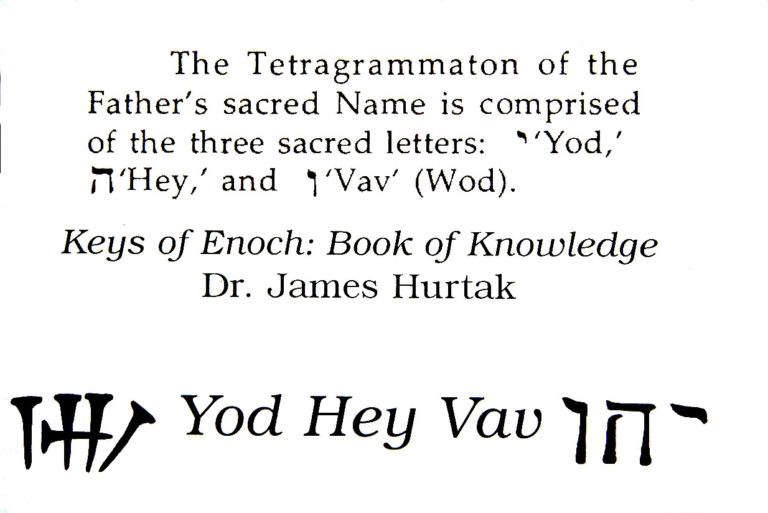

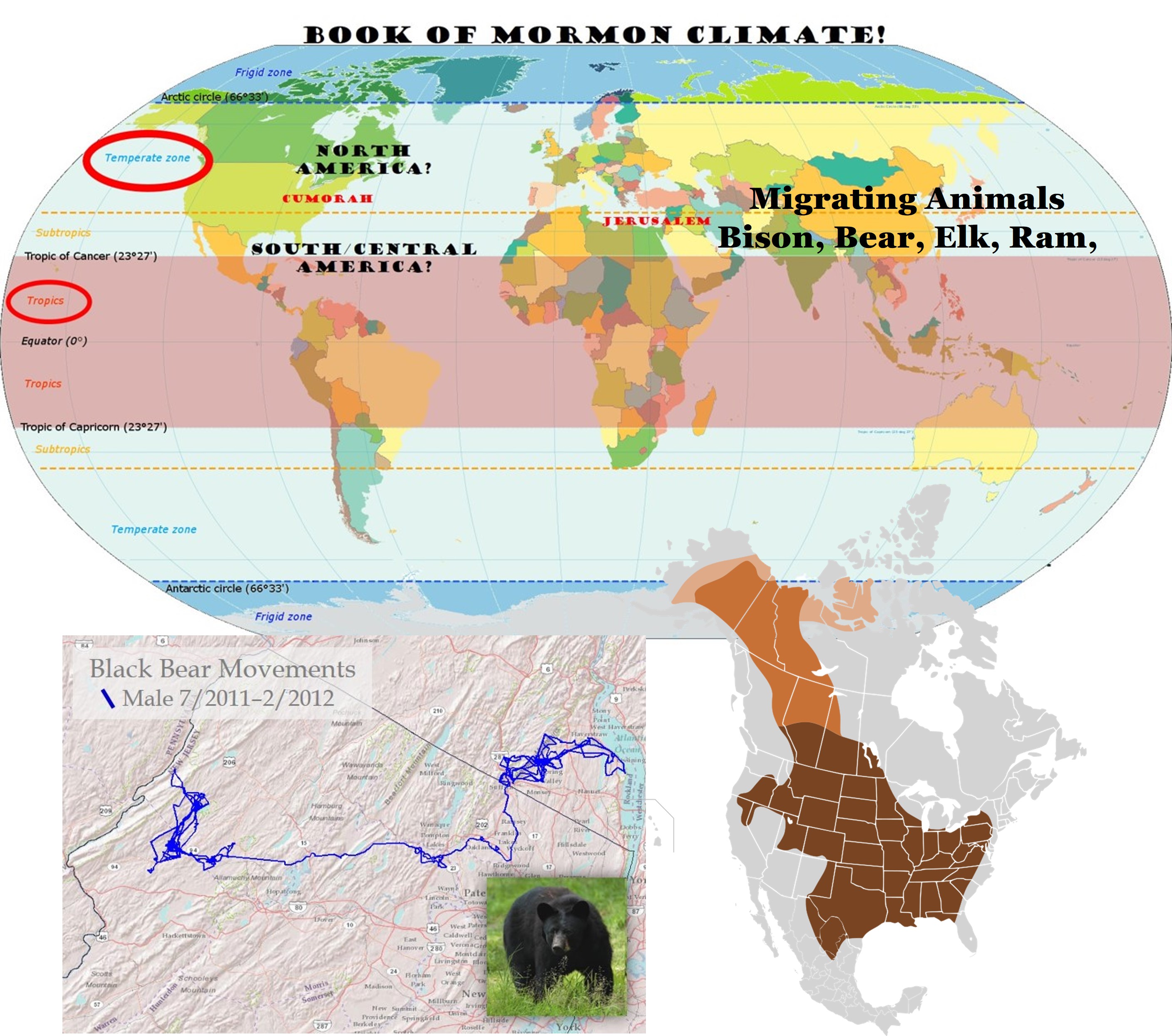

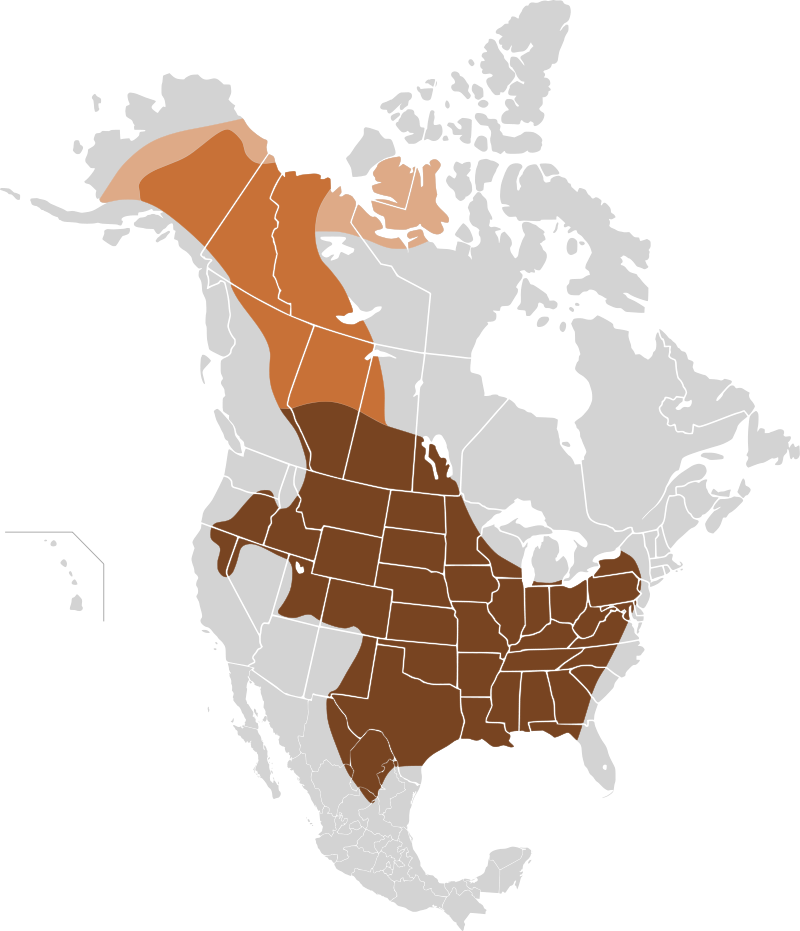
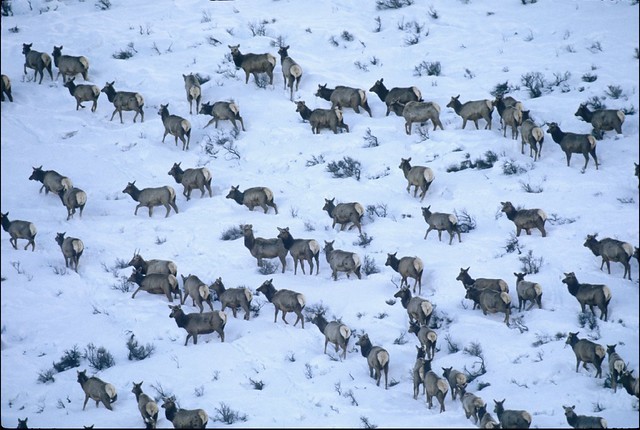
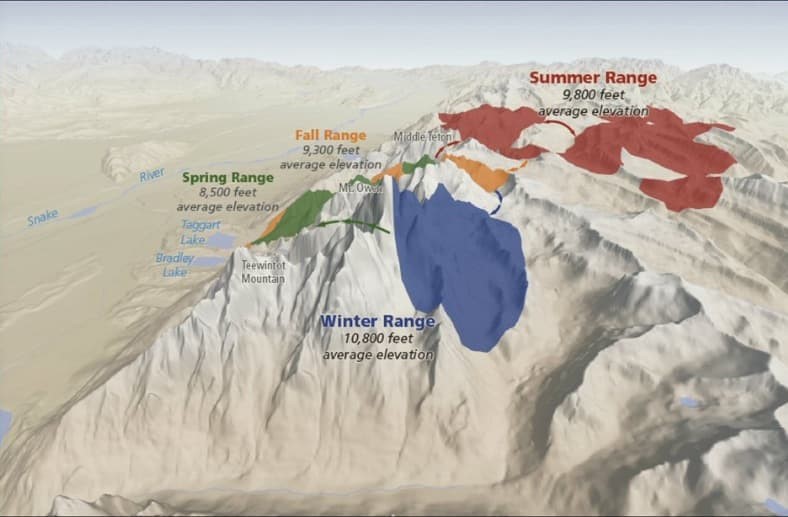
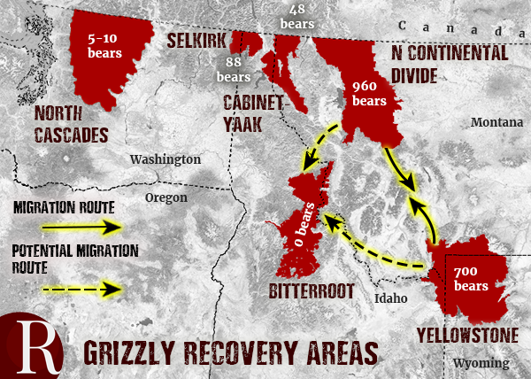
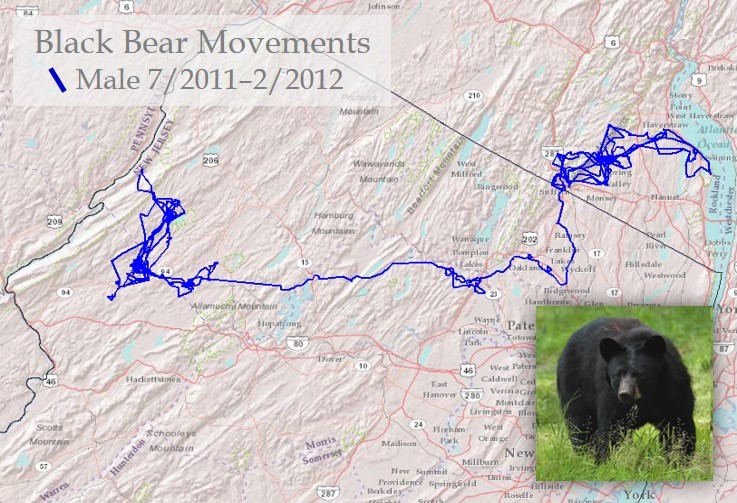
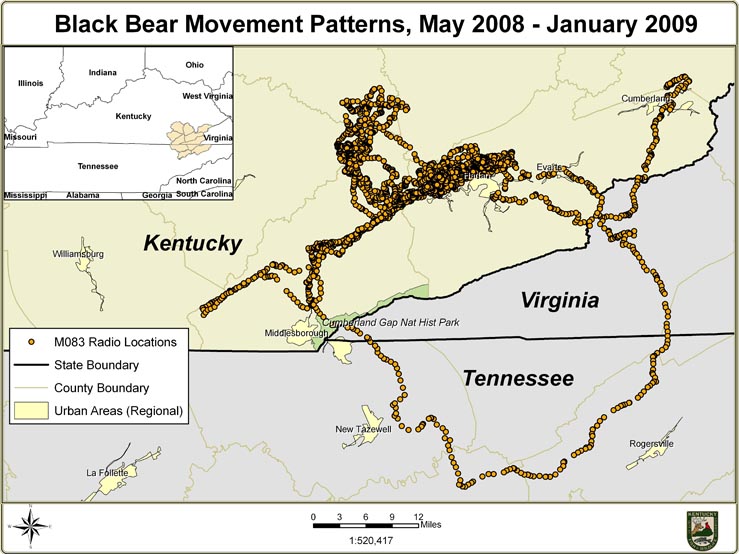

 (Above) “Kee-o-kúk, The Watchful Fox, Chief of the Tribe” by George Catlin,1835, oil on canvas; Smithsonian American Art Museum. (Note the red-dyed loin cloth. “…and they were naked, save it were a skin which was girded about their loins… ” (Alma 43:20). (Left) Joseph Smith met with Chief Kee-O-Kuk on Aug. 12, 1841; see p. 117 Annotated Book of Mormon)

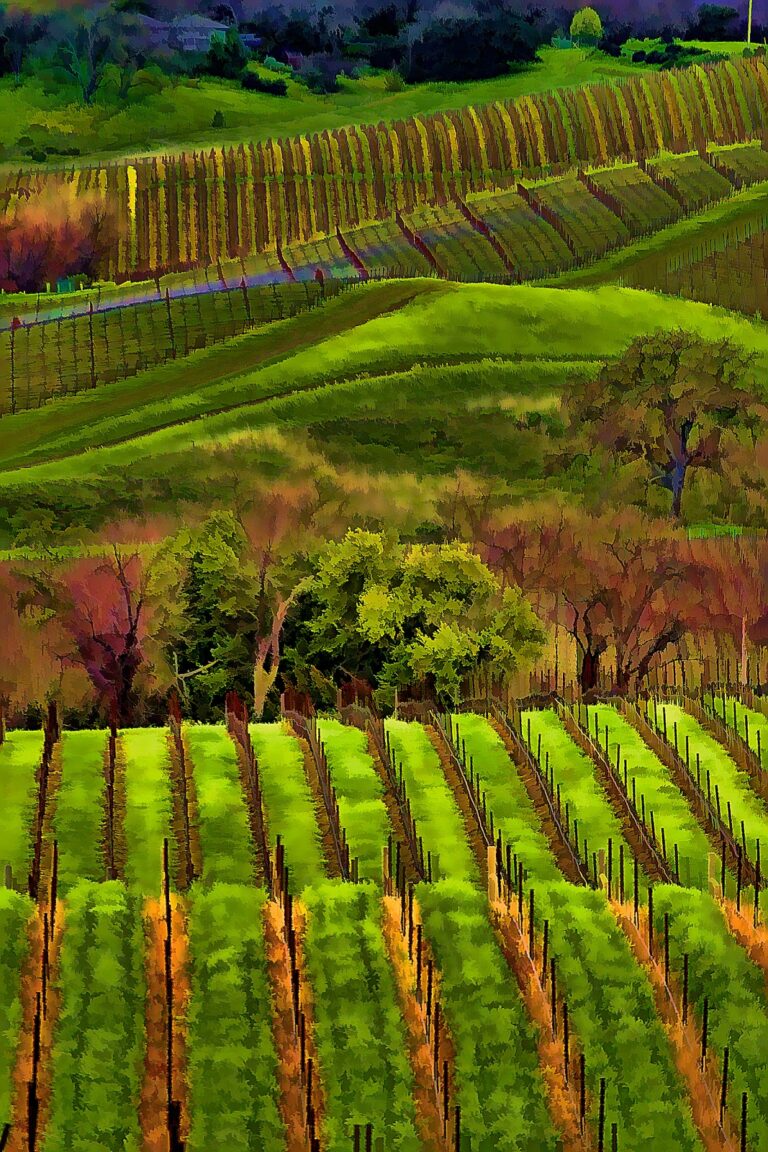


 Pulque [‘pulke](Classical Nahuatl: metoctli), or octli, is an alcoholic beverage made from the fermented sap of the maguey (agave) plant. It is traditional to central Mexico, where it has been produced for millennia. It has the color of milk, somewhat viscous consistency and a sour yeast-like taste. Source Wikipedia



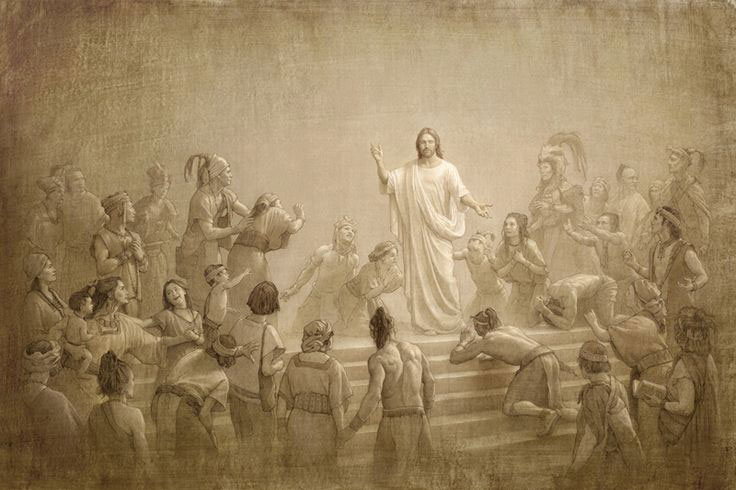
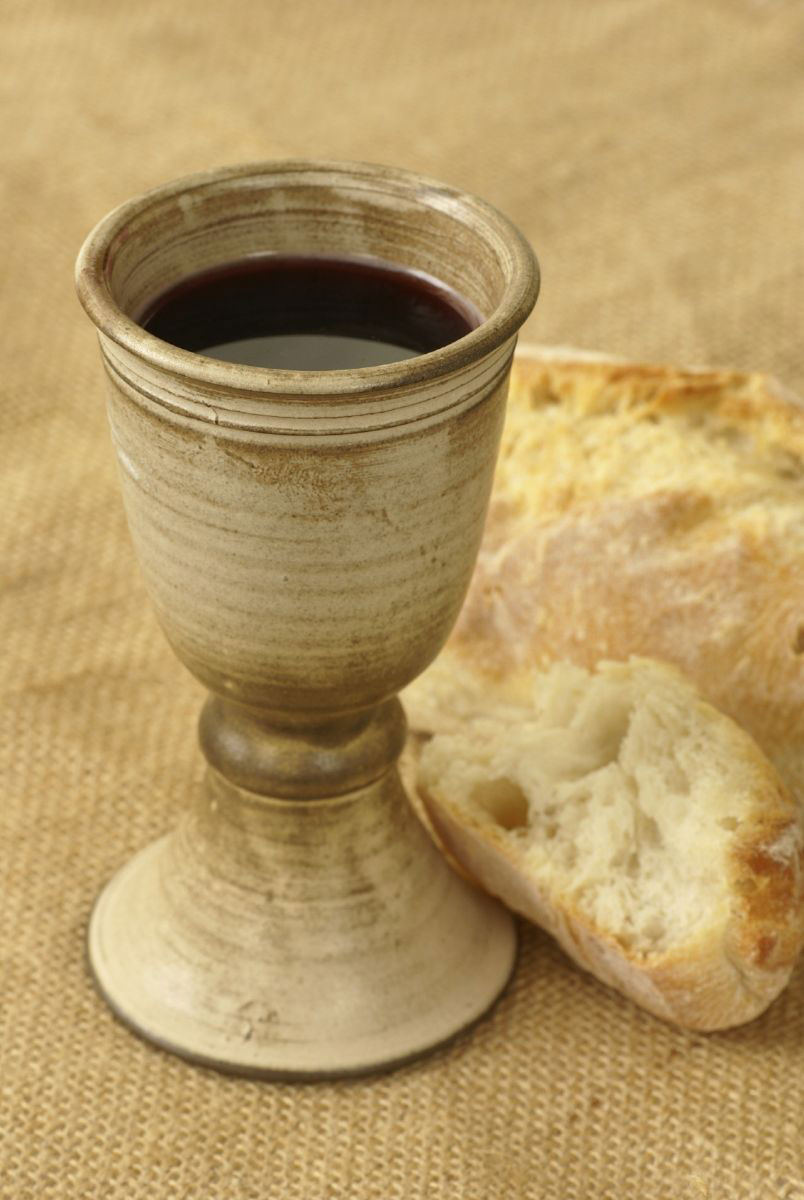

 The history of the vine in America begins, symbolically at least, in the fogs that shroud the medieval Norsemen’s explorations. Every American knows the story of Leif Ericsson, and how, in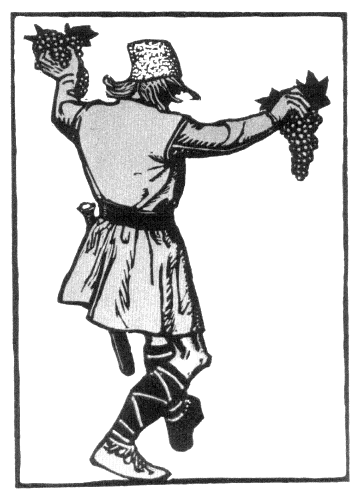


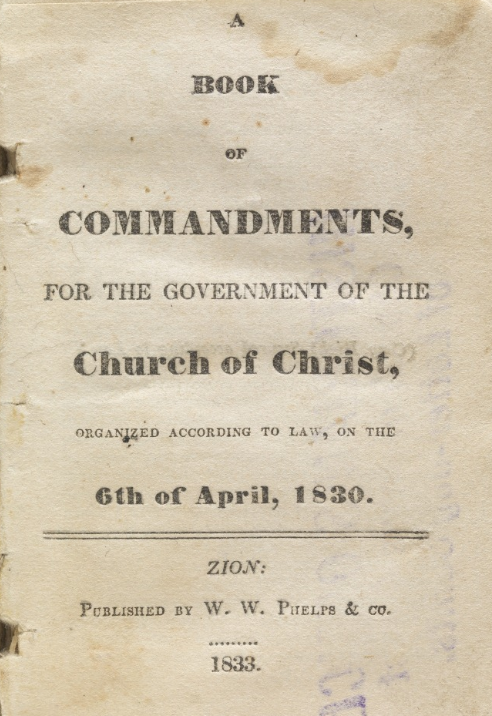
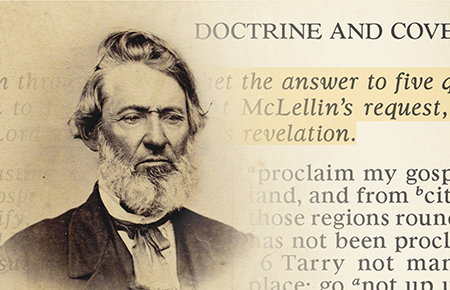


 2) The Evening and Morning Star [1832-33] $500,000


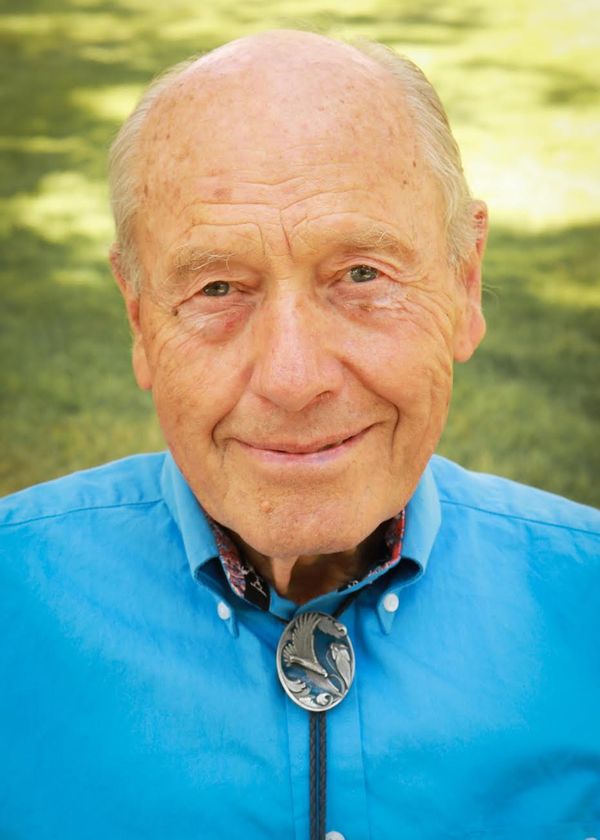 Our great friend David W Allan shared some sad information with me the other day about the unfortunate attitudes imbedded in our intellectuals at BYU. He was asked by BYU to submit a paper on the subject of Evolution and Faith.
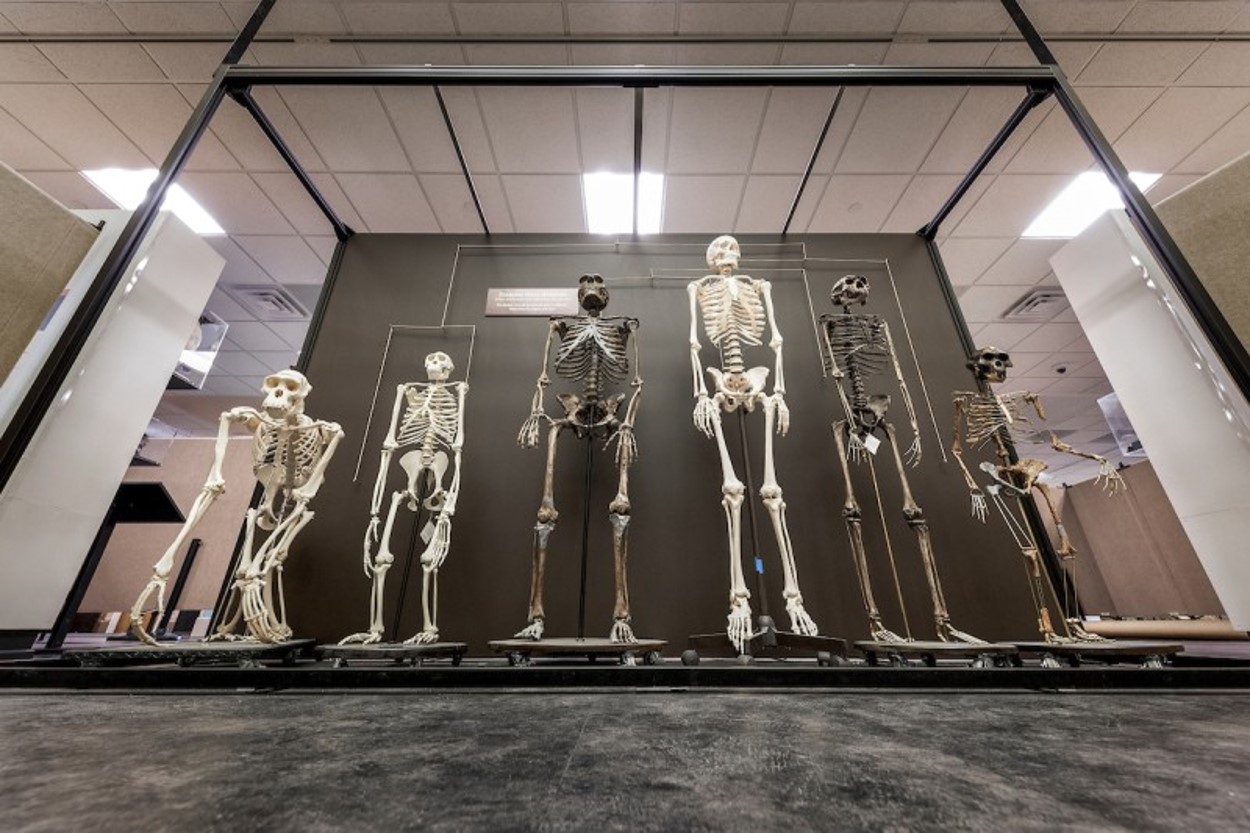

 But, Have We Been Deceived?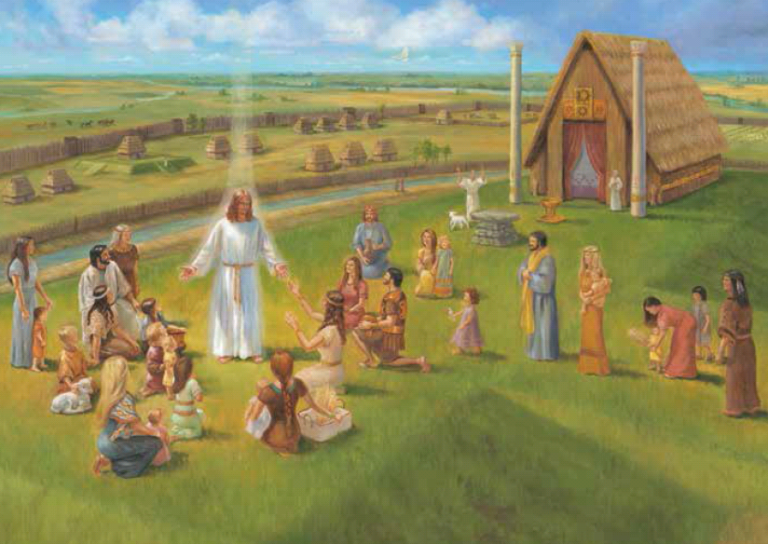

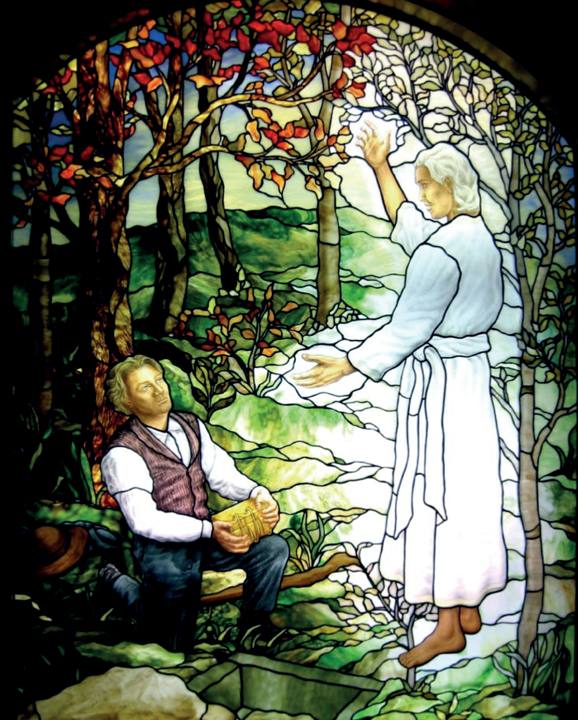
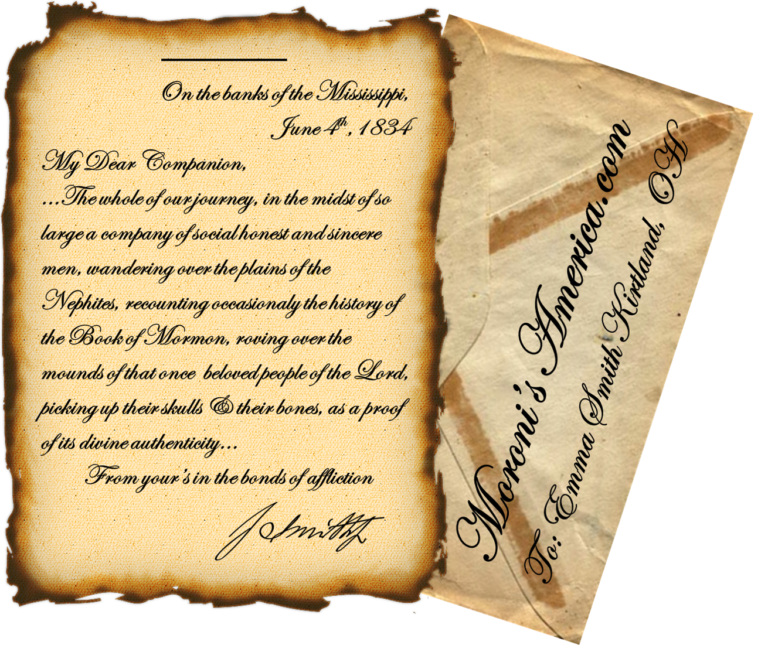

 My Dear Companion, I now embrace a few moments to dictate a few words that you may know how it is with us up to this date. We arrived this morning on the banks of the Mississippi, and were detained from crossing the river, as there was no boat that we could cross in, but expect a new one to be put into the river this evening, so that we are in hopes, to be able to cross tomorrow, and proceed on our journey…

 …At about one mile west rises another ridge of less height, running parallel with the former, leaving a beautiful vale between. The soil is of the first quality for the country, and under a state of cultivation, which gives a prospect at once imposing, when one reflects on the fact, that here, between these hills, the entire power and national strength of both the Jaredites and Nephites were destroyed.
 “During our travels we visited several of the mounds which had been thrown up by the ancient inhabitants of this country—Nephites, Lamanites, etc., and this morning I went up on a high mound, near the river, accompanied by the brethren. From this mound we could overlook the tops of the trees and view the prairie on each side of the river as far as our vision could extend, and the scenery was truly delightful.


 “Let them build up a city unto my name upon the land opposite the city of Nauvoo, and let the name of Zarahemla be named upon it.”
  Manti- Huntsville, Randolph County MO

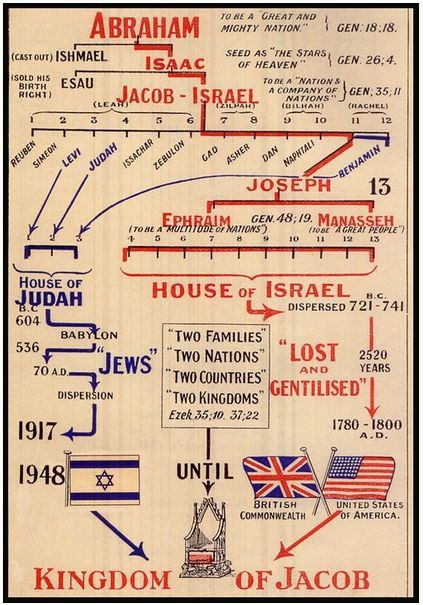


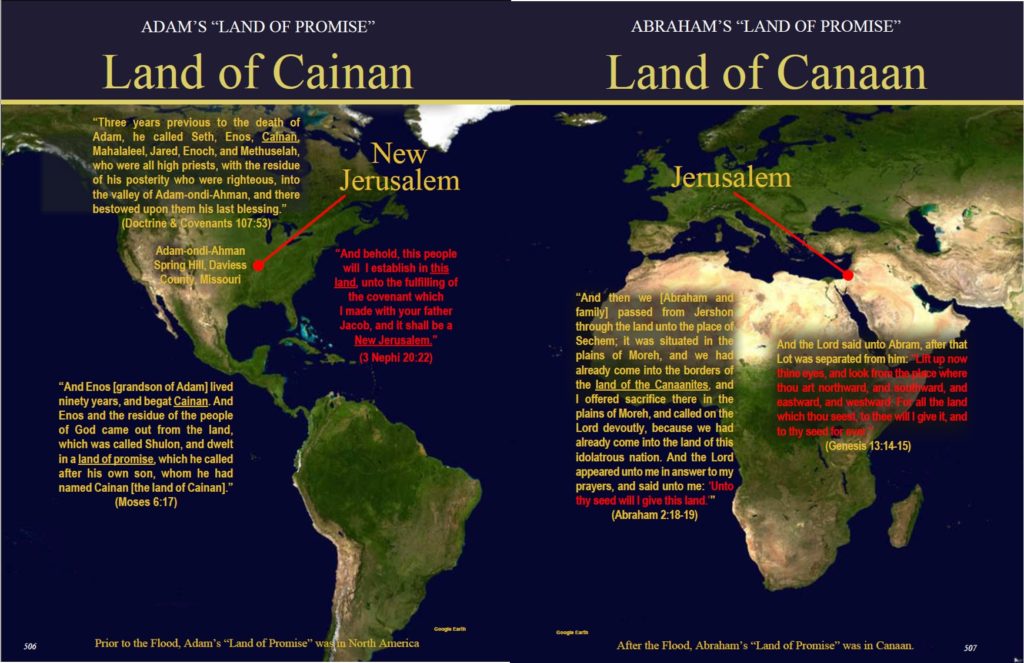


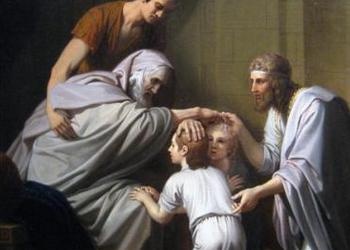


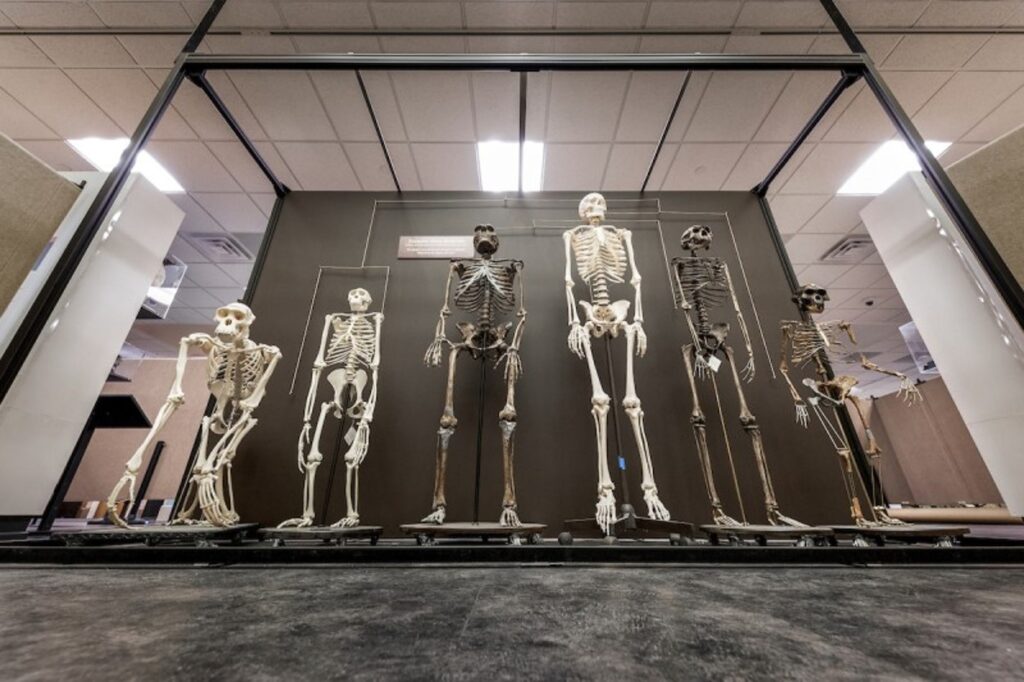

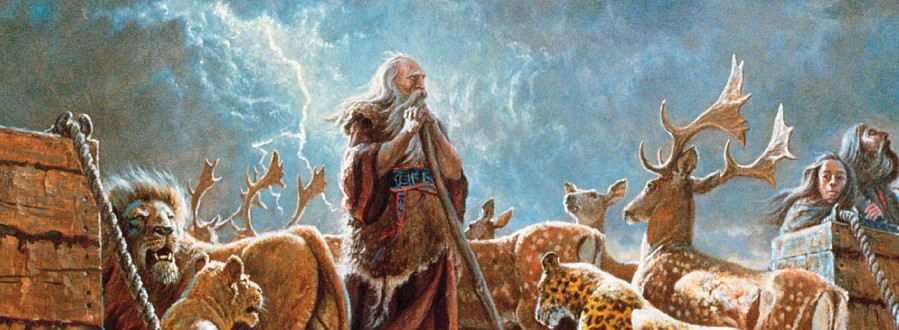

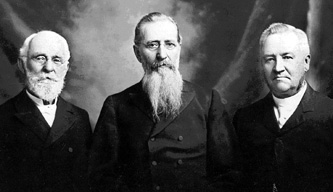
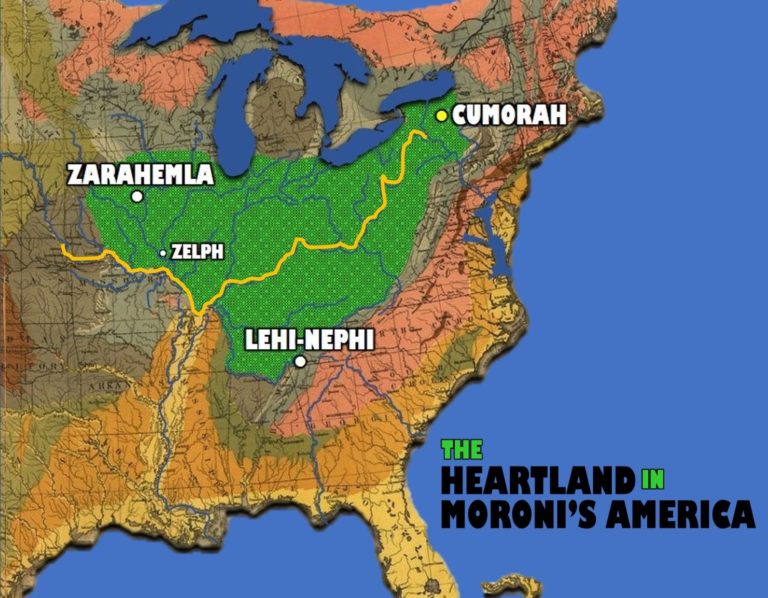
 “On the top of the mound were stones which presented the appearance of three altars having been erected one above the other, according to the ancient order; and the remains of bones were strewn over the surface of the ground. The brethren procured a shovel and a hoe, and removing the earth to the depth of about one foot, discovered the skeleton of a man, almost entire, and between his ribs the stone point of a Lamanitish arrow, which evidently produced his death. Elder Burr Riggs retained the arrow. The contemplation of the scenery around us produced peculiar sensations in our bosoms; and subsequently the visions of the past being opened to my understanding by the Spirit of the Almighty, I discovered that the person whose skeleton was before us was a white Lamanite, a large, thick-set man, and a man of God. His name was Zelph. He was a warrior and chieftain under the great prophet Onandagus, who was known from the Hill Cumorah, or eastern sea to the Rocky mountains. The curse was taken from Zelph, or, at least, in part-one of his thigh bones was broken by a stone flung from a sling, while in battle, years before his death. He was killed in battle by the arrow found among his ribs, during the last great struggle of the Lamanites and Nephites.”

 “Just before the Camp passed from Illinois across the Mississippi river into Missouri, Joseph with Brigham Young and others went up on one of the mounds in the neighborhood to obtain a view of the great river, called the Father of Waters. Here they found an altar built according to the ancient style, and from its foot they dug up the skeleton of a man. They were surprised to find an arrow-head between the ribs. It was revealed to the Prophet that this was the remains of Zelph, a white Lamanite and a mighty man of God, who had fought as a chieftain under the Prophet Omandagus [sp]. He was killed in battle during the last great struggle of the Lamanites and Nephites. Of course, we know it was not in the last battle of the struggle because that was fought around the hill Cumorah. What a glorious gift is the inspiration of God!” The Latter-day Prophet, History of Joseph Smith, Written for Young People page 100-101 by George Q. Cannon Illustrated and Published at Juvenile Instructor Office Salt Lake City, Utah 1900
 “…Here, between these hills, the entire power and national strength of both the Jaredites and Nephites were destroyed. By turning to the 529th and 530th pages of the Book of Mormon, you will read Mormon’s account of the last great struggle of his people, as they were encamped round this hill Cumorah. In this valley fell the remaining strength and pride of a once powerful people, the Nephites—once so highly favored of the Lord, but at that time in darkness, doomed to suffer extermination by the hand of their barbarous and uncivilized brethren. From the top of this hill, Mormon, with a few others, after the battle, gazed with horror upon the mangled remains of those who, the day before, were filled with anxiety, hope, or doubt.” Oliver Cowdery’s Letter VII Joseph Smith Papers “Letter VII,” LDS Messenger and Advocate, July 1835, 1:155–159 .


 The more common reference to Cumorah among Latter-day Saints is to the hill near present-day Palmyra and Manchester, New York, where the plates from which the Prophet Joseph Smith translated the Book of Mormon were found. During the night of September 21, 1823, Moroni appeared to Joseph Smith as an angel sent from God to show him where these plates were deposited (JS–H 1:29-47).
 A testimony also comes from David Whitmer, one of the three witnesses to the truth of the Book of Mormon. When Joseph Smith and Oliver Cowdery found it necessary to move from Harmony, Pennsylvania, to Fayette, New York, David Whitmer drove them from Harmony to the home of his father in Fayette. Before starting on this journey Moroni came to the Prophet and took possession of the plates in order to insure their safety in transit to the Whitmer home. On the way the three brethren, Joseph, Oliver and David overtook Moroni carrying the plates. (see note#1) Joseph suggested to David that he ask the “stranger” to ride. David stopped his team and invited him to ride, if by chance he would be going in their direction. “No,” said the one addressed, very pleasantly, “I am going to Cumorah.” “This name was somewhat new to me,” says David, “and I did not know what ‘Cumorah’ meant.” They all gazed at him and at each other. When David looked around again, after turning to Joseph for instruction or information, the man had disappeared. “It was the Messenger (Moroni) who had the plates, who had taken them from Joseph just prior to our starting form Harmony.” says David Whitmer in closing the story of the incident. (See Orson Pratt and Joseph F. Smith’s report of an interview with David Whitmer. Millennial Star, Vol,. 40, pp. 769-774. The report bears date of September 17, 1878.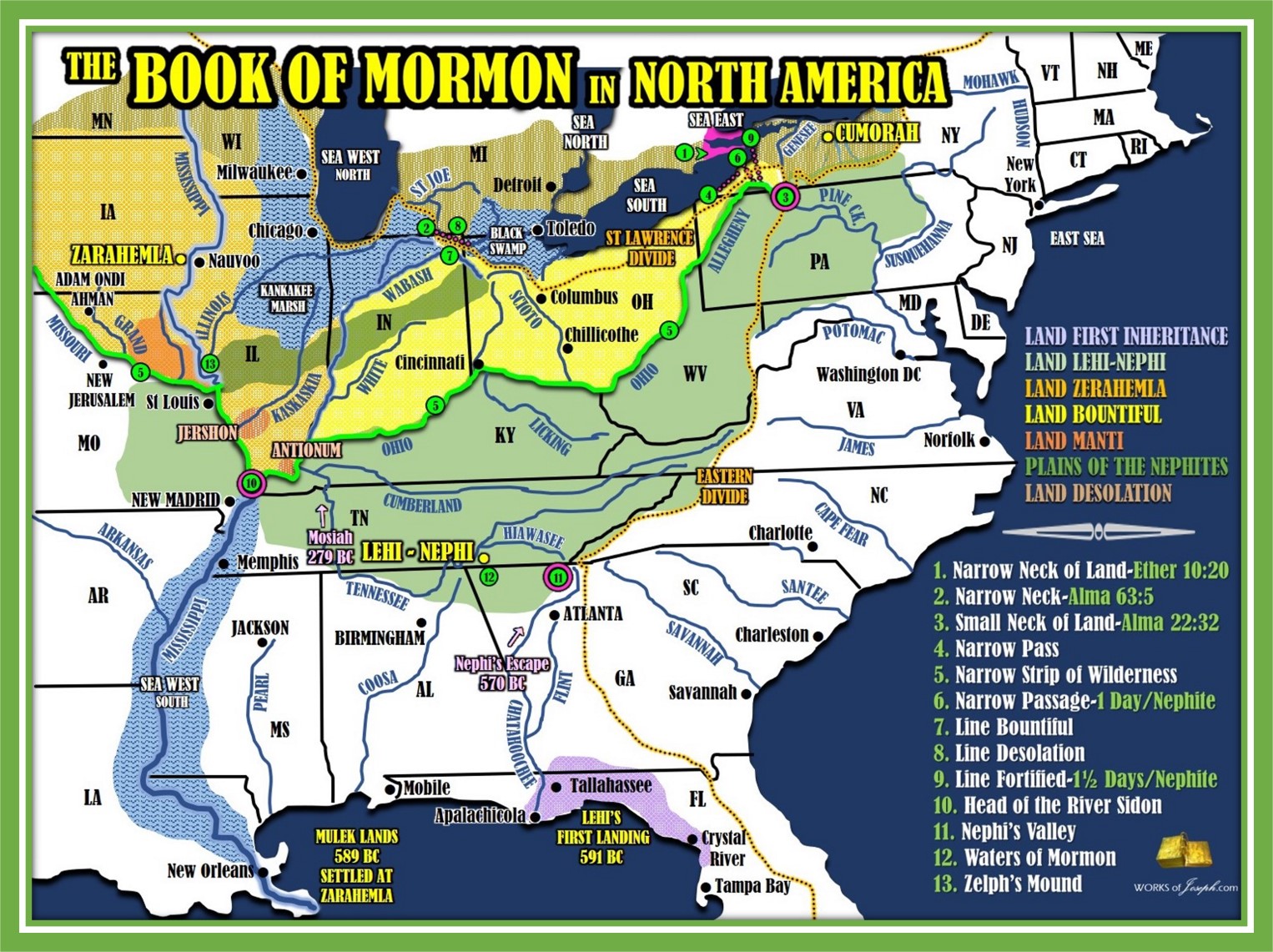
 Let’s see, two great battles of extermination took place near the Hill Cumorah. The first occurred sometime before 600 BC in which some two million warriors were, along with their wives and children. The second occurred in 385 AD, in which 150,000 warriors were killed. And you did your search I would imagine somewhere near the year 2000 AD. The area that you searched has been gone over by others for the last 200 years or more, and do think 1) that those arrow heads would still be on the surface after that period of time, and 2) that by searching around the area you could pick up a bunch of arrow heads that all the others who have poured over the area for the last 200 years have missed?


 My name is Steven Smoot I am President of the Family First Foundation


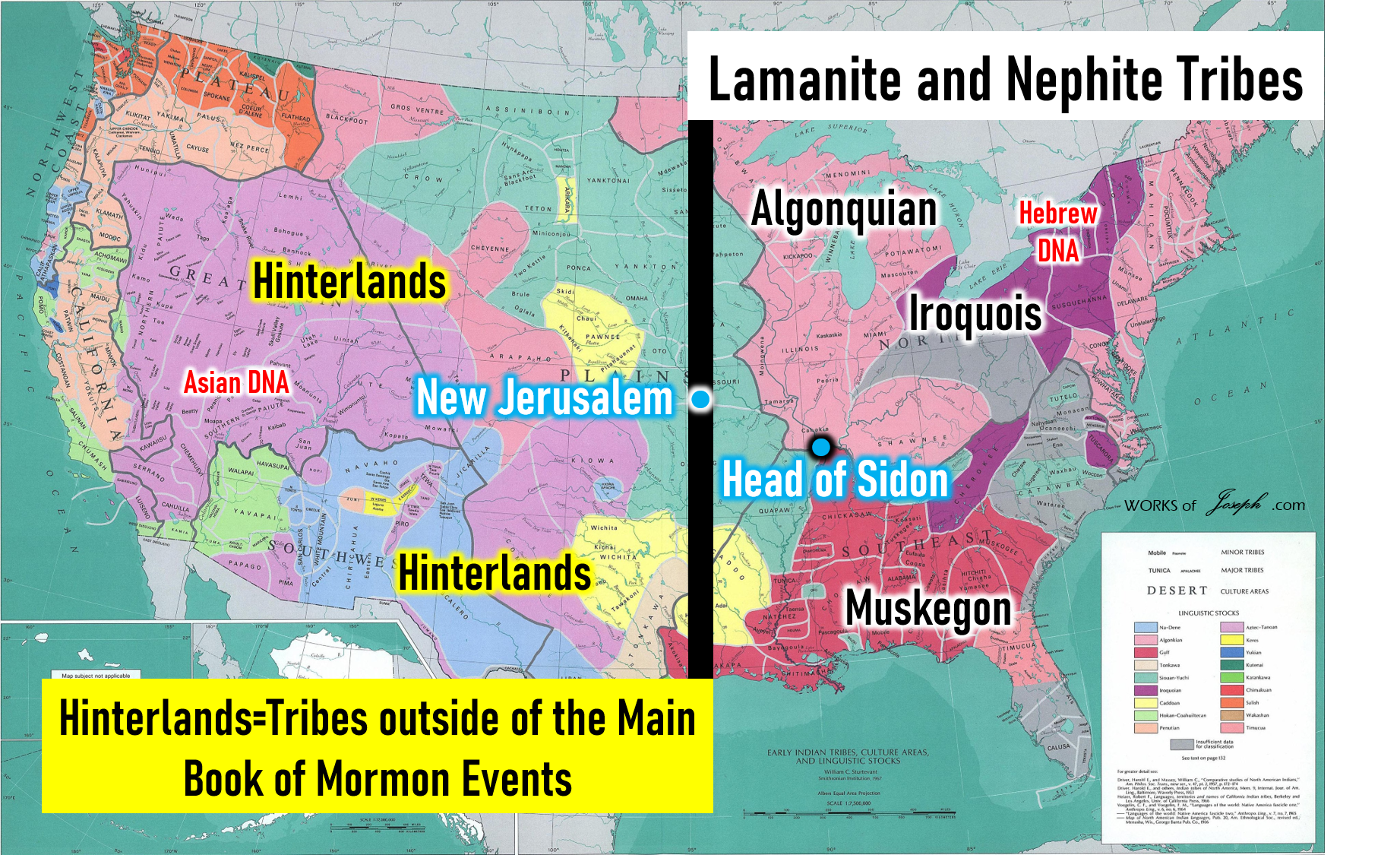


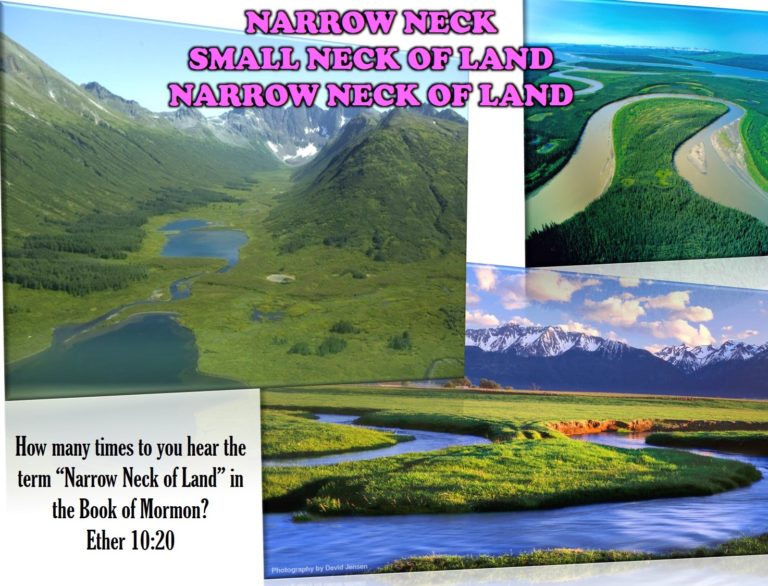
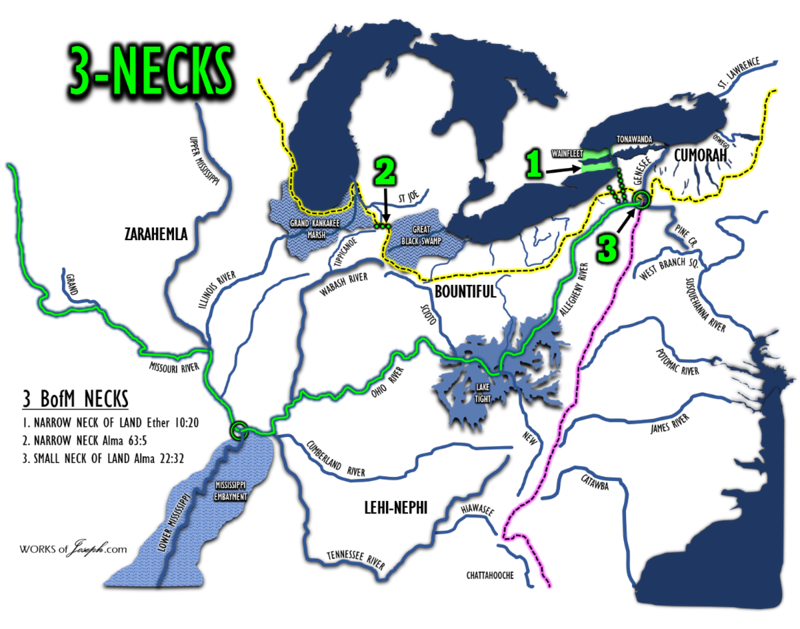
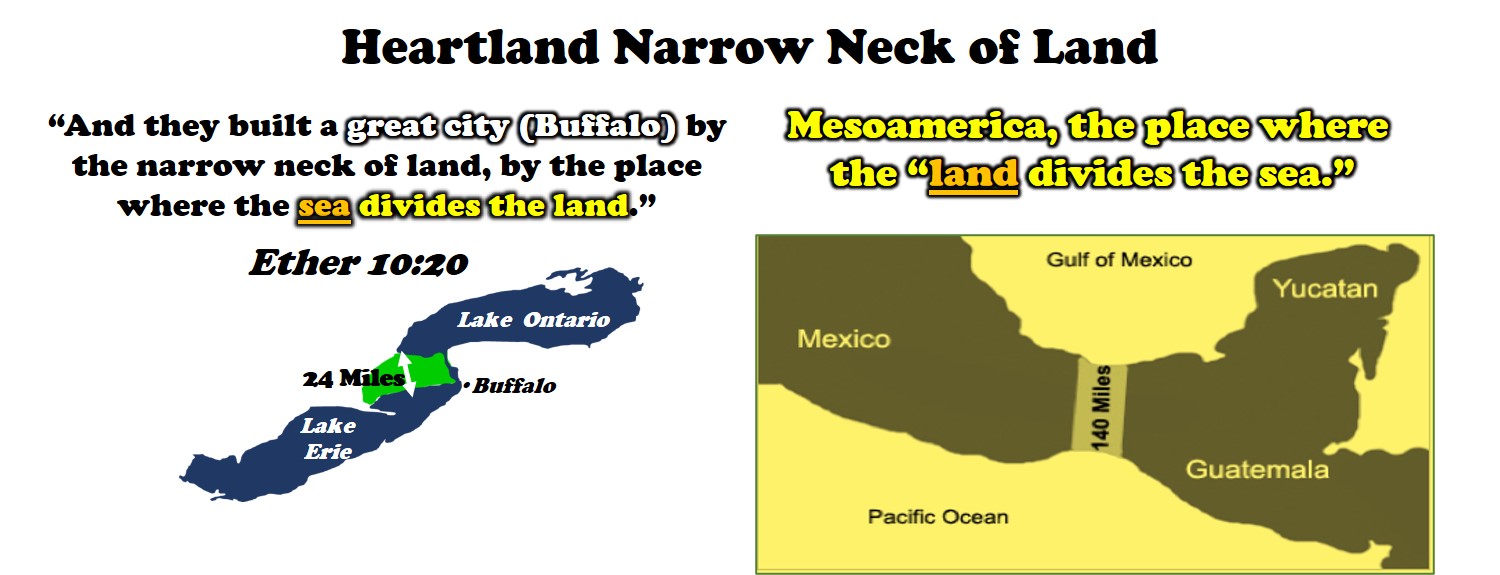
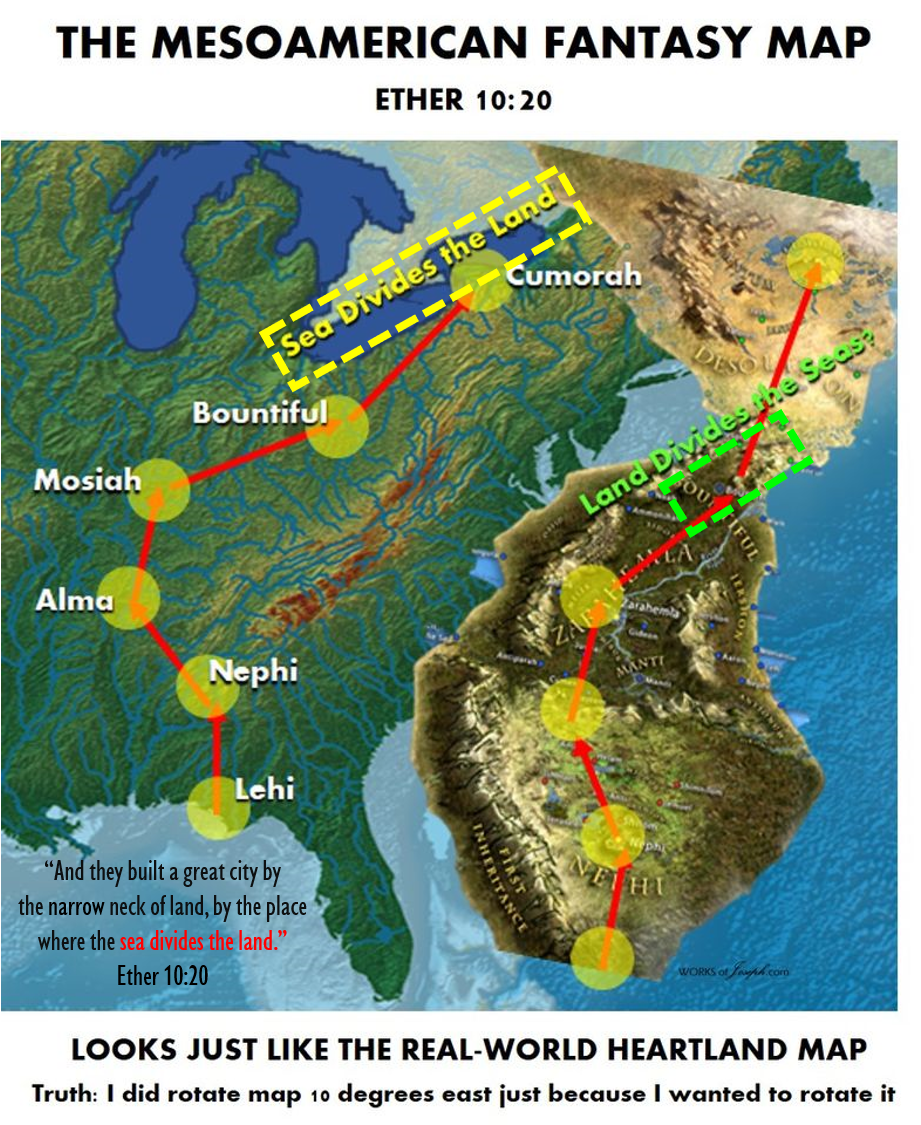
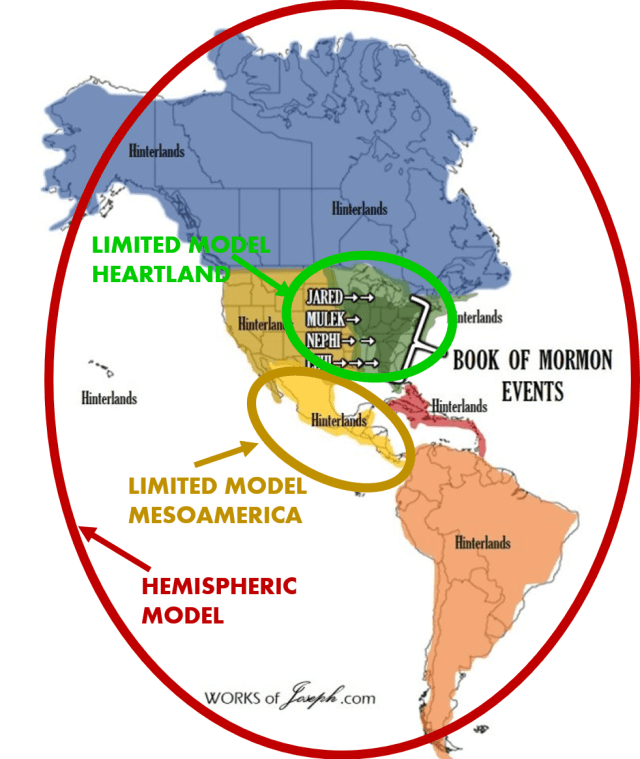
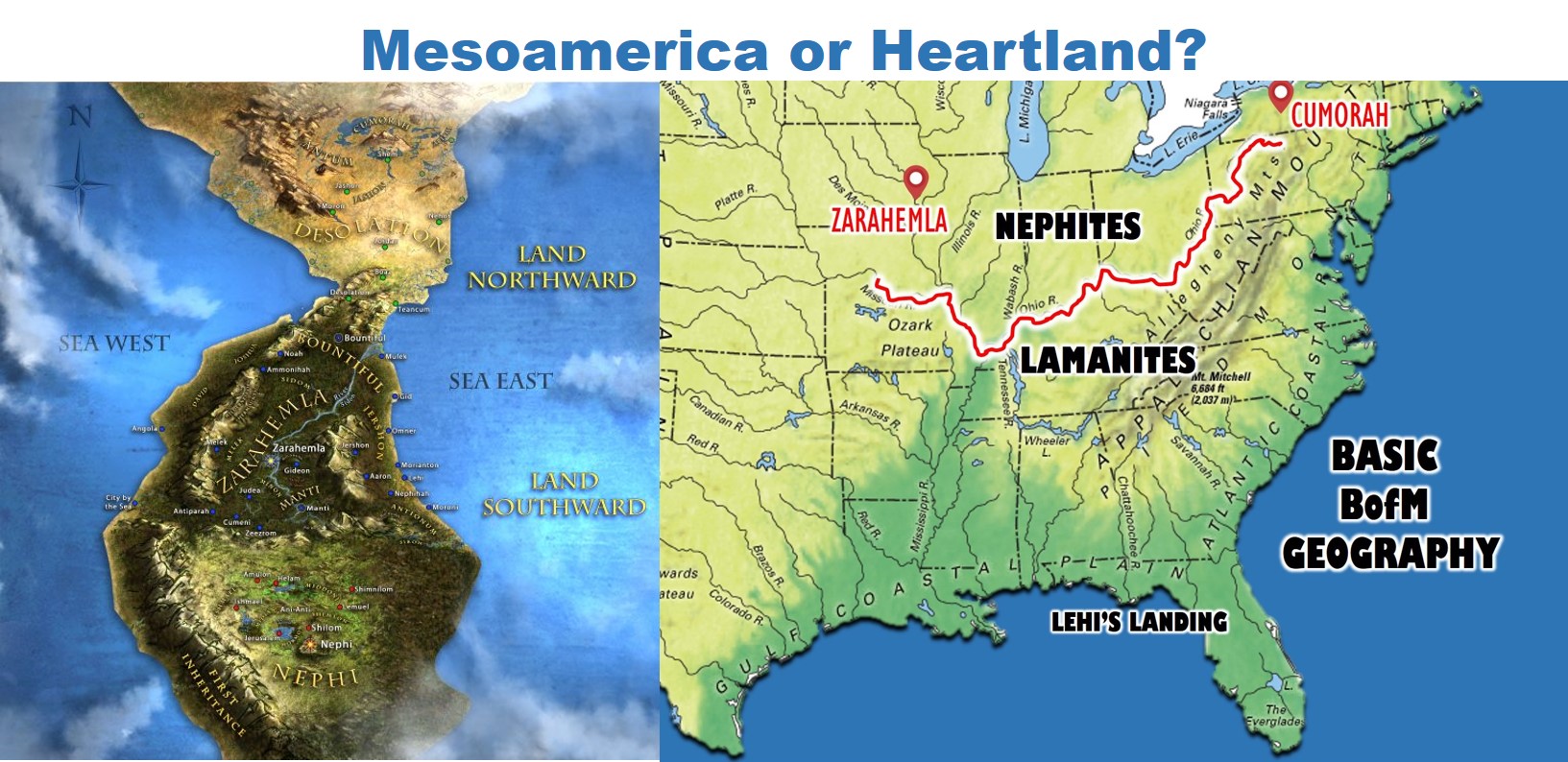
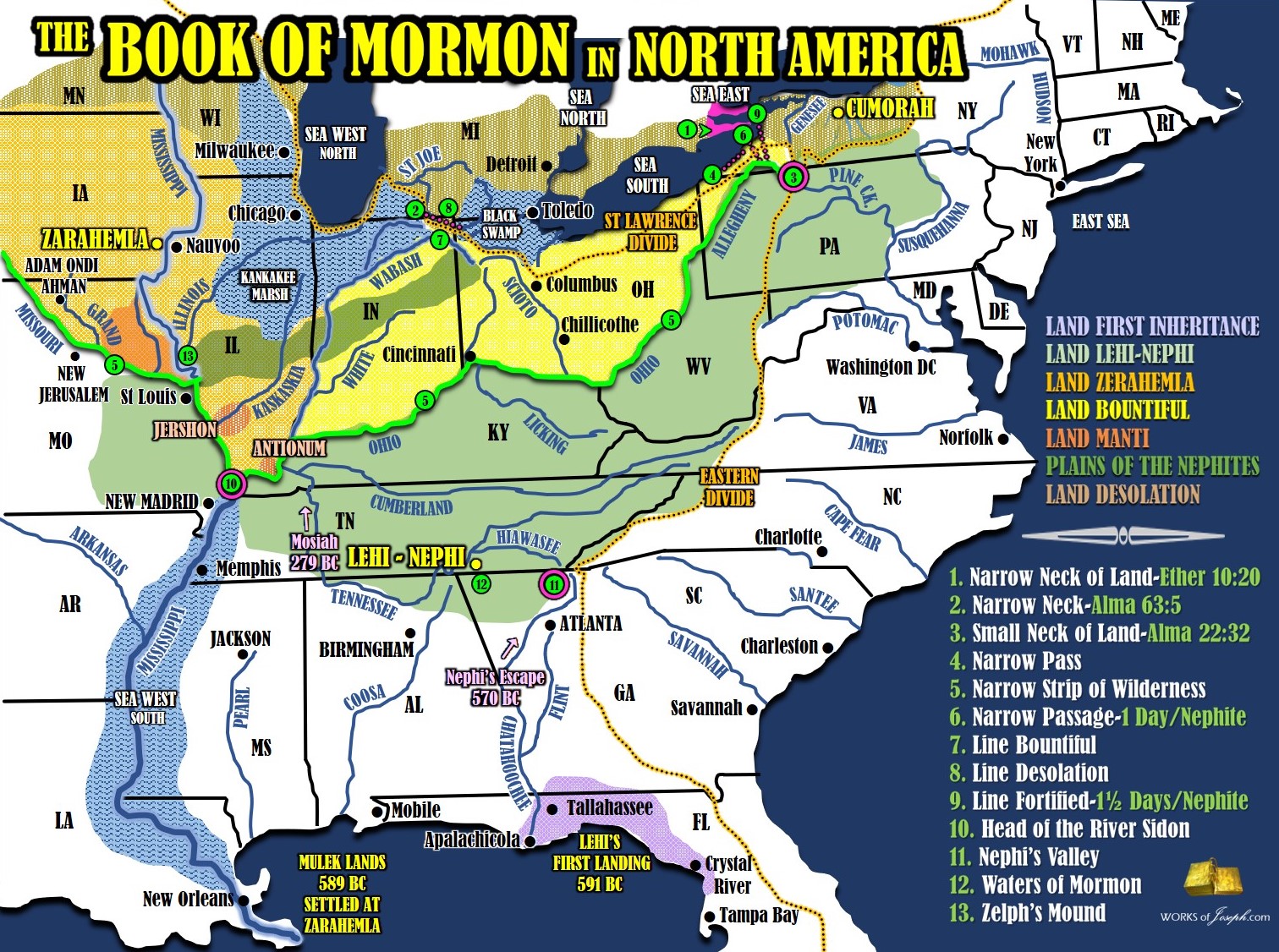
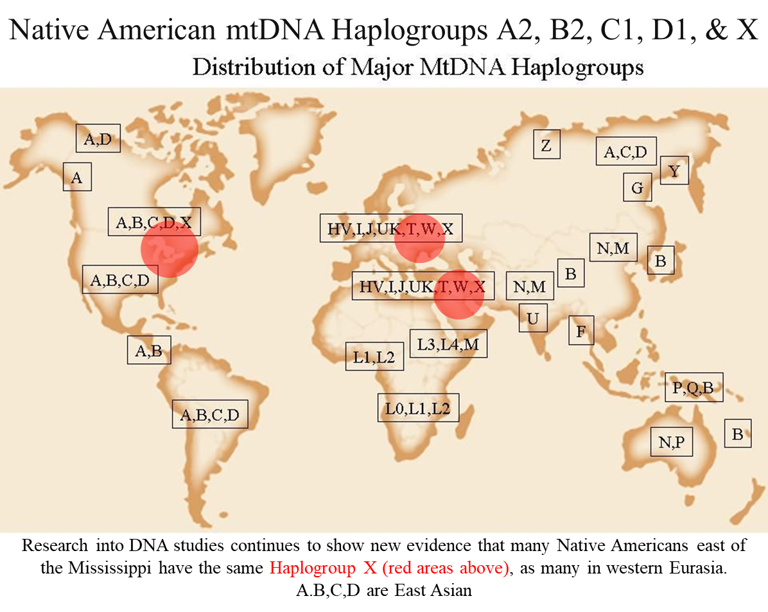
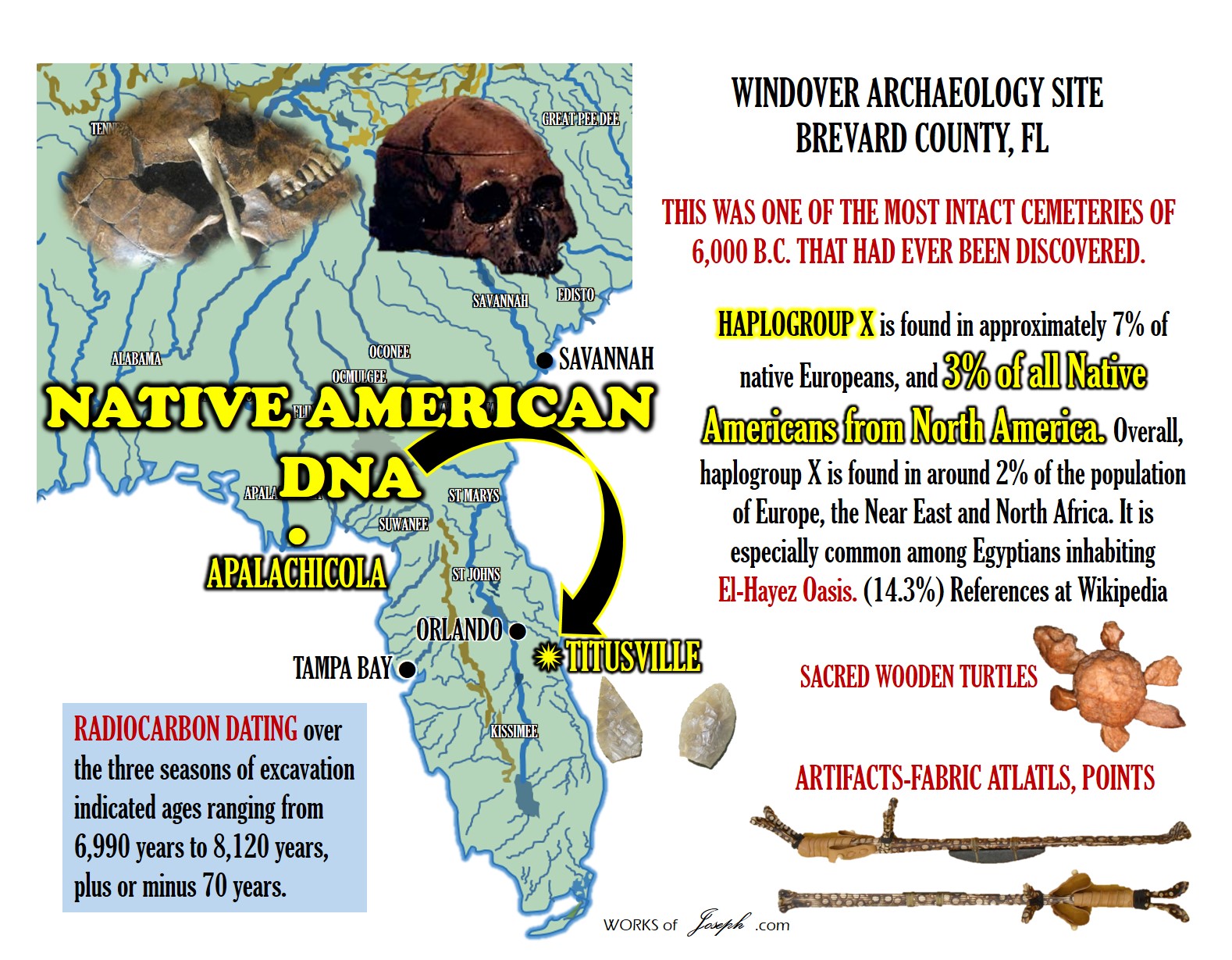
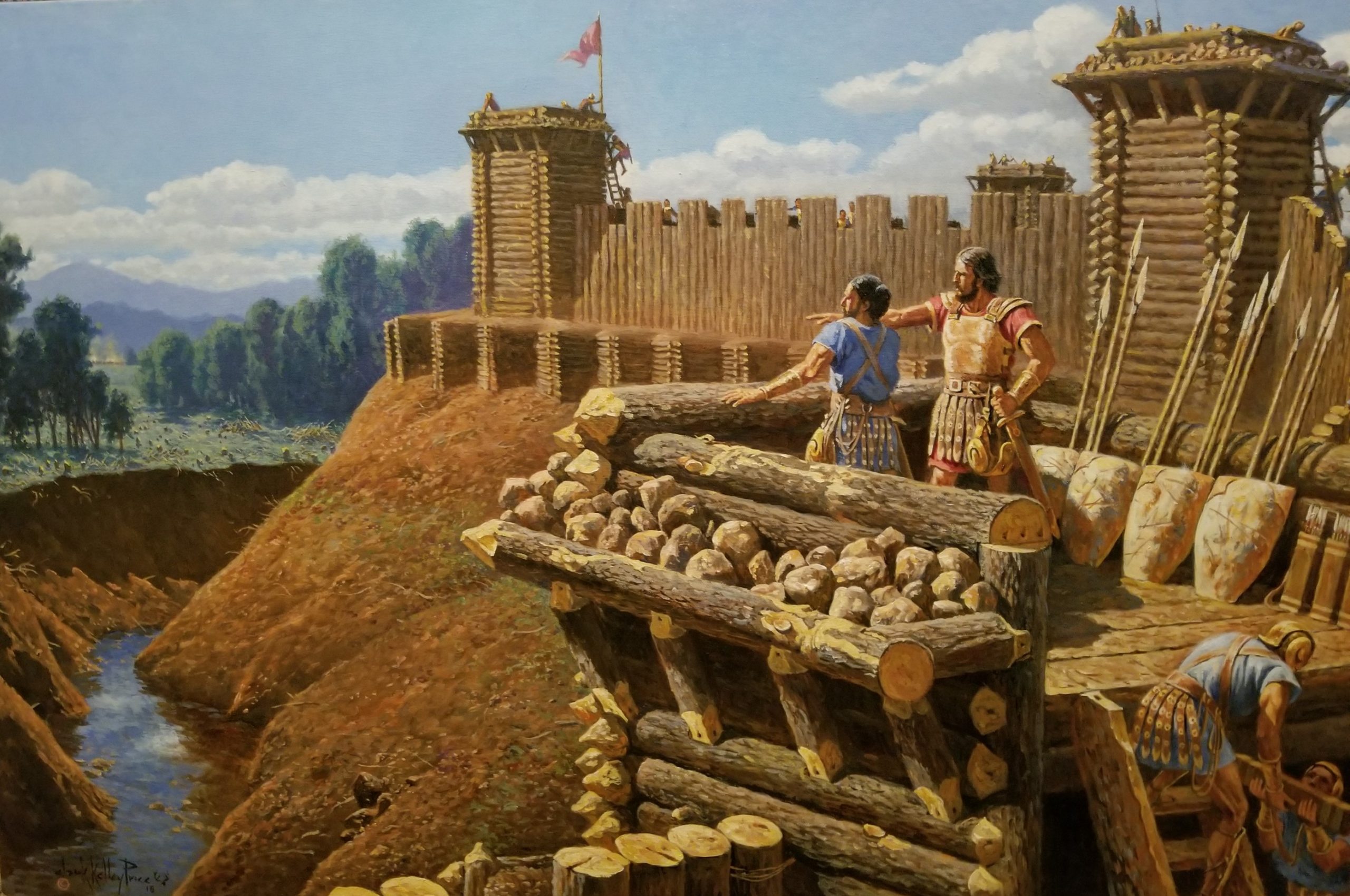
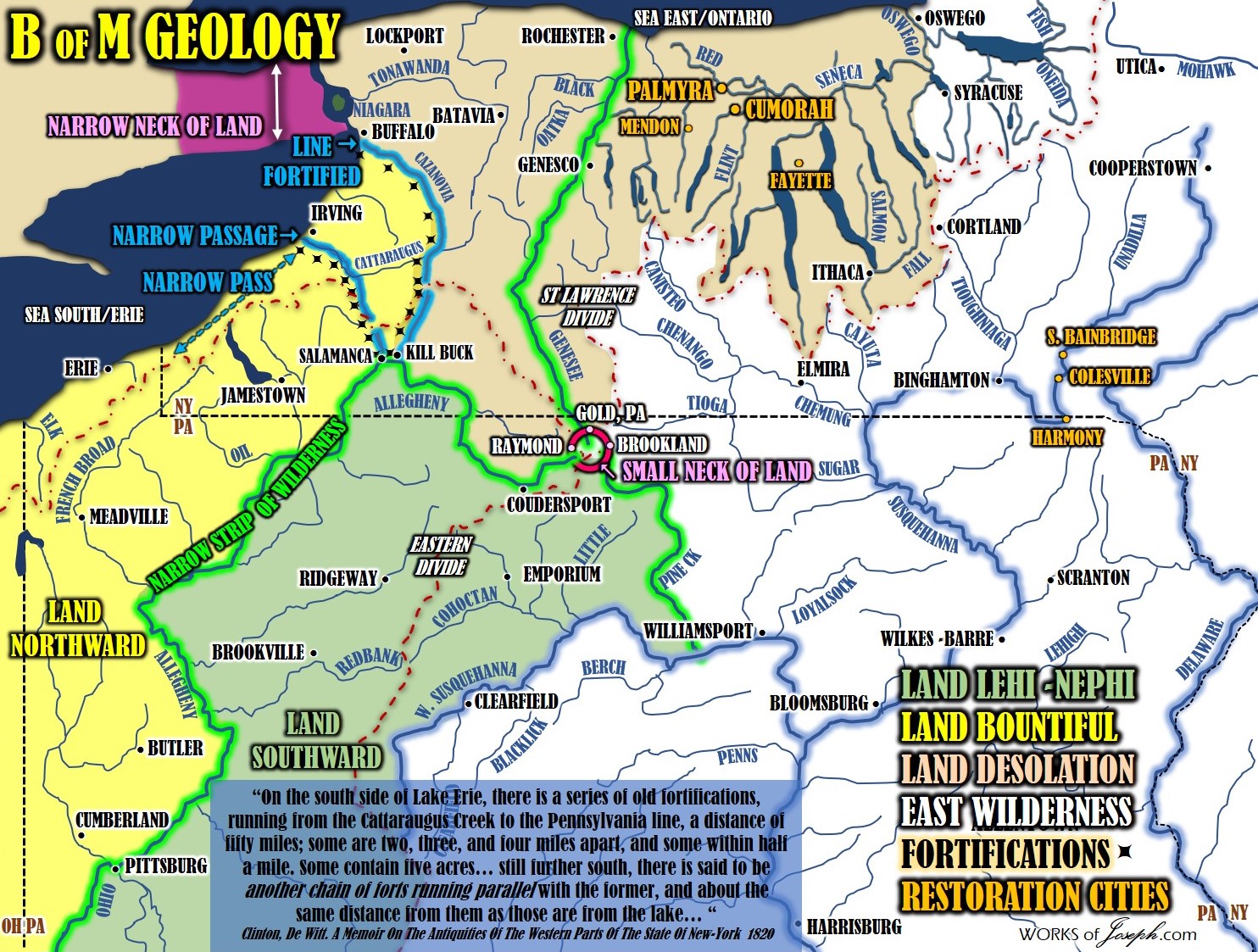
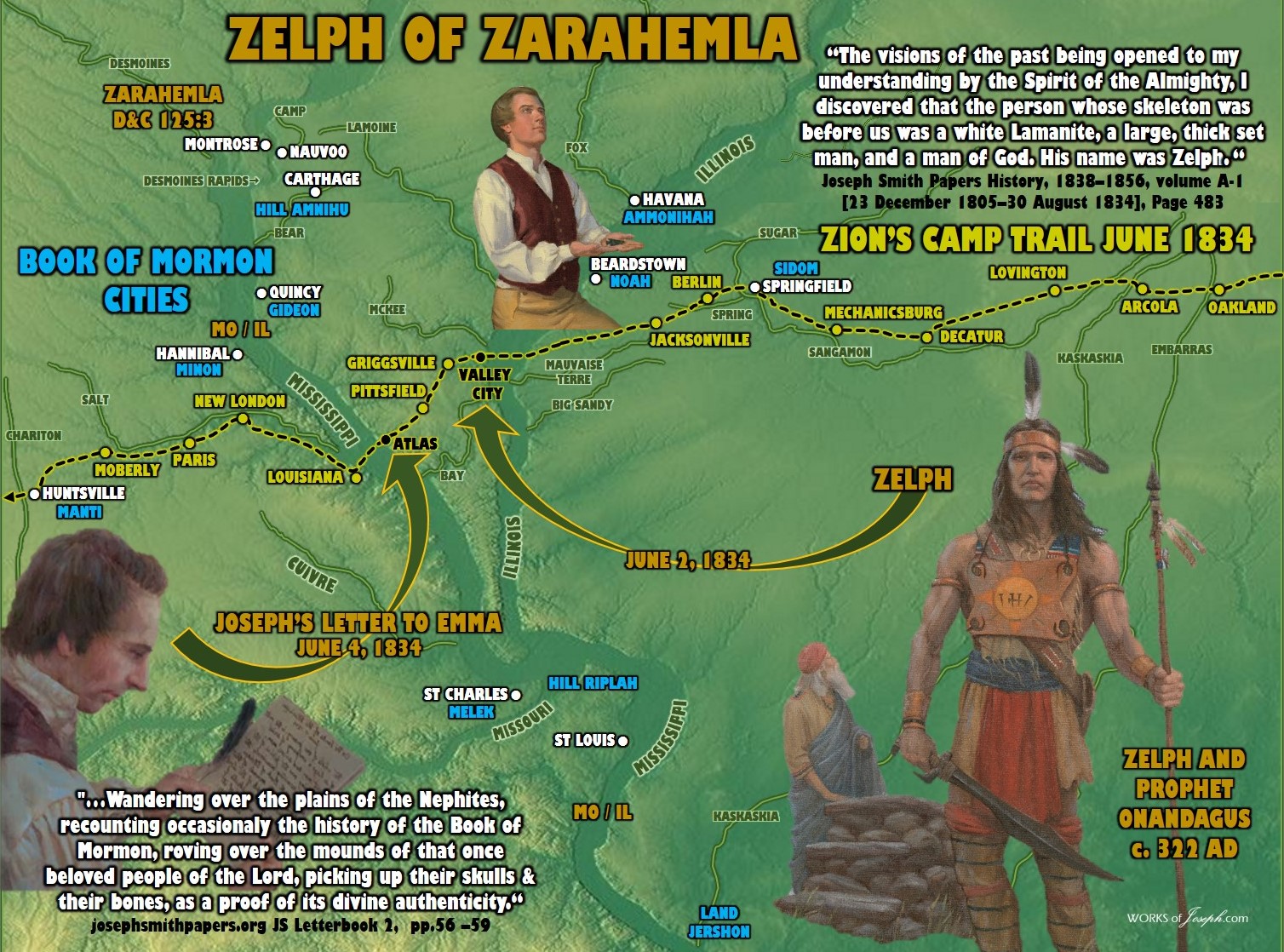

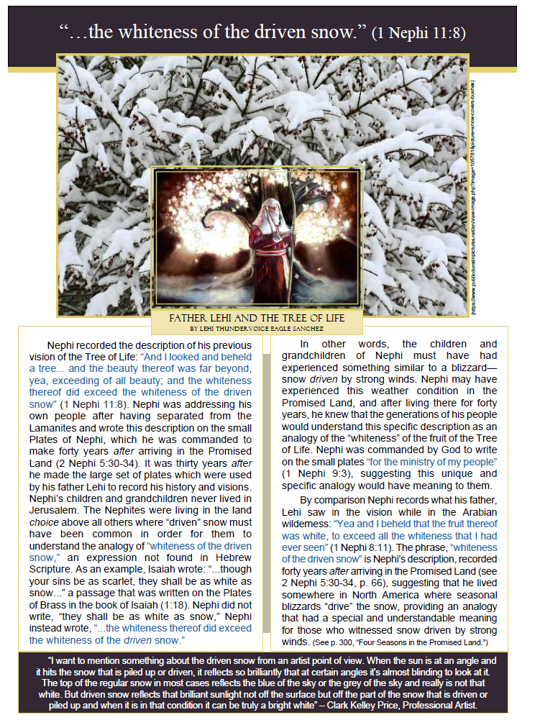
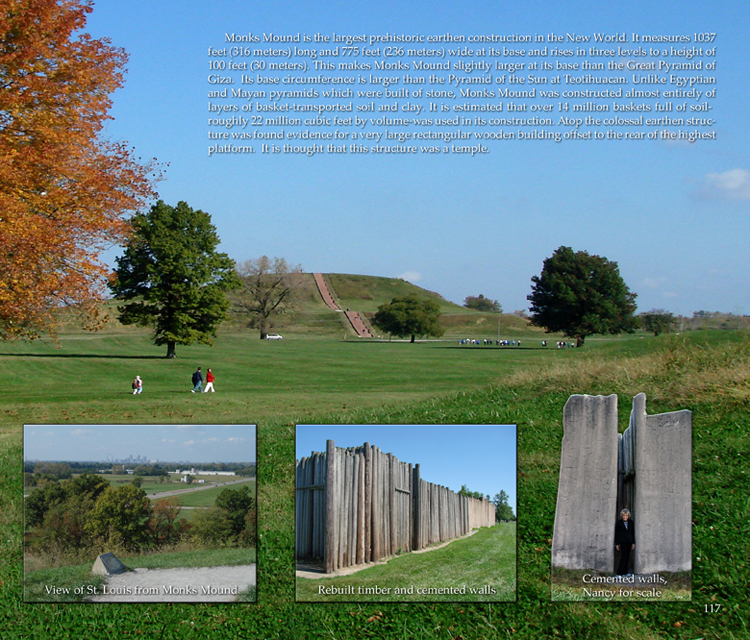
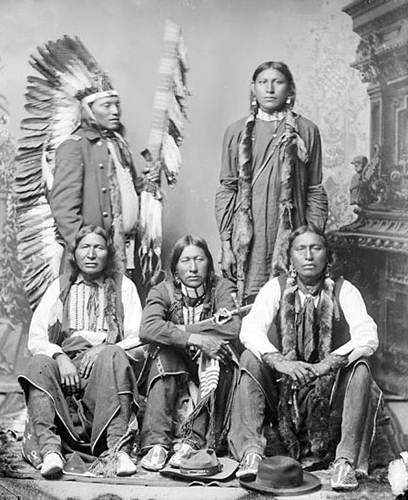




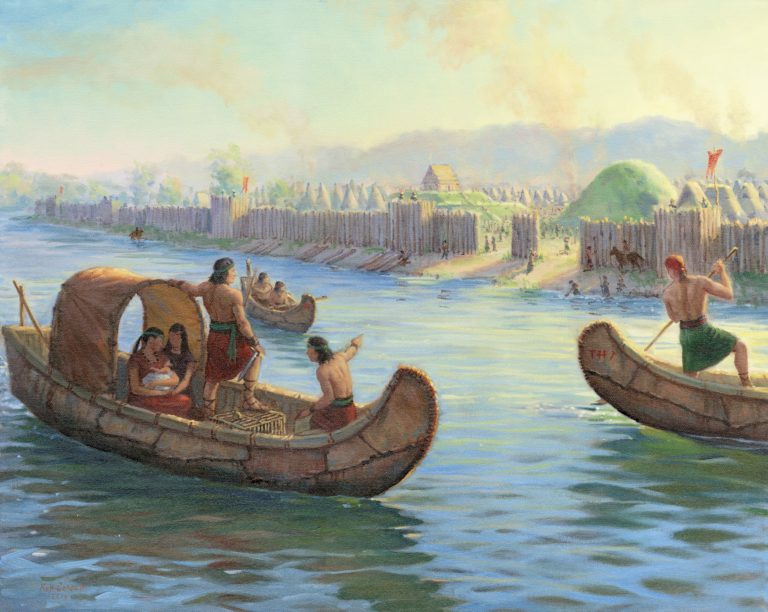
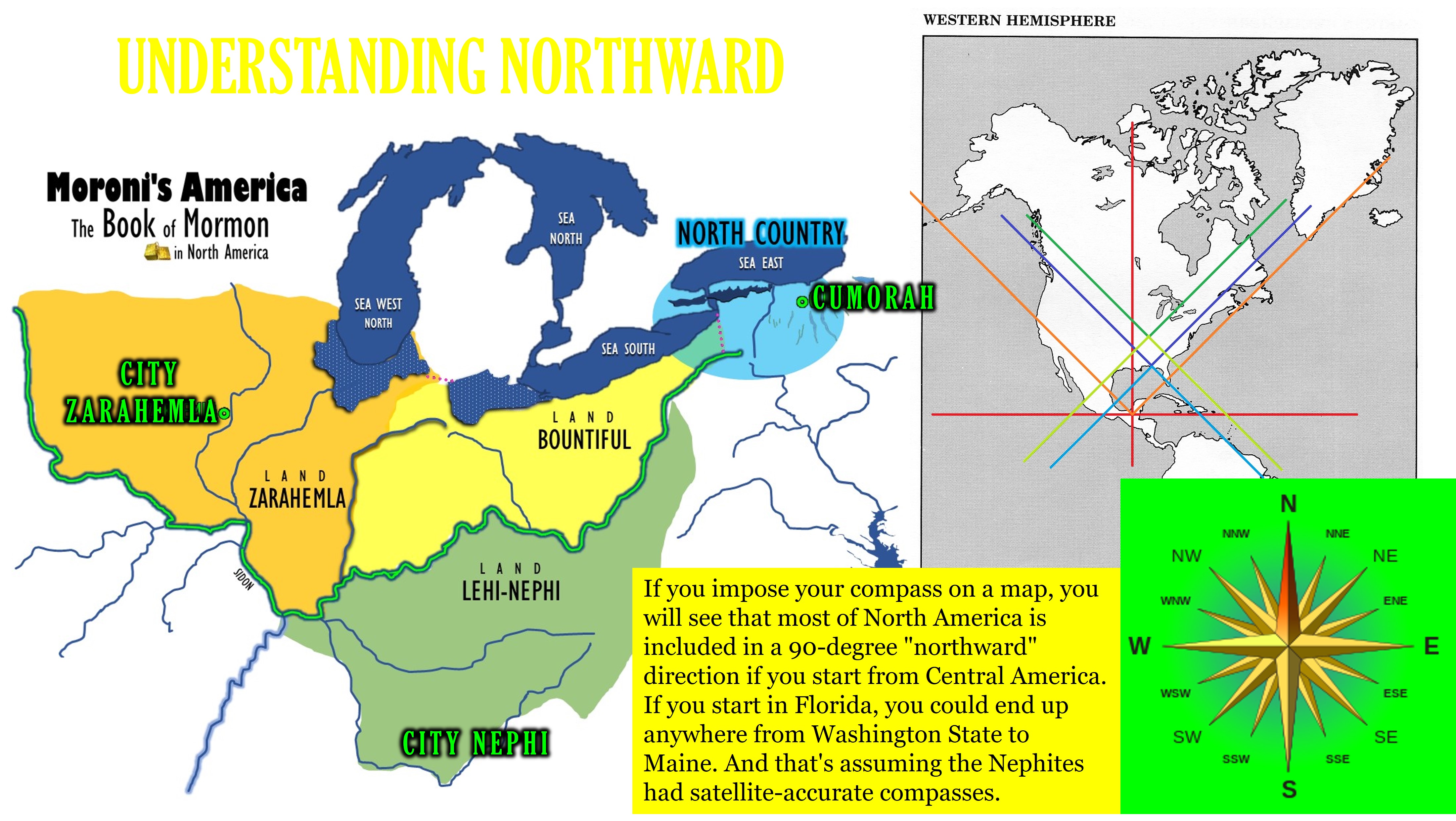
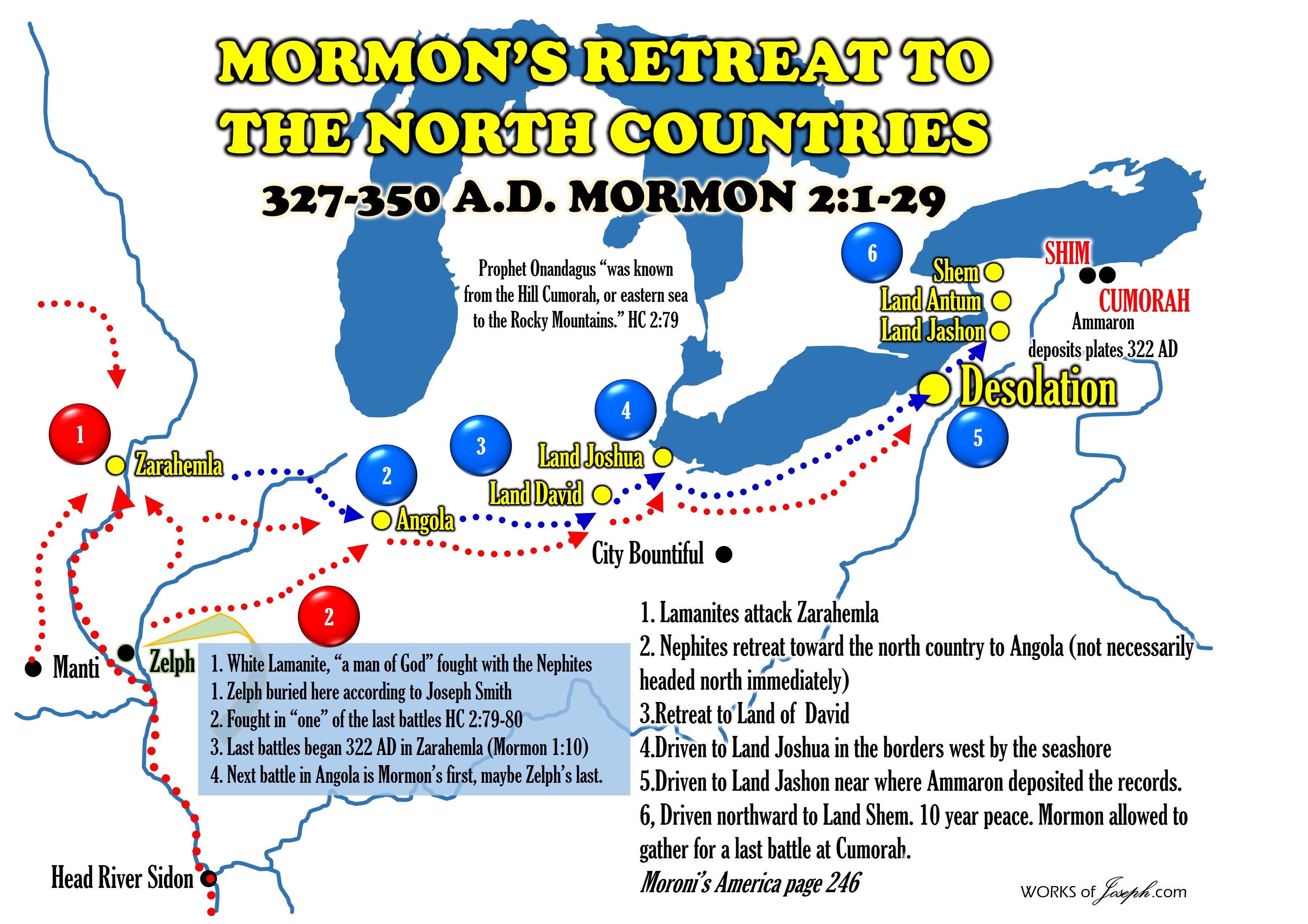
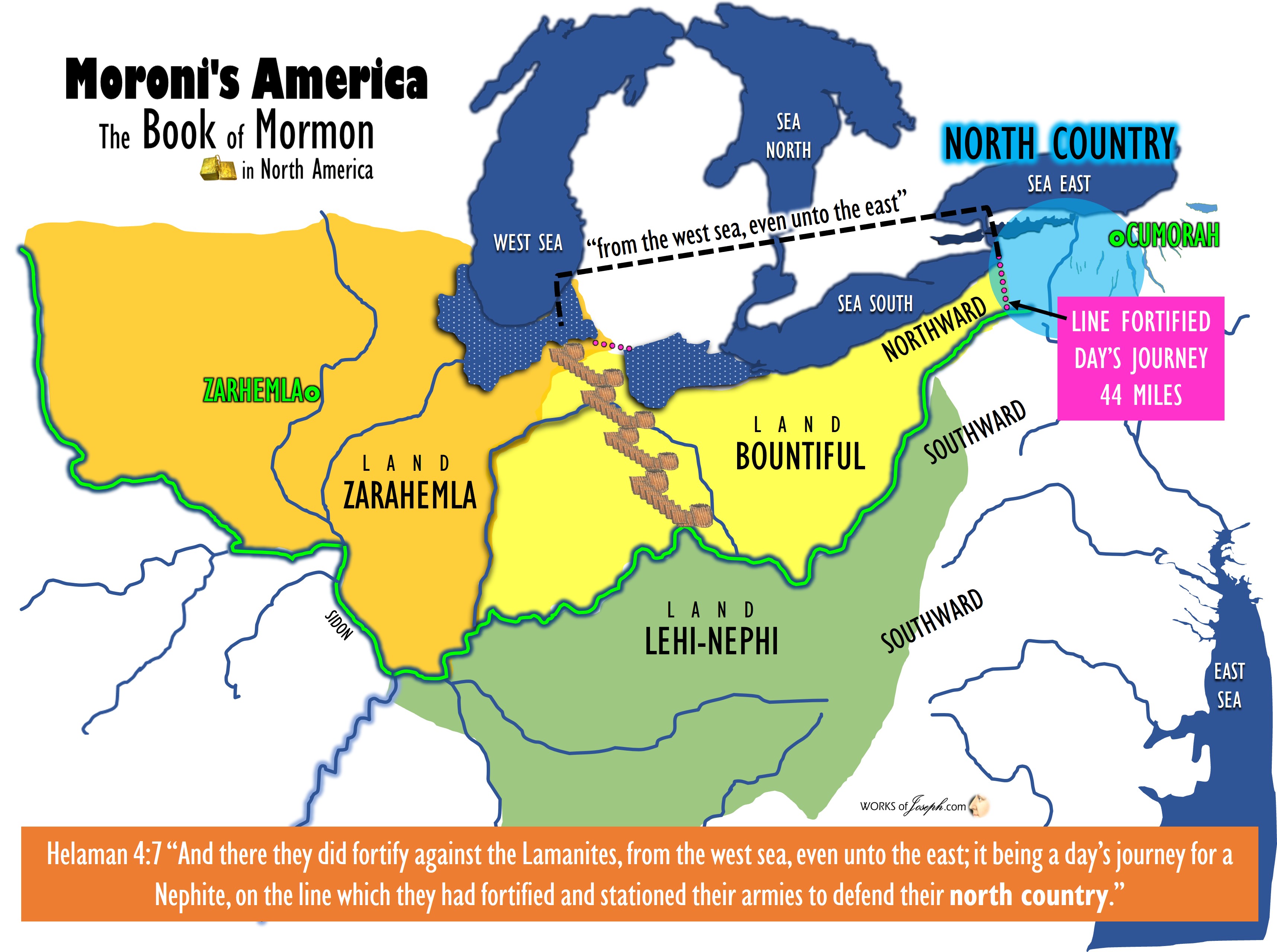 “Mormon refers to the land of Zarahemla as “the land southward.”


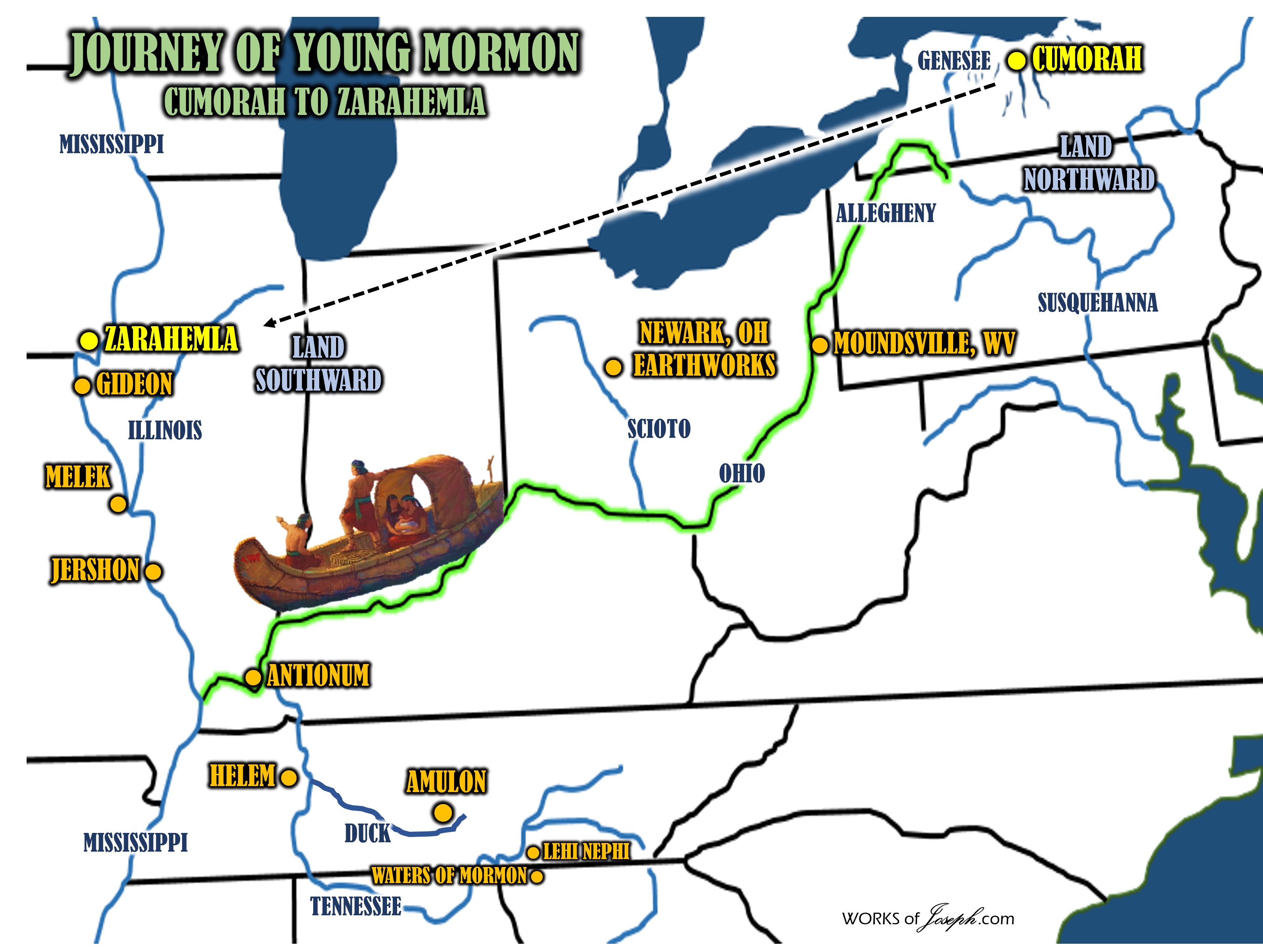 “Mormon’s father may have taken his son to visit historic sites along tributaries, such as the Scioto and Tennessee Rivers. He could have visited the ancient city of Nephi, [Waters of Mormon] the places where the sons of Mosiah taught the gospel to the Lamanites, and Alma’s land of Helam (Near Old Stone Fort, TN). He could have visited the battlefields described in Alma. The journey would be the perfect preparation for the future prophet and historian who would compile the history of Lehi’s descendants.” Moroni’s America page 242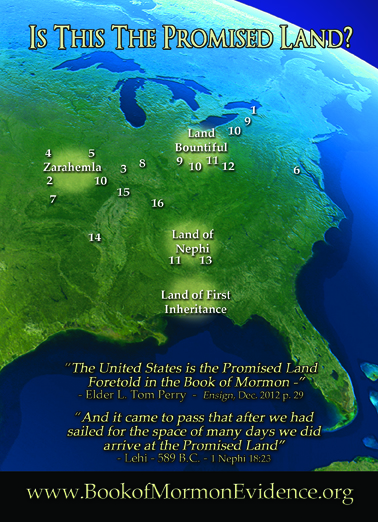
 FEATURES: FOR THE FIRST TIME EVER
 Visit our website at
 “…This modernistic theory of necessity, in order to be consistent, must place the waters of Ripliancum and the Hill Cumorah some place within the restricted territory of Central America, notwithstanding the teachings of the Church to the contrary for upwards of 100 years. Because of this theory some members of the Church have become confused and greatly disturbed in their faith in the Book of Mormon. It is for this reason that evidence is here presented to show that it is not only possible that these places could be located as the Church has held during the past century, but that in very deed such is the case… It is known that the Hill Cumorah where the Nephites were destroyed is the hill where the Jaredites were also destroyed. This hill was known to the Jaredites as Ramah. It was approximately near to the waters of Ripliancum, which the Book of Ether says, “by interpretation, is large, or to exceed all…
 Visit our website at
 The Annotated Book of Mormon by David Hocking and Rod Meldrum Page 24-25
 “Millennia ago he [Marion G. Romney] declared: “There shall none come into this land [he was speaking of America] save they shall be brought by the hand of the Lord… In the western part of the state of New York near Palmyra is a prominent hill known as the “hill Cumorah.” (Morm. 6:6.) On July twenty-fifth of this year, as I stood on the crest of that hill admiring with awe the breathtaking panorama which stretched out before me on every hand, my mind reverted to the events which occurred in that vicinity some twenty-five centuries ago—events which brought to an end the great Jaredite nation… Thus perished at the foot of Cumorah the remnant of the once mighty Jaredite nation, of whom the Lord had said, “There shall be none greater … upon all the face of the earth.” (Ether 1:43.)… This second civilization to which I refer, the Nephites, flourished in America between 600 B.C. and A.D. 400. Their civilization came to an end for the same reason, at the same place, and in the same manner as did the Jaredites…









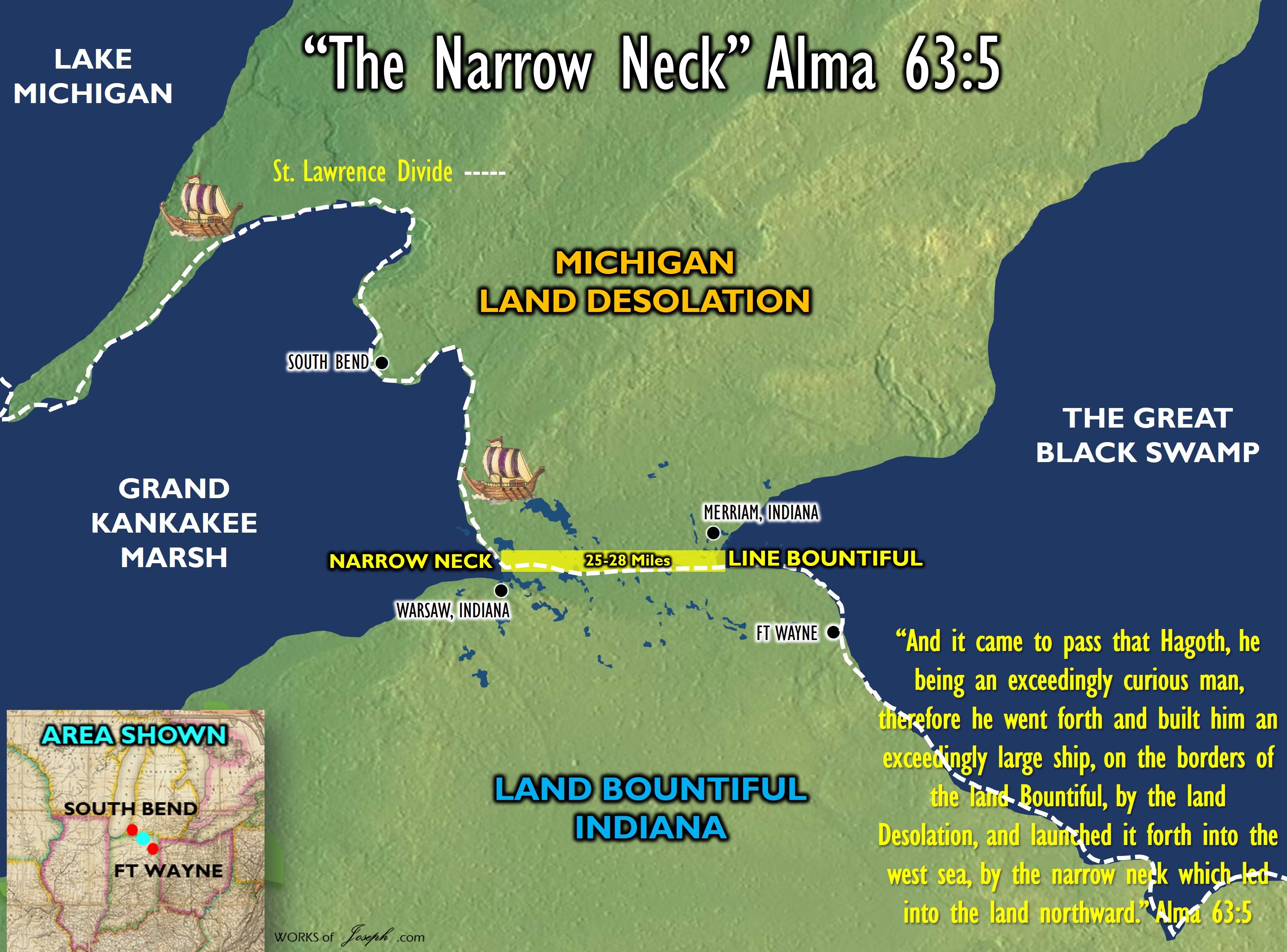
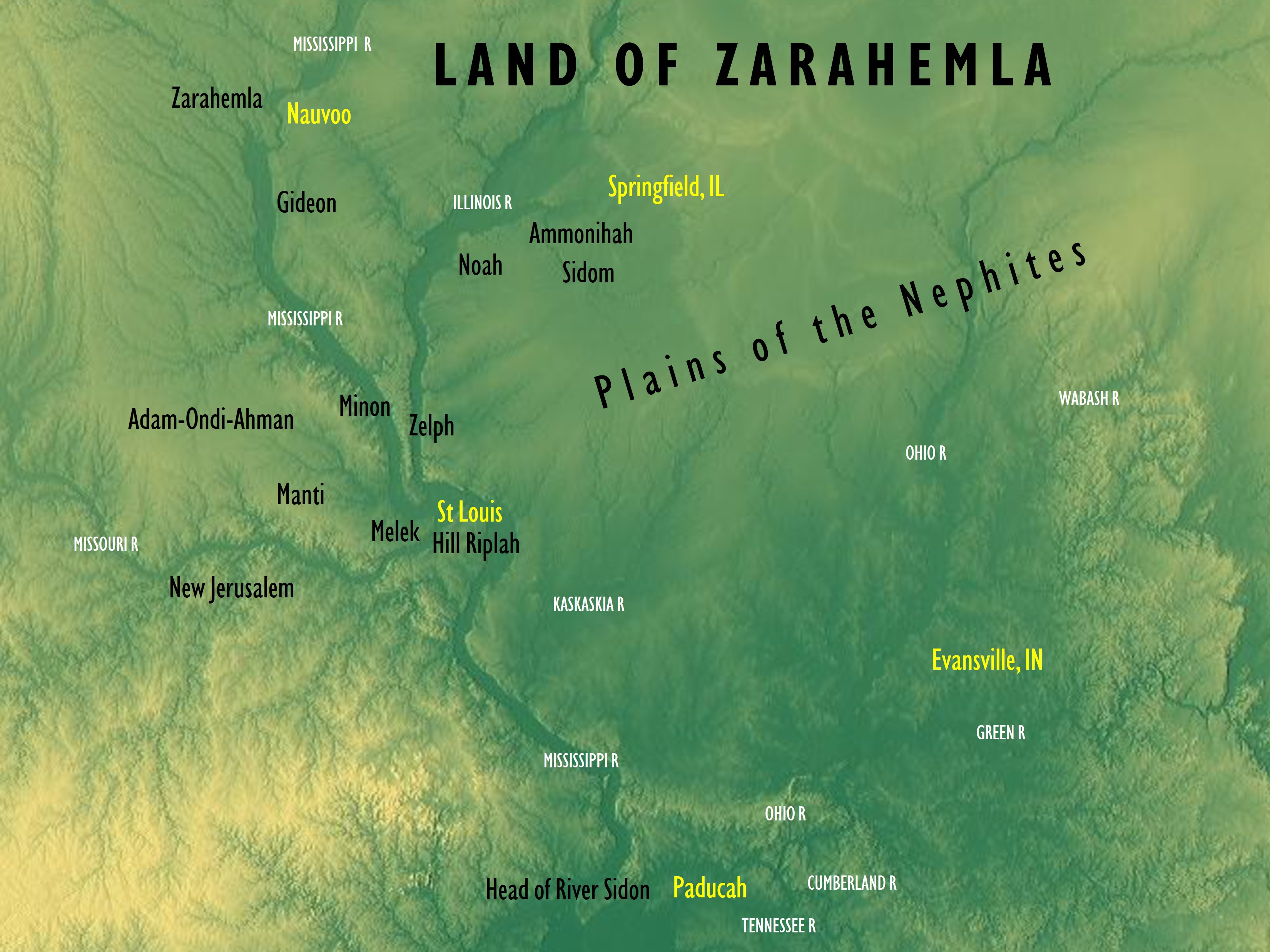

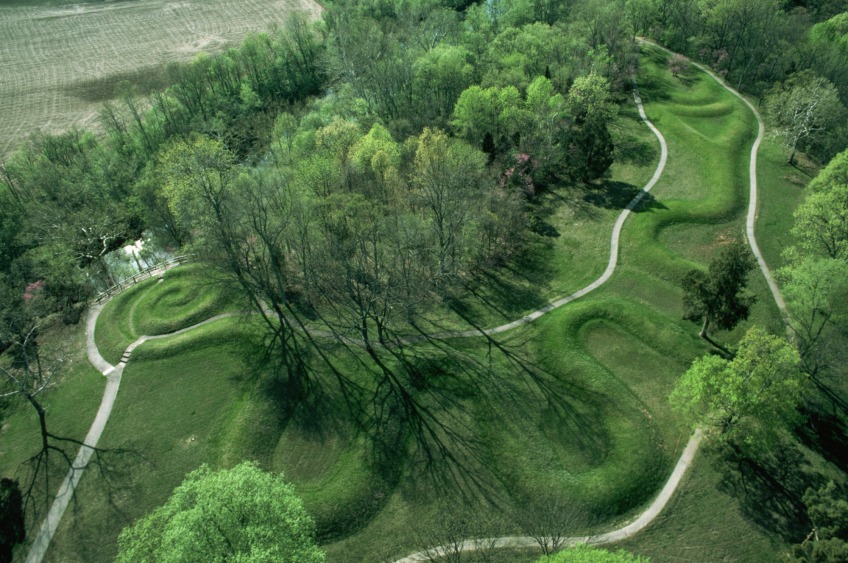





 Cowdery said, “The manner in which the plates were deposited: First, a hole of sufficient depth, (how deep I know not) was dug. At the bottom of this was laid a stone of suitable size, the upper surface being smooth. At each edge was placed a large quantity of cement, and into this cement, at the four edges of this stone, were placed, erect, four others, their bottom edges resting in the cement at the outer edges of the first stone. The four last named, when placed erect, formed a box, the corners, or where the edges of the four came in contact, were also cemented so firmly that the moisture from without was prevented from entering.





 The cartoons in this post are all from my great friend Val Chadwick Bagley. For 37 of the past 40 years he has believed in the Mesoamerican Theory and drawn cartoons reflecting that. He now believes in the Heartland Model and is having some fun sharing the differences between the two theories. It is amazing how Val also “just makes sense”. Purchase Val’s products below. Meso fans, just let go of the barriers and have some fun with these.


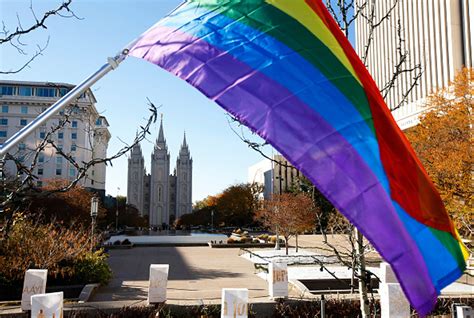

 BYU Graduate Receives Diploma Then Opens Her Robe To Show Pride Flag
“Was Elder Holland Prophetic in his BYU talk last summer? “Commandeering the graduation”. Is protesting the LGBTQ policies at BYU protesting the doctrine of the Church? What does the Pride Flag mean to you?” CWIC Media
BYU Graduate Receives Diploma Then Opens Her Robe To Show Pride Flag
“Was Elder Holland Prophetic in his BYU talk last summer? “Commandeering the graduation”. Is protesting the LGBTQ policies at BYU protesting the doctrine of the Church? What does the Pride Flag mean to you?” CWIC Media
 be sending out students that are ready to do the same in loving, intelligent and articulate ways. Yet, I fear that some faculty are not supportive of the Church’s doctrines and policies and choose to criticize them publicly. There are consequences to this. After having served a full-time mission and marrying her husband in the temple, a friend of mine recently left the church. In her graduation statement on a social media post, she credited [such and such a BYU program and its faculty] with the radicalizing of her attitudes and the destruction of her faith.”
 and acclaim of the world
 Brigham Young University biologist Steven Peck gave the Eugene England Memorial Lecture at Utah Valley University, a publicly-funded school, on Thursday. At the address, he delved into the rift between science and religion.”