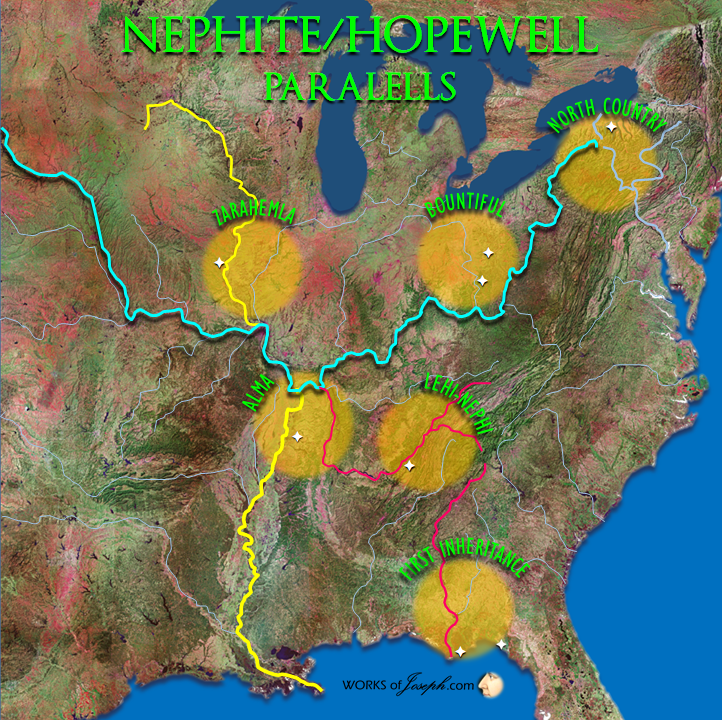
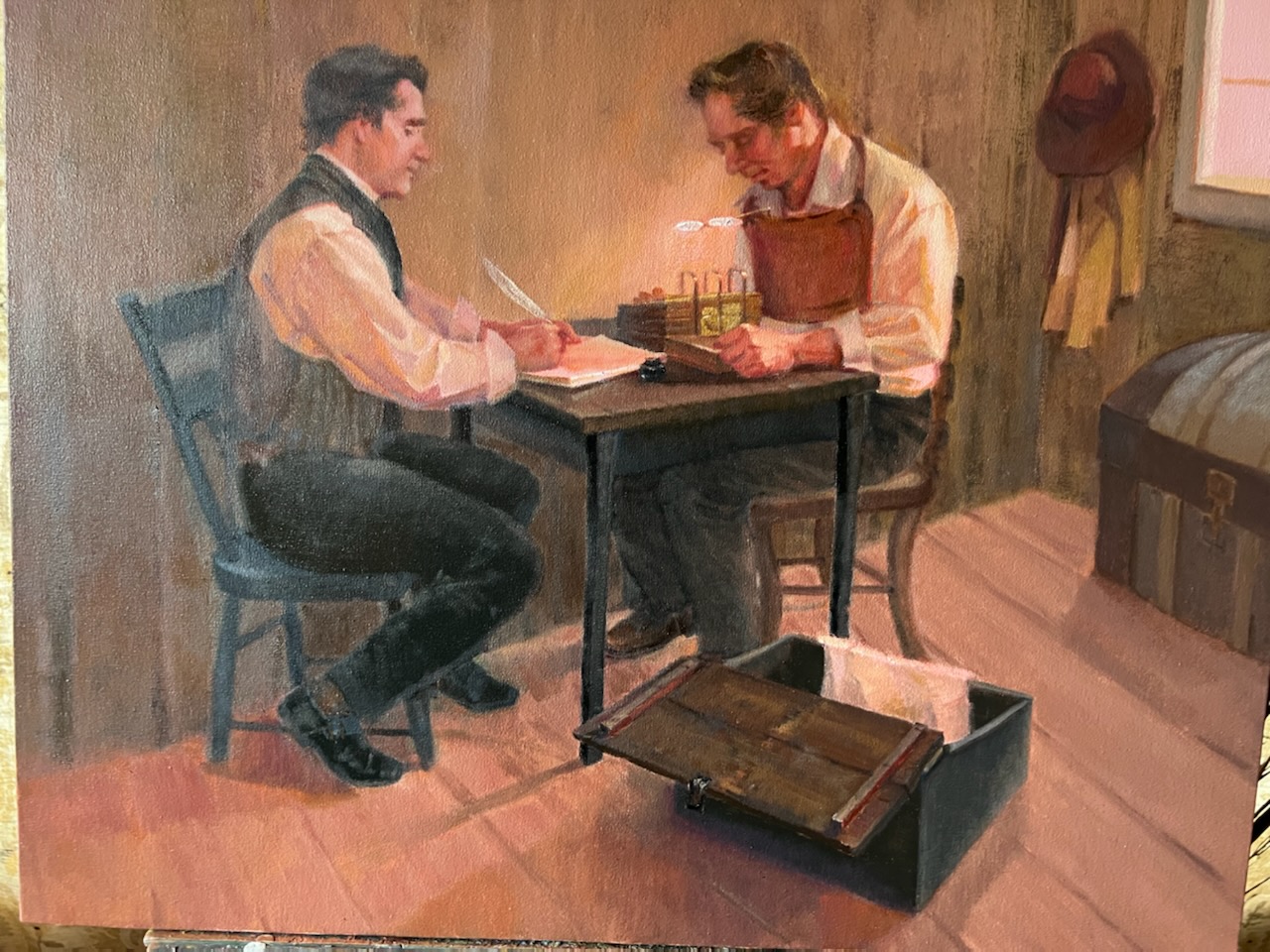
“Do you who trust and believe Joseph Smith, believe his words when he said to Emma that he was “wandering over the Plains of the Nephites?” Do you trust the fact that Joseph was camped on the Mississippi River near a small landing near the town of Atlas, Illinois? Do you indeed believe Joseph wrote said letter of June 4, 1834 as shown in the Joseph Smith papers?Was Joseph telling Emma the truth? Did he have any reason to be making something up here? Do you really think that Joseph was traveling on the very plains that the Nephites had once walked on, some 2,000 years ago? If he wasn’t why would Joseph say he was walking on those very plains of the Nephites? Was he really roving over the Nephite mounds and was it indeed a proof of the divine authenticity of the Book of Mormon?
Actual Letter in the JSP from Joseph to Emma. Handwriting of James p. MulhollandJoseph Near the Mississippi at Atlas, Illinois wrote this letter to Emma.. Joseph said, roving over the mounds and picking up Nephite bones in this area, is PROOF of the Divine Authenticity of the Book of Mormon. Only a Mesoamerican in a bubble could think differently. Why deny it, embrace it my intellectual friends.
Mark Wright a Mesoamerican friend once wrote while trying to downplay Joseph’s letter spoken of above saying, “in a letter to his wife Emma dated June 4, 1834, he gave a general account of what they encountered on their excursion:” That’s about all he said. Does Mark mean generally true or generally false, or he doesn’t know? What did they encounter on their excursion? Bones of real Nephites? Did they really see physical mounds? Did Joseph really say this, “proof of [the Book of Mormon’s] divine authenticity?” Yes, and Yes. So, Joseph spoke a FACT, not a FEELING. Joseph spoke the truth and I believe Joseph, and I know that Joseph knows that the plains of the Nephites in the Book of Mormon are in Ohio, Indiana, and Illinois. Letter to Emma Smith, 4 June 1834 Joseph Smith Papers
You can either believe Joseph or believe historians of BYU or intellectual professors who are more interested in staying a member of thier own group think, than they are of researching truth. If BYU and the leading LDS scientists had spent millions and millinos of dollars of research in the heartland, as they have in Mexico, we may know the truth by now.
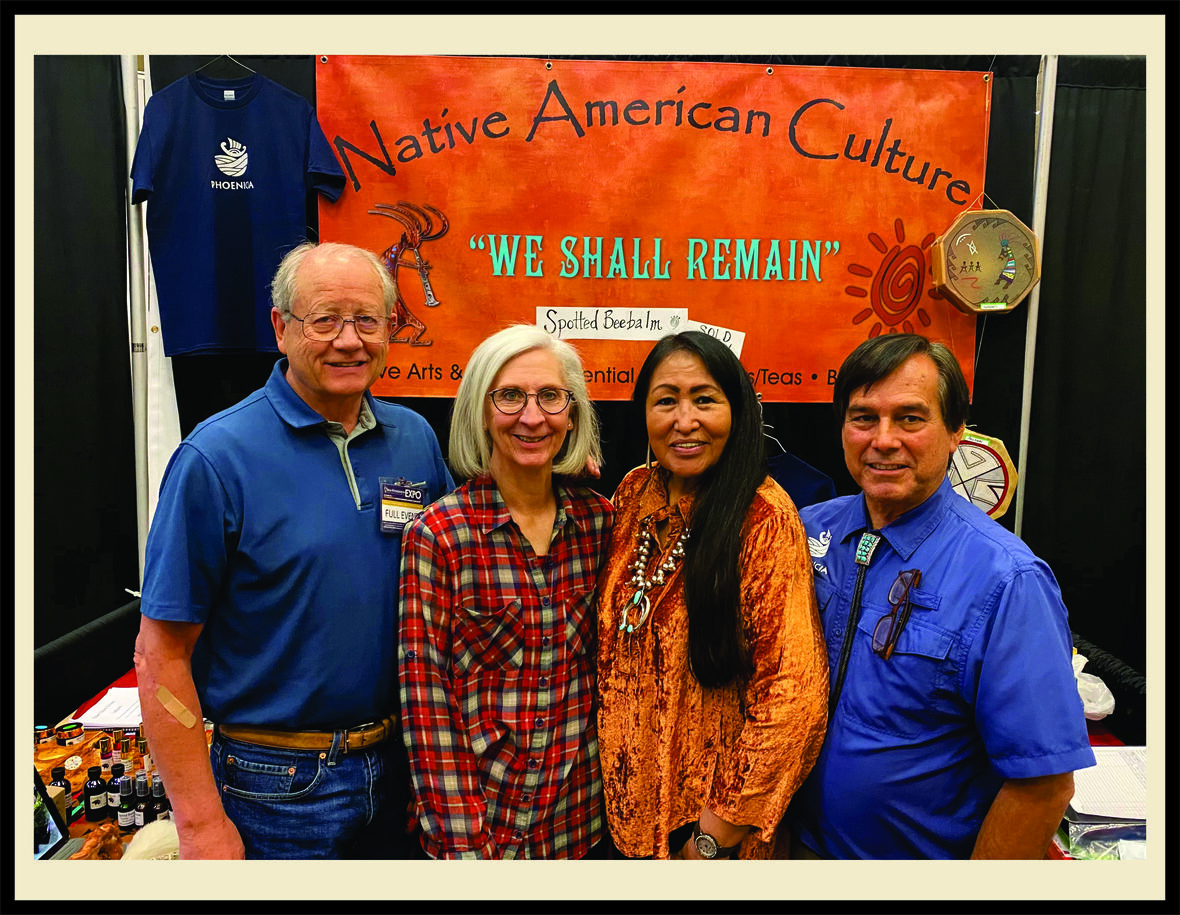
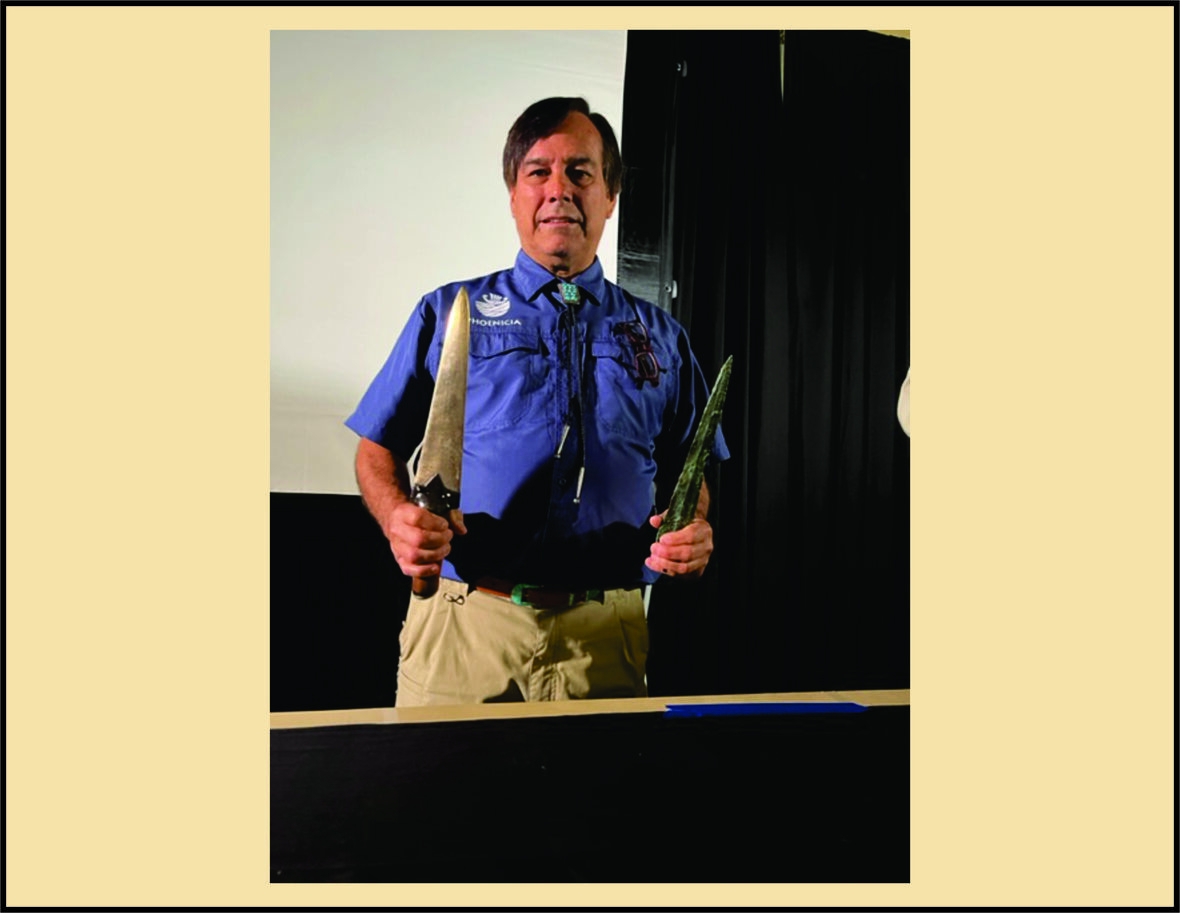
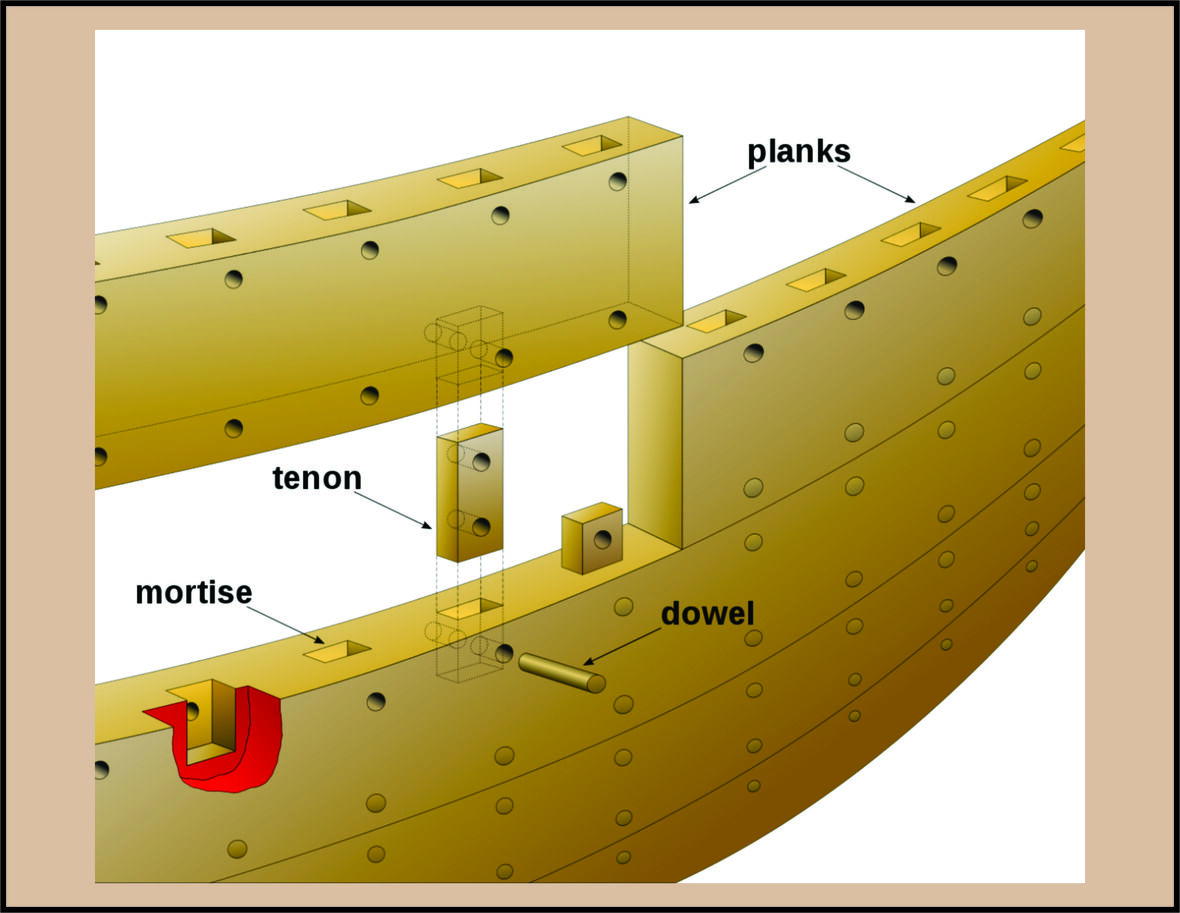
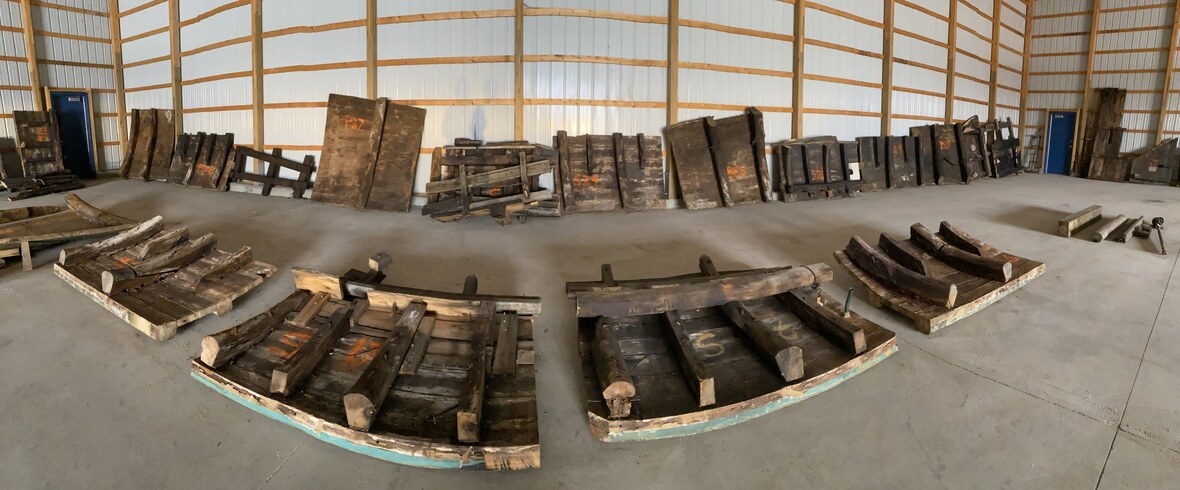
With the help of the Heartland Group, Wayne May, Dr. John Lefgren, Mike and Betty Lafontaine, Dr. Kevin Price and many others, we ARE finally spending some independent money from donors in search of the true Zarahemla near Montrose Iowa. We are also researching the Phoenicia Replica Ship’s voyage, which proves a possible route from the Old World to Florida that very likely says it’s possible for Lehi to land in Florida in about 589 BC. in a 600 BC sailing ship. See their efforts here. zarahemla.site
Rod Meldrum Asks, “Why do Intellectuals conflate when Joseph Smith does or does not have a revelation? The Mission to the Lamanites as declared and described by the Lord in the Doctrine and Covenants clearly reflects that Joseph sent the missionaries to the areas revealed and directed by the Lord. The scriptures imply that not only were they to preach to the Native Americans on this North American continent, but that they are a remnant of the seed of Lehi and “Lamanites” as described in the Book of Mormon and Doctrine and Covenants.” Rod Meldrum Prophecies and Promises page 94
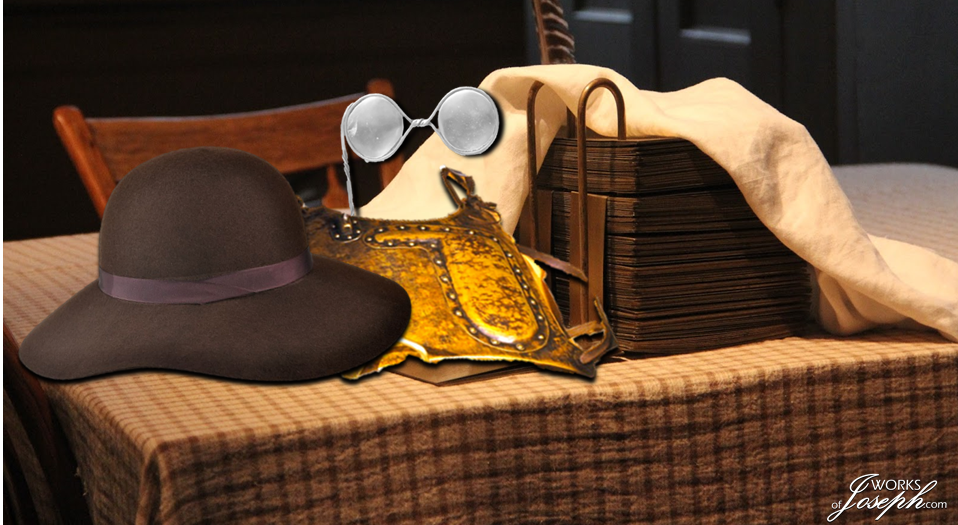
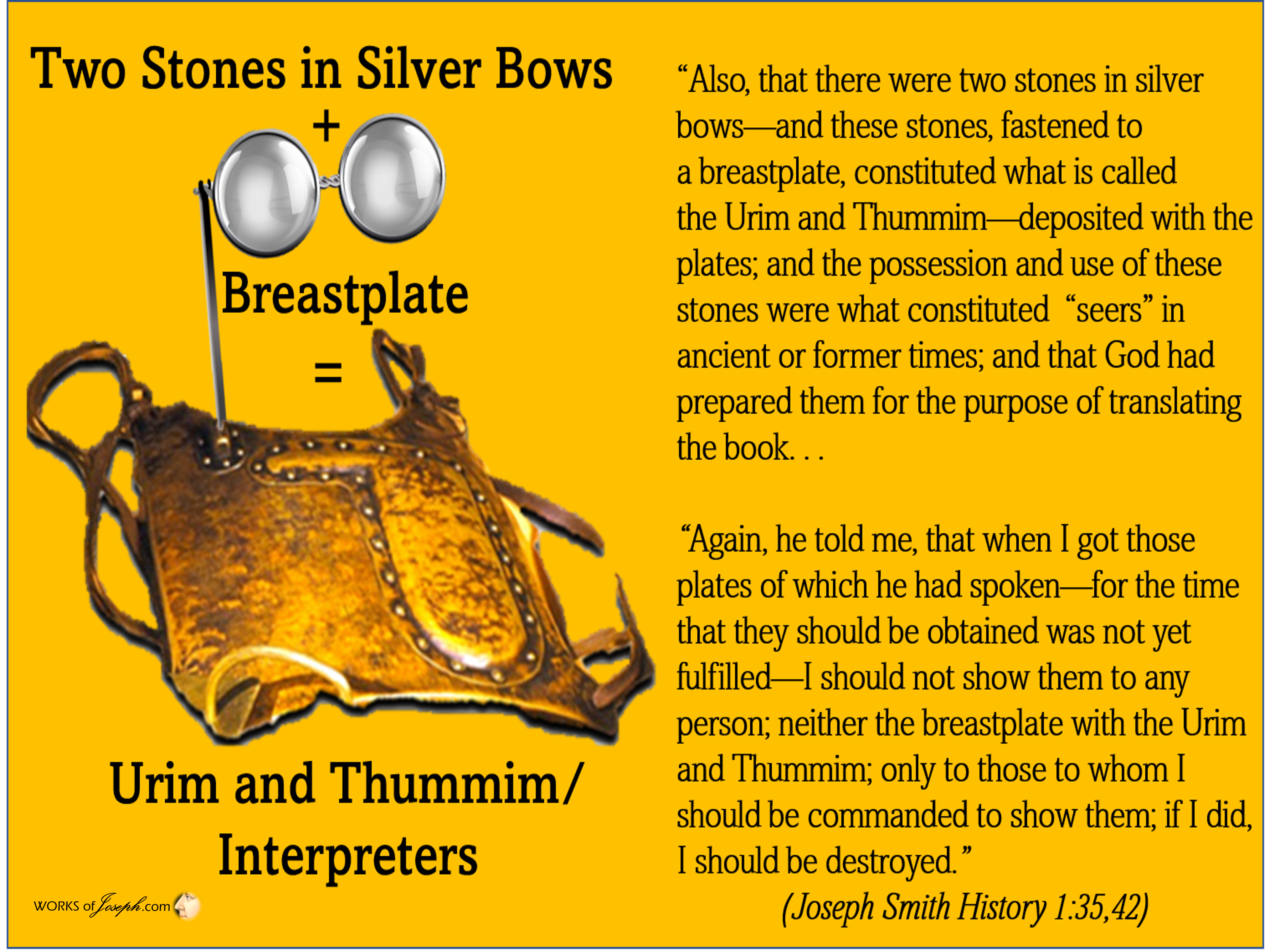
Rod Meldrum Endorses, “These Stones, Fastened to a Breastplate”
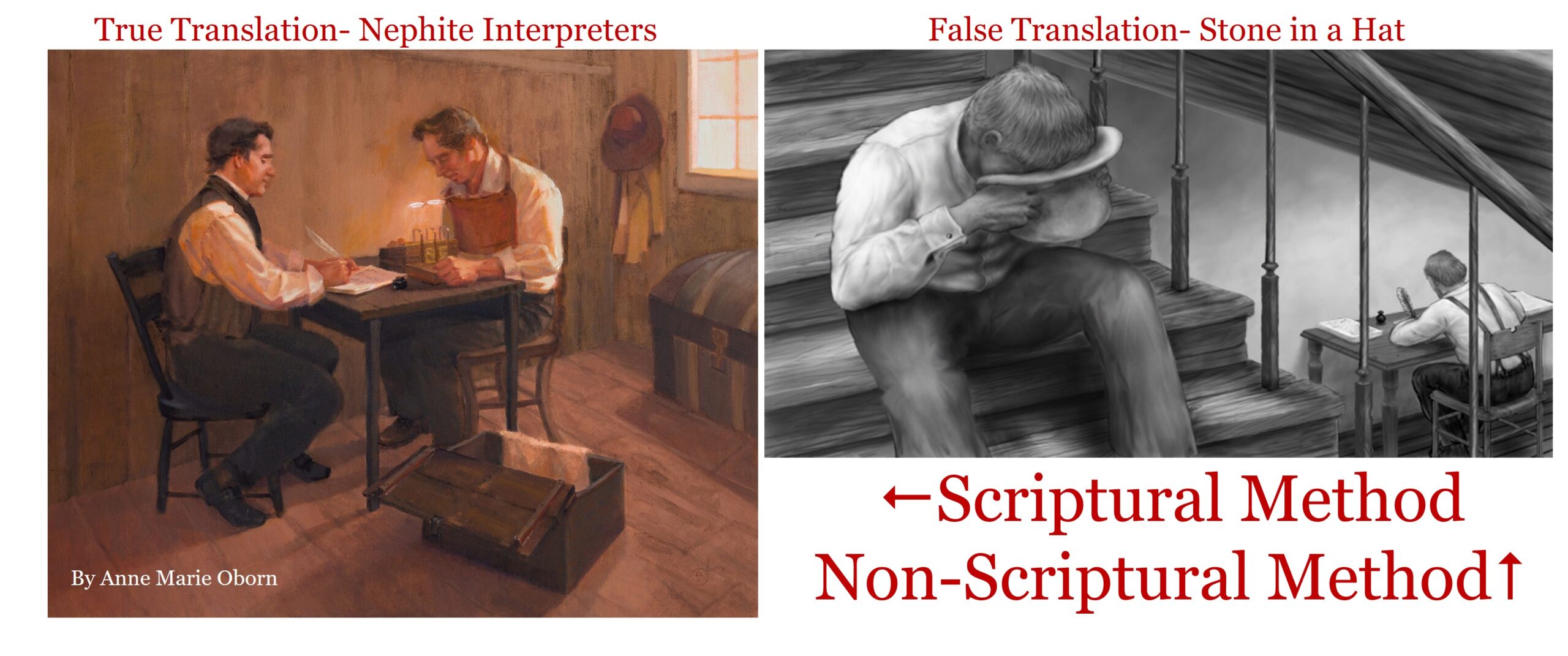
“Foundational to the Restoration is the validity of the translation of the Book of Mormon. The primary editors, Joseph Smith and Oliver Cowdrey, maintained that the process was accomplished using an instrument provided centuries in advance by the Lord for the very purpose of sacred inspired translation. Some detractors claimed that Joseph abandoned the
Lord’s instrument, the Urim and Thummim, for a more convenient stone in a hat. The Lord Himself in several revelations validated Joseph’s use of this instrument. Yet modern historians point to hostile witnesses to bolster their stone in the hat (SITH) narrative. Rian explores important new insights into this critical aspect of Church History.” Rod Meldrum Endorsement page i, “These Stones Fastened to a Breastplate” by Rian Nelson.
Mr. Meldrum continues to say, “The writers of the articles at fairlds.org and Book of Mormon Central, have concluded that perhaps these revelations were not directly from the Lord but just Joseph’s choice of words and therefore cannot be taken at face value without secondary interpretation. FAIR writes: “Many readers assume that revelations in the Doctrine and Covenants in which Joseph Smith speaks in “God’s voice” are direct “quotations” from God. Joseph didn’t claim to be hearing a voice, and he didn’t claim to be quoting God or “taking dictation.” Rather, impressions would come to him, which he would put into words. Joseph clearly did not consider them “direct quotations” from God, since he was quite happy to revise them, edit them later, etc.…This means that “Lamanites” to describe the American Indians was Joseph’s word choice.” It would appear that there is a need by FAIR to maintain a legitimacy for the Limited Geography Theory (LGT) by also writing “The few personal statements he made on Book of Mormon geography indicate that he believed it took place on a hemispheric scale, so it would be natural for him to believe that all Native Americans were pure descendants of Laman, and hence were literal “Lamanites.” See also http://en.fairmormon.org/ Lamanites in the Doctrine and Covenants” Note 54 by Rod Meldrum Prophecies and Promises
The Book of Mormon is- A REAL HISTORY!
Why are more and more people of the world claiming that Noah’s flood was fictional or just a good story? More people are saying that Adam wasn’t the first man on this earth. Why are more and more members of the Church of Jesus Christ of Latter-day Saints claiming that the Book of Mormon contains a lot of great parables that aren’t real stories, but just parables that can teach us good things? Is the Bible the Word of God? We answer yes as far as it is translated correctly. We do know however that the stories in the Bible are actual accounts of real people in real places, just as the Book of Mormon is.
Why would we believe anything else? Because Satan’s plan is in full force. Remember this is Satan’s world right now. It won’t be Christ’s until the second coming. The craftiness of man is constantly being mixed with scripture and folklore. The “Great and Spacious building” is truly coming from the halls of academia. Many intellectuals continue pointing their fingers at humble followers of God from the heights of those house’s of cards. “Who’s on the Lord’s side who?” There are “save two churches”, one that speaks the truth of the Savior and all others who teach of man and his so-called wisdom.
Educated Men
“The more I see of educated men—I mean those who are trained in the doctrines and philosophies now taught in the world, the less regard I have for them. Modern theories which are so popular today just do not harmonize with the gospel as revealed to the prophets, and it would be amusing if it were not a tragedy to see how some of our educated brethren attempt to harmonize the theories of men with the revealed word of the Lord. Thank the Lord, there is still some faith left and some members who still cherish the word of the Lord and accept the prophets. Surely the world is ripening rapidly for the destruction, and Satan has power and dominion over his own. If any are saved surely the Lord must soon come and have power over his Saints and reign in their midst, and execute ‘judgment upon Idumea, or the world.'” (Joseph Fielding Smith, Jr., and John J. Stewart, The Life of Joseph Fielding Smith [Salt Lake City: Deseret Book Co., 1972], 210 – 211.)
How You Can Know the Truth of Book of Mormon Geography
“Individual members are encouraged to independently strive to receive their own spiritual confirmation of the truthfulness of Church doctrine. Moreover, the Church exhorts all people to approach the gospel not only intellectually but with the intellect and the spirit, a process in which reason and faith work together.” LDS Newsroom 4 MAY 2007
“You don’t have to wonder about what is true. You do not have to wonder whom you can safely trust. Through personal revelation, you can receive your own witness that the Book of Mormon is the word of God, that Joseph Smith is a prophet, and that this is the Lord’s Church. Regardless of what others may say or do, no one can ever take away a witness borne to your heart and mind about what is true.
I urge you to stretch beyond your current spiritual ability to receive personal revelation, for the Lord has promised that “if thou shalt [seek], thou shalt receive revelation upon revelation, knowledge upon knowledge, that thou mayest know the mysteries and peaceable things—that which bringeth joy, that which bringeth life eternal.” Revelation for the Church, Revelation for Our Lives by President Russell M. Nelson
I’m Not Neutral
Click to enlarge a Heartland version of the Book of Mormon
As you read this recent blog of Jonathan’s, don’t be discouraged, be bold! Don’t allow fear to affect your faith! The truth shall be known and we must continue steadfastly in living and teaching the truth of the Book of Mormon to the world. The Book of Mormon is real and true and it speaks of one amazing hill Cumorah in upstate New York. The “Plains of the Nephites” as Joseph said to Emma are in Ohio, Illinois, and Indiana, in the United States of America. I don’t speak for the Church of Jesus Christ of Latter-day Saints, but I do speak of common sense and truth as I understand it. I love this Church and the Brethren are true messengers of Christ. The Church remains neutral on geography, but they didn’t say I had to be. I know the land spoken of in the Book of Mormon, is the United States of America, and I am so blessed to live in this country. May we continue to share this true message of the Book of Mormon with the world.
Only 49% of LDS believe Book of Mormon is a literal, historical account? by Jonathan Neville
“Jana Reiss published a fascinating detail recently about the beliefs of Church members about whether the Book of Mormon is a literal, historical account:
More religiously orthodox. Utah Mormons were more devout on almost every testimony question. These differences were less pronounced on questions of basic Christian belief (God, Jesus, etc.) and more visible on specifically Mormon questions about the Book of Mormon, Joseph Smith, and the role of apostles and prophets today. For example, there’s a twenty-point difference between the Utah Mormons who strongly agree that the Book of Mormon is a “literal, historical account” (69%) and the non-Utah Mormons who do (49%). In many cases on these testimony questions, non-Utah folks would choose the second option of “somewhat” agree rather than “strongly” agree. So it doesn’t mean they don’t believe in Mormon teachings, but they may hold them less tightly than Utah Mormons tend to.
Purchase Today
This indicates that 1/3 of devout Utah Mormons don’t strongly believe the Book of Mormon is a literal, historical account, and less than 1/2 of non-Utah Mormons believe that.
I suspect that the difference between the Utah and non-Utah Mormons is partly attributable to Utah Mormons having fewer interactions with people who challenge their faith in the Book of Mormon; i.e., they let bias confirmation guide them.
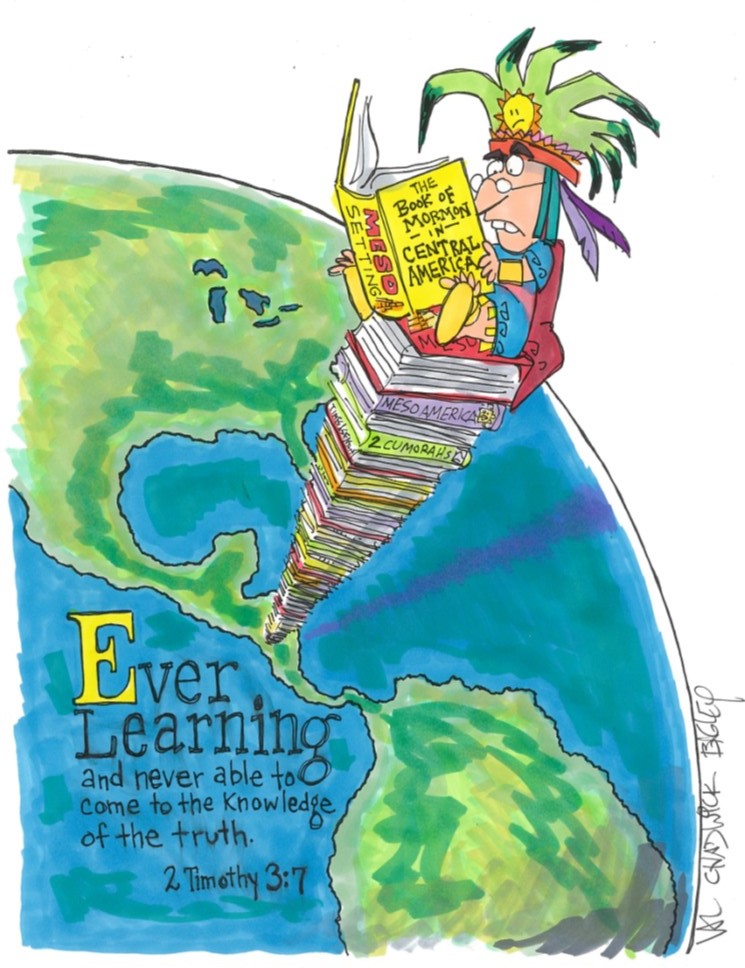
Those who make inquiries on the Internet quickly realize that outside of a handful of M2C intellectuals and their followers, no Mesoamerican scholars see any links between actual Mayan culture and the Book of Mormon. As I’ve shown many times, the so-called “correspondences” touted by the M2C intellectuals are illusory and unpersuasive to those who are outside the M2C bubble..
_____
The difference could also be attributed to demographics; i.e., non-Utah Mormons are generally younger, and younger LDS are less likely to believe the Book of Mormon is a literal history because of what LDS youth are being taught in CES and at BYU.
As LDS youth go through CES and BYU and learn the Book of Mormon by referring to the fantasy map, even fewer will believe it is a literal, historical account.
BYU fantasy map that teaches the prophets are wrong about the New York Cumorah This map is the work of fine scholars at BYU who claim it is the best representation of the geography-related passages in the text. Of course, they really mean it’s the best representation of their M2C-driven interpretation; other interpretations of the text fully support the teachings of the prophets.
BYU fantasy map that teaches the prophets are wrong about the New York Cumorah
Church members must realize that these fine scholars also teach that the prophets are wrong about the New York Cumorah. That’s why, in their map, they place Cumorah at the upper part of this fantasy map, as far from the real-world New York as possible.
This BYU map has been taught for several years now. Every new student has to learn this map in their introductory Book of Mormon classes. CES uses a similar map.
My question is, how could any trusting youth in the Church believe the Book of Mormon is a literal, historical account when his/her CES/BYU teachers claim a fantasy map is the best fit for the geography?
Especially when these CES/BYU teachers are telling the youth that the prophets are wrong?
_____
The M2C intellectuals, who claim to have been hired by the prophets to guide the Church, do, in fact, seem to be guiding the Church through their influence on the youth.
The inevitable result of this course will be rejection of the historicity of the Book of Mormon. What impact will that have? I’ll discuss that in an upcoming post.
_____
Meanwhile, let’s consider what course we’re on.
The de-literalizing of the Book of Mormon became apparent to me when I took a closer look at the lesson manuals, the CES/BYU curriculum, the Saints book, the visitors centers, etc. These all repudiate the teachings of the prophets about the New York Cumorah. I attribute all of those to the M2C Church employees.
True, members of the Quorum of the Twelve do approve all of this, at some level. But they can only review what the employees show them, and the employees only show them M2C approved material.
So far, not one Apostle or President of the Church has repudiated or even questioned the teachings of prior prophets about the New York Cumorah.
_____
Lately, lds.org has linked to the groups who are promoting the fictional fantasy maps of the Book of Mormon. At BYU Education Week, they offer courses in Lessons from the Book of Mormon and Lessons from the Chronicles of Narnia back-to-back.
And it has been 40 years since anyone speaking in General Conference declared the Book of Mormon is a real history.
When I go back and re-read the conference talks and other messages, they mostly emphasize the content of the book, not it’s historical reality. The parables in the Bible are discussed in the same way; i.e., stories that teach true principles.
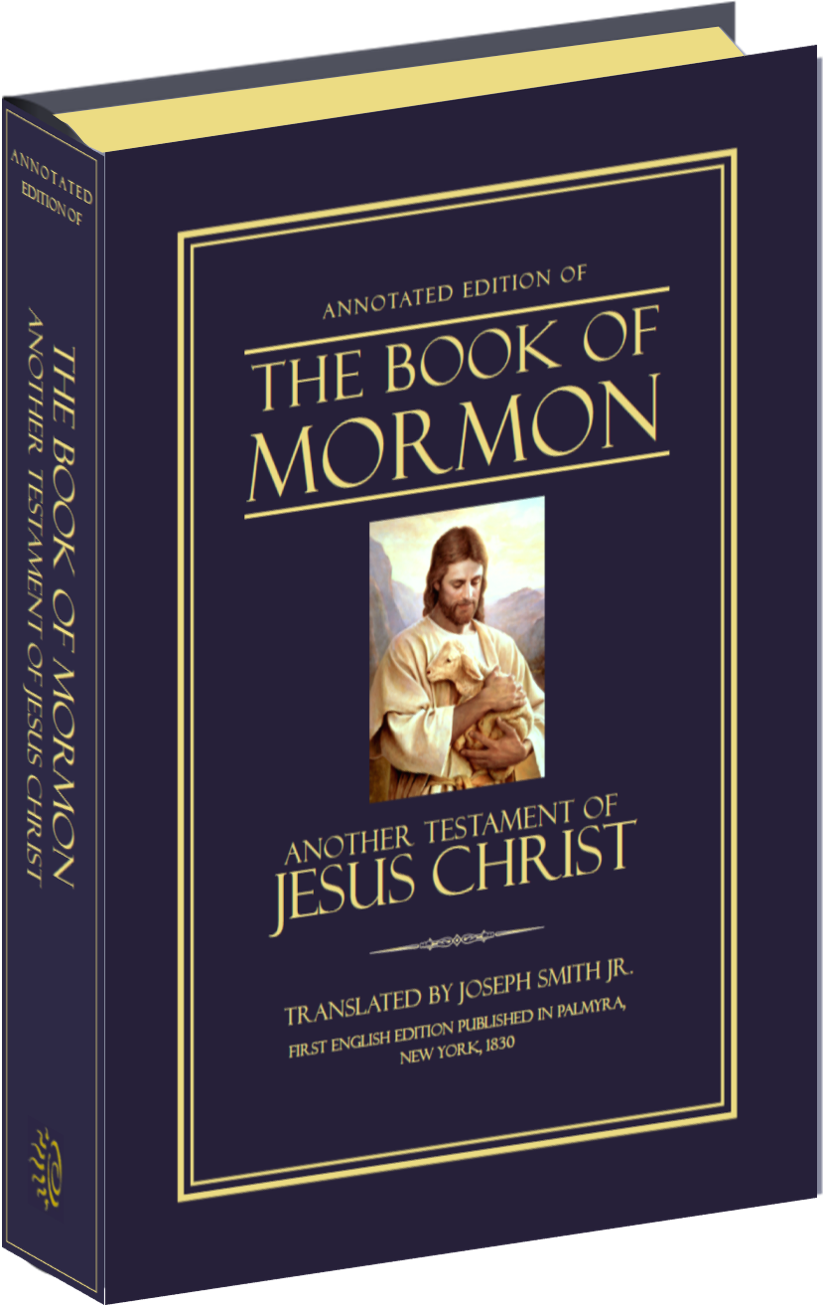
Buy the Annotated Book of Mormon today!
Of course we all stipulate that the message of the Book of Mormon is more important than its history, but it is the literal, divine authenticity of the Book of Mormon–its historicity–that makes it a miraculous manifestation of God’s involvement with the world. As an inspired parable, it may have power like the Biblical parables, but the power of the book is, in my view, greatly diminished.
The Church History Department is instructing their staff and volunteers to tell people that Joseph never actually used the plates; instead, he kept them covered with a cloth while he read the words on a stone in a hat. Now Skousen and Carmack are saying Joseph didn’t even translate the plates, an idea that is getting zero pushback from Church leaders and a warm welcome from the intellectuals, in part because it corroborates their view that Joseph Smith was merely an ignorant farm-boy speculator who misled the Church about the New York Cumorah.
People tell me that when they ask Church leaders about Book of Mormon geography, the standard response is “We don’t talk about that.” That’s also the response missionaries are instructed to give whenever the question arises.
I realize the historicity doesn’t matter to those who already want to believe; bias confirmation always conquers lack of evidence. I’m more interested in the people who want at least some touchstone with reality.
Purchase Here!
During his lifetime, Joseph Smith emphasized the literal, historical reality of the Book of Mormon. He helped Oliver Cowdery write Letter VII, which teaches it was a fact that the final battles of the Nephites and Jaredites took place in the valley west of the hill Cumorah in western New York and that the repository of Nephite records (Mormon 6:6) was in the same hill. Joseph endorsed Letter VII and made sure it was widely distributed so all Church members could read it.
Today, few Church members have ever heard of Letter VII.
Instead, they’re learning that the Book of Mormon took place in a fictional fantasyland.
“The final struggles between Nephites and Lamanites were waged in the vicinity of the Hill Cumorah, in what is now the State of New York, resulting in the destruction of the Nephites as a nation, about 400 A.D. The last Nephite representative was Moroni, who, wandering for safety from place to place, daily expecting death from the victorious Lamanites, wrote the concluding parts of the Book of Mormon, and hid the record in Cumorah. It was this same Moroni who, as a resurrected being, gave the records into the hands of Joseph Smith in the present dispensation.” James Talmage Articles of Faith
“The United States is the promised land foretold in the Book of Mormon—a place where divine guidance directed inspired men to create the conditions necessary for the Restoration of the gospel of Jesus Christ.” Elder L. Tom Perry Ensign Dec. 2012
“The Lord gave a divine promise to the ancient inhabitants of this favored country (the United States): ‘Behold, this is a choice land, and whatsoever nation shall possess it shall be free from bondage, and from captivity, and from all other nations under heaven, if they will but serve the God of the land, who is Jesus Christ” (Ether 2:12).
Our Heavenly Father inspired the leaders of…the United States of America, that they might together, under His direction, having been raised up by God for the purpose, establish the Constitution of this country and…Bill of Rights, that by the year of our Lord 1805 [there would be] a climate where our Heavenly Father could send into this period of mortality a choice spirit who would be known as Joseph Smith, Jr.” Teachings of Thomas S. Monson by Thomas S. Monson2011 (Ordained an Apostle, 1963; ordained President of the Church, 2008)
Mark of the Michigan Mound Builders Yod-Hey-Vau (Ojibwa Tongue) The Creator’s Son Deity or God Son of the Right Hand Egyptian Discovery of AmericaPurchase today
The special LDS editions of the Ancient American contain approx. 39 pages each, covering a wide variety of topics from Native American Traditions, Archeological evidence of the Book of Mormon in North America, and writings from Joseph Smith and the Book of Mormon leaving no doubt that America is the “The Promise Land” of the scriptures.
References:
Annals of the Cakchiquels. Title of the Lords of Totonicapan, published by University of Oklahoma Press. Norman. OK. 1953, Translated by Della Goetz
Book of Mormon, published by The Church of Jesus Christ of Latter Day Saints, 1987
Christ in North America, published by Resource Communications Inc., Tigard, OR, 1963, Delbert W. Curtis
Fair Gods and Feathered Serpents, published by Horizon Publishers, Bountiful, UT, 1997, Professor Terry O’Brien
Gospel of the Great Spirit, published by Morning Star Pub, Zion. USA. 1990. Joshua M. Bennett
He Walked the Americas, published by Legend Press, Amherst, WI, 1963. L. Taylor Hansen
History of the Ojibwa People, published by Minnesota Historical Society Press, St.Paul, MN. 1984, William W. Warren
Holy Bible, King James Version, Old and New Testament, published by The Church of Jesus Christ of Latter Day Saints, 1987
Ancient American Volume l, Issue #5, Stone, Clay, Copper, Archives of the Past, March/April 1994, The Mystic Symbol Demystified, David A. Deal
Ancient American Volume 2, Issue #9, Inca Stone, March/April 1995, The Mystic Symbol Demystified, Kenneth Moore.
IN 1982, a discovery apparently unrelated to the Michigan tablets was alleged to have been made by Mr. Russell Burrows of Olney, Illinois. He claims to have found a cave in the southern part of his state loaded with the treasures of foreign visitors who crossed the seas from the Near East, Europe and Africa about 2,000 years ago.
He claims the site is also a rich repository of stone records belonging to some unknown people who possessed a high level of culture. I have known Mr. Burrows since 1993, and compiled a photographic library of some of his items, which number over 2,000 such stones. I personally examined about half of them, and have concluded they are authentic artifacts. Although he refuses to divulge the location of his cave, the sheer number and sometimes fine workmanship of the artifacts he allegedly took from the site tend to support their identification as genuine artifacts.
Even so, many of my fellow diffusionists have condemned the Burrows Cave finds as part of a hoax. Admittedly, the tangle of frustrating obstacles, legal and otherwise, preventing any kind of access to the location’s whereabouts have disenchanted very many investigators. But the full story of Burrows Cave, while yet to be told, is gradually unfolding with the gradual release of objects never before seen, and someday we may learn everything there is to know about this site. There may be a parallel here with the Dead Sea scrolls, discovered in 1948. Even now, a complete accounting of this find has still not been disclosed to the public.
Purchase all 5 Now
Mr. Burrows telephoned me two years ago to say that he had purposely withheld some inscribed stones from sale because of the imagery they featured; namely, identifiably Christian scenes, mostly Old Testament. He was uncomfortable with these items, because he feared critics would use such obvious themes to further debunk his discovery. Mr. Burrows knew some Indians had knowledge of Old World traditions and Old Testament stories. But what concerned him was, as he put it, “the Jesus stones.”
At my request, he sent me photographs of them, and I was able to compare their images of evidently Old Testament themes with similar representations found on the Michigan tablets. I was astonished to notice that both sets not only featured scenes of Jesus Christ, but also the same “Mystic Symbol.” The same symbol appears in southern Illinois 62 years after the last published information concerning the Michigan mound builders using this identical mark. Approximately 20,000 to 30,000 Michigan artifacts were excavated from 1848 to the 1920’s, compared with the 6,000 to 7,000 Burrows Cave stones of southern Illinois removed between 1982 and 1986. These fundamental facts render any possibility for either collection being a hoax extremely remote, if not impossible.
The predominant glyph found on the Burrows Cave objects is the so-called “Helios symbol,” coined by epigrapher, Paul Shaffranke. Even this important character is found in conjunction with the Michigan symbol to suggest some type of inter-action between these two otherwise distinct groups. Maybe these glyphs have the same meaning. There appear to have been vital differences between these two groups of ancient Americans: non-Christian imagery dominates the Burrows Cave stones.
Still, there are legitimate doubts among our own diffusionist supporters concerning these “Christ stones,” due largely to some relatively minor variations in the placement of glyphs, together with the anomalous appearance of a particular symbol on the Michigan objects. Clearly, much work still needs to be done in any comparisons of these two diverse collections. But the evidence of the Michigan Tablets and Burrows Cave stones suggests that some fundamentally important culture-bearer visited our Western Hemisphere in pre-Columbian times. Was it actually the Christ? Or one of his disciples? Whatever his true identity, the arrival of this person left a deep impact on the tribal memories of Native Americans. Their “Yod-hey-vah” is remarkably similar to the biblical Je-ho-vah who seems to be portrayed throughout the Michigan plates.Was the East Star Man and Peace-Maker known to so many indigenous North American tribes really Jesus Christ? Perhaps the imminent translation of the Illinois and Michigan artifacts will answer that question. Following is a partial listing of the oral traditions of the Dawn God, Peacemaker, East Star Man, the Pale One, etc., from He Walked the Americas, by L. Taylor Hansen, Legend Press, Amherst, Wisconsin, twentieth printing 1994, @ with permission —
“Tribes of Oklahoma territory:
Today the name of Oklahoma, translated from the native language, means the Land of the Red Man. Here was a large and powerful city, whose crests showed an interesting history, and to this metropolis came the Healer. Here He once more changed the temples, chose from the priesthood His twelve disciples, and lectured to all the people…He told them that He was born across the ocean, in a land where all men were bearded. In this land He was born of a virgin on a night when a bright star came out of the heavens and stood over His city. Here, too, the heavens opened and down came winged beings singing chants of exquisite beauty… To them he was known as Chee-Zoos, the Dawn God, ..for well they know He watches over them, and that when their Journey here is over He will meet them in the land of Shadows, for such was His sacred promise.
For the region of the Mississippi during the golden days of the Healer, Decoodah palnts us a fairly clear picture. Those we now call the Great Mound Builders, were tribes speaking the word-:family and branches of the Algonkin language. These were the Ancients of the country. In the days of the Great Mound Builders, these mounds marked the sites of the cities. The mounds were a sort of writing, a manner of recording passing history, a royal marriage, a dynasty ended. They were to be read from the inside outward, and about them swirled the cities. One had an even longer history than the modern town of London. The mounds were probably faced with lumber and then painted in brilliant colour, perhaps to resemble those of the Mayans with whom they seemed to have some commerce. In fact that commerce may have been extensive since there was much mining in Michigan.
To this happy and peaceful land came the Great White Robed Master with His sea-grey eyes and His golden sandals. Here too, we find the only relics probably touched by his hands or possibly fashioned under his personal direction.
In the Spiro Mound in Oklahoma, opened carefully in the practiced manner of all university excavations, was found the symbol of the hand with the great T-Cross through its center. There has also been recovered much pottery with winged beings not unlike the angels singing.
In the Indian mound of Pittsfield was found three pages of parchment now held in old Harvard, upon which were quotations from the Old Testament, written in Archaic Hebrew.
About eight miles southeast of Newark, the father of Bancroft, Indian recorder of untold legends, speaks of finding the only engraved stone pictograph of the white-robed teacher. About His head, in Ancient Hebrew were the words of the Ten commandments. His hair and beard are well pictured as well as His flowing robe…
How many other mounds have been plowed and leveled, and their contents scattered which the Red Men held as holy, planting trees of the sacred cedar upon them to keep them safe through two millennia? True the invasion of the Serpents from perhaps 700AD. onward, coming up the Mississippi in their long snake-painted dugouts, carrying their sacred fire, brought an end to peaceful living, and brought with them war and pillage and the priesthood of the Sacrificers. Yet they turned away from the hills of cedar, seeing the symbols of the Healer.
Eastern Tribes speak:
The Algonkin of the Eastern Seaboard, when asked how they got their name for the Dawn Light, say that it was the name of the Pale One. They would not give Him their own name, as He had asked them, for to Him names meant nothing and He allowed each tribe to name Him. They asked instead His name in childhood when He lived across the ocean. The name He gave them was a strange one, hard to say in their liquid language, so today they try hard to say it: Chee-Zoos, God of the Dawn Light.
The Algonkin of the Great Lakes remember well the pale Great Master. The Chippewa say He gave them many medicine lodges whose signs and symbols are secret, fashioned from those across the ocean, and even today they hold this secret know1edge.
Even the proud Dacootah, they of the Turtle Totem, leading north the line of Serpents, often their age-old migration, recall in long-lost adoration the sacred name of the pale-faced Healer.
“It was long ago that we knew Him. He gave to us our rite of baptism, many of our lodges, and our rites of purification. When He came to us the days were warmer; the sun cast down shorter shadows. Well do we remember how He foretold the coming of the white man, and other predictions; We have backslid from His teachings, but to Him we dance the Sun Dance. We remember Great Wakona well.”
Tribes of the Great Lakes:
Besides the shores of Mishee-gahme-gahme (Lake Superior) is the forest still called Sacred, in the state called Michigan….let us speak of the Prophet.
“He was bearded, and pale of feature-without doubt a White Man. His eyes were as grey-green as still green water, and just as changeable in their colour. He came to us one day at dawning and the light touched His hair with the sheen of red-gold- until it shone like newly-mined copper. Yet He was not as the men of your people. This one was a god, with high soul-stature. If He touched a man who was wounded, that one became healed.
His robe was long and white down to the hemline which almost hid His golden sandals. Everyone wished to make Him white robes, for then He would leave behind the old ones, and all that He touched was enchanted with His god-like power of healing.”
“…He came alone. He organized the churches, changed the temples, taught the priesthood. Some say He taught them a secret language with certain signs of greeting. I know not.”
“…He came to us when we had cities more than a thousand winters before the days of the Black Robes and the Long Knives…
“… The ruins have been scattered by White Men.”
“…The city which we call sacred is not far from here. Its history is longer than that of England’s London…”
“…Once we had books and priests to read them, but those were times long distant in the past. Books are of stuff which can be swept to oblivion. Since then we have placed our stories in the chants of our people, but now even these are being forgotten…..”
“Coming North from our Capitol, City, where the Mississippi meets the Missouri, in the long-boats of the traders, the Prophet made His journey toward the City we called Sacred. This was an ancient metropolis. Before we built its Mound of Extinction. after the Great Civil War of the Turtles, ninety-six dynasties of rulers had lived their long and eventful history. Like the Capitol, it too…had buildings built upon great crests… This city was called Sacred because it was in the center of the Cross of Waters from whence ran the rivers to the Four Oceans. East to the Sunrise ran the waters, and Northward to the Sea of Dancing Lights; to the West beyond the Great Divide the waters ran to the Sea of the Sunset, while the Missouri and Mississippi ran to the Southern Sea, the Sea of the Karibs… to this, the City of the Great Cross of Waters, up the river called Father of Waters, one golden morning came the Healer…The streets were covered with flowers strewn in homage on the path before Him as He walked toward the Temple. Greatly beloved now was the Pale God, known as the Lord of Wind and Water. His every move bespoke His kindness; His very touch revealed His divinity; and before Him all the people bowed down. Through the rows of worshippers He moved to the Temple, in quiet solemnity, holding up His hand in blessing-that hand with the strange palm-marking, for through it was engraved the True Cross which He had taken as His Symbol. There at the Temple He abode among us, though He often rode away with the merchants, or more often walked to distant villages, holding in His hand His great staff and stopping to speak with all the people, from the aged to the children.”
Even non-religious scholars recognize Jesus of Nazareth as an historical figure. But did he actually arrive in the Americas? The evidence for at least his followers establishing an important, even populous outpost in the North American Midwest, however, is rich with artifacts from both Michigan and Illinois. Moreover, the same recurring theme may be traced to the pre-Columbian peoples of North, Central and South America, implying that the culture bearer they memorialized was a real person. In rejecting such evidence, arbitrarily dismissing both the Michigan Tablets and Burrows Cave stones as “fakes,” persistent questions about the Christ-like visitor grow even more difficult to understand.
In the New Testament, Christ refers to other people and places he must go when He says:
“And other sheep I have, which are not of this fold: them also I must bring, and there shall be one fold. and one shepherd.” – King James version, John 10:16.
When did He go and visit these other people? If one concludes that there is something to the legends and stories of the inhabitants of Native America, then their visitor begins to bear a certain resemblance to Jesus as He is depicted in the New Testament.
In Fair Gods and Feathered Serpents, author T. J. O’Brien writes:
“One might argue, if Christ did not come here, how does one explain the religious use by New World natives of vestments, the cross, chants, rituals, incense, ceremonial objects. infant baptism, and great works of religious art: statues and paintings, also identified with Christianity? “
References:
Annals of the Cakchiquels. Title of the Lords of Totonicapan, published by University of Oklahoma Press. Norman. OK. 1953, Translated by Della Goetz
Book of Mormon, published by The Church of Jesus Christ of Latter Day Saints, 1987
Christ in North America, published by Resource Communications Inc., Tigard, OR, 1963, Delbert W. Curtis
Fair Gods and Feathered Serpents, published by Horizon Publishers, Bountiful, UT, 1997, Professor Terry O’Brien
Gospel of the Great Spirit, published by Morning Star Pub, Zion. USA. 1990. Joshua M. Bennett
He Walked the Americas, published by Legend Press, Amherst, WI, 1963. L. Taylor Hansen
History of the Ojibwa People, published by Minnesota Historical Society Press, St.Paul, MN. 1984, William W. Warren
Holy Bible, King James Version, Old and New Testament, published by The Church of Jesus Christ of Latter Day Saints, 1987
Ancient American Volume l, Issue #5, Stone, Clay, Copper, Archives of the Past, March/April 1994, The Mystic Symbol Demystified, David A. Deal
Ancient American Volume 2, Issue #9, Inca Stone, March/April 1995, The Mystic Symbol Demystified, Kenneth Moore.
References:
Annals of the Cakchiquels. Title of the Lords of Totonicapan, published by University of Oklahoma Press. Norman. OK. 1953, Translated by Della Goetz
Book of Mormon, published by The Church of Jesus Christ of Latter Day Saints, 1987
Christ in North America, published by Resource Communications Inc., Tigard, OR, 1963, Delbert W. Curtis
Fair Gods and Feathered Serpents, published by Horizon Publishers, Bountiful, UT, 1997, Professor Terry O’Brien
Gospel of the Great Spirit, published by Morning Star Pub, Zion. USA. 1990. Joshua M. Bennett
He Walked the Americas, published by Legend Press, Amherst, WI, 1963. L. Taylor Hansen
History of the Ojibwa People, published by Minnesota Historical Society Press, St.Paul, MN. 1984, William W. Warren
Holy Bible, King James Version, Old and New Testament, published by The Church of Jesus Christ of Latter Day Saints, 1987
Ancient American Volume l, Issue #5, Stone, Clay, Copper, Archives of the Past, March/April 1994, The Mystic Symbol Demystified, David A. Deal
Ancient American Volume 2, Issue #9, Inca Stone, March/April 1995, The Mystic Symbol Demystified, Kenneth Moore.
Wayne May and Rod Meldrum are both known to have been instrumental in the research and development of many evidences found in North America that indicate strong possibilities that Book of Mormon events occurred right here in North America, known as the Heartland Model of Geography. They have been friends for many years and support each other on their witness that the Book of Mormon is indeed the word of God and it is their goal to share it with all to bring others unto Christ. Purchase the book, “The Mystic Symbol: Mark of the Michigan Mound Builders, by Henriette Mertz here.
Wayne N. May was born and raised in Wisconsin. He is a 49 year convert to the LDS Church and has served in four Branch Presidencies, three Elder Quorum Presidencies, Seminary Instructor, Gospel Doctrine Instructor, Veil worker at the Oakdale Minnesota Temple, and currently is serving as Gospel Doctrine Teacher of the Menomonie Wisconsin Branch, Oakdale, Minnesota Stake. His wife Kristine is active with Wayne in the archaeological discoveries of the Midwest. Together they publish the quarterly magazine Ancient American which has been in continuous print for 30 years and covers the pre-Columbian Americas. Wayne and Kristine are the parents of seven children, and grandparents to twenty two. Wayne is author of five books on the subject of Book of Mormon Archaeology in North America. They are titled; This Land: Zarahemla and the Nephite Nation; This Land: Only One Cumorah; This Land: They Came from the EAST; book four is This Land: America 2,000 B.C. to 500 A.D and book five is This Land: Willard’s Cumorah Land. (Purchase Below). Wayne gives firesides to members and non-members alike, wherever he is invited to present. He has been presenting information on the topic of North America’s archaeological data from New York to California since 1994 which demonstrates how it applies to the Book of Mormon timeline and *diffusion in the Western Hemisphere.
CHRIST IN NORTH AMERICA? – (Part I) Wayne May
“Traditions of a mysterious, bearded visitor from overseas have been current across our continent since pre-Columbian times. The universal image of this man, depicted as an influential religious leader, has fascinated me for twenty years, during which time I conducted my investigations among every Native American willing to discuss his or her tribal history with me. Through them I learned that the mythic memory of this light-skinned (often referred to as white-skinned), robed man occurs in ancient myth among numerous Indian peoples.
But his story is found most frequently in North American legends, which reveal more information about his appearance and the nature of his arrival. In Middle and South America, he was known, respectively, as the “Feathered Serpent” (the Mayas’ Kukulcan and Aztec Quetzalcoatl), and “Sea Foam”, Kon-Tiki-Viracocha, to the Incas. North of the Rio Grande River, he is generally referred to as East Star Man, Peace Maker, Pale One, Dawn Star, etc.
Native accounts tell of his arrival from the direction of the rising sun, after which he set up a priesthood among his followers, known as the “Wau-pa-nu” (the spelling is phonetic). They were said to have healed the sick and instituted new laws. Blood sacrifice was forbidden and replaced by the use of tobacco, today an important element in all traditional Native American ceremonies. Among many eastern tribes, East Star Man is regarded as the son of the Great Spirit, the Creator.
I first learned of this Son of the Great Spirit from Ricardo Baeza, an Ojibwa medicine man in Golden Valley, Minnesota. He approached me after my lecture about the Michigan Plates. Collectively, they were associated with Daniel Soper and Father Savage, early preservers of a large group of copper artifacts and stone tablets unearthed from numerous mounds throughout the state of Michigan, beginning in the late 1800s.
The objects, today scattered across the United States and Canada in mostly private collections, feature portrayals of familiar scenes from mostly the Old Testament and three or more, undeciphered, written scripts, together with depictions of what appear to be persons from Europe or Near East in hostile interaction with Native Americans. Although condemned out of hand as fraudulent by the archaeologists, the so-called “Michigan Plates” or “Soper Savage Collections” continue to intrigue independent antiquarians, who believe the artifacts were made by an Old World religious community in the upper Mid-west during the 4th Century A.D or earlier. In the 1950s, Henrietta Mertz was the first researcher to identify the “tribal mark or mystic symbol” which commonly appears throughout the collection.
Following my Golden Valley slide presentation of the Michigan Plates, Mr. Baeza told me that he could actually read some of the glyphs that appeared on the Soper-Savage tablets, explaining that their symbolic meaning was part of his tribe’s sacred tradition. He added that the so-called “mystic symbol” represented the name of the Creator’s son, pronounced in the Ojibwa tongue (reading the cuneiform characters from right to left) as “Yod-hey-vay”. This name, he said really has an additional syllable, buthe fourth is pronounced only once ayear in a sacred ceremony and then only by a tribal holy man in the great lodge. Mr. Baeza’s explanation sparked my memory of an article by Ancient American author, David Deal, in Ancient American’s Stone, Clay, Copper, Archives of the Past, March/April, 1994 Issue #5, entitled, “The Mystic Symbol Demystified”.
In his investigation of the Michigan relics, Deal was able to convincingly translate from the quasi-Hebrew script the name of two sons of a deity figure featured on the tablets as “Son-of-the-Right-Hand” and “Son-of-the-Left-Hand.” The tablets’ internal evidence unquestionably demonstrate two opposing groups of people represented by two individuals, one good, the other evil. Both of these individuals carry identification marks which appear on many but not all of the plates’ biblical scenes. These well-known moments from the Old Testament clearly identify each sons’ proper role.
For example, on the so-called “creation tablet,” where Adam is apparently brought to life, the Son-of-the-Right-Hand’s mark is included as part of this positive event. But on another plate, where he and Eve seem to be ejected from the Garden of Eden, the Son-of-the-Left-Hand’s mark floats above them, suggesting calamity. This simple but lucid marking of “good and bad,” or “righteous and evil,” is recurring throughout much of the Michigan collection.
“Of course the two sacrifices, one for Yahweh and the other for Azazel (Leviticus 16), are indicative of the two brothers, as well. The stories throughout the Bible of the two brothers from Cain and Abel, Isaac and Ishmael, Jacob and Esau, Manasseh and Ephraim, etc., all point to the same allegory. The fact that the Michigan Christians of the Fourth Century A.D. were aware of this angelic conflict and modern Christians are not, is the major point to ponder.
The modern doctrines would not allow such an interpretation. Of course, not many Christians actually use the name Yahweh in their worship either, but when the New Testament says that the accuser is before the Father daily, making accusations, and that the Messiah is seated again at the right hand of the Father, acting as an advocate, they should, perhaps, reconsider this concept. The point isn’t about to become embroiled in a theological discussion, but to realize that the doctrine pictured on these tablets, does not conform to any Christian religion of this day and age (including 1874). Therefore, the possibility of fraud is diminished to nearly zero, by this fact alone.”
The Michigan relics came to public attention in 1879 when they were reported in a state newspaper. But for thirty one years before, Father Soper had been collecting them throughout the state. From 1848 to 1920, the relics continued to be accidentally uncovered by local people clearing forests and building roads. Over the course of more than seventy years and across twenty seven counties, thousands of slate, clay and copper tablets continued to emerge. Written testimonies and sworn affidavits accompanying many of the discoveries were officially recorded, mostly by farmers who plowed them up while working their land, and not by trained archaeologists, who were neither available nor open-mindedly disposed enough to even give their authenticity the benefit of a doubt. They claimed then, as they still do, that the Michigan tablets must necessarily be fake, because no one from the Old World could have arrived in America before Christopher Columbus.
Their fossilized mind-set was examined in Ancient American Volume 2, Issue Number 9, May/June 1995, page 31, by Kenneth Moore. He addresses the claims of hoaxing these artifacts by citing the work of two brothers named Scotford, who probably faked a few of their own reproductions of the Michigan tablets. But Moore also points out that although it is reasonable to expect some forgeries with any collection of this size, it must be remembered that when fraudulent duplicates of this kind are made they are usually copied from original artifacts. More revealingly, the first Michigan plates to be found, already in the many hundreds, at least, were already being collected before the Scotford brothers were even born!
By 1920, the scholars of the day had academically crucified several men and women who would not stand down concerning these artifacts. Some colleges and private museums actually destroyed their Michigan tablet collections by casting them into local dumps. In the decades following that wholesale destruction, the Soper-Savage discoveries lapsed into almost total obscurity, and might have been utterly forgotten, save for the independent research of two American writers, Henrietta Mertz and Milton R. Hunter.
The books of Henrietta Mertz continue to be prized by readers interested in pre-Columbian arrivals in the New World by overseas visitors. Her Pale Ink, an examination of possible Chinese contacts in British Columbia 2,000 years ago, and The Wine Dark Sea, re-thinking Jason and the Argonauts as transatlantic voyagers in quest of a South American Golden Fleece, are still sought after by diffusionists. *[Diffusionism refers to the diffusion or transmission of cultural characteristics or traits from the common society to all other societies. They criticized the Psychic unity of mankind of evolutionists]. But Mertz was a professional trained in forgery identification, and it was in this capacity that she was challenged to either prove or disprove the authenticity of the Michigan tablets.
After 30 years of research, her conclusions were about to go into print, but she passed away unexpectedly before publication. A few years later, her nephew released Henrietta’s Mystic Symbol, Mark of the Michigan Mound Builders. The book argues that the Michigan relics are largely authentic, and urges their preservation as genuine relics from a lost American civilization. During her long years of research, Mertz was able to track down a large number of artifacts originally collected by the Catholic priest, Father Soper. After his death, they had been sent to Notre Dame
University for storage.
In all, some 4,000 such items were shipped to Notre Dame in poorly packaged cracker barrels. About 2,500 objects, more than half the collection, were badly damaged in transit to the university. Originally made of brittle clay, many fractured and broke, often crumbling to pieces. Henrietta requested permission to examine their surviving collection with an eye to its ownership. She was allowed to research the artifacts in the company of a Catholic priest, but university officials were reluctant to give them up for purely academic purposes.
In the midst of her investigation, the Father with whom she had been working on the Michigan tablets was coincidentally contacted by missionaries from the Church of Jesus Christ of Latter Day Saints, commonly known as Mormons. Aware of their second scriptural book (the Book of Mormon )that testified to the presence of Christ in America, the priest invited them to inspect the Soper-Savage collection. Intrigued, the missionaries wasted no time in contacting Milton R. Hunter of Salt Lake City, Utah, a researcher of American antiquities.
After several months of communication and visits to Notre Dame, the school officials chose to turn over the collection to Hunter rather than Henrietta. She was nonetheless afforded enough time with the artifacts to complete her research for The Mystic Symbol. Elliot Soper, son of Daniel Soper, offered his father’s collection to Hunter after having learned of Notre Dame’s transference of its artifacts.
Hunter’s expanded collection of Michigan plates and related items is today warehoused in the historical archives of the Church of Jesus Christ of Latter Day Saints, in Salt Lake City, Utah. Their historical department recently allowed Ancient American staff and Triple A Productions to photograph Mr. Hunter’s collection in its entirety for continued study.”
Now, to my story again. Besides the Delawares, Shawnees, Kickapoos, Wyandots, Pottowattomies, Senecas, Osages, Choctaws, Cherokees, Kaskaskias, Kansas, &c. &c. which our nation and the missionaries are domesticating as they are gathered, upon the southern limits of the land of Israel, the Pawnees, the Sioux, the Rickarees, the Mandans, the Nespersees, the Blackfeet, the Sacs, the Foxes, and many other tribes, rove and hunt from prairie to prairie, from river to river, from hill to hill, and from mountain to mountain, and live, and are blessed before the face of heaven daily as well as their contemporary whites; and, perhaps I may add, are as justifiable before God, as any people on the globe, called heathens. No church bell from its elevated steeple, rings “Go to meeting; it is Sunday,” while a dozen lesser ones, for stages and Steam boats, peal a ding dong “for parties of pleasure, as a holiday,” among these rude sons of the west.—And it is a difficult matter to make one soul of them believe the Great Spirit ever said, “Remember the Sabbath day to keep it holy,” while they know, that the majority of the white nation, use it for a holiday. No politicians boast of freedom and equal rights, while thousands are imprisoned for debt, or are in bondage: No; when the tribes are at peace, the Indian is free; his land is free; his game is free; his time is free, and all is free.” LETTER NO. II. From WW Phelps to Oliver Cowdery Liberty, Mo. Nov. 6, 1834
The Record of Their Forefathers
“Elder Pratt’s autobiography recounts the first known preaching to the Lamanites in this dispensation: “After travelling for some days we called on an Indian nation at or near Buffalo; and spent part of a day with them, instructing them in the knowledge of the record of their forefathers. We were kindly received, and much interest was manifested by them on hearing this news” (Pratt 47). While Elder Pratt referred to these Native Americans as the Catteraugus tribe, Indian historians would more likely call them members of the Seneca nation who were inhabiting the Catteraugus reservation.
The group’s next contact with Native Americans was with the Wyandot tribe near Sandusky, Ohio. While no baptisms among the Indians were recorded, several settlers around Kirtland, Ohio, were baptized. Among these was Frederick G. Williams, who accompanied the four missionaries on their continued journey. Upon arrival at the western boundary of Missouri and after a trip on foot of about 1,500 miles (Pratt 52), Elders Whitmer and Peterson remained in the village of Independence working as tailors to earn money for the group, while the other elders crossed to the Indian territory. There they met with the Shawnees and the Delawares. These two tribes were not western savages but small, civilized remnants of once great eastern nations to whom the idea of prophets and special messages was not new (see Underfill 132–37). The interchange between the missionaries, Oliver as speaker, and Chief Anderson of the Delawares is well covered in Elder Pratt’s record (see Pratt 54–56). Hopes continued high as Oliver wrote to Joseph:
The principal chief says he believes every word of the Book & there are many more in the Nation who believes & we understand there are many among the Shawnees who also believe & we trust that when the Lord Shall open our way we shall have glorious times. . . . (Joseph Smith’s Letter Books)
Government Indian Agents
Unfortunately, the government Indian agents and sectarian ministers combined to oust the missionaries from the Indian territory before further progress could be made (Pratt 57). The success of the mission can be seen in the converts garnered in Ohio (see Anderson 474–96) and also in the eager willingness of the brethren to take the message to the Lamanite remnant. Since the keys for the gathering of Israel were not formally restored until 3 April 1836 (D&C 110:11), perhaps must that was said and done prior to that date was preparatory in nature.
Mission to the Lamanites but also to Locate the Promised Land.
These early missionaries also became the first members to reach the area of the western frontier, which was to play an important role in the history of the Church. It appears Joseph informed Oliver that his mission was not only to the Lamanites but also to locate the promised land. Prior to Oliver’s departure, he signed an affidavit (Picture left) stating that he was going to preach the fulness of the gospel to the Lamanites, “and also, to rear up a pillar as a witness where the temple of God shall be built, in the glorious new Jerusalem” (Revelations 44). Similarly, an Ohio newspaper, referring to baptisms in nearby Kirtland, indicated that Oliver Cowdery was “bound for the regions beyond the Mississippi, where he contemplates founding a ‘City of Refuge’ for his followers, and converting the Indians, under his prophetic authority” (“The Golden Bible” 3). It would thus seem that, from the very beginning, the concept of conversion of the Lamanites was closely connected to the establishment of the city Zion.” Byron R. Merrill, “Joseph Smith and the Lamanites,” in Joseph Smith: The Prophet, The Man, ed. Susan Easton Black and Charles D. Tate Jr. (Provo, UT: Religious Studies Center, Brigham Young University, 1993), 187–202
“The first Sabbath after our arrival in Jackson county, Brother W. W. Phelps preached to a western audience over the boundary of the United States, wherein were present specimens of all the families of the earth; Shem, Ham and Japheth; several of the Lamanites or Indians–representative of Shem; quite a respectable number of negroes–descendants of Ham; and the balance was made up of citizens of the surrounding country, and fully represented themselves as pioneers of the West. At this meeting two were baptized, who had previously believed in the fulness of the Gospel.” HC 1:191 The First Sabbath in Zion.
Heber J Grant in London
“I rejoice in the work that is being accomplished both at home and abroad. I rejoice in the manifestations of the Spirit of God, that come to each and every one of our elders who faithfully perform the duties devolving upon them. I rejoice in the fact that God opens the way and prepares the hearts of the honest in every land and clime, wherever this Gospel of Jesus Christ has gone. It is also a source of joy and satisfaction to me that, in all my journeys at home and abroad, wherever I go, wherever I mingle with people, I am constantly receiving additional evidence and testimony regarding the divinity of this work in which we are engaged, As I journeyed away from home, and as I mingled with people, I would feel sorrowful if I had constantly been finding objections to the plan of life and salvation, that required exertion on my part to explain away. It would be a source of regret if I were constantly finding obstacles in the path, regarding the divinity of the work of God, which we have espoused. But, I have never found any such obstacles: I have never found anything that needed to be explained away: everything points to the divinity of the work.
“While listening to the remarks of Brother Ivins, referring to a book that was written by one of our enemies, in which the statement is made that there is not a particle of evidence to show that there is any trace of the Hebrew among the people who anciently inhabited this country, and that there is no evidence that would go to prove that the Book of Mormon is true. I was reminded of a little item of evidence that came under my observation while I was in the City of London. A gentleman there, to whom a very dear friend of mine, Col. Alex. G. Hawes, had given me a letter, kindly invited a number of newspaper men to his home to meet me. I am very sorry that the newspaper men declined the honor; but I had the privilege of meeting with this man and his family, and a few friends, and conversing with them. One of his friends had been a member of the British legation at Constantinople and had spent a considerable portion of his life there. He had traveled all over the holy land and was familiar with the people and their customs. Among other things, he said: “Mr. Grant, I was astonished beyond measure, when I visited Canada, to find there oriental patterns woven in beads, by the American Indians. They were the same patterns that were woven in rugs, in the oriental countries. I have traveled extensively, and I had never seen those oriental patterns in any part of the world except in the holy land, until I found them among the North American Indians. Those patterns have been handed down for hundreds of years, from generation to generation ; they are kept in families, and can be found nowhere else; and how under the heavens those Indians, who have no connection with the people of the holy land, should have the same patterns is a mystery to me.” “Well, mv friend,” I said, “if I were to inform you that the forefathers of these American Indians came from the city of Jerusalem, that would explain it, wouldn’t it?” He replied, “Well, of course, it would.” I asked him if he had ever read the Book of Mormon. He said, “No.” “Well, it will be my pleasure to send you a copy, and from it you will learn that the forefathers of the American Indians came from Jerusalem.” “Well,” he said, “that explains the mystery; I am much obliged for the book.” Now, the one thing for us to do, as Latter-day Saints, is to be loyal, to be true, to be patriotic, to be honest with God; then we need have no fear of what the world may say about us. We have the truth, and we know it, thank God; we know it, though the world may not know it. Let us follow the admonition of the Savior, and let our light so shine that other men seeing our good deeds shall glorify God.” ELDER HEBER J. GRANT 79th Annual Conference of the Church of Jesus Christ of Latter- day Saints April 4th, 5th, and 6th, 1909, page 111-113
Heber J. Grant
“I would say to the Lamanites, if I could speak to them understandingly, that you are also a branch of the house of Israel, and chiefly of the house of Joseph, and your forefathers have fallen through the same examples of unbelief and sins, as have the Jews, and you, as their posterity, have wandered in sin and darkness for many generations; and you, like the Jews, have been driven and trampled under the foot of the Gentiles, and put to death through your wars with each other, and with the white man, until you are almost destroyed. But there is still a redemption and salvation for a remnant of you in the latter days.” History of His Life and Labors By Wilford Woodruff
THE AMERICAN INDIAN (UH-NISH-IK-NA-BA) by ELIJAH M. HAINES
From this book, THE AMERICAN INDIAN (UH-NISH-IK-NA-BA) by ELIJAH M. HAINES we will show the similarity in some of the Indian languages, to the Hebrew, and that the former must have been derived from the latter. I have edited just one chapter of over 833 pages which focuses on Chapter IV, Affinity with the Jews. This may be a lengthy blog, but it is amazing how much information you will receive about the similarities of our Book of Mormon Lamanites with the Tribe of Judah from Israel. You will also enjoy some of the old pictures which come from this amazing book.
You will also enjoy the online links to other wonderful books written long ago about the Native Americans of the United States. I know they are the honored brothers of Manasseh and it is our duty as Ephraim to bring us together again with the Book of Mormon. To Purchase the Annotated Book of Mormon Click Here!
THE AMERICAN INDIAN (UH-NISH-IK-NA-BA). The Whole Subject Complete in One Volume Illustrated with Numerous Appropriate Engravings. By ELIJAH M. HAINES. CHICAGO: THE MAS-SIN-NA’-GAX COMPANY, 1888. Page 99-114
The subject of the American Indian has ever been one of peculiar interest to the ethnologist and student of history; but at no time since the discovery of America has it attracted so much attention as is being given to it at the present day. Volumes upon volumes have been written concerning it in its varied relations, but still it is not exhausted; and indeed the changing circumstances of the American race present at this day a phase of this subject, calling for its renewed presentation in more complete and comprehensive form.
Amidst the vast number of books published concerning this mysterious people since the discovery of America, there seems to be none now in print presenting their history in a succinct classified form, at the same time reaching out and taking in every phase of the Indian subject, to the satisfaction of the general reader.
This book has therefore been prepared with reference to this long felt want, and is such a work as the public mind and student of history now seem to demand. As the title indicates, it comprises ‘the whole Indian subject in complete and comprehensive form. In other words, it is a sort of cyclopaedia on the subject of the’ American Indian in all its phases and bearings as shown by the table of contents following; grouping together in condensed form, and within such limited space as the subject will admit of, the varied information comprised in that vast field of research in American history, not to be found in any single work of this kind heretofore published, containing many special features, which are highly interesting and valuable to the general reader.
Photograph (Left) of Elijah M. Haines, Illinois politician from Lake County and former Speaker of the Illinois House.
CHAPTER IV. AFFINITY WITH THE JEWS.
Opinion of James Adair-The Indians Descended from the People of Israel-He Assigns Twenty-three Arguments for this Opinion— Similarity Between the Languages — Comparison of Words and Sentences— Opinion of Be v. Jedidiah Morse— Similarity of Religious Customs— Dr. Boudinot Favors this Theory— Rev. Ethan Smith— Evidence in Favor of this Theory— The Indians Acknowledge but One Great Spirit like the Jews— Father Charlevoix Presents Evidence in Support of this Theory— Indians Were Never Known to Worship Images— Evidence of William Penn — Features of the Face like the Hebrews — And so with Dress t Trinkets and Ornaments— Their Fasts and Feasts, like the Jews— They Reckon by Moons and Count Time like the Hebrews— Have their Prophets— Abstain from Unclean Things — Salute the Dawn of Morning by Devotional Ceremony — In their Lodge Tales and Traditions Twelve Brothers are Spoken of— Custom in Mourning for the Dead, like the Jews— Have a Custom of Burnt Offerings— Had a Custom like the Jews of Anointing the Head— The Indian Medicine Lodge Corresponded to the Jewish Synagogue — Had a Secret Order Resembling that of the Jews— Their Medicine Man Corresponded to the “Wise Men,” Matthew II, 1 — The Bow and Arrow was Common to the Jews— The Indian Tent was like that of the Jews — Lived in Tribes like the Jews.
Many writers have given special attention to an inquiry into the subject of the American aborigines, with reference to discovering an affinity of this people with the Jews, or people of Israel.
Among the class of writers aforesaid is Mr.James Adair, who resided forty years among the American tribes, and who wrote a book (here) on the subject, which was published about the year 1775, in which he, without hesitation, declares that the American aborigines are descendants from the Israelites, and so complete is his conviction on this head, that he declares he finds a perfect and undisputable similitude in each. He says: “From the most accurate observations I could make, in the long time I traded among the Indians of America, I was forced to believe them lineally descended from the tribes of Israel.”
AFFINITY WITH THE JEWS
Among the early authorities cited, to show that the American Indians are descendants from the Israelites, Mr. Adair seems to be the principal one, and since his time, all writers who have favored his views, refer with unreserved confidence to the evidence furnished by him to this end.
One of the earnest writers in support of this theory in later times, is Rev. Ethan Smith, of Poultney, Vt , as shown in his book entitled “ View of the Hebrew, or the Tribes of Israel in America,” published in 1825, wherein he undertakes to prove, citing Mr. Adair and others, that the American Indians are descendants from the Lost Tribes of Israel.
Mr. Smith sums up the arguments of Mr. Adair that the natives of this continent are of the ten tribes of Israel, to the following effect: 1. Their division into tribes. 2. Their worship of Jehovah. 3. Their notions of a theocracy. 4. Their belief in the administration of angels. 5. Their language and dialects. 6. Their manner of counting time. 7. Their prophets and high priests. 8. Their festivals, fasts and religious rites. 9. Their daily sacrifice. 10. Their ablutions and anointings. 11. Their laws of uncleanliness. 12. Their abstinence from unclean things. 13. Their marriage, divorces and punishments of adultery. 14. Their several punishments. 15. Their cities of refuge. 16. Their purifications and preparatory ceremonies. 17. Their ornaments. 18. Their manner of curing the sick. 19. Their burial of the dead. 20. Their mourning for the dead. 21. Their raising seed to a deceased brother. 22. Their change of names adapted to their circumstances and times. 23. Their own traditions; the account of English writers ; and the testimonies given by Spaniards and other writers of the primitive inhabitants of Mexico and Peru.
Many of those who contend for Jewish origin of the American Indian insist that evidence of this fact is found in the languages of the Indians, which appear clearly to have been derived from the Hebrew. This is the opinion expressed by Mr. Adair, in which Dr. Edwards having a good knowledge of some of the Indian languages, concurs and gives his reasons for believing this people to have been originally Hebrew.
The languages of the Indians and of the Hebrews, he remarks, are both found without prepositions, and are formed with prefixes and suffixes, a thing not common to other languages; and he says that not only the words, but the construction of phrases in both are essentially the same. The Indian pronoun, as well as other nouns, he remarks, are manifestly from the Hebrews. The Indian laconic, bold, and commanding figures of speech, Mr. Adair notes as exactly agreeing with the genius of the Hebrew language.
THE AMERICAN INDIAN
Relative to the Hebraism of their figure, Mr. Adair gives the following instance from an address of a captain to his warriors, on going to battle: “I know that your guns are burning in your hands; your tomahawks are thirsting to drink the blood of your enemies ; your trusty arrows are impatient to be upon the wing ; and lest delay should burn your hearts any longer, I give you the cool refreshing words: Join the holy ark; and away to cut off the devoted enemy”
Indian Languages, Similar to the Hebrew
A table of words and phrases is furnished by Dr. Boudinot, Adair and others, to show the similarity, in some of the Indian languages, to the Hebrew, and that the former must have been derived from the latter. The following is an example afforded from the sources quoted:
Photocopy from THE AMERICAN INDIAN (UH-NISH-IK-NA-BA). By ELIJAH M. HAINES.
Rev. Jedidiah Morse, in big tour among the Western Indians, says of the Indians language: “It is highly metaphorical; and in this and other respects they resemble the Hebrew.” ” This resemblance in their language” he adds, “and the similarity of many of their religious customs to those of the Hebrews, certainly give plausibility to the ingenious theory of Dr. Boudinot, exhibited in his interesting work, the Star in the West”
Dr. Boudinot speaks of some Indians at a place called Cohocks, who called the high mountain at the west Ararat He says that the Penobscot Indians called a high mountain by the same name ; that he himself attended an Indian religious dance, concerning which he remarks:
“They dance one round; and then a second, singing hal-hal-hal, till they finished the round. They then gave us a third round, striking up the words le-le-le. On the next round it was the words, lu-lu-lu, dancing with all their might During the fifth round was yah-yah-yah. Then all joined in a lively and joyful chorus, and sung halleluyah ; dwelling on each syllable with a very long breath, in a most pleasing manner.” And he says, “there could be no deception in all this. Their pronunciation was very gutteral and sonorous, but distinct and clear.”
Rev. Ethan Smith, in his book before mentioned, remarking on this circumstance, says: “How could it be possible that the wild native Americans, in different parts of the continent, should be found singing this phrase of praise to the Great First Cause, or to Jah —exclusively Hebrew, without having brought it down by tradition from ancient Israel ? The positive testimonies of such men as Boudinot and Adair are not to be dispensed with nor doubted. They testify what they have seen and heard. And I can conceive of no rational way to account for this Indian song, but that they brought it down from ancient Israel, their ancestors.”
Dr. Boudinot further says of the Indians: ” Their languages in their roots, idioms and particular construction, appear to have the whole genius of the Hebrew; and what is very remarkable have most of the peculiarities of that language, especially those in which it differs from most other languages.”
It is also insisted by many, as further evidence showing the Jewish origin of the American Indian, that they have had their imitation of the ark of the covenant in ancient Israel. Rev. Ethan Smith says, that different travelers, and from different regions, unite in this, and refers to the fact that Mr. Adair is full in his account of it. He describes it as a small square box, made convenient to carry on the back; that the Indians never set it on the ground, but on rocks in low ground where stones were not to be had, and on stones where they are to be found. Mr. Adair, in reference to this matter, says:
“It is worthy of notice that they never place the ark on the ground, nor set it on the bare earth when they are carrying it against an enemy. On hilly ground, where stones are plenty, they place it on them. But in level land, upon short logs, always resting themselves (i. e. the carriers of the ark) on the same materials. They have also as strong a faith of the power and holiness of their ark as ever the Israelites retained of theirs. The Indian ark is deemed so sacred and dangerous to touch, either by their own sanctified warriors, or the spoiling enemy, that neither of them dare meddle with it on any account. It is not to be handled by any except the chieftain and his waiter, under penalty of incurring great evil; nor would the most inveterate enemy dare to touch it. The leader virtually acts the part of a priest of war, pro tempore, in imitation of the Israelites fighting under the divine military banner.”
It is said that among all the aboriginal tribes and nations of both North and South America, whatever may have been said by the Spaniards to the contrary, they acknowledged one, and only one God, and this again is taken by the advocates of the Jewish origin of the American Indians as further proof that this people are descendants of the Jews. Dr. Boudinot says of the Indians, that they were never known, whatever mercenary Spaniards may have written to the contrary, to pay the least adoration to images or dead persons, to celestial luminaries, to evil spirits, or to any created beings whatever ; in which Mr. Adair concurs, adding that none of the numerous tribes and nations, from Hudson Bay to them Mississippi, have ever been known to attempt the formation of any image of God. On this subject Rev. Ethan Smith says:
“Du Pratz was very intimate with the chief of those Indians called ‘ The Guardians of the Temple,’ near the Mississippi (Book Here). (He inquired of them the nature of their worship. The chief informed him that they worshipped the great and most perfect Spirit, and said: * He is so great and powerful, that in comparison with him all others are as nothing. He made all things that we see, and all things that we cannot see.’ The chief went on to speak of God as having made little spirits, called free servants, who always stand before the Great Spirit, ready to do his will. That ‘ the air is filled with spirits, some good, some bad, and that the bad have a chief who is more wicked than the rest.’ Here, it seems, is their traditional notion of good and bad angels, and of Beelzebub, the chief of the latter. This chief, being asked how God made man, replied that ‘ God kneaded some clay, made it into a little man, and, finding it was well formed, he blew on his work, and the man had life and grew up.’ Being asked of the creation of the woman, he said that ‘ their ancient speech made no mention of any difference, only that the man was made first Moses 9 account of the formation of the woman, it seems, had been lost 1 “
Charlevoix, speaking of the Indian traits and religious customs, and in reference to their resembling the Jews, says: ” The greatest Part of their Feasts, their Songs and their Dances, appear to me to have had their Rise from Religion, and still to preserve some Traces of it; but one must have good eyes, or rather a very lively imagination, to perceive in them all that some travelers have pretended to discover. I have met with some who could not help thinking that our savages were descended from the Jews, and found in everything some affinity between these barbarians and the people of God. There is, indeed, a resemblance in some things, as not to use knives in certain meals, and not to break the bones of the beast they ate at those times, and the separation of the women during the time of their usual infirmities. Some persons, they say, have heard them, or thought they heard them, pronounce the word Hallelujah in their songs. But who can believe that when they pierce their ears and noses they do it in pursuance of the law of circumcision ? On the other hand, don’t we know that the custom of circumcision is more ancient than the law that was given to Abraham and his posterity. The feast they made at the return of the hunters, and of which they must leave nothing, has also been taken for a kind of burnt offering, or for a remain of the passover of the Israelites ; and rather, they say, because when any one cannot compass his portion, he may get the assistance of his neighbors, as was practiced by the people of God, when a family was not sufficient to eat the whole Paschal Lamb.”
Rev. Ethan Smith, in his book before mentioned, refers to a letter from Mr. Calvin Cushman, missionary among the Choctaws, to a friend in Plainfield, Mass., in 1824, in which he says:
” By information received from Father Hoyt respecting the former traditions, rites and ceremonies of the Indians of this region, I think there is much reason to believe they are descendants of Abraham. They have had cities of refuge, feasts of first fruits, sacrifices of the firstlings of the flock, which had to be perfect, without blemish or deformity, a bone of which must not be broken. They were never known to worship images, nor to offer sacrifices to any God made with hands. They all have some idea and belief of the Great Spirit Their feasts, holy days, etc., were regulated by sevens, as to time, i. e., seven sleeps, seven moons, seven years, etc They had a kind of box containing some kind of substance which was considered sacred, and kept an entire secret from the common people. Said box was borne by a number of men who were considered pure or holy (if I mistake not, such a box was kept by the Cherokees). And whenever they went to war with another tribe they carried this box; and such was its purity in their view that nothing would justify its being rested on the ground. A clean rock or scaffold of timber only was considered sufficiently pure for a resting place for this sacred coffer. And such was the veneration of all of the tribes for it, that whenever the party retaining it was defeated and obliged to leave it on the field of battle, the conquerors would by no means touch it. “ The celebrated William Penn, who saw the Indians of the eastern shore of the continent before they had been affected by the ill-treatment of the white people, in a letter to a friend in England concerning this people, says:
” I found them with like countenances with the Hebrew race; and their children of so lively a resemblance to them that a man would think himself in Duke’s place, or Barry street, in London, when he sees them.” Here, without the least previous idea of those natives being Israelites, that shrewd man was struck with their perfect resemblance of them, and with other things which will be noted. He speaks of their dress and trinkets as notable like those of ancient Israel ; their earrings, nose jewels, bracelets on their arms and legs (such as they were), on their fingers, necklaces made of polished shells found in their rivers and on their coasts, bands, shells and feathers ornamenting the heads of females, and various strings of beads adorning several parts of the body.
Mr. Penn further adds that the worship of this people consists in two parts, sacrifices and cantos (songs). The first is with their first fruits, and the first buck they kill goes to the fire; and that all who go to this feast must take a piece of money, which is made of the bone of a fish. (” None shall appear before me empty.”) He speaks of the agreement of their rites with those of the Jews, and adds:
“They reckon by moons; they offer their first ripe fruits; they have a kind of feast of tabernacles; they are said to lay their altars with twelve stones; they mourn a year; they have their separation of women; with many other things that do not now occur.” Here is a most artless testimony given by that notable man, drawn from his own observations and accounts given by him, while the thought of this people’s being actually Hebrew was probably most distant from his mind. William Penn visits the Indians
Mr. Adair says that the southern Indians have a tradition that their ancestors once had a sanctified rod, which budded in one night’s time, which is held by some to be a tradition of Aaron’s rod. Some tribes of Indians, it is said, had, among their numerous feasts, one which they called the hunter’s feast,answering, it is claimed by some, to the Pentecost in ancient Israel, and which is described as follows:
“They choose twelve men, who provide twelve deer. Each of the twelve men cuts a sapling ; with these they form a tent, covered with blankets. They then choose twelve stones for an altar of sacrifice. Some tribes, he observes, choose but ten men, ten poles, and ten stones. Here seems an evident allusion to the twelve tribes, and also to some idea of the ten separate tribes of Israel. Upon the stones of their altar they suffered no tool to pass. No tool might pass upon a certain altar in Israel.”
In their feasts of first ripe fruits, or green corn, the custom of the Indians is to eat none of their corn or first fruit till a part is given to God. In the Indian feasts they had their sacred songs and dances, singing Hallelujah, Tohewa, in syllables which compose the words, and it is asked what other nation besides the Hebrews and Indians ever attempted the worship of Jehovah.
Mr. Adair, in further support of his theory, says: “As the nation had its particular symbol, so each tribe has the badge from which it is denominated The sachem of each tribe is a necessary party in con- veyances and treaties, to which he affixes the mark of his tribe. If we go from nation to nation among them we shall not find one who doth not lineally distinguish himself by his respective family. The genealogical names which they assume are derived either from the names of those animals whereof the cherubim are said in revelation to be compounded, or from such creatures as are most familiar to them. They call some of their tribes by the names of cherubimical figures that were carried on four principal standards of Israel.”
The Indians count time after the manner of the Hebrews. They divide the year into spring, summer, autumn and winter. They number their years from any of those four periods, for they have no name for a year, and they subdivide these and count the year by lunar months, like the Israelites who counted by moons. They begin a year at the first appearance of the first new moon of the vernal equinox, according to the ecclesiastical year of Moses. Till the so-called captivity the Israelites had only numeral names for the solar and lunar months except Abib and Ethamin ; the former signifying a green ear of corn, and the latter robust or valiant, and by the first of these the Indians (as an explicative) term their Passover, which the trading people call the green corn dance.
Jews had a Sanctum Called Holy of Holies/Ishtoallo
In conformity to, or after the manner of the Jews, the Indians of America have their prophets, high priests and others of a religious order. As the Jews had a sanctum sanctorum (holy of holies), so in general have all the Indian nations. There they deposit their consecrated vessels, none of the laity daring to approach that sacred place. Indian tradition says that their fathers were possessed of an extraordinary divine spirit, by which they foretold future things and controlled the common course of nature ; and this power they transmitted to their offspring, provided they obeyed the sacred laws annexed pertaining thereto.
Mr. Adair, it must be remembered, in referring to words in the Indian languages, has reference to those tribes which at that day were living in the southern colonies, classed by ethnologists as the Appalachians, and who were the Choctaws, Chickasaws, Cherokees, Seminoles and Muscogees. In speaking with reference to these Indians he says, Ishtoallo is the name of their priestly order, and their pontifical office descends by inheritance to the eldest. There are some traces of agreement, though chiefly lost, in their pontifical dress. Before the Indian Archimagus officiates in making the supposed holy fire for the yearly atonement for sin, the Sagan (waiter of the high priest) clothed him with a white ephod, which is a waistcoat without sleeves. In resemblance of the Urim and Thummim, the American Archimagus wears a breast plate made of a white conch shell with two holes bored in the middle of it, through which he puts the ends of an otter skin strap and fastens a buck-horn white button to the outside of each, as if in imitation of fche precious stones of the Urim.
[More about Ishtoallo here: SIMILARITY OF CUSTOMS OF THE ISRAELITES AND NORTH AMERICAN INDIANS. To the Editors of the Jewish Expositor. The Jewish Expositor, and Friend of Israel]
7. In conformity to or after the manner of the Jews, the Indian Americans have their prophets, high priests, and others of a religious order. As the Jews had a sanctum sanctorum, [Holy of Holies) so have all the Indian nations. There they deposit their consecrated vessels; none of the laity daring to approach that sacred place. The Indian tradition says, that their forefathers were possessed of an extraordinary divine spirit, by which they foretold things future, and controlled the common course of nature: and this they transmitted to their offspring, provided they obeyed the sacred laws annexed to it. Ishtoallo is the name of all their priestly order; and their pontifical office descends by inheritance to the eldest. There are some traces of agreement, though chiefly lost, in their pontifical dress. Before the Indian Archimagus officiates in making the supposed holy fire for the yearly atonement of sin, the Sagan clothes him with a white ephod, which is a waistcoat without sleeves. In resemblance of the Urim and Thummim, the American Archimagus wears a breast-plate made of a white conch-shell, with two holes bored in the middle of it, through which he puts the ends of an otter-skin strap, and fastens a buck horn white button to the outside of each, as if in imitation of the precious stones of the Urim.”— Upon this statement (says Mr. Faber,) I may observe, that Ishtoallo may perhaps be a corruption of Ish-di-Eloah, a man of God, (see 2nd Kings iv. 21, 22, 25. 27. 40. et alibi,; and that Sagan is the very name by which the Hebrews called the deputy of the high priest, who supplied his office, and who performed the functions of it in the absence of the high priest, or when any accident had disabled him from officiating in person. (See Calmet’s Diet. vox Sagan.)
“It is generally thought that Elohim is derived from eloah, the latter being an expanded form of the Northwest Semitic noun ’il.[5] The related nouns eloah (אלוה) and el (אֵל) are used as proper names or as generics, in which case they are interchangeable with elohim.)” Wikipedia Quote Here K. van der Toorn, Bob Becking, Pieter Willem van der Horst (eds), Dictionary of deities and demons in the Bible (revised 2nd edition, Brill, 1999)
In this statement, Rev. Ethan Smith thinks Mr. Adair exhibits evidence of which he himself seems unconscious, saying that the general name of all their priestly order is Ishtoallo, and the name of the high priest waiter is Sagan. It is thought by some that the former word is a corruption of Ish-da-elvah, a man of God ; see 2 Kings, iv, 21, 22, 25, 27, 40, and other places. That the latter word Sagan is the very name by which the Hebrews called the deputy of the high priest, who supplied his office, and performed the functions of it in the absence of the high priest.
The ceremonies of the Indians, in their religious worship, says Mr. Adair, were more after the Mosaic institutions than of Pagan imitation; which could not be if a majority of the old nations were of heathenish descent They were utter strangers to all the gestures practiced by the Pagans in their religious rites.
Mr. Adair further speaks of the sacred adjuration of the Indians by the great and awful name of God; the question being asked, and the answer given, Yah, with a profound reverence in a bowing posture of body immediately before the invocation of To-he-wah; this he considers to be Hebrew, adjuring their witnesses to give true evidence.
Jle says it seems exactly to coincide with the conduct of the Hebrew witnesses even now on like occasions.
Mr. Adair, in likening the Indians to the Jews on account of their abstinence from unclean things, says that eagles of every kind are esteemed an unclean food, likewise ravens, crows, bats, buzzards, swallows and every species of owl. This he considers as precisely Hebrew, as also their purifications of their priests, and purification for having touched a dead body or any other unclean thing. He further says that before going to war, the Indians have many preparatory ceremonies of purification and fasting, like what is recorded of the Israelites.
Bev. Mr. Chapman, missionary of the United States Foreign Missionary Society, at the Union Mission, in a letter of March 24th, 1823, gives an account of some of the manners and customs of the Osage Indians, which would seem to have some bearing on the question under consideration. He went with a large company of these Indians, whose object was to form a treaty of peace with the Cherokees, to Fort Smith. The evening before they arrived on a hill, the chiefs announced that in the morning they must make their customary peace medicine (a religious ceremony previous to a treaty) for the purpose of cleansing their hearts and securing their sincerity of thinking and acting. Ten of the principal warriors, including the priest of the Atmosphere, (a name of one of their clans) were selected and sent beneath a ledge, to dream or learn whether any error had been committed thus far, or (as they express it) to “watch the back track.” In proceeding to describe their ceremonies, prayers, sacred painting, anointings, etc, Mr. Chapman says: “About two feet in advance, and in a line with our path, were three bunches of grass, which had been cut and piled about three feet apart, as an emblem of him whom they worshipped.
“Here the priest stood with his attendants, and prayed at great length. Having finished his prayer, he again ordered the march on foot. The Indians from the right and left entered the path with great regularity, and, on wheeling forward, every individual was compelled to step upon each bunch of the grass. The company proceeded about forty rods, then halted and formed as before. The priest now ordered his senior attendant to form a circle of grass about four feet in diameter, -and to fix a handsome pile in the centre. By this he made another long prayer. Then stepping on the circle, and followed in this by his attendants, they passed on.”
Mr. Chapman further says: “It is a universal practice of these Indians to salute the dawn every morning with their devotion.” This custom, it may be remarked, seems to be universal among all the American tribes. In regard to the ceremonies which Mr. Chapman describes, he adds: “Perhaps the curious may imagine that some faint allusion to the lost ten tribes of Israel may be discovered in the select number of dreamers (they being ten), to the Trinity in Unity in the bunches (and the circle) of grass, to the Jewish anointings and purifications in their repeated paintings, to the sacred rite of the sanctuary in their secret consultations, and to the prophetic office in the office of their dreamers.”
A religious custom is related by Maj. Long, which some think goes to prove that the Omaha Indians are of Israel. He relates that from the age of between five or ten years their little sons are obliged to ascend a hill fasting once or twice a week, during the months of March and April, to pray aloud to Wahconda. When this season of the year arrives, the mother informs the little son that the u ice is breaking up in the river, the ducks and geese are migrating, and it is time for you to prepare to go in clay.” The little worshipper then rubs himself over with whitish clay, and at sunrise sets off for the top of a hill, instructed by the mother what to say to the Master of Life.
From his elevated position he cried aloud to Wahconda, humming a melancholy tune, and calling on him to have pity on him and make him a great hunter, warrior, etc.
This, it is urged by some, has more the appearance of descending from Hebrew tradition than from any other nation in the earthy teaching their children to fast in clay as “in dust and ashes,” and to cry to Jah for pity and protection.
In part second of Mr. Schoolcraft’s general work on the Indian tribes of the United States, p. 135, is an article written by Mr. Wm. W. Warren, on the oral traditions respecting the history of the Ojibway nation. Mr. Warren, as Mr. Schoolcraft remarks, was a descendant, on his mother’s side, of one of the most respectable Indian families- at the ancient capital of this nation.
In this communication, Mr. Warren is inclined to the opinion, from the information derived from the manners and customs of the Ojibways, that the red race of America are descendants of the lost tribes of Israel, and he asserts that this is the belief of some eminent men and writers, and mentions this belief to say that he has noted much in the course of his inquiries that would induce him to fall into the same belief, besides the general reasons that are adduced to prove the fact Referring to the Ojibways, he says:
“I have noticed that in all their principal and oldest traditions and lodge tales, twelve brothers are spoken of that are the sons of Getube, a name nearly similar to Jacob. The oldest of these brothers
is called Mudjekeewis, and the youngest Wa-jeeg-e-wa-kon-ay, the name for his coat of fishers 9 skins, with which he resisted the machinations of evil spirits. He was the beloved of his father and the Great Spirit; the wisest and most powerful of his twelve brothers.”
The tradition in which also originated Ke-na-big-wusk, or snake-root, which forms one of the four main branches of the Me-da-win, is similar in character to the brazen serpent of Moses that saved the lives of the afflicted Israelites. In the Indian tradition, the serpent is made to show to man a root which saved the lives of the people of a great town, which was being depopulated by pestilence. Not only in these instances is the similitude of the Ojibway oral traditions and the written history of the Hebrews evident and most striking, but in part first of Mr. Schoolcraft’s work aforesaid, page 259, is some information by Mr. Thomas Fitzpatrick, a government agent of the higher Platte and Arkansas. In this, reference is made to the fact of a resemblance in the manners, customs and habits of the Indians with that of the Jews or Israelites, in which he says: “In regard to the manners, customs, habits, etc., of the wild tribes of the western territory, a true and more correct type than any I have ever seen may be found in the ancient history of the Jews or Israelites after their liberation from Egyptian bondage. The medicine lodge of the Indian may be compared to the place of worship or tabernacle of the Jews, and the sacrifices, offerings, purifications and anointings may be all found amongst and practiced by those people.”
It is to be noted, however, that Mr. Fitzpatrick is not inclined to adopt these evidences as proof that the Indians are descended from the Jews, but considers them as mere coincidences, liable to occur among the natives of any portion of the globe.
In an interview which the writer had several years ago with Rev. John Johnston, a native educated Ottawa Indian, and a minister of the gospel of the Episcopal Church among the Ojibways at White Earth Agency, Minn., he expressed his belief quite firmly that the aborigines were descendants from the Jews, and cited instances of their manners, customs and habits in support of this opinion.
There is a marked similarity between the customs of the Indians and the Jews in their mourning for the dead. Like the Jews, the Indians had a time or season for mourning for the dead. A custom among the Jews of loud lamentation over the dead was also a peculiar custom of the American tribes. In Gen. xxxii, 34, it is said that *’ Jacob rent his clothes, and put sackcloth upon his loins, and mourned for his son many days.” This is suggestive of a like custom among the American Indians. Among the Indians the friends of the deceased visited the graves of their departed relatives and there resumed their custom of weeping and shrieking. This was also a prominent custom among the Jews, as noticed in John xi, 31 : ” She goeth out to the grave to weep there.” The custom of engaging women to mourn over the bodies of the dead, which prevailed among the American tribes, was also a custom among the Jews, as mentioned in Jer. ix, 17 : ** Thus saith the Lord of Hosts, consider ye, and call for the mourning women that they may come.”
Among the Indians it was a custom for the bridegroom to make presents to the father or parents of the bride as a consideration in the transaction. This custom also prevailed among the . Jews; Jacob gave a term of service as a consideration for Eachel. Gen. xxix, 20.
Among the Jews, parents negotiated marriage between sons and daughters. Hagar chose a wife for Ishmael. Gen. xxi, 21. Judah selected a wife for Er. Gen. xxxviii, 6. The like custom prevailed among the American Indians.
The marriage ceremony among the American tribes was much the same as with the Jews. In Gen. xxiv, 67, it is said ” Isaac brought her into his mother Sarah’s tent, and took Eebekah, and she became his wife.” Rev. James Freeman, in his book entitled ” Manners and Customs,” says there is no evidence of any special religious forms in these primitive marriages. The marriage ceremony consisted of the removal of the bride from the father’s house to that of the bridegroom, or that of his father. The marriage ceremony among the American tribes was of like simplicity, and very much the same.
The Indians, like the Jews, had a custom of burnt offerings, as that of the burning of tobacco, as an offering to the Great Spirit They had also a custom like that of the meat offering of the Jews. See Lev. vi, 14. They also, like the Jews, had a sacrifice of animals. Num. xix, 2. Instead of the red heifer without a spot, as with the Jews, it was a white dog without a spot or blemish.
Like the Jews, they had their feasts for various occasions. Amongst others was a feast of first fruits, such as the strawberry feast of the Iroquois. The harvest feast was universal with all tribes who raised the Indian corn or zea maize. This corresponded to the like custom among the Jews. Ex. xxiii, 16.
Dancing on various occasions was a custom practiced among the American Indians as with the Jews, although not precisely in the same form. Dancing was performed at first among the Jews on sacred occasions only. Among the Hebrews it was joined with sacred songs and was usually participated in by the women only. When the men danced it was in company separate from the women. When Jeptha returned from his conquest over the Ammonites, his daughter came out to meet him with timbrels and with dances. When the men of Benjamin surprised the daughters of Shiloh, the latter were dancing at a feast of the Lord. Judges, xxi, 19-21. A corresponding custom of dances among the Hebrews, as given in scripture, is found among all the American tribes, the occasion for many of which is precisely the same.
Amen Literally Means Firm, From Aman
The Israelites used the mortar for beating their manna. Num. xi, 8. It was by this means that the Indians of America from time immemorial beat their corn and thus prepared it for use.
The custom prevailing among the Jews of anointing the head, and in using oils on other parts of the body, also prevailed among the American tribes.
Sign language, so common among the American tribes, is also marked as a mode of communication among the Jews. In Proverbs, vi, 13, it is said “He speaketh with his feet; he teacheth with his fingers.”
The Indians, at the close of their speeches in council, used a word of like signification as the word Amen, common among the Jews as stated in 1 Chronicles, xvi, 36. U A11 the people said Amen, and praised the Lord.” Amen literally means firm, from Aman, to prop, to support Its figurative meaning is faithful ; its use is designated as affirmatory response, and the custom is very ancient among the Jews. See Num. v, 22, Deui xxvii, 15-16. The Iroquois, in closing their speeches, used the word Hiro, of the like import of the Jewish word Amen. The Pottawattamies, a tribe of the Algonquin group, used the word Hoa.
The Indian medicine lodge or council-house corresponds much to the ancient Jewish synagogues, which were originally places of instruction rather than of worship, and wherein, it is said, the Jews read and expounded the law. We find Christ publicly speaking in the synagogues, and so also the Apostles in their missionary travels addressing the people in the synagogues.
The secret order of medicine men and prophets of the Indians had a corresponding institution among the Jews called “sons of the prophets,”forming a peculiar order, whose mission seems to have been to assist the prophets in their duties, and in time to succeed them. 2 Kings, ii, 3-12; vi, 1.
A personage corresponding to the Indian medicine man is found in the ”wise men” or Magi of the Jews, spoken of in Mathew, ji, 1. We find in the Old Testament several references to the Magi. In Jer. xxxix, 3, 13, Nergal-sharezer is said to have been the Rab-mag, that is, the chief of the Magi. In Daniel’s time the Magi were very prominent in Babylon. In Dan. ii, 2, “magicians,” “astrologers,” “sorcerers,” and “Chaldeans” are mentioned, while in the twenty-seventh verse of the chapter “soothsayers” are named.
Some tribes of Indians had a custom of making images or a kind of idols, not as an object of worship, but to imitate or personate some particular spirit or god, to whom they paid some kind of adoration. A like custom seems to have prevailed among the Jews, mentioned in 1 Samuel, vi, 5.
A custom prevailed among western Indian tribes, who lived in villages of dirt houses, of assembling on the tops of their dwellings on festive or public occasions; this was likewise a custom among the Jews. See Judges, xvi, 27, wherein it is said, “there were upon the roof about three thousand men and women, that beheld while Samson made sport”
The Indians felt that menial service was degrading. Service of this kind among them was performed by the women. The same idea prevailed among the Jews, who considered it a degradation to be hewers of wood and drawers of water. Josh, ix, 21.
The bow and arrow, the common and efficient weapon with the primitive American Indian, was also in common use among the ancient Jews. See 2 Kings, xiii, 15.
The ancient Israelites lived in tents in the style of the most of the American tribes.
In notions of dress there was a striking similarity between the American Indians and the Jews, especially in regard to the outer garment thrown over the shoulders or wrapped around the body. The Indian medicine man or prominent chief possessed a peculiar vanity in regard to their dress, which was frequently gaudy and fantastic, and so with the high priests among the Jews where display in dress was a peculiar feature in Jewish custom among those high in authority. It was a custom among the Jews to sleep in their garments, Deut. xxiv, 12-13, and so with the American Indians.
The name Dorcas, Acts, ix, 36, it is said, means antelope or gazelle. According to some writers the Jews had a custom of giving to their daughters poetic names, or names significant of beauty or beautiful objects. This was a marked custom with the American Indians.
According to Mr. Freeman, it was an ancient custom among the Jews to give names to families from animals. This found a corresponding custom among the Indians, in adopting their totems to mark their families, as the bear, the deer, the elk, and the like. The custom is continued among the Israelites down to the present time, as found in the name of Wolf, Bear, Lion and other names from animals.
It was a custom among the Jews to give names to persons that have some special signification, as Reuben, ” See a Son.” This custom likewise prevailed among other eastern nations. This was a universal custom among the American Indians, as Sheeshebanee (Ojibway), “little duck.”
The change of names of persons in after life on particular occasions was a custom of the Jews. 2 Chron. xxxvi, 4; Gen. xxxii, 28 ; xxxv, 10. It was also a custom among the American Indians.
By an ancient mode of declaring war, practiced amongst the Jews, a herald came to the confines of the enemy’s territory, and, after observing certain solemnities, cried with a loud voice, ” I wage war against you,” at the same time giving reasons therefor. He then shot an arrow or threw a spear into the enemy’s country, which was significant of warlike intentions. The custom among the Indians, in declaring war, was to send a bundle of arrows to some representative chief of the enemy.
The Indian practice of lying in ambush to surprise an enemy, it seems, was also a practice to some extent among the Jews. In Judges, v, 11, is the following: “They that are delivered from the noise of archers in the places of drawing water, there shall they rehearse the righteous acts of the Lord.” This, it is said, refers to the practice of lying in ambush near wells and springs for the purpose of seizing flocks and herds when brought thither for water.
When a war party of Indians returned to their villages after the victory, it was customary for the women and children, with the old men remaining behind, to assemble and express their great joy by singing, shouting and other demonstrations. This was likewise a custom among the Jews, as appears 1st Sam. xviii, 6: “It came to pass as they came, when David was returned from the slaughter of the Philistine, that the women came out of all the cities of Israel, singing and dancing, to meet King Saul with tabrets, with joy, and with instruments of music.” See also Ex. xv, 20. Judges, xi, 34.
The war club and other weapons of the Indians were like those of the Jews. Jer. li, 20. With the Jews, the same as with the Indians, these weapons were buried with the dead. Ezek. xxxii, 27.
The custom of wearing buffalo horns by distinguished warriors, attached to their head dress, seems to have existed also among the Jews. In 1st Kings, xxii, 11, it is said ” the false prophet Zedekiah made him horns of iron,” and in Ps. lxxv, 5: ” Lift not your horns on high; speak not with a stiff neck.”
History of the Ojibway Indians
Rev. Peter Jones, an educated Ojibway Indian, in the appendix to his book, entitled “History of the Ojibway Indians,” quotes approvingly the following from a recent publication which he considers good authority, and wherein is summed up in general terms the most striking analogies between the American tribes and the ancient Israelites:
“They (the Indians) are living in tribes, with heads of tribes; they all have a family likeness, though covering thousands of leagues of land, and have a tradition prevailing universally that they connect that country at the northwest corner. They are a very religious people, and yet have entirely escaped the idolatry of the Old World. They acknowledge one God, the Great Spirit, who created all things seen and unseen. The name by which this being is known to them is Ale, the old Hebrew name of God; he is also called Tehowah, sometimes Yah, and also Abba; for this great being they possess a high reverence, calling him the head of their community, and themselves his favorite people. They believe that he was more favorable to them in old times than he is now; that their fathers were in covenant with him, that he talked with them, and favored them. They are distinctly heard to sing, with their. religious dances, Hallelujah and praise to Yah; other remarkable sounds go out of their mouth as shilu yo, shilu he ale yo he-wah, yohewah, but they profess not to know the meaning of these words, only that they learned to use them on sacred occasions. They acknowledge the government of a Providence overruling all things, and express a willing submission to whatever takes place. They keep annual feasts, which resemble those of the Mosaic ritual ; a feast of first fruits, which they do not permit themselves to taste until they have made an offering of them to God; also an evening festival, in which no bone of the animal that is eaten may be broken ; and if one family be not large enough to consume the whole of it, a neighboring family is called in to assist; the whole of it is consumed, and the relics of it are burned before the rising of the next day’s sun. There is one part of the animal which they never eat, the hollow of the thigh. They eat bitter vegetables, and observe severe feasts, for the purpose of cleansing themselves from sin ; they also have a feast of harvest, when their fruits are gathering in ; a daily sacrifice and a feast of love. Their forefathers practiced the rites of circumcision, but not knowing why so strange a practice wag continued, and not approving of it, they gave it up. There is a sort of jubilee kept by some of them. They have cities of refuge, to which a guilty man, and even a murderer, may fly and be safe.”
Mosaic Rituals
Rev. Jabez B. Hyde, a minister of the gospel, of prominence in Western New York, and of considerable experience among the Seneca Indians, writing in 1825 concerning his information derived from the aforesaid people on the subject of their manners and customs, says that of the meaning of words they used in their dances and divine songs, they were wholly ignorant They used the words T-O-He- Wah and Hal-le-lu-yak as represented of other Indians. Speaking further in regard to their apparent affinity with the Jews, he says: “In all their rites which I have learned from them, there is certainly a most striking similitude to the Mosaic rituals; their feast of first fruits; feasts of ingathering; day of atonement; peace offerings; sacrifices. They build an altar of stones before a tent covered with blankets ; within the tent they burn tobacco for incense, with fire taken from the altar of burnt offering.” Mr. Hyde further remarks that these Indians had formerly places like cities of refuge existing among them, and that an old chief had shown him the boundaries of one of them.
Art by George Catlin 1796 – 1872
On this subject the testimony of Mr. George Catlin may be considered as important, he having spent eight years amongst the wildest and most remarkable tribes then existing in North America, commencing in the year 1832, as an artist and student of Indian history and manners and customs. He describes at length and in detail the manners and customs of these tribes, in concluding which, he says:
“Amongst the list of their customs, however, we meet a number which had their origin, it would seem, in the Jewish ceremonial code, and which are so very peculiar in their forms, that it would seem quite improbable, and almost impossible, that two different people should ever have hit upon them alike, without some knowledge of each other. These I consider go farther than anything else as evidence and carry in mind conclusive proof that these people are tinctured with Jewish blood.”
To purchase the Annotated Book of Mormon Click Here:
Native Americans are Remnants of the Jews
“And again, I command thee that thou shalt not covet thine own property, but impart it freely to the printing of the Book of Mormon, which contains the truth and the word of God—Which is my word to the Gentile, that soon it may go to the Jew, of whom the Lamanites are a remnant, that they may believe the gospel, and look not for a Messiah to come who has already come.” D&C 29:26-27
“A great nation (the United States of America) shall be set up… by the power of God, so that the gospel may be restored, the Book of Mormon come forth, its message go to the American remnant of Jews, that the eternal covenants of the Lord with his people might be fulfilled.” “The remnant of Jacob, including the Lamanites in the Americas”, will assist in the gathering of Israel to the promised land New Jerusalem.”McConkie, Bruce R., Mortal Messiah, Book 4, 1981, pp. 348-349, 358
“I hope that when you read the Book of Mormon you will read carefully the last chapter of first Nephi, which refers to the day in which we are living. In this chapter Nephi talked about this land and the gentiles who in latter days would be brought here. Then he said:
And it meaneth that the time cometh that after all the house of Israel have been scattered and confounded [the scattering of the ten tribes and the Jews to all parts of the world], that the Lord God will raise up a mighty nation among the Gentiles, yea, even upon the face of this land [the United States]; and by them shall our seed be scattered. [Through the Indian wars the Indians were scattered by the early Americans.]” The Great Prologue by Mark E. Petersen.
Wayne May has been researching all of his life, finding amazing information about archaeology all over North America. He has become a very respected voice when it comes to copper in Michigan. Wayne has had articles in his Ancient American magazine for years from Mr. Wakefield and others who share with us amazing research about the ancient civilizations of the Hopewell and Adena Cultures. I recommend his magazines highly.
Editor’s Note: It’s important to remember that I support the Universal Model and believe in the organization and creation of the earth from about 12,000 BC, and dinosaurs date at the time of Adam. Of course materials of the earth have never been created from nothing, and matter is eternal in nature. I also believe that most of the Michigan tablets are real, and I also allow some to be possible forgeries. Each of us must decide through our own prayer and study.
The Shipping of Michigan Copper across the Atlantic in the Bronze Age (Isle Royale and Keweenaw Peninsula, c. 2400 BC-1200 BC)
Summary
Recent scientific literature has come to the conclusion that the major source of the copper that swept through the European Bronze Age after 2500 BC is unknown. However, these studies claim that the 10 tons of copper oxhide ingots recovered from the late Bronze Age (1300 BC) Uluburun shipwreck off the coast of Turkey was “extraordinarily pure” (more than 99.5% pure), and that it was not the product of smelting from ore. The oxhides are all brittle “blister copper”, with voids, slag bits, and oxides, created when the oxhides were made in multiple pourings outdoors over wood fires. Only Michigan Copper is of this purity, and it is known to have been mined in enormous quantities during the Bronze Age. Article by Jay Stuart Wakefield Published 29th July 2011
Mark of the Michigan Mound Builders Yod-Hey-Vau (Ojibwa Tongue) The Creator’s Son Deity or God Son of the Right Hand Egyptian Discovery of America
Wayne May publisher of Ancient American Magazine says, “I first learned of this Son of the Great Spirit from Ricardo Baeza, an Ojibwa medicine man in Golden Valley, Minnesota. He approached me after my lecture about the Michigan Plates. Collectively, they were associated with Daniel Soper and Father Savage, early preservers of a large group of copper artifacts and stone tablets unearthed from numerous mounds throughout the state of Michigan, beginning in the 1840’s.
The objects, today scattered across the United States and Canada in mostly private collections, feature portrayals of familiar scenes from mostly the Old Testament and three or more, undeciphered, written scripts, together with depictions of what appear to be persons from Europe or Near East in hostile interaction with Native Americans. Although condemned out of hand as fraudulent by the archaeologists, the so-called “Michigan Plates” or “Soper- Savage Collections” continue to intrigue independent antiquarians, who believe the artifacts were made by an Old World religious community in the upper Midwest during the 4th Century A.D or earlier. In the 1950’s, Henrietta Mertz was the first researcher to identify the “tribal mark or mystic symbol” which commonly appears throughout the collection.
Following my Golden Valley slide presentation of the Michigan Plates, Mr. Baeza told me that he could actually read some of the glyphs that appeared on the Soper- Savage tablets, explaining that their symbolic meaning was part of his tribe’s sacred tradition. He added that the so-called “mystic symbol” represented the name of the Creator’s Son, pronounced in the Ojibwa tongue (reading the cuneiform characters from right to left) as “Yod-hey-vau”. This name, he said really has an additional syllable, but the fourth is pronounced only once a year in a sacred ceremony and then only by a tribal holy man in the great lodge. Mr. Baeza’s explanation sparked my memory of an article by Ancient American author, David Deal, in Ancient American’s Stone, Clay, Copper, Archives of the Past, March/April, 1994 Issue #5, entitled, “The Mystic Symbol Demystified”.
In the midst of her investigation (Henriette Mertz), and the Father with whom she had been working on the Michigan tablets was coincidentally contacted by missionaries from the Church of Jesus Christ of Latter Day Saints. Aware of their second scriptural book (the Book of Mormon) that testified to the presence of Christ in America, the priest invited them to inspect the Soper-Savage collection. Intrigued, the missionaries wasted no time in contacting Milton R. Hunter of Salt Lake City, Utah, a researcher of American antiquities.
After several months of communication and visits to Notre Dame, the school officials chose to turn over the collection to Hunter rather than Henriette. She was nonetheless afforded enough time with the artifacts to complete her research for The Mystic Symbol. Elliot Soper, son of Daniel Soper, offered his father’s collection to Hunter after having learned of Notre Dame’s transference of its artifacts. Hunter’s expanded collection of Michigan plates and related items was kept warehoused in the historical archives of the Church of Jesus Christ of Latter Day Saints in Salt Lake City, Utah for a period of time where the historical department allowed Ancient American staff and Triple A Productions to photograph Mr. Hunter’s collection in its entirety for continued study. Today the collection is kept by the Michigan Historical Society.
The evidence of the Michigan Tablets and Burrows Cave stones suggests that some fundamentally important culture-bearer visited our Western Hemisphere in pre-Columbian times. Was it actually the Christ? Or one of his disciples? Whatever his true identity, the arrival of this person left a deep impact on the tribal memories of Native Americans. Their “Yod-hey-vau” is remarkably similar to the biblical Je-ho-vah who seems to be portrayed throughout the Michigan plates. Was the East Star Man and Peace-Maker known to so many indigenous North American tribes really Jesus Christ? Perhaps the imminent translation of the Illinois and Michigan artifacts will answer that question.” The Mystic Symbol by Wayne N. May Publisher of Ancient American Magazine.
“One of the most important events in prehistory is the early discovery of America by the ancient Egyptians. Recently an article appeared in Ancient American magazine, describing it. However, the source of this article was a large petroglyph from Europe. It appears that the Mystic Symbol is the first known American petroglyph, which confirms this early discovery. So, apparently, it is a combination of a time glyph and a geographic glyph. The spikes appear to represent dynasties or kings, but also important crossings of the Oceans.” Dr. R.M de Jong
“Father and Sons” (Tablet Picture Below) “God the Father’s face is never shown. To his right is Son of the Right Hand (Jesus Christ) and to his left is Son of the Left Hand (Lucifer). Sometime during the First Council of Nicaea in 325 A.D. to the Council in 381A.D., the Gospels were decided as to what and which would comprise the Holy Bible. At this time the understanding of the two sons of God was well known. However, the Holy men of the day decided that God could not have such an evil son as Lucifer. So the two Sons of God was changed to one Son and the other would become the Devil. It was also decreed that any church that kept the two son doctrine would be subject to excommunication, or even burned at the stake for preaching false doctrine. The two sons of God were no longer preached. This information was first brought forward by David Allen Deal in the publication of Ancient American magazine. This very doctrine of the Two Sons resurfacing in North America in the western woods of the State of Michigan was another support for the authenticity of the Michigan Plates. This doctrine was buried and hidden when the Nicene Creed was accepted and enforced by Roman Catholic Church by the year 381A.D.” Wayne May, ldsarchaeology.com 877-494-0044
Father and Sons (Michigan Tablets)
My blog is one of interesting information. I don’t claim it is all truth for I don’t know everything of course. I know the story behind those Michigan plates and I think there is much truth to them. There are some forgeries as well I believe. I have seen with many artifacts that the so called experts rarely say anything except that they are all fake. I find very little truth behind many of these so called experts.
I share the information and then expect each of us to study and pray about what is truth just as I do. I always say on my blog, don’t believe me, I am just an instrument for information and ideas that many have never considered. I want you to make up your own mind.
“And now I, Moroni, proceed to give an account of those ancient inhabitants who were destroyed by the hand of the Lord upon the face of this north country.” Ether 1:1
As you read the words and view the maps below, you will have a keen understanding of exactly where the “North Country” is, according to Ether 1:1. Once you understand the Book of Mormon most likely occurred in North America and the Narrow Neck of Land is the Niagara Peninsula, it will be easy to understand where the North County is located.
From Moroni’s America we read, “As I read this scripture, there is little doubt that Moroni lived near Hill Cumorah as he abridged the Jaredite record near where he would later bury the record along with the Nephite records. Is there any common sense doubt, that this is so?
“Ether 7:6… “near the land” is fairly vague… but at least we know it is around the Great Lakes, in the “north country” where Moroni lived when he wrote this record.
From Moroni’s perspective, writing in the north country, Zarahemla would be southward… the great Jaredite city was between the land northward (sometimes referred to as Desolation) and the land southward (which Ether 9 called Zarahemla, which included Bountiful). .. In reference to Buffalo [NY] (the proposed site of the great city), the land northward was the Niagara peninsula and further north and west of there.” Moroni’s America
Chapter 22 Moroni’s America
– Moroni
Moroni focuses on the geography of the soul.
He writes nothing about the lands of the Nephites. He includes an epistle from his father that references sites not otherwise mentioned in the text: the tower and land of Sherrizah and the abominations of the Nephites in Moriantum. Both locations symbolize the darkest recesses of the human soul, and the end of the epistle contrasts that darkness to the light of Christ.
Sherrizah had a tower, presumably a fortress but possibly a steep ridge or hill, from which the Lamanites took prisoners, men, women and children. They killed the men and fed their flesh to their wives and children (Moroni 9:7-8). The Lamanites left some widows and daughters behind in Sherrizah but took all the food, so “many old women do faint by the way and die.” Mormon was unable to rescue them because the Lamanite armies were “betwixt Sherrizah and me” (Moroni 9:16-17).
Moriantum was another Nephite land, but here, it was the Nephites who were depraved. They took Lamanite daughters prisoner, raped them, tortured them to death, and then ate their flesh (Moroni 9:9-10).
Mormon concludes his epistle in Chapter 9 by looking away from the darkness of the souls of his people and turning to Christ:
25 My son, be faithful in Christ; and may not the things which I have written grieve thee, to weigh thee down unto death; but may Christ lift thee up, and may his sufferings and death, and the showing his body unto our fathers, and his mercy and long-suffering, and the hope of his glory and of eternal life, rest in your mind forever.
26 And may the grace of God the Father, whose throne is high in the heavens, and our Lord Jesus Christ, who sitteth on the right hand of his power, until all things shall become subject unto him, be, and abide with you forever. Amen.
Moroni’s writings also display the geography of his own soul.
Even when he is pursued by the Lamanites, those fierce warriors who will kill him because he will not deny the Christ, Moroni risks his life to “write a few more things that perhaps they may be of worth unto my brethren, the Lamanites, in some future day, according to the will of the Lord” (Moroni 1:4).
In his final chapter, Moroni writes about how each individual can navigate through the geography of his or her own life. He shows that the power of the Holy Ghost lets each person know “the truth of all things” (Moroni 10:5), including the record of the Nephites. He explains how spiritual gifts guide us through the challenges of life, avoiding or overcoming obstacles we encounter.
The one place where Moroni writes about borders is metaphorically, in speaking of the establishment of Zion.
31 And awake, and arise from the dust, O Jerusalem; yea, and put on thy beautiful garments, O daughter of Zion; and strengthen thy stakes and enlarge thy borders forever, that thou mayest no more be confounded, that the covenants of the Eternal Father which he hath made unto thee, O house of Israel, may be fulfilled.
This seems to be Moroni’s hope not only for the promised land—for America—but for every land and nation and people who embrace the covenants.
Chapter 23 – Evidence, Proof, and Historicity
People often ask me, “How much evidence does it take to prove something?” My answer: “It depends on the individual and what he or she wants to believe.”
When I was a prosecutor, preparing a case for trial involved assembling and presenting evidence to prove elements of a crime beyond a reasonable doubt. In civil cases, the burden of proof is a preponderance of the evidence, meaning more likely than not. There are statutes and rules and court decisions about the fine points of these formal standards of proof.
But no such rules apply to our individual lives.
A person who wants to believe something will be convinced by little, or no, evidence. A person who doesn’t want to believe something may not be convinced by any amount of evidence. But most people, in most aspects of their lives, do tend to want to know the truth, even if it is “hard” because it contradicts what they’ve been taught or what they’ve believed before.
I wrote this book to offer evidence about the historical authenticity—the historicity—of the Book of Mormon.
In my view, the Mesoamerican theory has eroded faith in the Book of Mormon among those who look objectively at the evidence and arguments. The “evidence” usually cited to support Mesoamerica as the setting for the Book of Mormon narrative is illusory. Proponents find similarities between Mesoamerican culture and the culture described in the text of the Book of Mormon, but such similarities occur in many human cultures. Worse, they contradict the plain meaning of the text, which describes a Hebrew culture, not a Mayan one.
These similarities or “correspondences” are often dressed up in sophisticated rhetoric, but they boil down to this:
Nephi planted seeds and harvested them.
The Mayans planted seeds and harvested them.
Therefore, Nephi was a Mayan.
I realize no Mesoamerican proponents have made that specific argument, but the correspondences you read about—John Sorenson alone had 140 such correspondences in his book, Mormon’s Codex—follow that logic.
Meanwhile, the Mesoamerican proponents distort the text so it will fit their theory. Mormon’s Codex and many other publications and web pages that support the Mesoamerican theory claim the textual term “north” doesn’t really mean north. They substitute Mayan animals and plants for those mentioned in the text. They also insist Joseph Smith was merely speculating about where the Book of Mormon took place.
If you’re wondering where the Mesoamerican theory originated, Chapter 29 (Moroni’s America) addresses that.
Any standard of proof is subjective. Proof is whatever is sufficient to satisfy an individual about the truth or falsity of a given proposition. Because of different backgrounds, priorities, and values, some people require more proof of a given proposition than others. This subjectivity explains why we use juries in courts of law and peer reviews in science. In both cases, we assume that if evidence persuades a group, it is more likely to be accurate. Convince enough people—members of a jury, qualified scientists—and the law and public opinion will generally go along with the conclusion.
Yet human judgments are fallible. History is replete with examples of a “consensus” being wrong. Einstein famously challenged the consensus of his day with his own theory of relativity. The germ theory revolutionized medicine. Technology in all its forms has challenged prior consensus and dramatically changed the way people live and think.
Along the way, every challenge to the consensus faced opposition. Individuals with strong convictions used evidence and rational arguments to persuade others, but it is almost always a gradual process. What may be considered as “fact” in one time and place may be shown to be error in another time and place. New knowledge supersedes old, but old knowledge may be sustained when seen from a different perspective. Even where people agree on a set of facts (which itself can be a challenge), they differ regarding the interpretation and importance of those facts.
Religious leaders face similar obstacles. Moses presented a tremendous challenge, not only to the Egyptians but to the Israelite slaves who had grown accustomed to their status. Many prophets and religious leaders have been killed for what they preached. Jesus was crucified. Stephen was stoned. Many of the original apostles were killed.
When it comes to personal convictions, the views of a majority are irrelevant. Belief in God is an individual choice, not the product of a vote. In the same way, one’s acceptance or rejection of the Book of Mormon is highly personal, and may be the product of objective reasoning based on facts, spiritual insights based on personal experience, or a combination of the two.
In my view, even spiritual choices are improved with consideration of the best available evidence.” Moroni’s America by Jonathan Neville Page 261-267
The Hopewell and the Nephites are the Same People.
I will share some information about how the Nephite Culture of the Book of Mormon from 600 BC to 400 AD, has so many amazing similarities to the Hopewell Culture in the United States, that I believe they are one in the same cultures.
Many archaeologists, scientists and historians who aren’t members of the Church of Jesus Christ of Latter-day Saints, know and believe the history of the Hopewell Culture and verify the dating which parallels the Book of Mormon. I have a non-Mormon friend in Ohio who is an archaeologist who calls these people “Hebrews” and I call them Nephites.
Hopewell Parallels Nephites
The evidences of the Hopewell Civilization are immense and plentiful. The period of time they lived matches the timeline of the Nephites. (600 BC in Florida, 300 BC in Missouri, at the time of Christ in Ohio, and New York in 400 AD). Joseph Smith said, “this country” or “this Land” or “the place of the New Jerusalem” or his confirming letter to Emma that he was crossing the “plains of the Nephites”, are all very strong indicators that indeed the Hopewell are the Nephites. It seems so obvious to me, that it’ just hard to be denied any more. Follow your own personal revelation, as for me I feel I have, and the Hopewell and the Nephites are the same people.Page 303 Annotated Book of Mormon by David Hocking and Rod Meldrum
Moroni Fortifies Lands of the Nephites by Clark Kelley Price
CHARACTER OF INDIAN DEFENSES From ScienceViews.com
THE fortifications of the savage or hunter tribes of North America are uniformly represented to have been constructed of rows of pickets, surrounding their villages, or enclosing positions naturally strong and easy of defence. The celebrated stronghold of the Narragansetts in Rhode Island, destroyed in 1676 by the New England colonists under Winthrop and Church, was an elevation of five or six acres in extent, situated in the centre of a swamp, and strongly defended by palisades. It was of extraordinary size, and enclosed not far from six hundred lodges.
Of like character was the fort of the Pequots, on the Mystic River, in Connecticut, destroyed by Captain Mason. According to Hackluyt, the towns of the Indians on the St. Lawrence were defended in a similar manner. The first voyagers describe the aboriginal town of Hochelaga, now Montreal, as circular in form, and surrounded by three lines of palisades. Through these there was but a single entrance, well secured by stakes and bars; and upon the inside of the defence, were stages or platforms, upon which were placed stones and other missiles, ready for use, in case of attack. The town contained about fifty lodges.—(Hackluyt, Vol. III., p. 220.)
Charlevoix observes, that “the Indians of Canada are more expert in erecting their fortifications than in building their houses.” He represents that their villages were surrounded by double and frequently by triple rows of palisades, interwoven with branches of trees, and flanked by redoubts.—(Canada, Vol. II., p. 128.) Champlain also describes a number of fortified works on the St. Lawrence, above Trois Riviéres, which “were composed of a number of posts set very close together.” He also speaks of “forts which were great enclosures, with tiers joined together like pales,” within which were the dwellings of the Indians.—(Purchas, Vol. IV., pp. 1612, 1644.) Says La Hontan, “their villages were fortified with double palisades of very hard wood, which were as thick as one’s thigh, fifteen feet high, with little squares about the middle of the courtines (curtains).—(Vol. II., p. 6.) The Indians on the coasts of Virginia and North Carolina are described as possessing corresponding defences. “When they would be very safe,” says Beverly, “they treble the pales.”—(Hist. Vir., p. 149. See also Amidas and Barlow, in Pink., Vol. XII., p. 567; Heriot, ib. p. 603; Lafitau, Vol. III., p. 228, etc. etc.)
Among the Floridian tribes, the custom of fortifying their villages seems to have been more general than among the Indians of a higher latitude. This may readily be accounted for from the fact that they were more fixed in their habits, considerably devoted to agriculture, and less averse to labor than those of the north. The chronicler of Soto’s Expedition speaks of their towns as defended by “strong works of the height of a lance,” composed of “great stakes driven deep in the ground, with poles the bigness of one’s arm placed crosswise, both inside and out, and fastened with pins to knit the whole together.” Herrara, in his compiled account of the same expedition, has the following confirmation. “The town of Mabila or Mavila (Mobile) consisted of eighty houses seated in a plain, enclosed by piles driven down, with timbers athwart, rammed with long straw and earth between the hollow spaces, so that it looked like a wall smoothed with a trowel; and at every eighty paces was a tower, where eight men could fight, with many loop-holes and two gates. In the midst of the town was a large square.”—(Hist. America, Vol. V., p. 324.) Du Pratz also gives a corresponding account of the defences of the Natchez and neighboring tribes. “Their forts are built circularly, of two rows of large logs of wood, the logs of the inner row being opposite to the joinings of those of the outer row. These logs are about fifteen feet long, five feet of which are sunk in the earth. The outer logs are about two feet thick, the inner ones half as much. At every forty paces along this wall, a circular tower juts out, and at the entrance of the fort, which is always next the river, the two ends of the wall pass beyond each other, leaving a side opening. In the middle of the fort stands a tree, with the branches lopped off within a short distance of the trunk, and this serves as a watch-tower.—(Hist. Louisiana, p. 375.) The sub- joined description and illustrative engraving, copied from De Bry, no doubt convey a correct idea of the character of the Floridian defenses.
“The Indians build their towns in this wise. Having made choice of a spot near a running stream, they level it off as even as they can. They next draw a furrow of the size of the intended town in the form of a circle, in which they plant large round stakes, twice the height of a man, and set closely together. At the place where the entrance is to be, the circle is somewhat drawn. in, after the fashion of a snail-shell, making the opening so narrow as not to admit more than two at a time. The bed of the stream is also turned into this entrance. At the head of the entrance, a small round building is usually erected; within the passage is placed another. Each of them is pierced with slits and holes for observation, and is handsomely finished off after the manner of the country. In these guardhouses are placed those sentinels who can scent the trail of enemies at a great distance. As soon as their sense of smelling tells them that some are near, they hasten out, and, having found them, raise an alarm. The inhabitants on hearing the shouting immediately fly to the defence of the town, armed with bows, arrows, and clubs.
“In the middle of the town stands the king’s palace, sunk somewhat below the level of the ground, on account of the heat of the sun. Around it are ranged the houses of the nobles, all slightly covered with palm branches; for they make use of them only during nine months of the year, passing, as we have said, the other three months in the woods. When they return, they take to their houses again; unless, indeed, they have been burnt down in the meantime by their enemies, in which case they build themselves new ones of similar materials. Such is the magnificence of Indian palaces.”
Among the Indians to the westward of the Mississippi, particularly among the Mandans and kindred tribes, a somewhat different system of defence prevailed. The serpentine courses of the rivers, all of which have here high steep banks, leave many projecting points of land on elevated peninsulas, protected on nearly all sides by the streams, and capable, with little artificial aid, of being made effective for defensive purposes. Mr. Catlin describes the principal village of the Mandans, while that remarkable tribe existed, as protected upon three sides by the river, and upon the fourth “by a strong picket, with an interior ditch, three or four feet in depth.” The picket was composed of timbers a foot or more in diameter and eighteen feet high, set firmly in the ground, at a sufficient distance from each other to admit guns to be fired between them. The warriors stationed themselves in the ditch during an attack, and were thus almost completely protected from their assailants. These practices seem, however, to be of comparatively late introduction.—(N. A. Indians, Vol. I., p. 81.)
Brackenridge (Views of Louisiana, p. 242) mentions the ruins of an Indian town upon the Missouri River, fifty miles above the mouth of the Shienne. The spot was marked by “great piles of Buffalo bones and quantities of earthen-ware. The village appeared to have been scattered around a kind of citadel or fortification, enclosing from four to five acres, in an oval form.” The earth was thrown up about four feet, and a few of the palisades were remaining. The Shienne River is 1300 miles above the mouth of the Missouri. Lewis and Clark also mention a number of remains of Indian fortifications of like character, but it is to be observed that they distinguish between them and the larger and more imposing ancient works which fell under their notice in the same region. They describe an abandoned village of the Riccarees, called Lahoocat, which was situated in the centre of Goodhope Island. It contained seventeen lodges, surrounded by a circular wall, and is known to have been occupied in 1797.—(Exp., p. 72.) They also mention the remains of a deserted village, erected by Petit Arc or Little Bow, an Omahaw chief, on the banks of a small creek of the same name, emptying into the Missouri. It was surrounded by a wall of earth about four feet high.—(Exp., p. 41.) A circular work of earth, formerly enclosing a village of the Shiennes, was noticed by these explorers, a short distance above the mouth of the Shienne River.—(Exp., p. 80.) The ancient villages of the Mandans, nine of which were observed in the same vicinity, within a space of twenty miles, were indicated by the walls which surrounded them, the fallen heaps of earth which covered the huts, and by the scattered teeth and bones of men and animals.—(Exp., p. 84.) Another defensive work, probably designed for temporary protection, was observed by these gentlemen in the vicinity of the mouth of the Yellowstone. “It was built upon the level bottom, in the form of a circle, fifty feet in diameter, and was composed of logs lapping over each other, about five feet high, and covered on the outside with bark set upright. The entrance was guarded by a work on each side of it, facing the river.” These entrenchments, they were informed, are frequently made by the Minaterees and other Indians at war with the Shoshonees, when pursued by their enemies on horseback.—(Exp., p. 622.) Lieut. Fremont found similar constructions in the vicinity of the Arkansas. A much more feasible method of protection, under such circumstances, is mentioned by Pike. He states that the Sioux, when in danger from their enemies in the plains, soon cover themselves by digging holes with their knives, and throwing up small breastworks.—(Exp., p. 19.) They are represented as being able to bury themselves from sight, in an incredibly short space of time.
The numerous traces upon the Missouri of old villages occupying similar positions, and having evidently been defended in a like manner with those above described, place it beyond doubt that this method of fortification was not of recent origin among those Indians. Mr. Catlin mentions that there are several ruined villages of the Mandans, Minaterees and Riccarees, on the banks of the river, below the towns then occupied, which have been abandoned since intercourse became established with the whites.
Prince Maximilian notices a feature in the defences of the Mandan village of Mih-tutta-hang-kush, which does not seem to have been remarked by any other traveler. This village is represented to have consisted of about sixty huts, surrounded by palisades, forming a defence, at the angles of which were “conical mounds, covered with a facing of wicker-work, and having embrasures, completely commanding the river and plain.” In another place, however, our author adds, that these bastions were erected for the Indians by the whites.—(Travels in the Interior of North America, by Maximilian, Prince of Weid, pp., 173, 243.)
Page 287 Annotated Book of Mormon by David Hocking and Rod Meldrum
ANCIENT WORKS IN PENNSYLVANIA AND NEW HAMPSHIRE from ScienceViews.com
WITHOUT the boundaries of the State of New York, there are works composed of earth, closely resembling those described in the preceding pages. Among these may be named the small earth-works of Northern Ohio, which the author himself was at one time led to believe constituted part of the grand system of the mound builders.19 The more extensive and accurate information which he has now in his possession concerning them, as also concerning those of Western New York, has led to an entire modification of his views, and to the conviction that they are all of comparatively late date, and probably of common origin.
Some similar works are said to occur in Canada; but we have no account at all satisfactory concerning them. One is mentioned by Laing (Polynesian Nations, p. 109) upon the authority of a third person, as situated upon the summit of a precipitous ridge, near Lake Simcoe, and consisting of an embankment of earth, enclosing a considerable extent of ground. Mr. Schoolcraft also states that there are some ancient enigmatical walls of earth in the vicinity of Dundas, which extend several miles across the country, following the leading ridges of land. These are represented to be from five to eight miles in length, and not far from six feet high, with passages at intervals, as if for gates (Oneota, p. 326). Our knowledge concerning these is too limited to permit any conjecture as to their design.
In the State of Pennsylvania, there are some remains, which may be regarded as the “outliers” of those of New York. They are confined to the upper counties. Those in the Valley of Wyoming are best known. They have, however, been lately so much obliterated, that it is probable they can be no longer traced. One of the number was examined and measured in 1817 by a gentleman of Wyoming, whose account is published by Mr. Miner, in his “History of Wyoming.”
“It is situated in the town of Kingston, Luzerne county, upon a level plain, on the north side of Toby’s Creek, about one hundred and fifty feet from its bank, and about half’ a mile from its confluence with the Susquehanna. It is of an oval or elliptical form, having its longest diameter from northeast to southwest, at right angles to the creek. Its diameters are respectively 337 and 272 feet. On the southwest side appears to have been a gateway, twelve feet wide, opening towards the great eddy of the river into which the creek falls. It consisted of a single embankment of earth, which in height and thickness appears to have been the same on all sides. Exterior to the wall is a ditch. The bank of the creek upon the side towards the work is high and steep. The water in the creek is ordinarily sufficiently deep to admit canoes to ascend to the fortification from the river. When the first settlers came to Wyoming, this plain was covered with its native forests, consisting principally of oak and yellow pine; and the trees which grew upon the work are said to have been as large as those in any part of the valley. One large oak, upon being cut down, was found to be 700 years old. The Indians have no traditions concerning these fortifications; nor do they appear to have any knowledge of the purposes for which they were erected.”—(Miner’s History if Wyoming, p. 25.) Traces of a similar work existed on “Jacob’s Plains,” on the upper flats of Wilkesbarre. “It occupied the highest point on the flats, which in the time of freshets appears like an island in the sea of waters. In size and shape it coincides with that already described. High trees were growing upon the embankment at the period of the first settlement of the country. It is about eighty rods from the river, towards which opened a gateway; and the old settlers concur in stating that a well [cache ?] existed in the interior near the southern line. On the banks of the river is an ancient burial-place, in which the bodies were laid horizontally in regular rows. In excavating the canal through the bank bordering the flats, perhaps thirty rods south of the fort, another burial-place was disclosed, evidently more ancient, for the bones crumbled to pieces almost immediately upon exposure to the air, and the deposits were far more numerous than in that near the river. The number of skeletons are represented to have been countless, and the dead had been buried in a sitting posture. In this place of deposit no beads were found, while they were common in the other.”—(Miner’s History, p. 28.)
Near this locality, which seems to have been a favorite one with the Indians, medals bearing the head of the First George, and other relics of European origin, are often discovered.
Still further to the northwest, near the borders of New York, and forming an unbroken chain with the works of that State, are found other remains. One of these, on the Tioga River, near Athens, was ascribed by the Duke de Rochefoucauld to the French, in the time of De Nonville! He describes it as follows: “Near the confines of Pennsylvania, a mountain rises from the banks of the River Tioga, in the shape of a sugar loaf, upon which are to be seen the remains of some entrenchments. These are called by the inhabitants the ‘Spanish Ramparts,’ but I judge that they were thrown up against the Indians, in the time of De Nonville. A breast-work is still remaining.”—(Travels in America.) A similar work, circular or elliptical in outline, is said to exist in Lycoming county. Near it are extensive cemeteries.—(Day’s Hist. Coll., p. 455.)
In the New England States few traces of works of this kind are to be found. There are, however, some remains in the State of New Hampshire, which, whatever their origin, are entitled to notice. The subjoined plan of one of these is from a sketch made in 1822 by Jacob ll. Moore, Esq., late Librarian of the Historical Society of New York, who has also furnished the accompanying description.
“According to your request, I send the enclosed sketch and memoranda of an ancient fortification, supposed to have been the work of the Penacook Indians, a once powerful tribe, whose chief seat was in the neighborhood of Concord, New Hampshire. The original name of the town was derived from that of the tribe. The last of the Penacooks long since disappeared, and with them have perished most of the memorials of their race. Enough has come down to us, however, in tradition, added to the brief notes of our historians, to show that the Penacooks were once a numerous, powerful, and warlike tribe. Gookin places them under the general division of the Pawtucketts, which he calls ‘the fifth great sachemship of Indians.’20 Under the name of Penacooks, were probably included all the Indians inhabiting the valley of the Merrimack, from the great falls at the Amoskeag to the Winnepiseogee Lake, and the great carrying place on the Pemigewasset. That they were one and the same tribe, is rendered probable from the exact similarity of relics, which have been found at different places, and from the general resemblance of the remains of ancient fortifications, which have been traced near the lower falls of the Winnepiseogee, in Franklin and Sanbornton, and on the table-land known as the Sugar-Ball Plain, in Concord. Tradition ascribes to each the purpose of defence against a common enemy, the Maquaas or Mohawks of the west.
“The accompanying sketch was taken in pencil, on a visit to the spot, in company with the Hon. James Clark and several friends in the month of September, 1822. The remains are on the west side of the Winnepiseogee, near the head of Little Bay, in Sanbornton, New Hampshire. The traces of the walls were at that time easily discerned, although most of the stones had been removed to the mill-dam near at hand, on the river. On approaching the site, we called upon a gentleman (James Gibson) who had lived for many years near the spot, and of whom we learnt the following particulars: He had lived in Sanbornton fifty-two years, and had known the fort some time previous to settling in the place. When he came to the town to reside, the walls were two or three feet high, though in some places they had fallen down, and the whole had evidently much diminished in height, since the first erection. They were about three feet in thickness, constructed of stones outwardly, and filled in with clay, shells, gravel, &c., from the bed of the river and shores of the bay. The stones of which the walls were constructed were of no great size, and such as men in a savage state would be supposed to use for such a purpose. They were placed together with much order and regularity, and when of their primitive height, the walls must have been very strong-at least, sufficiently strong for all the purposes of defence against an enemy to whom the use of fire-arms was unknown.
“The site of the fortification is nearly level, descending a little from the walls to the bank of the river. West, for the distance of nearly half a mile, the surface is quite even. In front or east, on the opposite side of the river, are high banks, upon which at that time stood a thick growth of wood. When the first settlers discovered the fort, there were oak trees of large size standing within the walls. Within the enclosure, and in the mound and vicinity, were found innumerable Indian ornaments, such as crystals cut into the rude shapes of diamonds, squares, pyramids, &c., with ornamental pipes of stone and clay,—coarse pottery ornamented with various figures,—arrow-heads, hatchets of stone, and other common implements of peace and war.
“The small island in the bay appears to have been a burial-place, from the great quantity of bones and other remains disclosed by the plough, when settlements were commenced by the whites. Before the island was cultivated, there were several large excavations, resembling cellars or walls discovered, for what purpose constructed or used, can of course only be conjectured. There is a tradition that the Penacooks, at the time of their destruction by the Maquaas, had three hundred birch canoes in Little Bay.
“After writing thus far, I addressed a note to the Hon. James Clark, of Franklin, New Hampshire, with inquiries as to the present state of these ruins. Mr. Clark was kind enough at once to make a special visit to the site of the ruins, in company with Mr. Bamford, son of one of the first settlers. The following is an extract from his reply:
“‘The remains of the walls are in part plainly to be traced; but the ground since our former examination has been several years ploughed and cultivated, so as to now give a very indistinct view of what they were at our previous visit, when the foundation of the whole could be distinctly traced. No mounds or passage-ways can now be traced. A canal to convey water to a saw and grist mill occupies the place of the mound marked m. The stones used in these walls were obtained on the ground, and were of such size as one man could lift; they were laid as well as our good walls for fences in the north, and very regular; they were about three feet in thickness and breast high when first discovered. The stones have been used, to fill in the dam now adjoining. There were no embankments in the interior. The distance between the outer and inner wall was about sixty feet; the distance from the north to the south wall was about 250 feet, and from the west wall to the river about 220 feet. There were two other walls extending south to Little Bay. The general elevation of the ground was about ten feet above, and gently sloping to the river bank, which is about five feet above the water of the river. The distance between Great Bay and Little Bay is about 160 rods, with a gradual fall of fifteen feet. Here was a great fishing-place for the Indians.’ Mr. Bamford states that he has heard his father and Mr. Gibson say, that on their first acquaintance with this place, they have seen three hundred bark canoes here at a time. This may have been in consequence of the number of bays and lakes near this place. Sanbornton was laid out and surveyed in 1750; but Canterbury, adjoining the bay, was settled as early as 1727.
“The remains of a fortification, apparently of similar construction to that above described, were some years since to be seen on the bluffs east of the Merrimack River, in Concord, on what was formerly known as Sugar-ball Plain. The walls could readily be traced for some distance, though crumbled nearly to the ground, and overgrown with large trees.”21
21. “A mound 45 or 50 feet in diameter is situated on the northern shore of Ossipee Lake, New Hampshire. It is ten feet high, and was originally covered with timber. The earth is not like that of the meadow in which it stands, but of the adjacent plain. A slight excavation was made in it a number of years ago, in the course of which three entire skeletons were found, accompanied by two tomahawks and some coarse pottery. On the surrounding meadow were to be seen, when the ground was first cleared, the hills where the corn had anciently grown.”—Hist. and Mis. Coll. of N. H., Vol. II., p. 47: New Hampshire Gazetteer, p. 207.
E. G. Squier authored three books which would each give a different perspective into the daily lives of these ancient Mound Building cultures. In his 1848 book, Ancient Monuments of the Mississippi Valley, that he co-authored with the help of Dr. Davis, he would become famous, as it was the first publication of the Smithsonian. His second Book, Aboriginal Monuments of New York was a book that Squier had been hired by the Smithsonian to do separate from Davis. Then in 1851, Squier would publish, Antiquities of the State of New York, in which he included, A Supplement on the Antiquities of the West, printed in Buffalo, New York, by Geo H. Derby and Company, without the oversight and the aggressive editing of the Smithsonian. As a result, there is a good number of grammatical errors, as he gives more open, candid and revealing insights into the lives and decline of these ancient cultures.
Drawing on the wealth of knowledge he gained in his research over many years, Squier in his 1851 book gives expanded inferences into the lives of these ancient mound-building cultures. In writing on the strategic locations of these mounds and earthwork structures he states: “In respect of position, a very great uniformity is to be observed throughout. Most occupy high and commanding sites near the bluff edges of the broad terraces by which the country rises from the level of the lakes.”… “In nearly all cases they are placed in close proximity to some unfailing supply of water, near copious springs of running streams. Gateways, opening toward these, are always to be observed, and in some cases guarded passages are also visible.”67
Fortified Embankments
“Those works, which are incontestably defensive, usually occupy strong natural positions. …The natural strength of such positions, and their susceptibility of defenc[s]e would certainly suggest them as the citadels of a rude people, having hostile neighbors or pressed by foreign invaders. Accordingly, we are not surprised at often finding these heights occupied by strong and complicated works, the design of which is indicated no less by their position than by their heights occupied by strong and complicated works, the design of which is indicated no less by their position than by their peculiarities of construction.”68 Many of the fortifications as described by Mr. J. V. H. Clark “had been[e] inclosed with palisades of cedar.”69
“Occasional works are found on the hill-tops, overlooking the valleys, or at a little distance from them; but these are manifestly, in most instances, works of defen[s]e or last resort, or in some way connected with warlike purposes. And it is worthy of remarks, that the sites selected for settlements, towns, and cities, by the invading Europeans, are often those which were the especial favorites of the mound-builders, and the seats of their heaviest populations. Marietta, Newark, Portsmouth, Chillicothe, Circleville, Cincinnati, in Ohio; Frankfort in Kentucky; and St. Louis in Missouri, may be mentioned in confirmation of the remark. The cent[er] of population are now where they were at the period when the mysterious race of the mounds flourished.”70
A.J. Conant gave an account of a Captain Carver in the Preface of his 1879 book, Foot Prints of Vanished Races in the Mississippi Valley, which he entered according to an act of Congress into the office of the Librarian of Congress in Washington. Speaking of Captain Carver he stated:
His testimony is selected from that of a multitude of early writers, because he could not have been prejudiced by the preconceived opinions or notions of others, and also because he was a man of military training, being a captain in the British army, whose conclusions would not be mere guess-work. The judgment of Brackenridge, Atwater, William Wirt and many distinguished men, is in perfect agreement upon this point, namely: that they [the mounds/cities] could not have been built by the Indians as we know them, nor any people (living) in a like condition.71
Captain Carver, in the account of his travels in the year 1766-78, describes what he was convinced was a military work, which he accidently discovered upon the bank of Lake Pepin. This was long before it was known that America had any antiquities. Concerning it he says that its form was somewhat circular, and its flanks reached the river. Though much defaced by time, every angle was distinguishable, and appeared as regular and fashioned with as much military skill as if planned by Vauban himself.’ Again: ‘I was able to draw certain conclusions of its great antiquity.’ “How a work of this kind could exist in a country that has hitherto (according to generally-received opinion) been the seat of war to untutored Indians alone, whose whole stock of military knowledge has only till within two centuries, amounted to drawing the bow and whose only breastwork, even at present, is the thicket I know not.72
O. Turner in his 1850 book, Pioneer History of the Holland Purchase of Western New York—Embracing Some Account of Ancient Remains, provides an analysis of the lack of knowledge of Native American communities and ancient civilizations. He believed that they were not responsible for the existence of the mound structures, forts, and other artifacts found in western New York. He would go on to say, of the Indians:
If their own history is obscure; if their relations of themselves after they have gone back but little more than a century beyond the period of the first European emigration, degenerates to fable and obscure tradition; they are but poor revelators of a still greater mystery. We are surrounded by evidences that a race preceded them, farther advanced in civilization and the arts, and far more numerous. Here and there upon the brows of our hills, at the head of our ravines, are their fortifications; their locations selected with skill, adapted to refuge, subsistence and defence [sic]. The uprooted trees of our forest, that are the growth of centuries, expose their mouldering [sic] remains; the uncovered mounds masses of their skeletons promiscuously heaped one upon the other, as if they were the gathered and hurriedly entombed of well contested fields. In our vallies [sic] upon our hill sides, the plough and the spade discover their rude implements, adapted to war, the chase, and domestic use. All these are dumb yet eloquent chronicles of by-gone ages.
We ask the red man to tell us from whence they came and whither they went? And he either amuses us with wild and extravagant traditionary legends, or acknowledges himself as ignorant as his interrogators. He and his progenitors have gazed upon these ancient relics for centuries, as we do now,—wondered and consulted their wise men, and yet he is unable to aid our inquires. We invoke the aid of revelation, turn over the pages of history, trace the origin and dispersion of the races of mankind from the earliest period of the world’s existence, and yet we gather only enough to form the basis of vague surmise and conjecture.
Turner then draws in the 1850’s these observations from their findings:
“I believe we may confidently pronounce that all the hypotheses which attribute those works to Europeans are incorrect and fanciful—first, on account of the present number of the works; secondly, on account of their antiquity; having from every appearance, been erected a long time before the discovery of America; and finally, their form and manner are totally variant from European fortifications, either in ancient or modern times.
It is equally clear that they were not the work of the Indians… It is apparent that Turner did not believe the American Indians were responsible, or connected with the ancient civilization that was responsible for the mounds. Would this culture of thinking deny the American Indians their rightful heritage?
What knowledge is left that might enable society to unlock the enigma of the Mound-Builders’ existence? Many of the giant earthworks, temple mounds, and effigy constructions show signs of a central government and of a spiritual and religious turning, built in times of peace and prosperity where ceremonies and religious rituals were shared. In their later constructions are found evidences of a time when the populations were motivated by fear, building hill-top fortifications and defenses. They incorporate ingenious military design and constructions and give signs of a time of ongoing conflicts, where the motivation behind these types of constructions was that of survival.
Angel Mounds, Indiana Palisade Fortification Covered with Clay Plaster
Places of EntranceAdvancing and Receiving Armies
Ancient Monuments of the Mississippi Valley, 1848, Squier and Davis, Plate VI Fortified Hill, Butler County, Ohio three miles below the town of Hamilton
Ancient Monuments of the Mississippi Valley, 1848, Squier and Davis, Plate VII Fort Ancient is located on the east bank of the Little Miami River
Fort Ancient, an account of this work was first published in a magazine entitled “Port Folio” in Philadelphia in 1809. In 1820 Mr. Atwater included it in his report to the American Antiquarian Society. It was also mapped and described by a Cincinnati Professor, John Locke in 1843.
E. J. Squier went on to write: “The vast amount of labor necessary to the erection of most of these works precludes the notion that they were hastily constructed to check a single or unexpected invasion. On the contrary, there seems to have existed a system of defenc[s]es, extending from the mouth of the Alleghany diagonally across the country, through Ohio to the Wabash. Within this range, those works which are regarded as defensive are large and most numerous.” 74
“It is clear that the contest was a protracted one, and that the race of the mounds were for a long period constantly exposed to attack. This conclusion finds its support in the fact that, in the vicinity of those localities, where, from the amount of remains, it appears the ancient population, was most dense, we almost invariably find one or more works of a defensive character, furnishing ready places of resort in times of danger.”75
Ancient Hopewell, Copper Celt
Among the implements recovered from the mounds, are several copper axes as shown in Fig. 81 and 82 of chapter XI, Implements of Metal, Squier and Davis, Ancient Monuments.
Fortifications
Artistic renditions. Top Left Ft. Carlise Germantown, Ohio , Top Right Pollock Earthworks Cedarville, OH Bottom left Ft Merom Indiana, Middle Right Interior Ft Hill Hillsboro, OH , Bottom Right, South Gate Ft. Ancient Lebanon, OH. Art by Wayne May.
Metalworking
“There is almost positive evidence that the mound-builders were an agricultural people, considerably advanced in the arts, and possessing great uniformity, throughout the whole territory which they occupied in manners, habits and religion—a uniformity sufficiently marked to identify them as a single people having a common origin, common modes of life and as a consequence, common sympathies, if not a common and consolidated government.”76 Squier’s gave this assessment in his third report, Antiquities of the State of New York, which, unlike the earlier reports, gives a greater insight into the human psychic, giving insight into their motivations and solemn ceremonies, and into their proficiencies in the shaping and hardening of metals. Of there proficiencies in metalworking, Squier said:
“They possessed the secret of hardening the metal […] so as to make it sub serve most of the uses to which iron is applied. Of it they made axes, chisels and knives. The mound-builders also worked it into similar implements, although it is not yet certain that they contrived to give any extraordinary hardness.”… “A specimen found in a mound near Chillicothe, Ohio consists of a solid, well-hammered piece of copper, and weighs two pounds and five ounces.” … “Silver has also been found, but in small quantities, reduced to great thinness and closely wrapped around copper ornaments. The ore of lead, galena, has been found in considerable abundance, and some of the metal itself under circumstances implying a knowledge of its use on the part of the ancient people. The discovery of gold has been vaguely announced, but is not well attested. It is not impossible that articles of that metal have been found.” 77
Metal Headplate “The Mound Builders” Henry Clyde Shetrone, 1930, Fig. 61, p. 115 Copper plate with copper ear flaps and pearls attached.
Fig. 123. A HOPEWELL BURIAL ACCOMPANIED BY A TROPHY SKULL “With the skeleton of a venerable male, accompanied by many implements and ornaments, there was found the separate skull of a young male wearing a copper headplate. The latter probably was a trophy skull, either that of an enemy captured in battle or that of a relative retained as a family relic,” p. 199.
“It has already been remarked that the mounds are the principal depositories of ancient art, and that in them we must seek for the only authentic remains of the builders. In the observance of a practice almost universal among barbarous or semi-civilized actions, the mound-builders deposited various articles of use and ornaments with their dead. They also, under the prescriptions of their religion, or in accordance with customs unknown to us, and to which perhaps no direct analogy is afforded by those of any other people, placed upon their alters numerous ornaments and implements– which remain there to this day, attesting at once the religious zeal of the depositors and their skill in the minor arts.” 78
“In one case which fell under my observation, and in another which I have an account from the person who discovered it, the altar was of stone. … It was a simple elevation of earth packed hard, and was faced, on every side and on top, with slabs of stone of regular form, and nearly uniform thickness. They were laid evenly, and as a mason would say, ‘with close joints.’…This altar bore the marks of fire, and fragments of the mound-builders’ ornaments were found on and around it.”
“The Mounds of this class are most fruitful in relics of builders. On the altars have been found, though much injured and broken up by action of fire, instruments and ornaments of silver, copper, stone and bone; beads of silver, copper, pearls, and shells, galena, sculptures of the human head, and of numerous animals; pottery of various kinds, and a large number of interesting articles, some of which evi[de]nce great skill in art.” 79
Bone Heaps
In the History of the Holland Purchase (1849), in a location a mile north of Aurora Village, New York, there are several small lakes and ponds, around and between which are knobs of elevations, thickly covered with a tall growth of pine; upon them are several mounds where many human bones have been excavated. There are in the village and vicinity, gardens and fields where relics are found at each successive plowing. Few cellars are excavated without discovering them. In digging a cellar upon the farm of P. Pierson, a skeleton was exhumed, the thighbones of which would indicate great height; exceeding by several inches, that of the tallest of our own race. 80
“The mounds which formerly existed in Erie, Genesee, Monroe, Livingston, St. Lawrence, Oswego, Chenango, and Delaware counties, all appear to have contained human bones, in greater or less quantities, deposited promiscuously, and embracing the Skeletons of individuals of all ages and both sexes. They, probably, all owe their origin to a practice common to many of the North American tribes, of collecting together, at fixed intervals, the bones of their dead, and finally depositing them with many and solemn ceremonies. They were some times heaped together so to constitute mounds.”81
The “bone pits” which occur in some parts of Western New York, Canada and Michigan, etc., have unquestionably a corresponding origin…. They are of various sizes, but usually contain a large number of skeletons. In a few instances the bones appear to have been arranged with some degree of regularity. One of these pits discovered some years ago, in the town of Cambia, Niagara County, was estimated to contain the bones of several thousand individuals. …This locality was visited and examined by Mr. O. Turner, of Buffalo, in 1823. The account of this gentleman is published in his history of the “Holland purchase,” page 27 as follows: “The location commands a view of Lake Ontario and the surrounding country. An area of six acres of level land seems to have been occupied; fronting which, upon the circular verge of the mountain, were the distinct remains of a wall. Nearly in the centre of the area was a depository of the dead. It was a pit excavated to a depth of four or five feet, filled with human bones, over which were piles of sandstone. Hundreds seem to have been thrown in promiscuously, of both sexes and all ages. Numerous barbs or arrow-points were found among the bones and in the vicinity. It has been conjectured that this had been the scene of some sanguinary battle, and that these are the bones of the slain.”82
Dickson Mounds is a Native American settlement site near Lewistown, Illinois where more than 3,000 burials are estimated to have taken place. “Showing the interior of the house erected over the burials in a portion of the mound. More than 200 skeletons have been carefully uncovered, care being taken to leave them in the original position. It is thought that some epidemic caused these burials as there are groups of 8 or 9 skeletons in one place, apparently an entire family. Around the walls are many other artifacts found in the vicinity.” PUBLISHER Abraham Lincoln Presidential Library and Museum
Another which I [Squier] visited in the town of Clarence, Erie County, contained not less than four hundred skeletons. A deposit of bones comprising a large number of skeletons was found, not long since, in making some excavations in the town of Black Rock, situated on Niagara River, in Erie county…In Canada similar deposits are frequent. Accounts of their discovery and character appeared in various English publications, among which may be named the “British Colonial Newspaper” of September 1847, and the “Edinburgh New Philosophical Journal,” for July 1848. From a communication in the latter by Edward W. Bawtree, M.D., the subjoined interesting facts are derived. “A quantity of human bones was found in one spot in 1846 near Barrie, and also a pit containing human bones near St. Vincent’s. Great numbers were found in the latter, with several copper and brass kettles, and various trinkets and ornaments in common use among the Indians.”83
“The large cemeteries which have been discovered in Tennessee, Kentucky, Missouri and Ohio, seem to have resulted from a similar practice.”84 The practice of mounding dirt over their dead or in burying their dead in mounds above the natural terrain of the land, has all served to give evidence of their existence. We now understand that there were large populations found in North America anciently, as evidenced by their ruins, giant earth works structures, artifacts and fortifications. Their bone pits and the abundance of their abandoned ancient ruins also give signs of their rapid demise. As history has shown, most massive and rapid declines in populations are usually associated with the introduction of disease to a culture or the result of devastating wars.
Dickson Mound Excavation
_______________________
67 E. G. Squier: Antiquities of the State of New York: Buffalo, Geo. H. Derby and Co. 1851, 12
68 Ibid. 300, 301
69 Ibid. 38
70 Ibid. 208
71 A. J. Conant, A.M., Foot Prints of the Vanished Races of the Mississippi Valley, (St. Louis: Chancy R. Barns, 1879; reprinted Colfax, WI: Hayriver Press, 2007) Preface, iv, v.
72 Ibid.
73 O. Turner, Pioneer History of the Holland Purchas of Western New York, Jewett, Thomas & Co., Buffalo, N.Y., 1850, 18-22.
74 E. G. Squier: Antiquities of the State of New York: (1851), 303
75 Ibid. 304
76 Ibid. 304
77 Ibid. 328
78 Ibid. 326
79 Ibid. 317, 318
80 See; Fritz Zimmerman; The Nephilim Chronicles, Fallen Angels in the Ohio Valley: 80,81
81 E. G. Squier: Antiquities of the State of New York: (1851), 98
I think there is importance when the Prophet and Apostles of the Church of Jesus Christ of Latter-day Saints Brethren are being neutral on geography, evolution and other difficult issues. They want us to gain our own witness to secondary information. They have given us sound doctrine and that is what we should focus on. I know through the Spirit that the Book of Mormon is true. However, I love to seek for other truth like secondary evidence, and as Moroni has said “I may know the truth of all things”
I believe the Land of Promise spoken of in the Book of Mormon is the United States of America. The Constitution was created by the Lord, Adam and Eve were placed on this same land and the New Jerusalem will be on this same land. No need for me to check out Mesoamerica anymore as I did for 40 years.
Just like evolution. I don’t believe we came from an ape and I know that matter cannot come from nothing. I don’t have to look into science to figure this out, but by the witness of what the scriptures tell us.
I don’t expect President Nelson to come right out and tell me where the Book of Mormon events happened, or if we came from an ape, I know through sound reasoning the answer that makes most sense to me. Now if the Brethren say otherwise, I would always listen to them first, and then pray about it, but in my opinion the Church is neutral on secondary evidence that exist, to help each of us individually come to a knowledge of the “truth of all things” by personal revelation, as promised in the Book of Mormon. I don’t need to be commanded in all things!
There is an article from the SL Tribune about Richard Bushman that says he believes the Book of Mormon is RIGHT, not TRUE. Here. Bushman was also agnostic when he went on his mission. I want to share with you some important differences I see between the belief system of many Progressive Mormon’s (Like Bushman) and other Traditionalist Mormon’s. See my blog here for more detail about An Apologist. As I discuss things below I am not claiming to speak for any other member of M2C, (Mesoamerican Two Hill Cumorah theory or Heartlander, (Believers that events of the Book of Mormon began in the Heartland of North America), and I am definitely not speaking on behalf of the Church of Jesus Christ of Latter-day Saints. I love the Lord and His Church and I am a lifelong member in good standing.
I define myself as a Traditional & Conservative Apologist as well as many of my Heartland Geography friends would. I am also Traditional on Social, Financial, Political and Constitutional values.
Traditional is an advocate of maintaining tradition, especially so as to resist change. A person who believes the old ways are best. Truth cannot be changed. God’s in charge not man as a generalization. Judgmental of unusual behavior. Conservative is a person who is averse to change and holds traditional values. A person favoring free enterprise, private ownership, and socially traditional ideas and an adherence to God and His principles. Apologist is a person who defends or supports something (such as a religion, cause, or organization) that is being criticized or attacked by other people.” A person who offers an argument in defense of something controversial. Both M2C and Heartlanders are Apologists.
Most believers on the Mesoamerican two Cumorah Theory (M2C) belief of geography, I would say are Liberal, & Progressive Apologists.
Liberal a supporter of a political and social philosophy that promotes individual rights, civil liberties, democracy, and free enterprise. One who is open-minded or not strict in the observance of orthodox, traditional, or established forms or ways. Man’s more in charge not God, as a generalization. Less judgmental of norms. Progressive a supporter of policies that are socially progressive and promote social welfare. Favoring or implementing social reform or new, liberal ideas. Developing gradually or in stages; proceeding step by step until traditional values become more liberal or progressive.
Difficult Questions and Answers
Many Heartlanders are Conservative or believe in the Traditional history of the Church. Many in the M2C camp are more Liberal or Intellectual and believe in the Revisionist history of the Church. Most Traditional Mormons would answer questions about sensitive issues similar to me as follows:
Purchase here:Universal Model Volume II, The Living System
DNA- We believe there may be Hebrew DNA in many Native American Indians near the Great Lakes of the Algonquian and Iroquois tribes. Article Here: Only Asian DNA has been found amongst the people of South, and Central America and amongst other Western Native Americans of the United States and Alaska. We believe most of those living in the South Pacific Islands are of Israelite blood, but we haven’t found DNA yet. M2C believe the Asian DNA found in Central America is because the Asian population over took any Hebrew DNA that may have existed as during the time of Lehi.
Evolution: We do not believe a cat could evolve into a dog and we don’t believe an ape can evolve into Man. We do believe in Evolution defined as change or adaptation within a species. Most intellectuals believe we evolved from an ape and change can happen outside of a species.
Translation of the Gold Plates: We believe they were translated by the power of God with Joseph using the breastplate and two clear stones in a silver bow (Like spectacles) that were found in the same hill as the plates. Most M2C followers believe the stone in the hat method of translation (SITH). They believe Joseph Smith never looked at the gold plates to translate.
Seer Stones: We believe Joseph had several seer stones that were used for faithful things by Joseph, but Joseph did not use a seer stone in his hat to translate the Book of Mormon. If he did use this method, he would be just reading words from a seer stone that someone gave him to be written down so he wouldn’t have “translated” the plates but just would have dictated the words he saw in the stone to Oliver. Joseph could have used any item if he never had to look at the plates and Nephi and Moroni would never of had to write and preserve the plates. Joseph also used the Urim and Thummim to translate parts of the Doctrine and Covenants, the Bible and other books.
Politics- We believe the United States is the Promised Land of the Book of Mormon as Elder Perry said, “The United States is the promised land foretold in the Book of Mormon—a place where divine guidance directed inspired men to create the conditions necessary for the Restoration of the gospel of Jesus Christ.” Elder L. Tom Perry Ensign Dec. 2012. We are mostly very conservative, love the US Constitution and our Founding Fathers. We believe in the right to bear arms and freedom of speech. Most of us don’t agree with RINO Republican’s (Republican in Name only), and we believed John F. Kennedy had great visions on taxes and freedom, but we disagree with most Democratic platforms today. Most of us love the great freedoms that Trump has given us as he has kept his word, as few politicians do. We also believe in the values of Ronald Reagan. We highly respect George Washington, and other great founding fathers, and we love Abraham Lincoln. We disagree strongly with Woodrow Wilson. We don’t approve of the socialized version of government. We don’t agree with Socialism, Marxism, Communism, Totalitarianism, or Progressivism. We believe rights can only come from God not from Government, “Life Liberty and the Pursuit of Happiness.”
Polygamy: We believe Joseph Smith and Brigham Young were following the commandments to practice polygamy just as Abraham and others were instructed. Satan just uses this highly controversial idea to get us to doubt things. Only about 3% of the entire church ever practiced polygamy. We believe when the Lord commands us, we should listen. Spiritual marriage is a higher law of God and has little or nothing to do with a physical relationship.
Science: We believe the dinosaurs lived during the Old Testament with Adam and were killed during the great world wide flood. We also believe that rocks were created during the flood which was an event that happened at about 2345 BC. Most Intellectuals believe the dinosaurs are millions of years old. We believe Noah’s worldwide flood was real. Many M2C think it may have been a myth. We have shown in a laboratory that wood can be fossilized in 2 days not in millions of years. (See Universal Model by Dean Sessions).
Creationism: We believe Adam was the first man and Eve the first woman placed on this earth around 4,000 BC and the earth is only about 12,000 years old, but the material of the earth is billions of years old as matter cannot be created but has existed forever. Most intellectuals believe the earth is 4.5 billion years old as the consensus on google says. They also believe in cave men and men on earth before Adam.
Testimony: Most of the M2C theory are just as valiant as Heartlanders are in the Church and they are both trying to help others as good members of this Church. We just have different beliefs in some matters. Both sides should strive to love one another.
I realize I can’t put each of you into the box I have created with each definition above. We each have our own opinion on various issues and that is why it is important to listen to each other, study it our for ourselves, and then based on the spirit, develop our own witness of truth. I am thankful for free agency and I love listening to many differing opinions as it builds my knowledge base and helps me make more accurate decisions.
Personal Revelation
The Church of Jesus Christ of Latter-day Saints is neutral when it comes to Book of Mormon Geography and many of the other subjects from my above list. We should learn and study the revelations and doctrine that the Prophet and Apostles teach us and the standard works. Remember we are told that we may know the truth of all things. We as members should gain our own personal revelation on the scriptures, and the doctrine and revelations of the Church, including the things that are not doctrinal, just as the Prophet says below:
“Does God really want to speak to you? Yes! “As well might man stretch forth his puny arm to stop the Missouri river in its decreed course … as to hinder the Almighty from pouring down knowledge from heaven upon the heads of the Latter-day Saints.”
You don’t have to wonder about what is true. You do not have to wonder whom you can safely trust. Through personal revelation, you can receive your own witness that the Book of Mormon is the word of God, that Joseph Smith is a prophet, and that this is the Lord’s Church. Regardless of what others may say or do, no one can ever take away a witness borne to your heart and mind about what is true.
I urge you to stretch beyond your current spiritual ability to receive personal revelation, for the Lord has promised that “if thou shalt [seek], thou shalt receive revelation upon revelation, knowledge upon knowledge, that thou mayest know the mysteries and peaceable things—that which bringeth joy, that which bringeth life eternal.” Revelation for the Church, Revelation for Our Lives by President Russell M. Nelson
Different Apologists
M2C Apologists: They say they are neutral and open to hearing about other geographical theories of the Book of Mormon. I don’t believe they are neutral. The may vaguely listen to others, but they are staunch in the Mesoamerican belief. I believe they say they are neutral to stay in a supportive role with the Church.
John L. Sorenson a leader of the Mesoamerican Theory said, “There remain Latter-day Saints who insist that the final destruction of the Nephites took place in New York, but any such idea is manifestly absurd. Hundreds of thousands of Nephites traipsing across the Mississippi Valley to New York, pursued (why?) by hundreds of thousands of Lamanites, is a scenario worthy only of a witless sci-fi movie, not of history.” John L. Sorenson, Mormon’s Codex (Deseret Book, 2013), p. 688.
Heartland Apologists: We love and support The Church of Jesus Christ of Latter-day Saints and we are mostly life long members in good standing. We are not neutral in our opinions about Book of Mormon Geography. We believe Book of Mormon events happened in the heartland of North America. The Book of Mormon is only a small percent of history and through marriage and migration we acknowledge there are other Lamanites that live outside of this Heartland, not spoken of in the Book of Mormon, including in the western United States, Canada and Central and South America.
Mesoamerica Two Cumorah Theory
M2C means, “Mesoamerica Two Cumorah Theory”, as defined by Jonathan Neville. In other words those who believe there are two Hill Cumorah’s, one in New York where Joseph deposited the plates, and a second Hill Cumorah somewhere in Mexico where the final battles of the Nephites and Lamanites took place. YES, they really believe this! Why? 1. They need to justify that their theory has to have happened in Mesoamerica. 2. They insist the area around NY Cumorah is too small to be a place for such disaster. 3. They claim no bones, arrowheads, iron, copper and other artifacts have ever been found near the NY Cumorah. My Proof Here 4. They believe the Cave at Hill Cumorah that Joseph entered and saw wagon loads of plates was just a dream and didn’t really happen. Blog, Other Blog 5. They believe Moroni traveled over 3,500 miles to NY to bury the plates.
John L. Sorenson begins his Preface to Mormon’s Codex: An Ancient American Book, with these observations:
“This book presents a wide array of evidence that the Book of Mormon is an ancient historical record that could only have been produced by a writer who lived in Mesoamerica (southern Mexico and northern Central America) many centuries before Spanish explorers reached that area…. Numerous theories have, of course, been proposed to correlate Book of Mormon geography with the modern map of the Americas. None of these theories have been considered definitive by authorities of the Church of Jesus Christ of Latter-day Saints. In chapters 2 and 7, I explain why I consider only one of those theories–involving a particular area in Mesoamerica–to escape the fatal flaws exhibited by all the others.”
I suspect most readers glide right over this sleight-of-hand rhetoric. The truth, though, is that Church authorities have always made a clear distinction between fact and theory regarding Book of Mormon geography.
Fact: The Hill Cumorah is in New York. This was established as a fact in Letter VII, written by President Oliver Cowdery who was an eye-witness to the depository of Nephite records in that hill (Mormon 6:6). Joseph Smith helped write these letters, had them copied into his personal history, and endorsed their republication for the rest of his life. The fact that Cumorah is in New York has been repeated many times by Church leaders, including by members of the First Presidency speaking in General Conference. No member of the First Presidency or Quorum of the Twelve has ever repudiated this teaching of his predecessors.
Theory: Church leaders have always said don’t know for sure the locations of other Book of Mormon events, so every proposed geography other than the New York Cumorah is necessarily a theory.
All of this means that, starting right from the outset, Mormon’s Codex is propaganda, not scholarship…
Brother Sorensen also says, “There remain Latter-day Saints who insist that the final destruction of the Nephites took place in New York, but any such idea is manifestly absurd. Hundreds of thousands of Nephites traipsing across the Mississippi Valley to New York, pursued (why?) by hundred of thousands of Lamanites, is a scenario worthy only of a witless sci-fi movie, not of history.” Mormon’s Codex, p. 688…
The treatment of Cumorah in Mormon’s Codex is an illusion of scholarship, as you’ll see if you read it carefully. Here are some examples:
“In the final stage of their retreat, all the identifiable Nephites assembled near the hill Cumorah, probably Cerro El Vigia in south-central Veracruz….
When all the remaining Nephites were ‘gathered in,’ the numerically superior Lamanite horde waged battle. In a single day they exterminated all 23 units of the defenders (each nominally of 10,000 men)….
Finally, the hill where the end came for the Jaredites, who called it Ramah, and the location of the last battle of the Nephites at the same hill (they called it Cumorah), have a highly likely correspondence to Cerro El Vigia (see fig. 7.2), an outlier on the northwest of the Tuxtla Mountains. In overall location and in a dozen other features, the textual information in the Book of Mormon agrees with the geographical situation. 72″
In classic M2C citation cartel fashion, Footnote 72 (page 142) cites David A. Palmer, In Search of Cumorah (Bountiful, UT: Horizon Publishers, 1992). Brother Palmer, of course, encouraged Brother Sorenson to write his books…
Brother Palmer is the one who wrote the self-serving entry on Cumorah in the Encyclopedia of Mormonism that cites only his own book for authority, again in classic M2C citation cartel fashion. You can read my discussions of his book if you search for “David Palmer” on this blog. Brother Palmer cites the anonymous articles in the Times and Seasons for authority, while ignoring the teachings of the prophets entirely, except for a brief dismissal of Letter VII, which he doesn’t even quote. _____
As you go through the “criteria” for Cumorah set forth in Mormon’s Codex and In Search of Cumorah, you’ll see that the criteria are derived not from the text but from the assumed Mesoamerican setting. There must be volcanoes, for example, which Mormon and Moroni forgot to mention but which Brothers Sorenson and Palmer thoughtfully provide.
As I noted at the outset, once you recognize that Mormon’s Codex is a long-winded justification for repudiating the prophets, you see the logical fallacies and circular reasoning throughout.
To be clear, I do not reject the Mesoamerican setting and I won’t until it has not been rejected by the prophets. However, I think it is implausible, given the New York Cumorah. I think the evidence from ancient North America aligns far better with the text of the Book of Mormon than the evidence from Mesoamerica, Baja, Panama, etc.
For me, the distinction between fact and theory, between the New York Cumorah and everything else, is so well established by the prophets that it is inexcusable to censor, let alone repudiate, the teachings of the prophets…
It’s a side benefit that the fact of the New York Cumorah is so well supported by available archaeology, anthropology, geography, and geology. Mormon’s Codex is a classic case of the tail wagging the dog.” Jonathan Neville Illusion of scholarship – Mormon’s Codex part 3
“Sorenson’s analysis of Alma 22 seems to be influenced by the Times and Seasons article published on 1 October 1842, which declares that the Nephite city of Zarahemla “stood upon” “Central America or Guatimala [sic].” Sorenson cites this passage from the Times and Seasons, although he recognizes the “fact that the geography question had not been settled authoritatively.”[1] In Mormon’s Codex, Sorenson relegates the Times and Seasons articles to a footnote in support of his unequivocal conclusion: “Joseph Smith became convinced in the last years of his life that the lands of the Nephites were in Mesoamerica.”[1]
Sorenson’s assumptions about Central America lead him to a preconceived concept of Book of Mormon geography; i.e., a narrow neck of land between two larger land masses. Perhaps he felt somewhat bound by the Times and Seasons articles and his inference that Joseph Smith agreed with them. As such, Sorenson’s work could be viewed as an effort to vindicate the Prophet’s words.” Moroni’s America by Jonathan Neville pages 26-28
You Choose-
BYU Fantasy Map?
Heartland Model Map?
Follow the entire Nephite Time-line of how the Book of Mormon began in Jerusalem and then continued in Florida to Tennessee to Missouri, Illinois, Ohio and ended in New York, the same pattern as the ancient Hopewell culture. Here is that time-line article:
Translation Methods and Understanding with Martin Harris, Samuel Mitchell, Charles Anthon, and Jean-François Champollion.
Let us begin looking at the deep understanding of some renowned men. about the possibilities in regard to the translation of ancient records including the Book of Mormon. All the men we will speak about below either contributed, assisted, resisted, new about, or taught about, some methods of translation of ancient records. Some supported Joseph Smith, some did not, and some contributed to understanding methods of translation that make Joseph’s inspired story of translation even more believable than it already is.Many Church Historians and Professors continue to speak about (SITH) Stone in the Hat and (SSS) Silly Seer Stone. I continue to believe the Prophet Joseph and Scripture, some included below which say, “And now he translated them by the means of those two stones which were fastened into the two rims of a bow…” Mosiah 28:13. Also read“And behold, these two stones [different than the previous 16 stones]will I give unto thee, and ye shall seal them up also with the things which ye shall write. For behold, the language which ye shall write I have confounded; wherefore I will cause in my own due time that these stones [2 stones] shall magnify to the eyes of men these things which ye shall write.” Ether 3:23:24 (Parenthesis Added)
Joseph Smith himself said, “With the records was found a curious instrument, which the ancients called “Urim and Thummim,” which consisted of two transparent stones set in the rim of a bow fastened to a breast plate. Through the medium of the Urim and Thummim I translated the record by the gift and power of God.” (History of the Church, 4:537 Wentworth Letter).
This article will now add a few names of renowned reputation who speak about the translation either directly or indirectly and add their witnesses of method, means and possibilities of how Joseph describes the translation as, “by the Gift and power of God.”
Martin Harris Brief
Charles Anthon and Martin Harris
“Few episodes in early Mormon history are as fascinating—and problematic—as the February 1828 visit of Martin Harris to Professor Charles Anthon of Columbia College in New York City…
Harris sought out Mitchill first, who then wrote a letter referring him to Anthon. Harris later recounted that Anthon “stated that the translation was correct, more so than any he had before seen translated from the Egyptian…
He [Harris] carried the engravings from the plates to New York— shewed them to Professor Anthon who said that he did not know what language they were—Told him to carry them to Dr. Mitchell. Doctor Mitchell examined them and compared them with other hieroglyphs—thought them very curious—said they were the characters of a nation now extinct which he named.” Richard E. Bennett
Samuel Mitchill Brief
“Dr. Samuel Mitchill new the origins of the Native Americans of North America. He seems to have known their civilization ended right where Joseph Smith said it did. Mitchell said, “the great last battles between these warring peoples had occurred in upstate New York, a few miles southeast of Rochester…
Mitchill had been studying the origins of the American Indian people for several years and had painstakingly developed his own “two races” theory of ancient America.[29] His interest in the history of the ancient American Indians was therefore at a peak when Harris showed him the transcripts…
Mitchill also said, “they were the characters of a nation now extinct which he named, as the the “Iroquois” Indians of “Tartar descent…
Mitchell was a student of many American Indian languages, hieroglyphs, and native dialects. He also knew of Champollion’s great work…
Mitchill wrote to NY Governor Clinton in 1816, ‘The surviving race in these terrible conflicts between the different nations of the ancient natives residents of North America, is evidently that of the Tartars.'” Archaeologia Americana, 326 Brief Quotes of Richard E. Bennett
Mitchill Quote
“The battles are described as often having culminated in the destruction of previous, superior Native cultures which had taken final refuge in forts at the tops of hills, including the general region of the hill known to Mormons as Cumorah. In the town of Camillus, in the same county of Onondaga . . . there are two ancient forts . . . One is on a very high hill, and its area covers about three acres. . . . The ditch was deep and the eastern wall ten feet high. In the centre was a large lime stone of an irregular shape.” (See Map of the Ancient Nephite Battlegrounds Below)
A Memoir on the Antiquities of the Western Parts of the State of New-York, Addressed to the Honourable Samuel L. Mitchill, a Vice-President of the Literary and Philosophical Society of New York . . . by Dewitt Clinton . . . Read Before the Society November 13th, 1817De Witt Clinton (1769-1828)
Professor Charles Anthon Brief
“Anthon began his study of Greek and Latin at Columbia when only fourteen years of age…
Charles Anthon
Professor Charles Anthon, “was probably aware of emerging research interests in Egyptian hieroglyphics and of the recent decodings of the ancient Egyptian writings on the Rosetta Stone by the magnificent French linguist Jean-François Champollion. Richard E. Bennett
French linguist Jean-François Champollion Brief
“The Translation by Joseph Smith has been compared to “the superlative translator of ancient Egyptian hieroglyphic writing, the brilliant French linguist Jean-François Champollion. Just five years before, Champollion had finally decoded the mysterious hieroglyphs of the famed Rosetta Stone found near Alexandria by Napoleon’s army in 1799…
Jean Francois Champollion Translated Rosetta Stone
Among the better-known published works on Egyptian hieroglyphics available in 1828 was Jean-Francois Champollion’s famous Lettre a M. Dacier (1822) and his follow-up work, Precis du Systeme Hieroglyphique (1824). The latter two works of Champollion not only gave facsimiles of hieroglyphs but code-breaking translations…
Joseph Smith was not a decoder or a pure translator in the Champollion sense of the word but a transmitter/translator and writer who, with the aid of the interpreters, transposed what “he saw into exquisite English prose and poetry.” Richard E. Bennett
Martin Harris’s 1828 Visit to Luther Bradish, Charles Anthon, and Samuel Mitchill.
“Few episodes in early Mormon history are as fascinating—and problematic—as the February 1828 visit of Martin Harris to Professor Charles Anthon of Columbia College in New York City. Scholars from both within and without the Church—those seeking corroboration for the translation of the Book of Mormon as well as those trying to debunk the authenticity of the whole story—continue to grapple with the details of this event and its implications…
While there are details we do not fully know, it is clear that Harris returned from the East confirmed in his desire to assist in the translation and printing of the Book of Mormon, although perhaps for additional reasons than long supposed.[1]
The outlines of this story are well known in Mormon history. Working with the gold plates, Joseph Smith began the work of early translating in late 1827 from the “Reformed Egyptian” language found on Mormon’s abridgment of the large plates of Nephi. Early on, he transcribed some of the characters from the plates as a sort of alphabet or reference guide.[2] His primary scribe was Martin Harris, a respected Palmyra farmer, an early and keen supporter of Smith’s work who later became one of the Three Witnesses to the Book of Mormon. For a variety of reasons, Harris begged leave to take a transcription of the characters Smith had come across in his translation attempts to New York City, as historian B. H. Roberts writes, “to submit them to men of learning for their inspection.”[3] Roberts says Harris submitted “two papers containing different transcripts, to Professors Anthon and Mitch[i]ll, of New York, one that was translated and one not translated.”[4] According to Anthon’s own accounts, Harris sought out Mitchill first, who then wrote a letter referring him to Anthon.[5] Harris later recounted that Anthon “stated that the translation was correct, more so than any he had before seen translated from the Egyptian,” and after viewing the characters “said that they were Egyptian, Chaldaic, Assyriac, and Arabic, and he said that they were true characters and that the translation of such of them that had been translated was correct.” He even wrote a note “certifying to the people of Palmyra that they were true characters.” However, upon hearing Harris say in answer to his question that an angel of God had revealed such things and that part of the plates were sealed, Anthon promptly tore up his certificate. Denying the possibility of angels and of all such heavenly manifestations, he asked Harris to bring him the plates for him to translate. When Harris replied he could not do so and that parts of the plates were sealed, the man from Columbia brusquely responded, “I cannot read a sealed book.” Harris then returned to Mitchill, “who sanctioned what Professor Anthon had said respecting both the characters and the translation” (Joseph Smith—History 1:65)…
However, before offering his learned opinion on the written characters which Harris brought with him, Mitchill kindly referred him to his colleague, the young and upcoming scholar of linguistics, the thirty-one-year-old Professor Charles Anthon (1797–1867), AB, LLD. Born in New York City, Anthon began his study of Greek and Latin at Columbia when only fourteen years of age. At age twenty-three, he took up a position of professor of languages at Columbia. His famous edition of Lempriere’s Classical Dictionary, first published in 1825, had already marked Anthon as a rising classical scholar. However, in 1828 he was but an adjunct professor of Greek and Latin, more an accomplished grammarian than a prestigious scholar. His first love was the classics, especially the works of Homer and Herodotus. While he knew Greek, Latin, German, and French superbly well, there is little indication he knew much about Egyptian, Hebrew, or any other Middle Eastern language. Because of his love of languages, he was probably aware of emerging research interests in Egyptian hieroglyphics and of the recent decodings of the ancient Egyptian writings on the Rosetta Stone by the magnificent French linguist Jean-François Champollion [27] And, while it is reasonable to conclude that he may have been interested in ancient Near Eastern languages, Anthon was by no means a scholar of such. By force of his own brusque personality, he claimed to know more in this area than he really did.
When Anthon showed Harris the door, Mitchill welcomed him back and sanctioned what Harris showed him for at least two reasons. Like Anthon, Mitchill was a linguist having studied the Oriental languages, the classical languages of Greek and Latin, and was a student of many American Indian languages, hieroglyphs, and native dialects. He also knew of Champollion’s great work.[28]
But, unlike his junior colleague, Mitchill had been studying the origins of the American Indian people for several years and had painstakingly developed his own “two races” theory of ancient America.[29]His interest in the history of the ancient American Indians was therefore at a peak when Harris showed him the transcripts.[30]
Professor Mitchill had, in fact, arrived at the conclusion that “three races of Malays, Tartars, and Scandinavians, contribute to make up the American population.” [31] He believed that the Tartars (as he called the originating stock) were primarily from northeastern Russia and China.[32] He also had concluded that another great race of people had once coinhabited ancient America— a “more delicate race”—which he believed originated in the Polynesian Islands of the South Pacific. These people he called the Australasians or Malays. They were, however, eventually overtaken and exterminated by the more savage, warlike Tartars or Eastern Asiatics to the North—the ancestors of many of the North American Indians—and had long ago become extinct. Mitchill had come to the conclusion that they have probably been overcome by the more warlike and ferocious hordes that entered our hemisphere from the northeast of Asia. These Tartars of the higher latitudes have issued from the great hive of nations, and desolated, in the course of their migrations, the southern tribes of America, as they have done to those of Asia and Europe. The greater part of the North American natives are of the Tartar stock, the descendants of the hardy warriors who destroyed the weaker Malays that preceded them.[33]
Mitchillmaintained that the “Iroquois” Indians were of “Tartar descent, who expelled or destroyed the former possessors of the fertile tracts reaching from Lake Ontario south westwardly to the River Ohio.”[34] He went on to argue that the great last battles between these warring peoples had occurred in upstate New York, a few miles southeast of Rochester and not far from Palmyra, Harris’ home.
It was probably for these and perhaps other reasons that Mitchill showed deep interest in the transcript of the characters Harris showed him. Whether or not he wrote anything to substantiate the veracity of the characters is yet unknown; however, we now know what the two men said to each other. According to the 1831 journal of New York newspaper reporter, Gordon Bennett, arguably the earliest account of Harris’ visit to New York,
He [Harris] carried the engravings from the plates to New York— shewed them to Professor Anthon who said that he did not know what language they were—Told him to carry them to Dr. Mitchell. Doctor Mitchell examined them and compared them with other hieroglyphs—thought them very curious—said they were the characters of a nation now extinct which he named.[35]
Notes from Martin Harris’s 1828 Visit to Luther Bradish, Charles Anthon, and Samuel Mitchill.
[27] Among the better-known published works on Egyptian hieroglyphics available in 1828 were Jean-Pierre Rigord’s longstanding Memoire de Trevoux, first published in 1704, Georg Zoega’s Du Origine et Usu Obeliscorum (1797), Les Description d’Egypte, (1809), Thomas Young’s Museum Criticum vi (1815), and Jean-Francois Champollion’s famous Lettre a M. Dacier (1822) and his follow-up work, Precis du Systeme Hieroglyphique (1824). The latter two works of Champollion not only gave facsimiles of hieroglyphs but code-breaking translations. How many of these works Anthon or Mitchill had in their possession or were aware of is impossible to determine. For a good study on this topic, see Maurice Pope, The Story of Decipherment—From Egyptian Hieroglyphs to Maya Script, rev. ed. (London: Thomas and Hudson, 1999), chapters 2 and 3.
[28] Francis, “Reminiscences of Samuel Latham Mitchill,” 16–18. At one time he gave a “profound exegetical disquisition upon Kennicott’s Hebrew Bible in disproof of the interpretations of Gershom Seixas, the great Jewish rabbi of the age.” Beverly Smith, The Lantern, College Papers.
[29] Mitchill, “Discourse on Thomas Jefferson,” 15.
[30] Samuel L. Mitchill, A Lecture on Some Parts of the Natural History of New Jersey. Delivered Before the Newark Mechanic Association . . . 3 June 1828 (New York: Elliott and Palmer, 1828).
[31] Letter of Samuel L. Mitchill of New York to Samuel M. Burnside, Esq, Corresponding Secretary of the American Antiquarian Society, January 13, 1817, as published in Archaeologia Americana: Transactions and Collections of the American Antiquarian Society (1885; repr., Worchester, MA: Johnson Reprint, 1971), 1:314–15.
[32] E. Howitt, Selections from Letters Written During a Tour of the United States, in the Summer and Autumn of 1819 Illustrative of the Character of the Native Indians, and Their Descent from the Lost Ten Tribes of Israel (Nottingham, England: J. Dunn, 1819).
[33]Archaeologia Americana, 324–25. Mitchill went on to write Clinton in 1816 that “the northern tribes were probably more hardy, ferocious, and warlike than those of the south” and that “the hordes dwelling in the higher latitudes have overpowered the more civilized, though feebler inhabitants of the countries situated towards the equator. . . . The surviving race in these terrible conflicts between the different nations of the ancient natives residents of North America, is evidently that of the Tartars.” Archaeologia Americana, 326.
[34] Samuel L. Mitchill to John W. Francis, September 13, 1816, Samuel L. Mitchill Collection, Rare Books Dept., Countway Library of Medicine, Harvard University Library, Boston.
[35] From an original twenty-nine-page holograph journal of James Gordon Bennett, June 12–August 18, 1831. Bennett’s holograph journal tells of his journey through upstate New York, part of the time in company with Martin Van Buren, Benjamin F. Butler, and Nathaniel S. Benton. Special Collections, New York Public Library, New York City.
Richard E. Bennett, “Martin Harris’s 1828 Visit to Luther Bradish, Charles Anthon, and Samuel Mitchill,” in The Coming Forth of the Book of Mormon: A Marvelous Work and a Wonder, edited by Dennis L. Largey, Andrew H. Hedges, John Hilton III, and Kerry Hull (Provo, UT: Religious Studies Center; Salt Lake City: Deseret Book, 2015), 103–15.
Joseph Smith and the First Principles of the Gospel
By Richard E. Bennett Recently published in Joseph Smith, the Prophet and Seer (Provo, UT, and Salt Lake City: Religious Studies Center, Brigham Young University, and Deseret Book, 2010).
French Linguist Jean-François Champollion
Rosetta Stone Closeup
“The specifics of translation remain a mystery, but it may be instructive to compare the work of Joseph Smith to that of his magnificent contemporary, the superlative translator of ancient Egyptian hieroglyphic writing, the brilliant French linguist Jean-François Champollion. Just five years before, Champollion had finally decoded the mysterious hieroglyphs of the famed Rosetta Stone found near Alexandria by Napoleon’s army in 1799.
Joseph Smith, Oliver Cowdery, and the Process of Translation, 1829
We now come to our third and final episode, that period of translation in which Joseph Smith and his new scribe, Oliver Cowdery, completed the Book of Mormon as we now know it. Virtually the same age as Joseph, Oliver (1806–50) was also from Vermont, had been a store clerk and taught in country schools. While boarding with Joseph Smith’s parents, he learned of the ancient record and the lost 116 pages. What piqued his interest in the work was the fact that he had “inquired of the Lord” on the matter. As recorded in the Doctrine and Covenants, “as often as thou hast inquired thou hast received instruction of my Spirit. If it had not been so, thou wouldst not have come to the place where thou art at this time” (D&C 6:14). Joseph Smith said, “The Lord appeared unto . . . Oliver Cowdery and shewed unto him the plates in a vision and . . . what the Lord was about to do through me, his unworthy servant. Therefore he was desirous to come and write for me to translate.”[12]
The two men met each other for the first time on April 5, 1829, arranged some temporal business together the following day, and began the work of translation on April 7. Partners in the translating process, the great difference between the two men was in their spiritual preparation and academic approach to the task at hand. A teacher by profession who knew well how to read and write and do numbers far better than his partner, Oliver was nevertheless Joseph’s pupil in the first principles.
The profound intellectual difficulties Joseph Smith faced in translating an ancient unknown language even with the aid of the Urim and Thummim are hinted at in Oliver’s parallel failed experience as a translator and afford us yet another view of how repentance was once more taught during the translation process. It is noteworthy that the second elder of the Restoration began his mission by seeking the gift to translate. “Ask that you may know the mysteries of God, and that you may translate and receive knowledge from all those ancient records which have been hid up, that are sacred; and according to your faith shall it be done unto you” (D&C 8:11). However, as Elder Dallin H. Oaks has indicated, Oliver soon “failed in his efforts to translate.”[13] Why? “Behold, it is because that you did not continue as you commenced. . . . You have supposed that I would give it unto you, when you took no thought save it was to ask me. But behold, I say unto you that you must study it out in your mind; then you must ask me if it be right” (D&C 9:5, 7–8).
At issue here was more than Oliver’s attitude of teachability and humility; it was also an aptitude of intellectual application not so well developed in him as to bear results, at least not in the timely way now required. Oliver failed in the intellectually demanding work of translating because he had not thoroughly applied himself mentally to the task. As the Lord indicated, “Behold, you have not understood; you have supposed that I would give it unto you, when you took no thought save it was to ask me. But behold, I say unto you, that you must study it out in your mind; then you must ask me if it be right, and if it is right I will cause that your bosom shall burn within you; therefore, ye shall feel that it is right” (D&C 9:7–8). Joseph Smith had learned both lessons—spiritual and mental—from his previous experiences. He had been schooled in matters of character and spirit for the past nine years and from his past experience with Martin Harris and the translation of the 116 pages, clearly, in hindsight, a preparatory school of remarkable learning. Can we really expect Oliver to have learned them as well after but a few days at the task? We may wish to revise our thinking on who was the student and who was the teacher.
The intellectual demands of translating were rigorous and extremely challenging. If the experiences and testimony of the Three Witnesses are to be taken at face value, the successful translation of the Book of Mormon was neither magical nor mythical but measured and marvelous, a careful confluence of obedience, recurring repentance, and consequent revelation on the one side, and a rigorous mental exercise of intense study, recall and recognition, and trial and error on the other.”
Editors Note: “The way Brother Bennett explains the translation process above, in my opinion he makes the reading of words from a stone seem too simple, meaningless, and easy to do with any object. Key words Brother Bennett uses are Obedience, Repentance, Revelation, Mental Exercise, Intense Study, Recall, Recognition, and Trial and Error. Those words do not describe Joseph reading words off of a silly seer stone in a hat. My acronym for a Silly Seer Stone is, (SSS).
If a stone had words appear, that means someone (Angel, Christ, Nephite or who?) is having Joseph dictate, not translate. That would mean Joseph only read what he was told. That is not translation. David Whitmer, who was never a transcriber and one who never saw Joseph translate, said a piece of parchment would appear with words that would appear. Many intellectuals also say Joseph never looked at the plates while translating. Then why did Nephi and Moroni keep and protect the records? It doesn’t make sense. I believe Joseph really TRANSLATED an unknown language to English using the three objects that came in the stone box of Cumorah; Plates, Breastplate, and Spectacles. No SSS.” Rian Nelson
Rod Meldrum said, “Foundational to the Restoration is the validity of the translation of the Book of Mormon. The primary editors, Joseph Smith and Oliver Cowdrey, maintained that the process was accomplished using an instrument provided centuries in advance by the Lord for the very purpose of sacred inspired translation. Some detractors claimed that Joseph abandoned the Lord’s instrument, the Urim and Thummim, for a more convenient stone in a hat. The Lord Himself in several revelations validated Joseph’s use of this instrument. Yet modern historians point to hostile witnesses to bolster their stone in the hat (SITH) narrative.” Rod Meldrum Endorsement of “These Two Stones, Fastened to a Breastplate”, by Rian Nelson Purchase Here!
Joseph’s Translation Compared to the Rosetta Stone
Bennett continues, “The specifics of translation remain a mystery, but it may be instructive to compare the work of Joseph Smith to that of his magnificent contemporary, the superlative translator of ancient Egyptian hieroglyphic writing, the brilliant French linguist Jean-François Champollion. Just five years before, Champollion had finally decoded the mysterious hieroglyphs of the famed Rosetta Stone found near Alexandria by Napoleon’s army in 1799. After a lifetime of studying Coptic, Arabic, Hebrew, Greek, Egyptian, and a dozen other languages, Champollion, in his famous “Lettre à Monsieur Dacier” of September 22, 1822, exactly one year before Moroni’s initial visit, convinced the waiting world that he could read the ancient hieroglyphic writings of Egypt. As a result, Champollion, the man from Grenoble, is still rightfully revered as the father of modern Egyptology.
Whereas Champollion first naively believed that a thorough knowledge of Coptic would allow him to directly decipher ancient Egyptian hieroglyphs, he gradually came to the realization that such was quite dauntingly not the case. Hieroglyphic writings were not a single alphabet; they had a wide variety of spellings for the same person or place, and they had no vowels but plenty of shorthand contractions, such as in English one might write “pkg” for “parking” or “unvsty” for “university.” Furthermore, the ancient Egyptian scribes assumed the reader was conversant with their combinations of right vowels and contractions, “but this knowledge had been lost, although Coptic gives clues to it.”[14]
After long and painstaking effort, Champollion concluded that hieroglyphs could not be read alone but in groups or clusters. Intently comparing the Greek to the Coptic, the Coptic to the demotic (a later simplified form of ancient Egyptian writing) and, by extension, the demotic to the hieroglyphic, Champollion noted that there were three times as many hieroglyphic signs as there were Greek words. Therefore, there had to be a combination or grouping of signs to convey a single meaning—in other words, consonants and syllables, essential components to phonetic expressions. Though the hieroglyphs employed no vowels, they were a combination of phonetics and pictures. Unlike others of his scientific contemporaries, such as Thomas Young of England, Champollion was now looking not just for more clues between the hieroglyphic and the demotic, but for the ability to read the maze of what constituted hieroglyphic writing.
What finally enabled Champollion to do what neither Young nor any others were able to accomplish was applying his mastery of Coptic to the problem. As one leading scholar has written, “His knowledge of Coptic enabled him to deduce the phonetic values of many syllabic signs, and to assign correct readings to many pictorial characters, the meanings of which were made known to him by the Greek text on the Stone.”[15] The system of decipherment that Champollion had been methodically developing over several years was that hieroglyphic script was mainly phonetic but not entirely so, that it also contained logograms or a sort of shorthand symbols used to write native names and common nouns from the Pharaonic period. The combination of both constituted an ancient alphabet, which he now could prove and sufficiently read or decipher. Champollion thus came to the rightful conclusion that the hieroglyphic writings were not just of the later periods of Egyptian history but of the very earliest Pharaonic era as well. He therefore decoded the entire system and showed that hieroglyphic, hieratic, and demoticall corresponded to the same language. Whereas Young may well have discovered parts of the alphabet, it was “Champollion [who] unlocked an entire language.”[16]
Editors Note: Doesn’t this paragraph confound the (SSS) spoken of before? By reading about the painstaking knowledge, wisdom, and focus of one Mr. Champollion, it confirms my belief that an unlearned Joseph needed spiritual help from the Lord to translate from an unknown language to English, a record that we may enjoy, even the Book of Mormon.
Bennett continues,“Joseph Smith, on the other hand, could barely read or write one language, English.[17] Joseph Smith had neither the time, scholarly training, nor linguistic knowledge to decode one symbol after another; indeed his mission was not to master the linguistics required to read an ancient language but to translate or convey their meanings into English. His initial work of translation consisted of copying the various “characters,” letters, phrases, or hieroglyphs found on the large plates of Nephi into some sort of working alphabet. “I copied a considerable number of them,” he records, clear evidence of the strong mental exercise and careful study he too would need before translating could actually begin. Then only gradually did he begin to use what neither Champollion nor any other translator had at their command,the Interpreters. With the aid of these ancient instruments, Joseph Smith began to translate some of the characters.”
Editors Note: There are over 9 scriptures that validate to our Spirits, that joseph used “these stones, fastened to a breastplate, constituted what is called the Urim and Thummim—deposited with the plates; and the possession and use of these stones were what constituted “seers” in ancient or former times; and that God had prepared them for the purpose of translating the book.” JSH 1:35 PDF Below:
Bennett continues, “It would appear that the process was less one of decoding or deciphering the precise meaning of the individual characters and inscriptions found on the plates, as Champollion had so painstakingly done with the Rosetta Stone, and more one of discerning the meanings conveyed thereon and then,in addition, struggling to transliterate such meanings into acceptable, King James Bible–vintage literary English. The translators seemed to have functioned on two levels: conveying meaning from the ancient text while simultaneously suggesting wording in biblical-sounding English far beyond the reach then in Joseph’s limited grasp. Thus we might argue that Joseph Smith was not a decoder or a pure translator in the Champollion sense of the word but a transmitter/translator and writer who, with the aid of the interpreters, transposed what he saw into exquisite English prose and poetry.
For all of this, Oliver was ill prepared. The customized reprimand and gentle reproof he received in section 9 of the Doctrine and Covenants were less a rebuke and more a reminder that God had already called and prepared his prophet; what was needed now was a humble, penitent scribe and devoted supporter and trusted eyewitness to visions soon to occur. “Do not murmur my son, for it is wisdom in me that I have dealt with you after this manner; . . . it is not expedient that you should translate now. Behold it was expedient when you commenced; but you feared, and the time is past, and it is not expedient now; for, do you not behold that I have given unto my servant Joseph sufficient strength, whereby it is made up? And neither of you have I condemned. . . . Be faithful, and yield to no temptation” (D&C 9:6, 10–13). It was a lesson in repentance not missed by either man.
If Joseph and Oliver learned repentance at the outset of translating, they were repeatedly reminded of its central importance as their work progressed. Well known is David Whitmer’s 1882 remembrance of a time Joseph Smith could not translate, despite all the gifts he had at his command. “He could not translate unless he was humble and possessed the right feelings towards everyone,” Whitmer recalled.
To illustrate so you can see. One morning when he was getting ready to continue the translation, something went wrong about the house and he was put out about it. Something that Emma had done. Oliver and I went upstairs [obviously this was at the Whitmer home] and Joseph came up soon after to continue the translation, but he could not do anything. He could not translate a single syllable. He went downstairs, out into the orchard, and made supplication to the Lord; was gone about an hour—came back to the house, and asked Emma’s forgiveness and then came up stairs where we were and then the translation went on all right. He could do nothing save he was humble and faithful.[18]
Thus, to borrow B. H. Roberts’s phraseology, the translation “was not a merely mechanical process” but rather a laboratory of spiritual and mental application governed by the principles found in the very book they were now translating. Even after almost 10 years of preparation, Joseph Smith relearned the lesson that even the smallest sins or senseless hurts prevented the free flow of inspiration and revelation. By faith, faith unto repentance that led, in turn, to the guiding and revealing influence of the Spirit of the Lord, he lived his way through to the end of the translation process.”
Conclusion Joseph Smith and the First Principles of the Gospel
“I suggest a new and different perspective from that offered by some of Joseph Smith’s biographers. No where have I argued that Joseph Smith was a perfect man or without blemish. His sins and imperfections were real, and while I have not dwelt upon them in any way to discredit his life, they surely caused him a great deal of grief and hardship. Yet our theme has been that if God called a prophet, he prepared that prophet in the first principles of the gospel. The mission of Moroni, in preparing the way for the translation of the Book of Mormon, was the charge given to angelic visitors: “to minister according to the word of his command, showing themselves unto them of strong faith and a firm mind in every form of godliness. And the office of their ministry is to call men unto repentance, and to fulfil and to do the work of the covenants of the Father” (Moroni 7:30–31). Time after time, Moroni, the master prophet, trained Joseph Smith, the apprentice prophet, in matters of the soul, of honesty and integrity, in humility and patience, in repentance and forgiveness. Joseph Smith’s partners in translation, Martin Harris and Oliver Cowdery, were likewise taught the same principles and learned from hard experience that the message of the gospel had to be lived by the messengers of the gospel to have any lasting effect. Integrity, not hypocrisy, would attract the best of men and women and make for a lasting movement. This injunction was repeated all the way up to Fayette and the organization of the Church in April 1830 and indeed, for years afterward. “Preach naught but repentance:” and “the thing that will be of the most worth unto you will be to declare repentance unto this people, that you may bring souls unto me, that you may rest with them in the kingdom of my Father” (D&C 19:21; 15:6; see also 16:6). Indeed, this lesson of repentance and forgiveness would be repeated numerous times throughout the pages of later Church history, including the famous vision in the Kirtland Temple in April 1836 when the Savior pronounced once again to Joseph and Oliver, “Behold, your sins are forgiven you; you are clean before me; therefore, lift up your heads and rejoice” (D&C 110:5).”
Notes “from Joseph Smith and the First Principles of the Gospel”
[12] The Papers of Joseph Smith, vol. 1: Autobiographical and Historical Writing, ed. Dean C. Jessee (Salt Lake City: Deseret Book, 1989), 1:10.
[13] Dallin H. Oaks, “Our Strengths Can Become Our Downfall,” BYU Speeches of the Year, June 7, 1992, 6.
[14] Lesley and Roy Adkins, The Keys of Egypt: The Obsession to Decipher Egyptian Hieroglyphs (New York: Harper Collins, 2000), 84.
[15] Ernest Alfred Wallis Budge, The Rosetta Stone in the British Museum (New York: AMS Press, 1976), 4.
[16] Richard B. Parkinson, Cracking Codes: The Rosetta Stone and Decipherment (Berkeley: University of California Press, 1999), 40.
[17] Emma Smith later retold the experience of the translation period to her son as follows: “I am satisfied that no man could have dictated the writing of the manuscripts unless he was inspired; For, when acting as his scribe, your father would dictate to me hour after hour; and when returning after meals or after interruptions, he could at once begin where he had left off, without seeing either the manuscript or having any portion of it read to him. This was a usual thing for him to do. It would have been improbable that a learned man could do this; and, for one so ignorant and unlearned as he was, it was simply impossible” (“Last Testimony of Sister Emma,” Saints’ Herald, October 1, 1879, 290).
[18] Statement of David Whitmer to William H. Kelley and G. A. Blakeslee of Gallen, Michigan, September 15, 1882, from the Baden and Kelley debate on the divine origin of the Book of Mormon, 186, as cited in Brigham Henry Roberts, The Essential B. H. Roberts, ed. Brigham D. Madsen (Salt Lake City: Signature Books, 1999), 139.”
Joseph Smith and the First Principles of the Gospel Richard E. Bennett Recently published in Joseph Smith, the Prophet and Seer (Provo, UT, and Salt Lake City: Religious Studies Center, Brigham Young University, and Deseret Book, 2010). https://rsc.byu.edu/vol-11-no-2-2010/joseph-smith-first-principles-gospel
Editor’s Note: What impresses me most about Brother Bennett’s two articles above, I can tell he has an amazing amount of love and respect for the Prophet Joseph as I do. Though a man, Joseph in my opinion and the words of scripture, “has done more, save Jesus only, for the salvation of men in this world, than any other man that ever lived in it.” D&C 135:3
Those of us who believe in the Heartland theory are not Neutral on Geography. We believe the events of the Book of Mormon happened in North America in the Book of Mormon Promised Land of the United States, and some of us are “for profit” as a business earning enough to continue to share information with our followers.
Book of Mormon Central, The Interpreter, FairLDS or FairMormon, Meridian Magazine, and other Apologetic Groups focus on and believe in the Mesoamerican theory of geography in the Book of Mormon. The reason they act neutral is because the Church is neutral. We have no problem with the Church’s stand, but most of these Apologetics are not being honest.
The reason we feel they promote only Mesoamerica is their very websites say so. They won’t allow any articles or speaking about the Heartland theory on their website. They don’t want live debates with us and they won’t invite us to speak at any of their events, as we have invited them to Heartland events and heard from some of those who believe in the Mesoamerican theory. Their mission statements contain information that their focus is in Mesoamerica. We don’t have a problem with these Apologists to focus on Mesoamerica as that is their agency. We just wish they would be honest in their work. If you ask many members of The Church of Jesus Christ of Latter-day Saints if these various Apologists are neutral they would probably say yes. Why else would the Church have links on their websites that link to these various Apologetic sites? Most of these Apologists are also listed as Non-Profit companies. That simply means all the money that is donated to them, they can use it for research and/or large salaries for those who are not officially employees, but volunteers. We love these brethren and their websites have a lot of very valuable gospel material. I use them regularly to get their opinions on many things not including geography, the method of translation of the plates, or the hill Cumorah being in Mexico somewhere. We love our Church just as we know those who believe in the Mesoamerican theory love the Church.
“The FIRM Foundation (Foundation for Indigenous Research and Mormonism) is an organization dedicated to showing forth evidence for the Book of Mormon in order to provide The Church of Jesus Christ of Latter-day Saint members with well-researched information enabling them to powerfully and respectfully defend its historicity and thus its truthfulness – with the ultimate goal of bringing people unto Christ.
The FIRM Foundation believes The Book of Mormon events in the New World occurred in North America in the Heartland of the United States. This is the reason many call us “Heartlanders.” The Church of Jesus Christ of Latter-day Saints is neutral on this subject. Our information is based on our own personal beliefs in regard to: archaeology, anthropology, text of the Book of Mormon, distances, geology, and we believe the many rivers were the highways of the ancients including the Nephites.
No information or opinions of the FIRM Foundation represent The Church of Jesus Christ of Latter-day Saints. The owner and employees are members of the LDS Church and in good standing. FIRM Foundation is not neutral in our opinion about the geography of the Book of Mormon.” Rod Meldrum
“I know the Brethren of the Church take a neutral position on the geography of the Book of Mormon. I love and support the Brethren. For you and me to take a neutral stand is not required. The Lord told us to read and study, and in the promise to Moroni, He said we may know the truth of ALL things, and I feel that could include knowing the location of the Book of Mormon events if that is desirable. I believe knowledge of the Spirit and of the head, are both important in learning truth. As Elder Holland in 2018 said, “truth borne by the Holy Spirit comes with, in effect, two manifestations, two witnesses if you will—the force of fact as well as the force of feeling.”
I think there is importance in the Brethren being neutral on Geography, Evolution and other difficult issues. They want us to gain our own witness to secondary information. They have given us sound doctrine and that is what we should focus on. I know through the Spirit that the Book of Mormon is true. However, I love to seek for other truth and as Moroni has said “I may know the truth of all things.
I believe our friend Jonathan Neville has shared some great information below in regard the beliefs of Book of Mormon Central and others like them including The Interpreter, FairMormon, Meridian Magazine and others. I want you to have some information that I think is good to explain the various beliefs. Again we love these other groups and pray that we may all love each other and the Lord.” Rian Nelson
Here’s the Dilemma “I fully share the objectives of Book of Mormon Central (BMC) in terms of sharing the Book of Mormon. I love all the people associated with BMC and its affiliates. They’re all wonderful people. I support about 90% of what they do and wish I could support the rest. However, I think their focus on M2C undermines their objectives for all the reasons I’ve explained.
At the very least, they should represent all faithful views and interpretations of the Book of Mormon, but they refuse. They have earned the nickname Book of Mormon Central America because that’s the only theory of geography they permit on their web site. They continue to censor alternative faithful views.
Like its predecessor FARMS, BMC is the antithesis of diversity and neutrality, but for obvious reasons they want everyone to think they follow the Church’s policy of neutrality on Book of Mormon geography issues, as well as the policy against contention.
Let’s see what the reality is.
As always, I’m eager to correct any errors in this material, so if there are any, please let me know by email. _____
First, let’s review the history of M2C.
1917 map of M2C by L.E. Hills
M2C originated over 100 years ago with the work of RLDS scholars, including Stebbins and Hills. You can see the 1917 map by Hills to the left. Some details in the map are different from some modern M2C maps, but the Hills map clearly shows Cumorah/Ramah in Central America.
Cumorah was part of the contest between the RLDS and LDS, as I discussed in more detail here.
In the late 1800s, the President of the RLDS Church was Joseph Smith III, the son of Joseph Smith Jr. RLDS missionaries were coming to Utah and converting LDS members to their church. By one count, 3,000 LDS in Utah converted to the RLDS church.
In response, Brigham Young called Joseph F. Smith, the 27-year-old son of Hyrum Smith, to the First Presidency, where he served the remainder of his life.
Joseph Smith III and Joseph F. Smith were first cousins. Their rivalry was partly doctrinal but also familial.
RLDS scholars developed M2C about the time that LDS President Joseph F. Smith focused on the New York Cumorah. As editor of the Improvement Era in 1899, President Smith republished Letter VII, reaffirming President Cowdery’s declaration that it was a fact that the hill Cumorah in New York was the scene of the final battles of the Nephites and Jaredites, as well as the location of Mormon’s depository of Nephite records.
After he became President of the Church, Joseph F. Smith wanted to purchase the Hill Cumorah in New York. RLDS scholars were saying, in effect, “go ahead, but the real Cumorah is in Mexico.”
Over the objections of LDS Church leaders such as Joseph Fielding Smith, LDS scholars adopted the RLDS theory. Today’s M2C is the result. _____
Editors Note: Stephen Reed has some great information about the RLDS maps and how the current apologists have adapted their current maps based on the old RLDS teaching. See his blogs here and here
Neville continues, “The clearest statement of the philosophical basis for M2C was provided by Dr. John Sorenson, author of Mormon’s Codex and other M2C books and articles found in BMC’s archive. Original in blue, my comments in red.
What may startle some about this situation is that most of what Joseph Smith said or implied about geography indicates that he did not understand or was ambiguous about the fact, as it turns out, that Mesoamerica was the particular setting for Nephite history.
Notice: Brother Sorenson announces that the Mesoamerican setting is a fact.
That is how M2C intellectuals define “neutrality,” and that’s what “neutrality” means to their followers, employees, and donors. They are “neutral” only about where in Mesoamerica the Book of Mormon took place, but they insist it could have taken place only somewhere in Mesoamerica.
Continuing: Until he encountered the Stephens’s book, Joseph gave no hint that he was aware that such a limited area with a distinctive civilized culture even existed in the Americas. Even with Stephens’s material in mind, he made no more than a passing attempt to relate the Book of Mormon’s story to the newly-found ruins. And in the long run, the little blip on the Latter-day Saints’ mental screen caused by the explorer’s book faded as the mistaken folk view reasserted its dominance.
Notice what he’s saying here. All the prophets and apostles who declared and affirmed that Cumorah was in New York were misleading members of the Church with a “mistaken folk view.”
That’s the essence of M2C. You can ask anyone associated with Book of Mormon Central what they think about the teachings of the prophets about Cumorah. After trying to evade the question, they will eventually admit they agree with Brother Sorenson. They might try to persuade you that they are “neutral” because they disagree with Brother Sorenson about which river is Sidon, or exactly where in Mesoamerica a particular city or feature is located, but they agree with everything he wrote in the quotation above. That’s the essence of M2C.
We have Hebrew (Old Testament). We have Egyptian (Book of Abraham) We have Greek (New Testament). And we have Mayan (Book of Mormon).
That’s as non-neutral as it gets. The logo is a carryover from the old FARMS, which was also 100% M2C, as discussed below.
This logo, heavily promoted with millions of dollars, announces to the world that there is no room for an interpretation of the Book of Mormon outside Mesoamerica. _____ Now, the people involved.
We love all these brothers and sisters. They are all wonderful, faithful, smart, etc. But they all have one thing in common: complete fidelity to M2C. Some of them are active in social media, pushing M2C aggressively. Maybe we’ll look at some examples of their work, but anyone following this topic knows what I’m referring to.
It is difficult to find more dogmatic groupthink than what exists among the BMC staff.
I tried really hard, though, and came across this group.
Actually, there was more “neutrality” about President Trump among the Democrats at Jim Clyburn’s recent fish fry than there is “neutrality” about Book of Mormon geography at BMC.
_____
The BMC editorial position, demonstrated in their archive as well as their regular Kno-Why series, focuses purely on M2C.
They oppose the New York Cumorah at every opportunity because they equate M2C with the authenticity of the Book of Mormon. It’s M2C or bust. This explains why they think the stakes are so high, and why M2C promoters have such an emotional attachment to M2C.
Purchase Here This also explains why so many people (including BYU professors) lose their faith in the historicity of the Book of Mormon when they realize M2C is based on circular reasoning and illusory evidence (as well as the repudiation of the teachings of the prophets). Long ago, Joseph Fielding Smith warned that M2C would cause members of the Church to become confused and disturbed in their faith in the Book of Mormon. BMC rejects his warning, along with the teachings of all the prophets and apostles who have taught that the Hill Cumorah is in New York. BMC coordinates its M2C messages with several affiliates who also promote the same M2C message, including Fairmormon and the Interpreter. https://bookofmormoncentral.org/content/affiliates
The M2C editorial position is at the core of their approach to the Book of Mormon. BMC and the Interpreter had their origins in FARMS, an organization that was known for its dogmatism and aggressive apologetics. The BMC archive contains some of the FARMS material.
Let’s look at how M2C is incorporated in BMC’s official policies.
The legal organization behind Book of Mormon Central is the Book of Mormon Archaeological Forum, Inc., a 501 (c) 3 non-profit public charity chartered in the state of Utah in 2004. When people donate to BMC, they are really donating to BMAF. BMC donors are supporting the dissemination of M2C, as we discussed here.
And that’s perfectly fine, so long as they know what they’re doing.
For decades, BMAF’s mission statement read:
If you can’t read it, it says:
The Book of Mormon Archaeological Forum (BMAF) is a 501(c)(3) not for profit organization dedicated as an open forum for presentation, dissemination, and discussion of research and evidences regarding Book of Mormon archaeology, anthropology, geography and culture within a Mesoamerican context.Our goals are (1) to increase understanding of the Book of Mormon as an ancient Mesoamerican codex, (2) to correlate and publish works of LDS and CofC scholars, (3) to help promote unity and cooperation among scholars and students of the Book of Mormon, and (4) to provide a forum where responsible scholars can present current ideas and discoveries.
After I publicized this mission statement, they changed the statement to what it currently reads:
MISSION STATEMENT
The Book of Mormon Archaeological Forum (BMAF) is a 501(c)(3) not for profit organization dedicated as an open forum for presentation, dissemination, and discussion of research and evidences regarding Book of Mormon archaeology, anthropology, geography and culture within Mesoamerican and other ancient contexts.
Even when they made this change, they could not bring themselves to endorse neutrality. The “other ancient contexts” they refer to here are in the Old World. They are not referring to anywhere in the Americas other than Mesoamerica. This is evident in all their work. Anyone can see it for themselves.
BMC continues “to increase understanding of the Book of Mormon as an ancient Mesoamerican codex.” You can see it in the archive, their Kno-Whys, their social media work, their firesides, their coordinated efforts with other members of the M2C citation cartel, etc.
I’ve mentioned a few examples previously in this blog, which you can see by searching for “KnowWhy,” “Kno-Why” or “no-wise” in the search box. For example:
Book of Mormon Central Policy on Book of Mormon Geography – June 2016
Book of Mormon Central at this time is officially geography neutral. We seek deep understanding of the Book of Mormon text. We hope diligent students work together to achieve working consensus on the geographic correlation issue. Until that happens, our selection of exegetical material is guided by these principles:
In our hierarchy of evidence, the text itself is primary because it is closest to the divine.
If profound and compelling location-specific insights shed light on the text, we highlight these regardless of their geographic provenience.
We favor authors with credentials in their areas of interest.
We favor formally published works from reputable presses.
We welcome good work from any geographic persuasion that is responsive to these principles.
This is all window-dressing for Church leaders and donors. I’ve discussed the implementation here:
I’ll conclude this post with another official statement and its implementation by a BMC employee who demonstrates the deep emotional attachment BMC has with M2C.
Book of Mormon Central Social Media Policy
Joseph Smith emphatically taught, “Friendship is one of the grand fundamental principles of Mormonism. [It is designed] to revolutionize and civilize the world, and cause wars and contentions to cease and men to become friends and brothers” (Teachings of the Prophet Joseph Smith, p. 316). At Book of Mormon Central we strive to represent the very best of professional and personal characteristics in our private and public lives. The message of the Book of Mormon is so compelling and transformative that we have no need to engage in any form of negative public discourse, including in our professional and private social media accounts. Our tremendous work is our defense. We let it speak for itself. Diligently pursuing our mission is the most powerful and convincing way we can answer any contrary individuals or organizations.
To see how that policy is implemented, look at the following social media post by a BMC employee, one that Dan Peterson at the Interpreter endorses. (We aren’t putting any of Dan’s posts here because, technically, he’s not listed under BMC’s directory.)
You have abundantly proven that you are not somebody who can have a rational argument in good faith with an “M2C intellectual.” You have, repeatedly, demonized and belittled and cast aspersion on anybody who doesn’t accept your dogmatic interpretation of early Mormon historical sources relevant to Book of Mormon geography. This isn’t just a matter of having differences of opinion. As your blog posts have more than demonstrated, you have a personal vendetta against the “citation cartel” (which is, in reality, peer reviewed academic scholarship, as opposed to your own brand of trashy Internet pseudo-scholarship) and anybody who is out of step with your narrow and uncompromising Heartland apologetics.
I suspect I know why you are so personally angry and upset at “M2C intellectuals.” It must be very frustrating that your pseudo-scholarship which you’ve invested so much time and energy into is not making mainstream inroads in Mormon studies. It must be frustrating to be a laughingstock at the Church History Department and amongst BYU faculty. It must be frustrating that the best you can do is publish semi-coherent ramblings on obscure personal blogs or with no-name presses. But just know that it isn’t anything personal: it’s because both your Mormon history and your Book of Mormon geography are nonsense and you’re a deeply unpleasant person to interact with..
I don’t know why you have chosen to become such a fanatic over this one issue, but I will say that it is genuinely sad that your testimony is so fragile that even the slightest contradiction of your pet theory causes your cognitive dissonance to flair up like lights on a Christmas tree.
I am content with what I wrote in my post and in the KnoWhy, and I’ll allow readers to decide for themselves which explanation they find more persuasive. I will not, however, waste further time or attention on your shenanigans. Like I said, since you refuse to engage people who disagree with you in good faith, and since you’re a close-minded fanatic, it would be utterly pointless for me to engage you any further.
I will just say this one thing: for all of your self-righteous preening about how you accept the apostles and the prophets, and how “M2C intellectuals” are subversive apostates, it is breathtakingly hypocritical for you to lambast the Church History Department and BYU faculty and Seminaries & Institutes faculty for not kowtowing to your theories, since all of them are ultimately hired by the First Presidency and Quorum of the Twelve. It is astoundingly hypocritical for you to criticize the “Correlation Department” of the Church, which approves “M2C” artwork and videos and articles in Church publications, when, again, the First Presidency and the Twelve are a part of Correlation. It is monstrously hypocritical of you to accuse Saints of being “revisionist history” attempting to deceive people about Book of Mormon geography when Saints has been authorized, reviewed, and approved by the First Presidency and the Twelve.
So please, Jonathan, spare us all the self-righteous BS about how “M2C intellectuals” are trying to get people to disbelieve the prophets and apostles.
Because guess what: as long as you keep doing what you’re doing, you are, in fact, doing the exact same thing. As long as you keep screaming about “M2C intellectuals” ruining the Church, you’re actually telling people to disbelieve the modern prophets and apostles who keep hiring them to work for the Church and guide the Church’s membership in intellectual and historical matters.
“Physician, heal thyself!” _____
That last sentence is good advice for everyone.
Source: About Central America by Jonathan Neville
An Absurd Character Assassination From a Meso-Blogger called Peter Pan here
Titled: Neville-Neville Land Refuting the errors of Jonathan Neville and the Heartland hoax
“Jonathan Neville has continued his long slide into apostasy by claiming that today’s Church leaders are no longer teaching important truths in General Conference.
This is the same pattern the Latter-day Saints have seen time and time again since 1830: Someone accuses the prophet and other general authorities of being “out of the way,” while they themselves claim to know the truth. Sooner or later, they declare the Church to be in apostasy and break off to form their own church. There have been hundreds of such offshoots; one recent example is the cult of Denver Snuffer. Heartlanders like Jonathan Neville aren’t far behind them.” Peter Pan
Below is another article by Peter Pan who gets our position very wrong.
FIRM Foundation accuses the Church of deceiving the elect HERE
By Peter | Tags: Apostasy, Church leadership, Conspiracy theories, First Presidency, Heartland hoax, Rodney Meldrum, Seer stones, Self-awareness
“The Foundation for Indigenous Research and Mormonism Foundation (or “FIRM Foundation”) was formed by Rodney Meldum in 2008. It is the leading organization in the “Heartland” Book of Mormon movement.
Jonathan Neville is a frequent contributor to the FIRM Foundation’s website and frequent speaker at their conferences. He’s also collaborated with Rod Meldrum on Heartland publications, including their Annotated Edition of the Book of Mormon. Neville isn’t responsible for things done by the FIRM Foundation, but he is an important individual within that circle.
On February 17, 2020, the FIRM Foundation posted the following on their Facebook page:
FIRM Foundation Facebook post from February 17, 2020 (Note: The date of Ezra Taft Benson’s BYU address was October 25, 1966, not 1996.)
Here we see yet another example of Heartlanders accusing the Church and its leaders of being fallen or in apostasy and needing correction. According to Rodney Meldrum’s FIRM Foundation, the Church today is teaching “things that do not square with the truth” because the devil is “trying to deceive the very elect.” That, according to them, is why Church publications include statements about Joseph Smith engaging in supposedly “occultic” practices like using seer stones. The Heartlanders are, of course, “the wheat,” while everyone else who believes these supposedly false teachings—including President Russell M. Nelson himself—are “the tares.”
This has been a significant step taken by all apostate groups before they split from the main body of the Church: Accuse its leaders of being “out of the way” and not teaching true principles. The leaders and followers of such groups, of course, believe that they are teaching the truth and that the leaders of the Church need to come into alignment with them.” Peter Pan
Rian Nelson’s Response:
“I wish Peter and his Pan would fess up to his secrecy. What is he hiding? I personally put up the quote above from Pres Benson last Feb. It fit perfectly into my feelings that many in the church even the very elect will be deceived. My mind has never been on the General Authorities or leadership of the church although some GA’s have led some astray in the past. The Brethren are NOT leading anyone into apostacy and they are men who I and all those at the Firm Foundation love and respect.
President Nelson and the Apostles are wonderful men and lead and guide the Lord’s true Church. I have always felt as has Rod or any other person associated with the FIRM Foundation that we love and follow the Lord through His Apostles and Prophets. Mr. Peter Pan is lying and it is not right to promote such slander. If any of you reading this post decide to email him please be nice and loving as we don’t want to treat others as he is treating us.
We advise our Heartland supporters and all people to be kind to those of other Apologetic groups just as we should be kind to all of God’s children. We are simply requesting an honest treatment from these other groups and find some way of working together to build the Lord’s Kingdom and share Christ together with the world.” Rian Nelson
Many Agree: The Geography of the Book of Mormon Matters!
“The book is true no matter where it happened. Right? This is a response I have heard many others say and one I have said myself many times. But reading in 3 Nephi this morning made me change my mind. I think the Book of Mormon geography does matter.
When Christ appeared to the Nephites as the resurrected Savior, He blessed them, He taught them He prayed with them and for them. He also quoted to them the words of Isaiah. He reminded them that they had been given THIS LAND for their inheritance and were warned that they would not be allowed to remain on THIS LAND if they did not remain faithful. This emphasis shows the significance of the LAND to the Book of Mormon people, and the people who would be brought by the hand of God to THIS LAND and now occupy THIS LAND.
Christ himself said, “great are the words of Isaiah” and He commanded the Nephites and all who read the Book of Mormon to search his words. If the words of Isaiah are great and we are commanded to read them and study them and ultimately understand them, then I believe we most certainly should understand where THIS LAND is and we should understand who the Lord is taking to when he talks about the inhabitants of THIS LAND. Because he is in fact talking directly to those who are on THIS LAND and if you don’t know where that is you can’t fully understand the message.
Does the geography of the Book of Mormon matter? With over 1400 references to “this land” in the Book of Mormon I’m not sure how the Book of Mormon prophets could have made it clearer. THIS LAND matters. Geography matters. Those of us on THIS LAND the “promised land,” the Land of Liberty, the Land of the New Jerusalem need to know who we are. America is THIS LAND. America is a covenant land. I live on THIS LAND. Even the chapter heading of 3 Nephi also confirms this truth.
Israel will be gathered when the Book of Mormon comes forth–The Gentiles will be established as a free people in America–They will be saved if they believe and obey; otherwise, they will be cut off and destroyed–Israel will build the New Jerusalem, and the lost tribes will return.
I am learning more each day about what the prophecies say about me, my fellow Gentiles and my House of Israel sisters and brothers on THIS LAND. I desire to understand my covenant that I have made with the Lord and the Book of Mormon is the “voice crying from the dust” helping me understand it. The geography of the Book of Mormon matters to me.” Rod Meldrum FIRM Foundation President
“And now I, Moroni, proceed to give an account of those ancient inhabitants who were destroyed by the hand of the Lord upon the face of this north country.” Ether 1:1
As I read this scripture, there is little doubt that Moroni lived near Hill Cumorah as he abridged the Jaredite record near where he would later bury the record, along with the Nephite records. Is there any common sense doubt, that this is so?
Now the land of Moron, where the king dwelt, was near the land which is called Desolation by the Nephites.” Ether 7:6
“Near the land” is fairly vague… but at least we know it is around the Great Lakes, in the “north country” where Moroni lived when he wrote this record.
From Moroni’s perspective, writing in the north country, Zarahemla would be southward… the great Jaredite city was between the land northward (sometimes referred to as Desolation) and the land southward (which Ether 9 called Zarahemla, which included Bountiful). .. In reference to Buffalo [NY] (the proposed site of the great city), the land northward was the Niagara peninsula and further north and west of there.” Moroni’s America
THIS LAND: Zarahemla and the Nephite Nation
by Wayne May and Edwin Goble. Published by Ancient American Archaeology Foundation P.O. Box 370, Colfax, Wisconsin 54730 www.ancientamerican.com
Only One Cumorah
THIS LAND #1: Zarahemla and the Nephite Nation by Wayne May
“A major question in Book of Mormon studies is, “Where was the Land of Zarahemla really?” There can be no real Book of Mormon Archaeology until the true real-world setting of the Book of Mormon is identified. It will not do to just dig up any archaeological site in the Americas and call it a Book of Mormon site. There have been many theories in the past about this, but none has been able to answer the question to the satisfaction of the authors. The theory that is presented in this book harmonizes things that were previously misunderstood. This book shows that the Hill Cumorah where the Nephites were destroyed really was in New York, and that the heartland of the Nephite culture, being the Land of Zarahemla, was not too far from it.
For over 100 years, the majority of people did not doubt that Cumorah was really in New York, and the prophets were consistent in their teachings about that fact. (See our list of quotes at the end). The only thing that was ever in doubt was how far south the rest of the lands mentioned in the Book of Mormon were from Cumorah in New York. The popular theory that the Land Southward including Zarahemla was in Mesoamerica (Southern Mexico and parts of Central America) started in 1842 with some speculation in the church. Later, certain people identified the Isthmus of Panama as the “obvious” narrow neck mentioned in the Book of Mormon. From this promiscuous mix of speculation spawned the idea that the Book of Mormon Lands covered the whole hemisphere.
Then the Mesoamericanists came along with the idea of a theory that the Book of Mormon Lands only took up a few hundred miles. They believe that Cumorah and all the rest of the lands were actually down in Mesoamerica, so they have dispensed entirely with a Cumorah in New York State.
This book in no way represents the official position of the Church of Jesus Christ of Latter-day Saints. This material is the result of painstaking research and the personal ideas of the authors, which we are solely responsible for. While our theory is different than most in many respects, we cannot take credit for all of the concepts in this book. Much of it builds on research of those who came before. We would like to give credit where credit is due.
More maps visit here!
First of all, thanks to the many hours of work from the Mesoamerican researchers, because one recognizes the Book of Mormon Lands didn’t take up the whole hemisphere. The text demands an introduction of a more limited area than that. Delbert Curtis was the first to recognize the Niagara Peninsula as the Narrow Neck of Land. He gave us a reason to “Return to Cumorah.” He was one of the pioneers. It was truly unfortunate, however, that Curtis dismissed the Manti site in Missouri, which could have led him much further along to the whole picture. Duane Aston was the first to recognize that the word Niagara means “neck.” Duane Erickson was probably the first to break away from the extremely limited and untenable models of the New York Geographies. He paved the way for the more broad, but still limited, geographies that fit much better with the internal evidence from the Book of Mormon.
The broader limited geographies help one to understand how people could fill the whole face of the land. One can also understand how there was “an exceedingly great distance” between the Zarahemla/Nephi area and the Land of Many Waters, but it was still a relatively limited area. Duane Erickson was the first to recognize the Sidon as the Mississippi. We have built on his pioneering to demonstrate that the place name indeed shows this to be the case. Duane recognized that Zarahemla, Iowa mentioned in D&C 125 was the ancient site of Zarahemla as well, or at least, was in the area of it.
Ron and Jeff Garff (See Jeff’s Video from the April 2022 Expo. Available by about May 10, 2022), were innovative enough to put this North American story with scriptural support on four video cassettes and make them available to the serious students of the Book of Mormon geography. A wealth of information was laid open for anyone searching for the lands of the Nephites.
Each researcher has had his or her part in putting together puzzle pieces for a true picture of geography. This book may consist of little bits of inspiration here and there. Even so, we do not know our thesis is correct. We cannot make any claims. All we know is that this theory feels right to us. We believe that our book has cemented these puzzle pieces into a coherent whole and added to them. Yet, we are always open to new information as it comes forth.
It is unfortunate that all past researchers have failed to deal with the Manti in Missouri site for one reason or another. Finally, the true nature of the head of the Sidon in its vicinity has been identified. The Manti site is at least as important as Cumorah in New York is. Without the Manti site in Missouri, one cannot come to a correct understanding of where the river Sidon or Land Southward is. We are able to show how that Manti fits with the internal evidences and how it also fits with Erickson’s Zarahemla site in Iowa.
Moroni Fortifies the Lands of the Nephites, by Clark Kelley Price.
Another of our contributions is to further solidify Duane Aston’s completed research on the meaning of the word Niagara; to leave no doubt as to the identity of that landmark as the Narrow Neck of Land. Our theory is the first to show how the whole Great Lakes System is the West Sea spoken of. We have shown that the ancients did not regard these as separate bodies of water, but as one great whole; for it was the “sea” that divided the land, not seas.
Further, we have paved the way for understanding how to correctly identify what evidences can be used in a plausible argument. We have shown that things must actually date to the correct time period. The mistake made by others was to not take into consideration artifact dating. We have shown things are controversial and have not been redeemed by science yet. We recognize that these cannot be regarded as evidence… yet.
In spite of that, the artifacts still demand further research and cannot be dismissed out of hand. They have a high probability of being real. Just test them is all we ask. This book shows that the Adena-Hopewell were indeed the Book of Mormon peoples.
It also shows that the artifacts one uses as potential Book of Mormon artifacts, must date to the right time period and be from the right area. Unlike previous researchers, we have directly challenged the notions of the Mesoamerican researchers. We have taken their dogmatism head-on, that it is impossible that Book of Mormon Lands could be in the Great Lakes region. Previous researchers have not dared take on the Mesoamericanists. They seem to pretend that there was no need to challenge them. They seem to believe that it was enough that prophets said Cumorah was in New York, so that was all the evidence they needed, when it was only one of the spices in the soup, not all of the ingredients. The fact is, if the Mesoamericanists are never directly challenged, their theory will always dominate the scholarly opinion in The Church of Jesus Christ of Latter-day Saints. If there is never a paradigm shift in the scholarly opinion of the Church towards a Great Lakes setting, the Church will forever be held in the clutches of an incorrect theory. If any revelation is ever to be had on the geography by a prophet to tell us finally how it is, surely some kind of research would have to come out some time beforehand to show the plausibility of such a revelation, to prepare the minds of the people for it. Otherwise, such a revelation would probably be doubted because “everybody knows it’s in Mexico.” Such a thing would be a preparatory work. We make no special claims, but we do see the potential need for such a thing. If so, perhaps this book will fill the void, and show the need for further research in this long-ignored area of North America. If the Foundation for Ancient Research and Mormon Studies (FARMS) is going to spend large sums in their research in Mexico, all we ask is that they spend an equal amount of money on the United States. What they will find may surprise them. Perhaps they don’t take it seriously yet because of their pet theories. Eventually someone will have to give them a good enough reason.
Some people believe that the Lord doesn’t want anything to be found. Our conviction, on the other hand, is that the Lord has complete control over the evidence. They can only be found in His own due time. If we have found anything, it can only be because its time has come. It may be that it was always out there, and the time has just come for this data to be put together. The Lord may have been hiding it, and people’s minds simply needed to be opened to be able to see it.” Edwin G. Goble & Wayne N. May
Quotes from Apostles, Prophets, & Saints about ONE CUMORAH!
1. “I do not believe that the classrooms or the pulpits of our Church are for laboratory purposes in which to experiment with new doctrines and speculative notions. They are exclusively for the use of those who are willing to convert men and women and boys and girls to the truth. . . . I do not believe we should give credence to the highly speculative theories about Book of Mormon geography. I do not believe that there were two Hill Cumorahs, one in Central America and the other one up in New York, for the convenience of the Prophet Joseph Smith, so that the poor boy would not have to walk clear to Central America to get the gold plates. I do not believe we can be good Latter-day Saints and question the integrity of Joseph Smith. I do not believe we can be good Latter-day Saints and question the testimony of the eleven witnesses of the Book of Mormon. I do not believe you have a testimony of the truth if you question the accuracy of the translation of the Book of Mormon.” Mark E. Petersen LDS Conference Reports, Sunday afternoon, April 5, 1953
2. “…This modernistic theory of necessity, in order to be consistent, must place the waters of Ripliancum and the Hill Cumorah some place within the restricted territory of Central America, notwithstanding the teachings of the Church to the contrary for upwards of 100 years. Because of this theory some members of the Church have become confused and greatly disturbed in their faith in the Book of Mormon. It is for this reason that evidence is here presented to show that it is not only possible that these places could be located as the Church has held during the past century, but that in very deed such is the case… It is known that the Hill Cumorah where the Nephites were destroyed is the hill where the Jaredites were also destroyed. This hill was known to the Jaredites as Ramah. It was approximately near to the waters of Ripliancum, which the Book of Ether says, “by interpretation, is large, or to exceed all… It must be conceded that this description fits perfectly the land of Cumorah in New York, as it has been known since the visitation of Moroni to the Prophet Joseph Smith, for the hill is in the proximity of the Great Lakes and also in the land of many rivers and fountains. Moreover, the Prophet Joseph Smith himself is on record, definitely declaring the present hill called Cumorah to be the exact hill spoken of in the Book of Mormon. Further, the fact that all of his associates from the beginning down have spoken of it as the identical hill where Mormon and Moroni hid the records, must carry some weight. It is difficult for a reasonable person to believe that such men as Oliver Cowdery. Brigham Young, Parley P. Pratt, Orson Pratt, David Whitmer, and many others, could speak frequently of the Spot where the Prophet Joseph Smith obtained the plates as the Hill Cumorah, and not be corrected by the Prophet, if that were not the fact. That they did speak of this hill in the days of the Prophet in this definite manner is an established record of history.” Doctrines of Salvation Joseph Fielding Smith Chapter 12
3. “The United States is the promised land foretold in the Book of Mormon—a place where divine guidance directed inspired men to create the conditions necessary for the Restoration of the gospel of Jesus Christ.” Elder L. Tom Perry Ensign Dec. 2012
4. “Both the Nephite and Jaredite civilizations fought their final great wars of extinction at and near the Hill Cumorah (or Ramah as the Jaredites termed it), which hill is located between Palmyra and Manchester in the western part of the state of New York. It was here that Moroni hid up the gold plates from which the Book of Mormon was translated. (Morm. 6; Ether 15.) Joseph Smith, Oliver Cowdery, and many of the early brethren, who were familiar with all the circumstances attending the coming forth of the Book of Mormon in this dispensation, have left us pointed testimony as to the identity and location of Cumorah or Ramah.” (Doctrines of Salvation, vol. 3, pp. 232-241.) (Bruce R. McConkie, Mormon Doctrine “CUMORAH,” 1966, p. 175)
5. “We visited the Hill Cumorah and were accorded the courtesy of going thereon by the wife of Mr. George Sampson, a brother of Admiral Wm. Sampson, who before his death owned the property. When we went up there and looked around, we felt that we were standing on holy ground. The brethren located, as near as they thought was possible, the place from which the plates of the Book of Mormon were taken by the Prophet. We were delighted to be there. Looking over the surrounding country we remembered that two great races of people had wound up their existence in the vicinity, had fought their last fight, and that hundreds of thousands had been slain within sight of that hill. Evidence of the great battles that have been fought there in days gone by are manifest in the numerous spear and arrow-heads that have been found by farmers while plowing in that neighborhood. We were fortunate enough to obtain a few of the arrowheads.” (George Albert Smith, Conference Report, April 1906, Third Day—Morning Session p. 56)
6. “Aug. 11, Wed: President McCune and I went early to the Grove. Later we were conveyed by auto to the Hill Cumorah by Brother Bean. We climbed the hill and traversed it back and fore and examined it with interest and care. It is the largest of the many glacial drumlins of the locality, and is the most prominent of all the elevations in the neighborhood. Aside from the fact that the plates of the Book of Mormon were taken from this hill, I was greatly interested in looking from its summit over the surrounding region and in contemplating the tremendous battle-scenes of the past, whereby first the Jaredites and later the Nephites were exterminated as nations. I believe the Book of Mormon account without reservation or modification. I believe, also, and express it as my personal conviction, that many ancient records, possibly those from which Mormon made his abridgment, are still concealed in that hill. I believe also that they will be brought forth in the Lord’s due time, and that until that time no man will succeed in finding them.” (James E. Talmage Journal Entries, 1920, pg 132-133; Special Collections, Harold B. Lee Library, BYU: MSS 229, Box 6, Folder 1, Journal 23.)
7. “Millennia ago he declared: “There shall none come into this land [he was speaking of America] save they shall be brought by the hand of the Lord… In the western part of the state of New York near Palmyra is a prominent hill known as the “hill Cumorah.” (Morm. 6:6.) On July twenty-fifth of this year, as I stood on the crest of that hill admiring with awe the breathtaking panorama which stretched out before me on every hand, my mind reverted to the events which occurred in that vicinity some twenty-five centuries ago—events which brought to an end the great Jaredite nation… Thus perished at the foot of Cumorah the remnant of the once mighty Jaredite nation, of whom the Lord had said, “There shall be none greater … upon all the face of the earth.” (Ether 1:43.)… This second civilization to which I refer, the Nephites, flourished in America between 600 B.C. and A.D. 400. Their civilization came to an end for the same reason, at the same place, and in the same manner as did the Jaredites… The tragic fate of the Jaredite and the Nephite civilizations is proof positive that the Lord meant it when he said that this “is a land of promise; and whatsoever nation shall possess it shall serve God, or they shall be swept off when the fulness of his wrath shall come upon them. And the fulness of his wrath cometh upon them when they are ripened in iniquity.” (Ether 2:9.) This information, wrote Moroni, addressing himself to us who today occupy this land, “cometh unto you, O ye Gentiles” (now, Gentiles is the term used by the Book of Mormon prophets to refer to the present inhabitants of America and to the peoples of the old world from which they came)… Now my beloved brethren and sisters everywhere, both members of the Church and nonmembers, I bear you my personal witness that I know that the things I have presented to you today are true—both those pertaining to past events and those pertaining to events yet to come. The issue we face is clear and well defined. The choice is ours. The question is: Shall we of this dispensation repent and obey the laws of the God of the land, who is Jesus Christ, or shall we continue to defy them until we ripen in iniquity That we will repent and obey and thereby qualify to receive the blessings promised to the righteous in this land, I humbly pray in the name of Jesus Christ, our Redeemer. Amen.” America’s Destiny Marion G. Romney Oct 1975
8. “Oliver Cowdery wrote that the Ephraimites and the Lamanites were the “original settlers of this continent,” and that “an ancient prophet caused the plates from which the Book of Mormon was translated to be buried nearly two thousand years ago, in which is now called Ontario County, New York. In this same issue, W. W. Phelps wrote that it was “by that book [the Book of Mormon] I learned that the poor Indians of America were of the remnants of Israel.” Many other times editor Phelps identified the land of America as being the place where at least some Book of Mormon history took place, including the last battles of both the Jaredites and the Nephites (see Messenger and Advocate, vol. 2, October 1835, and the letter of W. W. Phelps to Oliver Cowdery in that same issue.) Oliver Cowdery Latter Day Saints’ Messenger and Advocate, July 1835, pp. 158-159
9. “We shall now introduce much circumstantial evidence, from American antiquities, and from the traditions of the natives, etc. First, says Mr. Boudinot: “It is said among their principal or beloved men, that they have it handed down from their ancestors, that the book which the white people have, was once theirs: that while they had it they prospered exceedingly, etc. They also say, that their fathers were possessed of an extraordinary Divine Spirit, by which they foretold future events, and controlled the common course of nature; and this they transmitted to their offspring, on condition of their obeying the sacred laws; that they did, by these means, bring down showers of blessings upon their beloved people; but that this power, for a long time past, had entirely ceased.” Colonel James Smith, in his journal, while a prisoner among the natives, says: “They have a tradition, that in the beginning of this continent, the angels or heavenly inhabitants, as they call them, frequently visited the people, and talked with their forefathers, and gave directions how to pray. Mr. Boudinot, in his able work, remarks concerning their language: “Their language, in its roots, idiom, and particular construction, appears to have the whole genius of the Hebrew; and what is very remarkable, and well worthy of serious attention, has most of the peculiarities of that language.” There is a tradition related by an aged Indian, of the Stockbridge tribe, that their fathers were once in possession of a “Sacred Book,” which was handed down from generation to generation; and at last hid in the earth, since which time they had been under the feet of their enemies. But these oracles were to be restored to them again; and then they would triumph over their enemies, and regain their rights and privileges.” Quoted from A Voice of Warning An introduction to the faith and doctrine of The Church of Jesus Christ of Latter-day Saints. Chapter IV by Parley P. Pratt
10. [Heber C. Kimball] “prophesied that when the final last struggle came to this nation it would be at the Hill Cumorah where both of the former Nations [Jaredite and Nephite] were destroyed” (abt. Heber C. Kimball) Wilford Woodruff’s Journal 6:305, December 17, 1866
11. “In 1873, apostles Brigham Young Jr. and George Q. Cannon visited the New York Hill Cumorah and wrote up an account of the same which was published. “Undoubtedly great changes had occurred in the appearance of the surrounding country[side] since the days when Mormon and [his son] Moroni had trod the spot where we stood. Still we could readily understand, even now, how admirable a position this would be [from the hilltop] for a general to occupy in watching and directing the movements of armies and in scrutinizing the position of an enemy. Around Cumorah is yet a land of many waters, rivers and fountains [just] as Mormon said it was in his day. Our emotions on treading on this sacred hill were of the most peculiar character. They were indescribable. This was the hill Ramah of the Jaredites. In this vicinity, Coriantumr and Shiz, with the people whom they led, fought their last battle. For this great battle they were four years preparing, gathering the people together from all parts of the land, and arming men and women, and even children. The battle lasted eight days, and the result was the complete extermination of the Jaredite nation, none being left but the Prophet Ether and Coriantumr, who succeeded in slaying his mortal enemy Shiz. [Ether] and Coriantumr alone, of all that mighty race which had flourished upwards of fifteen hundred, were left. Who can imagine the feelings which he must have had on such an occasion? From the summit of this hill, Mormon and his great son Moroni had also witnessed the gathering of hosts of the Nephites, and the dusky and myriad legions of their deadly enemies, the Lamanites. Around this hill they had marshaled their forces–their twenty-three divisions of ten thousand men each, commanded by the most skillful of their generals, all to be swept away except Moroni. It was here that [Mormon] hid the abridgement which he made of the records [of his people], and which is know known by his name [Book of Mormon]. And it was here, thirty-six years after this tremendous battle, that his son Moroni also hid his abridgment of the book of Ether, and the record which he had made from which we learn the fate of his father, Mormon, and his other companions It was to this spot that about fourteen hundred years after these events, Joseph Smith, the Prophet, was led by Moroni in person, and here the records, engraved on plates, were committed to him for translation. Who could tread this ground and reflect upon these mighty events, and not be filled with indescribable emotion?” Brigham Young, Jr. and George Q. Cannon The Latter-Day Saints’ Millennial Star,(35 (33): 513-16), Tuesday, August 19th, 1873
12. Just two months and twelve days before his death in 1877, Brigham Young was establishing a new stake in Farmington, Utah. In his discourse, he said the following: “Orrin P. Rockwell is an eyewitness to some powers of removing the treasures of the earth. He was with certain parties that lived nearby where the plates were found that contain the records of the Book of Mormon. There were a great many treasures hid up by the Nephites. Porter was with them one night when there were treasures, and they could find them easy enough, but they could not obtain them. When [Porter] tells a thing he understands, he will tell it just as he knows it; he is a man that does not lie. He said that on this night when they were engaged hunting for this old treasure, they dug around the end of a chest for some twenty inches. The chest was about three feet square. One man who was determined to have the contents of that chest took his pick and struck into the lid of it, and split through into the chest. The blow took off a piece of the lid, which a certain lady [Lucy Mack Smith, Joseph’s mother] kept in her possession until she died. That chest of money went into the bank. Porter describes it so he says this is just as true as the heavens are.” Brigham Young Journal of Discourses (Liverpool, 1878), vol. 19:36-39.
13. “Consider how very fortunate we are to be living in this land of America. Many great events have transpired in this land of destiny. This was the place where Adam dwelt; this was the place where the Garden of Eden was; it was here that Adam met with a body of high priests at Adam-Ondi-Ahman shortly before his death and gave them his final blessing, and the place to which he will return to meet with the leaders of his people (D&C 107:53-57). This was the place of three former civilizations: that of Adam, that of the Jaredites, and that of the Nephites.” The Teachings of Ezra Taft Benson pp. 587-588
14. McGavin and Bean explain their point of view concerning the identity of the Hill Cumorah as an ancient battlefield. The authors conclude that the scholars “need not search for [Cumorah] in Mexico or Yucatan” E. Cecil McGavin and Willard W. Bean “Cumorah-Land, An Ancient Battlefield,” in The Improvement Era 44, September 1941, 526, 571-72.
15. J. Golden Kimball is quoted as saying the following: “Heber C. Kimball said it was revealed to him that the last great destruction of the wicked would be on the lakes near the Hill Cumorah.” J. Golden Kimball (abt. Heber C. Kimball) N. B. Lundwall, Temples of the Most High, SLC: Bookcraft, 1941, p. 52.
16. “Once the red men were many; they occupied the country from sea to sea — from the rising to the setting sun; the whole land . . . Thousands of moons ago, when the red men’s forefathers dwelt in peace and possessed this whole land the Great Spirit talked with them, and revealed His law and His will and much knowledge to their wise men and prophets. This they wrote in a Book . . . written on plates of gold and handed down from father to son for many ages and generations. It was then that the people prospered and were strong and mighty; they cultivated the earth, built buildings and cities and abounded in all good things, as the pale faces now do . . . This Book, which contained these things was hid in the earth by Moroni, in a hill called by him Cumorah, which hill is now in the state of New York, near the village of Palmyra, in Ontario county . . . Thus ended our first Indian mission, in which we had preached the Gospel in its fullness and distributed the record of their forefathers among three viz.: the Cattaraugus Indians, near Buffalo, N.Y., the Wyandots, of Ohio and the Delawares, west of Missouri.” Autobiography of Parley P. Pratt, pp. 56-6; Documentary History of the Church Vol 1: Footnotes 183:2-18
17. “Two great American Christian civilizations—the Jaredites and the Nephites—were swept off this land because they did not “serve the God of the land, who is Jesus Christ” (Ether 2:12). What will become of our civilization?… I have faith that the Constitution will be saved as prophesied by Joseph Smith. It will be saved by the righteous citizens of this nation who love and cherish freedom. It will be saved by enlightened members of this Church—among others—men and women who understand and abide the principles of the Constitution.
I reverence the Constitution of the United States as a sacred document. To me its words are akin to the revelations of God, for God has placed His stamp of approval upon it.
I testify that the God of heaven sent some of His choicest spirits to lay the foundation of this government, and He has now sent other choice spirits to help preserve it.
We, the blessed beneficiaries of the Constitution, face difficult days in America, “a land which is choice above all other lands” (Ether 2:10)… Ezra Taft Benson “Our Divine Constitution Ensign Oct 1987
By Ken Corbett.
18. “It is as impossible for me to continue the subject of yesterday as to raise the dead. My lungs are worn out. There is a time to all things, and I must wait. I will give it up, and leave the time to those who can make you hear, and I will continue the subject of my discourse some other time. I want to make a proclamation to the Elders. I wanted you to stay, in order that I might make this proclamation. You know very well that the Lord has led this Church by revelation. I have another revelation in relation to economy in the Church–a great, grand, and glorious revelation. I shall not be able to dwell as largely upon it now as at some other time; but I will give you the first principles. You know there has been great discussion in relation to Zion–where it is, and where the gathering of the dispensation is, and which I am now going to tell you. The prophets have spoken and written upon it; but I will make a proclamation that will cover a broader ground. The whole of America is Zion itself from north to south, and is described by the Prophets, who declare that it is the Zion where the mountain of the Lord should be, and that it should be in the center of the land. When Elders shall take up and examine the old prophecies in the Bible, they will see it.” President Joseph Smith’s Remarks–The Whole of America Zion–April Conference, 1844 Section Six 1843-44, p.362
19. “What most impressed me last summer on my first and only expedition to Central America was the complete lack of definite information about anything. Never was so little known about so much… It is just a fact of life that no one knows much at all about these oft-photographed and much-talked-about ruins… Counterparts to the great ritual complexes of Central America once dotted the entire eastern United States, the most notable being the Hopewell culture centering in Ohio and spreading out for hundreds of miles along the entire length of the Mississippi River. These are now believed to be definitely related to corresponding centers in Mesoamerica… One thing that leads us to suspect that most of the great powerhouses whose traces still remain were never anything more than pompous imitations or replicas is their sheer magnificence. The archaeologist finds virtually nothing of the remains of the primitive Christian church until the fourth century, because the true church was not interested in buildings and deliberately avoided the acquisition of lands and edifices that might bind it and its interests to this world. The Book of Mormon is a history of a related primitive church, and one may well ask what kind of remains the Nephites would leave us from their more virtuous days. A closer approximation to the Book of Mormon picture of Nephite culture is seen in the earth and palisade structures of the Hopewell and Adena culture areas than in the later stately piles of stone in Mesoamerica… Though such piles as the great pyramid-temple of Chichén Itzá yield to few buildings in the world in beauty of proportion and grandeur of conception, there is something disturbing about most of these overpowering ruins. Writers describing them through the years have ever confessed to feelings of sadness and oppression as they contemplate the moldy magnificence—the futility of it all: “They have all gone away from the house on the hill,” and today we don’t even know who they were.
The great monuments do not represent what the Nephites stood for; rather, they stand for what their descendants, “mixed with the blood of their brethren,” descended to. But seen in the newer and wider perspective of comparative religious studies, they suggest to us not only the vanity of mankind and the futility of man’s unaided efforts, but also something nobler; the constant search of men to recapture a time when the powers of heaven were truly at the disposal of a righteous people.” Ancient Temples: What Do They Signify? By Hugh Nibley September 1972
20. “The passages which I have quoted from the Book of Mormon and the more extended discussion of this subject by Elder B. H. Roberts which was published in The Deseret News of March 3 definitely established the following facts: That the hill Cumorah, and the hill Ramah are identical. That it was around this hill that the armies of both the Jaredites and Nephites fought their great last battles. That it was in this hill that Mormon deposited all of the sacred records which had been entrusted to his care by Ammaron, except the abridgment which he had made from the plates of Nephi, which were delivered into the hands of his son, Moroni. We know positively that it was in this hill that Moroni deposited the abridgment made by his father, and his own abridgment of the record of the Jaredites, and that it was from this hill that Joseph Smith obtained possession of them.” Anthony Ivins Improvement Era June 1928
21. “On the title page I read that it is “written to the Lamanites, who are a remnant of the house of Israel; and also to Jew and Gentile.” In the introduction to the Book of Mormon: Another Testament of Jesus Christ, it says that the Lamanites “are among the ancestors of the American Indians.” As I read the Book of Mormon, it seemed to me that it was about my American Indian ancestors. It tells the story of a people, a part of which were later described as “Lamanites,” who migrated from Jerusalem to a “land of promise” (1 Nephi 2:20) about 600 B.C.” “Come unto Me, O Ye House of Israel” By Elder Larry Echo Hawk of the Seventy Ensign Oct 2012
22. “But while this direct testimony from the Prophet himself is lacking, it is not lacking from those who are competent to speak on the subject–and who did speak of it and who published their statements, and one of these in the life time of the prophet, Oliver Cowdery, close associate with Joseph Smith in bringing forth the Book of Mormon, and his chief amanuensis in the translation of it, declares this hill from which the Book of Mormon was taken to be the Hill Cumorah, the place where Mormon deposited “all the records in his possession, except his abridgment from the plates of Nephi which he gave to his son; and also emphatically declares it to be the scene of the destruction of both the Jaredite and Nephite people. This statement Oliver published in the Church organ at the time, called the “Saints Messenger and Advocate,” Kirtland, Ohio, 1834. There are nine letters published under the title of “Early Scenes and Incidents in the Church.” These letters were reproduced in the Improvement Era, Vol. II, 1898-9”. Written for the Deseret News by B. H. Roberts.
23. “From the time Father Bosley located near Avon, he found and plowed up axes and irons, and had sufficient to make his mill irons, and had always abundance of iron on hand without purchasing. In the towns of Bloomfield, Victor, Manchester, and in the regions round about, there were hills upon the tops of which were entrenchments and fortifications, and in them were human bones, axes, tomahawks, points of arrows, beads and pipes, which were frequently found; and it was a common occurrence in the country to plow up axes, which I have done many times myself. I have visited the fortifications on the tops of those hills frequently, and the one near Bloomfield I have crossed hundreds of times, which is on the bluff of Honeyoye River, at the outlet of Honeyoye Lake. In that region there are many small deep lakes, and in some of them the bottom has never been found. Fish abound in them. The hill Cumorah is a high hill for that country, and had the appearance of a fortification or entrenchment around it. In the State of New York, probably there are hundreds of these fortifications which are now visible, and I have seen them in many other parts of the United States. Readers of the Book of Mormon will remember that in this very region, according to that sacred record, the final battles were fought between the Nephites and Lamanites. At the hill Cumorah, the Nephites made their last stand prior to their utter extermination, A. D., 385. Thus was Heber preaching the Gospel to the Gentiles, above the graves of the ancients of Israel, whose records with the fullness of that Gospel, and the relics of their prowess and civilization, were now whispering from the dust.” Life of Heber C. Kimball by Orson F. Whitney Mounds at Cumorah
24- “In his heretofore unpublished letter, Elder Golden Jensen refers to statements made in his presence at the Hill Cumorah by the late Elder James E. Talmage, of the Council of the Twelve, as follows:
Dear Brother Dixon, In keeping with your request, I will endeavor to give you herein an account of an experience which I greatly enjoyed while laboring as secretary of the Eastern States Mission.
In the summer of 1920, I received an assignment to attend a special meeting with the missionaries laboring in Buffalo, New York. The day following the meeting I met George W. McCune, my mission president, and the late Dr. James E. Talmage who had driven to Buffalo from Detroit, Michigan. At their invitation I accompanied them to New York City. Enroute, however, we proceeded to Rochester, thence to the city of Palmyra, where we visited briefly. We then proceeded to the Joseph Smith Farm, where we left our car and walked to the sacred grove. As we were about to enter the grove, Dr. Talmage stopped, removed his shoes, and requested that President McCune and I remain where we were while he entered and prayed, alone in that sacred and holy spot, to the Living God.
After a while he called us to join him, whereupon he retold the story of the boy Prophet and of the glorious vision which Joseph had beheld, while President McCune and I sat and wept with joy. Leaving the grove, we went immediately to the Hill Cumorah and viewed the spot where the Angel Moroni had, ages before, deposited the golden plates according to the instructions of the Lord. These records were later revealed and delivered to Joseph the Prophet and were translated by him forth to the world The Book of Mormon. All the while I was being thrilled and edified by the continuous flow of information and wisdom that came from the marvelous store of knowledge of Elder Talmage. I think I shall never forget how he looked, standing with bared head on the crest of the Hill Cumorah and with outstretched arm describing as he seemed to visualize that last great battle between the armies of the Nephites and Lamanites, calling attention to the significance of the hill as a vantage point for the forces who might gain control of possession of it.
At this time, he stated that he had found as a result of a survey and extensive analysis made by him, while a student in an eastern university, the soils of the surrounding area to be very rich in calcium, and phosphate content, in the soils particularly adjacent to the Hill Cumorah. With further investigation he discovered that there was a lack of these elements in the land which lay further than a few miles in radius in any direction from the Hill Cumorah. To him, this discovery was indicative of the fact that there was decaying of bones of the Nephite and Lamanite armies that perished there. To Apostle Talmage there was no doubt as to the reality of those great events as related in the Book of Mormon, nor was there any doubt in his mind as to the place where they had occurred. Sincerely your brother, J. Golden Jensen” JUST ONE CUMORAH by Riley L. Dixon, P. 147-149
This FIVE book series by Wayne May contains valuable information about Book of Mormon archaeology, Native American oral history, and Church History relating to this subject material. This package includes one (1) each of Volume One; This Land: Zarahemla and the Nephite Nation, Volume Two; This Land: Only One Cumorah, Volume Three; This Land: They Came from the East, Volume Four; This Land: America 2000 B.C. to 400 A.D. and Volume Five; Willards Cumorah.
Images of the size and form of a man (1 Sam. 19:13, 16) used from patriarchal times (Gen. 31:30, 32) and onwards (Judg. 17:5; Hosea 3:4–5; Zech. 10:2) in worship and for magical purposes both in Israel and in Babylon (Ezek. 21:21). To use teraphim was probably not to worship strange gods but to worship the true God in a corrupt manner.
Teraphim Genesis 31.19
“Now Laʹban had gone to shear his sheep, and Rachel stole the teraphim statues that belonged to her father.” New World Translation
“And Laban went to shear his sheep: and Rachel had stolen the images that were her father’s.” King James Version
Teraphims were sometimes consulted to make predictions. – “For the king of Babylon stood at the parting of the way, at the head of the two ways, to use divination: he made his arrows bright, he consulted with images, he looked in the liver.” Ezekiel 21:21
Worshipping Through the Spirit
Worshipping the Lord through the spirit is crucial. We don’t need an object or book or other item in order to worship Him in spirit and truth. To understand worshipping vs receiving the word of the Lord can be very different. For example. You don’t need an idol or image called Teraphim, to worship God, but you may feel a need of having a representation of God close by, in order to better focus your attention on the word of God. Maybe like a prayer rock. The rock is there to remind us to pray, not an item to pray too. Perhaps this is how the ancients misused the Teraphim. A prophet used it to get into the spirit of worship or be surrounded by things that help him get into the focus a prophet needs, and a non prophet used it to pray to for guidance and looking for answers from the image. We could look at that in the use of a statue or picture of Mary today in some churches. We shouldn’t worship the picture or statue, but let it help us get in tune with the spirit.
I believe a big reason the Church of Jesus Christ of Latter-day Saints seldom has a picture or statue of Christ in the Chapel is for this reason. If during sacrament meeting our mind and eyes are fixed on a specific image of Christ or a specific statue of Christ, our heart may not be reflecting on the true God, as we should worship through the power of the spirit and not of the image. Some people see a certain picture of Christ and it may recall a good feeling and others may see the same picture and not like that version of the picture and it takes their mind off of the spirit and focuses too much on that particular picture.
Thus, to use teraphim or an image or a statue was probably not to worship strange gods but to worship the true God in a corrupt manner as the Bible Dictionary above says. Worshipping the true God through the true manner would not need a picture or idol, but only your internal personal picture or image you may see personally, as you worship in spirit and truth.
It may be like Moses’ staff in the wilderness. That seems to me to be a lesser law of worship than we know today, but looking simply on the staff and serpent saved many people from their destruction. Sometimes the simplicity of the commandment makes many not believe it is of God. In our Church today think of the consistent council our Bishop and leaders give us. They simply say, read scriptures, pray daily, fast and attend your meetings to partake of the Sacrament. To some that seems too easy but simply obeying your leaders in simple things usually will work in getting you to feel the Spirit in a more focused way. I may actually look at the ancient Teraphim as today’s Prayer, Scriptures, Sacrament, Temple picture, picture of the First Presidency, or our favorite picture of Christ in our home.
Teraphim, or Urim and Thummim
“The book of Mormon, as a revelation from God, possesses some advantage over the old scripture: it has not been tinctured by the wisdom of man, with here and there an Italic word to supply deficiencies. It was translated by the gift and power of God, by an unlearned man, through the aid of a pair of Interpreters, or spectacles—(known, perhaps, in ancient days as Teraphim, or Urim and Thummim) and while it unfolds the history of the first inhabitants that settled this continent, it, at the same time, brings a oneness to scripture, like the days of the apostles; and opens and explains the prophecies, that a child may understand the meaning of many of them; and shows how the Lord will gather his saints, even the children of Israel, that have been scattered over the face of the earth, more than two thousand years, in these last days, to the place of the name of the Lord of hosts, the mount Zion.
It may be well to state, that the prophet of God, in ancient days, according to the accounts of men, kept their sacred records on plates of gold, and those of less consequence on plates of brass, copper, wood, &c., see Jahn’s biblical archeology, Josephus, and others. These plates were generally made from the sixteenth to the thirty second part of an inch thick (of metal) and something like six by eight inches square, and fastened at the back with three rings through which a rod was put to carry them, or hang them. The word of the Lord, the history of the doings of the children of God, and their genealogy was engraved in a nice workmanlike manner, upon them, in Hebrew, reformed Egyptian, &c. Such was the condition of the plates, from which came the book of Mormon. As may be seen by an allusion in the book of Ether, all that was on them is not translated; wherefore, as they are sacred, when the Book of Mormon was translated from them, they were again hid up to the Lord, to come forth again in his own due time.The Ark of the covenant containing the sacred stone tables, was hid up to the Lord, in the cave where Moses climbed up to view the heritage of God, and was not to come forth till God received his people again unto mercy, when all these things and the cloud shall return, and the glory of God shall rest upon his temple. The present generation is great with events.” 1833 January The Evening and the Morning Star https://catalog.churchofjesuschrist.org/assets/2747dc8d-2b2e-45e1-88da-a335c0436deb/0/1
Teraphim
Givers of prosperity, idols in human shape, large or small, analogous to the images of ancestors which were revered by the Romans. In order to deceive the guards sent by Saul to seize David, Michal his wife prepared one of the household teraphim, putting on it the goat’s-hair cap worn by sleepers and invalids, and laid it in a bed, covering it with a mantle. She pointed it out to the soldiers, and alleged that David was confined to his bed by a sudden illness ( 1 Samuel 19:13-16 ). Thus she gained time for David’s escape. It seems strange to read of teraphim, images of ancestors, preserved for superstitious purposes, being in the house of David. Probably they had been stealthily brought by Michal from her father’s house. “Perhaps,” says Bishop Wordsworth, “Saul, forsaken by God and possessed by the evil spirit, had resorted to teraphim (as he afterwards resorted to witchcraft); and God overruled evil for good, and made his very teraphim (by the hand of his own daughter) to be an instrument for David’s escape.”, Deane’s David, p. 32. Josiah attempted to suppress this form of idolatry ( 2 Kings 23:24 ). The ephod and teraphim are mentioned together in Hosea 3:4 . It has been supposed by some (Cheyne’s Hosea) that the “ephod” here mentioned, and also in Judges 8:24-27 , was not the part of the sacerdotal dress so called ( Exodus 28:6-14 ), but an image of Jehovah overlaid with gold or silver (Compare Judg. 17,18; 1 Samuel 21:9 ; 1 Samuel 23:61 Samuel 23:9 ; 1 Samuel 30:71 Samuel 30:8 ), and is thus associated with the teraphim. Bible Dictionaries – Easton’s Bible Dictionary – Teraphim (See THUMMIM .)
Hosea 3:4
“For the children of Israel shall abide many days without a king, and without a prince, and without a sacrifice, and without an image, and without an ephod, and without teraphim:”
IE domestic idols, perhaps in size and shape of a man. Judg. 18:18 (18, 20); 1 Sam. 19:13 (13, 16).
Judges 18:18, 20
18 And these went into Micah’s house, and fetched the carved image, the ephod, and the teraphim, and the molten image. Then said the priest unto them, What do ye?
20 And the priest’s heart was glad, and he took the ephod, and the teraphim, and the graven image, and went in the midst of the people.
Perfection (LXX., “truth;” Vulg., “veritas”), Exodus 28:30 ; Deuteronomy 33:8 ; Judges 1:1 ; 20:18 ; 1 Samuel 14:31 Samuel 14:18 ; 23:9 ; 2 Sam 21:1 . What the “Urim and Thummim” were cannot be determined with any certainty. All we certainly know is that they were a certain divinely-given means by which God imparted, through the high priest, direction and counsel to Israel when these were needed. The method by which this was done can be only a matter of mere conjecture. They were apparently material objects, quite distinct from the breastplate, but something added to it after all the stones had been set in it, something in addition to the breastplate and its jewels. They may have been, as some suppose, two small images, like the teraphim (Compare Judges 17:5 ; Judges 18:14Judges 18:17Judges 18:20 ; Hosea 3:4 ), which were kept in the bag of the breastplate, by which, in some unknown way, the high priest could give forth his divinely imparted decision when consulted. They were probably lost at the destruction of the temple by Nebuchadnezzar. They were never seen after the return from captivity.
And I, Abraham, had the Urim and Thummim, which the Lord my God had given unto me, in Ur of the Chaldees” Abraham 3:1
“And thou shalt put in the breastplate of judgment the Urim and the Thummim; and they shall be upon Aaron’s heart, when he goeth in before the Lord: and Aaron shall bear the judgment of the children of Israel upon his heart before the Lord continually.” Exodus 28:30
7 And he put upon him the coat, and girded him with the girdle, and clothed him with the robe, and put the ephod upon him, and he girded him with the curious girdle of the ephod, and bound it unto him therewith.
8 And he put the breastplate upon him: also he put in the breastplate the Urim and the Thummim.
9 And he put the mitre upon his head; also upon the mitre, even upon his forefront, did he put the golden plate, the holy crown; as the Lord commanded Moses. Leviticus 8:7-9
Also, that there were two stones in silver bows—and these stones, fastened to a breastplate, constituted what is called the Urim and Thummim—deposited with the plates; and the possession and use of these stones were what constituted “seers” in ancient or former times; and that God had prepared them for the purpose of translating the book. JSH 1:35
“Having removed the earth, I obtained a lever, which I got fixed under the edge of the stone, and with a little exertion raised it up. I looked in, and there indeed did I behold the plates, the Urim and Thummim, and the breastplate, as stated by the messenger. The box in which they lay was formed by laying stones together in some kind of cement. In the bottom of the box were laid two stones crossways of the box, and on these stones lay the plates and the other things with them.” Book of Mormon Introduction- Testimony of Joseph Smith
Israeli boy finds 3,400-year-old Canaanite figurine during hike
While climbing the archaeological mound in Tel Rehov, Ori Greenhut discovers ancient female figurine, believed to be one of the Teraphim, idolatrous statues used during Biblical times. Michael Bachner, TPS|Published: 02.28.16 , 09:27
A seven-year-old child recently discovered an ancient female figurine at the Tel Rehov archeological site in northern Israel. The figurine is estimated to be one of the Teraphim, idolatrous statues used during Biblical times.
Ori Greenhut, from the community of Tel Teomim, went on a hike with friends at the beginning of the week accompanied by the father of one of his friends. While climbing the archeological mound in Tel Rehov, Ori came across a stone that had been moved and suddenly saw a small figure covered in mud. He scraped off the mud and discovered the clay figurine.
“Ori came home with an impressive figurine and it was really exciting,” said Moriya Greenhut, Ori’s mother. “We explained to him that it is an antiquity and that the Antiquities Authority keeps the findings for the benefit of the general public.”
Ori Greenhut with his find (Photo: Moriya Greenhut)
The Greenhut family gave the figurine to the Israel Antiquities Authority (IAA), and IAA representatives came to Ori’s school at Kibbutz Sde Eliyahu to award him a certificate of appreciation for his good citizenship. They also informed the class of details about the figurine, which depicts a naked woman and was made by pressing soft silt into a mold.
“It was incredible,” said Ori’s teacher. “The archeologists came into the class during a Torah lesson in which we had just learned about the Teraphim, statues that were used at the time for pagan idolatry. I suddenly understood that one of these Teraphim was here in the class with us!”
The figurine (Photo: Clara Amit, IAA)
Hebrew University Professor Amihai Mazar, who directs the Tel Rehov excavation expedition, studied the figurine and concluded that it is approximately 3,400 years old and “typical of Canaanite culture between the 15th and 13th centuries BCE.”
“Some researchers believe the figurine depicts a mortal woman while others think it is a depiction of the fertility goddess Ashtoreth, known from the Bible and from Canaanite sources,” added Prof. Mazar. “There is a good chance that the term Teraphim in the Torah indeed refers to this kind of figurine.”
“The figurine seems to have belonged to one of the residents of the ancient city of Rehov, which had then been ruled by the pharaohs of ancient Egypt,” he added.
Judges 17:5: An Ephod, Teraphim, and an Illegitimate Priest
Verse 5: And the man Micah had an house of gods, and made an (Judg. 8:27) ephod, and (Gen. 31:19, 30; Hos. 3:4) teraphim, and consecrated (Heb. filled the hand, Ex. 29:9;1 Kings 13:33) one of his sons, who became his priest.
An house of gods, that is, an house or place consecrated for the service of God in this manner.
[And he made an Ephod] That is, a Mantle, a superhumeral. See what things are on Exodus 28:4 (Malvenda). By Ephod, as the principal sacerdotal vestment, all others are signified (Lapide, thus Lyra, Vatablus, Bonfrerius, Junius, Malvenda).
An ephod; an eminent part of the priestly garments, Exodus 28:4, which, some think, is here put for all of them.
[And Teraphim] That is, Images having a human figure; Hosea 3:4. They say that they made those images for the honor of God, led by a certain pretext of religion and superstition: which the jealous God abominates. That Micah was a worshipper partly of the true God, partly of idols. Every instrument of false religion is able to be understood here (Vatablus). Teraphim μορφώματα/shaped in the form of Cherubim, says Jerome to Marcella, both in 1 Samuel 22:18 and 2 Samuel 6:14, just as it appears that it is to be taken in Hosea 3:4. For it is a middle word, pertaining to images good and bad. If we follow this interpretation, we shall say that these Teraphim are called אֱלֹהִים/ Elohim/gods,[6] that is, angels, because they were signifying Angels. Now, the graven and earthen things were altars, a lampstand, and other lesser things of this sort, in the place of the great things that were in the Sanctuary; just as, Torquatus[7] constructed elegant baths of Parian marble, Otacilius[8] made kettles[9] (Grotius). [Francis Moncæius, who contends that the golden calf was fashioned by Aaron into the similitude of the Mosaic Cherubim, concerning which we spoke at length on Exodus 32, thinks similarly of Micah.] Micah [says he] and his mother fashioned a graven thing, etc., both an Ephod and Teraphim after the similitude of the Mosaic works of the same sort. Perhaps the graven and molten thing was like unto that sacred plate, Exodus 39:30, not indeed of gold, as in that place, but of silver, on which also, just as it was done on that, he saw to it that the name of the Lord was graven (Moncæius’ Concerning the Golden Calf 1:17). The Ephod agreed with the Mosaid Ephod, no less in form and use than in name (Moncæius’ Concerning the Golden Calf 1:18). The Teraphim agreed with the Mosaic Cherubim (Moncæius’ Concerning the Golden Calf 1:18). For the term Teraphim is not always taken in an ill sense, but is used indifferently of whatever image, sometimes even in a good way, as in Hosea 3:4. [Concerning which see what things are to be said on that passage σὺν Θεῷ, Lord willing.] Teraphim were household idols, which were worshipped in the home, and were consulted as oracles concerning matters arcane or future, their Penates and Lares, as it were[10] (Lapide). They appear to have been idols that gave responses to questions: as it is easily proven out of Ezekiel 21:21, …he consulted Teraphim; out of Zechariah 10:2, the Teraphim have spoken vanity; and out of 2 Kings 23:24, where after familiar spirits and wizards Teraphim are placed, as things conjoined, and have regard to divination and oracles (Bonfrerius). Moreover, either they are called Teraphim, that is, Seraphim, as it were; for the Chaldeans convert שׂ/S into ת/t: or images shameful, indecent, and filthy are called Teraphim; for to the Chaldean תרף/theraph signifies to putrefy, and to afflict with disgrace (Lapide). Now, Teraphim is a word of the plural number, the singular of which is not found.
Stolen Teraphim
Teraphim; some sort of images so called, of which see Genesis 31:19; Hosea 3:4.
[And he filled his hand] That is, with oblations, with which rite priests were initiated (Munster, similarly Vatablus, Menochius). See Exodus 28:41[11] (Piscator). To fill the hand of one is to introduce him into the possession of some matter. He next declares, and he was to him a priest (Vatablus). It is strange that a lay and profane man would rush into a consecration of this sort: but what is strange, if one that fashions gods for himself, should also forge priests? But evidently, of what sort of gods, such is the consecration, and such also the priests (Bonfrerius).
[Of one of his sons] Namely, the firstborn. Formerly the right of the priesthood belonged to such (Lapide, Serarius, Tostatus). But this account does not convince; for that right of the firstborn was annulled by the Aaronic priesthood, and Micah was able to employ any one of his sons in this work according to the manner of the Aaronic priests (Bonfrerius). He did this temporarily, until provision was made for him of a certain Levite (Junius, Malvenda).
[And he was made a priest for him] Evidently, because the priests were not publicly discharging their office, through fault, or because the regions were infested with brigandage, Micah actually supposed that God was to be worshipped by him in private religion; and so, although at first he had willed his own son to be a priest for him, he soon preferred the Levite he found to his son, so that he might approach as nearly as possible to the institutes of the Law. For he was worshipped the true God, יְהוָה/Jehovah/LORD, Judges 17:3, 13; 18:6. And God responds with true things to the one asking, Judges 18 (Grotius).
Who became his priest; because the Levites in that corrupt estate of the church neglected the exercise of their office, and therefore were neglected by the people, and others put into their employment. But this kind of priesthood was condemned, Numbers 16:40; 18:2, 7.
[4] Exodus 29:9: “And thou shalt gird them with girdles, Aaron and his sons, and put the bonnets on them: and the priest’s office shall be theirs for a perpetual statute: and thou shalt consecrate Aaron and his sons (וּמִלֵּאתָ֥ יַֽד־אַהֲרֹ֖ן וְיַד־בָּנָֽיו׃, and thou shalt fill the hand of Aaron and the hand of his sons).”
[5] 1 Kings 13:33: “After this thing Jeroboam returned not from his evil way, but made again of the lowest of the people priests of the high places: whosoever would, he consecrated him (יְמַלֵּ֣א אֶת־יָד֔וֹ, he filled his hand), and he became one of the priests of the high places.”
[10] Among the Romans, the Penates and Lares were household deities.
[11] Exodus 28:41: “And thou shalt put them upon Aaron thy brother, and his sons with him; and shalt anoint them, and consecrate them (וּמִלֵּאתָ֧ אֶת־יָדָ֛ם, and fill their hand), and sanctify them, that they may minister unto me in the priest’s office.”
Kabbalah: Teraphim – Teraphim were called the “givers of prosperity,” “guardians of comforts,” They were suppose to bring prosperity and good luck, though the practice was considered heathen.
Rachel may have stolen the household idols of her father “Laban the Syrian” out of a superstitious fear of moving from the only home she ever knew, believing the idols would protect and bring blessing to her and her household.
The idols, also called “teraphim“, were large or small human shaped figurines.
Having household idols could have been what amounted to the superstitious belief that it would bring good-luck and blessings for the possessor’s household.
It seems as though Rachel continued to hold onto pagan spiritual practices and superstitions embraced by her father’s family. Remember Rachel and the mandrakes in WBS #165 Genesis 30 *Rachel Gives Birth to Joseph”*
Let’s not judge Rachel. Let each of us take personal inventory of ourselves. Do any of us professing Christians today have difficulty letting go of non-Christian practices that exist as part of family tradition? Do we embrace little or big idols or good luck charms in place of believing God’s promises in His Word to bless, protect and care for us?
PUT AWAY THE GODS YOUR FATHERS SERVED ON THEOTHER SIDE OF THE FLOOD!
God destroyed the whole world and all of the people in it except for Noah and his family; eight people total God saved to continue the human race.
Any kind of idol worship no matter how big or small or insignificant you think it might be, is sin against God and a doorway for you to be controlled by demonic activity.
Elder Bruce R. McConkie of the Quorum of the Twelve Apostles wrote, “Nothing is more absolutely universal than the Resurrection.”[1] Though all people will be resurrected (1 Corinthians 15:22), not all will be resurrected at the same time. Technically speaking, there are four resurrections.
The Morning of the First Resurrection: This resurrection began with Christ’s Resurrection and will continue in and through the Millennium. This resurrection is reserved for those who have lived righteously. It is reserved for those who are destined to be heirs of the celestial kingdom.
The Afternoon of the First Resurrection:This resurrection starts once the Millennium has begun and will carry on throughout the thousand years of the Millennium. It is reserved for those who have lived good lives but were not necessarily valiant. This resurrection is reserved for those who are destined to inherit the terrestrial kingdom.
Seeking the One by Liz Lemon Swindle
The Morning of the Second Resurrection: This resurrection begins at the end of the Millennium. It is reserved for those who have lived sinful lives, for those who have lived contrary to the dictates for their conscience and the promptings of the Holy Spirit. Those who come forth in this resurrection will inherit the telestial kingdom, the lowest of the three degrees of glory. Those who inherit this glory will not spend eternity in the presence of Satan and his minions. However, they will be eternally shut out of the presence of God and Christ.
The Afternoon of the Second Resurrection: This resurrection will take place after all others have been resurrected. It is reserved for the sons and daughters[2] of perdition, for those who will spend eternity with the devil and his angels because, in mortality, they did the work of the devil and his angels. It is the only one of the four resurrections that provides its recipients with no glory whatsoever. Hence, the eternal abode for those who come forth in this resurrection is known as “outer darkness” (Alma 40:13), where God’s light never shines (D&C 88:6–13).
Thus, what does it mean if your patriarchal blessing promises you that you will “come forth in the morning of the First Resurrection”? One stake patriarch I am acquainted with suggested that it means you will be resurrected “at the first opportunity you are able to be.” It certainly means that if you are true to your covenants, you will be exalted. It is the promise that, through your faithfulness and through Christ’s Atonement, you are going to make it to the celestial kingdom, where you will preside over your posterity for eternity, doing what God does, because you will have become what He is. Could there be any greater promise that God could make to any of His children? LDS Living
Light of Christ -Common Sense – Personal Revelation
Light of Christ
“The Light of Christ is the divine energy, power, or influence that proceeds from God through Christ and gives life and light to all things. The Light of Christ influences people for good and prepares them to receive the Holy Ghost. One manifestation of the Light of Christ is what we call a conscience.
The Light of Christ “proceedeth forth from the presence of God to fill the immensity of space.” It is “the light which is in all things, which giveth life to all things, which is the law by which all things are governed” (Doctrine and Covenants 88:12–13; see also Doctrine and Covenants 88:6–11). This power is an influence for good in the lives of all people (see John 1:9; Doctrine and Covenants 93:2). In the scriptures, the Light of Christ is sometimes called the Spirit of the Lord, the Spirit of God, the Spirit of Christ, or the Light of Life.” Church of Jesus Christ.org Study Manual
Common Sense
“We have it in our power to begin the world over again.” — Thomas Paine, Common Sense
“Common Sense” was first published anonymously by Thomas Paine in January of 1776and is regarded by many as the most important piece of writing of the American Revolution. Although descent among the colonists was growing over the British government’s newly levied taxes and customs duties and the bloody battle at Concord, there was still talk of reconciliation among the colonists. However, Paine’s convincing arguments against the monarchy and British domination spread like wildfire throughout the colonies and turned the public tide toward independence. General George Washington wrote to a friend in Massachusetts: “I find that Common Sense is working a powerful change there in the minds of many men. Few pamphlets have had so dramatic an effect on political events.”
What is common sense as a person?
“It’s hard to precisely define common sense, but here goes: Common sense is the action that is deemed by the majority of people to be the most acceptable and/or most likely to result in the best outcome. In other words, it is doing something in a particular way that is the way most people would do it.
Or, from a personal point of view, it is the action you would take in a situation or the method you would use to perform a task. It’s important to note that it is the action being taken that is most likely to count when people think of common sense, not the outcome.
It is often possible to reach the same outcome in multiple ways, but if you see someone going about things differently to how you would do it, you might perceive a lack of common sense… even if they reach the same endpoint. Now that we’ve got a working definition of common sense, let’s explore the reasons why someone might be perceived as lacking in it.” A Conscious Rethink
More definitions of Common Sense:
Sound judgment not based on specialized knowledge. An internal sense, formerly believed to be the sense by which information from the other five senses is understood and interpreted. Ordinary sensible understanding; one’s basic intelligence which allows for plain understanding and without which good decisions or judgments cannot be made.
Good sense, sound judgment, level-headedness, practicality, prudence, soundness, reasonableness, gumption, horse sense, native intelligence, mother wit, smarts, and wit.
Personal Revelation
“It is a tender experience to petition our Heavenly Father in sincere, heartfelt prayer and look to Him for personal guidance.
I would like to focus on some of the sacred principles that apply to receiving personal revelation. I will rely heavily on the scriptures and the words of the prophets, seers, and revelators.
After we experienced our spiritual birth, Heavenly Father counseled and corrected us, and we were instructed, enlightened, and edified in His holy presence. Now that we have experienced our physical birth in mortality, He desires to continue to communicate with us and to give us counsel and direction. He does this through personal revelation, which involves preparation, prayer, and promptings. Personal revelation is one of the greatest gifts and blessings we can receive.
To pray is to have a conversation with Deity. This sacred and supernal communication with Heavenly Father is a divine and delicate process. This crucial communication should be conducted with great care and in compliance with sacred counsel.
Pray often. To receive personal revelation requires a constant, concentrated effort in which we continue to petition Heavenly Father about our concerns. We cannot become casual in our communications with Him. To do so is to ignore the counsel to “trifle not with sacred things” (D&C 6:12). We must follow the counsel to “pray unto him continually by day, and give thanks unto his holy name by night” (2 Ne. 9:52). It is not the duration of our prayers but the depth of our desire that results in revelation.” Personal Revelation 1997 By Elder L. Lionel Kendrick Of the Seventy
Three Keys to Personal Revelation
1- We are all born with the gift of the Light of Christ, as we chose in the pre-existence to follow the plan of our father in Heaven through Christ.
2- I believe the next gift we are blessed with is very sound Common Sense, which for a normal person who doesn’t have an impairment of mind, can readily tap into it.
3- I believe Personal Revelation is a blessing that comes from the utilization of many gifts, and takes the most work as it is not usually given to us but most often we have to really strive and work to receive it.
With these three gifts and blessings, we can as Moroni says, “know the truth of all things”. Not know things for the Church or for our neighbors, but for ourselves and our family. If a man you have the Keys of leadership and if a woman you share in those keys equally, as the two of you are righteous.
“Here are my personal feelings, followed by many quotes of Prophets and Apostles that you will find very informational. Please read and then pray about it all. It’s between you and the Lord. You can receive Personal Revelation!
It is my opinion that we always take into consideration the leaders of our Church and make it a matter of prayer as well. President Nelson showed an example of following his beliefs by taking the “shot”, not to say that’s what we should do, but to say it is how he feels. I don’t believe it should be called a vaccine as it is officially classified by the FDA as “experimental”, and until we know exactly what is in the “shot” I will not take it in this form myself. The Prophet did not command us to take it, but a statement from the Church on Jan 19, 2021, said, “the Church urges its members, employees and missionaries to be good global citizens and help quell the pandemic by safeguarding themselves and others through immunization. Individuals are responsible to make their own decisions about vaccination.” I feel I am being a great citizen by sharing with others a perspective from an active member in good standing and allowing each person to make up their own mind.
In this recent statement by the Church in an email of Aug 12, 2021, it said, “we urge the use of face masks in public meetings whenever social distancing is not possible. To provide personal protection from such severe infections, we urge individuals to be vaccinated.” I do not have the same level of confidence in the current medical experts and very few of our government officials that the Brethren may have trust in. I know the only true Church, even, The Church of Jesus Christ of Latter-day Saints is doing what it feels best for the world as a whole. It’s amazing to me how effective the Church is in this world-wide organization. With my study and prayer and considering the Church’s advisement, I decided to not wear a mask, and I will try to safely keep a distance with others that seem sensitive. Out of respect in some situations, I may choose to wear a mask. Also, I will not take the “shot”, as I have looked at the ingredients and I don’t want some of those substances in my body. I have taken safe vaccinations in the past, but I don’t have confidence in the current experimental gene therapy.
I would only recommend that each of you do what is best for yourself. After you research and study this situation, please take into consideration the advice of the Church, doctors you trust, and other reliable sources, and make your own decision, especially after much prayer. Also, I don’t believe others should be making decisions for my children especially ones that force them or mandate. I am the parent with a God-given responsibility, and I will make the decision for my children until they are 18. The Lord loves us all and He will bless us according to our faith, and the Lord loves us regardless of the decision we each make. What is right for me, may not be right for you. The plan of moral and free choice is a blessing from the Lord.” Rian Nelson
Joseph by Kendra Burton 2021
Joseph Smith said, “We have heard men who hold the priesthood remark that they would do anything they were told to do by those who preside over them even if they knew it was wrong; but such obedience is worse than folly to us; it is slavery in the extreme; and the man who would thus willingly degrade himself, should not claim a rank among intelligent beings, until he turns from his folly. A man of God would despise the idea. Others, in the extreme exercise of their almighty authority have taught that such obedience was necessary, and that no matter what the saints were told to do by their presidents, they should do it without any questions. When Elders of Israel will so far indulge in these extreme notions of obedience as to teach them to the people, it is generally because they have it in their hearts to do wrong themselves.” –Joseph Smith, (Jr. Joseph Smith, the Millennial Star, Vol 14, # 38, pages 593-595)
Elder Dallin H. Oaks said, “President [Marion G.] Romney then described one of Satan’s methods: “Satan is a skillful imitator, and as genuine gospel truth is given the world in ever-increasing abundance, so he spreads the counterfeit coin of false doctrine.” Our Strengths Can Become Our Downfall; Dallin H. Oaks of the Quorum of the Twelve Apostles
“I feel the powers of Satan are doing their best to distract us, confuse us, force us, and make good look evil and evil look good. To me the purpose behind Covid which to me is a manufactured patented and man-made virus, and not a natural virus, purposely made to create fear and power. The powerful and elite want power and control over the masses in order to manipulate us however they choose. Our individual faith in Christ will protect us more than anything man may do.” Rian Nelson
“Satan uses every possible device to accomplish his purpose to degrade and enslave every soul. He attempts to distort and corrupt everything created for the good of man—sometimes by diluting that which is good, sometimes by camouflaging that which is evil. We generally think of Satan attacking us at our weakest spot. President Kimball described this technique when he said, “Lucifer and his followers know the habits, weaknesses, and vulnerable spots of everyone and take advantage of them to lead us to spiritual destruction” (Spencer W. Kimball, The Miracle of Forgiveness [Salt Lake City: Bookcraft, 1969], pp. 218–19) …
“I have heard of more than one group who are so intent on following the words of a dead prophet that they have rejected the teachings and counsel of the living ones… Following the prophet is a great strength, but it needs to be consistent and current lest it lead to the spiritual downfall that comes from rejecting continuous revelation. Under that principle, the most important difference between dead prophets and living ones is that those who are dead are not here to receive and declare the Lord’s latest words to his people. If they were, there would be no differences among the messages of the prophets.” Our Strengths Can Become Our Downfall Dallin H. Oaks of the Quorum of the Twelve Apostles
“I agree with the Prophet Joseph Smith Jr., along with our current Prophet, Russell M. Nelson. I love them both and I know this Church is true and the Book of Mormon is the word of God. I realize that when the Prophet gives a revelation, it becomes doctrine, and I will always follow it as led by the Spirit. When the Leaders of the Church urge us or recommend something, they are doing their duty of warning, preaching, and trying to help us in this difficult world. Individual answers are all around each of us, and the Lord will guide us based on our faith, research, and study to know what is right. Personal revelation is most important as it comes from God. However, we must be hesitant to share personal revelation as if we are speaking for the Church or any other individual or Church leader. We are all accountable to Christ individually, not collectively.” Rian Nelson
President Nelson said, “Does God really want to speak to you? Yes! “As well might man stretch forth his puny arm to stop the Missouri river in its decreed course … as to hinder the Almighty from pouring down knowledge from heaven upon the heads of the Latter-day Saints.”
You don’t have to wonder about what is true. You do not have to wonder whom you can safely trust. Through personal revelation, you can receive your own witness that the Book of Mormon is the word of God, that Joseph Smith is a prophet, and that this is the Lord’s Church. Regardless of what others may say or do, no one can ever take away a witness borne to your heart and mind about what is true.
By Ken Corbett
I urge you to stretch beyond your current spiritual ability to receive personal revelation, for the Lord has promised that “if thou shalt [seek], thou shalt receive revelation upon revelation, knowledge upon knowledge, that thou mayest know the mysteries and peaceable things—that which bringeth joy, that which bringeth life eternal.” Revelation for the Church, Revelation for Our Lives by President Russell M. Nelson
J. Reuben Clark Jr., First Counselor in the First Presidency, 7 Oct. 1944: “I tell you we are beginning to follow along the course of the early Christian church. So long as that church was persecuted from without, it prospered, but when it began to be polluted from within, the church began to wither. There is creeping into our midst, and I warn you brethren about it, and I urge you to meet it, a great host of sectarian doctrines that have no place amongst us. The gospel in its simplicity, is to be found in the revelations, the teachings of the Prophet and the early leaders of the Church.” (In One Hundred Fifteenth Semi-annual Conference of The Church of Jesus Christ of Latter-day Saints[Conference Report, October 1944] [Salt Lake City, Utah: Published by the Church of Jesus Christ of Latter-day Saints], pp. 117–18; paragraphing omitted.)
J. Reuben Clark Jr., First Counselor in the First Presidency, 7 Oct. 1945: “Even during the time of the apostles there began to be a falling away, as is clear from the Epistles of Paul, of Peter, John, James, and Jude. People began to wander off, and that wandering was increased in the succeeding centuries, accumulating speed, it seems, as it went on. They began to gather into church teachings things to make Christianity a little more palatable to the philosophers of the time. . . . They were trying to satisfy the thought and the philosophy and the reasoning of men, in order that they might have their support and probably their praise. . . . There is a deep lesson in all of that for us today. Already there are coming in amongst us doctrines that have no part or place in the pure doctrines of the restored gospel. These heresies are creeping in insidiously. They come to us from the philosophies of the Christian scholars of the day. They make our doctrines, as they made the early Christian beliefs, more palatable to our philosophers, but so surely as they destroyed the Christian church in the early days, just so surely will they destroy us if we do not stop them where they are.” (In One Hundred Sixteenth Semi-annual Conference of The Church of Jesus Christ of Latter-day Saints [Conference Report, October 1945] [Salt Lake City, Utah: Published by the Church of Jesus Christ of Latter-day Saints], pp. 165, 166; paragraphing omitted.)
J. Reuben Clark
J. Reuben Clark Jr., First Counselor in the First Presidency, 29 Sept. 1950: “In the early church the Saints were extremely anxious for two things: First, to be well thought of by the pagans. Their ears itched for praise. Do any of you brethren know anything about such a tendency as that?”(In “Remarks at Bishop’s Meeting,” J. Reuben Clark Papers, box 151, L. Tom Perry Special Collections, Harold B. Lee Library, Brigham Young University, Provo, Utah.)
J. Reuben Clark Jr., Second Counselor in the First Presidency, 5 April 1952: “Read your books. There is a startling parallel between the course that is coming in to us today and the course that was in the early Church, so startling that one becomes fearful.” (In One Hundred Twenty-second Annual Conference of The Church of Jesus Christ of Latter-day Saints [Conference Report, April 1952] [Salt Lake City, Utah: Published by The Church of Jesus Christ of Latter-day Saints], p. 81.)
Boyd K. Packer of the Quorum of the Twelve Apostles, 30 Mar. 1990: “In recent years I have felt, and I think I am not alone, that we were losing the ability to correct the course of the Church. You can not appreciate how deeply I feel about the importance of this present opportunity unless you know the regard, the reverence, I have for the Book of Mormon and how seriously I have taken the warnings of the prophets, particularly Alma and Helaman. Both Alma and Helaman told of the church in their day. They warned about fast growth, the desire to be accepted by the world, to be popular, and particularly they warned about prosperity. Each time those conditions existed in combination, the Church drifted off course. All of those conditions are present in the Church today. Helaman repeatedly warned, I think four times he used these words, that the fatal drift of the church could occur ‘in the space of not many years.’ In one instance it took only six years. (See Helaman 6:32, 7:6, 11:26.)” (Transcript of an address given at a Regional Representatives Seminar, 30 March 1990, entitled “Let Them Govern Themselves.”)
May we have a beautiful Easter. May we make it a day of joy and love and a day of remembrance of the opportunity to do better, and may we give up the old for something new. I love the Lord Jesus Christ with all my soul.
Further below we speak about a very interesting article from the Latter-day Millennial Star, Editor James E. Talmage. It speaks about the Tucson Lead Artifacts. As with many artifacts found in North America that have a link to Jews or the Old World, many say they are a hoax and many say the are genuine. We report and you can decide. I believe that the Native American Indians of the Eastern United States are related to the Hebrews and there will be many signs found about that connection as well as the truth about these artifacts.
Ancient Dinosaur Depictions
“In the 1920s thirty-one Roman-style lead artifacts were excavated near Tucson, AZ (see right). These are described on p. 331 of David Hatcher’s book The Lost Cities of North & Central America and were featured on the History Channel’s 2013 show America Unearthed. These lead objects appear to be religious in nature with Hebrew and Latin inscribed upon the swords, spears and crosses. They were buried about five feet below the desert surface in a layer of caliche (a cement-like mixture of desert soil and minerals). Skeptics have questioned the authenticity of these artifacts because the discovery site contains no other artifacts (like pottery, broken glass, bones, ashes or houses) that might validate the existence of Medieval colony. But perhaps this location was merely a ceremonial storage location. Supporters point out the value of the significant amount of burial work and expensive lead involved and wonder what the motivation could be for such an elaborate hoax? After all, just one cross weighs 62 pounds! Microscopic analysis of the mineralization build up on the implements seems to argue for them being genuine. A 1972 attempt to dig on location to search for additional objects was curtailed due to legal challenges. But one of the biggest objections to the authenticity of the Tucson Silverbell artifacts is the precise carvings of an apparent Diplodocus dinosaur on the sword (click right to see it highlighted). The artifacts have been stored at the Arizona Historical Society.
To the left are pictured Ica Ceremonial Burial Stones from the Nasca culture (100 BC to 800AD) that are carved in a bas relief technique. In 1500s the Spanish Conquistadors brought back stories that there were stones with strange creatures carved on them found in Peru. Some of the stones were even brought back to Spain. The Incan Chronicler Juan de Santa Cruz Pachucuti Lumqui wrote in 1571 about the strange engraved stones in Ica. (See Swift, Dennis, Secrets of the Ica Stones, 2006.) Dom Geronomo Cabrera was a Spanish conquistador who settled the area of Ica in 1570. One of his descendants, Dr. Javier Cabrera, saw these stones as a child and began collecting them in the 1960s. He eventually accumulated thousands of stones. Retired from the University of Lima, Dr. Cabrera focused upon validating these finds within the scientific community. His credibility was strengthened by the discovery of ancient ceramics that display long-necked, reptilian creatures. This pottery is currently displayed in the museum of Lima (lower right).” https://www.genesispark.com/exhibits/evidence/historical/ancient/dinosaur/
Why a Hoax?
Why is it so often those so-called intellectuals or Scientists or Historians usually think new information that goes against their belief system is a hoax? Because they lack the desire and courage to admit change and growth and that there are more superior minds in the past than in their own group. Yes, the Nephites and Jaredites and Abrahamitic etc. were all smarter than most of today’s archaeologists, because today’s intellectuals lack the spirt of discernment and the courage of swallowing their pride. Of course there are some exceptions, but they seem rare.
Ignorant Savages?
“…When…first commanded to testify of these things they [The Three Witness] demurred and told the Lord the people would not believe them for the book concerning which they were to bear record told of a people who were educated and refined, dwelling in large cities; whereas all that was then known of the early inhabitants of this country was the filthy, lazy, degraded and ignorant savages that were roaming over the land. The Lord told us, in reply that he would make it known to the people that the early inhabitants of this land had been just such a people as they were described in the book, and he would lead them to discover the ruins of great cities, and they should have abundant evidence of the truth of that which is written in the book…” – David Whitmer, Interview with James H. Hart (Richmond, Mo., 21 August 1883), as printed in Deseret Evening News, Salt Lake City, Utah
Drifting Far Afield
“What to do about it I do not know. It is a problem for the Presidency to consider. It is a very apparent fact that we have traveled far and wide in the past 20 years [since his father’s death]. What the future will bring I do not know. But if we drift as far afield from fundamental things in the next 20 years, what will be left of the foundation laid by the Prophet Joseph Smith? It is easy for one who observes to see how the apostasy came about in the Primitive Church of Jesus Christ. Are we not traveling the same road? The more I see of educated men—I mean those who are trained in the doctrines and philosophies now taught in the world, the less regard I have for them. Modern theories which are so popular today just do not harmonize with the gospel as revealed to the prophets, and it would be amusing if it were not a tragedy to see how some of our educated brethren attempt to harmonize the theories of men with the revealed word of the Lord. Thank the Lord, there is still some faith left and some members who still cherish the word of the Lord and accept the prophets. Surely the world is ripening rapidly for the destruction, and Satan has power and dominion over his own. If any are saved surely the Lord must soon come and have power over his Saints and reign in their midst, and execute ‘judgment upon Idumea, or the world.'” (Joseph Fielding Smith, Jr., and John J. Stewart, The Life of Joseph Fielding Smith [Salt Lake City: Deseret Book Co., 1972], 210 – 211.)
Lamanites ARE DESCENDANTS of the JEWS.
We need to look no further than the scriptures to know the Lamanites ARE DESCENDANTS of the JEWS. It is probably hard for most people reading this blog to understand that many of the intellectuals don’t believe this. The biggest reason for this, is that the Natives of Central/South America are of Asian lineage and they believe the Book of Mormon happened in Mesoamerica.
“And again, I command thee that thou shalt not covet thine own property, but impart it freely to the printing of the Book of Mormon, which contains the truth and the word of God—Which is my word to the Gentile, that soon it may go to the Jew, of whom the Lamanites are a remnant, that they may believe the gospel, and look not for a Messiah to come who has already come.” D&C 29:26-27
Which is my word to the Gentile, that soon it may go to the Jew, of whom the Lamanites are a remnant, that they may believe the gospel, and look not for a Messiah to come who has already come.” D&C 19:27
“And then shall the remnant of our seed know concerning us, how that we came out from Jerusalem, and that they are descendants of the Jews.” 2 Nephi 30:4
“Hearken, O ye elders of my church, saith the Lord your God, who have assembled yourselves together, according to my commandments, in this land, which is the land of Missouri, which is the land which I have appointed and consecrated for the gathering of the saints. Wherefore, this is the land of promise, and the place for the city of Zion. And thus saith the Lord your God, if you will receive wisdom here is wisdom. Behold, the place which is now called Independence is the center place; and a spot for the temple is lying westward, upon a lot which is not far from the courthouse. Wherefore, it is wisdom that the land should be purchased by the saints, and also every tract lying westward, even unto the line running directly between Jew and Gentile;” D&C 57:1-4
AMERICAN INDIAN OF THE HOUSE OF ISRAEL by James E. Talmage
The origin of the American Indian is a subject of perennial interest and concern to ethnologists. What was once a theory has now come to be widely accepted as a fact — that the Indian tribes are descendants of Asiatic ancestors, who in all probability were Israelites, or, in the broadest sense of the term, Jews. Believers in the Book of Mormon have no doubts in the matter, for that record sets forth with circumstantial detail the migration of colonies directly from Jerusalem to the Western Continent. As a result of recent investigations conducted under the auspices of American institutions of recognized standing, many interesting statements have been given to the Press. The following has been accorded space in several American journals, and is here reproduced with editorial caution against accepting inferences as demonstrated facts. It is to be hoped that through the official reports to appear later, more definite information will be available.
Tucson, Arizona, December 14. — The American Indian is of Semitic origin.
Roman letter R on Signal Hill. Its letter-form and ductus (design and direction of letter strokes) are the same as those engraved in lead on the Tucson Artifacts.
Roman legionnaires, centuries ago, roamed and fought on Arizona deserts!
And these Romans, in turn, were destroyed long before the coining of the “Spanish conquistadors.”
These are some of the startling theories being advanced here to-day, following the remarkable discoveries of archaeologists from Princeton, the University of Arizona, and other colleges, who have been making secret excavations for a year on the ranch of Thomas Bent, nine miles from here.
Lying six feet beneath an almost solid layer of desert limestone, the excavators have unearthed weapons bearing Roman and Jewish inscriptions. With them have been found religious symbols, crosses and batons, also inscribed in Jewish and Latin phrases, some of them singing “the praises of Israel and Rome.
Scholars here today were inclined to believe the recent finds have established the origin of the American Indian. The relics, they say, furnish indisputable evidence that the Indian is of Semitic origin.
It is claimed, moreover, that the discovery of the relics has definitely established that a race of early Mediterranean people crossed the Atlantic to America, and either subjugated or allied themselves with the natives to such an extent that a powerful province of the Roman Empire was formed and ruled over by them for several centuries.
A SUMMARY
This Church of Jesus Christ ok Latter-day Saints, claiming to be all that its name expresses or logically implies, holds that its special mission in the world is to officiate in the authority of the Holy Priesthood by proclaiming the Gospel and administering in the ordinances thereof amongst all nations, and this in preparation for the approaching advent of the Lord Jesus Christ.
Besides its missionary labor among the living, the Church, true to the commission laid upon it by divine investiture, is continuously engaged in vicarious service for the dead, administering the ordinances of salvation to the living in behalf of their departed progenitors. Largely for this purpose the Church constructs Temples and maintains therein the requisite ministry in behalf of the dead.
In the carrying out of the work committed to it, the Church is tolerant of all sects and parties, claiming for itself no fight or privilege that it would deny to individuals or other organizations. It affirms itself to be the Church of old, established anew. Its message to the world is that of peace and good will — the invitation to come and partake of the blessings incident to the new and everlasting covenant between God and His children. Its warning voice is heard in all lands and climes: “Repent ye! Repent! For the Kingdom of Heaven is at hand.” — J. E. T. Latter-day Millennial Star Editor James E. Talmage March 4, 1926 page 136-137
Genuine Ooparts Crucial to History or a Colossal Hoax? A Thorough Examination of The Tucson Artifacts
A Curious Find Amidst the Gravel
Charles Manier found the first Tucson Artifact sticking out of the gravel near an abandoned lime kiln beside Silverbell Road in September 1924. It was a cross and required some effort to free it from the ground. He realized it was made of two pieces stuck together, so he pried them apart and found lettering engraved on their faces. That prompted him to contact Dr. Frank H. Fowler, Latin professor at the University of Arizona, who had no trouble translating them. Several of them were discovered by Thomas Bent Sr. (friend/business partner of Manier) and some of the university faculty even participated in the excavations. The process was well documented, including photographs, and followed by the Tucson and Phoenix newspapers, and even a New York Times article. Source:
Tucson Lead Artifacts
The Tucson artifacts, sometimes called the Tucson Lead Crosses, Tucson Crosses, Silverbell Road artifacts, or Silverbell artifacts, were thirty-one lead objects that Charles E. Manier and his family found in 1924 near Picture Rocks, Arizona which were initially thought by some to be created by early Mediterranean civilizations that had crossed the Atlantic in the first century, but were later determined to be a hoax.
The find consisted of thirty-one lead objects, including crosses, swords, and religious/ceremonial paraphernalia, most of which bore Hebrew or Latin engraved inscriptions, pictures of temples, leaders’ portraits, angels, and a dinosaur (inscribed on the lead blade of a sword). One contained the phrase “Calalus, the unknown land”, which was used by believers as the name of the settlement. The objects also have Roman numerals ranging from 790 to 900 inscribed on them, which were sometimes interpreted to represent the date of their creation. The site contains no other artifacts, no pottery sherds, no broken glass, no human or animal remains, and no sign of hearths or housing. Wikipedia
Boy’s bones. DNA from this ancient Siberian skeleton offers clues to the first Americans. CREDIT: THE STATE HERMITAGE MUSEUM, ST. PETERSBURGPurchase Now
SANTA FE—Where did the first Americans come from? Most researchers agree that Paleoamericans moved across the Bering Land Bridge from Asia sometime before 15,000 years ago, suggesting roots in East Asia. But just where the source populations arose has long been a mystery.
[Editor: This is such a long held and false belief about the Land Bridge, it seems funny to me every time I hear it. It’s just like saying the earth is flat anymore. Both are just simply wrong. Also as you will read below, the world is really messed up, as they continue to think man and cave men existed millions of years ago. What about the continued belief that Dinosaurs are millions of years old? It just makes no sense to me any more. I still feel the lack of humility among the elite is their biggest challenge].
Now comes a surprising twist, from the complete nuclear genome of a Siberian boy who died 24,000 years ago—the oldest complete genome of a modern human sequenced to date. His DNA shows close ties to those of today’s Native Americans. Yet he apparently descended not from East Asians, but from people who had lived in Europe or western Asia. The finding suggests that about a third of the ancestry of today’s Native Americans can be traced to “western Eurasia,” with the other two-thirds coming from eastern Asia, according to a talk at a meeting* here by ancient DNA expert Eske Willerslev of the University of Copenhagen. It also implies that traces of European ancestry previously detected in modern Native Americans do not come solely from mixing with European colonists, as most scientists had assumed, but have much deeper roots.
The Mal’ta boy was related to people who later migrated across Beringia to the Americas. “I’m still processing that Native Americans are one-third European,” says geneticist Connie Mulligan of the University of Florida in Gainesville. “It’s jaw-dropping.” At the very least, says geneticist Dennis O’Rourke of the University of Utah in Salt Lake City, “this is going to stimulate a lot of discussion.”
Editor: As a member of The Church of Jesus Christ of Latter-day Saints, I don’t believe there was a migration from the Bering Land Bridge. I believe the migration was by the ocean voyages of the Jaredites, Mulekites and Lehites.
See Annotated Book of Mormon Page 544 about information below
Purchase Now!
“Among the class of writers aforesaid is Mr. James Adair, who resided forty years among the American tribes, and who wrote a book on the subject, which was published about the year 1775, in which he, without hesitation, declares that the American aborigines are descendants from the Israelites, and so complete is his conviction on this head, that he declares he finds a perfect and undisputable similitude in each. He says: ‘From the most accurate observations I could make, in the long time I traded among the Indians of America, I was forced to believe them lineally descended from the tribes of Israel,’” – “History of the American Indians,” London: Edward and Charles Dilly [1775] p. 13.
“A table of words and phrases is furnished by Dr. Boudinot, Adair and others, to show the similarity, in some of the Indian languages, to the Hebrew, and that the former must have been derived from the latter” – Haines, Elijah M., “The American Indian (UH-XISH-IK-XA-BA), The Whole Subject Complete in One Volume,” Chicago: The MAS-SIX-XA’-GAX Company [1888], 98; 100.
Editor: You will find a most interesting and familiar phrase to many Latter-day Saints, if you combine the word “to pray” with the word for “God” below.
THE AMERICAN INDIAN (UH-NISH-IK-NA-BA). The Whole Subject Complete in One Volume Illustrated with Numerous Appropriate Engravings. By ELIJAH M. HAINES. CHICAGO: THE MAS-SIN-NA’-GAX COMPANY, 1888.
This work has been selected by scholars as being culturally important and is part of the knowledge base of civilization as we know it. This work was reproduced from the original artifact and remains as true to the original work as possible. Therefore, you will see the original copyright references, library stamps (as most of these works have been housed in our most important libraries around the world), and other notations in the work. This work is in the public domain in the United States of America, and possibly other nations.
We know the Brethren of the Church take a neutral position on the geography of the Book of Mormon. There are many CES instructors and other BYU professors that teach the Two Cumorah theory or Mesoamerican theory, and they say a second Hill Cumorah exists somewhere in Mexico, but they aren’t sure where. I believe there is only one Hill Cumorah which is associated with the Heartland Model of the Book of Mormon. For you and I to take a neutral stand is not required. The Lord told us to read and study, and in the promise to Moroni, He said we may know the truth of ALL things, and that would include knowing the location of the Book of Mormon events. I believe knowledge of the Spirit and of the head, are both important in learning truth. For over 40 years, I used to believe in the Mesoamerican theory, but after research and prayer I believe in the Heartland Model.
Elder Jeffrey Holland shares the following about heart and head learning. “Truly rock-ribbed faith and uncompromised conviction comes with its most complete power when it engages our head as well as our heart… truth borne by the Holy Spirit comes with, in effect, two manifestations, two witnesses if you will—the force of fact as well as the force of feeling… I believe God intends us to find and use the evidence He has given—reasons, if you will—which affirm the truthfulness of His work…” Jeffrey R. Holland The Greatness of Evidence Aug 2017
I feel strongly that the location of the many Book of Mormon events happened in the United States of America. I will support and follow the Brethren where ever they say it is located, but what if they never tell us and we find out it was our duty as Latter-day Saints to find this out on our own? I would just love for all to consider a North American setting for the Book of Mormon. I believed as many others did about two Cumorah’s for 40 years But, with new information in the Joseph Smith Papers and Letter VII written by Oliver Cowdery and Joseph Smith in 1835, I am so excited about the new knowledge the Lord is sending us today to strengthen our testimonies.
Book of Mormon Central Inaccurate about the Mention of Cumorah
“There is “no historical evidence that Moroni called the hill ‘Cumorah’ in 1823” during his first encounter with the Prophet Joseph Smith. The name Cumorah came into “common circulation [amongst Latter-day Saints] no earlier than the mid-1830s.” 2The first documented person to identify the drumlin hill 3 in Manchester, New York where Joseph Smith received the plates with the hill Cumorah appears to have been William W. Phelps in 1833. 4…
Here is the Church Museum showing two Cumorah’s. Mormon’s Mayan Cumorah in Mexico and Moroni’s Cumorah in New York. How can Historians get it so wrong?
As far as can be determined, the Prophet Joseph Smith himself only associated the hill in New York with the Cumorah in the Book of Mormon towards the end of his life. In an 1842 epistle the Prophet spoke of hearing “Glad tidings from Cumorah! Moroni, an angel from heaven, declaring the fulfilment of the prophets—the book to be revealed” (Doctrine and Covenants 128:20).7 Before then, Joseph left the name of the New York hill where Moroni gave him the plates unnamed in his accounts of the coming forth of the Book of Mormon.8 Whether the Prophet arrived at this conclusion about the location of Cumorah by revelation, by conforming to usage that had become common among the early members of the Church about Book of Mormon geography, or in some other way is historically unknown.9″KnoWhy #489
Many apologists like Book of Mormon Central, FairLDS and The Interpreter say the hill in New York was not called Cumorah until the end of Joseph’s life. They try to insinuate that Cumorah is not an important name for the hill as they describe the so-called hill Cumorah, simply “a Hill” in Saints Vol. 1.(Here you can find an article by Jonathan Neville called “Church historians concede they censored Cumorah in Saints“). They leave completely out the word Cumorah. They are trying to get rid of the name Cumorah because they claim there were two “hills” of the restoration, one in NY. and the other in Mexico somewhere, neither necessarily called Cumorah. They claim the large cave in hill Cumorah did not exist in NY but was maybe a dream that Joseph had while he was in New York about some hill in Mexico.
You see, BOMC has to say the Liahona and Sword were in the stone box, because there was no large cave close by to store them in. They have to also claim there is no cave at Cumorah to put a large amount of Jaredite and Nephite records in. In other words they say there are two hills of the restoration, but neither one of them are called Cumorah and in NY they only say there was a stone box where the plates were deposited an no separate cave.
LDS Church Video in their Museum shows the Liahona and the Sword in the same box with the Gold Plates, Breastplate, and Spectacles. First there is no scripture stating this, and second there is no room for a sword and third there was a large cave close by to store all artifacts and records.
Also the reason BOMC claims the final battles of the Nephites was fought in Mexico, is because they say the hill in Cumorah was too small and no armor has been found in NY. This way they can claim there were two hills one in NY where Joseph found the records and a second hill in Mexico where the final battles would have been. See KnoWhy #231,where BOMC also discusses and suggests that, “Mormon May Have Exaggerated”, and “A Thousand May Not Actually Mean a Thousand” You can read there own words about at their KnoWhy #489 above.
The Grand Repository of all the Numerous Records… was Located in Another Department of the Hill
Here is what Orson Pratt said about the two repositories in the NY hill Cumorah.
“The hill Cumorah, with the surrounding vicinity, is distinguished as the great battlefield on which, and near which, two powerful nations were concentrated with all their forces. Men, women and children fought till hundreds of thousands on both sides were hewn down, and left to molder upon the ground. . . .
These new plates were given to Moroni to finish the history. And all the ancient plates, Mormon deposited in Cumorah, about three hundred and eighty-four years after Christ. When Moroni, about thirty-six years after, made the deposit of the book entrusted to him, he was, without doubt, inspired to select a department of the hill separate from the great depository of the numerous volumes hid up by his father. The particular place in the hill where Moroni secreted the book, was revealed, by the angel, to the prophet Joseph Smith, to whom the volume was delivered in September, A.D. 1827. But the grand repository of all the numerous records of the ancient nations of the western continent, was located in another department of the hill, and it’s contents under the charge of holy angels, until the day should come for them to be transferred to the sacred temple of Zion.” 1866 Orson Pratt Millennial Star (28 (27): 417)
Geography Packet
I love the “Packet” that Jonathan Neville has put together here. I feel you will learn some new truths about the Hill Cumorah. I haven’t found one quote of Joseph Smith speaking about a Hill Cumorah in Mexico, yet I have found hundreds of Apostles, Prophets, and Saints discuss just One Cumorah in New York, as you will see below. The packet also shows a few times the word Cumorah was used before BOMC says it was.” Rian Nelson
First Mention of Cumorah
1. Early 1827– Joseph Smith (quoted by his mother Lucy Mack Smith)
[In January 1827, Joseph] returned with his wife, in good health and fine spirits. Not long after this his father had occasion to send him to Manchester on business. <And,> as he started quite early in the morning, we expected him home, at the outside, by 6. o clock in the evening. But when 6. came he did not arrive.— we always had a peculiar anxiety about him whenever he was absent from us; for, it seemed as if something was always taking place to jeopardize his life. But to return, he did not get home till the night was far spent. On coming in, threw himself into a chair, apparently much exhausted. My husband did not observe his appearance, and immediately exclaimed, “Joseph, why have you staid so late? has anything happened you? we have been much distressed about you these three hours. As Joseph made no reply, he continued his interrogations until I finally said: now, father, (as that was the manner in which I commonly addressed him) let him rest a moment— dont touble him now— you see he is home safe, and he is very tired; so pray wait a little.
The fact is, I had learned to be a little cautious about matters with regard to Joseph; for I was accustomed to see him look as he did on that occasion, and could not easily mistake the cause thereof. Presently he smiled, and said in a very calm tone, “I have taken the severest chastisement, that I have ever had in my life”. My husband, supposing it was from some of the neighbors, was quite angry; and observed, “I would would like to know what business any body has to find fault with you.”
“Stop, father, Stop.” said Joseph, “it was the angel of the Lord— as I passed by the hill of Cumorah, where the plates are, the angel of the Lord met me and said, that I had not been engaged enough in the work of the Lord; that the time had come for the record to <be> brought forth; and, that I must be up and doing, and set myself about the things which God had commanded me to do: but, Father,’ continued he, ‘give yourself no uneasiness concerning the reprimand that I have received; for I now know the course that I am to pursue; so all will be well.”
2. Lucy Mack Smith
“[Moroni, after telling Joseph about the record, said] but you cannot get it until you learn to keep the commandments of God For it is not to get gain. But it is to bring forth that light and intelligence which has been long lost in the Earth
Now Joseph beware or when you go to get the plates your mind will be filled with darkness and all manner of evil will rush into your mind. To prevent you from keeping the commandments of God that you may not succeed in doing his work and you must tell your father of this for he will believe every word you say.
“Currently (July 2020) in the United States there is a controversy about federal officers in cities such as Portland, Oregon, who are protecting federal property. This is reminiscent of the challenges faced by Stephen S. Harding, the fourth territorial Governor of Utah.
In 1862, U.S. President Abraham Lincoln appointed Harding as Governor of the Utah Territory. Harding had conflicts with Brigham Young and was unable to enforce federal law. In 1863, President Lincoln appointed Harding as Chief Justice of the Colorado Territory’s Supreme Court.
Harding was born in Palmyra, NY, on February 24, 1808. His family moved to Indiana in 1820, but he remembered Joseph Smith, Jr., from seeing him fishing often.
In 1829, Harding returned to Palmyra to visit friends, including Pomeroy Tucker. While visiting the printing shop, he met Martin Harris, Oliver Cowdery, Joseph Smith, and Joseph’s father. When he expressed interest in the Book of Mormon that was being prepared for printing, he was invited to spend the night at the Smith home. Oliver Cowdery read from the manuscript.
Harding left to visit his brother, but two weeks later he ran in to Martin Harris again in Palmyra. Here’s the account Harding wrote in a published letter.
“About two weeks after this I met Martin Harris. He was glad to see me; inquired how I felt since my dream. He told me that since he saw me at Mr. Smith’s he had seen fearful signs in the heavens. That he was standing alone one night, and saw a fiery sword let down out of heaven, and pointing to the east, west, north, and south, then to the hill of Cumorah, where the plates of Nephi were found.” https://archive.org/details/GR_1666/page/n65/mode/2up
Harding wrote this letter in 1882, but he relates several details that attest to his solid memory. Of course, this is not proof that the hill in New York is the same as the Cumorah of Mormon 6:6, but it does show that at least Martin Harris believed it was, even before the Book of Mormon was printed.
That Harris would refer to Cumorah this way is another corroboration of other accounts that Joseph Smith’s contemporaries understood that the hill where Joseph found the plates was the Cumorah of the Book of Mormon. Source: Letter VII by Jonathan Neville
4. 1830– Oliver Cowdery (quoted by Parley P. Pratt) during the mission to the Lamanites (D&C 28, 30 and 32).
“This Book, which contained these things, was hid in the earth by Moroni, in a hill called by him, Cumorah, which hill is now in the State of New York, near the village of Palmyra, in Ontario County.
“In that neighborhood there lived a young man named Joseph Smith, who prayed to the Great Spirit much, in order that he might know the truth; and the Great Spirit sent an angel to him, and told him where this Book was hid by Moroni; and commanded him to go and get it. He accordingly went to the place, and dug in the earth, and found the Book written on golden plates.
“But it was written in the language of the forefathers of the red man; therefore this young man, being a pale face, could not understand it; but the angel told him and showed him, and gave him knowledge of the language, and how to interpret the Book. So he interpreted it into the language of the pale faces, and wrote it on paper, and caused it to be printed, and published thousands of copies of among them; and then sent us to the red men to bring some copies of it to them, and to tell them this news. So we have now come from him, and here is a copy of the Book, which we now present to our red friend, the chief of the Delawares, and which we hope he will cause to be read and known among his tribe; it will do them good.”
We then presented him with a Book of Mormon.
There was a pause in the council, and some conversation in their own tongue, after which the chief made the following reply: “We feel truly thankful to our white friends who have come so far, and been at such pains to tell us good news, and especially this new news concerning the Book of our forefathers; it makes us glad in here”—placing his hand on his heart. Autobiography of Parley P. Pratt, http://www.gutenberg.org/files/44896/44896-h/44896-h.htm
5. First formal Church History, 1835
– Oliver Cowdery and Joseph Smith wrote a series of essays, published as letters, about early Church history, including the restoration of the Priesthood, the visit of Moroni, and Joseph’s recovery of the plates. Letters I and II were published in The Messenger and Advocate in Kirtland, Ohio, in October and November 1834. An excerpt from Letter I was canonized in the Pearl of Great Price as a note to Joseph Smith-History.
In December 1835, Joseph Smith ordained Oliver Cowdery as Assistant President of the Church. In 1835, when Letters IV through VIII were published, the First Presidency consisted of Joseph Smith, Jr., President; Oliver Cowdery, Assistant President; Sidney Rigdon, First Counselor; and Frederick G. Williams, Second Counselor.
President Williams began copying the letters into President Smith’s personal history before another scribe completed the work, as Joseph noted in his journal. This history can be seen in the Joseph Smith Papers and is the source of the quotations below.
In 1840, Joseph Smith and Sidney Rigdon specifically approved of the republication of all eight letters in the Gospel Reflector, a newspaper in Philadelphia published by Benjamin Winchester. Also in 1840, Joseph Smith gave the letters to his brother, Don Carlos Smith, with instructions to republish them in the Times and Seasons in Nauvoo. Don Carlos published them in 1840-1841. Parley P. Pratt republished all eight letters in the Millennial Star.
Daniel C. Peterson (PhD, UCLA) is a professor of Islamic studies and Arabic at Brigham Young University and founder of the university’s Middle Eastern Texts Initiative. He has published and spoken extensively on both Islamic and Mormon subjects. Formerly chairman of the board of the Foundation for Ancient Research and Mormon Studies (FARMS) and an officer, editor, and author for its successor organization, the Neal A. Maxwell Institute for Religious Scholarship, his professional work as an Arabist focuses on the Qur’an and on Islamic philosophical theology. He is the author, among other things, of a biography entitled Muhammad: Prophet of God (Eerdmans, 2007).
Mr. Peterson also is President of The Interpreter Foundation which opposes the Heartland theory and promotes the Mesoamerican theory, which is fine with us. We simply want you to compare his belief about the translation of the plates with mine. Read for yourself and then decide.
BOMC and “The Interpreter Foundation”, says they agree with the Church of Jesus Christ of Latter-day Saints in their neutral stand on Book of Mormon Geography. They also claim there are two Hill Cumorah’s, one in Mexico, and the one in NY. BOMC is not neutral as they won’t allow a dialogue or allow material on their website with any other geographical theory, including the Heartland. FIRM Foundation is not neutral on geography, but believe the Book of Mormon events began in the Heartland of North America, and there is only one Hill Cumorah in NY.
Book of Mormon Central’s Explanation of the Translation
Why Were the Plates Present During the Translation of the Book of Mormon? Post contributed by BMC Team September 21, 2017, KnoWhy #366
“People are sometimes surprised to discover that the plates of the Book of Mormon were not regularly used during the process of its translation. 1- While translating, Joseph Smith would typically place his face into a hat to block out ambient light. 2- He would then, according to witnesses, read aloud the words which miraculously appeared in a seer stone or in the interpreters, and a scribe would record them. 3- As for the plates themselves, Emma Smith reported that they “often lay on the table without any attempt at concealment, wrapped in a small linen tablecloth.” 4- Other witnesses recalled that on a few occasions they were kept “in a nearby box under the bed or even hidden in the Whitmer’s barn during translation.” 5- This has caused some to wonder why the plates were necessary at all. If Joseph Smith wasn’t actively consulting them during the translation, then why were they covered with a cloth and placed in some nearby and usually visible location?” Book of Mormon Central
President Ezra Taft Benson offered this advice, “Sometimes room behind the pulpit, in our classrooms, in our Council meetings and in our church publications we hear, read or witness things that do not square with the truth. . . . Now do not let this serve as an excuse for your own wrong-doing. The Lord is letting the wheat and the tares mature before he fully purges the Church. He is also testing you to see if you will be misled. The devil is trying to deceive the very elect.” Ezra Taft Benson, “Our Immediate Responsibility” (BYU Devotional, Provo, October 25, 1996), https://speeches.byu.edu/talks/ezra-taft benson_immediateresponsibility.
In this case that Book of Mormon Central speaks about above, I believe some of the historians and scholars are being deceived or just who get it wrong. The Prophet and Brethren have hired the Historians and trust them, but in some cases I believe they have given the Brethren the wrong advice purposely or not. Also, Book of Mormon Central, FairMormon, The Interpreter, Meridian Magazine and others claim they are neutral like the Church says when it comes to geography and translation, but I believe they are not neutral but one-sided towards Mesoamerica. I am not neutral as I believe geography of the Book of Mormon occurred in the USA and the Heartland, but I don’t pretend I am neutral like many of the apologists. I also believe the Prophet Joseph never used a seer stone to translate. Why didn’t the Lord put the silly seer stone in with the gold plates? Because the Lord gave Joseph the Spectacles and the breastplate to properly translate.
I just read this article below by Daniel Peterson of The Interpreter Foundation. I thought it would be a good ideas to share with you my feelings about certain comments he has made. I will leave his words in black and my words will be in red.
Joseph, the stone and the hat: Why it all matters
Daniel Peterson, Columnist March 27, 2015
Tom Smart, Deseret News
Statute of the prophet Joseph Smith in Salt Lake City. Joseph Smith used a stone in a hat to help him in his translation of the Book of Mormon. Critics have made merry over this, but it makes sense and it’s actually an indicator that he was telling the truth. (We critics of this stone in the hat theory should make “merry” over this concept as Daniel says? How in the world can you tell Joseph was telling the truth simply because Daniel was saying so?)
Portrait of Joseph Smith by artist Alvin Gittins.
Mason Davis, center, portraying Samuel Smith, greets John Foss, portraying Joseph Smith, during filming of the Priesthood Restoration at the LDS Motion Picture Studio in Provo, Monday, Sept. 29, 2014.
Joseph Smith used a stone in a hat to help him in his translation of the Book of Mormon. Critics have made merry over this, but it makes sense and it’s actually an indicator that he was telling the truth. (So Daniel repeats his assumption about the stone in the hat? Why, it didn’t work the first time.)
Ravell Call, Deseret News
Joseph Smith used a stone in a hat to help him in his translation of the Book of Mormon. Critics have made merry over this, but it makes sense and it’s actually an indicator that he was telling the truth. (Another one? He wants us to just believe him?
ShutterStock
Ancient prophets who lived on the American continent wrote the records of their people on plates of ore. These writings contained the teachings of the prophets and the account of Jesus Christ’s visit to the Americas after His Resurrection. (You will find that when Daniel and other Mesoamericanists say “Americas” they are referring to all things about the plates and their location in Central America. I will say America which means North America as that is where I believe the first events of the Book of Mormon took place.) A prophet named Mormon made a shorter account of the writings on gold plates, and his son, Moroni, buried the plates in a hill.(The hill is called Cumorah, which he doesn’t say. Daniel and friends claim Cumorah was a later name given to the hill and doesn’t mean the same hill in NY that we know it was. For example in the book “Saints, the name Cumorah is left out of that publication.) The resurrected Moroni gave the plates to Joseph Smith, who translated the writing on the plates with the help of Heavenly Father. The translation is called the Book of Mormon.
Joseph Smith helped translate the Book of Mormon from ancient plates written by prophets. (Joseph didn’t just help, he is the only one who did translate by the gift and power of God. Why lessen the importance of Joseph, it indeed that was the purpose here?)
Laura Seitz, Deseret News
A replica of plates from which the Book of Mormon were translated to Joseph Smith from the Angel Maroni are on display at the Church History Museum on Thursday, February 19, 2009. Laura Seitz, Deseret News.
Some critics of Joseph Smith mock the fact that part of the Book of Mormon translation process apparently involved dictating while looking at a stone that he’d placed within a hat. The reason some mock the dictation notion, is because it is wrong in my opinion. Why would Moroni and Nephi and other prophets take painstaking efforts to maintain the plates and hide them and record their lives on them, to only later have Joseph not read them or utilize them to just have someone put words on a stone? Daniel makes his own belief system a problem for those who disagree with him.)
Yet far from being damaging evidence against his claims and against the Book of Mormon, this fact may strongly support their plausibility. The Lord has said that he makes (seemingly) weak things become strong (Ether 12:27), and this seems yet another such case. (So Daniel is saying the weak things, includes reading words off of a stone and making Joseph’s efforts so easy?)
Consider a smartphone or e-reader, for instance. Their screens are very difficult to read out in the sunlight and need to be shaded. Or consider your personal computer. You probably don’t place it directly in front of a window where bright light will be streaming into your face. You need contrasting darkness so that you can see the screen without strain, and especially so if you’ll be working on it for lengthy periods. Otherwise, your eyes will tire and your head will ache. (So now we are saying that the Lord’s seer stone gave off inferior light and Joseph had to use a hat? Who made this up? Very seldom do any of us need to read our cell phones inside a hat, or to block out the sunlight. The smart users of a cell phone look at their phones in places where that darkness is not needed.)
Now consider Joseph Smith. According to those familiar with the process, he dictated the Book of Mormon from words that somehow appeared in a “seer stone” or (much the same thing) in the Urim and Thummim. (Here Daniel is referring the Emma Smith, David Whitmer and Martin Harris who claimed to have been familiar with the translation process. These three never saw the process as Joseph was commanded to not show the plates, interpreter or the spectacles to anyone). He rarely if ever actually had the plates with him; (This is silly to insinuate Joseph didn’t need the plates to translate) he couldn’t read what was on them except through revelation anyway, and he could receive revelation (via the “interpreters”) just as easily without the plates as with them. (Daniel assumes the Urim and Thummim, the Interpreters and the stone in the hat are all the same referenced object and they aren’t necessarily) (So why were the plates necessary? Perhaps, among other things, to reassure him and the witnesses who saw and testified of them — and, thus also, us — that he was dealing with something objectively real and external to himself.) (The plates were necessary because they contained the true words of Prophets that would be important to know exactly what they said, not for an object lesson).
Evidence indicates that Joseph dictated (No, Joseph Translated by the Gift and Power of God, he did not dictate) the Book of Mormon over the course of three months (or perhaps somewhat less). His scribes needed light in order to work, but it’s quite understandable that Joseph sought to reduce the fatigue (how do we know this?) of his eyes by using a hat to exclude the ambient light. (What does needing light have to do with anything. Of course the scribes needed to see and so did Joseph, but they didn’t need to block out light using a hat).
The implications of this, however, are intriguing. A manuscript hidden in the bottom of a hat would be difficult if not impossible to read. (This is correct, but translation didn’t happen this way. Joseph used his memory bank of prior knowledge with the help of seeing images, visions and words in the spectacles as he looked at the characters on the plates, and then in his own words told his scribe what he saw, read or heard). Yet Joseph dictated the Book of Mormon — roughly 270,000 words — in somewhere between 60 and 90 days. That’s approximately 3,000 to 4,500 words each and every day, without rewrites or significant revisions. (Practiced writers will instantly recognize this as a stunning pace.) Or, to put it another way, this young man, with only about two months of schooling, dictated (Not dictated but translated) roughly six to nine pages of today’s printed English edition every single day for two or three months.
Had he memorized it? That seems unlikely.
“These Stones, Fastened to a Breastplate” JSH 1:35
Was he creating it on the spot? That would have been an astonishing achievement. And the evidence seems against it. (If Joseph was just reading words off of a stone, he could have read words off of a piece of wood, or any object in a hat. A critical issue is, there were only three things contained in the stone box where the plates lay, the breastplate and the two stones fastened to a silver bow fastened to that breastplate. This is all Joseph needed to translate. He didn’t need a hat and a stone that he had he found earlier in a well, to dictate).
For example, he himself was sometimes surprised by what he read. He couldn’t pronounce many of the proper names, for example, and had to spell them out. He worried when he read about the walls of Jerusalem; he’d never seen a town surrounded by walls, and he needed his wife’s reassurance that this was true (see “David Whitmer Interviews: A Restoration Witness,” Lyndon W. Cook, Grandin Book Company, 1991). (Isn’t it just as possible that Joseph had trouble understanding certain images or explaining in his own memory bank of words, what he was seeing or trying to say from his mind or from the plates how to describe things)?
When he came to a break in the text, he had his scribe write “chapter.” This happened throughout the book of 1 Nephi, for example, and it also occurred at the end of that book. But then, when they realized that they’d now reached a break between two independent books, they crossed out the word “chapter” and replaced it with “The Book of Nephi,” marking the opening of 2 Nephi (see “The Original Manuscript of the Book of Mormon: Typographical Facsimile of the Extant Text,” edited by Royal Skousen, FARMS, 2001; and Skousen’s “Translating the Book of Mormon: Evidence from the Original Manuscript,” in “Book of Mormon Authorship Revisited: The Evidence for Ancient Origins,” edited by Noel B. Reynolds, FARMS, 1997).
It appears, thus, that Joseph was dictating from an unfamiliar text. (I believe Joseph was translating not dictating. If he was dictating, the words he read came from some other source and not the plates. Were they the words of Nephi, Christ, an angel, or one of the three Nephites? It could be anyone and not the prophets who kept the records all these years). It also seems likely that what he was reading provided its own independent light source, such that he could read it even with ordinary light excluded, in what one historian famously called “a world lit only by fire.” That sounds very much like the translation method described by the Prophet and other witnesses to the translation, but it’s difficult to reconcile with the theories that critics typically offer. (If the words Joseph was reading had their own “independent light source” as Daniel said, why did Joseph need to block out other light or have a hard time reading anything on the stone)?
“Foundational to the Restoration is the validity of the translation of the Book of Mormon. The primary editors, Joseph Smith and Oliver Cowdrey, maintained that the process was accomplished using an instrument provided centuries in advance by the Lord for the very purpose of sacred inspired translation. Some detractors claimed that Joseph abandoned the Lord’s instrument, the Urim and Thummim, for a more convenient stone in a hat. The Lord Himself in several revelations validated Joseph’s use of this instrument. Yet modern historians point to hostile witnesses to bolster their stone in the hat (SITH) narrative. Rian explores important new insights into this critical aspect of Church History.” R o d M e l d r u m T h e F I R M F o u n d a t i o n
Special Articles of the Translation- Shirt, Hat, Linen
If a stone had words appear, that means someone (Angel, Christ, Nephite or who?) is having Joseph dictate, not translate. That would mean Joseph only read what he was told. That is not translation. David Whitmer, who was never a transcriber and one who never saw Joseph’s actual translation, said a piece of parchment would appear with words that would appear. Many intellectuals also say Joseph never looked at the plates while translating. Then why did Nephi and Mormon keep and protect the records? It doesn’t make sense. I believe Joseph really TRANSLATED an unknown language to English.
The hat was nothing more than a prop to block out Emma’s vision so Joseph could keep his promise to not show the breastplate (under his shirt), or the spectacles hidden from view and not in the hat; and the plates lay partially covered as Emma could not see them at all from her angle. Yes, the Prophet of the Lord kept his promise not to show anyone these articles the best way he knew how with his shirt, the hat, and the linen; these became special articles of the translation and a special part of the” gift and power of God”. How marvelous are these spectacles as I can see “everything” as Joseph said to Josiah Stowell as written by Lucy and written by her transcribers, Brother, and Sister Coray. I know the title of the art for me is, “Mother”, I have got the Key” and as Lucy continued to say, “Joseph seems to like the glasses far more than the plates.” Joseph said, Mother, I can see anything! This Key (Spectacles) unlocked the Heart (Breastplate) so Joseph by the “Gift and Power of God”, could translate this special book for a witness to the world. How I love the Book of Mormon, another witness of Jesus Christ.
Lucy’s Description of the Spectacles Under a Linen
“Lucy Mack Smith said, “I trembled so much with fear lest all might be lost again by some small failure in keeping the commandments, that I was under the necessity of leaving the room to conceal my feelings Lucy. Joseph saw this and followed me. “Mother,” said he. “Do not be uneasy. All is right. See here,” said he, “I have got the key.”
I knew not what he meant, but took the article in my hands and, examining it with no covering but a silk handkerchief, found that it consisted of two smooth three-cornered diamonds set in glass, and the glasses were set in silver bows connected with each other in much the same way that old-fashioned spectacles are made. He took them again and left me, but did not tell me anything of the record….
That of which I spoke, which Joseph termed a key, was indeed nothing more nor less than a Urim and Thummim by which the angel manifested those things to him that were shown him in vision; by which also he could at any time ascertain the approach of danger, either to himself or the record, and for this cause he kept these things constantly about his person.” (History of Joseph Smith, Revised and Enhanced, p. 139, 145)
To better understand what my feelings are about the method of translation you can read my short PDF here, or several of my blogs here and here, or you can purchase my new Book titled “These Stones, Fastened to a Breastplate” JSH 1:35 at our bookstore here.
We enjoyed the wonderful people at the Book of Mormon Evidence Conference yesterday. I didn’t have time to finish my talk, but the recorders of it came to my rescue and made copies of all my slides, which are self-explanatory. So those who take advantage of the BookofMormonEvidence.org/streaming services can both hear my talk and see all the slides in a few weeks.
For the conference my publisher, Boyd Tuttle (Digital Legends) is offering a pre-sale price for my new book here: TIME AND ETERNITY, THE END-TIMES & BEYOND REVEALED, this link will let you take advantage your purchase even though you may not or could not have gone to the conference.
In our search for truth, the Lord has given us religious and scientific tools to know or not know if something is true. In the following blog article I use those tools to disprove many pervasive theories that Satan is using to deceive the world masses.
Here and in my blog articles, I share the proofs that the theories of: organic evolution, the big bang theory, the theory that the solution to the pandemic is vaccination, the theory that Book of Mormon geography took place in Mesoamerica, are false.
By removing Satan’s confusing and faith destroying theories we can move to conflict resolution and into the Lord’s love as we partake in that which we know to be true: God’s word.
My new book is designed to bring faith and hope to a world that is spiraling down in immorality. I have attached a document that gives you a picture of the book cover and some exciting details of its contents. We are using a larger font so that all ages can read it easily.
Evolution and Big Bang Theories Are Pervasive
But, Have We Been Deceived?
These three points are fundamental in our search for truth.
1. You cannot prove a theory true; we don’t know enough. Only God knows enough. Correlation does not provide validation. This is a common mistake many make. If data agree with an idea, thesis, or theory, they assume it must be true, when in fact it proves nothing. Maybe it gives a person a warm feeling.
2. You can prove an idea, thesis, or theory false if you have reliable falsification data. This is very powerful, and we will see that it is very important–to know what is not true so that we can move on to the truth.
3. You can only know something is true if God tells you, because, “by the power of the Holy Ghost ye may know the truth of all things.” (Moroni 10:5)
Free Download
If these two theories, evolution and the big bang are false, it has enormous implications for the world community. Using these tools, let us explore the facts together to learn the truth.
You can download a detailed article by clicking the link below.
Rod Meldrum and the team of Firm Foundation want to thank each and everyone one of those who attended and participated at our huge conference.
We heard from Tim Ballard who spoke on the USA Covenant on the land including the entire world, we heard from radio show host Greg Hughes who spoke about the power the members of the Church have from the “pew”, as we add to the words we hear from the pulpit. I missed so many who made our event a special one. Forgive me ahead of time as I hope each and every one of the speakers, vendors and guests know how important to us they are.
We were inspired by Jason Mow and his motivational talk about becoming a Warrior for the Lord with our Warrior Ethos. Eric Moutsos is always a huge inspiration of commitment to truth and to the gospel in this troubled world. Dare to stand out and not be just ordinary.
Mike and Betty LaFontaine shared their experience of purchasing along with John Lefgren, the amazing “Phoenicia Ship” that proved a possible Lehi route from Oman to Florida on the replica Phoenician ship. The same vessel sailed from Tunisia to Florida which could have proceeded up the Mississippi River, proving another possible route of King Zedikiah’s son, Mulek from Israel to Iowa. This Heartland Research and Phoenicia group will be now assembling the ship near Nauvoo at Ft. Madison Iowa, near where the Mulekites lived in nearby Montrose, Iowa. You all may assist John, Mike, and Betty in rebuilding this magnificent 600 BC replica very soon. Just see details at zarahemla.site.
Boyd Tuttle also as a former crew member on the Phoenicia, shared about his new book about the people of Zarahemla.
We heard from David Hocking with his brand new Annotated Book of Scripture, this time all about the New Testament with co-author Shawn Hugh. What an awesome new book to add to your Annotated series of books.
Through a great friend named David Crandall, who is very connected in politics, he arranged access for us to have the privledge of getting to know two fantastic candidates for the United States Congress, Jason Preston for the Utah 3rd District and Andrew Badger running for the 1st Utah Congressional seat. They were both very inspiring and I personally would vote for either if I lived in their district. They are not only bright and well spoken, but their love of people and dedication to conservative principles is just what we need in Utah. Too many extremists have made their way into Utah politics and we need them voted out.
Of course Wayne May and his three talks about the Nephites and archaeology were all home runs. He is such a fantastic man and he knows his Heartland Geography. I feel in the next life, Wayne will be our Head President of the Geography of the World as each of us learn under his tutelage. (That would be awesome).
We had our dear, brilliant Hannah Stoddard speak five times. I can’t get enough of her so I share her with each of you. She is a young lady full of truth and the Spirit of love. She is such a great example for dearly departed James and the entire family. This wonderful family just released a new book about, A Christ Centered Home and titled, “Family Miracles, Overcoming Opposition, Abuse and Death.” What an amazing true story about the Stoddard family as they share the trials, tragedies, and joy in their young lives. We also love the contributions of Kimberly Smith of the Joseph Smith Foundation. Her knowledge of the true gospel is immense.
We had several professional artists at our event. David Lindsley revealed a new painting representing the translation of the plates by Joseph and Oliver called, “By the Gift and Power of God.” As usual in his own talented way he shares his art on canvas as well as with ancient renditions of amazing Hebrew and Nephite artifacts. We were also blessed with the talents of Ann Marie Oborn who unveiled her new and beautiful painting called, “These Stones, Fastened to a Breastplate” JSH 1:75. This beautiful painting now joins her other marvelous work she presented to us in our last expo called, “Mother I have got the Key.”
New to our Expo was Brent Peterson with his amazing hand made replicas of important gospel events. His hand made Liahona was my favorite. You saw his replica 16 stones of the Brother of Jared, Moses’ staff with the serpent that was raised before the Israelites, a beautiful Sword of Laban recreation, along with the Gold Plates, beautiful sheep skins, and his beautiful two stones touched by the finger of God for the Brother of Jared that were sealed up as the Interpreters in the Stone Box where Joseph Smith retrieved them in 1827. I was almost 4,000 years ago the Jaredite plates, breastplate and Interpreters were buried as Joseph later used these special 3 items to bring us the world’s greatest book, even the Book of Mormon.
We met a fantastic man Jeremy Michel who hands down, had the coolest collection of dinosaur bones, replicas, and other historic items. We sure appreciated his participation in speaking and sharing his articles.
Once again we heard the beautiful voice of Tatia Nelson who we plan on highlighting in future events. With her love of the Savior and talent for inspiring music, each of us were truly inspired by her. She also shared her passion with us about health, healing, oils and eating properly, as she is an example of health to each of us. (Especially me)
CJ Peterson, a man of many gifts and talents was there to share his natural products for health and vitality of NaturesFusion and SilverCeuticles. He displayed an amazing collection of old original wonderful and special books that were owned and read by prophets and apostles. His love for rare books was an inspiration to us as he spoke about the spirit behind these many antique books.
Our favorite Herbal Vet, and healthy living doctor, Dr. Patrick Jones was once again present to share his products, knowledge and love of the gospel with us all.
We also received wonderful foot and back massages from Tim Peak as he shared is many healthy machines and CBD oils and other products to make our lives more livable.
Peggy and Ernie Lehenbauer as usual share their amazing jewelry and health products with us. One thing I can always say about them is, they love all people and strive for each of us to have joy in our life, no matter the challenges we have.
Our great friend, David Doane did double duty as usual by sharing with us more about Mulek and his knowledge base about Book of Mormon Remnants. He also believes strongly in natural products called LifeWave X39 & X49. They Stimulate Stem Cells, & Cardiovascular & Bone Health With Your Light. Thanks for sharing David.
For the first time on our big stage we enjoyed an amazing young man, Daniel Burdett, who shared his incredible love of Prophets and what they say, especially Ezra Taft Benson who he said could easily be a “heartlander” as his values and strong condemnation of evil is what we are all about. I purposely put him on the main stage and at the same time I put our super-star Hannah in that same time slot. I was absolutely pleased to see Hannah had 220 people in a small room while Daniel Burdett had over 180 in the large room. Way to go Daniel, you are becoming an inspiring teacher of the Gospel as you also share intelligent insights into the UM Model as well.
We had our unsung hero, Wayne May give up his spot on the main stage so Daniel could speak. Thanks to Dean Sessions and Wayne for forcing their hand, for me to share the talents of Daniel with the rest of you.
Another first timer to our stage was Shannon Tracy. He is a very well researched and informed man about the truth and accurate way to depict people and events in the History of the Church. From discovering the true Nauvoo Bell, to researching the most authoritative and accurate description of the Prophet’s Martyrdom, to understanding a very precise discussion on the true facial features of the prophet Joseph Smith, he is a true believer in the Heartland model and one who is full of energy to assist us in our mission of sharing the truth of the gospel and his love of the Savior with all.
Speaking of Dean and the Universal Model. Do you know anyone who has more knowledge of true science than Dean? I don’t. Do you realize he has created many new scientific laws and proven these laws in his lab, as the intellectuals of the day scoff and scorn him. I love it. Many intellectuals are the “Great and Spacious” building, aren’t they?
Did you see the Barlow family pulling triple duty? Russ and family are our new video specialist and they do a great job. I’m sure many of you noticed the great new huge screen we watched in the main room and how wonderful the visuals and acoustics were. The Barlow’s are to thank. Heidi shared amazing messages about teaching proper principles in the home. Russ fed us with the topic of “Can we believe Christ about science and history?” The overwhelming conclusion is, of course we can believe Christ in all things. If you haven’t checked out their family friendly version of instruction material called TruthSeekers, you are missing something wonderful.
Jonathan Neville was at his best as usual. He shared two instructive presentations about, Plain and Precious: Why Cumorah Matters, and The Rational Restoration: Reframing Church History. Check out one of his over 30 books he has written as he is an encyclopedia of truth and knowledge about the gospel.
We have been blessed the past few years with the knowledge from David Read as he has shared with us about Heartland DNA from the Hebrews by discussing former Mormon, John Dehlin’s DNA Dodge, and new information about, Joseph Smith’s DNA and Joseph of Egypt. He discussed outstanding evidence of Lamanite linkage to the Hebrews.
Kevin Price is a most welcomed PhD into the fold. He however has two things that most normal PhD’s don’t have. Great knowledge of science, and a sound understanding of that science and how the scriptures’ and truths found in the glorious Church support that science. He has almost single handedly discovered a new miracle plant from Montrose Iowa he calls Nephite Bee-Balm. With the professional help of his brother in-law Dana Young, they have created an amazing oil in their factory called, ZeraThyme. I have used it and it did help me overcome a terrible cough in just a few days. Many people have found amazing cures. The exciting thing about Kevin is, he trusts in God and the plants, as the Lord has provided these herbs for the benefit of man.
Our favorite water guys were there as usual with Water Pure. Craig Fairclough and Tom Smokeoff gave us the latest innovation for us to use the purest and best form of water in business and in our home. We thank them again.
Hands down, for me personally, my favorite presentation was done by great friend of the heartland, Darin Southam. He is the Creator, Writer, Editor, Lead Actor and guru behind the new sensational movie called, “The Oath- A Redeeming Love. A Transcending Mission” Coming Sept 2022 to big theaters.
This film is entirely independent of The Church of Jesus Christ of Latter-day Saints and is independently funded by over 43 amazing investors. 90% of the cast and crew on Darin’s pilot short film were not members of The Church of Jesus Christ, and an even higher number than that is true of our first full feature. We’re proud of the fact that so many of all faiths (and of no faiths) have joined our production team and lent their inspiring talents to this meaningful endeavor. Nearly all the Hollywood professionals we’ve consulted have been very supportive of (and genuinely intrigued with) what we are doing. Yes, the Writer/Director, Darin Southam(Scott), is an active member of the Church of Jesus Christ of Latter-day Saints who has made a lifelong study of the Book of Mormon, and is an enthusiastic fan of Captain Moroni.
Lastly I personally thank Rod and Tonya Meldrum. They are fantastic people to work with. I would do anything for them. Their example of true living Saints is always an inspiration to me. If not for Rod this delightful movement of people who love the Lord may not have been possible. Rod and Tonya desire all to come unto Christ, through the good things of life and especially through the Book of Mormon. Jake Blaney, Rod’s son in-law and daughter Cassie Grover also helped tremendously and so did Wes and Ellen Clark, two dependable great friends who would do anything for us. I love them all.
If you have comments or pictures to share about this past conference, I would be happy to put them on one of my blogs. May the Lord bless you all.
Below is a fantastic article done by John Lefgren that I know you will also enjoy.
Presentation of the Phoenicia to 1,000s
There is nothing like a live audience in a large conference center. During the last weekend, thousands of people had a chance to react to the idea of reassembling the Phoenicia Ship on the west bank of the Mississippi River in Montrose, Iowa. At the end of the presentation, the audience broke into a spontaneous round of applause. The live energy of the audience was on display for everyone to see.
There were many words of encouragement. Several people offered to come to the Phoenicia Building this summer to help reconstruct one of the world’s oldest ship replicas. So many wanted to be part of our effort to put together a 30-ton artifact in the Western Hemisphere. Hundreds expressed their desire to connect with Mulek, the Prince of Judah, who in the 6th Century Before Christ sailed across the Atlantic Ocean from the Middle East to the Heartland of America.
We expected that at the conference there would have been a few nay-sayers, but this time we only met well-wishers. We take this reaction as a positive indication. We are now getting ready for the serious work of putting the ship’s parts back together. Our goals are clear for the summer. We welcome all who wish to become part of this historic project.
Betty Red Ant is the Subject of the Artist, but Who is the Mystery Artist?
Yesterday morning Betty Red Ant LaFontaine played her Native American Flute to nearly a thousand people at the FIRM Foundation Conference in Layton, Utah.
When Betty played her handmade wood flute, her original musical piece Phoenicia Sunrise, a mystery artist sketched for a few minutes during the unveiling of the ancient ship’s carved horse head from the bow of the ancient ship.
The mystery artist came and gave to Betty the original copy of the sketch. She presented to Betty right after her performance and then disappeared into a crowd of hundreds. Betty reports that the artist is in her mid-20s and has blonde hair.
This piece of art is directly from the heart and hand of a young artist. We want to find out who she is so we can adequately acknowledge her talent as we bring to the world’s attention the significance of how the Phoenicia connects the people of the Old World to the people of the New World.
Please get in touch with us if you know the name of the artist who made the drawing.
The first live audience gave their full attention to how the Heartland Research Group will begin to put together the pieces of the 2,600-year-old replica of the ancient ship in the Heartland of America from Phoenicia.
The Phoenicia Building in Montrose, Iowa, has a sign inviting the Heartland Research Group friends to see the step-by-step reassembling of the oldest ship replica in the Western Hemisphere.
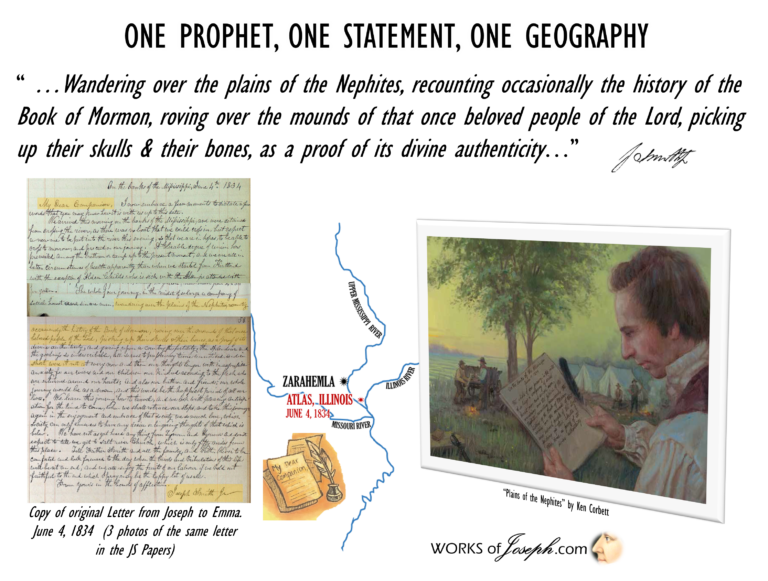
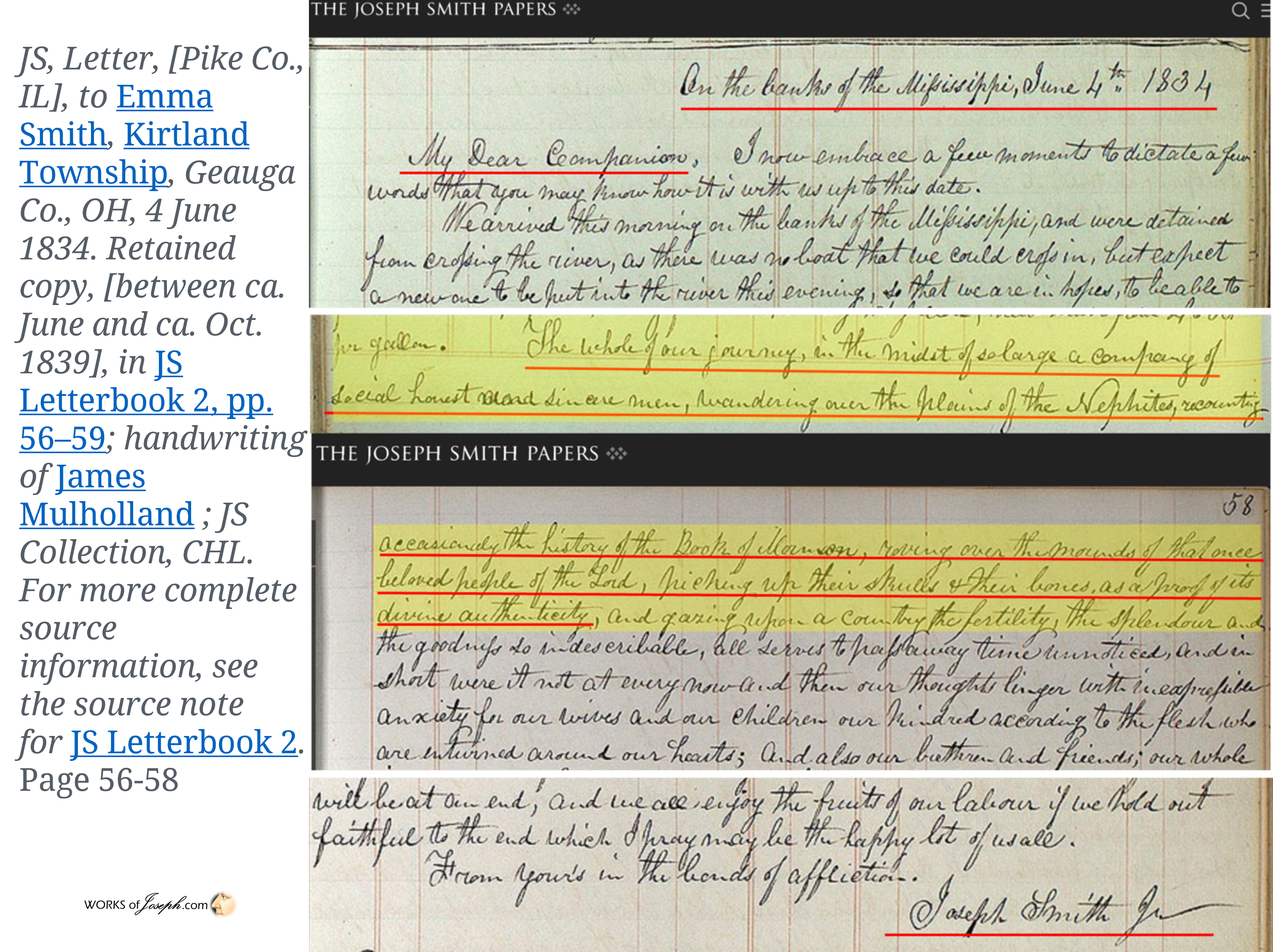
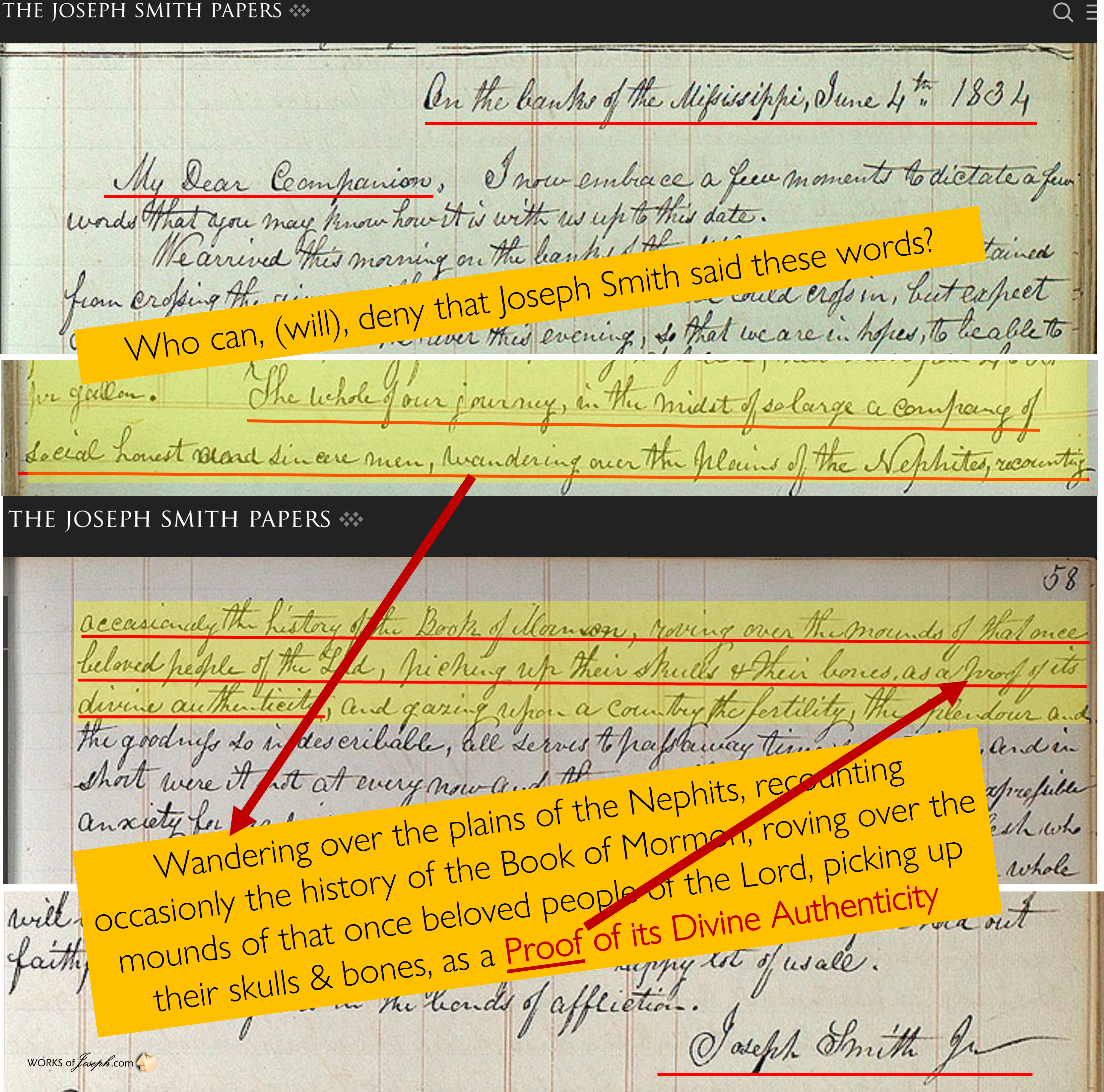
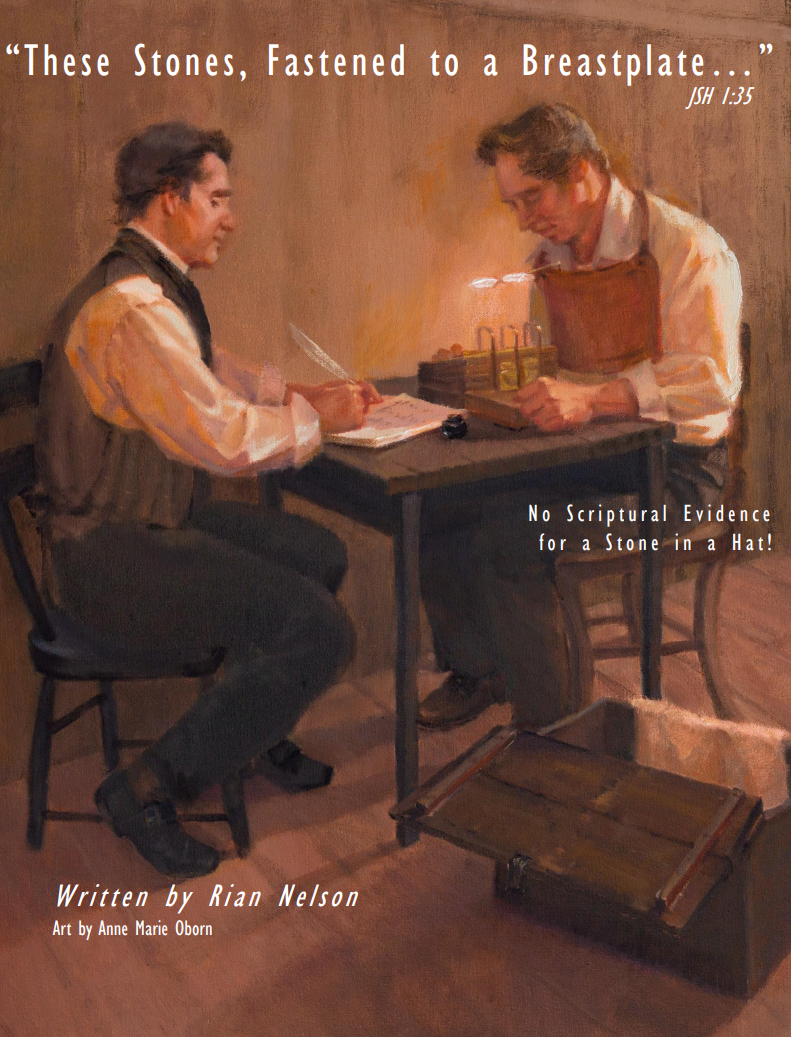
 Why are more and more people of the world claiming that Noah’s flood was fictional or just a good story? More people are saying that Adam wasn’t the first man on this earth. Why are more and more members of the Church of Jesus Christ of Latter-day Saints claiming that the Book of Mormon contains a lot of great parables that aren’t real stories, but just parables that can teach us good things? Is the Bible the Word of God? We answer yes as far as it is translated correctly. We do know however that the stories in the Bible are actual accounts of real people in real places, just as the Book of Mormon is.
 Why would we believe anything else? Because Satan’s plan is in full force. Remember this is Satan’s world right now. It won’t be Christ’s until the second coming. The craftiness of man is constantly being mixed with scripture and folklore. The “Great and Spacious building” is truly coming from the halls of academia. Many intellectuals continue pointing their fingers at humble followers of God from the heights of those house’s of cards. “Who’s on the Lord’s side who?” There are “save two churches”, one that speaks the truth of the Savior and all others who teach of man and his so-called wisdom.
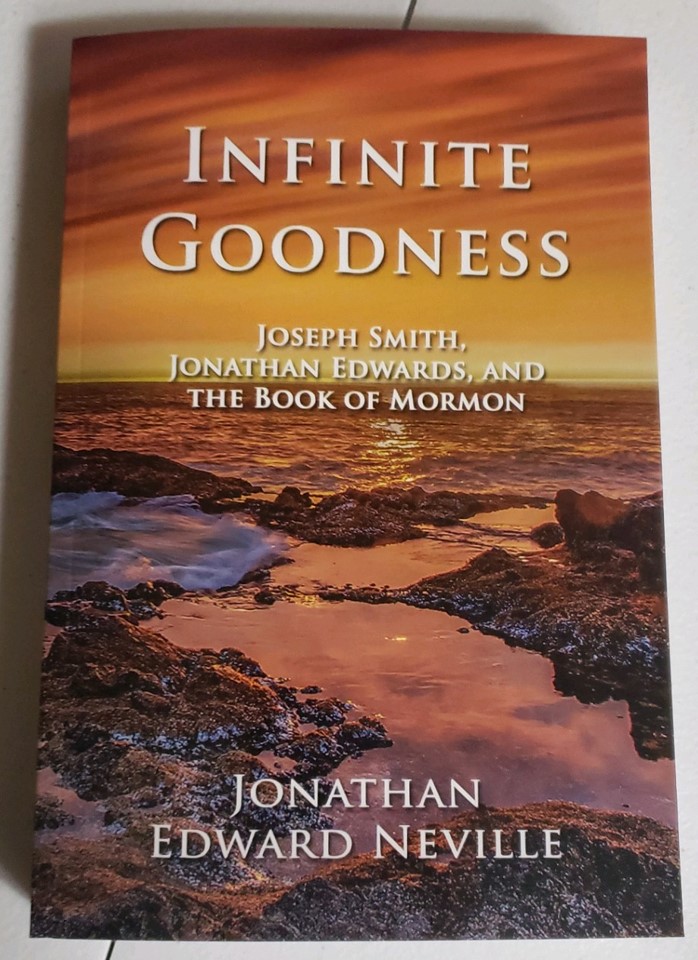

 The de-literalizing of the Book of Mormon became apparent to me when I took a closer look at the lesson manuals, the CES/BYU curriculum, the Saints book, the visitors centers, etc. These all repudiate the teachings of the prophets about the New York Cumorah. I attribute all of those to the M2C Church employees.

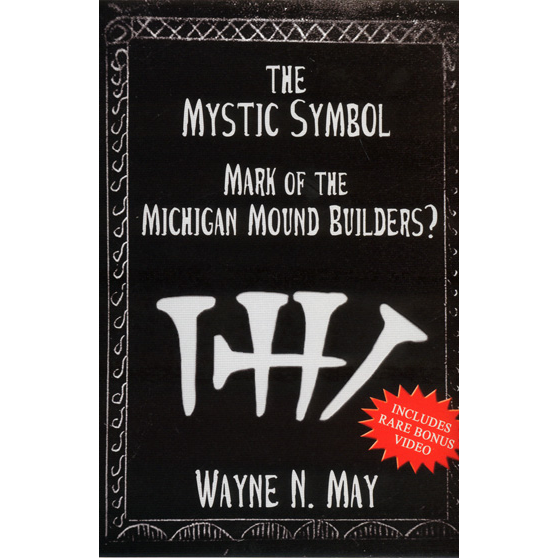
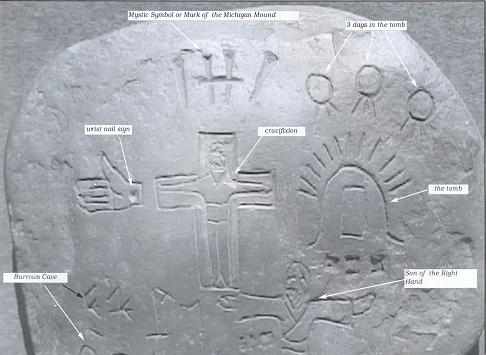
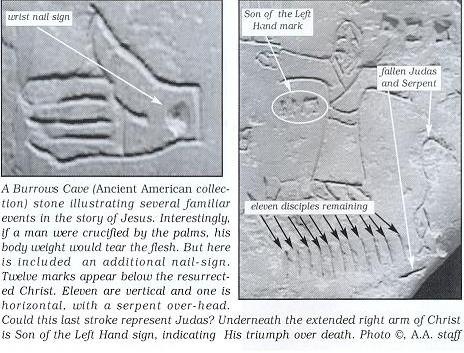
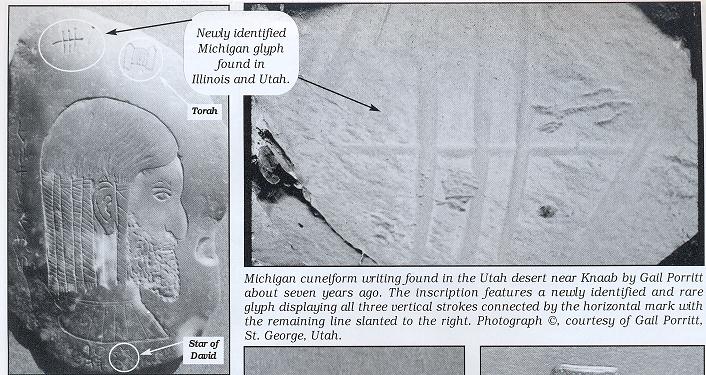
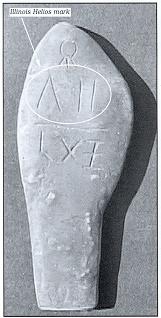
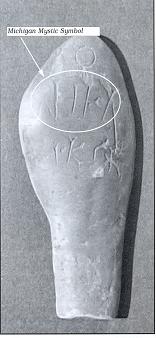
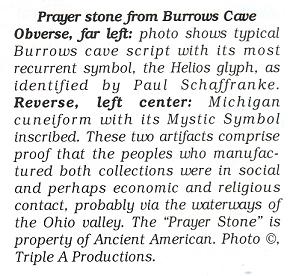
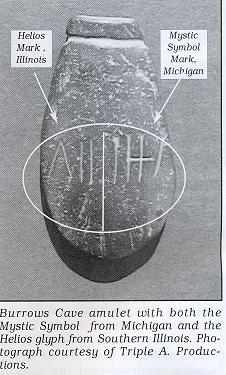
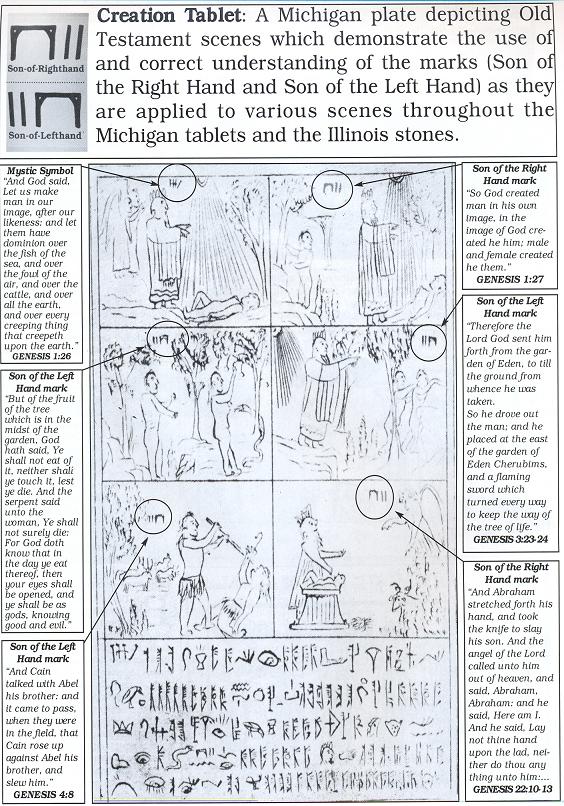
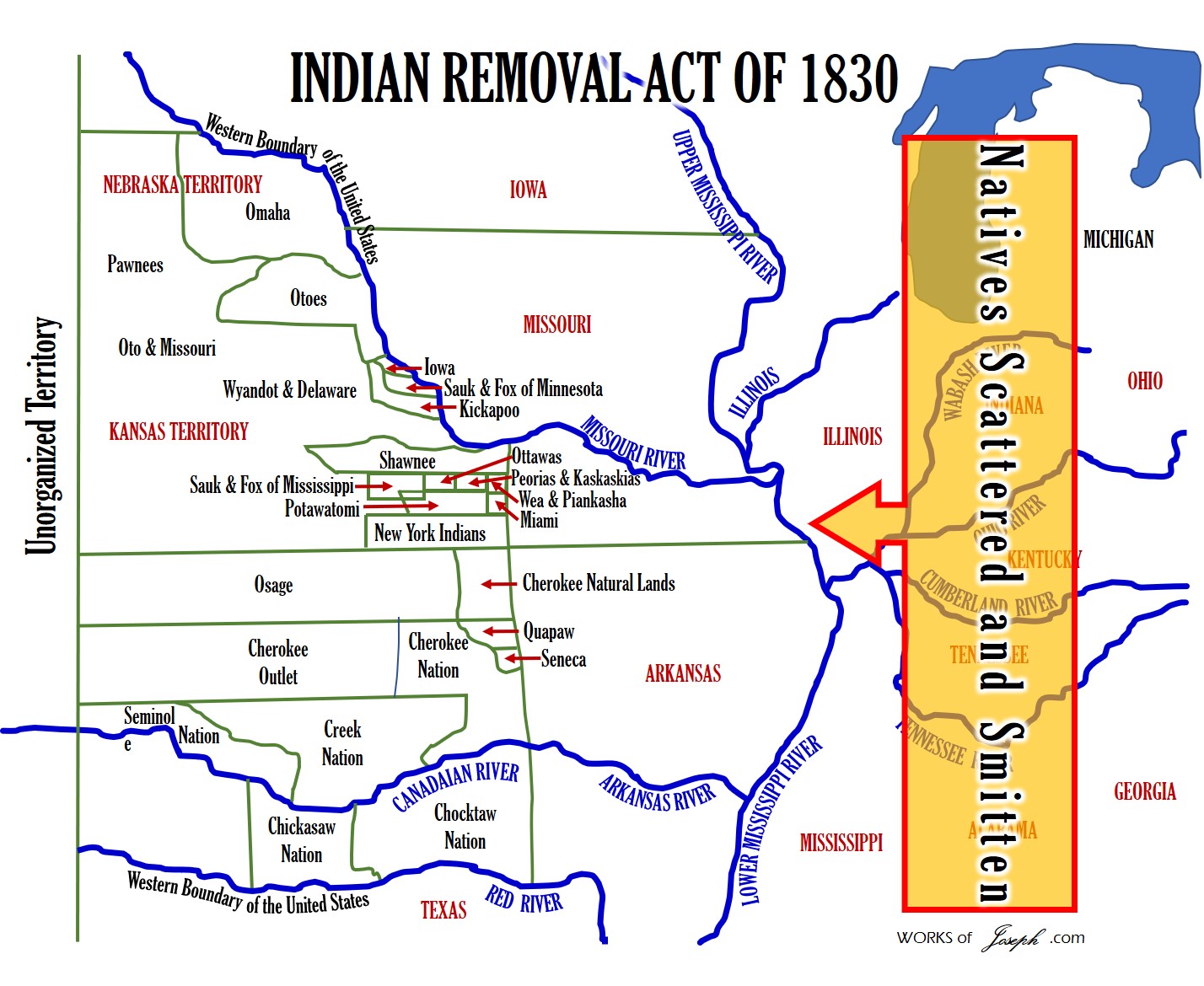
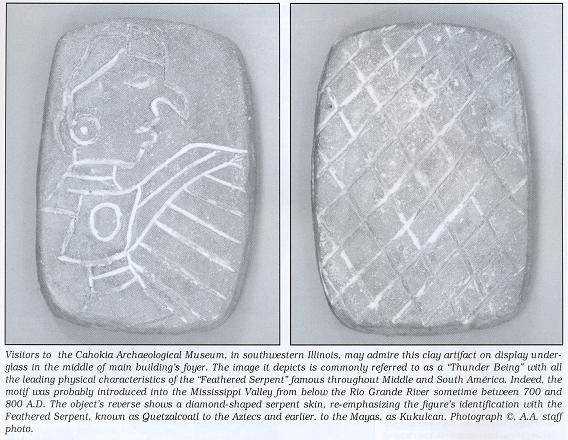
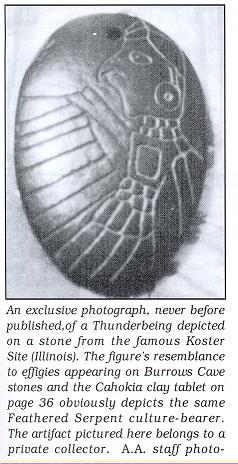
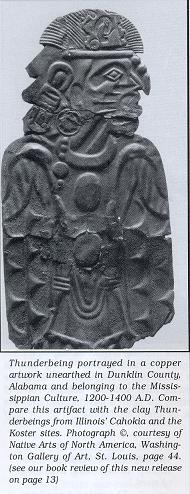
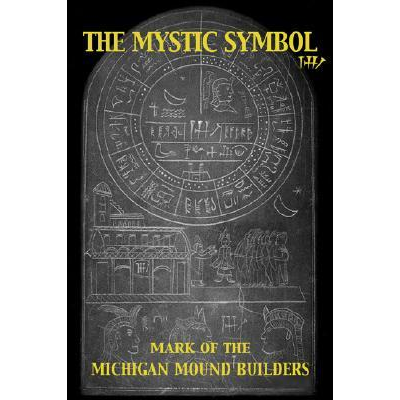

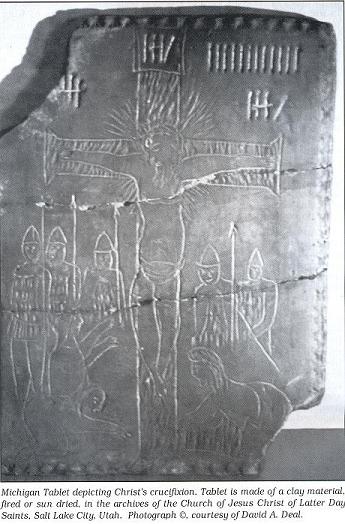
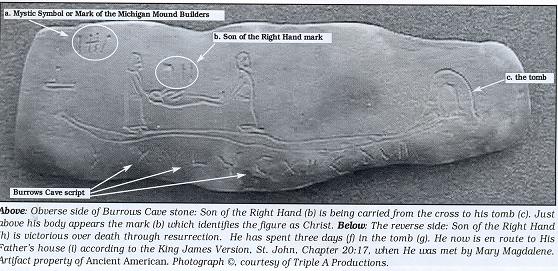
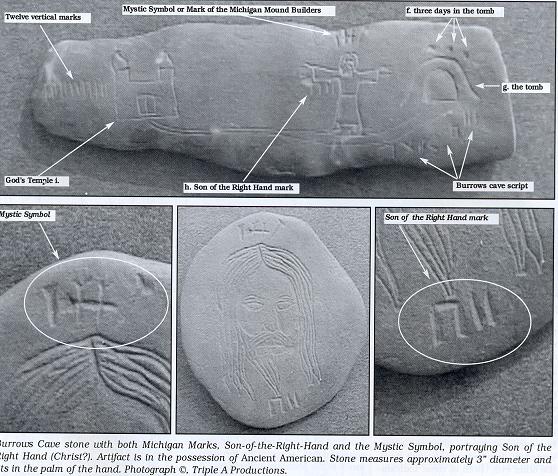
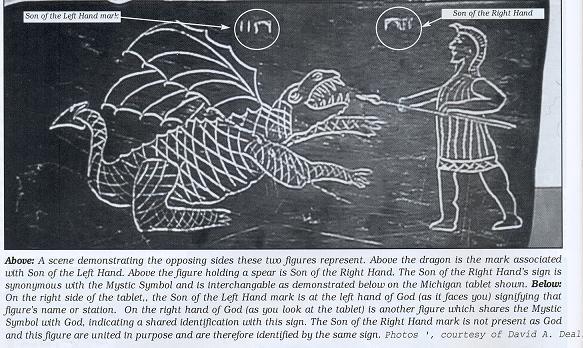
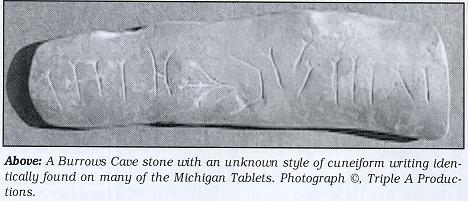
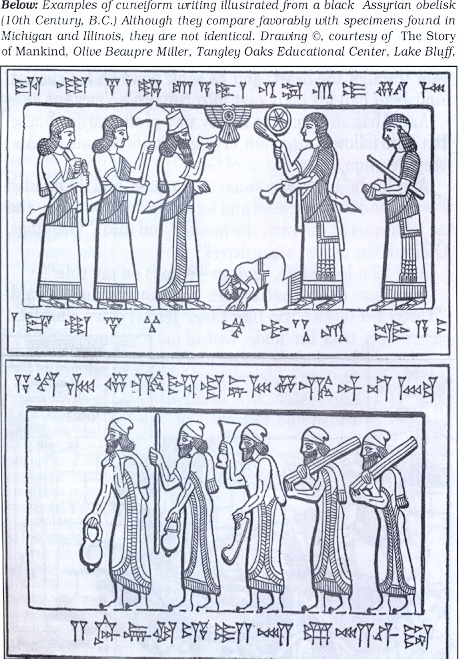
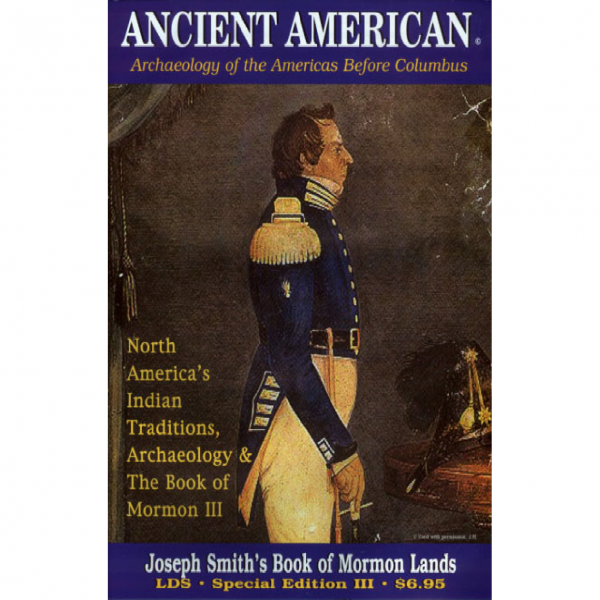


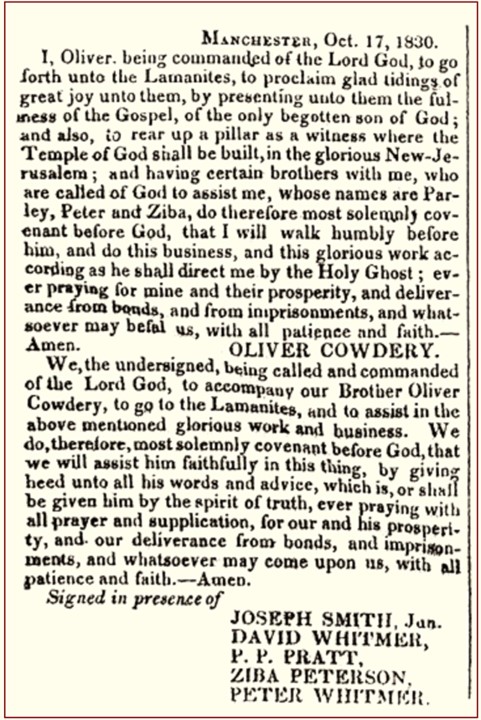
 From this book, THE AMERICAN INDIAN (UH-NISH-IK-NA-BA) by ELIJAH M. HAINES we will show the similarity in some of the Indian languages, to the Hebrew, and that the former must have been derived from the latter. I have edited just one chapter of over 833 pages which focuses on Chapter IV, Affinity with the Jews. This may be a lengthy blog, but it is amazing how much information you will receive about the similarities of our Book of Mormon Lamanites with the Tribe of Judah from Israel. You will also enjoy some of the old pictures which come from this amazing book.
 This book has therefore been prepared with reference to this long felt want, and is such a work as the public mind and student of history now seem to demand.

 Among the early authorities cited, to show that the American Indians are descendants from the Israelites, Mr. Adair seems to be the principal one, and since his time, all writers who have favored his views, refer with unreserved confidence to the evidence furnished by him to this end.
 Dr. Boudinot speaks of some Indians at a place called Cohocks, who called the high mountain at the west Ararat He says that the Penobscot Indians called a high mountain by the same name ; that he himself attended an Indian religious dance, concerning which he remarks:
 Dr. Boudinot further says of the Indians: ” Their languages in their roots, idioms and particular construction, appear to have the whole genius of the Hebrew; and what is very remarkable have most of the peculiarities of that language, especially those in which it differs from most other languages.”
 “Du Pratz was very intimate with the chief of those Indians called ‘
  Charlevoix, speaking of the Indian traits and religious customs, and in reference to their resembling the Jews, says: ” The greatest Part of their Feasts, their Songs and their Dances, appear to me to have had their Rise from Religion, and still to preserve some Traces of it; but one must have good eyes, or rather a very lively imagination, to perceive in them all that some travelers have pretended to discover. I have met with some who could not help thinking that our savages were descended from the Jews, and found in
  everything some affinity between these barbarians and the people of God. There is, indeed, a resemblance in some things, as not to use knives in certain meals, and not to break the bones of the beast they ate at those times, and the separation of the women during the time of their usual infirmities. Some persons, they say, have heard them, or thought they heard them, pronounce the word Hallelujah in their songs. But who can believe that when they pierce their ears and noses they do it in pursuance of the law of circumcision ? On the other hand, don’t we know that the custom of circumcision is more ancient than the law that was given to Abraham and his posterity. The feast they made at the return of the hunters, and of which they must leave nothing, has also been taken for a kind of burnt offering, or for a remain of the passover of the Israelites ; and rather, they say, because when any one cannot compass his portion, he may get the assistance of his neighbors, as was practiced by the people of God, when a family was not sufficient to eat the whole Paschal Lamb.”
 ” By information received from Father Hoyt respecting the former traditions, rites and ceremonies of the Indians of this region, I think there is much reason to believe they are descendants of Abraham. They have had cities of refuge, feasts of first fruits, sacrifices of the firstlings of the flock, which had to be perfect, without blemish or deformity, a bone of which must not be broken. They were never known to worship images, nor to offer sacrifices to any God made with hands. They all have some idea and belief of the Great Spirit Their feasts, holy days, etc., were regulated by sevens, as to time, i. e., seven sleeps, seven moons, seven years, etc They had a kind of box containing some kind of substance which was considered sacred, and kept an entire secret from the common people. Said box was borne by a number of men who were considered pure or holy (if I mistake not, such a box was kept by the Cherokees). And whenever they went to war with another tribe they carried this box; and such was its purity in their view that nothing would justify its being rested on the ground. A clean rock or scaffold of timber only was considered sufficiently pure for a resting place for this sacred coffer. And such was the veneration of all of the tribes for it, that whenever the party retaining it was defeated and obliged to leave it on the field of battle, the conquerors would by no means touch it. “
  Mr. Penn further adds that the worship of this people consists in two parts, sacrifices and cantos (songs). The first is with their first fruits, and the first buck they kill goes to the fire; and that all who go to this feast must take a piece of money, which is made of the bone of a fish. (” None shall appear before me empty.”) He speaks of the agreement of their rites with those of the Jews, and adds:
 “They choose twelve men, who provide twelve deer. Each of the twelve men cuts a sapling ; with these they form a tent, covered with blankets. They then choose twelve stones for an altar of sacrifice. Some tribes, he observes, choose but ten men, ten poles, and ten stones. Here seems an evident allusion to the twelve tribes, and also to some idea of the ten separate tribes of Israel. Upon the stones of their altar they suffered no tool to pass. No tool might pass upon a certain altar in Israel.”
 Mr. Adair, in further support of his theory, says: “As the nation had its particular symbol, so each tribe has the badge from which it is denominated The sachem of each tribe is a necessary party in con- veyances and treaties, to which he affixes the mark of his tribe. If we go from nation to nation among them we shall not find one who doth not lineally distinguish himself by his respective family. The genealogical names which they assume are derived either from the names of those animals whereof the cherubim are said in revelation to be compounded, or from such creatures as are most familiar to them. They call some of their tribes by the names of cherubimical figures that were carried on four principal standards of Israel.”
 The Indians count time after the manner of the Hebrews. They divide the year into spring, summer, autumn and winter. They number their years from any of those four periods, for they have no name for a year, and they subdivide these and count the year by lunar months, like the Israelites who counted by moons. They begin a year at the first appearance of the first new moon of the vernal equinox, according to the ecclesiastical year of Moses. Till the so-called captivity the Israelites had only numeral names for the solar and lunar months except Abib and Ethamin ; the former signifying a green ear of corn, and the latter robust or valiant, and by the first of these the Indians (as an explicative) term their Passover, which the trading people call the green corn dance.
 In conformity to, or after the manner of the Jews, the Indians of America have their prophets, high priests and others of a religious order. As the
  [
[ The ceremonies of the Indians, in their religious worship, says Mr. Adair, were more after the Mosaic institutions than of Pagan imitation; which could not be if a majority of the old nations were of heathenish descent They were utter strangers to all the gestures practiced by the Pagans in their religious rites.
 Mr. Adair, in likening the Indians to the Jews on account of their abstinence from unclean things, says that
  A religious custom is related by Maj. Long, which some think goes to prove that the Omaha Indians are of Israel. He relates that from the age of between five or ten years their little sons are obliged to ascend a hill fasting once or twice a week, during the months of March and April, to pray aloud to Wahconda. When this season of the year arrives, the mother informs the little son that the u ice is breaking up in the river, the ducks and geese are migrating, and it is time for you to prepare to go in clay.” The little worshipper then rubs himself over with whitish clay, and at sunrise sets off for the top of a hill, instructed by the mother what to say to the Master of Life.
 “I have noticed that in all their principal and oldest traditions and lodge tales, twelve brothers are spoken of that are the sons of Getube, a name nearly similar to Jacob. The oldest of these brothers
 There is a marked similarity between the customs of the Indians and the Jews in their mourning for the dead. Like the Jews, the Indians had a time or season for mourning for the dead. A custom among the Jews of loud lamentation over the dead was also a peculiar custom of the American tribes. In Gen. xxxii, 34, it is said that *’ Jacob rent his clothes, and put sackcloth upon his loins, and mourned for his son many days.” This is suggestive of a like custom among the American Indians. Among the Indians the friends of the deceased visited the graves of their departed relatives and there resumed their custom of weeping and shrieking. This was also a prominent custom among the Jews, as noticed in John xi, 31 : ” She goeth out to the grave to weep there.” The custom of engaging women to mourn over the bodies of the dead, which prevailed among the American tribes, was also a custom among the Jews, as mentioned in Jer. ix, 17 : ** Thus saith the Lord of Hosts, consider ye, and call for the mourning women that they may come.”


 The secret order of medicine men and prophets of the Indians had a corresponding institution among the Jews called “
 A custom prevailed among western Indian tribes, who lived in villages of dirt houses, of
  In notions of dress there was a striking similarity between the American Indians and the Jews, especially in regard to the outer garment thrown over the shoulders or wrapped around the body. The Indian medicine man or prominent chief possessed a peculiar vanity in regard to their dress, which was frequently gaudy and fantastic, and so with the high priests among the Jews where display in dress was a peculiar feature in Jewish custom among those high in authority. It was a custom among the Jews to sleep in their garments, Deut. xxiv, 12-13, and so with the American Indians.
 According to Mr. Freeman, it was an
 Rev. Peter Jones, an educated Ojibway Indian, in the appendix to his book, entitled “


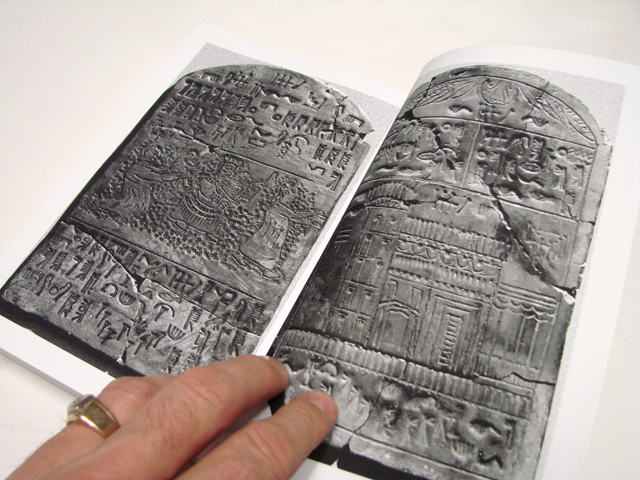


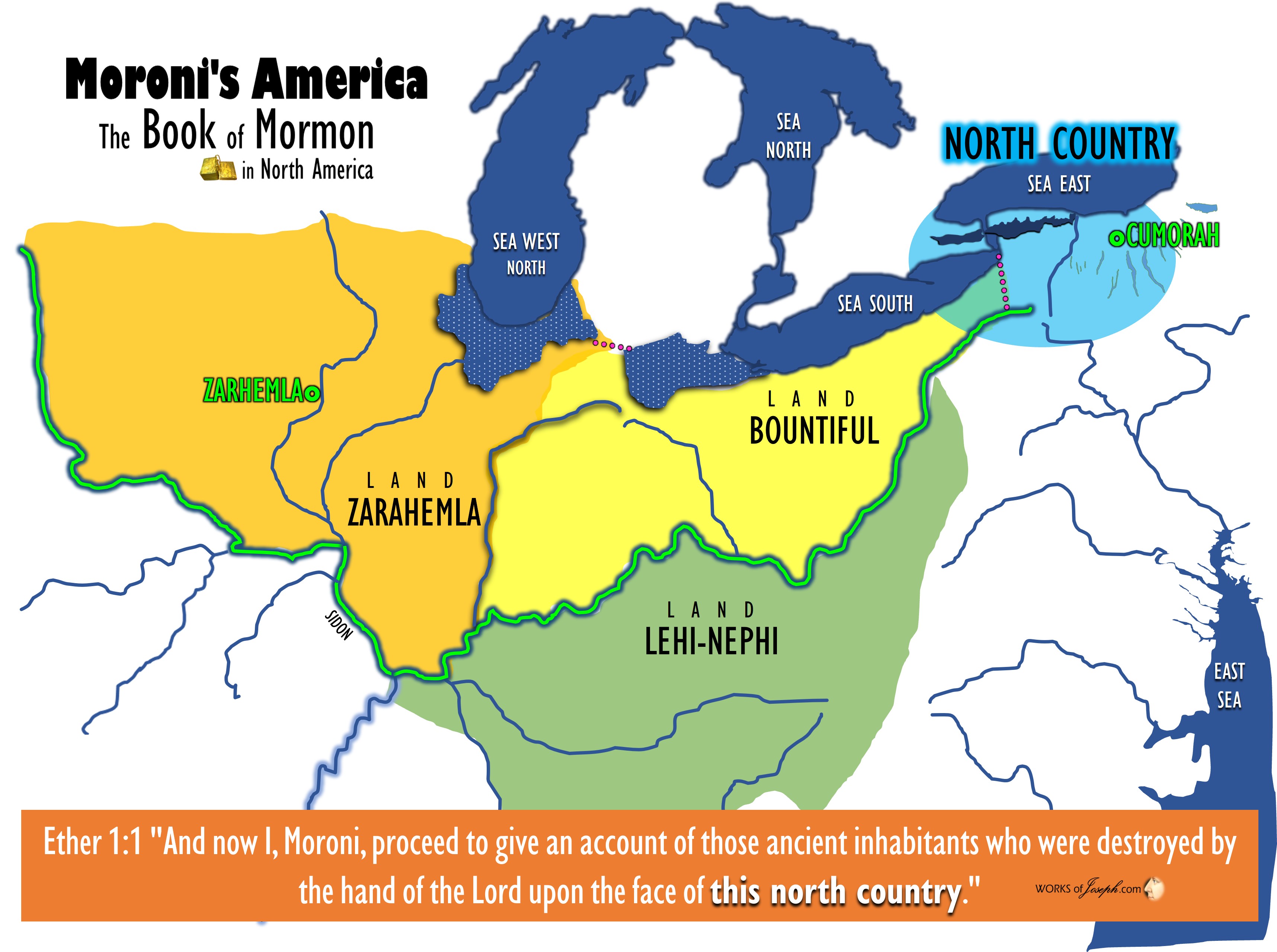
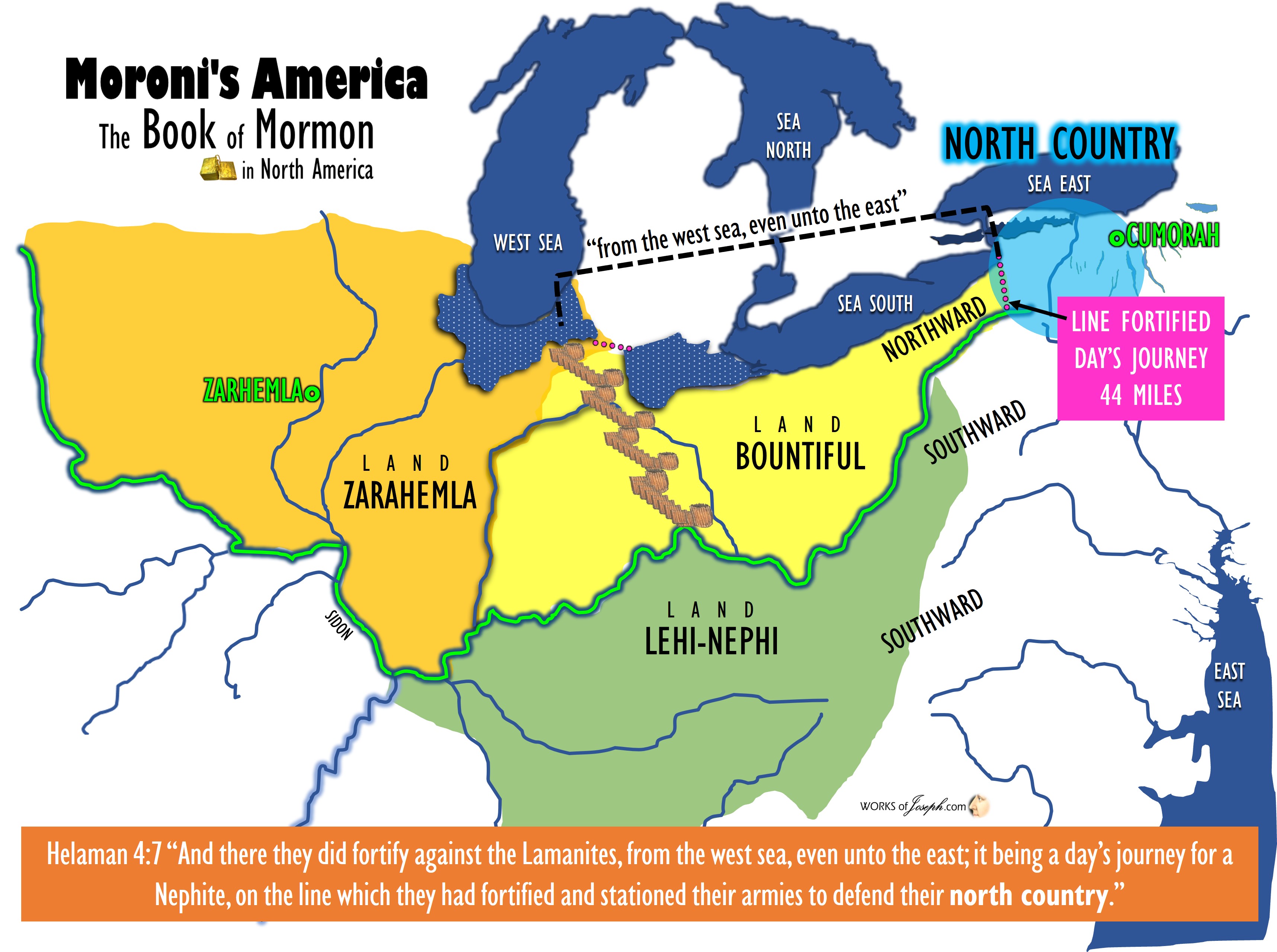
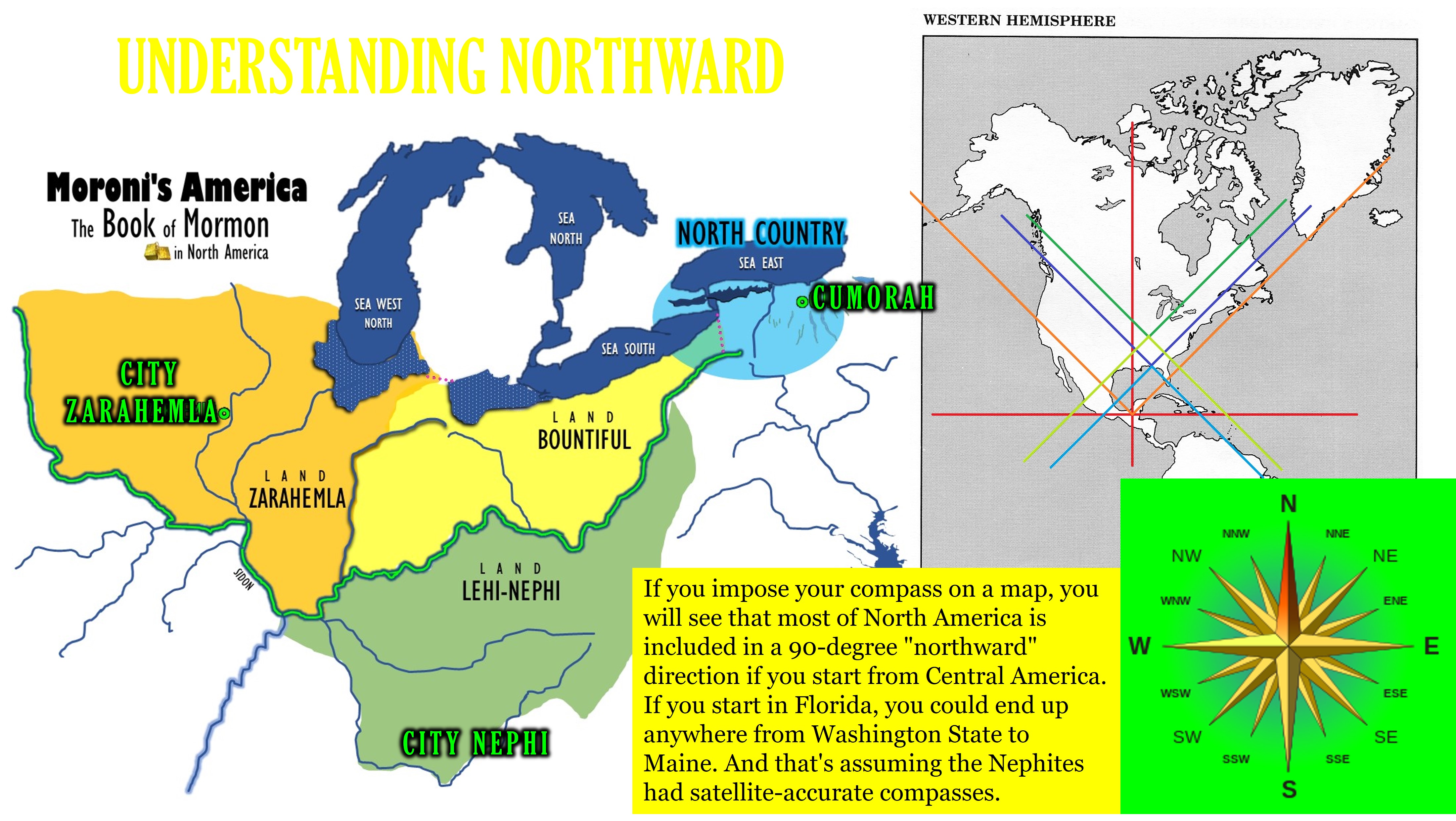
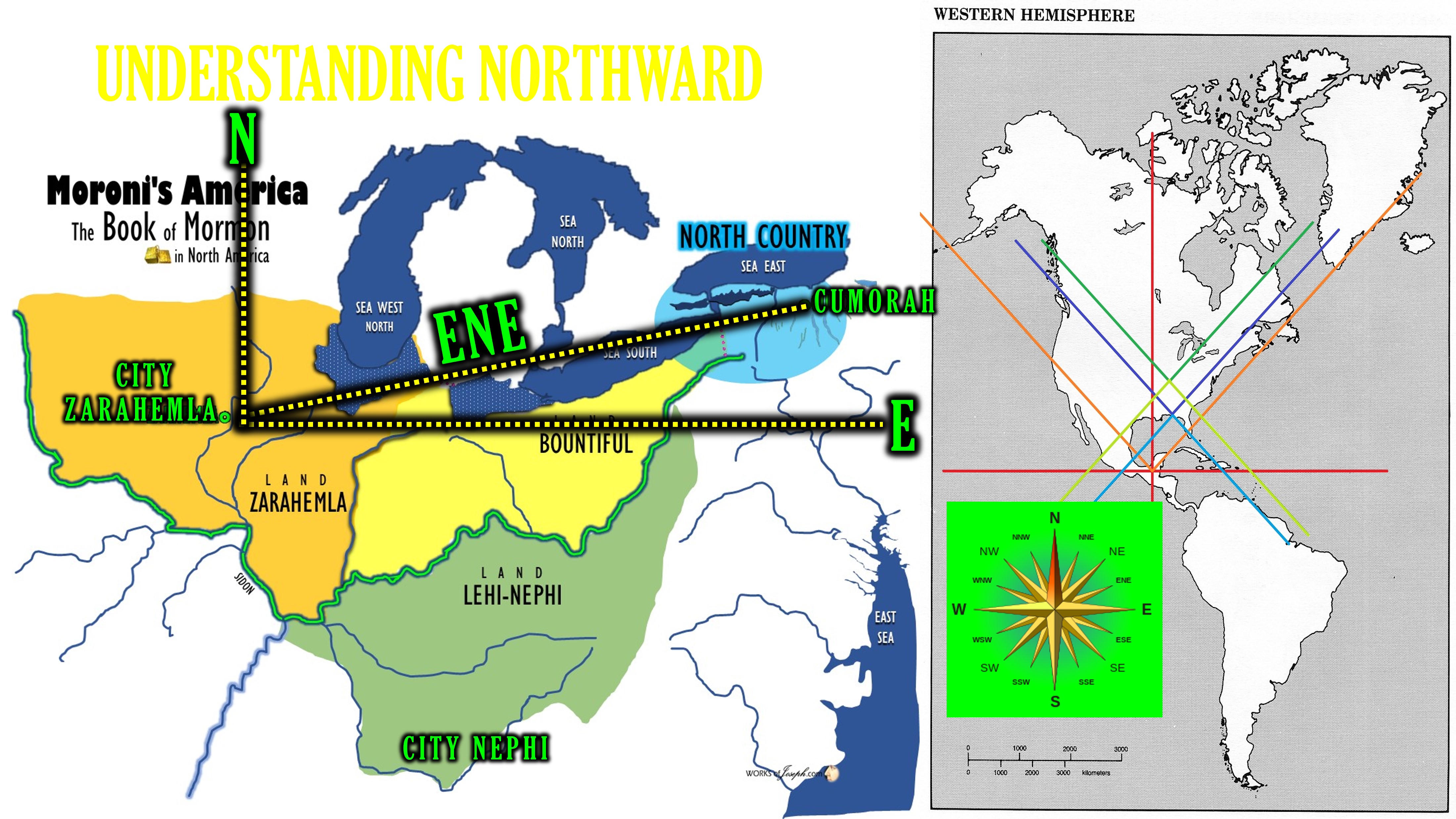
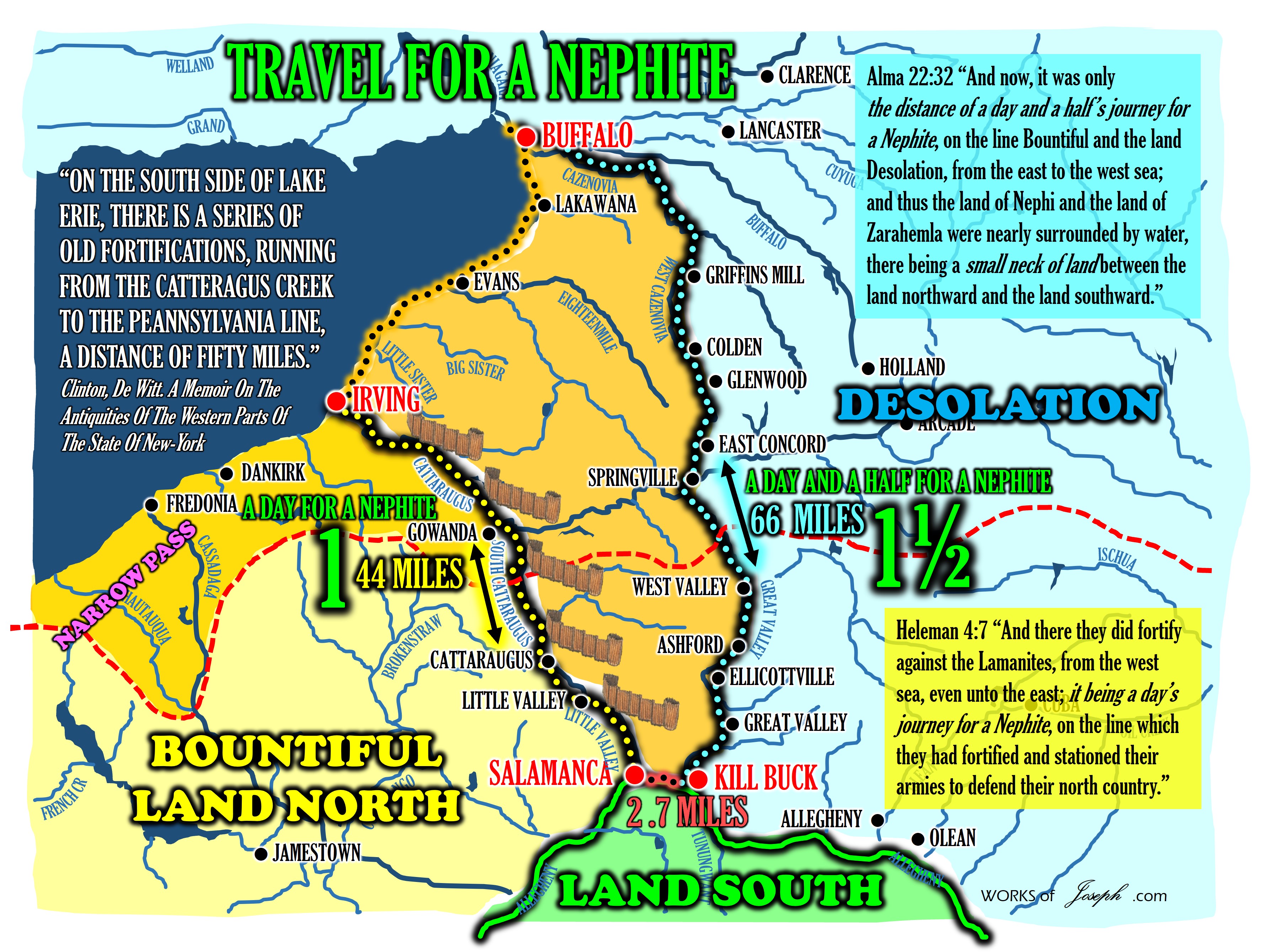

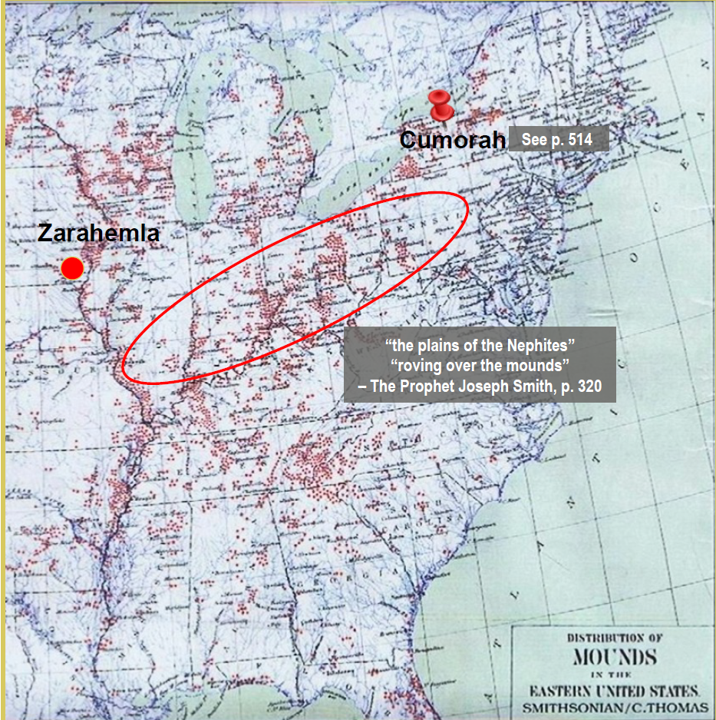
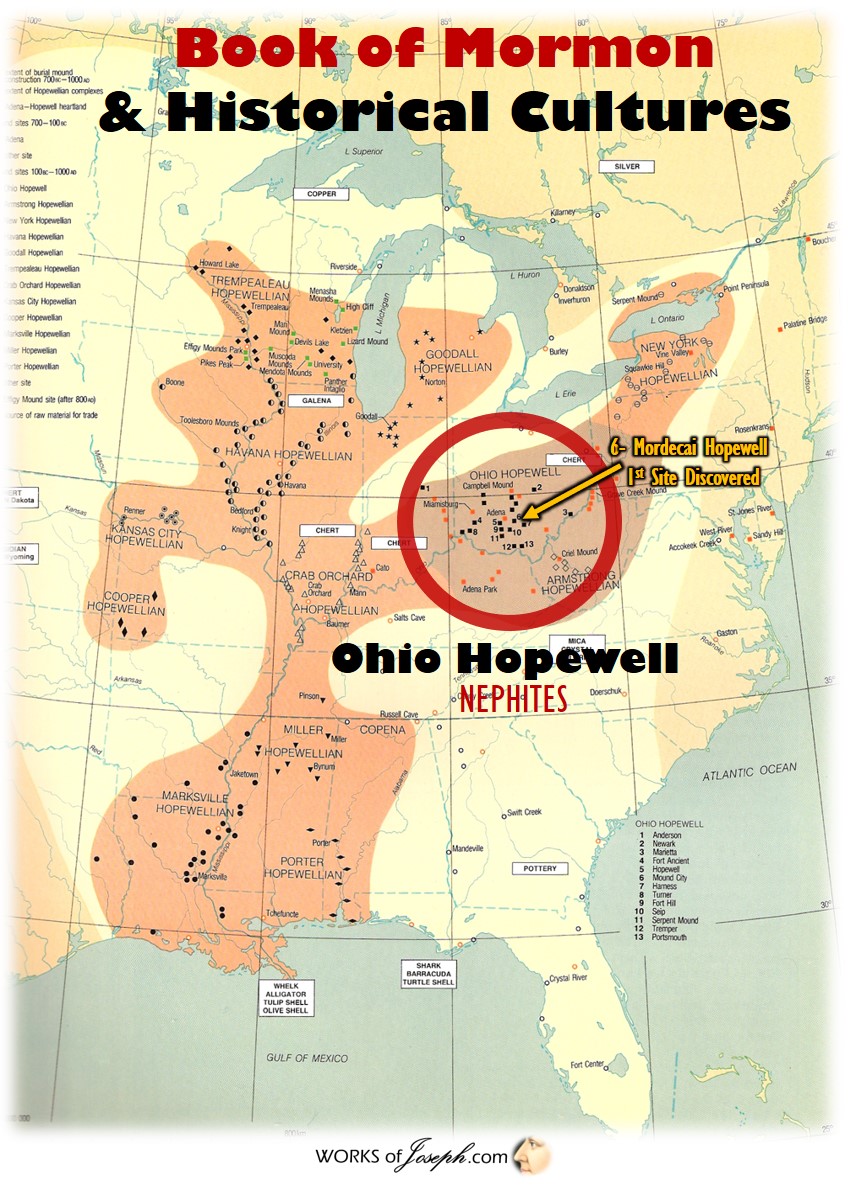

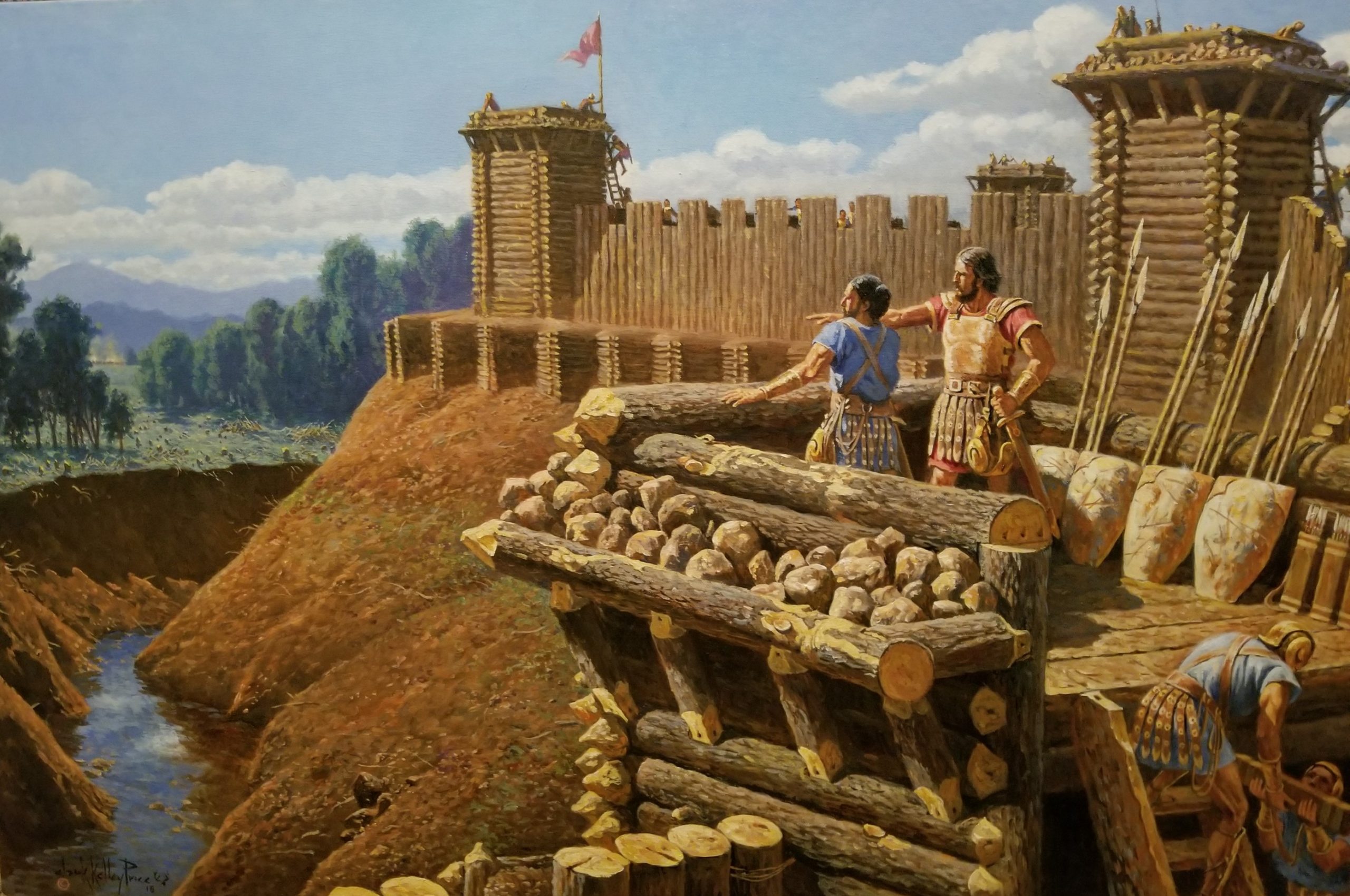
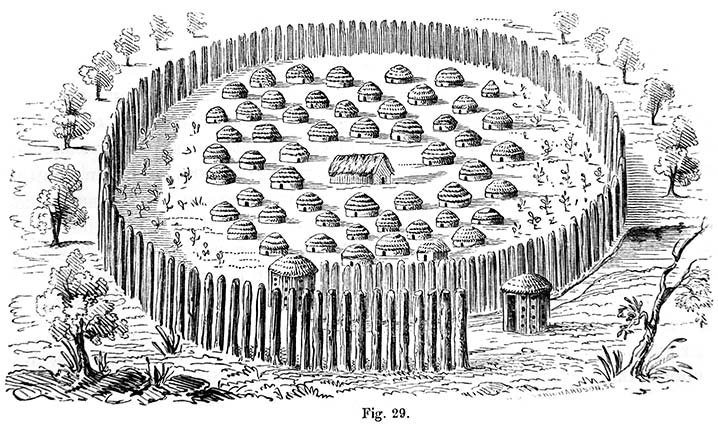
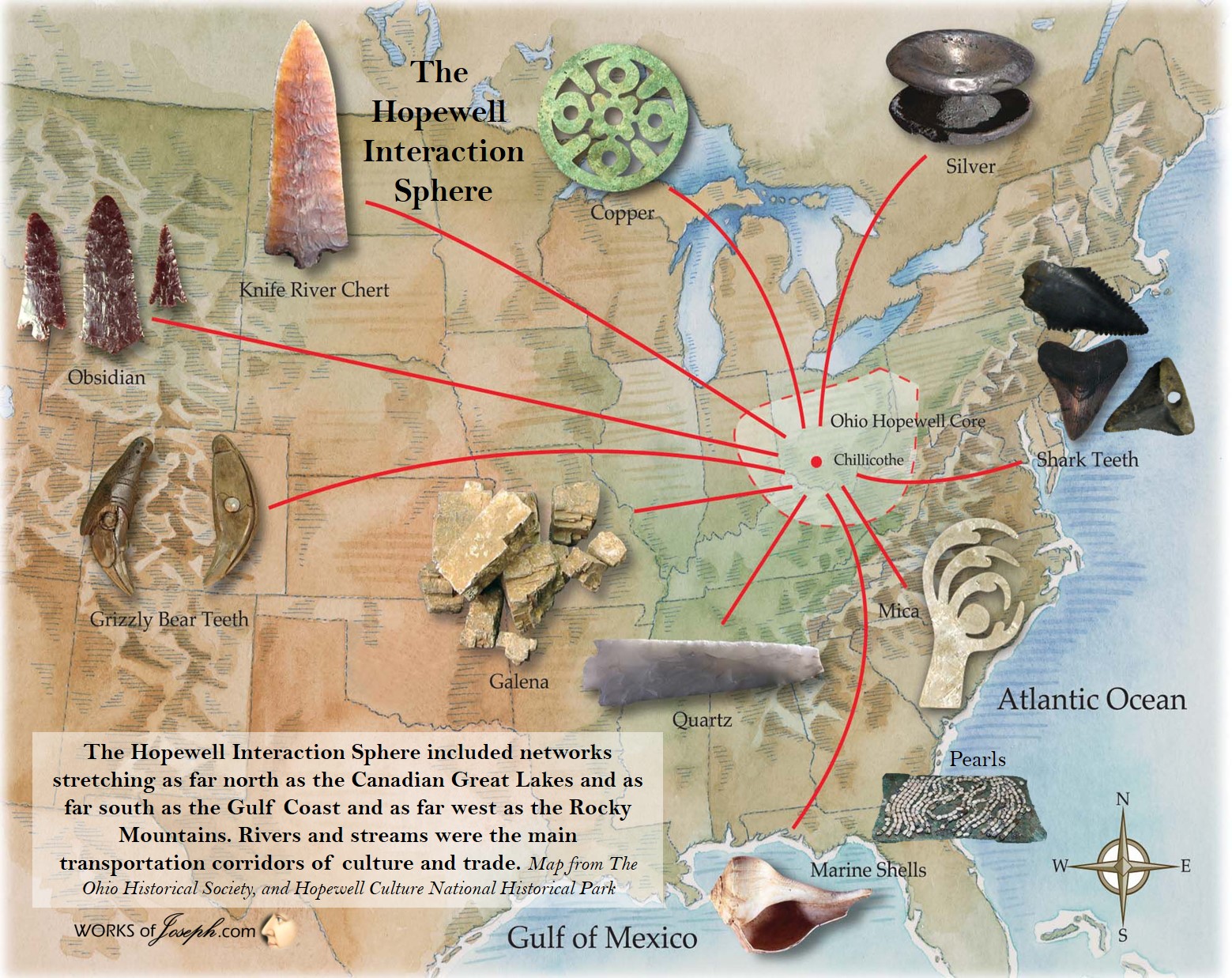


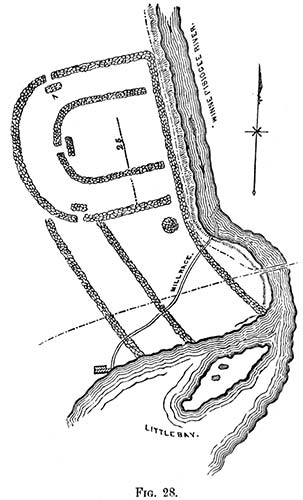


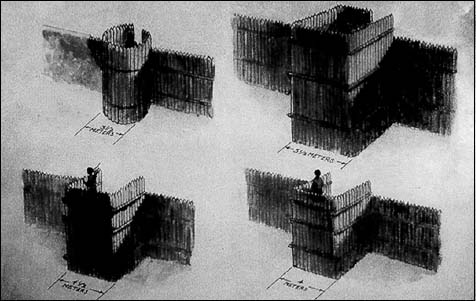


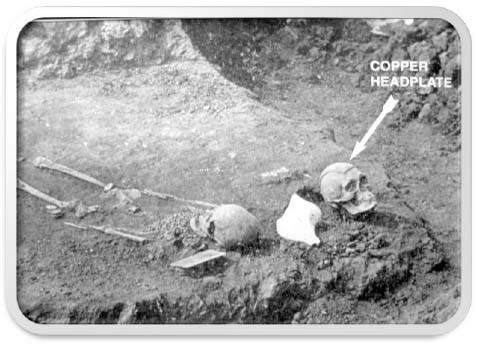
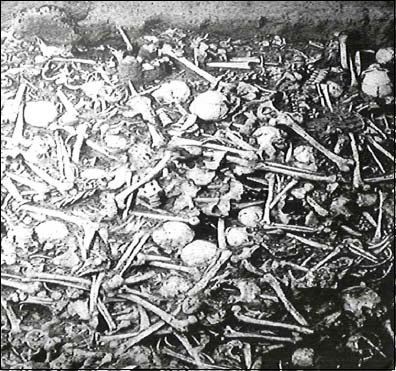


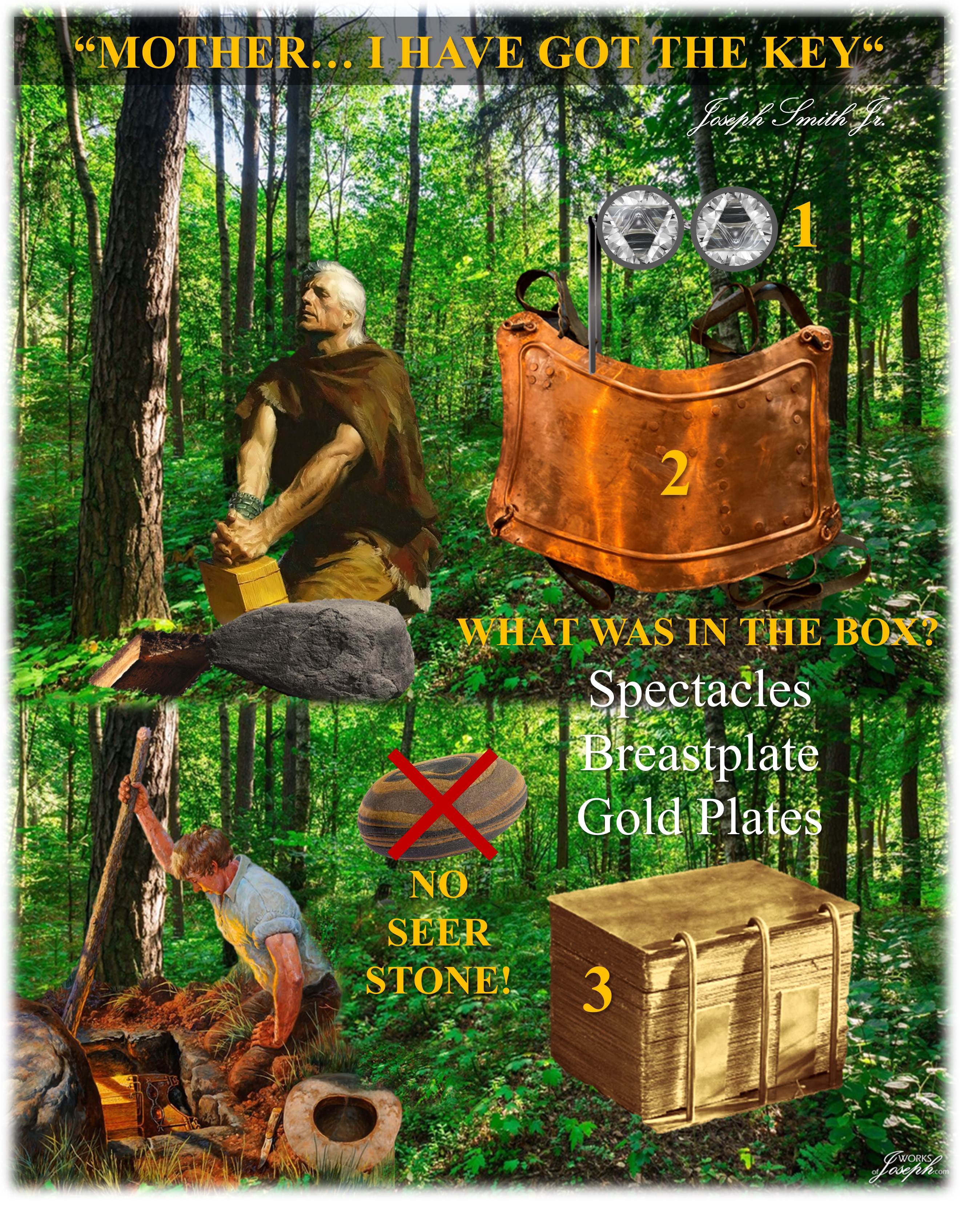

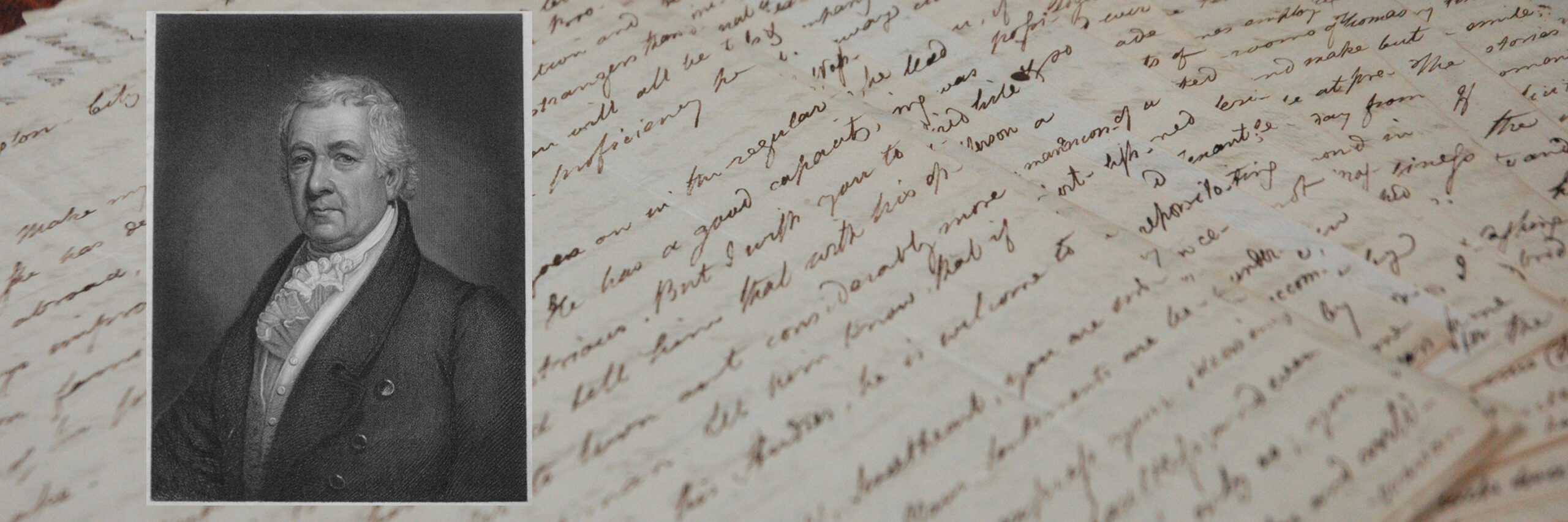
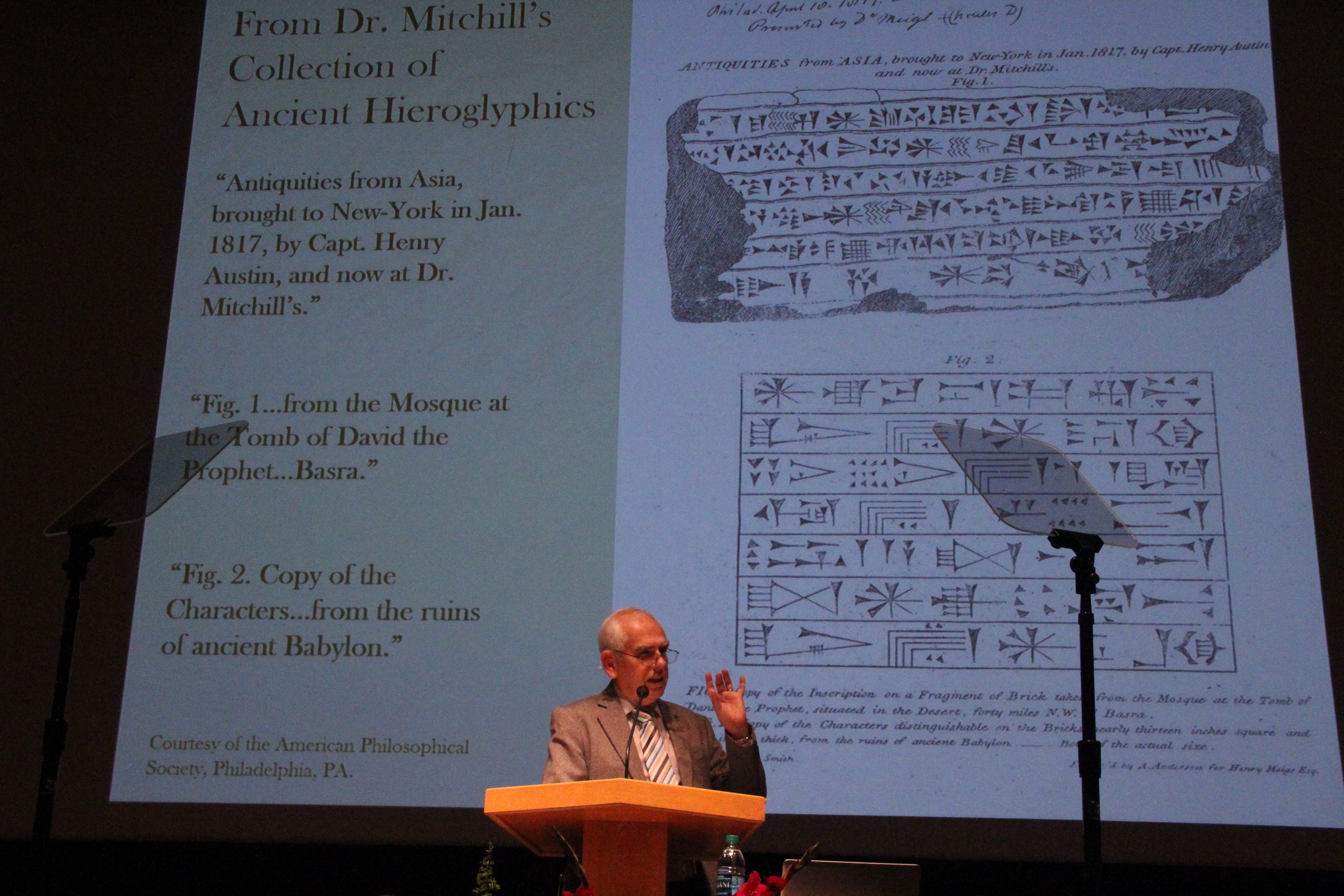


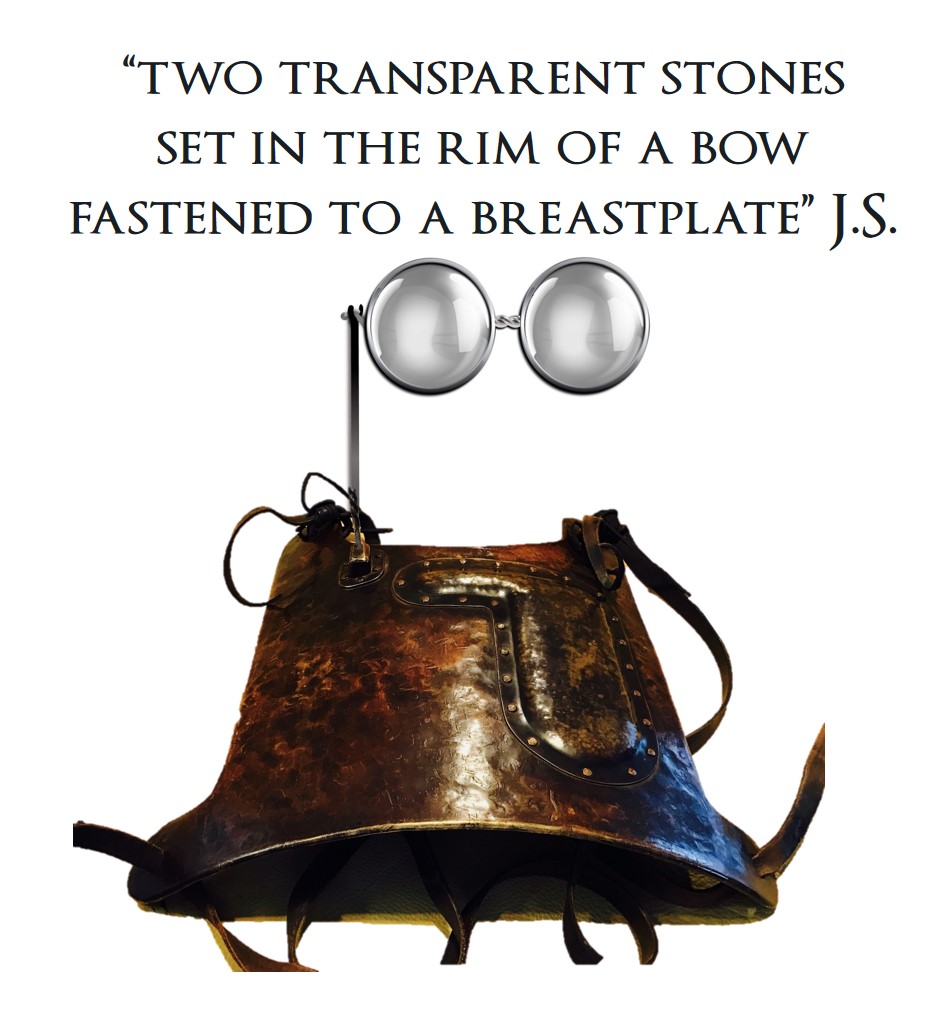
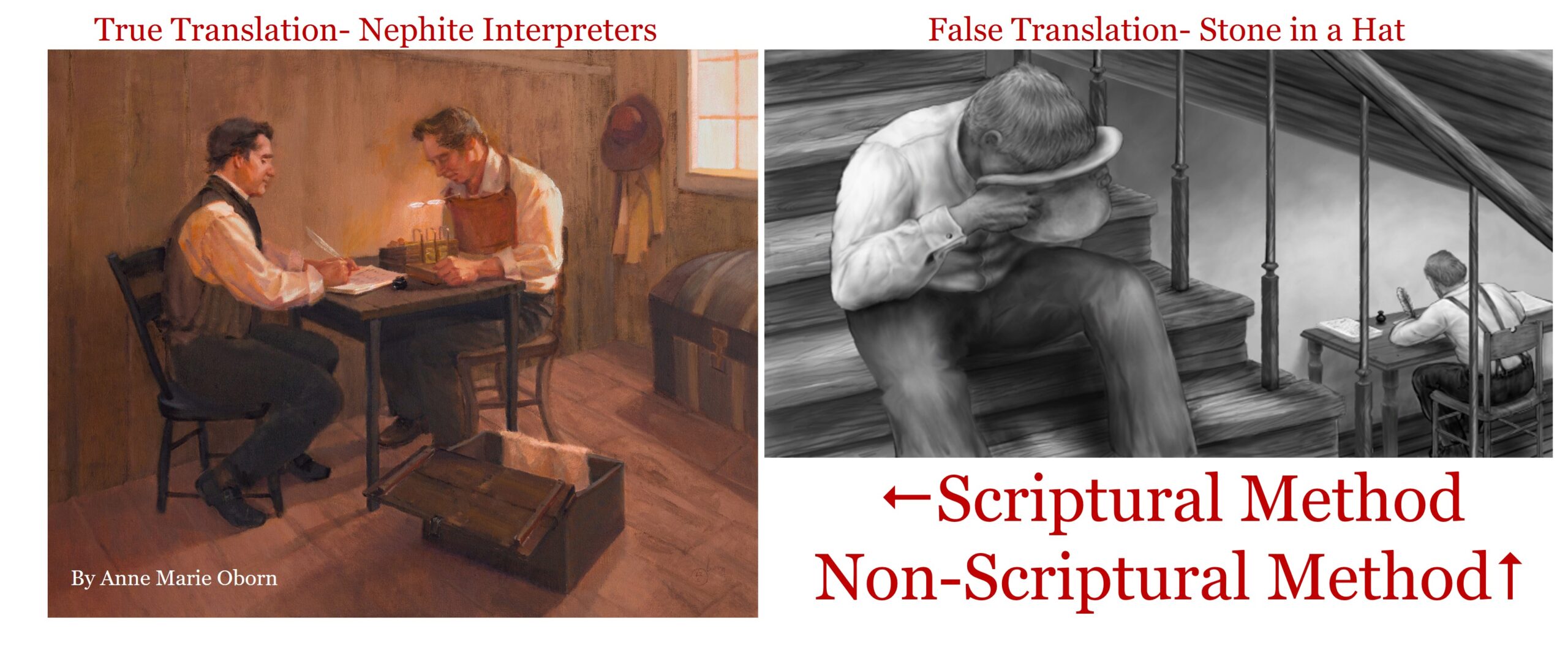



 We have Hebrew (Old Testament).


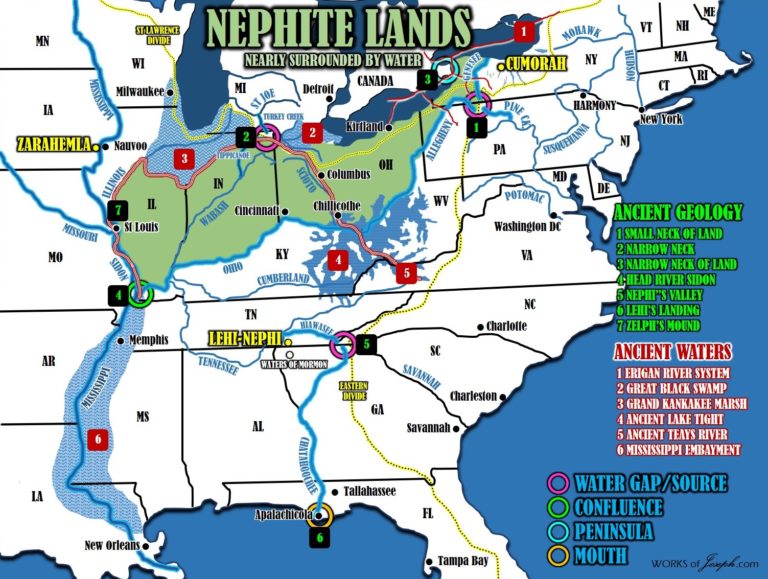



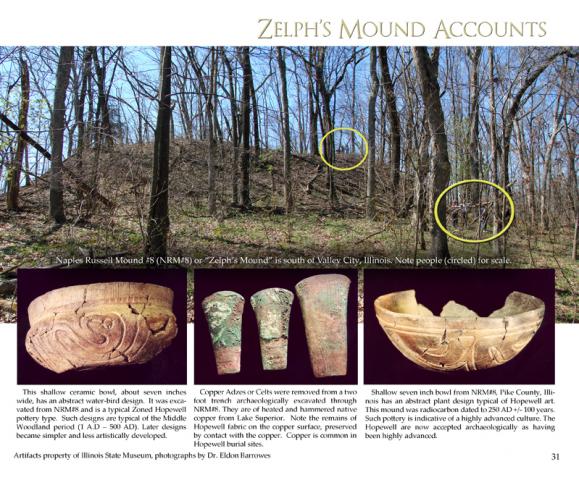
 3-Books for the New Heartlander
 Along with “
 2. “…This modernistic theory of necessity, in order to be consistent, must place the waters of Ripliancum and the Hill Cumorah some place within the restricted territory of Central America, notwithstanding the teachings of the Church to the contrary for upwards of 100 years. Because of this theory some members of the Church have become confused and greatly disturbed in their faith in the Book of Mormon. It is for this reason that evidence is here presented to show that it is not only possible that these places could be located as the Church has held during the past century, but that in very deed such is the case… It is known that the Hill Cumorah where the Nephites were destroyed is the hill where the Jaredites were also destroyed. This hill was known to the Jaredites as Ramah. It was approximately near to the waters of Ripliancum, which the Book of Ether says, “by interpretation, is large, or to exceed all… It must be conceded that this description fits perfectly the land of Cumorah in New York, as it has been known since the visitation of Moroni to the Prophet Joseph Smith, for the hill is in the proximity of the Great Lakes and also in the land of many rivers and fountains. Moreover, the Prophet Joseph Smith himself is on record, definitely declaring the present hill called Cumorah to be the exact hill spoken of in the Book of Mormon. Further, the fact that all of his associates from the beginning down have spoken of it as the identical hill where Mormon and Moroni hid the records, must carry some weight. It is difficult for a reasonable person to believe that such men as Oliver Cowdery. Brigham Young, Parley P. Pratt, Orson Pratt, David Whitmer, and many others, could speak frequently of the Spot where the Prophet Joseph Smith obtained the plates as the Hill Cumorah, and not be corrected by the Prophet, if that were not the fact. That they did speak of this hill in the days of the Prophet in this definite manner is an established record of history.” Doctrines of Salvation Joseph Fielding Smith Chapter 12
 4. “Both the Nephite and Jaredite civilizations fought their final great wars of extinction at and near the Hill Cumorah (or Ramah as the Jaredites termed it), which hill is located between Palmyra and Manchester in the western part of the state of New York. It was here that Moroni hid up the gold plates from which the Book of Mormon was translated. (Morm. 6; Ether 15.) Joseph Smith, Oliver Cowdery, and many of the early brethren, who were familiar with all the circumstances attending the coming forth of the Book of Mormon in this dispensation, have left us pointed testimony as to the identity and location of Cumorah or Ramah.” (Doctrines of Salvation, vol. 3, pp. 232-241.) (Bruce R. McConkie, Mormon Doctrine “CUMORAH,” 1966, p. 175)
 7. “Millennia ago he declared: “There shall none come into this land [he was speaking of America] save they shall be brought by the hand of the Lord… In the western part of the state of New York near Palmyra is a prominent hill known as the “hill Cumorah.” (Morm. 6:6.) On July twenty-fifth of this year, as I stood on the crest of that hill admiring with awe the breathtaking panorama which stretched out before me on every hand, my mind reverted to the events which occurred in that vicinity some twenty-five centuries ago—events which brought to an end the great Jaredite nation… Thus perished at the foot of Cumorah the remnant of the once mighty Jaredite nation, of whom the Lord had said, “There shall be none greater … upon all the face of the earth.” (Ether 1:43.)… This second civilization to which I refer, the Nephites, flourished in America between 600 B.C. and A.D. 400. Their civilization came to an end for the same reason, at the same place, and in the same manner as did the Jaredites… The tragic fate of the Jaredite and the Nephite civilizations is proof positive that the Lord meant it when he said that this “is a land of promise; and whatsoever nation shall possess it shall serve God, or they shall be swept off when the fulness of his wrath shall come upon them. And the fulness of his wrath cometh upon them when they are ripened in iniquity.” (Ether 2:9.) This information, wrote Moroni, addressing himself to us who today occupy this land, “cometh unto you, O ye Gentiles” (now, Gentiles is the term used by the Book of Mormon prophets to refer to the present inhabitants of America and to the peoples of the old world from which they came)… Now my beloved brethren and sisters everywhere, both members of the Church and nonmembers, I bear you my personal witness that I know that the things I have presented to you today are true—both those pertaining to past events and those pertaining to events yet to come. The issue we face is clear and well defined. The choice is ours. The question is: Shall we of this dispensation repent and obey the laws of the God of the land, who is Jesus Christ, or shall we continue to defy them until we ripen in iniquity That we will repent and obey and thereby qualify to receive the blessings promised to the righteous in this land, I humbly pray in the name of Jesus Christ, our Redeemer. Amen.” America’s Destiny Marion G. Romney Oct 1975
 10. [Heber C. Kimball] “prophesied that when the final last struggle came to this nation it would be at the Hill Cumorah where both of the former Nations [Jaredite and Nephite] were destroyed” (abt. Heber C. Kimball) Wilford Woodruff’s Journal 6:305, December 17, 1866
 14. McGavin and Bean explain their point of view concerning the identity of the Hill Cumorah as an ancient battlefield. The authors conclude that the scholars “need not search for [Cumorah] in Mexico or Yucatan” E. Cecil McGavin and Willard W. Bean “Cumorah-Land, An Ancient Battlefield,” in The Improvement Era 44, September 1941, 526, 571-72.
 21. “On the title page I read that it is “written to the Lamanites, who are a remnant of the house of Israel; and also to Jew and Gentile.” In the introduction to the Book of Mormon: Another Testament of Jesus Christ, it says that the Lamanites “are among the ancestors of the American Indians.” As I read the Book of Mormon, it seemed to me that it was about my American Indian ancestors. It tells the story of a people, a part of which were later described as “Lamanites,” who migrated from Jerusalem to a “land of promise” (1 Nephi 2:20) about 600 B.C.” “Come unto Me, O Ye House of Israel” By Elder Larry Echo Hawk of the Seventy Ensign Oct 2012
 23. “From the time Father Bosley located near Avon, he found and plowed up axes and irons, and had sufficient to make his mill irons, and had always abundance of iron on hand without purchasing. In the towns of Bloomfield, Victor, Manchester, and in the regions round about, there were hills upon the tops of which were entrenchments and fortifications, and in them were human bones, axes, tomahawks, points of arrows, beads and pipes, which were frequently found; and it was a common occurrence in the country to plow up axes, which I have done many times myself. I have visited the fortifications on the tops of those hills frequently, and the one near Bloomfield I have crossed hundreds of times, which is on the bluff of Honeyoye River, at the outlet of Honeyoye Lake. In that region there are many small deep lakes, and in some of them the bottom has never been found. Fish abound in them. The hill Cumorah is a high hill for that country, and had the appearance of a fortification or entrenchment around it. In the State of New York, probably there are hundreds of these fortifications which are now visible, and I have seen them in many other parts of the United States. Readers of the Book of Mormon will remember that in this very region, according to that sacred record, the final battles were fought between the Nephites and Lamanites. At the hill Cumorah, the Nephites made their last stand prior to their utter extermination, A. D., 385. Thus was Heber preaching the Gospel to the Gentiles, above the graves of the ancients of Israel, whose records with the fullness of that Gospel, and the relics of their prowess and civilization, were now whispering from the dust.” Life of Heber C. Kimball by Orson F. Whitney Mounds at Cumorah




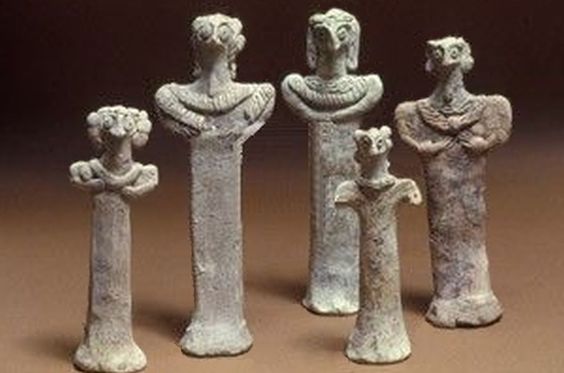
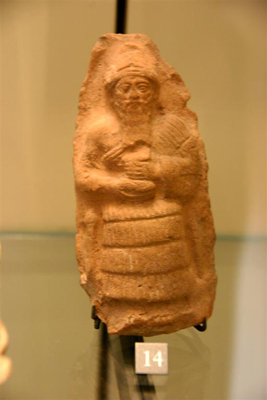
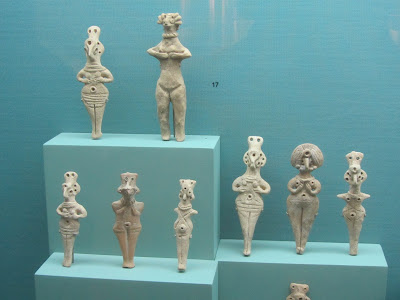

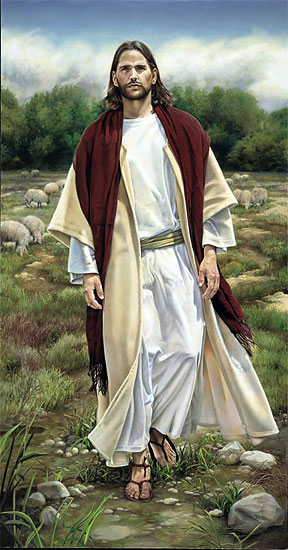


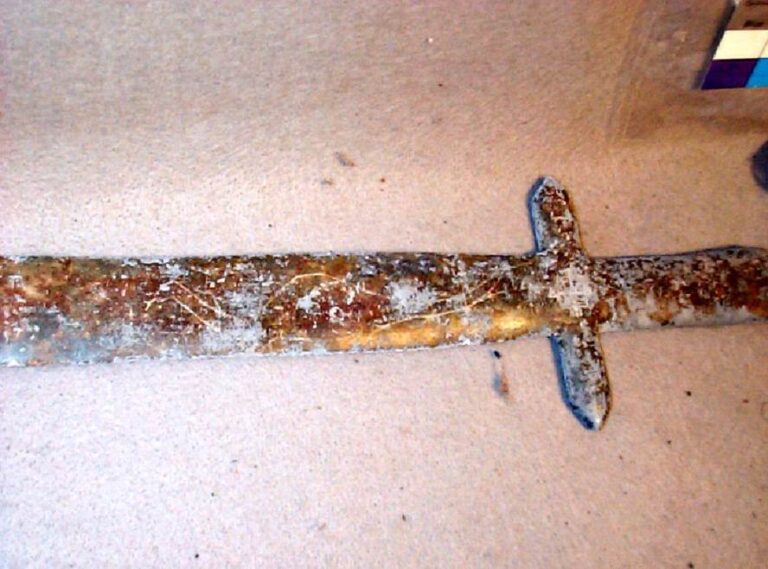
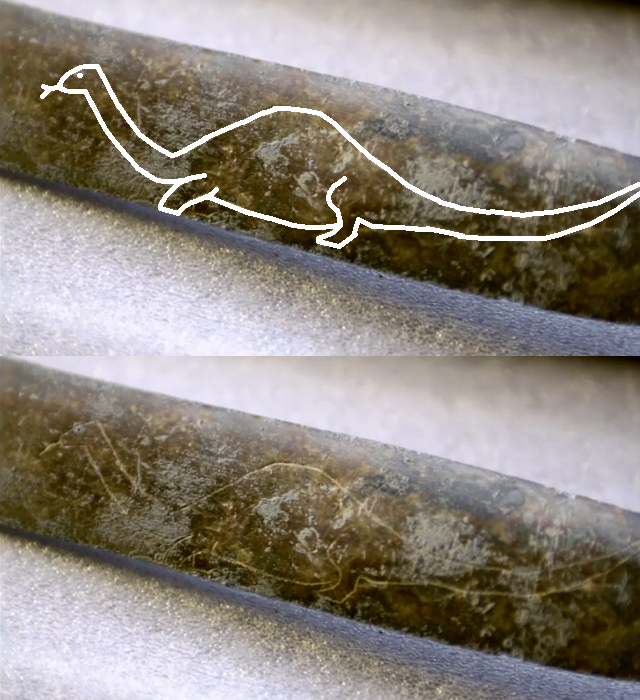
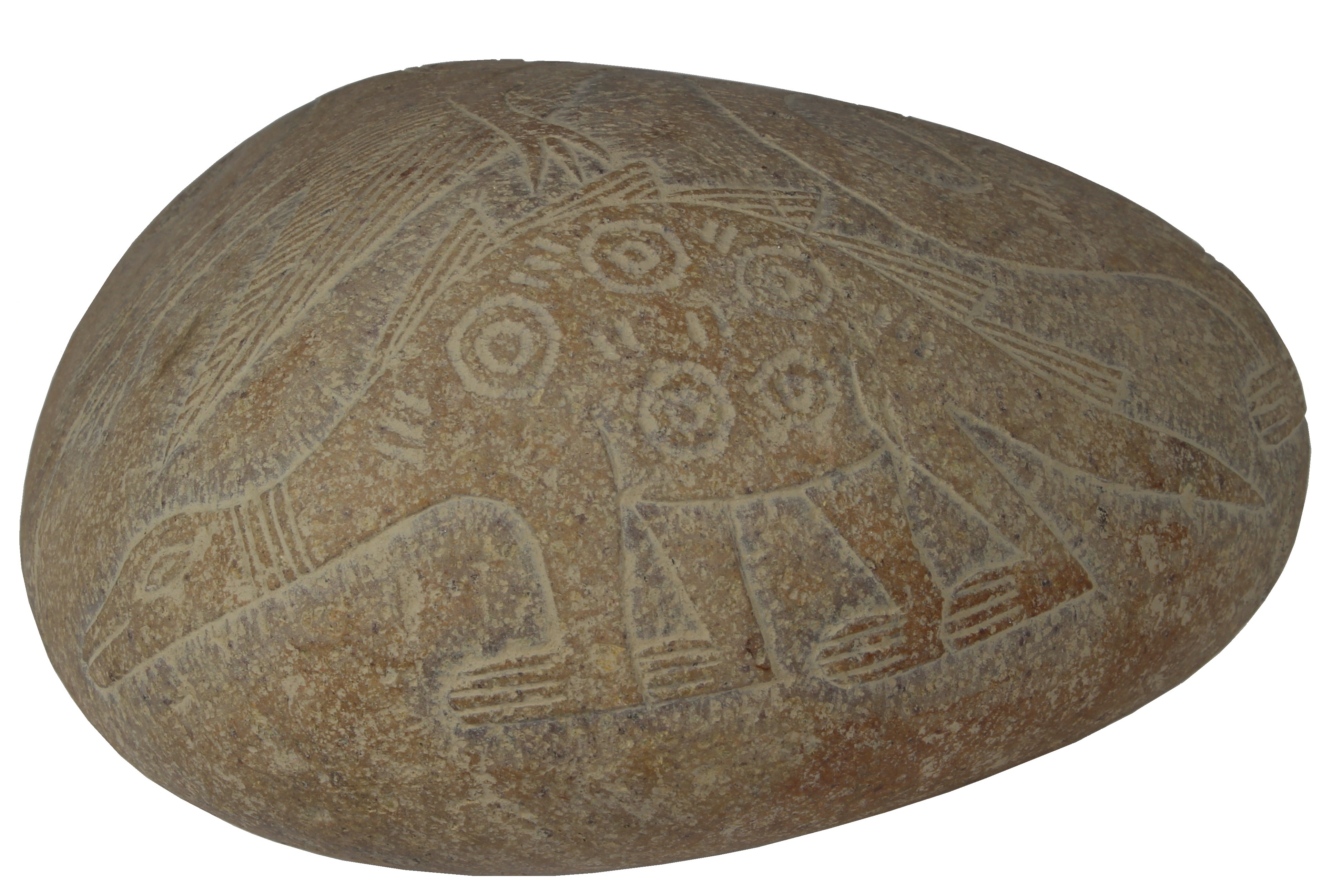




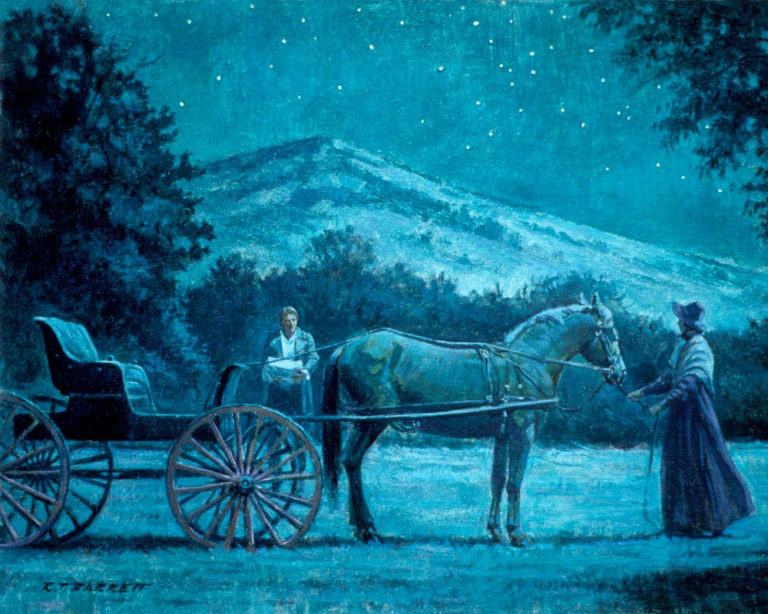
 Elder Jeffrey Holland shares the following about heart and head learning. “Truly rock-ribbed faith and uncompromised conviction comes with its most complete power when it engages our head as well as our heart… truth borne by the Holy Spirit comes with, in effect, two manifestations, two witnesses if you will—the force of fact as well as the force of feeling… I believe God intends us to find and use the evidence He has given—reasons, if you will—which affirm the truthfulness of His work…” Jeffrey R. Holland The Greatness of Evidence Aug 2017
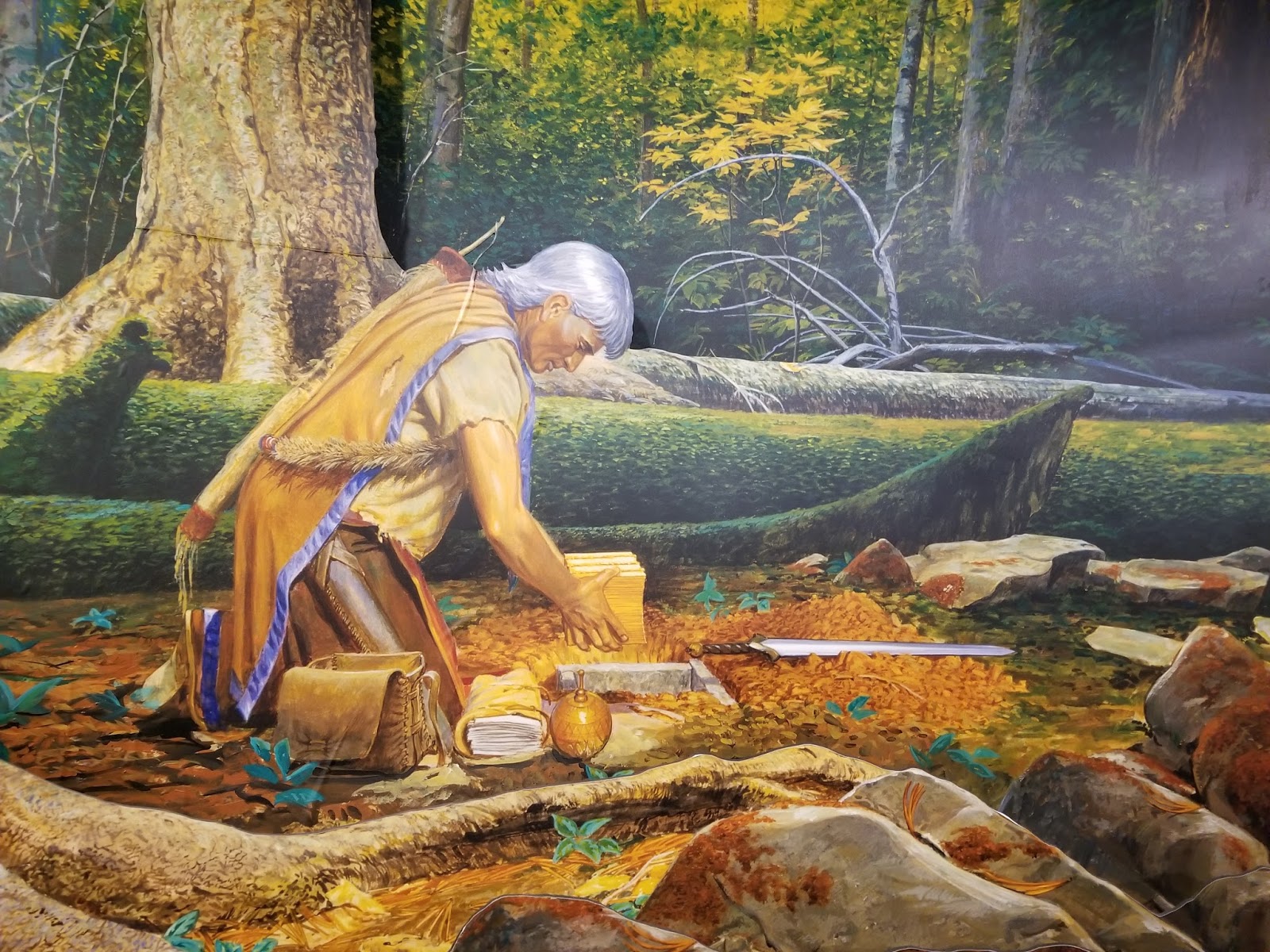


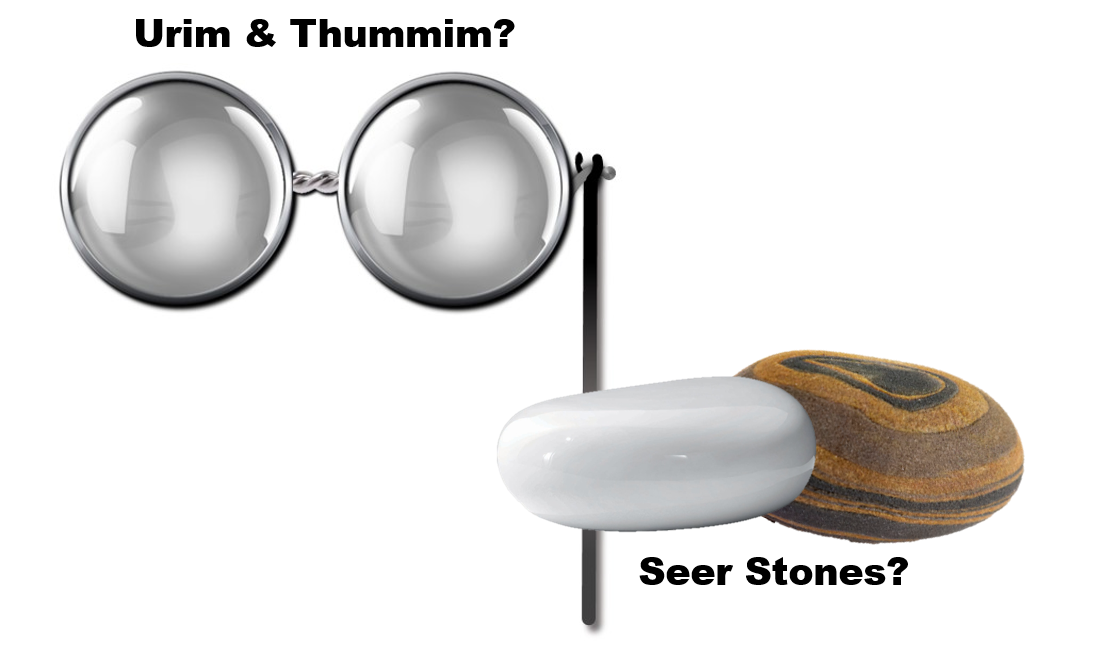



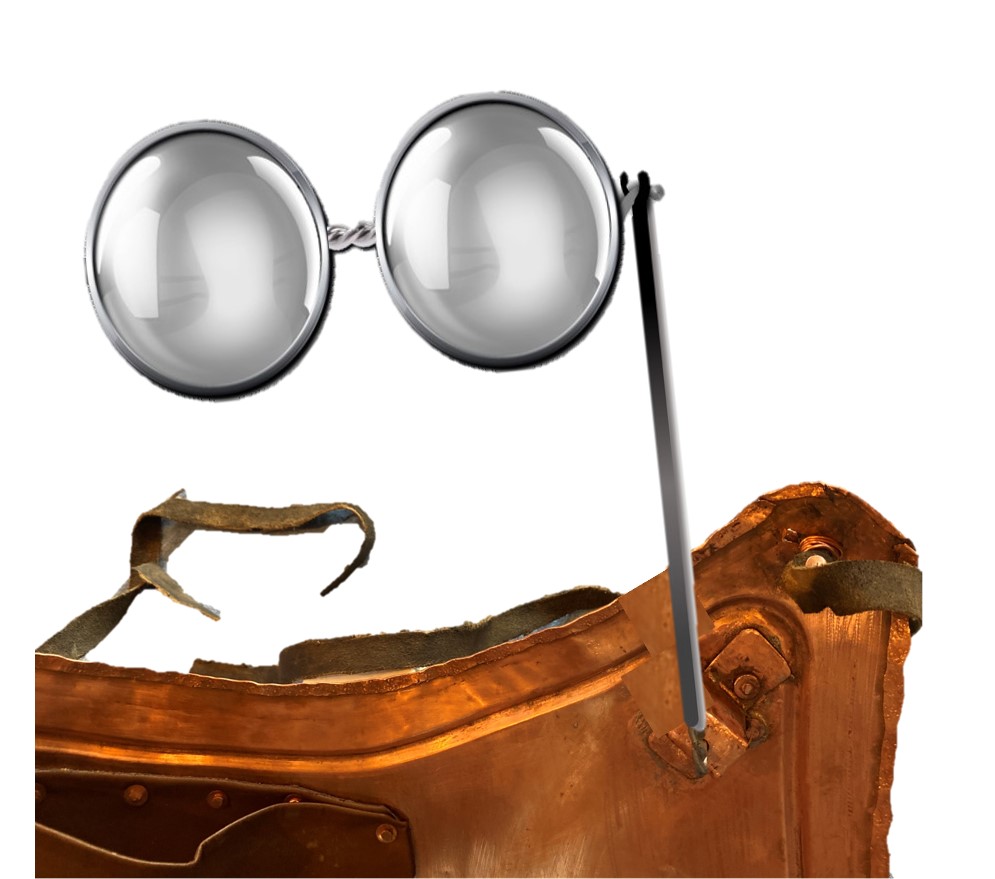
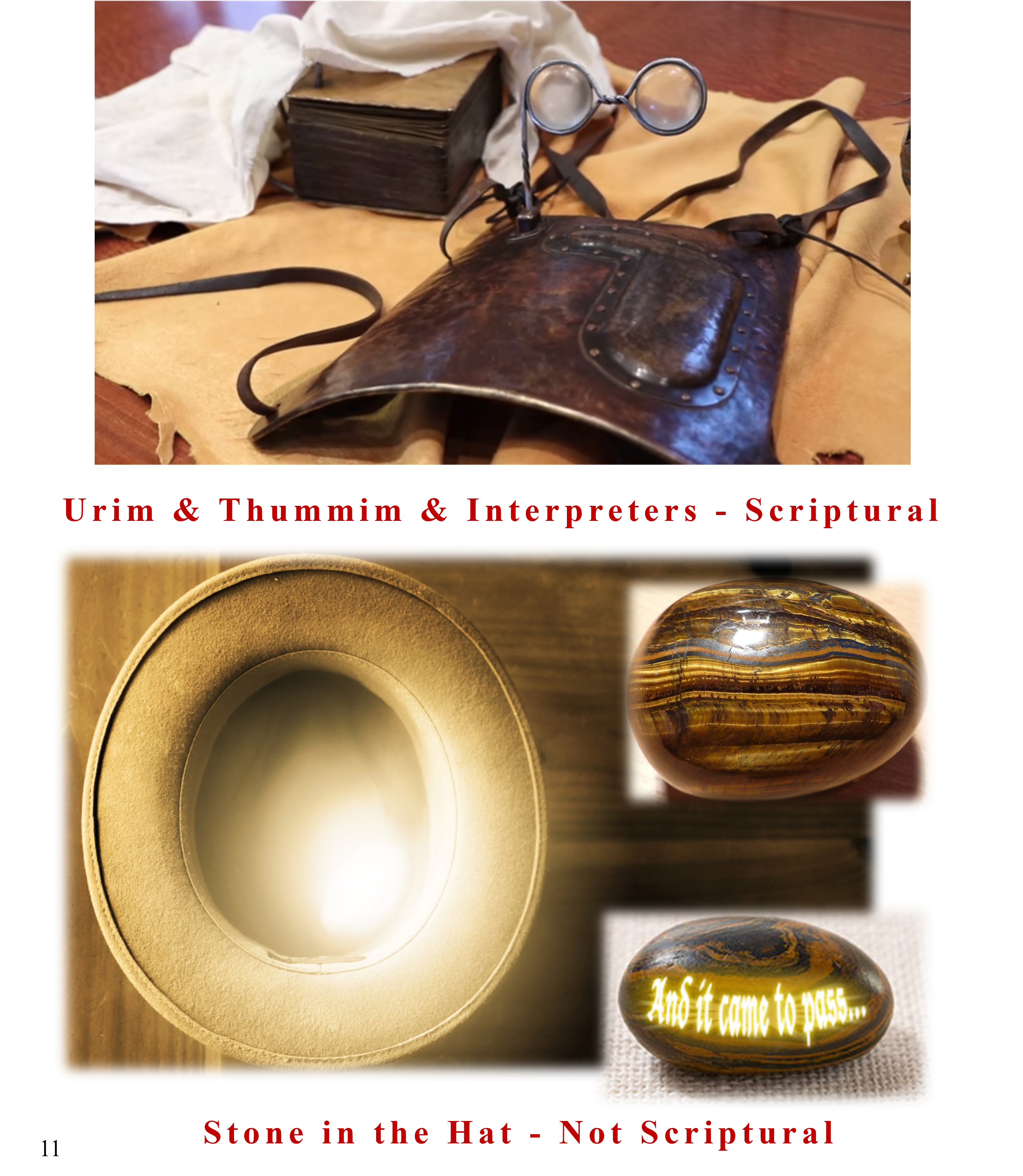
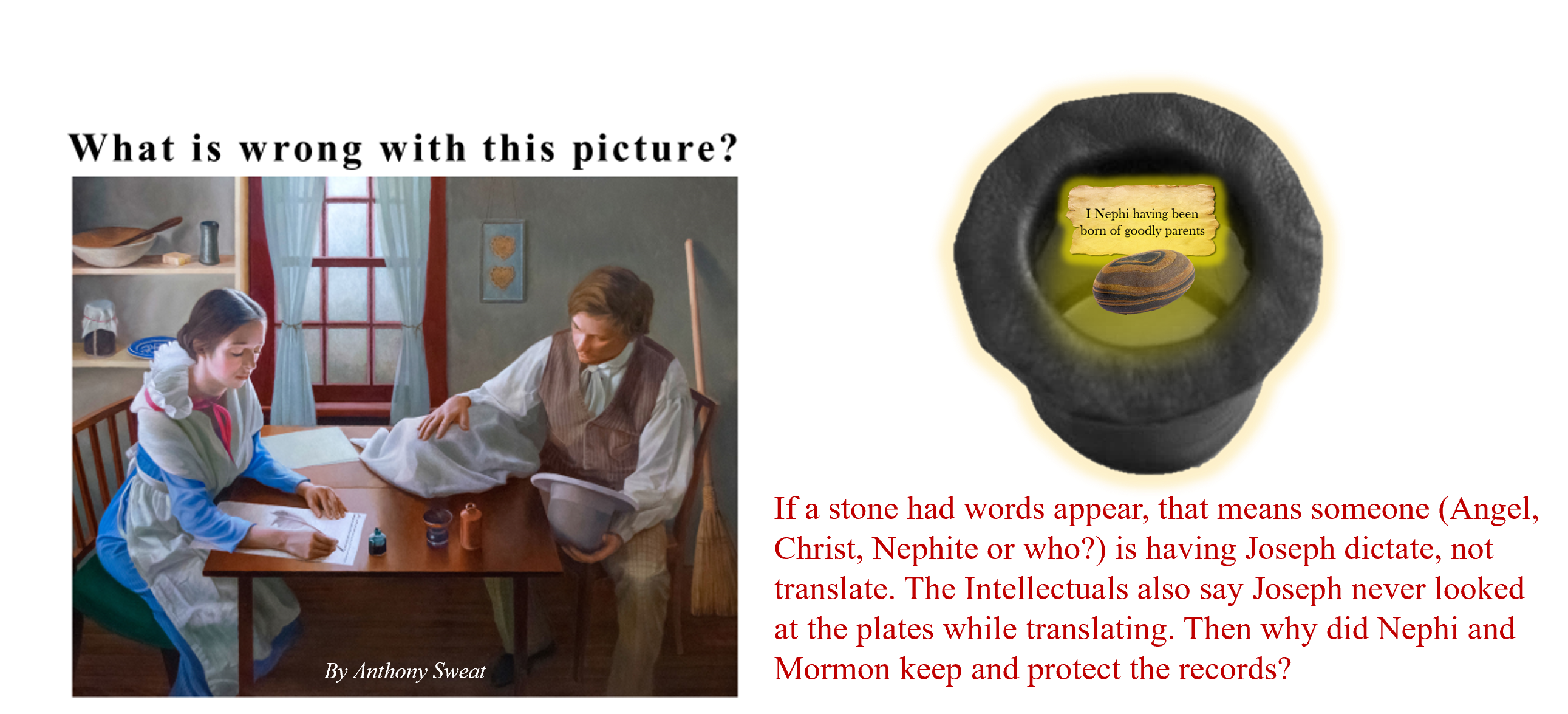

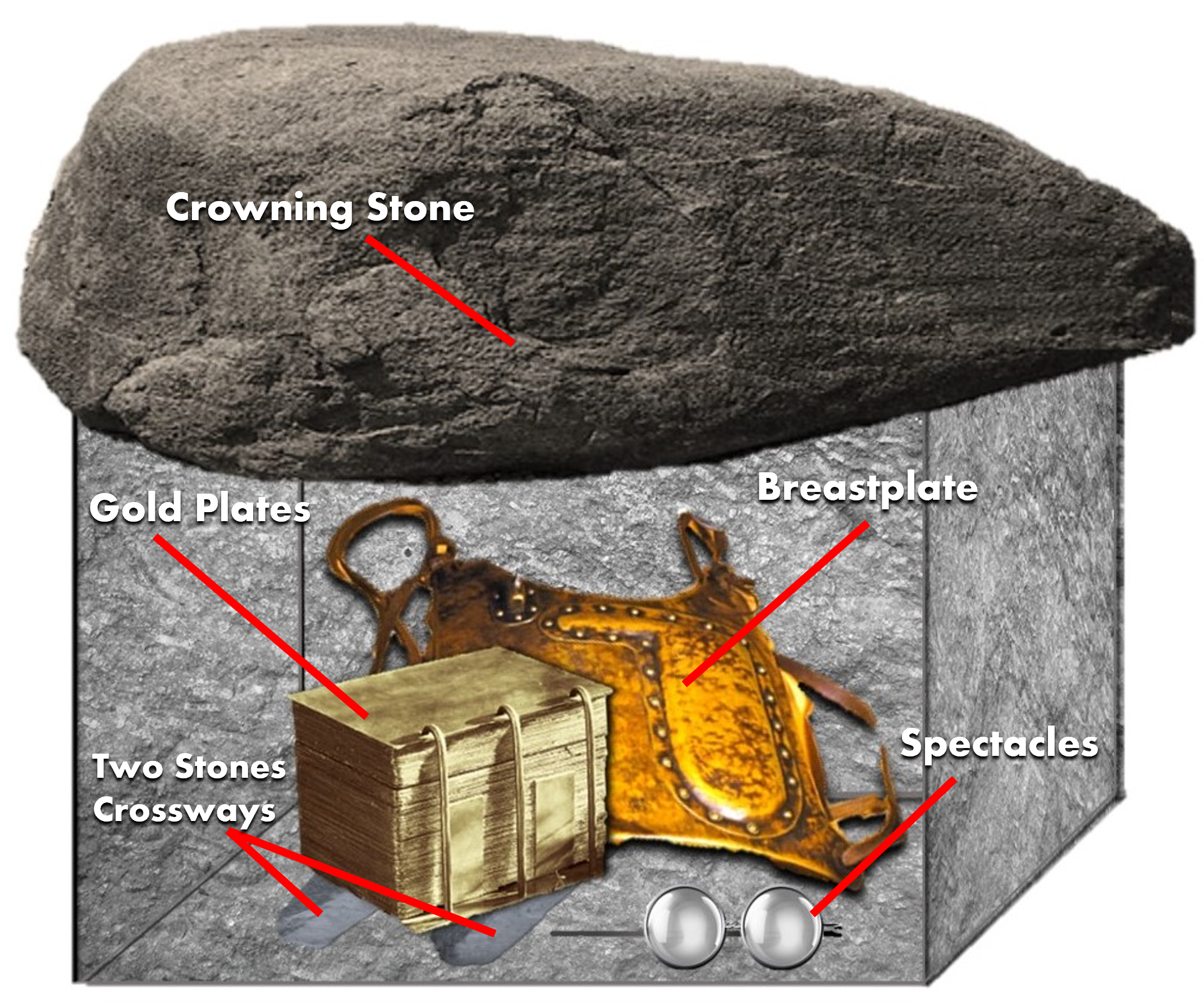
 But, Have We Been Deceived?